Experts Matter. Find Yours.
Connect for media, speaking, professional opportunities & more.
Baylor Gerontology Expert: Signs that Your Loved One is Suffering Elder Abuse
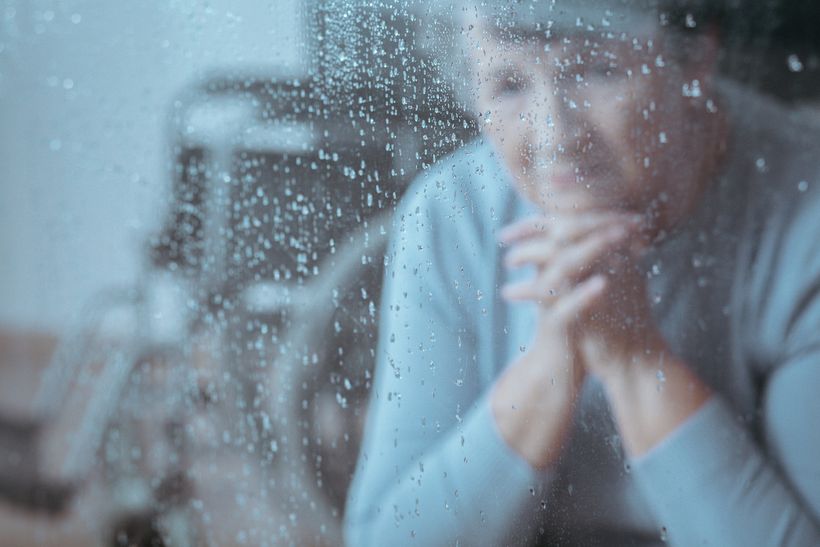
Each year, an estimated 5 million older adults are abused, neglected or exploited, according to the Administration for Community Living. Gerontology expert James Ellor, Ph.D., M.Div., professor in Baylor University’s Diana R. Garland School of Social Work, shares what elder abuse looks like and how people can respond if they see the signs. Reports of abuse are most often submitted by family members, hospital staff and law enforcement. But churches and other organizations should also be diligent, Ellor said, adding that clergy are considered mandatory reporters in many states. “No one group of caring persons can solve this problem alone; it takes a community of caring lay and professional leaders to even try to start to make a difference,” Ellor said. “If signs are noticeable, the next steps will depend on the type of abuse. In most cases, counseling support is critical, but often the need for medical help or legal help is also very important.” Elder abuse – intentional or negligent acts by a caregiver or trusted individual – comes in many forms: neglect or isolation, physical abuse, sexual abuse, exploitation or financial abuse, emotional and psychological abuse, verbal abuse and threats. Physical Abuse Like any other form of physical abuse, physical abuse incudes odd bruising, broken bones or contusions that are not easily explained, Ellor said. One sign that quickly raises suspicion is when broken bones or bruises happen repeatedly. Drug overdoses or the withholding of drugs are also challenging. Emotional abuse Ellor said this could include yelling at the senior, humiliating him or her, blaming and/or scapegoating. Sexual abuse “This is contact without consent,” Ellor said. “We see this often between spouses, particularly when one spouse has dementia.” Neglect “Possibly one of the most common categories, it simply means not taking the time to respond to a wide variety of needs when one is the designated caregiver,” Ellor said. Financial exploitation “Laws governing guardianship and power of attorney try to address this, but family members who take money from seniors as cash or property are the most common culprits,” Ellor explained. Fraud This can involve financial exploitation or even heath care fraud, but it generally involves either over-charging, selling unnecessary benefits of something, or it may include trying to sell something that would benefit one’s children, Ellor said. Self-Neglect “Some seniors simply choose to not help themselves, often in the name of leaving money or property to family members,” Ellor said. “Evidence of this could be that they don’t purchase needed medications or other resources.” Report suspected mistreatment to local adult protective services, long-term care ombudsman or law enforcement agencies that can investigate the situation. ALSO READ: "Gerontology Expert: Six Questions You Should Ask Before Choosing a Nursing Home" SEE: Baylor University's Directory of Faculty Experts ABOUT JAMES ELLOR, PH.D. James Ellor, Ph.D., M.Div., is a professor in Baylor University’s Diana R. Garland School of Social Work. Ellor works with older adults around issues of mental and spiritual health. He has served on the executive committee of the Midwestern Geriatric Education Center and provided education, counseling and planning for individuals and groups who work with seniors. His research includes work in entrostomal therapy, hunger, the church as service provider, spiritual assessment and intervention techniques with cognitively impaired older adults. ABOUT BAYLOR UNIVERSITY Baylor University is a private Christian University and a nationally ranked research institution. The University provides a vibrant campus community for more than 17,000 students by blending interdisciplinary research with an international reputation for educational excellence and a faculty commitment to teaching and scholarship. Chartered in 1845 by the Republic of Texas through the efforts of Baptist pioneers, Baylor is the oldest continually operating University in Texas. Located in Waco, Baylor welcomes students from all 50 states and more than 80 countries to study a broad range of degrees among its 12 nationally recognized academic divisions. ABOUT DIANA R. GARLAND SCHOOL OF SOCIAL WORK Baylor University’s Diana R. Garland School of Social Work is home to one of the leading graduate social work programs in the nation with a research agenda focused on the integration of faith and practice. Upholding its mission of preparing social workers in a Christian context for worldwide service and leadership, the School offers a baccalaureate degree (B.S.W.), a Master of Social Work (M.S.W.) degree and three joint-degree options, M.S.W./M.B.A., M.S.W./M.Div. and M.S.W./M.T.S., through a partnership with Baylor’s Hankamer School of Business and George W. Truett Theological Seminary, and a Ph.D. program. Visit www.baylor.edu/social_work to learn more.


Just how vulnerable are older Americans to getting hooked on opioids?
It’s a problem that most don’t commonly associate with seniors, retirees and older adults – being hooked on opioids. But it is a problem in America and it’s growing at a frightening pace. According the article attached: ‘Researchers involved with the University of Michigan’s National Poll on Healthy Aging polled a nationally representative sample of 2,000 Americans, aged 50 to 80, about what their health-care providers talked about when prescribing opioid medication to them. In the past two years, 589 said they filled an opioid prescription. This group knew how often to take the medication, but the majority didn’t recall their doctors or pharmacists talking about the risk of addiction, the risk of overdose, or what to do with leftover pills. About 40 percent said their doctors didn’t talk to them about the side effects of opioid use or guide them on when to cut back on pain medications.’ That is a staggering and scary scenario? But what can be done? Is it simply about better communication and information? Or do stronger restrictions and regulations need to be put in place to limit the opportunity for vulnerable seniors to become addicted? As America struggles to battle the opioid epidemic – are seniors another layer of addicts that could compound this situation? There are a lot of questions and that’s where the experts from can help. Dr. Marc Sweeney is the Founding Dean of the School of Pharmacy at Cedarville University and is an expert in the fields of drug abuse, prescription drug abuse and Opioid addiction. Marc is available to speak with media regarding this growing issue. Simply click on his icon to arrange an interview. Source:


Being homeless negatively impacts health in diverse ways, especially for those experiencing chronic homelessness.1 Such persons are at higher risk for multiple infectious diseases, traumatic injuries, interpersonal violence, conditions related to extreme heat or cold, and death due to alcoholism and drug overdoses. They are more likely than housed persons to use hospital emergency departments for health care and to be admitted to the hospital for health problems, because they are less likely to have health insurance and because their conditions cannot be appropriately cared for without safe and secure housing. Thus, there are compelling reasons to know whether interventions aimed at reducing homelessness also reduce the adverse health consequences associated with it. Source:


The impact of behavioral bias on decision-making
For business leaders, the ability to make critical decisions in a dynamic work and industry environment is essential to the success of an organization. However, Diwas KC, associate professor of information systems & operations management, and coauthors Francesca Gino (Harvard U) and Bradley R. Staats (UNC) note that behavioral traits can sometimes impact the ability to weigh new information and make a logical decision, even in the face of negative news. KC, Gino, and Staats analyze 147,000 choices made by cardiologists during a six-year period when they were presented with negative news from the FDA about drug-eluting stents used in angioplasty. The experienced cardiologists were more likely to continue using the questionable stents than their less-experienced peers, even after being informed of the problem. The role of influence also played a factor in the decision-making. They add, “Given that those who feel they are expert are less likely to react to negative news, those around them show the same tendency, thus making worse decisions than those in groups with less perceived expertise.” The seasoned cardiologists were better able to “generate counterexamples to the negative news and thus be susceptible to confirmation bias.” The authors note managers should be aware that more experience and the perception of expertise may bias decision-making. Source:



The Value of a Cure and Do All Americans Benefit from Medical Breakthroughs?
On February 28, 2017 policymakers, health officials, industry representatives and patient advocates were meeting in Washington to discuss the ‘value of a cure’ – the costs, the public health benefits and how America will move forward following the passage of the 21st Century Cures legislation. The Act, which was signed in December promises to accelerate funding for biomedical research while it also loosens regulations governing drugs and medical equipment and devices. Innovations in medical research and technology have produced cures and breakthrough therapies to overcome diseases that were once considered a death sentence. Polio is preventable with a vaccine, HIV is managed with a daily drug regimen, and Hepatitis C now has a cure. But are these breakthroughs reaching all communities? How can we balance the high costs of drug development with affordability? And what can we do to ensure that new cures continue to be developed? This is where Virginia Commonwealth University can help. Our experts are thought leaders and are some of the go-to opinions in this field. Dr. Thomas Roper is a professor and the director of the Department of Chemical and Life Science Engineering at the VCU School of Engineering. Thomas specializes in efforts to bring engineering and science closer to patients who utilize medicines via novel technologies. Dr. Frank Gupton is a professor and the chair of the Department of Chemical and Life Science Engineering at the VCU School of Engineering. He leads the school’s Medicines for All project that is striving to reduces costs of treatment for AIDS. He is an award-winning researcher and an expert in his field. Both Dr. Roper and Dr. Gupton are available to speak with media regarding this very important issue. Simply click on either of their icons to arrange an interview. Source: