
Experts Matter. Find Yours.
Connect for media, speaking, professional opportunities & more.

Wastewater Hazards in Southwest Florida Spark Environmental Concerns Across the State and Beyond
Over the last week hundreds of millions of gallons of wastewater have spewed from a former fertilizer plant in Piney Point, Florida, which was abandoned in 2001 and taken over in 2006 by the Florida Department of Environmental Protection. The location is adjacent to Tampa Bay, a 400-square-mile body of water that separates Tampa, Clearwater and St. Petersburg and is full of fish, crabs, seagrass, dolphins, manatees and seabirds of every kind. The state plans to close Piney Point, scientists are trying to forecast what comes next and environmentalists fear algal blooms and fish kills (also known as fish die-offs). “There are hundreds if not thousands of these waste storage ponds in the United States and each one is a ticking time bomb,” says Villanova University’s Metin Duran, PhD, an expert on the biological processes of environmental engineering, including public health microbiology and biological processes for waste management. “The last major disaster was in December 2008, when a 40-acre pond used by Tennessee Valley Authority for the coal-burning Kingston Fossil Plant collapsed. The aftermath included damage to the area’s ecosystem and lawsuits.” Regulations regarding waste storage ponds are at the state level, and they aren’t very strict, says Dr. Duran. “Though there are strict design and groundwater monitoring requirements to ensure waste does not cause groundwater pollution, these waste impoundments are prone to have issues under extreme weather events, such as heavy rains. With the increased frequency of such events recently, there is a risk that more of such may fail.” Dr. Duran adds that it can be difficult to predict short- and long-term effects of the Florida case, but the reported low-level radioactive contamination could cause major damage to aquatic life and properties—and that phosphorous and nitrogen would cause eutrophication in Tampa Bay as well.


Is This Bitcoin's Time to Shine?
Bitcoin was invented in 2008 and launched in 2009, but after years of skepticism, it's finally becoming a part of mainstream conversation. The cryptocurrency's value has continued to rise since 2017, but with the start of 2021, its price has surged and many more companies are looking for ways to get involved. Tesla and Square have invested. (You can even buy a Tesla with bitcoins.) Goldman Sachs and JPMorgan are exploring ways to meet customer demand for cryptocurrency investment. A National Football League player converted half of his salary into bitcoins. And Major League Baseball's Oakland Athletics are offering a suite for the 2021 season at the price of one bitcoin. So, if it's been around for so long, why are we only seeing this mainstream push now? "I think the Bitcoin ecosystem is developing to the point where people can start to think about using it as a currency," said John Sedunov, PhD, an associate professor of finance who studies Bitcoin. "However, the price still remains volatile, and it isn't clear that the currency can maintain its current $50,00-to-60,000 value." While there are companies adopting and investing now, this will still be a gradual process, Dr. Sedunov says. "As businesses become better able to accept the currency, and perhaps more importantly better able to withstand and manage the volatility of Bitcoin, then the currency will become more widespread in its use. The process would be expedited if the entire supply chain accepted Bitcoin, rather than just the retailer and the end of the chain. This would smooth the process and allow people to utilize the currency without as much concern for converting it." Additionally, Dr. Sedunov notes that there needs to be a continued evolution of the ability of firms to accept and manage the currency, in addition to a reduction in the volatility of the currency. Smaller businesses may be at much more of a risk than large corporations and banks if there is price instability. But the value of Bitcoin won't be this high forever. As the country and economy continue to deal with the impact of the pandemic, there are growing concerns that inflation could be next, pushing consumers to other options, like cryptocurrency. "When the pandemic ends and there is, perhaps, more economic stability, Bitcoin's value will wane a bit, but I don't think it will fade to nothing," Sedunov notes. "The big question mark, to me, is the U.S. Dollar and inflation. Inflation expectations are rising, and this only pushes people more toward alternatives. If this trend continues, then perhaps economic stability will be a bit lower, and more people will flock toward Bitcoin."


Eliminating The Barriers To Telehealth & Patient Retention
During the ongoing national pandemic, healthcare is in a period of rapid evolution, bringing telehealth to the forefront of patient care. Telehealth is a proven strategy to improve health outcomes, but it’s gated behind socioeconomic privilege and leaves behind many of our community’s most vulnerable patients. One such disparity is the inability of many Americans to access digital health care. This silent epidemic affects lives daily. Many patients, especially those in rural communities, face obstacles when trying to get the care they need. From access to reliable transportation and affordable child care to financial instability and lack of culturally competent providers, there is no shortage of hurdles standing in the way of disadvantaged populations accessing quality care. Well-implemented telehealth services can offer a clear path through these common barriers to care while improving health outcomes and boosting patient retention. “We know that mobile health intervention is an effective tool for retaining patients in care, but it’s only as effective as it is accessible,” said Richard Walsh, our CEO. “It would be negligent to assume that every individual has access to the devices, internet, or knowledge necessary to engage in telemedicine.” Like other leaders in the industry, we know telehealth is a privilege, but at Continuud, we believe it should be a right.” As Nathan Walsh, our CXO, said, “During a public health crisis such as this, we have to be proactive in ensuring that underserved communities have access to the care that they need in every way possible.” Through our research and conversations with community health leaders, we have identified 4 common barriers to telehealth success: access to video-ready phones or tablets, access to a reliable & affordable internet connection, an understanding of how to use the device to access services, and trust in technology being used for health services. Our solution is to create a platform that not only solves these problems but also enhances the patient experience and drives the best possible outcome of telehealth intervention. Our platform, Access, provides 8-inch tablets with an unlimited data connection to patients. Each device ships with a secured environment and limited functionality customized by the health care provider to include the tools that patients need to access care. We have created a simple deployment and warehousing solution to make it easy for organizations to get started quickly. Our end-to-end deployment and recall services handle every aspect of the platform so organizations can remain focused on serving their patients. The platform supports patient-by-patient interface customizations, so each patient’s experience is tailored to their unique treatment plan. We have device insurance and same-day replacement built into the program to account for loss, theft, and damaged devices, so organizations will always have access to the inventory they need to serve their clients. At Continuud, we offer an integrated ecosystem designed from the ground up to enable health care providers to work more efficiently toward a common goal of driving positive health outcomes in their communities. Continuud is known throughout Indiana for our innovative approach to connecting high-risk populations to care and implementing strategic technology to help retain and learn from patients so providers can evolve with the needs of their patients. To learn more about our platform, click here to visit our homepage. If you would like to schedule a demo with our team to talk about the platform in greater detail, click here.


How the Biden Administration Can Help Save the Planet
With the inauguration of Joseph R. Biden as the 46th president of the United States came a slew of executive orders—and perhaps most notably America's reentry into the Paris Climate Accord. After the Obama administration joined the largest global cooperative agreement to limit the emission of dangerously climate-altering greenhouse gasses in 2015, the U.S. withdrew in 2017 under former president Donald Trump. Villanova University biology professor Samantha Chapman, PhD, studies how "blue carbon" solutions, like the restoration of wetlands, can contribute to slowing the harmful impact of climate change on the planet. Recently, Dr. Chapman broke down the top three things the Biden administration must do to save the planet, since we are, as she puts it, "close to some scary tipping points." #1: Pressure Brazil’s President Bolsonaro to stop the devastation of the Amazon. "The Amazon Rainforest regulates our global climate. It is imperative that through diplomacy and aid, we incentivize developing countries to preserve their intact lands and biodiversity. We can't do this without helping local communities incentivize the people living in these places to save these lands. Road building in forests is a huge cause of our planet's downward slope." #2: Invest in restoration of natural ecosystems. "We must invest resources into coastal wetlands and forests, here and abroad. USAID could be partially retooled in partnership with the United Stated Geological Survey (USGS), which already does this. These natural ecosystems will serve as natural climate solutions and be harbors for threatened species and nice places for humans to recreate. We must restore the opportunity for nature to re-invoke the necessary feedbacks that make the ecosystems work. Sometimes this involves complicated engineering, sometimes it is simpler and means giving nature space to restore. We're trying both." #3: Find ways to make people feel connected to land and nature—and value it. "This is a vague one and not one that I'm sure any administration can do. The pandemic has given me hope on this—I see so many more people out hiking, fishing, walking, and hanging out in parks. When time comes for voting on taxes, people have to remember that these state parks and preserves and even neighborhood parks cost money to staff and preserve. The U.S. has incredible land and nature and yet, in my experience, Americans value and understand it less than other countries. Some of that has to do with our frontier history. We can learn from Native Americans. Appointing Representative Deb Haaland as the secretary of the interior is one good step the Biden administration has taken in this direction." Dr. Chapman emphasizes that despite the uphill battle ahead, she remains hopeful. "Left to heal and helped to heal, the ecosystem processes that sustain our lives and those of the other amazing organisms on our planet can be restored," she notes. "Good things are happening. They just need to happen at a much larger scale."


The Alexa Effect: How the internet of things (IoT) is increasing retail sales
Imagine this scenario. You’re out of coffee but with the click of a button or a simple voice command, you reorder a two months’ supply that will arrive the same day. And that almond milk you like? Well, imagine your fridge already knew you were running low on supplies and independently sent the order to restock before you ran out. The stuff of science-fiction until only recently, internet of things (IoT) technology is beginning to change the way we live and work. Simply put, IoT is a system of interrelated devices—things that can include gadgets, digital objects, or machines, wearables and so on—which have the capacity to send and receive data over a network without human agency or human interaction. As a technology, IoT is novel, and it’s poised to reconfigure a range of sectors and industries—among them, the world of retail. Amazon is a leader in the consumer-facing space with an ecosystem of apps like Alexa, Fire TV, and the now-defunct Dash Button. Meanwhile, tech-savvy retailers are using IoT to facilitate operations. Smart shelves in stores can detect the status of perishable goods or inventory requirements; radio frequency identification (RFID) sensors can actively track the progress of produce through the supply chain. Retailers can even use IoT to send customers personalized digital coupons when they walk into the store. As IoT continues to gain traction around the globe, the potential for efficiency-boosting innovation in retail is clear. Less clear, however, is its actual impact on consumer choices and behaviors. Sure, IoT can save time and mental effort, but how does that translate into real-world business outcomes? This is the question that underscores new research by Vilma Todri and Panagiotis Adamopoulos, both assistant professors of information systems and operations management at Emory’s Goizueta Business School. They were keen to understand whether consumer behavior is significantly changed under the regime of this new technology as it continues its roll out across the world. Specifically, they wanted to know if IoT technology actually increases demand for products. And it turns out that it does. “IoT technology in retail is really in its infancy, so understanding its impact on users and business is key,” Adamopoulos said. “We wanted to shed light on these dynamics at this early point to spark interest and generate more debate around how retailers can leverage this technology.” Together with Stern’s Anindya Ghose, he and Todri put together a large data-set with information about sales of certain products in countries with existing IoT retail markets and in others where the technology has not yet been introduced. “We needed to take into account these sorts of variables to really understand the effect,” Todri said. “So, we had our control group of non-IoT retail markets, and we were able to compare sales data for the same products in countries where the technology has been adopted.” The researchers also controlled for time trends, looking at the impact on sale prior to and post IoT adoption. “Looking at the data over time and pinpointing the exact moment when a product has been made available for sale via IoT sales channels across different countries and at different moments, we were able to infer the effect of the technology on product sales,” Todri said. In total, they looked at sales for the same or similar products in six countries between 2015 and 2017. They also compared sales across different retailers. “By analyzing the same sales information for different products in different markets using different channels across the world, we can see differences in the data that can only be attributable to this new technological feature,” Adamopoulos said. And the differences are significant. The concept is fascinating, and if you are interested in learning more, a complete article about this topic is attached: If you are a journalist or looking to learn more about IoT, our experts can help. Vilma Todri and Panagiotis Adamopoulos, both assistant professors of information systems and operations management at Emory’s Goizueta Business School. Both experts are available to speak with media; simply click on either expert's icon to arrange an interview today.




Generalists and Specialists – Key Ingredients for an Innovation Ecosystem
David Epstein describes in his book Range: Why Generalists Triumph in a Specialized World, the relationship between specialists and generalists. Specialists being the masters of depth while generalists integrate across a range of options and diverse applications. The combination of the two leads to powerful potential for innovation. InventionShare seeks to create a similar relationship between inventors and corporations. Leveraging inventions that have very broad applicability, InventionShare systematically researches across many industries searching for businesses that are poised to leap forward with a strategic technology injection. One such technology is called Circuit Seed which redefines analog electronic design with a new paradigm that enables configurable analog in a scalable digital format. This technology dramatically lowers the cost, power, noise and temperature thresholds enabling breakthrough advances in a diversity of applications such as: automotive radar, Lab-on-a-chip and many more. By applying Epstein’s principles, InventionShare through its unique business model, is creating an innovation ecosystem spanning many industries through partnership and collaboration. For more information, please contact: Lesley Gent Director Client Relations, InventionShare™ lgent@InventionShare.com (613) 225-7236, Ext 131 Or visit our website at InventionShare.com


Earned Media: The Secret Weapon of Brand Building
I was reading the newspaper recently and saw an article about tax filing season. The article outlined some of the challenges facing people during tax season but it also highlighted some of the opportunities and useful tips. It wasn’t the reporter outlining this information — it was a tax expert the reporter had interviewed and used as a source in their story. The information was incredibly helpful. The expert being interviewed humanized the issue by telling stories about people she had helped. I was engaged. And, because I was engaged, I read the story very carefully. I even remember the name of the expert and the name of her firm. It stuck. I happen to have an excellent accountant — but if I didn’t — I can guarantee I would have called this expert in the story. In fact, I have no doubt she got calls after the article was published. And, from her standpoint and the standpoint of her firm — they paid nothing to be in that article. Not only did they get valuable space in a news story as an expert without paying for the exposure — the reporter likely even thanked her for helping. Advertising executives, marketing agencies and social media “gurus” typically don’t like people like me — news media strategists. We tell clients that the best bang for their buck is “earned media” which means exactly what it says — media that you have earned (and not purchased) whether it be through relationships or by being in an expert database. We help them tell their organic stories by positioning them as experts in their field, which is not easy today given everyone has a LinkedIn account or website calling themselves an “expert” or a “guru”. It’s one thing to proclaim yourself an expert — it’s something completely different to be recognized as one by the news media. You see, despite what some will say, traditional news media is far from dead. Is it facing challenges and reinvention? Absolutely. But, dead? Absolutely not and it’s still the medium by which earned media legends are made. I want to be clear in saying there can be, indeed, a time and place for paid media. The issue is that for too many organizations, it’s the only tangible tool in their toolbox. And it is, by far, the most expensive tool with, questionably, the lowest return on investment. In my opinion, unless you’re spending Coke and Samsung levels of dollars on advertising (multi millions), there’s a good chance your ads are being washed away in the information tsunami — the white noise that is our over-saturated information ecosystem. In many cases, advertising as a stand-alone marketing strategy CAN BE a colossal waste of your money. Even social media marketing and advertising is fast becoming the most cluttered and noisy space for paid and promoted messaging. Due to its lower cost, people are flooding to it making it increasingly more difficult to be heard in the sea of white noise. The fact is that a well-balanced marketing and communication strategy is one that reaches your target audience on a number of levels — some of them could be paid — some of them organically through social media — and the one many people neglect is to serve as experts to drive earned media. It is often neglected because it’s the one marketing tool that requires working with someone who truly understands journalism and journalists — and what their daily and hourly needs are in terms of getting their jobs done. So – yes – it’s hard work and it’s very specialized work. But there are companies, people and tools out there that can help. And, it’s worth the hard work. Being quoted as an expert in a legitimate news story or feature interview can move mountains in terms of building your brand. First of all, being in a news story gives you an instant status AND credibility. In paid advertising, it’s you saying how great you are — it’s self-declared. People are skeptical — they know you’ve paid to say that about yourself; you are blasting out a one way message. However, the traditional media interviewing you is a two way conversation the public is watching in an engaged way. It’s akin to a third party testimonial. In other words, the viewing/reading/listening audience sees a trusted journalist they feel they know who is putting this expert source in their story — this is someone the journalists trusts as an expert source so inherently the message is that the public should trust them as well. In this case, the medium (traditional news media) truly is a big part of the message. You can’t buy that. Legitimacy. Credibility. The foundation of any successful brand. It is earned. I have a college client that I work with. They decided to focus more on earned media, admittedly, with some hesitation. We media coached a number of their professors and Deans. We put a plan into place to develop some tangible relationships with journalists. It started small with one short interview. Then it was two. Then it was a regular spot. And within one year, the amount of earned media they have received has arguably far outpaced the value of all their paid advertising. Some of their people have become go-to experts for the media where they were non existent just a year ago. Prospective students and parents see this college’s experts in the media and immediately associate true tangible value to the institution in considering where to enrol. We built capacity with this College and now they are rolling on their own. They have momentum. This is what you need to reach for. And earned media is the gift that keeps on giving. That newspaper story, radio interview or television panel you were featured in will be shared by the media outlets to their huge social media audiences. Other interested people will then share it further to their networks. This is increases your third party credibility — in some cases reaching more people than the original news story. This rarely happens with ads or paid media and is the secret weapon of earned media. And if you weren’t already convinced, then consider this: earned media creates huge online traffic and can have an extremely positive impact on organic SEO for your website or brand — something paid media can’t do. So, if you’re a hospital, a university or research centre, one of the core issues you’re facing today is recruiting top talent. Recruiting is competitive and complex — yet most potential recruits will begin their research on Google. They will search your institution and see what’s being said about you. If you are getting a lot of positive earned media, that will quickly show up high on your Google search results. The potential recruit reads those news stories and sees your institution is out there with its experts. Even doctors and professors will associate traditional earned media coverage as a measurement in credibility. So, how do you go about increasing your earned media reach? How do you become known as an expert in your field with the media? Admittedly, it’s not as easy as buying a full page ad in a newspapers or boosting a post on Facebook. Earned media is both an art and a science and it requires an intuitive, expert knowledge of the media. Making sure you are listed in searchable online networks that journalists use is a very good start. But there is a caution. You only have one or two chances to prove yourself as a reliable and value added source for journalists. If you become known as a lame or boring guest, you’ll be blacklisted and that opportunity will disappear. So before you go running into the streets declaring yourself an expert ready for national media exposure. Make sure you’re ready to be interviewed by the media because they won’t give you a free ride. They are journalists and not stenographers. You will be asked tough, challenging questions. The key is to be prepared for the opportunity. How do you do that? Well that’s my next column. Stay tuned.



Key Environmental Quality Research Questions Identified for North America by Multidisciplinary Team
As density in cities increase along with other global megatrends, researchers are working to address environment and health challenges in collaborative ways. Using a recently pioneered process, a multidisciplinary team of North American researchers, government agencies and businesses leaders identified priority research questions for the United States, Canada and Mexico in an effort to tackle pressing environmental quality issues. In an article published in the journal of Environmental Toxicology and Chemistry, Bryan W. Brooks, Ph.D., Distinguished Professor of Environmental Science and Biomedical Studies and director of the environmental health science program at Baylor University, led the Global Horizon Scanning Project (GHSP), which focuses on identifying environmental and health issues internationally. Brooks also facilitated GHSP workshops in Africa, Australia, Central and Southeastern Asia, Europe and Latin America. “We face palpable global environment and health challenges, which require innovative understanding, tools, products and systems to prevent, diagnose and manage adverse outcomes to public health and the environment,” Brooks said. “The GHSP was initiated as part of a larger effort to identify important international research needs. It is essentially a research roadmap towards achieving more sustainable environmental quality, which is necessary to protect human health, biodiversity and ecosystem services.” As part of the study, members of the Society of Environmental Toxicology and Chemistry’s (SETAC) and the American Chemical Society’s (ACS) Environmental Chemistry and Agrochemcials Divisions submitted questions that were then synthesized during a workshop by scientists and engineers from the academic, government and business sectors. “This project is intentionally inclusive, bottom-up, multidisciplinary, multisector and transparent,” Brooks said. “Answering these priority research questions will not be easy, but strategically doing so promises to accelerate progress to address grand challenges that matter to everyone.” “This report provides a comprehensive global perspective covering some of the world’s most critical environmental challenges that will impact society for decades to come,” said Sherine Obare, Ph.D., dean and professor of the Joint School of Nanoscience and Nanoengineering at UNC Greensboro and chair elect of the American Chemical Society’s Environmental Chemistry Division. “SETAC’s ability to engage scientists from around the globe has led to forums that identify urgent challenges including, next generation 21st century analytical chemistry methods, strategies to predict chemical exposure, understanding multiple stressors and new approaches in chemical risk assessment. This project will define the scientific directions needed to transform environmental science and engineering, globally.” “The GHSP reflected in this paper has harnessed the insights of scientists not only across North America but around the world,” said Charles Menzie, Ph.D., Global Executive Director of SETAC. “Each brings tremendous experience and a strong sense of what is needed for future research. However, the distillation of these many into a set of consensus questions provides a much needed foundation for charting our direction for research to inform environmental policy. SETAC is proud to have supported this through our global meetings and now through our journal.” A related GHSP manuscript identifying priority environmental quality questions for the Australasiaregion of Oceania was also recently published in Integrated Environmental Assessment and Management. GHSP efforts from Africa and Asia are ongoing with plans to report priority research questions from these global regions in the next year. ABOUT BAYLOR UNIVERSITY Baylor University is a private Christian University and a nationally ranked research institution. The University provides a vibrant campus community for more than 17,000 students by blending interdisciplinary research with an international reputation for educational excellence and a faculty commitment to teaching and scholarship. Chartered in 1845 by the Republic of Texas through the efforts of Baptist pioneers, Baylor is the oldest continually operating University in Texas. Located in Waco, Baylor welcomes students from all 50 states and more than 80 countries to study a broad range of degrees among its 12 nationally recognized academic divisions. ABOUT BAYLOR COLLEGE OF ARTS & SCIENCES The College of Arts & Sciences is Baylor University’s oldest and largest academic division, consisting of 25 academic departments and seven academic centers and institutes. The more than 5,000 courses taught in the College span topics from art and theatre to religion, philosophy, sociology and the natural sciences. Faculty conduct research around the world, and research on the undergraduate and graduate level is prevalent throughout all disciplines.


Watch your step…snake season is in full swing! Let our experts help with your questions!
In Georgia there are sure signs of spring - flowers are in bloom…and snakes are back in the grass. Now before you shriek or shirk away at the sound or sign of a snake, it is important to know that snakes play and important and vital role in the local ecosystem. They’re essentially nature’s pest control - keeping rats, mice, moles and other rodents at bay. In fact, seeing a snake is usually a sign of good environmental health for your garden, property or local environment. And now for the less than good news. Some snakes in Georgia are dangerous. In fact, there are six different venomous snakes slithering around the state. And it’s not just in the forests and countryside, copperheads are all part of the metropolitan urban landscape too. So, what precautions do people need to take? What are the simple do’s and don’ts if you encounter a snake? Are there easy ways to identify dangerous and non-dangerous snakes? And – this season seems to be producing a much more pronounced snake population– why is that? There are a lot of questions to be asked – and that’s where our experts can help. Lance McBrayer from Georgia Southern University is an expert in organismal ecology and snakes. He’s happy to talk with media - simply click on his icon to arrange an interview.


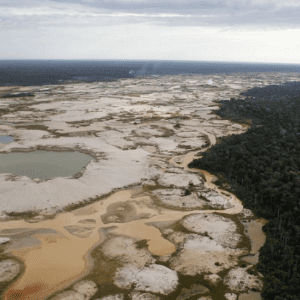
Biodiversity on the brink? Is there any stopping the damage to the Pervuian Amazon?
There’s nothing new or breaking about the importance of the Amazon rain forest. For decades, politicians, celebrities and most recently – even the Pope called on the world to act against the deforestation and further protection of the region. The impacts of this devastation are being felt around the world. The massive forests absorb greenhouse gases, and as deforestation occurs at a staggering rate – so too does the increase in climate change and global warming. But agriculture, mining and development seem to be ignorant to those requests and consequences. While a lot of attention naturally goes to Brazil, Peru’s is in just as much trouble. According to the United Nations, the country is one of 17 "megadiverse" countries on the planet containing 70 percent of the world's biodiversity. There’s still a l lot to know about the affects of deforestation and how losing over a million hectares of rain forest has taken a toll on fish, the ecosystem and the vast flora and fauna that remain undiscovered. That’s where our experts can help. Anthony Mazeroll, PhD, Professor of Biology at Soka University of America, is also Executive Director and Board Chair for the Amazon Research Center for Ornamental Fishes, which is devoted to sustainable breeding and conservation of the rainforest ecology. Dr. Mazeroll is available to speak with media regarding this and many other issues affecting the Amazon - simply click on Anthony’s icon to arrange an interview. Source:

