
Experts Matter. Find Yours.
Connect for media, speaking, professional opportunities & more.

CorpusCast with Dr Robbie Love: Professor Laurence Anthony on AntConc
CorpusCast is the podcast about corpus linguistics and what it can do for society. Join Dr Robbie Love as he speaks with top researchers in the field to find out more about how corpus linguistics – the study of linguistic patterns in large samples of language – is applied to a diverse range of areas including health, social justice and education. To mark the 25th episode and second anniversary in 2024, this episode reflects on the incredible two-year journey, expressing gratitude to exceptional guests and listeners spanning over 30 countries. In this milestone episode, the spotlight is on Professor Lawrence Anthony, the brilliant mind behind AntConc, a widely used and freely available corpus tool. Listeners are invited to join a profound exploration into AntConc's story, development, and its impact on corpus linguistics. Professor Lawrence Anthony, based at Waseda University in Japan, directs the Center for English Language Education in Science and Engineering. With over two decades of expertise in educational technology, natural language processing, and genre analysis, he has been a pioneer in developing educational software for corpus linguistics enthusiasts. Listeners can anticipate a captivating conversation as CorpusCast delves into the world of AntConc, gaining insights into its significance in the field. The third season kicks off with Professor Lawrence Anthony, promising a knowledge-packed episode. A heartfelt thank you goes out to all CorpusCast listeners for their continuous support. Here's to more discoveries, learning, and growth in 2024! Happy New Year, and welcome to another exciting episode of CorpusCast! Dr Robbie Love ? https://bit.ly/3Zcgo36 Professor Laurence Anthony ? https://www.laurenceanthony.net/ Aston Centre for Applied Linguistics ? https://bit.ly/3QKHcSF School of Social Sciences and Humanities ? https://bit.ly/3JCRAd1 Find out more about courses related to this show ? https://bit.ly/3pR705k #corpuslinguistics #BusinessCommunication #AstonUniversity #RobbieLove #MatteoFuoli #SocietalImpact #corpuslinguistics #AntConc #PodcastAnniversary #EducationTechnology



Big shift coming to the EV industry
Already a pioneer in the industry, the University of Delaware has once again played a key role in taking electric vehicles to the next level. Researchers there helped bring about new automotive standards that will drive lower-cost charging and vehicle-to-grid (V2G) integration and standardize Tesla’s connector so that future U.S.-made EVs will have this technology on it. The two newest standards for electric cars, both approved this month by standards committees of SAE International (formerly the Society of Automotive Engineers), should bring EV drivers great joy, according to Willett Kempton, professor at the University of Delaware’s Center for Transportation Electrification on UD’s Science, Technology and Advanced Research (STAR) Campus. Center director Rodney McGee was chairman of the two SAE committees, while postdoctoral researcher Garrett Ejzak, Kempton and administrative assistant Becky Cox played key roles in the engineering, research and policy work undergirding the new EV standards. “These developments mark a big shift for the EV industry,” said Kempton, who is affiliated with research centers in both the College of Earth, Ocean and Environment and the College of Engineering at UD. “Drivers will gain access to more charging stations and lower-cost charging. They will have new options for using their EV to help fight climate change and even make money when plugged in. These changes are likely to spur even greater adoption of EVs for clean, affordable transportation.” The so-called “V2G standard” (SAE J3068) provides the missing link for widespread use of vehicle-to-grid (V2G) technology, which Kempton and his colleagues invented at UD more than two decades ago. “We’ve been doing V2G for 20 years here at the University of Delaware, wondering when the rest of the world would catch on,” Kempton said. “One key missing piece has been a complete standard for controlling and managing V2G, which now exists within SAE J3068.” V2G allows you to plug your EV into an electrical outlet and send power from the car battery back to your local energy utility, making a little income while helping the nation’s power grid. This is becoming increasingly more important as more renewable sources of energy come online. When the sun isn’t shining or the wind isn’t blowing, EV owners can plug in and “perform important energy-balancing services,” according to Kempton. The savings from V2G can add up. “Our V2G demonstrations show an EV can earn between $100 a year and $1,500 a year. The wide variation is due to different markets and to regulations in different utilities. It also depends on the EV’s capabilities,” Kempton explained. Current EVs need a substantial update or retrofit to be able to do V2G, while new EVs equipped with the signaling technology are expected to be available by 2025. This standard also will make it possible to use your EV as backup power for your house. As extreme weather increases with climate change, that’s a good energy reserve to have when the lights go out. It takes one-and-a-half kilowatts to power the average house, Kempton said. Your electric car can produce 80 kilowatts of power, enough to run a whole house and more. “So, your EV can both help fight climate change and keep your house going when extreme storms happen,” Kempton said. With SAE J3400 now approved, the connector system Tesla developed for EV charging will now be standardized and can be included on future EVs of any brand. The first non-Tesla cars with this technology, also known as the North American Standard Connector, are expected to hit the market in 2025. “This will eliminate Tesla’s monopoly on their charging stations, making them available for use by any new EV,” Kempton said. According to Statista, the U.S. had more than 53,000 public EV charging stations and over 138,000 public charging outlets in May 2023. Visit Kempton's profile and click on the contact button to arrange an interview.


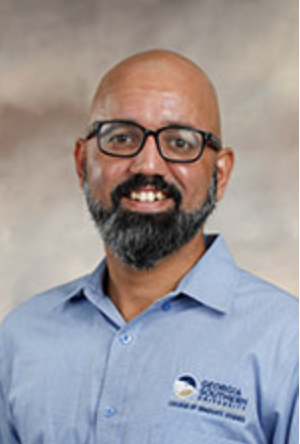
The National Science Foundation awarded nearly $3 million to Georgia Southern University to launch the Research and Mentoring for Postbaccalaureates (RaMP) program. At each university, RaMP supports approximately 10 students per year in gaining full-time research experience, mentoring for potential career paths and building a network of professional contacts. Georgia Southern’s project, “Mentoring and Research Opportunities for Careers in Coastal Science (MROC2S),” aims to aid those with little to no exposure to research or the resources to do so. Checo Colón-Gaud, Ph.D., associate dean of the Jack N. Averitt College of Graduate Studies and principal investigator for a National Science Foundation grant, totaling almost $3M, that will be used for a research and mentoring program. “The target is to benefit underrepresented minority students to increase diversity in the STEM (science, technology, engineering and mathematics) fields,” said Checo Colón-Gaud, Ph.D., associate dean of the Jack N. Averitt College of Graduate Studies and the project’s principal investigator (PI). Beginning in August 2024, participating students will be given an annual stipend. The postbaccalaureate fellows will have the opportunity to learn regional-specific natural resource science and participate in meaningful training with their peers before entering the field. “It would benefit those who are not yet sure if they want to pursue careers in natural resource science or graduate studies after earning their undergraduate degree,” Colón-Gaud added. Georgia Southern’s awarded fund will extend through 2027, and with 10 participants at a time, Colón-Gaud anticipates that this “significant and transformative” experience should strengthen the workforce. Interested in learning more about the Research and Mentoring for Postbaccalaureates (RaMP) program or looking to talk with Checo Colón-Gaud? Contact Georgia Southern's Director of Communications Jennifer Wise at jwise@georgiasouthern.edu to arrange an interview today.


An interdisciplinary team from Georgia Southern University was awarded more than $465,000 from the National Academies of Sciences, Engineering, and Medicine to foster the development of scientific and environmental skills that are critical to solving complex issues in the Gulf of Mexico region now and into the future. The award is part of an initiative with the Gulf Research Program (GRP) that awarded $2 million to eight projects that engage children and youth in place-based educational activities. The funded project, “Suwannee Watershed: Assessment and Monitoring of Place to Gain Understanding of Local Flow (SWAMP to GULF),” is led by principal investigator (PI) Lacey Huffling, Ph.D., associate professor of science education, and co-PIs Heather Scott, Ed.D., and Regina McCurdy, Ph.D., both assistant professors of science education. (l-r) College of Education’s Lacey Huffling, Ph.D., Regina McCurdy, Ph.D., and Heather Scott, Ed.D., are part of an interdisciplinary team awarded $465k to train science teachers in the Gulf of Mexico. “I am honored that we were selected to receive funding from the Gulf Research Board,” said Huffling. “Over the past four years, we have developed a strong network of Georgia middle and high school teachers who are dedicated to developing the science and environmental literacy of their students through watershed citizen science, specifically focused on areas of Georgia that flow into the Gulf of Mexico. We are excited to continue to grow this network of teachers in Florida further to foster scientific and environmental literacy of future generations to monitor and advance scientific and community understanding of the Lower Suwannee Watershed.” The group will train and support teachers in Florida to implement place-based learning through citizen science using communities as classrooms to deepen teachers’ and students’ sense of place and connection to local watersheds; research how teachers and students address local issues and solve problems by using and developing their critical environmental agency; and increase participation of rural populations in science, which have historically been underrepresented. This initiative, along with the seven other GRP projects, will help connect young learners across the Gulf of Mexico region with local environmental issues and work toward the betterment of the region at large. “The goal of these grants is to empower young learners through place-based education, an interdisciplinary, student-centered, inquiry-driven teaching and learning practice situated in the local community and environment,” said Karena Mary Mothershed, senior program manager for the GRP’s Board on Gulf Education and Engagement. “These eight projects have a high potential to create long-lasting impacts on underserved students in grades K-8 across the Gulf of Mexico region, enabling them to consider and address environmental challenges impacting their own communities.” Additional SWAMP to GULF project members include Georgia Southern staff and faculty: Mary Thaler, senior administrative assistant for the Center for STEM Education; J. Checo Colón-Gaud, Ph.D., professor of biology and associate dean of the Jack N. Averitt College of Graduate Studies; Shainaz Landge, Ph.D., assistant professor of chemistry, Luke Roberson, coordinator of Community Engagement and Outreach for the Institute of Water and Health; and Asli Aslan, Ph.D., director of the Institute of Water and Health. Interested in learning more? Contact Georgia Southern's Director of Communications Jennifer Wise at jwise@georgiasouthern.edu to arrange an interview today.

• Rice straw could be a fuel of the future in rural Philippines • Across Asia 300 million tonnes of rice straw go up in smoke every year • New proposals includes scaling up harvesting system with straw removal, biogas-powered rice drying and storage and efficient milling. An Aston University bioenergy researcher has been explaining how rice straw could be a fuel of the future in rural Philippines. Dr Mirjam Roeder who is based at the University’s Energy & Bioproducts Research Institute (EBRI) is collaborating with the UK company Straw Innovations Ltd, Southeast Asian Regional Center for Graduate Study and Research in Agriculture (SEARCA) and Koolmill Systems Ltd to showcase their research. The Food and Agriculture Organisation (FAO) states that rice is the number one food crop globally and 91% of it is produced and consumed in Asia. As a crop it is responsible for 48% of global crop emissions and for every kilogram of rice, a kilo of straw is produced. Across Asia 300 million tonnes of rice straw go up in smoke every year when burnt after harvest, releasing emissions and air pollutants that triple risks of increased respiratory diseases and accelerate climate change. To raise awareness of sustainable uses for rice straw Dr Roeder has travelled to the sixth International Rice Congress in Manila, Philippines to explain the potential of the emerging technology. Rice straw is an underdeveloped feedstock and can be collected and digested to produce biogas, unlocking sustainable straw management options and renewable energy for farmers using anaerobic digestion (AD) from rice straw. Dr Roeder has been working with Straw Innovations on their UK Innovate project demonstration facility in the Philippines, the Rice Straw Biogas Hub, which is scaling up a complete harvesting system with straw removal, biogas-powered rice drying and storage, together with efficient milling. Craig Jamieson, Straw Innovations said: “The International Rice Congress is only held every four years and is a key event for coordinating and tracking progress in rice research. “Our partnership with Aston University and SEARCA adds independent, scientific rigour to the work we do and amplifies our message to government policy makers. We are grateful to Innovate UK for their ongoing support through the Energy Catalyst Programme, which is accelerating our development.” At the conference Dr Roeder has been explaining how independent environmental and social research can increase farmer incomes, equality of opportunity, food security and decarbonisation benefits. She said: “Engaging with stakeholders and working in partnership across organisations is vital to the successful adoption of new technologies. I am delighted to have had the opportunity to host an event with our project partners at this prestigious conference, bringing the cutting-edge research of using rice straw for clean energy to the forefront of the rice research community and supporting the pathway to net zero.” Dr Glenn B Gregorio, Center Director of SEARCA, added: "We are gaining insights into the environmental impact of rice straw utilisation and implementing policies to unleash its potential to empower us to make informed decisions that are instrumental to climate change mitigation and decarbonisation," Professor Rex Demafelis, University of the Philippines, is also working with SEARCA and is leading the project on life cycle analyses and measurements of rice straw greenhouse gas emissions. He said: “Rice straw is a valuable resource, and we are grateful to be part of this team which seeks to harness its full potential and promote circularity, which would ultimately contribute to our goal of reducing our greenhouse gas emissions.” ENDS The Supergen Bioenergy Hub works with academia, industry, government and societal stakeholders to develop sustainable bioenergy systems that support the UK’s transition to an affordable, resilient, low-carbon energy future. The Hub is funded jointly by the Engineering and Physical Sciences Research Council (EPSRC) and the Biotechnology and Biological Sciences Research Council (BBSRC) and is part of the wider Supergen Programme. For further information contact Rebecca Fothergill and Catriona Heaton supergen-bioenergy@aston.ac.uk Follow us on Twitter @SuperBioHub Visit our website at supergen-bioenergy.net Visit our YouTube Channel to watch the video on Carbon Balance FAO: RICE PRODUCTION IN THE ASIA-PACIFIC REGION: ISSUES AND PERSPECTIVES - M.K. Papademetriou* (fao.org) https://www.fao.org/3/x6905e/x6905e04.htm About Aston University For over a century, Aston University’s enduring purpose has been to make our world a better place through education, research and innovation, by enabling our students to succeed in work and life, and by supporting our communities to thrive economically, socially and culturally. Aston University’s history has been intertwined with the history of Birmingham, a remarkable city that once was the heartland of the Industrial Revolution and the manufacturing powerhouse of the world. Born out of the First Industrial Revolution, Aston University has a proud and distinct heritage dating back to our formation as the School of Metallurgy in 1875, the first UK College of Technology in 1951, gaining university status by Royal Charter in 1966, and becoming The Guardian University of the Year in 2020. Building on our outstanding past, we are now defining our place and role in the Fourth Industrial Revolution (and beyond) within a rapidly changing world. For media inquiries in relation to this release, contact Nicola Jones, Press and Communications Manager, on (+44) 7825 342091 or email: n.jones6@aston.ac.uk

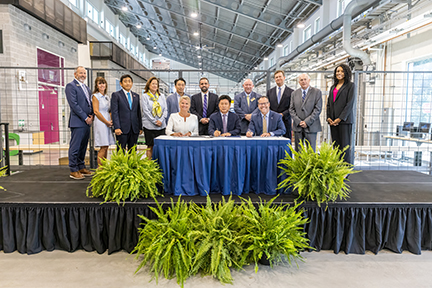
In a milestone collaboration aimed at fostering workforce development, innovation, and community enrichment, Hyundai Motor Group Metaplant America (HMGMA), Georgia Southern University and Ogeechee Technical College are signing a formal agreement to work together in addressing regional workforce needs while advancing academic excellence and technological innovation. Ogeechee Technical College President Lori Durden, HMGMA CEO and President Oscar Kwon, and Georgia Southern University President Kyle Marrero sign transformative agreement surrounded by officials from both institutions and HMGMA. The partnership will encompass a diverse range of initiatives that reflect the shared commitment HMGMA and its local education partners have to catalyze positive change for both the academic community and the broader society. Leveraging their respective strengths, this collaboration aims to address workforce demands, create transformative educational pathways, and drive impactful research endeavors. “Together, we are not just building cars; we are building futures, strengthening the community and driving progress,” said HMGMA CEO Oscar Kwon. “That is part of Hyundai’s mission: progress for humanity. Our partnership with these institutions reflects our shared vision for a brighter, more innovative future.” As part of this partnership, Georgia Southern University has committed to build on the success it has already seen in recruitment services for HMGMA. These services will include on-campus information sessions, dedicated company recruiting events, and on-campus interview days for graduating seniors. By bridging the gap between academia and industry, the University is ensuring that its students are well-prepared for the demands of the professional world. The university also will offer professional development certifications and courses for the company’s employees through its Continuing and Professional Education programs. “This partnership stands as a testament to the value of collaboration between academia and industry in driving holistic growth,” said Georgia Southern President Kyle Marrero. “By uniting forces, HMGMA and Georgia Southern University are forging a path that not only elevates educational opportunities but also cultivates a thriving community equipped to meet the challenges and opportunities of the future.” Georgia Southern also will strengthen its alliance with Ogeechee Technical College to create revised and expanded articulation agreements, pathway programs, and credit transfers. These initiatives will pave the way for the development of collaborative academic programs tailored to meet the specific workforce needs of the region. This includes exploring innovative degree pathways such as Advanced Manufacturing Engineering, as well as fostering additional academic collaborations that align with workforce-driven educational programs. Ogeechee Tech’s commitment includes continuing its record of providing training to local companies to include implementing the Electric Vehicle Professional Technical Certificate of Credit and Hybrid/Electric Vehicle Repair Technician Technical Certificate of Credit programs, and developing Industrial Maintenance Noncredit Training for HMGMA Employees. Additionally, Ogeechee Tech agrees to provide on-campus recruitment events and career fairs to current and past graduates. “Ogeechee Technical College is very excited about entering into this MOU with HMGMA,” said Lori Durden, president of Ogeechee Tech. “This has been several months in the making, and like other institutions and technical colleges in our region, we are going to do all that we can to support the efforts of our Governor to make Georgia the electric mobility capital of America. This is an exciting day for Ogeechee Technical College, and we look forward to supporting the evolving workforce development needs of this region.” With the Memorandum of Understanding, HMGMA will help promote educational opportunities in the region; develop internship, career pathway programs, and other appropriate work-based learning opportunities; and commit to exploring potential research, innovation, and commercialization projects. Interested in learning more or looking to talk with Georgia Southern President Kyle Marrero about this exciting new partnership ? Contact Georgia Southern's Director of Communications Jennifer Wise at jwise@georgiasouthern.edu to arrange an interview today.

It's a fabulous fall - and our expert can explain why all those colors come out this time of year
Autumn has arrived. And as we all take time to welcome this wonderous palette that nature delivers year after year, those who are curious about all those colors are looking for answers. Why there are so many different shades, tints, and tones? What causes the colors to change? And where's the best place to find one of nature's finest displays of leaves? It's a topic that comes up every year, and recently Connecticut Public Radio connected with UConn's Bob Fahey to get some of the answers about autumn in New England. I ventured into a forest in northeastern Connecticut with two UConn tree experts. We met up at Horsebarn Hill, one of the best viewpoints in the state, surveying a rolling river valley showing off with fall colors. We see oaks just starting to turn red. Nearby hickories provide a dash of yellow – and, of course, the maples are already stealing the show, even on a cloudy day. Here’s what I found out: Our trees are diverse One reason the foliage is so good is simply due to the number of species we have. “We have a very diverse hardwood forest in this part of New England,” said Bob Fahey, an associate professor and forest ecologist at UConn. “We have both species that are more southern species and also some of the more northern species.” “In comparison to say, the Mid-Atlantic or other places that have lots of deciduous species, we have maples, which are just the best,” he said. “We also have a number of species that have nice yellow foliage,” he said. “Birches and beech. If you go a little bit farther south from here, mostly what you have is oaks. And oaks can have good fall foliage colors, but there are a lot of times they don't and they don't last for as long.” We have lots and lots of trees The diversity of species provides a diversity of color, said Tom Worthley, an associate extension professor and a forester at UConn. He asked me to remember the last time I flew over Connecticut. What did you see, he asked. Lots of trees, right? “Most of the ground is covered by a tree canopy,” Worthley said, noting that some estimates put that tree canopy cover at around 75% of the land area of the whole state. “Back where we were standing a few minutes ago, we had some cherry trees,” Worthley said, his eyes scanning the trees enveloping us. “There's a few remnant ash, there's some walnut around the edges here. And let's see, some hickory.” A walnut tree towers over us – and there are even some white pines. It’s that varied bioscape that sets New England forests apart. “Even in my two-acre forest behind my house, I have 22 different species of tree, which is more than some regions of the northern part of the U.S.,” Fahey said. Travel to the west, and what you’re likely to see are lots of evergreens and aspen trees. “Not that there aren't others, there are plenty of others, but not in the same abundance and not in the same kind of mix that we have around here,” Worthley said. Climate plays a role Across New England are rolling hills with microclimates that can contribute to vibrant fall colors. “You’ll see ... highly different color in different parts of the landscape, which has to do with temperature differences,” Fahey said. Combine that with Connecticut’s mix of southern and northern species and the colors here might not be as exciting and bright as what you would see in Vermont and New Hampshire, Fahey said. But our foliage season can sometimes last a little bit longer. One reason? Oaks. “We have so much more of that oak component,” Fahey said. “The oaks will hold their leaves until the end of October.” Moisture, temperature and the amount of daylight all contribute to how long it takes for a tree to shed its leaves. And, for each species, the calculation is different. “A tree makes an economic decision,” Worthley said. “It decides, ‘Well, it's costing more in energy to keep these leaves going than what they're producing for me and so it's time to shut them off.’” Why do leaves fall anyway? It’s when leaves are green that the most important work is happening, pulling carbon out of the atmosphere and giving us oxygen. And for that green color, we can thank the pigment chlorophyll. “The color that's in the leaves – is always there from the time the leaf is grown,” Worthley said. “As the growing season fades, the chlorophyll disappears,” he said. Then the other colors in the leaf can begin to show off. Pigments like anthocyanins (reds and purples) and carotenoids (yellows and oranges) peek out, tiny threads in an autumnal blanket transforming New England’s green forests into a richly colored landscape. The colors are out - but only for a limited time. If you're a journalist looking to know more about this topic before all the leaves fall, then let us help. Dr. Fahey is an Associate Professor in the Department of Natural Resources and the Environment and Center for Environmental Sciences and Engineering at the University of Connecticut. He is also the George F. Cloutier Professor in Forestry, director of the UConn Forest, and associate director of the UConn Eversource Energy Center. Simply click on his icon now to arrange a time to talk today.


Preparing the clean hydrogen workforce
The University of Delaware will play a leading role in workforce development efforts associated with the Mid-Atlantic Clean Hydrogen Hub (MACH2), which has been selected by the U.S. Department of Energy to receive up to $750 million in funding through the historic Regional Clean Hydrogen Hubs program. MACH2 was chosen as one of seven hydrogen hubs, totaling up to $7 billion in grants, announced by the Energy Department on Oct. 13. In stiff national competition, MACH2 ranked among the most pro-labor and greenest hubs in the nation, according to the Delaware Sustainable Chemistry Alliance (DESCA), which brokered the proposal, involving industries, academic institutions, local governments and community partners from across Delaware, southeastern Pennsylvania and South Jersey. Hydrogen is the most abundant element in the universe, and the Energy Department is working to accelerate its use as a clean energy source and as a means to decarbonize heavy industry, transportation and energy storage to meet President Biden’s goal of a 100% clean electrical grid by 2035 and net-zero carbon emissions by 2050, with the regional hydrogen hubs leading the way. MACH2 will encompass a network of hydrogen producers, consumers, local connective infrastructure for hydrogen deployment, and the education and training needed to develop the region’s clean energy workforce. UD will lead the higher education component of MACH2’s workforce development with Cheyney University, Rowan University and the University of Pennsylvania. MACH2 is projected to create 20,000 well-paying jobs in the production, delivery and use of zero-emission hydrogen to repower the region’s industrial facilities, transportation systems and agriculture sectors. What kinds of jobs will MACH2 help prepare people for? There will be a need for technicians for hydrogen-powered vehicles, construction workers for installing hydrogen pipelines, fuel cell power system operators, hydrogen production plant managers, and directors of research and development (R&D) programs, to name a few. Some of these roles may require a high school diploma and an apprenticeship or specific credential; others may require a college degree, from bachelor’s to master’s to Ph.D. Yushan Yan, the Henry Belin du Pont Chair in Chemical and Biomolecular Engineering at UD, will direct the hub’s higher education workforce development efforts. This work will complement high school, vo-tech and community college training programs in energy and construction that will be expanded through the hub, along with pre-apprenticeship programs, particularly those that recruit from underserved communities, offered by building trade unions. “The University of Delaware and our collaborators at Cheyney, Rowan and Penn are well-poised to prepare students for rewarding careers in the new hydrogen economy,” Yan said. “Several engineering, energy and hydrogen programs are already in place at our institutions and will be expanded through the hub, offering students exciting opportunities.” UD will enhance hydrogen technology training at the master’s level through a new “4+1” master’s degree in electrochemical engineering, which would allow highly qualified undergraduate students to earn a bachelor’s degree in an area such as chemical and biomolecular engineering or mechanical engineering and then continue on to earn a master’s degree in electrochemical engineering in the fifth year.


From Sci-Fi to Reality: Nanoscale Materials Pave the Way for High Precision Disease Treatment
Imagine being able to create something smaller than the size of a single strand of hair that can help treat cancer at the cellular level. Sounds like something out of a science fiction novel or movie, right? Wrong. Emily Day, with the Department of Biomedical Engineering at the University of Delaware is doing just that. Her lab innovates nanomaterials (materials with single units measuring between 1 and 100 nanometers) that enable more high precision treatment of cancer, blood disorders and other diseases. She also studies how these nanoparticle interact with with our bodies on both the subcellular-level and whole-organism level. Day has been recognized with an NSF CAREER Award along with dozens of other awards and grant honors. She is available to talk about her research and can be contacted by clicking her profile.

Expert explainer - Storm Daniel and the Libya flooding
Expert: Dr Kiran Tota-Maharaj Reader in Civil & Environmental Engineering (Water and Environmental Engineering) College of Engineering and Physical Sciences, Aston University 1/ Do we have any basic measures on the volume of precipitation that triggered the collapse of the two dams that flooded Derna? How much rain over what period of time? Are there adequate records to put that in historical context? Were any records broken? Storm Daniel has the characteristics of a tropical depression, approximately 170 millimetres (6.7 inches) of rainfall occurred fell in Libya. Torrential rains of between 150 - 240 mm caused flash floods in several cities, including Al-Bayda, which recorded the highest rainfall rate of 414.1 mm. 2/ Do we know anything about the dams that failed? Where they old, near the end of their expected lifespan? Were they known to be fragile in any way? To what extent, in other words, might this have been a disaster waiting to happen? Flash floods, which is considered as one of the worst weather-related natural disasters are highly unpredictable following brief spells of heavy rain. This region in Libya is subjected to flash floods, where floods from the mountains causing heavy damage to hydraulic structures and features of Dams. These floods are made up of sudden, unexpected and heavy rains or a strong surge of water, which usually hit the steep sloped mountainous catchments and have inundated many regions in Libya. The sweeping flash floods also led to the death of many residents and great losses of property. Entire neighborhoods in Derna disappeared, along with their residents swept away by water after two ageing dams collapsed making the situation catastrophic and out of control, the city of Derna is surrounded by mountains, so the flash flooding occurred quite rapidly, taking over with surface-water levels rising as high as 3 metres (10 feet). Engineers have previously issued warnings about the risks of these dams bursting and the urgent need to strengthen their defenses, which unfortunately didn’t occur. Early Warning Systems (EWS)- which are effective ways to reduce the risks of flash floods have not been properly implemented. When EWS are issued before a flash flood event, additional time is created to take action and save lives and infrastructure. The unexpected arrival of a flash flood in Libya, combination with its force, limited understanding of the risks and small space-time scales provide explicit challenges for the development and implementation of an EWS system for flash floods. 3/ There is speculation about many thousands of deaths. Is this attributable almost entirely to the failed dams? Or was there massive and deadly flooding beside that? Thousands of people’s lives have been sadly lost after the massive flood ripped through the city of Derna as a result from the heave storm conditions and excessive rainfall. There have been several areas severely affected by widespread flooding, damage to infrastructure, and loss of life. The disastrous flooding event is likely the cause of the two dams’ collapses, making thousands of residents of the valley and the city of Derna, Libya vulnerable as a result of the storm. Entire neighbourhoods of Derna by the bank of the swollen river had been ravaged and washed away. For further details or to interview Dr Tota-Maharaj, contact Nicola Jones Press and Communications Manager, Aston University, Birmingham, UK n.jones6@aston.ac.uk or Mobile: (+44)7825 342091