
Experts Matter. Find Yours.
Connect for media, speaking, professional opportunities & more.

Researchers fight cybercrime with new digital forensic tools and techniques
Irfan Ahmed, Ph.D., associate professor of computer science, provides digital forensic tools — and the knowledge to use them — to the good guys fighting the never-ending cyber-security war. Ahmed is director of the Security and Forensics Engineering (SAFE) Lab within the Department of Computer Science and VCU Engineering. He leads a pair of interrelated projects funded by the U.S. Department of Homeland Security (DHS) aimed at keeping important industrial systems safe from the bad guys — and shows the same tools crafted for investigating cyber attacks can be used to probe other crimes. The goal of cyber attacks on physical infrastructure may be to cause chaos by disrupting systems and/or to hold systems for ransom. The SAFE lab focuses on protecting industrial control systems used in the operation of nuclear plants, dams, electricity delivery systems and a wide range of other elements of critical infrastructure in the U.S. The problem isn’t new: In 2010, the Stuxnet computer worm targeted centrifuges at Iranian nuclear facilities before getting loose and infecting “innocent” computers around the world. Cyber attacks often target a portion of the software architecture known as the control logic. Control logic is vulnerable in that one of its functions is to receive instructions from the user and hand them off to be executed by a programmable logic controller. For instance, the control logic monitoring a natural gas pipeline might be programmed to open a valve if the system detects pressure getting too high. Programmers can modify the control logic — but so can attackers. One of Ahmed’s DHS-supported projects, called “Digital Forensic Tools and Techniques for Investigating Control Logic Attacks in Industrial Control Systems,” allows him to craft devices and techniques that cyber detectives can use in their investigations of attacks on sensitive critical infrastructure. Their investigation capabilities, he explains, is an under-researched area, as most of the emphasis to date has been on the prevention and detection of their cyber attacks. “The best scenario is to prevent the attacks on industrial systems,” Ahmed said. “But if an attack does happen, then what? This is where we try to fill the gap at VCU. And the knowledge that we gain in a cyber attack investigation can further help us to detect or even prevent similar attacks.” In the cat-and-mouse world of cyber security, the way cybercriminals work is in constant evolution, and Ahmed’s SAFE lab pays close attention to the latest developments by malefactors. For instance, an attacker may go for a more subtle approach than modifying the original control logic. An attack method called return-oriented programming sees the malefactor using the existing control logic code, but artfully switching the execution sequence of the code. Other attackers might insert their malware into another area of the controller, programmed to run undetected until it can replace the function of the original control logic. Attackers are always coming up with new methods, but each attack leaves evidence behind. The SAFE lab examines possible attack scenarios through simulations. Scale models of physical systems, including an elevator and a belt conveyor system, are housed at the SAFE lab to help facilitate this. The elevator is a four-floor model with inside and outside buttons feeding into a programmable logic controller. The conveyor belt is more advanced, equipped with inductive, capacitive and photoelectric sensors and able to sort objects. The tools and methods applied in cybercrime can be useful in tracking down other malefactors. That’s where Ahmed’s second DHS-funded project comes in. It’s called “Data Science-integrated Experiential Digital Forensics Training based-on Real-world Case Studies of Cybercrime Artifacts.” Ahmed is the principal investigator, working with co-PI Kostadin Damevski, Ph.D., associate professor of computer science. The goal is to keep law enforcement personnel abreast of the latest trends in the field of cybercrime investigation and to equip them with the latest tools and techniques, including those developed in the SAFE lab. “For example, investigators often have to go through thousands of images, or emails or chats, looking for something very specific,” Ahmed said. “We believe the right data science tools can help them to narrow down that search.” The FBI and other law enforcement agencies already have dedicated cybersleuthing units; the Virginia State Police have a computer evidence recovery section in Richmond. Ahmed and Damevski are arranging sessions showing investigators how techniques from data science and machine learning can make investigations more efficient by sorting through the mounds of digital evidence that increasingly is a feature of modern crime.


Society matters LIVE: Lab made meat on the menu?
• Research at Aston University focuses on both creating lab-based meat and its psychological acceptance • Dr Eirini Theodosiou and Dr Jason Thomas will be speaking at April’s Society matters LIVE event • Lab made meat on the menu? will take place at Cafe Artum in Hockley Social Club on Thursday 27 April. Lab made meat will be the topic of the latest Society matters LIVE event from Aston University at Café Artum at Birmingham’s Hockley Social Club on Thursday 27 April. Dr Eirini Theodosiou and Dr Jason Thomas at Aston University are conducting research into lab-made or cultivated meat, both exploring the creation of the meat and the psychological impact of the product. Dr Eirini Theodosiou, senior lecturer in the School of lnfrastructure and Sustainable Engineering, focuses on ways to produce enough cell mass to create the meat. Meanwhile Dr Jason Thomas’ work explores the psychology behind supporting people to accept lab-made food. The research comes as current trends indicate that demand for animal-based foods will increase by 70% in 2050 to feed the predicted 9.8 billion people. Dr Theodosiou said: “Cultivated or lab grown meat offers a safer, more sustainable and animal cruelty-free alternative for consumers. It is a very young industry trying to replace traditional meat production methods however, with 800 million people worldwide suffering from hunger and malnutrition, it is a viable option.” “In addition, the livestock industry is responsible for 12-18% of the total greenhouse gas emissions and is a cause of deforestation. Increased meat production and factory farming are the topmost likely causes of the next pandemic due to the extensive use of antibiotics and increasing emergence of zoonotic diseases.” Dr Thomas said: “It is a relatively new food technology, and much work still needs to be done to make it affordable and on a massive scale. We are interested in finding out what factors can influence consumer purchase of and consumption of lab-made meat.” The event is organised by Aston University and Café Artum at Hockley Social Club as part of the Society matters LIVE series. Free tickets are available at https://www.eventbrite.co.uk/e/lab-made-meat-on-the-menu-tickets-464161147487?aff=ebdsoporgprofile



Ask an Expert: Is the "AI Moratorium" too far reaching?
Recent responses to chatGPT have featured eminent technologists calling for a six-month moratorium on the development of “AI systems more powerful than GPT-4.” Dr. Jeremy Kedziora, PieperPower Endowed Chair in Artificial Intelligence at Milwaukee School of Engineering, supports a middle ground approach between unregulated development and a pause. He says, "I do not agree with a moratorium, but I would call for government action to develop regulatory guidelines for AI use, particularly for endowing AIs with actions." Dr. Kedziora is available as a subject matter expert on the recent "AI moratorium" that was issued by tech leaders. According to Dr. Kedziora: There are good reasons to call for additional oversight of AI creation: Large deep or reinforcement learning systems encode complicated relationships that are difficult for users to predict and understand. Integrating them into daily use by billions of people implies some sort of complex adaptive system in which it is even more difficult for planners to anticipate, predict, and plan. This is likely fertile ground for unintended – and bad – outcomes. Rather than outright replacement, a very real possibility is that AI-enabled workers will have sufficiently high productivity that we’ll need less workers to accomplish tasks. The implication is that there won’t be enough jobs for those who want them. This means that governments will need to seriously consider proposals for UBI and work to limit economic displacement, work which will require time and political bargaining. I do not think it is controversial that we would not want a research group at MIT or CalTech, or anywhere developing an unregulated nuclear weapon. Given the difficulty in predicting its impact, AI may well be in the same category of powerful, suggesting that its creation should be subject to the democratic process. At the same time, there are some important things to keep in mind regarding chatGPT-like AI systems that suggest there are inherent limits to their impact: Though chatGPT may appear–at times–to pass the famous Turing test, this does not imply these systems ’think,’ or are ’self-aware,’ or are ’alive.’ The Turing test aims to avoid answering these questions altogether by simply asking if a machine can be distinguished from a human by another human. At the end of the day, chatGPT is nothing more than a bunch of weights! Contemporary AIs–chatGPT included–have very limited levers to pull. They simply can’t take many actions. Indeed, chatGPT’s only action is to create text in response to a prompt. It cannot do anything independently. Its effects, for now, are limited to passing through the hands of humans and to the social changes it could thereby create. The call for a moratorium emphasizes ‘control’ over AI. It is worth asking just what this control means. Take chatGPT as an example–can its makers control responses to prompts? Probably only in a limited fashion at best, with less and less ability as more people use it. There simply aren’t resources to police its responses. Can chatGPT’s makers ‘flip the off switch?’ Absolutely – restricting access to the API would effectively turn chatGPT off. In that sense, it is certainly under the same kind of control humans subjected to government are. Keep in mind that there are coordination problems – just because there is an AI moratorium in the US does not mean that other countries–particularly US adversaries– will stop development. And as others have said: “as long as AI systems have objectives set by humans, most ethics concerns related to artificial intelligence come from the ethics of the countries wielding them.” There are definitional problems with this sort of moratorium – who would be subject to it? Industry actors? Academics? The criterion those who call for the moratorium use is “AI systems more powerful than GPT-4.” What does “powerful” mean? Enforcement requires drawing boundaries around which AI development is subject to a moratorium – without those boundaries how would such a policy be enforced? It might already be too late – some already claim that they’ve recreated chatGPT. There are two major groups to think about when looking for develop regulatory solutions for AI: academia and industry. There may already be good vehicles for regulating academic research, for example oversight of grant funding. Oversight of AI development in industry is an area that requires attention and application of expertise. If you're a journalist covering Artificial Intelligence, then let us help. Dr. Kedziora is a respected expert in Data Science, Machine Learning, Statistical Modeling, Bayesian Inference, Game Theory and things AI. He's available to speak with the media - simply click on the icon now to arrange an interview today.



Protein engineer to explore route from DNA blueprint to synthetic antibodies – public lecture
Professor Anna Hine will explore how advances in protein engineering have enabled us to make both synthetic antibodies and their replacements Inaugural lecture will take place at Aston University on Tuesday 28 March 2023 at 6.30pm Members of the public may attend in person or online. Professor Anna Hine, a molecular biologist specialising in protein engineering in the College of Health and Life Sciences at Aston University, is to present her inaugural public lecture on Tuesday 28 March 2023. During her lecture, A route to synthetic antibodies (and their replacements), Professor Hine will take the audience from the basics of molecular biology to explaining her inventions in protein engineering, through to examining the ways in which her research is being applied internationally to develop synthetic antibodies. Professor Hine gained her PhD in molecular biology from The University of Manchester Institute of Science and Technology in 1992 and did her postdoctoral training at Harvard Medical School. She returned to the UK to take up a lectureship in molecular biology at Aston University in 1995. Professor Anna Hine, professor of protein engineering, said: “Antibodies are one of our major lines of defence against infection and we can create them very quickly to help incapacitate a multitude of biological invaders. Humans do this by changing the part of the antibody that recognises the invading pathogen, through a process of rapid, natural mutation. Protein engineers have learned to mimic this process in the laboratory to create synthetic proteins – particularly antibodies - for use in both therapy and fundamental research.” “I am delighted to have the opportunity to present our discoveries in a way that I hope will make just as much sense to non-scientists as to a scientific audience.” Similar to the natural mutation of antibodies, protein engineers can make vast numbers of tiny variations of a protein such as an antibody. Professor Hine added: “We will contemplate the vast numbers involved in protein engineering and present how our Aston University-based inventions have made the creation of DNA (and thus protein) ‘libraries’ as efficient as possible. “We will then examine the ensuing problem of how to find the few proteins that we really want from within a protein library. This includes collaborating with experts who specialise in computer-assisted library design and also working with those who have developed the latest methods to search the libraries that we make.” Professor Hine will also show how her latest collaborative projects are starting to move beyond the antibody itself. The lecture will take place at Aston University at 6.00pm for 6.30pm on Tuesday 28 March 2023. It will be followed by a drinks reception from 7.30 pm to 8.00 pm. The lecture is open to the public and free to attend. Places must be booked in advance via Eventbrite.

• Institute of Health and Neurodevelopment to host children’s activities at Birmingham’s science museum Thinktank on Saturday 18 March • British Science Week is a ten-day celebration of science, technology, engineering and maths • Brain Awareness Week highlighted with research showcased in glass box exhibition space on University campus. Aston Institute of Health and Neurodevelopment (IHN) is celebrating British Science Week (10-19 March) and Brain Awareness Week (13-19 March) by hosting an activities day for children at the Birmingham science museum Thinktank, alongside a social media campaign to help educate and inform the public on its latest research. Each year, the British Science Association runs a ten-day celebration of science, technology, engineering and maths called British Science Week. It is closely followed by Brain Awareness Week, a yearly global campaign to increase public awareness of brain research. The week-long celebration is organised by the Dana Alliance with a goal to educate and highlight the importance of research in developing new treatments, preventions and possible cures for brain diseases. Both campaigns align closely with the work of the Aston Institute of Health and Neurodevelopment, with the Institute’s researchers keen to use the week to host activities and share their research and information about the brain health with the public. Activities to highlight both British Science Week and Brain Awareness week include a social media campaign sharing research updates from members and surprising brain facts on Twitter (@Aston_IHN), a brain research exhibition in the glass box space in the Aston University main entrance, as well as an activity session at the Birmingham science museum Thinktank in Millennium Point. The meet and greet with IHN researchers will take place on Saturday 18 March between 11.00 and 16.00. Children and families can speak to researchers about their work and take part in interactive activities, such as memory games and eye-tracking experiments. Professor Jackie Blissett, co-director of IHN said: “British Science week and Brain Awareness week are really important campaigns for us. Brain Awareness week is the perfect time to showcase our research and engage with the public on what we do here at IHN. “We work in close collaboration with the NHS to help research potential treatments for children who experience a range of brain related conditions. We put children at the heart of what we do, with the aim of unlocking the potential of research to support children’s health and development as well as answering the questions that matter to children, their families and the services that support them.” Visitors to the exhibition on the Aston University campus are encouraged to share their thoughts about the exhibition and their pictures on Twitter, tagging @Aston_IHN. For more information about Aston Institute of Health and Neurodevelopment visit its website and for more information about studying psychology and neuroscience at Aston University visit our course pages.


AI-powered cruise control system may pave the way to fuel efficiency and traffic relief
The CIRCLES Consortium, consisting of Vanderbilt University, UC Berkeley, Temple University and Rutgers University-Camden, in coordination with Nissan North America and the Tennessee Department of Transportation, concluded a five-day open-track experiment on Nov. 18. Congestion Impacts Reduction via CAV-in-the-loop Lagrangian Energy Smoothing (CIRCLES) Researchers tested an AI-powered cruise control system designed to increase fuel savings and ease traffic using 100 specially equipped Nissan Rogue vehicles. The experiment—which ran from Nov. 14 through Nov. 18 on a sensor-filled portion of Interstate 24—is based on the results from an earlier, closed-track study where a single smart vehicle smoothed human-caused traffic congestion, leading to significant fuel savings. A single AI-equipped vehicle could influence the speed and driving behavior of up to 20 surrounding cars, causing a kind of positive ripple effect in day-to-day traffic. The CIRCLES Consortium will spend the next several months analyzing data collected on the AI-equipped vehicles and their impact on the flow of traffic over the duration of the experiment. The test was conducted on the recently opened I-24 MOTION testbed, the only real-world automotive testing environment of its kind in the world. Stretching for four miles just southeast of downtown Nashville, the smart highway is equipped with 300 4K digital sensors capable of logging 260,000,000 vehicle-miles of data per year. The CIRCLES Consortium research is supported by the National Science Foundation and the U.S. Departments of Transportation and Energy. Support was also provided by Toyota North America and General Motors. The experiment included Toyota RAV4 and Cadillac XT5 vehicles. Preliminary vehicle and traffic flow detection in the I-24 Mobility Technology Interstate Observation Network (MOTION). “On November 16 alone, the system recorded a total of 143,010 miles driven and 3,780 hours of driving. The I-24 MOTION system, combined with vehicle energy models developed in the CIRCLES project, provided an estimation of the fuel consumption of the whole traffic flow during those hours. The concept we are hoping to demonstrate is that by leveraging this new traffic system to collect data and estimate traffic and applying artificial intelligence technology to existing cruise control systems, we can ease traffic jams and improve fuel economy,” the CIRCLES team said in a joint statement. “Nissan has always been a pioneer in automotive innovation, and with our long-term vision, Nissan Ambition 2030, we know our future is autonomous, connected and electric,” said Liam Pedersen, deputy general manager at the Nissan Alliance Innovation Lab in California’s Silicon Valley. “CIRCLES shares our common goal of building a safer, cleaner world by empowering mobility.” “When it comes to transportation and mobility in Tennessee, we are at a critical juncture,” said Deputy Governor and TDOT Commissioner Butch Eley. “Traffic congestion is now becoming more prominent throughout Tennessee, and not just in urban areas. Addressing these challenges will force us to think critically about solutions, as transportation infrastructure projects traditionally are not identified nor completed before traffic congestion more dramatically affects our quality of life. One of these solutions is greater use of technology to enhance mobility. We are confident that this project and others like it will further strengthen Tennessee’s reputation for being a hub of automotive excellence.” “The I-24 MOTION project is a first-of-its-kind testbed, where we’ll be able to study in real time the impact connected and autonomous vehicles have on traffic in an open road setting,” said Meredith Cebelak, adjunct instructor in civil and environmental engineering at Vanderbilt and Tennessee transportation and transportation systems management and operations department leader at Gresham Smith. “The permanent infrastructure has been designed and installed, meaning the testbed will always be ‘on’ and available to researchers. By unlocking a new understanding of how these vehicles influence traffic, vehicle, infrastructure, and traffic management strategies, design can be optimized to reduce traffic concerns in the future to improve safety, air quality and fuel efficiency.” “Partnership across universities, government and the private sector is the key to pioneering projects like this one,” Vice Provost for Research and Innovation Padma Raghavan said. “From its earliest inception, all the partners in this effort have played vital roles. That trusted collaboration continues as the team analyzes results to seek new insights to address pressing challenges in transportation in Tennessee and beyond.”


Public lecture: how can we have a good future with artificial intelligence?
Public lecture: how can we have a good future with artificial intelligence?AI expert and educator Professor Anikó Ekárt to discuss one of today’s most provocative topics Lecture will take place on 28 February at Aston University Talk to explore artificial intelligence’s capabilities, benefits and pitfalls. The potential impact of artificial intelligence (AI) on our daily lives will be explored in a public lecture at Aston University. The University is inviting the public onto its campus on Tuesday 28 February to hear Professor Anikó Ekárt discuss one of today’s most provocative topics. Research into AI began in the1950s and since then it has played an increasing role in daily lives, such as chatbots and digital assistants. As an AI researcher and educator, Professor Ekárt will take a pragmatic view of the technology, arguing that society will benefit from it – but only if it is used responsibly. She said: “Digital assistants based on speech recognition are now broadly accepted and successfully embedded in many business services. “However, the most recent release of a chatbot with amazing writing capabilities has divided the world; some are relieved that their job may now become substantially easier, but others have questioned the impact of this on education. “In the lecture, I’ll suggest three key directions; responsible use of AI, exploring many AI techniques rather than focusing on just one, and educating the public about AI’s capabilities, benefits and pitfalls.” She will illustrate the success and further potential of less well-known AI techniques, such as evolutionary computation, genetic programming and symbolic regression, based on her 25 years of research. Anikó who is a professor of artificial intelligence, joined Aston University in 2006 as a lecturer. She leads the artificial intelligence research theme within the School of Informatics and Digital Engineering. Her research interests are centred around AI methods and their application, focusing on evolutionary algorithms and genetic programming. She has successfully contributed to applications of AI techniques to health, engineering, transport, and art. In 2022 she was the winner of the Evo* Award for Outstanding Contribution to Evolutionary Computation in Europe. The free event will be taking place on 28 February from 6 pm to 8 pm and will be followed by a drinks reception. To sign up for a place visit https://www.eventbrite.co.uk/e/an-inaugural-lecture-by-professor-aniko-ekart-tickets-516518760517

Aston University professor elected Fellow of Royal Microscopical Society
Professor Igor Meglinski is a physicist, scientist and biomedical engineer He pioneered the application of circularly polarised light for cancer detection His research is at the interface of physics, optics and imaging modalities. Igor Meglinski, professor of mechanical, biomedical and design engineering in the College of Engineering and Physical Sciences at Aston University, has been elected as a Fellow of the Royal Microscopical Society (RMS). Professor Meglinski is a physicist, scientist, and biomedical engineer whose research interests are at the interface between modern physics, optics and imaging modalities, focusing on the exploration of novel photonics-based phenomena and their implementation to practical applications in medicine, biology, life sciences and health care industries. Among other achievements, Professor Meglinski pioneered the application of circularly polarised light for cancer detection. best known for his development of fundamental studies and translation research dedicated to imaging of cells and biological tissues utilising polarised light, dynamic light scattering and computational imitation of light propagation within complex tissue-like scattering medium. His current research projects include the application of coherent polarised light for cancer diagnosis, functional imaging of blood and lymph flows, neuroimaging and brain malformation studies. He is also exploring human visual perception of polarised light and helical wave fronts, the fundamentals of shaped light with orbital angular momentum and quantum entanglements transfer in turbid tissue-like scattering medium, screening of cells, cell’s organelles and cells interaction. He has authored and co-authored more than 400 scientific papers and presented over 800 presentations at major international conferences in the field, including over 200 keynote and plenary talks and invited lectures. The Royal Microscopical Society is a learned society dedicated to the promotion and development of microscopy and imaging. Its members come from a wide range of backgrounds, including undergraduates, research students, users of microscopy in industry and academia, microscopy manufacturers and suppliers and research leaders in their various fields within the biological and physical sciences. Professor Igor Meglinski said: “I was delighted to be invited to become a Fellow of the Royal Microscopical Society. “It is always a pleasure to be recognised for your work, such as my recent research which could provide a more accurate method of blood flow diagnosis in skin to help people with diabetes.”
Aston University gears up to celebrate 50 years of transport education
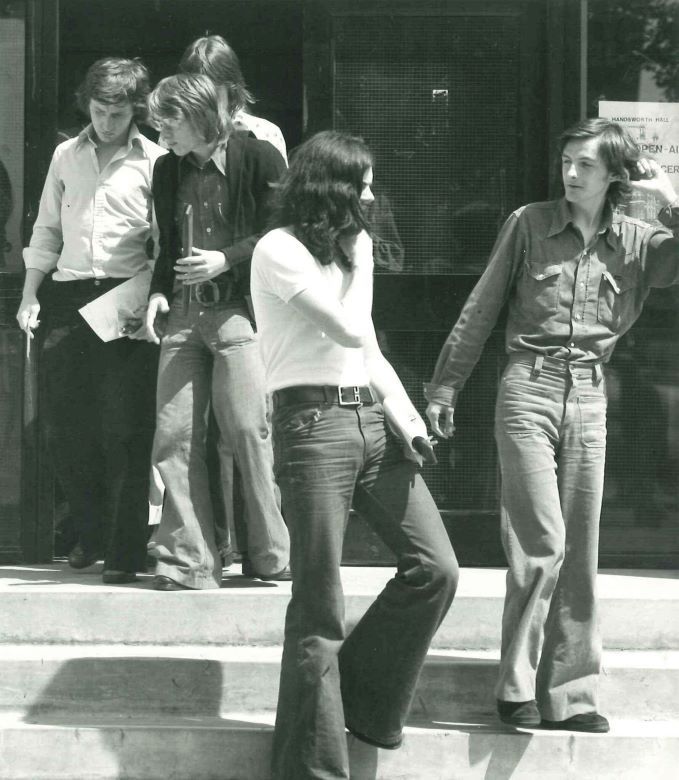
Aston University calls for former transport students to get in touch 2023 marks half a century of transport studies at the University First transport course ran in 1973. Aston University is asking former students to get in contact to help celebrate 50 years of transport education. This year marks half a century of transport studies at Aston University, dating back to 1973 when the subject first appeared as part of a combined honours degree course, with the first transport graduates completing in 1976. In 1982-3 the course became a degree in its own right and 40 years later is still teaching the transport professionals of the future. Aston University is currently the only UK institution to offer a dedicated transport management degree, BSc Transport Management, and a BSc Transport Planning degree apprenticeship. During the past five decades the course has produced graduates equipped with the skills, knowledge and experience needed across the transport sector. Dr Lucy Rackliff, programme director and head of the department of Engineering Systems & Supply Chain Management, said: “Generations of our students have contributed no end to the UK’s skills in this sector. From rail and road, consultancy and government, there are few areas in the transport sphere that have not been improved by our graduates. “If you studied transport at Aston University, we would love to hear from you with any stories and memories from your student days. And of course, we would love to hear about where your transport career has taken you.” Aston University started life in 1875, and in 1895 become the Birmingham Municipal Technical School, teaching chemistry, physics, metallurgy and electrical engineering. In 1966 it received its royal charter to become a university. If you would like to share where your transport career has taken you please get in touch via LinkedIn https://www.linkedin.com/groups/13582956/ or contact the University’s alumni team at alumni@aston.ac.uk
Public lecture: Be kind - effective design of software with and for real people
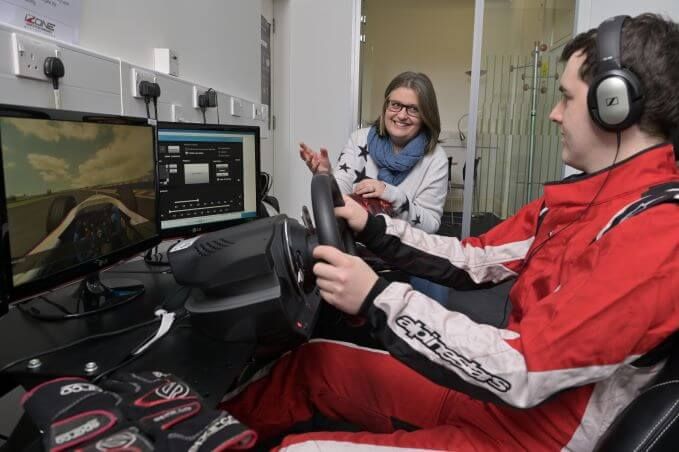
Public lecture: Be kind - effective design of software with and for real people Professor Jo Lumsden to give inaugural lecture on 9 March Will discuss need to approach software design with basic kindness. How software can be designed with kindness at its core is to be explored in a public lecture at Aston University. Professor Jo Lumsden is to give her inaugural lecture Be kind - effective design of software with and for real people on 9 March, which will be open to the public. Professor Lumsden said: “The approach to software development, however admirable, is often dominated by either the domain expert or the engineer who builds the software. “All too often, the voices of the real people who are destined to use the software are overlooked, or age-old techniques are adopted that do not support inclusive design or evaluation of such technologies.” Professor Lumsden will reflect on a wide range of examples which demonstrate novelty, or innovation. These could be in terms of designing with and interaction for end users, and evaluation to ensure feasibility and usability of technology that will be acceptable to end users. Professor Lumsden added: “Technology should be developed to help solve our problems or to improve our lives. “I am passionate about the fundamental need to approach software design with basic kindness. “I hope that the examples I will share in my lecture will inspire others to embrace empathetic approaches to future software design, so that collectively we can realise an effective and acceptable technological future.” Jo Lumsden is professor of human computer interaction in the College of Engineering & Physical Sciences at Aston University where she is also pro vice-chancellor (research integrity), head of the Computer Science Department and director of the Aston Interactive Media Lab. She has worked in research for more than 25 years and her recent work has centred on design and development of mobile assistive technologies which enhance the quality of life of those with special, typically healthcare-related, needs. Her multidisciplinary research brings together technologists, domain experts, and most importantly end users, to co-design technology, empowering end users to ensure their needs are met via the introduction of technology. The free event will be taking place on 9 March from 6 pm to 8 pm and will be followed by a drinks reception. To sign up for a place visit https://www.eventbrite.co.uk/e/an-inaugural-lecture-by-professor-jo-lumsden-tickets-530625183207