
Experts Matter. Find Yours.
Connect for media, speaking, professional opportunities & more.

How Blockchain Can Help Medical Facilities Control the Spread of Coronavirus
In the United States at least 12,000 people have tested positive for COVID-19, and 194 people have died as of Friday, March 20. Villanova College of Engineering professor Hasshi Sudler explains there are two critical areas where blockchain can help control the spread of coronavirus. "As individuals travel across borders, medical facilities need immutable, trustworthy medical data quickly and electronically. A critical requirement to contain coronavirus is to track any individual having tested positive and to track the health of anyone who has come in contact with that individual, even if those encounters were across borders," says Prof. Sudler, an expert on electrical and computer engineering. "The blockchain can be a common source of data that allows medical facilities to share immutable information internationally." Sudler cautions that, with the potential for people to provide false information about symptoms and travel history, medical facilities need a method to share trustworthy data with one another in real-time about individuals tested, their test results and test kits used (as some kits have proven faulty). Another requirement for controlling the spread of the virus is to validate quality medical advice while also identifying misinformation that could be circulating in society. "In the event of a pandemic, misinformation can be extremely dangerous. The public needs a way to confirm official statements made by reputable sources," says Prof. Sudler. While social media may be a popular source of information, it can also be a means of spreading myths, conspiracies and opinions often presented as facts. "The blockchain can serve as a means to verify quality advice the public should follow versus false claims the public should disregard," says Prof. Sudler.


Is This New Potassium Metal Battery Design the Future of Energy Storage?
From cell phones, to solar power, to electric cars, humanity is increasingly dependent on batteries. As demand for safe, efficient, and powerful energy storage continues to rise, so too does the call for promising alternatives to rechargeable lithium-ion batteries, which have been the dominant technology in this space. Led by Nikhil Koratkar, researchers from Rensselaer Polytechnic Institute have discovered a way to overcome a persistent challenge known as dendrites in order to create a metal battery that performs nearly as well as a lithium-ion battery, but relies on potassium — a much more abundant and less expensive element. “In terms of performance, this could rival a traditional lithium-ion battery,” said Koratkar, an endowed professor of mechanical, aerospace, and nuclear engineering at Rensselaer. While metal batteries have shown great promise, they have also traditionally been plagued by accumulation of metal deposits, called dendrites, on the anode. Over time, Koratkar explains, the conglomerates of potassium metal become long and almost branch-like. If they grow too long, they will eventually pierce the insulating membrane separator meant to keep the electrodes from touching each other and shorting out the battery. Koratkar and his team found that by operating the battery at a relatively high charge and discharge rate, they can raise the temperature inside the battery in a well-controlled manner and encourage the dendrites to self-heal off the anode. The researchers previously demonstrated a similar method of self-healing with lithium metal batteries, but they found the potassium metal battery required much less heat to complete the self-healing process. That promising finding, Koratkar said, means a potassium metal battery could be more efficient, safe, and practical. “I want to see a paradigm shift to metal batteries,” Koratkar said. “Metal batteries are the most efficient way to construct a battery; however, because of this dendrite problem they have not been feasible. With potassium, I’m more hopeful.” This research, recently published in Proceedings of the National Academy of Sciences, is just the latest development in Koratkar's contributions to battery research. He is available to discuss a range of possible futures for energy storage.



Proposed Fracking Ban Sent to U.S. Congress
If passed, bills introduced to the United States Congress could prevent federal agencies from issuing permits for expanded and new fracking in the country. Fracking is the use of a high-pressure fluid, being forced into a well to fracture or pulverize the rock next to a wellbore, to provide a pathway for oil and natural gas to flow and collect. "It's important for people to understand what fracking is and what it is not, and having an informed public is paramount in a democratic society," says the College of Engineering’s Scott Jackson, PhD, visiting assistant professor of chemical engineering. "There is a way to assure that oil and gas wells can be safely drilled and fracked with minimal impact on the environment." Fracking—a step in completing the installation of a gas or oil well—was first done in the 1940s as part of well stimulation in "tight" rock formations. Initially, it was done only in sandstone, not the shale that most people have heard about. "It has been used for more than 70 years prior to the shale revolution without controversy," Dr. Jackson says. Fracking and directional drilling are key technologies that have made the shale revolution possible; the ability to economically extract it has only come to fruition because of fracking and directional drilling. "The U.S. is now the world's largest producer of oil and natural gas. The shale revolution has driven the switch of electricity production from coal to a more environmentally friendly natural gas," says Dr. Jackson. Fracking has been controversial, and contentions concerning cariogenic chemicals being injected into "our fresh water" have been voiced by environmentalists, activists and the general public. Dr. Jackson says there is some basis for these statements, such as that water used in fracking has mostly undisclosed chemicals in it and that some of those chemicals may be carcinogenic. Because of this, Dr. Jackson says relaxing government oversight cannot be allowed. "Enforcing existing regulations and implementing and enforcing new regulations can only assure that oil and gas wells can be drilled and fracked safely with minimal impact on the environment."

Can America’s Infrastructure Withstand The Digital Economy?
When a city like New York is facing a continuous delivery stream of more than 1.5 million packages a day, something has to give. The growing number of sales by Amazon and other online retailers, combined with rapid delivery options, is choking streets within major metropolitan cities. This issue was recently featured in The New York Times — and when the journalists needed an expert perspective, they contacted Rensselaer Polytechnic Institute. Here's an excerpt: The average number of daily deliveries to households in New York City tripled to more than 1.1 million shipments from 2009 to 2017, the latest year for which data was available, according to the Rensselaer Polytechnic Institute Center of Excellence for Sustainable Urban Freight Systems. “It is impossible to triple the amount,” said José Holguín-Veras, the center’s director and an engineering professor at Rensselaer, “without paying consequences.” Households now receive more shipments than businesses, pushing trucks into neighborhoods where they had rarely ventured. And it could be just the beginning. Just 10 percent of all retail transactions in the United States during the first quarter of 2019 were made online, up from 4 percent a decade ago, according to the Census Bureau. — The New York Times, October 28, 2019 If you are a reporter covering this or a similar topic, let our experts help! Professor José Holguín-Veras is the Director of the Center for Infrastructure, Transportation, and the Environment (CITE) at Rensselaer. He is a leading authority in freight transportation and humanitarian logistics. Professor Holguín-Veras is available to speak with media regarding the ongoing difficulties cities are facing as shopping moves online and to the streets. Simply click on his icon to arrange an interview.


Researchers at Rensselaer Can Now 3D Print Skin With Working Blood Vessels
Researchers at Rensselaer Polytechnic Institute have developed a way to 3D print living skin, complete with blood vessels. The advancement, published online in Tissue Engineering Part A, is a significant step toward creating grafts that are more like the skin our bodies produce naturally. “Right now, whatever is available as a clinical product is more like a fancy Band-Aid,” said Pankaj Karande, an associate professor of chemical and biological engineering and member of the Center for Biotechnology and Interdisciplinary Studies (CBIS), who led this research at Rensselaer. “It provides some accelerated wound healing, but eventually it just falls off; it never really integrates with the host cells.” A significant barrier to that integration has been the absence of a functioning vascular system in the skin grafts. Karande has been working on this challenge for several years, previously publishing one of the first papers showing that researchers could take two types of living human cells, make them into “bio-inks,” and print them into a skin-like structure. Since then, he and his team have been working with researchers from Yale School of Medicine to incorporate vasculature. In this paper, the researchers show that if they add key elements — including human endothelial cells, which line the inside of blood vessels, and human pericyte cells, which wrap around the endothelial cells — with animal collagen and other structural cells typically found in a skin graft, the cells start communicating and forming a biologically relevant vascular structure within the span of a few weeks. “As engineers working to recreate biology, we’ve always appreciated and been aware of the fact that biology is far more complex than the simple systems we make in the lab,” Karande said. “We were pleasantly surprised to find that, once we start approaching that complexity, biology takes over and starts getting closer and closer to what exists in nature.” You can watch Pankaj Karande, associate professor of chemical and biological engineering, explain this research here: Pankaj Karande is an associate professor of chemical and biological engineering and member of the Center for Biotechnology and Interdisciplinary Studies (CBIS) at Rensselaer. He is available to speak with media regarding this latest development – simply click on his icon to arrange an interview.


Showcase Your Experts to Generate Media Attention and Grow Business
This blog was initially posted by our friend David Meerman Scott on his blog, read it here Some of your most important assets for securing interest in the media as well as educating your buyers are the experts who work at your organization. As a part of a virtual newsroom or other appropriate place on your site and blog, highlighting your employees is a great way to generate attention. When reporters are looking to quote someone in a story, having a name, photo, bio, and examples of content makes it much more likely they will want to conduct an interview. This is especially true when you are newsjacking. Similarly, when buyers are exposed to the smart people employed at your company, they will be more likely to trust and want to do business with you. Yet most companies feature only the senior management team on the site, not those with particular and interesting expertise. University of Ontario Institute of Technology shines spotlight on faculty researchers For example, the University of Ontario Institute of Technology (UOIT), a public research university located in Oshawa, just outside Toronto, was founded in 2002. That makes it one of Canada’s newest universities. With an enrollment of more than 10,000 students, UOIT offers a range of undergraduate programs, plus graduate programs in science, engineering, health, and information technology. But because it is such a new institution, the marketers and public affairs people at UOIT have to work extra hard to make sure that potential students, donors, partners, and other constituents know about the school. Unlike other universities, UOIT cannot rely on decades of families that send their children and grandchildren to the institution and support it with financial contributions. So one way the school reaches out to new audiences is by promoting with the media the many faculty experts who teach and do research at UOIT. “We focus on the experts within the institution,” John MacMillan, director of communications and marketing at UOIT told me. “We have very few resources, but we have a lot of really interesting people who are focused on very exciting things, like using big data and looking at issues of disability and how it relates to the insurance industry, among other things. We are able to reach the media and people who are organizing conferences or booking speaking engagements.” MacMillan uses the ExpertFile software platform as a way to easily showcase UOIT thought leaders in what they call their Expert Centre. He publishes, promotes, and measures the expert content as a tool to engage business prospects, media, and conference organizers. “We needed to have a way of getting out those important stories that we know are of interest to media, to producers, to editors, but also in many ways to partners, to institutions that might be interested in working with us,” MacMillan says. “And we needed to have a way that did a better job of telling our story to those various groups.” MacMillan started with 26 profiles for faculty in the Expert Centre, and is steadily expanding to a planned goal of 200 profiles. He says that an ideal expert is one who is already comfortable with digital technology. “We’re amplifying the presence of each of those faculty members—whether they are involved in multimedia, whether they have their own websites, or whether they have their own followings—and presenting them in a way that gets some response. Part of their success as faculty members lies in establishing their bona fides with granting authorities or with the government or with others. The Expert Centre augments their legitimacy.” Adding credibility to your newsjacking efforts Having profiles available to the media also helps your newsjacking efforts. When you comment on something that’s newsworthy and a reporter finds it via search, they often want to know biographical information on the person before they quote them. Having a link to the bio of the author of that timely blog post is a great way to add credibility and to increase the liklihood of being quoted. As an example of the action that can come from an Expert Centre profile, MacMillan cites Dr. Isabel Pedersen, an associate professor at UOIT and Canada research chair in Digital Life, Media, and Culture. “She focuses on a sociological perspective of wearable computing devices,” he says. “Her research looks into questions like: ‘When we wear gadgets on our body, how will that shift the reality for us? How will it change the way we interact with other people? How will it allow us to participate in digital culture?’ She is one of the early profiles that we created because she is one of our Canada Research chairs, a distinguished researcher who is working on an area of particular national and international importance.” Dr. Pedersen’s Expert Centre profile contains her bio, photo, links to her Twitter and Google Plus feeds, and a list of past speaking engagements, as well as video content, previews of her book Ready to Wear, and articles she has published. The profile attracted the attention of a reporter from IEEE Spectrum magazine, the publication of the world’s largest professional association dedicated to advancing technological innovation and excellence. “They were working on a story about wearable technology, and they wanted to interview her,” MacMillan says. “That’s a magazine from the U.S. that has a much broader readership than anything we’d be able to position her for, and it came along as a result of somebody seeing her profile and deciding that they wanted to speak with her. That’s an example of where we’ve been able to use our resources in a very efficient way, in a manner that gets a story out well beyond our own physical boundaries and that tells about the uniqueness of the work that’s going on at this university.” A lesson learned from the early days of the UOIT Expert Centre was the importance of having the profiles appear in a consistent voice. “When we started out, our assumption was that the individual faculty members or individual experts would develop their own profiles,” MacMillan says. “We realized that would result in a lack of consistency, so we hired a writer, and her job was specifically to interview our experts and to create a story for each of those experts so that when someone does look at this, they’re looking at a consistent story, a consistent tone, and a consistent brand for the university. I’ve learned from creating our Expert Centre that I share some one of the same challenges as faculty members: if you don’t manage your digital presence actively, someone will do it for you. I like to think that our Expert Centre has helped our faculty to curate their digital content as much as it’s helped our university to strengthen its brand.” The ExpertFile platform Your employees are a great resource for generating interest in the media as well as a way to show potential customers and partners that you are doing interesting work. Showcasing them is easier with the ExpertFile platform, a SaaS application that helps organizations make their experts more visible. In my mind, ExpertFile is to showcasing people what HubSpot is to showcasing content. What’s traditionally held many organizations back is that until now, there hasn’t been an online platform to simply organize the growing base of expert content that is being produced across organizations every day. Yet this content is what many audiences are looking for. They want to easily reference everything from biographies to speaking engagements, to social feeds and multimedia assets. “Experts are a great way to humanize an organization and make it more approachable, yet many marketers struggle with how to best showcase these people online,” notes Peter Evans, founder and CEO of ExpertFile. “Adding expert profiles to various sections of your website such as your media room is an ideal way to create more engagement on your site and drive valuable speaking, media and customer inquiries. Experts are quickly becoming the new frontier for content marketing.” Disclosure: I am on the advisory boards of both HubSpot and ExpertFile. Peter Evans, ExpertFile CEO, is a friend.



Part 2: Collaborating with Faculty Experts: A How-To Guide for Marketing Departments & Deans
In my last blog post, I shared some strategies that marketing departments can use to collaborate with their faculty experts (Read Part I). This post will reveal the final five principles that will help you collaborate with your faculty and get better results. 6. Show Quick Wins to Get Momentum As the old saying goes, “nothing succeeds like success.” We all like to back winners. So while you won’t immediately see massive changes across the board on day one, it’s important to show progress. Expert marketing programs deliver significant results over the long run but you must communicate the early wins you achieve in the first few months to create internal momentum. Remember it’s not just about the numbers. It’s just as important to provide qualitative information on the market interactions you are generating for your experts. For instance look at these early indicators: Contribution – Who’s participating in contributing content to your expert center? Look at key types of files such as publications, videos and presentations. Engagement – Also consider sending stats out to your experts showing which profiles get the most amount of web traffic. Other Results – Speak to activities where you used your expert content to do outbound story pitches to media. Also mention coverage you are getting, or speaking engagements that resulted from inquires received from your expert profiles. For instance, one of our ExpertFile clients, very soon after launching their expert center received an inquiry from a major engineering publication for one of their professors, a direct result of their participation in the Expert Center. Communicating this to other faculty drives engagement. Tip: Send out a quick “Leaderboard” email showing the top five or ten experts who rank highest in completed profiles. This public recognition will get noticed. 7. Opt-In your Experts For Various Research, Writing & Speaking Contributions The famous “help me, help you” quote from Jerry Maguire sums up the importance of collaborating effectively with your experts. They are very busy people; meeting them halfway will ensure mutual success. Get some face time: Emails with requests to send information often will go ignored. Instead invest the time to set up a quick meeting at their office to review and update their expert profile to make sure it’s up to date. Locate new projects that are in progress such as publications or speaking engagements and set a date to check-in with them. Identify Opportunities: Identify their key research interests and passions to see where they can help in contributing to the overall content mix. Organize Your Content Contributions: Build out a list of key areas for each expert where they can “opt-in” to contribute to your expert marketing programs. Think about various areas they can help as a researcher, writer, or speaker for both internal and external events. Remember, there are many jobs to be done across campus that go way beyond media interviews. Identify who can write blog posts, contribute to content in a research capacity, or even review story pitches. Track these commitments and follow up with your experts and you will see the payoff. Many experts want to help, but it’s important to approach them and organize your interactions with them in an efficient manner for success. Content planning frameworks are a great way to track this information. 8. Put Your Experts in the Spotlight Want to see better results from your media relations efforts? Organize your experts based on areas of interest. Once you’ve curated that list, you can align your experts with breaking news events and other opportunities on your editorial calendar. Here’s how it looks: Set up a “Topic Cloud”: List all the areas of interest that your faculty experts want to speak on. Make sure the terms you use are relevant to what journalists are searching for on Google. Start at a high level and then drill down for a structured taxonomy of terms. For instance if you have a medical expert who speaks about ebola you also should index them under the term “infectious disease” as journalists also use this search term when looking for sources. Align Your Experts with an Editorial Calendar: An editorial calendar allows you to plan content well ahead of time so you can promote upcoming research, publications and other announcements. Mapping experts to these events in advance will deliver better quality output and engagement. For example, there are always stories that recur every year, things like tornadoes, taxation, gas prices and the like. Preparing for these stories allows you to have your angle ready, along with creative assets such as images and videos that will engage targeted audiences. With this work already done, you will have time to attend to other pressing matters. Get Ready to Pounce on Breaking News: The benefits of real-time marketing and helping journalists write the next paragraph of a breaking story are immense, but this is a game of speed. Matching the right expert to the right media opportunity requires this type of pre-planning to identify who the go-to people are within your organization. 9. Develop a Scorecard: Identify Some The Expert Metrics You want to Measure Here are the categories you need to pay attention to as you evaluate your progress as an organization: Contribution – Show stats on how you are seeing growth in published content assets. Track the growth in areas such as the number of published expert profiles, % completion of profiles and growth of published content in categories such as videos, PowerPoint presentations, and whitepapers. Engagement – Ask your digital team to provide stats on the number of profile views each expert is receiving monthly. Try ranking some of your top experts and send out a note congratulating them. Also try to spot trends such as traffic spikes related to topics that may be of interest to the media. These metrics can help you decide what topics you focus on when producing content or promoting your experts to journalists. Inquiries – Requests to contact your experts can come from a variety of audiences, and all can be valuable for internal departments ranging from media relations and advancement to recruiting. It’s important to evaluate what types of requests you are receiving. You can sort and route these requests more efficiently with an online form. Some suggested categories you can track include: Media Inquiries Speaking Inquiries Expert Witness Inquiries Student or Parent Inquiries (classify by type i.e. Graduate Students, Foreign Students) Donor Inquiries Partner Inquiries Research Collaboration Inquiries Results – While it can be difficult to close the loop on all requests that you generate from your expert marketing efforts, try linking the source of your inquiries back to results. For instance, if you are doing clip reports, highlight specific media coverage that resulted from your efforts. You should also look at other important data such as student inquiries and donor connections that are made through your expert marketing programs. This will help you justify the return on investment and perhaps allow you to secure additional budget and resources from various groups in the organization who benefit. 10. Make Your Experts Feel Special: Don’t Forget Rewards and Incentives Anyone running a successful expert marketing program will tell you that it’s important to embrace some of the “softer” people skills to get results. It is essential to provide feedback and recognition to contributors to keep them motivated to help you. Remember that your experts are in constant demand, so you are competing for their most limited resource – their time. Here are some key things you should consider when working with your experts: Be Visible: Walk the campus and take an active interest in the work your experts are doing. Face-to-face meetings are an important part of enlisting support. Educate Them on Their Value as Experts: Help your experts understand how their contributions can impact areas related to media coverage, student enrolment, donor and alumni relations, and government and corporate sponsorships. Offer Assistance: Help them manage their online presence in your expert center. Make it as simple as possible to update content such as presentations, videos and speaking engagements. Recognize Key Contributions: Send personal notes to experts to thank them for their help. You can also do a shout out via email to a list of key contributors.

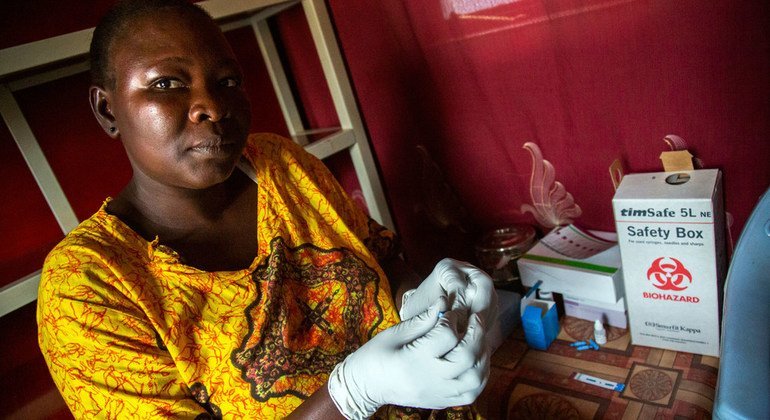
It’s all eyes on Africa as the UN looks to find ways to ensure universal health care for all
It was a historic moment earlier this month as the United Nations and African Union pledged to pursue bolds goals that will strengthen global health and provide health care to all across Africa. “The Memorandum of Understanding we have signed today is an important step towards formalizing the cooperation between WHO and the African Union and to implementing the Addis Ababa Call to Action,” said the WHO chief. “The Addis Ababa Call to Action is a powerful commitment from African Union leaders to increase domestic financing for health, and to hold themselves accountable for that commitment”, he added. Following a political declaration on universal health coverage, which was approved in September by all UN Member States, the General Assembly adopted a global resolution to translate that commitment into reality by legislators in 140 countries. November 18 - UN News It’s indeed a bold declaration and one that will require prevention, infection control and affordable delivery of care. Key UN-AU collaboration specifics Provide technical expertise to the African Medicines Agency and create an environment to foster local production of medicines. Strengthen collaboration between WHO and the Africa Centers for Disease Control and Prevention – with a particular focus on emergency preparedness, to build defenses against epidemics and other health emergencies. Support the implementation of the Addis Ababa Call to Action on universal health coverage and the AU Declaration on Domestic Financing. The prospects are positive, but delivery will be a challenge, and if you are a journalist covering this topic and need an expert source for insight and perspective – let us help. Dr. Saad Bhamla is an Assistant Professor of Chemical & Biomolecular Engineering at the Georgia Tech College of Engineering where he also runs the Bhamla Lab that develops low cost tools for science education and global health. Saad is available to speak to media regarding this topic, simply click on his icon to arrange an interview.



CRISPR is the genetic game changer – but are we ready?
CRISPR is here to stay – and the daily advances of this technology and stem cell therapy seem to be moving at a near exponential speed. “CRISPR Therapeutics of Zug, Switzerland, reported that one patient with sickle cell anemia and another with beta thalassemia appear to have benefited from the same CRISPR-based intervention for up to 9 months, STAT reports. (The company gave STAT an early look at the data but did not allow outside commenters to see the results.) Before the treatment, both patients required multiple infusions each year of red blood cells. CRISPR Therapeutics, collaborating with Vertex Pharmaceuticals, removed blood stem cells from their bodies and modified them with CRISPR to knock out a gene that shuts down production of fetal hemoglobin. When the edited cells were put back in each patient’s body through a stem cell transplant—which required a toxic chemotherapy to kill their own stem cells—both people produced high levels of fetal hemoglobin and no longer needed transfusions.” November 19 – Science Mag CRISPR and how it will shape the future of genetics, health care and society are the subject of great debate, hope and concern and if you are a journalist covering this topic and need an expert source for insight and perspective – let us help. Dr. Michael Davis researches cardiac regeneration, stem cell therapy and preservation at the Georgia Tech College of Engineering where he also is the Associate Chair for Graduate Studies in Biomedical Engineering. Michael is available to speak to media regarding this topic, simply click on his icon to arrange an interview.


A Lego-Like Approach to Improve Nature’s Own Ability to Kill Dangerous Bacteria
The Centers for Disease Control and Prevention considers antibiotic resistance one of the most urgent public health threats, one that affects communities worldwide. The ramifications of bacteria’s ability to become resistant to antibiotics can be seen in hospitals, public places, our food supply, and our water. In their search for solutions, researchers at Rensselaer Polytechnic Institute have been looking to nature. In a paper recently published in Biomacromolecules, the team demonstrated how it could improve upon the ability of nature’s exquisitely selective collection of antimicrobial enzymes to attack bacteria in a way that’s much less likely to cause bacterial resistance. “The idea is that we could take nature’s approach and just make it better,” said Jonathan Dordick, a chaired professor of chemical and biological engineering and a member of the Center for Biotechnology and Interdisciplinary Studies (CBIS). In order for bacteria to grow and live, they naturally produce autolysin enzymes that can break down their own cell walls, allowing those cells to divide and multiply. In attacking one another, bacteria take advantage of a similar process, using an antibacterial protein known as a bacteriocin to kill a bacterium. Bacteria can also be attacked by bacteriophages, which are viruses that infect bacteria. They produce phage endolysin enzymes, which attack the bacterial cell from the inside. All three types of enzymes are broadly known as cell lytic enzymes, as they catalyze the breakdown of the bacterial cell wall. “It’s very difficult for bacteria to become resistant to the action of these enzymes,” Dordick said. “For example, if they became resistant to an autolysin, they wouldn’t divide.” Like building blocks, most cell lytic enzymes are modular. They’re made up of one binding domain which attaches to the cell wall, and a catalytic domain that breaks holes in the cell wall — effectively destroying the targeted bacteria. “The idea was: Could we use a Lego-like approach here? Could we take a binding domain from one enzyme and can we mix it with a binding domain or catalytic domain of another one?” Dordick said. The issue of antibiotic resistant bacteria and disease is a serious one and of great concern to the medical community. If you’re a journalist covering this topic or are looking to know more about the ongoing research into this field – let our experts help. Jonathan S. Dordick is the Howard P. Isermann Professor of Chemical and Biological Engineering at Rensselaer Polytechnic Institute where he is also the Senior Advisor to the President for Strategic Initiatives. Dr. Dordick is available to speak with media regarding this topic - simply click on his icon to arrange an interview.
