Experts Matter. Find Yours.
Connect for media, speaking, professional opportunities & more.
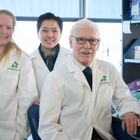
Two rising cancer researchers from ChristianaCare’s Cawley Center for Translational Cancer Research were recognized for outstanding scientific contributions at the University of Delaware’s Annual Biology Research Day Conference on January 30, 2026. The awards highlight the strength and impact of colorectal cancer research underway at the Cawley Center. Anh Nguyen, a third year Ph.D. student, received the conference’s first place poster award for his project, “FGF19/FGFR4 Axis: A Key Driver in Tumor Growth and Treatment Resistance in Colorectal Cancer.” His research explores a signaling pathway that may lead to new strategies for targeting treatment resistant disease. Molly Lausten, a fifth year Ph.D. student, earned third place for her presentation, “Investigating the role of miR 27a 3p in the WNT signaling pathway and chemoresistance in colorectal cancer stem cells.” Her work examines a key microRNA that may influence resistance to therapy, a major challenge in treating aggressive tumors. “These awards reflect far more than individual excellence,” said Bruce M. Boman, M.D., Ph.D., MSPH, FACP, senior scientist and director of Cancer Genetics at the Cawley Center. “They show the power of rigorous, curiosity driven science to move the field forward. Molly and Anh are tackling some of the hardest questions in colorectal cancer, and their success speaks to the innovative environment we are building at ChristianaCare. I could not be more proud of their achievement and their commitment to improving outcomes for patients.”

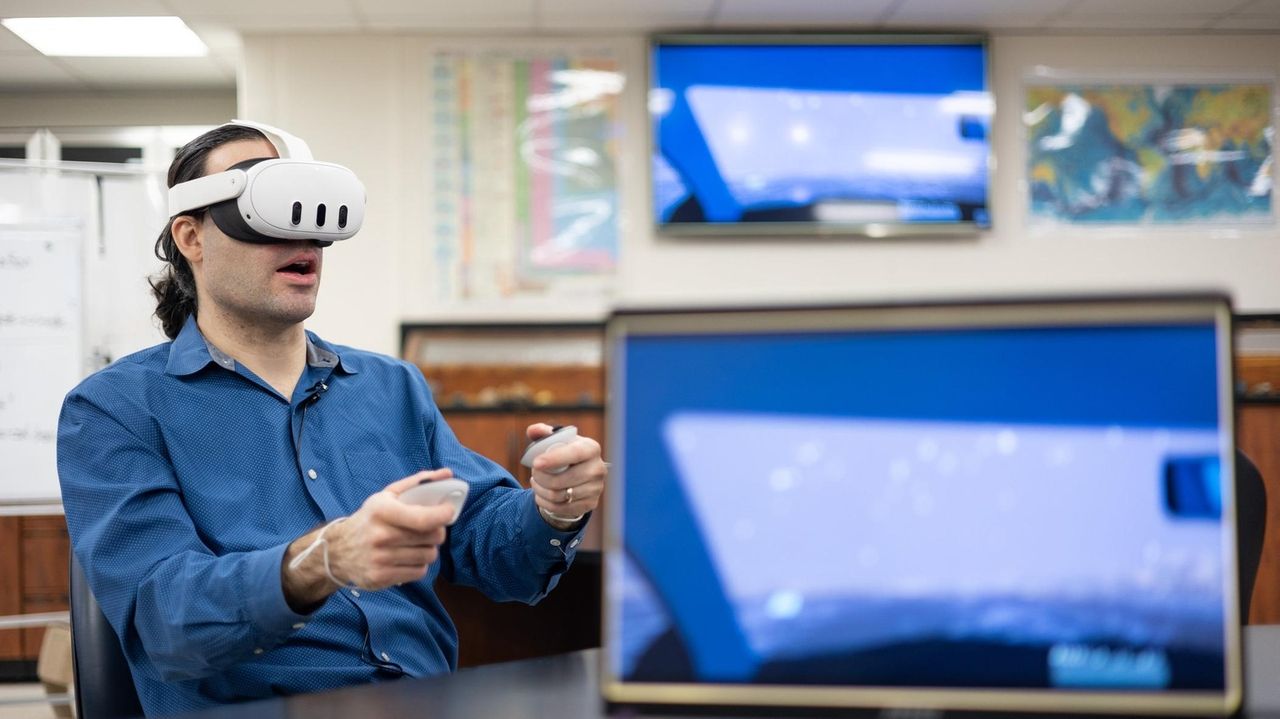
VR Teaches the Danger of “Short-Fuse” Weather Events
Dr. Jase Bernhardt, associate professor of geology, environment, and sustainability and director of Hofstra University’s meteorology program, was interviewed by Newsday about the use of virtual reality technology to teach the public about the danger of driving in a snow squall.


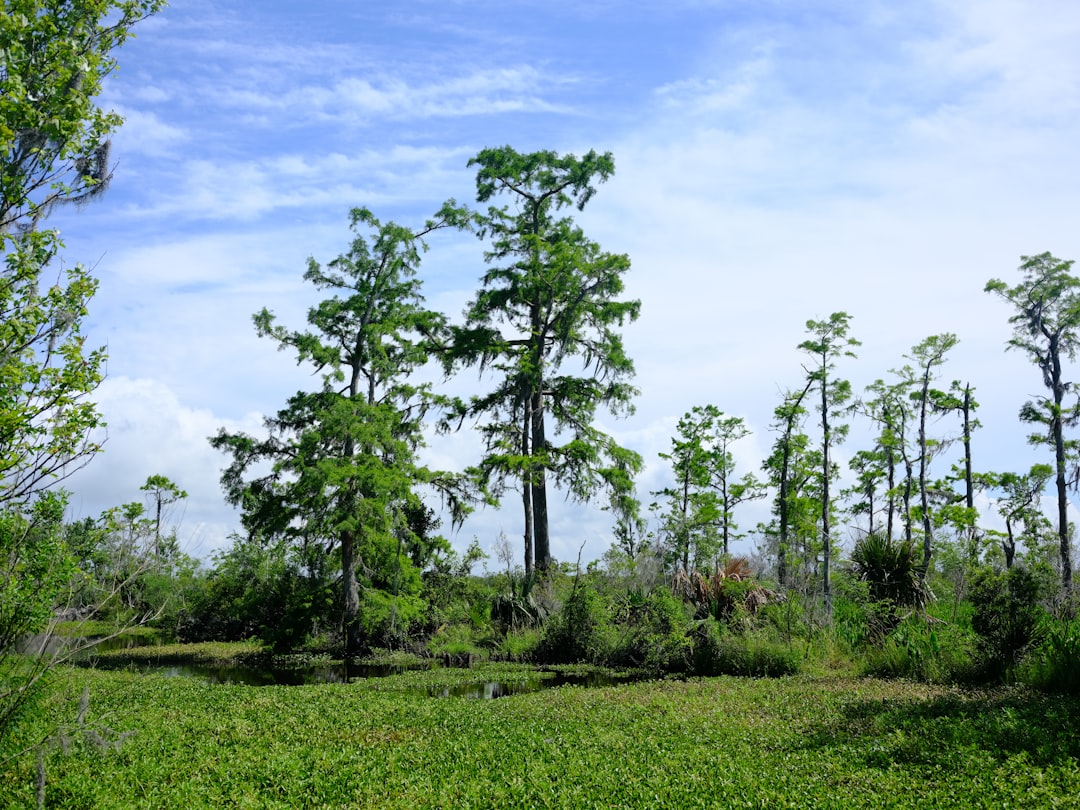
Wetlands: Nature’s First Line of Defense for Our Coast and Communities
Since the 1930s, Louisiana’s coastline has been reshaped by the relentless advance of the Gulf, with over 2,000 square miles of land disappearing beneath its waters and representing the largest loss of coastal land anywhere in the continental United States. This dramatic transformation has far-reaching consequences, threatening local economies, delicate ecosystems, and heightening the state’s exposure to hurricanes. In the face of these urgent challenges, LSU’s College of the Coast & Environment (CC&E) stands at the forefront, leading pioneering research and bold initiatives that not only protect Louisiana’s coast, but also build stronger, more resilient communities. Below are just a few examples of how CC&E is driving meaningful solutions for our coastal future. Wetlands are vital to protecting our coast, and CC&E researchers are actively investigating the role of both constructed and natural wetlands in reducing coastal flooding hazards. Through several projects funded through the US Army Corps of Engineers, Drs. Robert Twilley, Matthew Hiatt, and CC&E Dean Clint Willson, along with collaborators across campus, are conducting research on coastal ecosystem design - a framework that leverages the benefits of natural and nature-based coastal features, such as wetlands, environmental levees, and flood control gates – and how that could be integrated into engineering design and urban planning. Through the State of Louisiana’s ambitious Coastal Master Plan, administered by the Louisiana Coastal Protection and Restoration Authority, wetland construction and restoration play a huge role in managing the Louisiana coastal region. Such innovative techniques leveraging natural and nature-based features require evaluation to determine the success of such projects, and CC&E researchers are using cutting-edge science to advance this endeavor. Dr. Tracy Quirk and her students are investigating the success of marsh restoration by comparing structural and functional characteristics (e.g., vegetation, elevation, hydrology, accretion, and denitrification) between two created marshes and an adjacent natural reference marsh along the north shore of Lake Pontchartrain, Louisiana. Wetlands not only serve as a buffer from storms and sea level rise but also play a major role in regulating greenhouse gas emissions and contribute to productive vibrant ecosystems. In large collaborative project funded by the National Science Foundation, Dr. Giulio Mariotti is using computer models to forecast how coastal marshes may change in size, shape, and salinity in the future, and how these changes could affect methane emissions. As part of the same project, Drs. Haosheng Huang and Dubravko Justic are creating high-resolution hydrodynamic and biogeochemical models to predict changes in methane emissions in coastal Louisiana. In another project, with funding from Louisiana Center of Excellence, National Science Foundation, Louisiana Sea Grant, and the National Oceanic and Atmospheric Administration, Drs. Matthew Hiatt and John White have established a network of sensors to measure water levels and salinity throughout the wetlands in Barataria Bay, Louisiana, a region that has experienced significant land loss and storm impacts. The goal is to establish an understanding of the drivers of saline intrusion in marsh soils, and to ultimately determine what this means for the ecological resiliency of wetlands experiencing rapid change. CC&E’s leadership in wetlands science is recognized nationwide. It is the only college in the United States to have six faculty members—Drs. John White, John W. Day, Jr., Robert Twilley, William Patrick, James Gosselink, and R. Eugene Turner—honored with the prestigious National Wetlands Award. No other institution has had more than one recipient. Presented annually by the Environmental Law Institute, this award celebrates individuals whose work demonstrates exceptional innovation, dedication, and impact in wetlands conservation and education. CC&E’s unmatched record reflects decades of pioneering research and a deep commitment to safeguarding the nation’s most vulnerable coastal landscapes. Every day, CC&E channels this expertise into action—protecting Louisiana’s coast and, in turn, the communities, wildlife, and ecosystems that depend on it. Through bold research, collaborative partnerships, and a vision grounded in science, the college is shaping a more resilient future for coastal regions everywhere. CC&E is building teams that win in Louisiana, for the world. Article originally published here.


From classroom to cosmos: Students aim to build big things in space
In the vast vacuum of space, Earth-bound limitations no longer apply. And that’s exactly where UF engineering associate professor Victoria Miller, Ph.D., and her students are pushing the boundaries of possibilities. In partnership with the Defense Advanced Research Projects Agency, known as DARPA, and NASA’s Marshall Space Flight Center, the University of Florida engineering team is exploring how to manufacture precision metal structures in orbit using laser technology. “We want to build big things in space. To build big things in space, you must start manufacturing things in space. This is an exciting new frontier,” said Miller. An associate professor in the Department of Materials Science & Engineering at UF’s Herbert Wertheim College of Engineering, Miller said the project called NOM4D – which means Novel Orbital and Moon Manufacturing, Materials, and Mass-efficient Design – seeks to transform how people think about space infrastructure development. Picture constructing massive structures in orbit, like a 100-meter solar array built using advanced laser technology. “We’d love to see large-scale structures like satellite antennas, solar panels, space telescopes or even parts of space stations built directly in orbit. This would be a major step toward sustainable space operations and longer missions,” said team member Tianchen Wei, a third-year Ph.D. student in materials science and engineering. UF received a $1.1 million DARPA contract to carry out this pioneering research over three phases. While other universities explore various aspects of space manufacturing, UF is the only one specifically focused on laser forming for space applications, Miller said. A major challenge of the NOM4D project is overcoming the size and weight limitations of rocket cargo. To address these concerns, Miller’s team is developing laser-forming technology to trace precise patterns on metals to bend them into shape. If executed correctly, the heat from the laser bends the metal without human touch; a key step toward making orbital manufacturing a reality. “With this technology, we can build structures in space far more efficiently than launching them fully assembled from Earth,” said team member Nathan Fripp, also a third-year Ph.D. student studying materials science and engineering. “This opens up a wide range of new possibilities for space exploration, satellite systems and even future habitats.” Miller said laser bending is complex but getting the correct shape from the metal is only part of the equation. “The challenge is ensuring that the material properties stay good or improve during the laser-forming process,” she said. “Can we ensure when we bend this sheet metal that bent regions still have really good properties and are strong and tough with the right flexibility?” To analyze the materials, Miller’s students are running controlled tests on aluminum, ceramics and stainless steel, assessing how variables like laser input, heat and gravity affect how materials bend and behave. “We run many controlled tests and collect detailed data on how different metals respond to laser energy: how much they bend, how much they heat up, how the heat affects them and more. We have also developed models to predict the temperature and the amount of bending based on the material properties and laser energy input,” said Wei. “We continuously learn from both modeling and experiments to deepen our understanding of the process.” The research started in 2021 and has made significant progress, but the technology must be developed further before it’s ready for use in space. This is why collaboration with the NASA Marshall Space Center is so critical. It enables UF researchers to dramatically increase the technology readiness level (TRL) by testing laser forming in space-like conditions inside a thermal vacuum chamber provided by NASA. Fripp leads this testing using the chamber to observe how materials respond to the harsh environment of space. “We've observed that many factors, such as laser parameters, material properties and atmospheric conditions, can significantly determine the final results. In space, conditions like extreme temperatures, microgravity and vacuums further change how materials behave. As a result, adapting our forming techniques to work reliably and consistently in space adds another layer of complexity,” said Fripp. Another important step is building a feedback loop into the manufacturing process. A sensor would detect the bending angle in real time, allowing for feedback and recalibration of the laser’s path. As the project enters its final year, finishing in June of 2026, questions remain -- especially around maintaining material integrity during the laser-forming process. Still, Miller’s team remains optimistic. UF moves one step closer to a new era of construction with each simulation and laser test. “It's great to be a part of a team pushing the boundaries of what's possible in manufacturing, not just on Earth, but beyond,” said Wei.


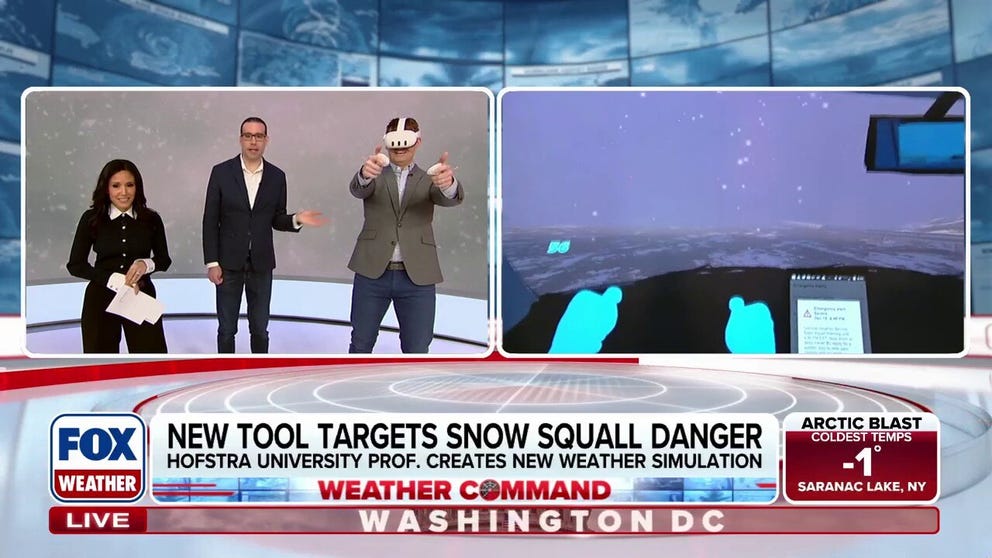
Teaching Driving Safety During a Snow Squall
Dr. Jase Bernhardt, associate professor of geology, environment, and sustainability and director of Hofstra University’s meteorology program, was interviewed by Fox Weather about a virtual reality tool he developed that simulates the danger of driving in a snow squall.
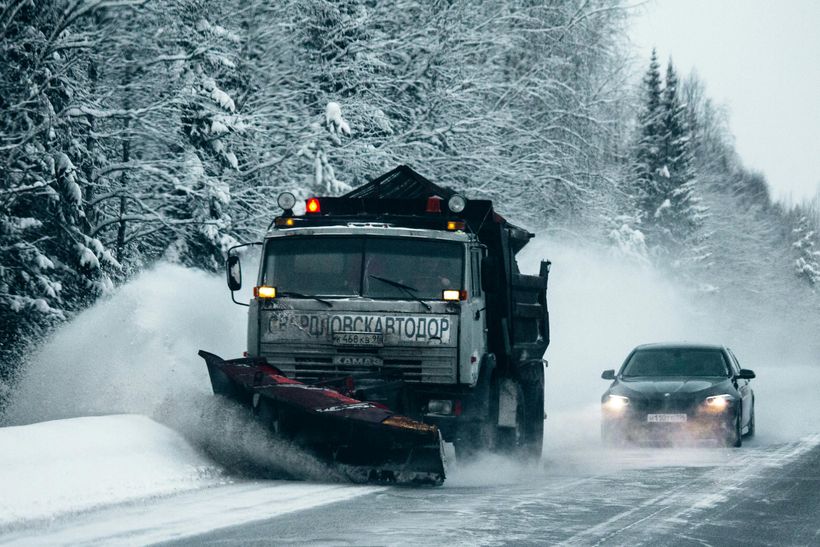
Streaks of white that coat roads and cars. Powdery footprints smudged into floors. It’s the time of year when much of the United States relies on road salt to keep ice at bay and accepts the nuisances that come with it. But beyond the inconvenience, all that salt has potentially serious, long-term effects on the environment, human health and infrastructure. Steven Goldsmith, PhD, an associate professor of Geography and the Environment at Villanova University, researches topics in watershed biogeochemistry and environmental health. A focus of his lab is the study of de-icing practices on water quality. Recently, Dr. Goldsmith shared insights from his work, exploring the widespread consequences of road salt and potential solutions to reduce its harm. Question: You have led or participated in research focused on the environmental impacts of road salt application, often locally, but with much broader implications. What have some of those studies found? Steven Goldsmith: In 2022, we published a paper showing that salt—sodium in particular—is seeping into Philadelphia's water supply, and it's timed with snow melts. We found that if you drank a glass of tap water during the peak period in the winter of 2018-19, your sodium intake would be six times what the Environmental Protection Agency (EPA) recommends within a glass of water for someone on a low-sodium diet. We are susceptible in this region because most of our water supply comes from rivers, and the rivers receive that salt runoff. Some of our findings indicate this is a chronic issue and not limited to winter months. All that contaminated shallow groundwater causes the concentration to rise year-round, even in the summer. In a recent paper, we discuss the issue of salt that lands on the side of the road. When it does, it infiltrates into soil, and then it goes into shallow groundwater before entering our streams. Oftentimes when salt is applied to the road and you receive that initial precipitation, you are left with runoff with salinity near the concentration of sea water, which is very bad for freshwater organisms. Q: Have those studies found other impacts beyond those created directly by sodium? SG: It’s certainly not just a sodium issue—it's also a chloride issue. Chloride does have a negative impact on aquatic organisms, but it can also corrode drinking water infrastructure. If you have lead pipes in that infrastructure, that can lead to a range of human health issues. Even just to prevent those problems, applying chemicals to protect from the corrosion of pipes increases costs. Perhaps the worst part is when road salt infiltrates shallow soil and groundwater, the sodium is left behind preferentially in soils because it's displacing other positively charged elements, which could then go into groundwater. The elements it replaces are metals. If we have more salt runoff on the side of the roads, chances are, if we look in those streams, we are going to see higher concentrations of heavy metals like copper, zinc and even lead. Q: You have mentioned the efficacy of brine. What is brine and why is it more effective than traditional road salt? SG: If you’ve ever driven behind a rock salt truck, you probably noticed it pelts your windshield and shoots salt everywhere. A lot of that rock salt ends up following the natural trajectory of the road, which is designed to drain towards the sides to keep water from pooling. As soon as a snowstorm happens, it's going to melt and flow into the storm drain. That, of course, is bad for the environment, but also doesn’t help remove ice from the road. With brine, the application is a diluted road salt with water mixture that is usually about 23 percent sodium chloride by volume, and it’s referred to as an “anti-icing” measure. The saltwater infiltrates the top layer of pavement and embeds in the roadway itself, which keeps ice from crystallizing when snow or water hits the surface. To use an analogy, let’s say you have a large rock that you placed on top of the pavement, but you also have a quarter of that rock’s volume in sand. If you put that sand onto the pavement, it will permeate into nooks and crannies. That's the same idea here: use less material and in a way that makes it stick better to the surface and reduces the need to reapply as often during and after storms. Q: What are potential positive impacts if municipalities switch from road salt to brine? SG: There are limited studies on this, but it's been shown that if done properly, brining can reduce salt runoff into streams by anywhere from 23 to 40 percent. If it's 40 percent, you have almost cut the problem in half, and that lower peak salt concentration and runoff would have a profound positive impact on aquatic organisms that are downstream. From a cost standpoint—and I say this theoretically because there are other up-front costs associated with brining at the municipal level—if you reduce salt concentrations by up to 40 percent it means you apply a lot less and therefore spend a lot less. Q: What can individuals do to decrease road salt runoff, and how much of an impact does individual use have? SG: We can start by addressing the household salt application problem. Another one of our recent papers suggests that other impervious surfaces, like driveways, sidewalks and parking lots, are probably contributing even more than the roadway application. The best estimate is that individual or private contractor use could be over 10 times what you see on roads. For researchers, part of addressing this is trying to understand why people apply so much salt on their personal properties: are they afraid of lawsuits? Keeping with the Joneses? Are they not aware of ordinances that say you have to shovel within a certain number of hours, which would negate the need for salt anyway? For homeowners and other individuals, one proposed solution is to use a coffee mug’s worth of salt for every 10 sidewalk squares. Think of it as a “low-sodium diet” to make sure you’re not overapplying. It’s a way we can limit our use of salt and do so in a way that doesn't jeopardize safety. These individuals can also sweep up salt applied before a storm that never materialized to use before the next one. This will prevent the possibility of rain needlessly dissolving the salt. Q: Are there effective alternatives to road salt that individuals can use? SG: The only truly effective alternative, unfortunately, is simply using less road salt. While some people apply sand, it also washes into local streams, causing environmental harm. Another option that has gained attention is beet juice—what I like to call the “Dwight Schrute” solution. Beet juice actually works better than road salt because its organic acids prevent ice from crystallizing at temperatures much lower than those at which rock salt is effective. However, from an environmental standpoint, beet juice contains high levels of nutrients, which can contribute to algae growth if it enters waterways. Additionally, recent studies suggest it may also be toxic to aquatic organisms. The growing consensus is that while some road salt is necessary, we need to use less of it.



How Higher Ed Should Tackle AI
Higher learning in the age of artificial intelligence isn’t about policing AI, but rather reinventing education around the new technology, says Chris Kanan, an associate professor of computer science at the University of Rochester and an expert in artificial intelligence and deep learning. “The cost of misusing AI is not students cheating, it’s knowledge loss,” says Kanan. “My core worry is that students can deprive themselves of knowledge while still producing ‘acceptable work.’” Kanan, who writes about and studies artificial intelligence, is helping to shape one of the most urgent debates in academia today: how universities should respond to the disruptive force of AI. In his latest essay on the topic, Kanan laments that many universities consider AI “a writing problem,” noting that student writing is where faculty first felt the force of artificial intelligence. But, he argues, treating student use of AI as something to be detected or banned misunderstands the technological shift at hand. “Treating AI as ‘writing-tech’ is like treating electricity as ‘better candles,’” he writes. “The deeper issue is not prose quality or plagiarism detection,” he continues. “The deeper issue is that AI has become a general-purpose interface to knowledge work: coding, data analysis, tutoring, research synthesis, design, simulation, persuasion, workflow automation, and (increasingly) agent-like delegation.” That, he says, forces a change in pedagogy. What Higher Ed Needs to Do His essay points to universities that are “doing AI right,” including hiring distinguished artificial intelligence experts in key administrative leadership roles and making AI competency a graduation requirement. Kanan outlines structural changes he believes need to take place in institutions of higher learning. • Rework assessment so it measures understanding in an AI-rich environment. • Teach verification habits. • Build explicit norms for attribution, privacy, and appropriate use. • Create top-down leadership so AI strategy is coherent and not fractured among departments. • Deliver AI literacy across the entire curriculum. • Offer deep AI degrees for students who will build the systems everyone else will use. For journalists covering AI’s impact on education, technology, workforce development, or institutional change, Kanan offers a research-based, forward-looking perspective grounded in both technical expertise and a deep commitment to the mission of learning. Connect with him by clicking on his profile.


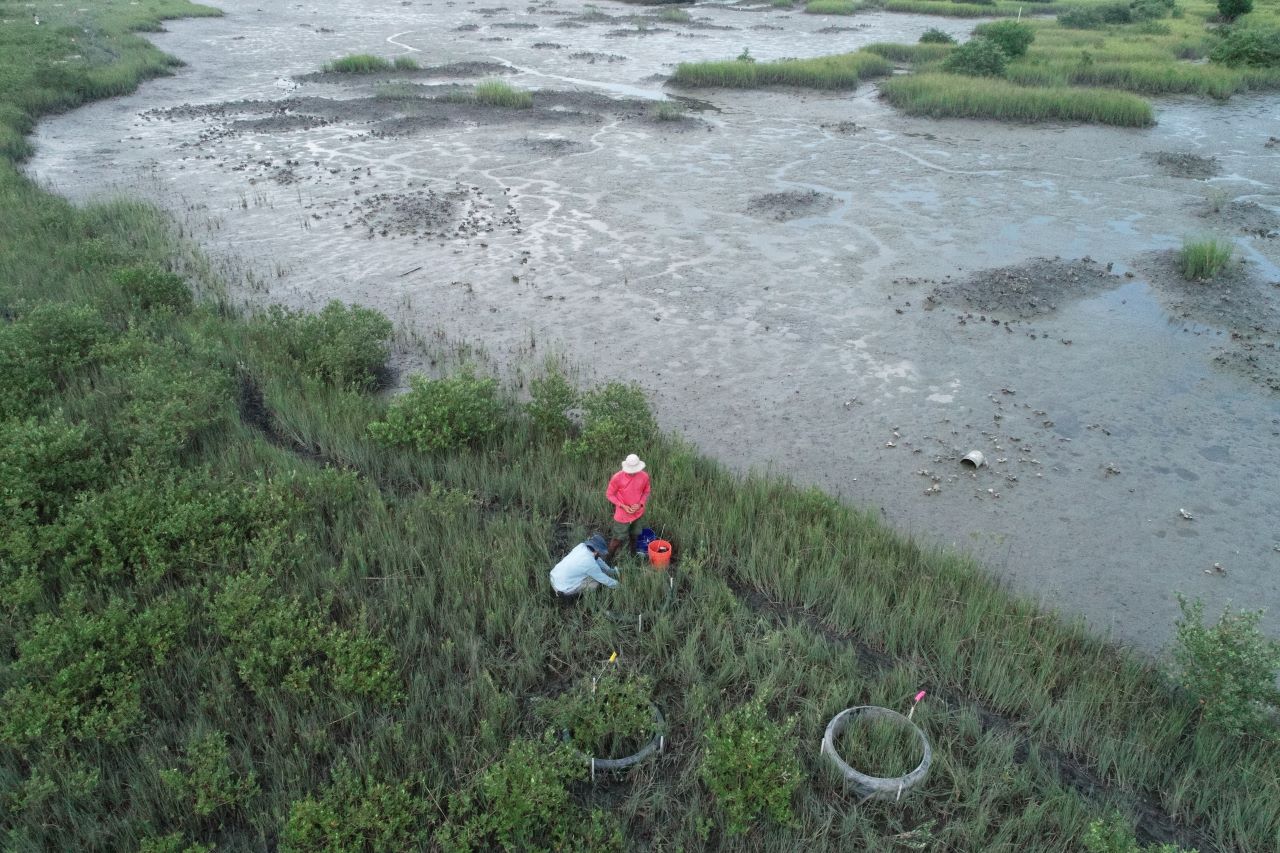
Natural defenses: UF researchers use living infrastructure to protect Florida’s shores
Armed with a $7 million grant from the Army Corp of Engineers, University of Florida researchers are working to bolster shoreline resilience and restore troubled wetlands in St. Augustine through nature-based solutions. “The idea of nature-based solutions is to build what we sometimes refer to as green infrastructure, to use living, natural components as the building blocks,” said Andrew Altieri, Ph.D., an assistant professor with the Engineering School of Sustainable Infrastructure & Environment and interim director of the Center for Coastal Solutions, also known as CCS. Instead of building man-made structures to protect wetlands, for example, restoration crews can move dredged natural sediment otherwise destined for costly disposal to increase wetlands’ size and elevation, restoring their ability to protect shorelines from storm surge, keep pace with sea-level change, filter toxins, store carbon and provide habitats for wildlife. The project is in concert with the Army Corps of Engineers’ goal to naturally reuse and repurpose at least 70% of dredged sediment into other natural areas to benefit habitats and restoration by 2030. “It is critical to understand, test and model how natural processes can be harnessed and strategically implemented to sustainably meet the challenge of rapidly intensifying coastal hazards while also providing environmental, economic and social benefits,” Altieri wrote in the project’s technical summary. Overall, the multi-disciplinary project closely examines patterns and processes of change in coastal landscapes. That includes wetlands — marshes and mangroves — and beach/dune systems. The project comes as these coastal areas are facing threats both natural and human. These areas are essential to wildlife, air quality, native vegetation, storm protection and the overall health of the ecosystem. A 2008 study by the U.S. Fish and Wildlife Service reported a net loss of about 361,000 acres of wetlands in the coastal watersheds of the eastern United States between 1998 and 2004 — an average net decrease of 59,000 acres each year, with experts citing sea-level rise as one of the primary factors. “We're trying to understand the patterns of that loss and what's leading to it,” Altieri said. “These systems are essentially the first and sometimes last line of defense against coastal hazards, risks that include storm surges and coastal flooding. They are forming a buffer, this kind of protective layer on our coast. But they're changing, generally for the worse and are in danger of being lost.” With this project, the CCS-led research team plans to advance the science, technology and engineering principles of nature-based solutions. With marshes, the primary concern is elevation loss, which can drown the vegetation critical to the ecosystem. They are sinking, eroding and succumbing to sea-level changes, Altieri said. “The plants are really important for trapping sediment and holding sediment,” he said. “You lose some of the plants, then you get more erosional loss and a lack of the accumulation of sediment.” Sediment is natural muck on the bottom of water bodies. “If we can add sufficient sediment to increase the elevation to a level where the plants thrive, then they will retain that sediment that's been added to hopefully trap more sediment and accumulate more biomass through their growth,” Altieri said. “It’s something that may need to be done periodically. You may stop that decline, but you may even reverse the process of loss and change the trajectory.” As a bonus, this process saves the cost of disposing of dredged sediment, which is usually piped offshore or to a materials-management area. This project is the next step for CCS-led coastal resilience efforts in St. Augustine. In 2024, CCS and WSP Environment & Infrastructure Inc. launched a coastal wetlands-restoration project to keep pace with sea level change and erosion. The 2025 work is a standalone project with separate funding, Altieri said. The current project also has more research disciplines and project partners, including UF researchers from Landscape Architecture, Geological Sciences and the School of Forest, Fisheries and Geomatic Sciences. “Storm surges, wave energy, coastal flooding – all of that can be slowed or reduced because of wetlands,” Altieri said. “They are basically like shock absorbers. These wetlands, beaches and dunes can be lost or eroded to some degree, but the upland area behind them is essentially protected.” Researching the resilience of dunes comes with a different set of dynamics. Here, they are looking at the plants that support the dunes – sea oats and panic grass, for example. That vegetation also provides a habitat for animals such as beach mice, turtles and birds. On the beach, the team also is looking at water energy and how grain size affects the stability of dunes. “It’s understanding water movement, water energy. How is that interacting with depositing sediment, moving sediment around, sorting sediment? With water, you tend to carry finer particles further than coarser materials,” he said. What does success look like after the award’s five years end? “We'll have an understanding of what's changing on our coasts and why,” Altieri said. “We'll have an understanding of how we can work within this system to modify the natural components and utilize the natural processes. And we will hopefully be working with partners through additional funding mechanisms to actually apply that towards implementation of solutions to increase coastal resilience.” The team also includes Peter Adams, Department of Geological Sciences; Julie Bruck, Department of Landscape Architecture, School of Landscape Architecture and Planning; Maitane Olabarrieta, ESSIE; Alex Sheremet, ESSIE; Nina Stark, ESSIE; Ben Wilkinson, Geomatics Program, School of Forest, Fisheries, and Geomatics Sciences; and Xiao Yu, ESSIE.

As Disney’s “Zootopia 2” barrels toward becoming the highest-grossing animated Disney movie of all-time, the box office isn’t the only place fans of the franchise are apparently flocking. Recently, CNN reported that “Zootopia 2” fans in China—where the wildly popular movie has already been crowned it’s highest-grossing foreign animated film ever—have expressed increased interest in owning Indonesian pit vipers, a striking blue and highly venomous snake portrayed as an anthropomorphic protagonist named Gary De’Snake in the film. The outlet spoke to individuals who purchased the animal after seeing “Zootopia 2” and noted surges in searches and prices among exotic pet retailers. The reported phenomenon prompts the question: can blockbuster movies really be drivers of the exotic pet trade? “I think they can,” said Ryan Almeida, PhD, an assistant teaching professor of Geography and the Environment at Villanova University who studies the exotic pet trade. “There have been a lot of anecdotal reports of movies and TV shows influencing the pet trade, but the peer-reviewed evidence isn’t there.” Causation or Correlation? Reasons for Pet Demand are Tricky to Single Out While the increased interest in the pit viper may be the latest pet trend influenced by the entertainment industry, it is certainly not the first, says Dr. Almeida, who has recently been conducting research at wildlife expos in an effort to understand more of the intricacies of various pet-related trends. In the 1980-90s, red-eared slider turtles became massively popular pets, and it just so happened to coincide with a popular new show based off the animal. “The Teenage Mutant Ninja Turtles craze, especially in the United Kingdom, probably helped drive demand for these turtles as pets,” Dr. Almeida said. “Turtle exports from the United States exploded in popularity during this time, there just is a not a peer-reviewed study demonstrating it was definitely caused by the show.” In the 2000’s, Pixar’s “Finding Nemo” and its sequel, “Finding Dory,” reportedly bolstered purchases of clownfish and blue tangs—the fish for whom those characters were modeled. Interest in owning owls as pets was also said to have spiked among Harry Potter fans in certain parts of the world amid the height of the joint movie/book popularity. Though much of the evidence of these trends is anecdotal, anecdotal doesn’t necessarily mean it didn’t happen. For instance, it’s difficult to completely discredit an exotic pet retailer who reported a 500% sales increase of an animal featured in a recent, very popular movie. But it’s also difficult to prove the causation, not to mention the scale. Dr. Almeida, who is interested in the qualities that make exotic pets desirous to consumers, says that even if sales of an animal from a movie did increase, the reasons are likely far more nuanced than just their appearance on screen. “Rarity is one important factor. We have good evidence that that certain [consumers] care a lot about rarity, that prices rise as animals become rarer and that retailers sell more animals if they are rare.” Another is morphology, or the physical structure of the animal. “Animals with unique morphology or distinctive colorations and patterns are more susceptible for these spikes in demand,” he said. “If Gary De’Snake was a brown, common garter snake and not a striking blue colored viper, I doubt we would see this attention. “I suspect that that's partially why this snake species, Trimeresurus insularis, was chosen for this movie, and why the fish representing Nemo and Dory are the ones they are, and not one of the millions of more boring looking fish species out there.” Even the on-screen portrayal, he suspects, makes a difference. “If the characters are protagonists, that could potentially either consciously or subconsciously, lead to more positive associations with the pet, especially for something like a pit viper, which probably has sort of a negative connotation to go with it in the first place. Also, the way these animals are anthropomorphized likely matters to some degree to people who report buying these animals because of the movie.” Case in point, one purchaser of the highly venomous viper told CNN that the movie helped give “reptile pets a better image,” saying of Gary De’Snake “I love his enthusiastic attitude and his sense of responsibility,” which would not be qualities associated with or displayed by the actual living species. “Attention to all of this falls in line with the same sort of things we are already know are drivers of demand in the pet trade,” Dr. Almeida said. Blockbuster Movies Probably Don’t Make Blockbuster Pet Trends Yet, while Dr. Almeida cedes that there is likely some degree of real demand for exotic pets based on movies (as evidenced by the self-reporting of people doing so for that reason), he cautions that there is very little to suggest these types of trends typically occur on large scales, especially those large enough to make any ecological impacts. He referenced a 2019 paper published by researchers at the University of Oxford, which looked at the purported increase of clownfish and blue tang sales after “Finding Nemo” and “Finding Dory.” “They found that there was an increase in the amount of people searching for the animal online, but not any evidence that retailers were importing more blue tangs, consumers were buying more blue tangs, or even that people were going to an aquarium to see them.” The findings, per the University of Oxford, suggested “that the impact of movies is limited when it comes to large scale buying of animals.” The authors also noted the role of viral media articles in suggesting this plausible causation was a hard-and-true phenomenon. Similarly, a 2017 study concluded that, contrary to popular belief, the Harry Potter series was unlikely to have increased demand for pet owls in the United Kingdom. Even if the demand was there at those larger scales, Dr. Almeida says meeting that demand could be a challenge, depending on the species. “You’d potentially have to poach them in large numbers from the wild, and that's challenging in and of itself. Or they would have to be captive bred, which for some animals is relatively easy but others not so much.” Not to mention the other roadblocks to mass exotic pet ownership. “Some of them may be tough to obtain or even illegal to own in the first place. Also, many of the consumers of films like ‘Zootopia 2’ who might feel a strong emotional pull to an animal are children, and children aren’t the ones going out and buying pets. And, even if something like this did become a large-scale trend, trends are fleeting. The long-term impact, ecologically, would be hard to predict.” But make no mistake. Pet trends certainly do happen on large scales, and whether they are caused by movies in part or not at all, they can have dire ecological consequences. Look at the case of the red eared slider. “Regardless of any possible influence from the show, these turtles are relatively easy to captive breed, so therefore relatively easy to acquire,” Dr. Almeida said. “But they are tough pets. They live a really long time and are kind of hard to care for, and that leads to people releasing them into the wild. They are now among the most invasive reptile species on the planet.” So much so, that the UK banned their sale in 1996. “It ties back to the complications of assessing certain aspects of the wildlife trade. There are so many factors, how do we get the entire picture? It’s a wicked problem.” Whether that problem includes movies with venomous, anthropomorphic snake protagonists appears unlikely, outside of a few highlighted cases. “It certainly wouldn’t be supported by much hard evidence… yet,” Dr. Almeida said. “But this is very much an under-researched phenomenon. I know I’ll keep my eye out for blue insularis next time I attend a pet expo.”


Researchers warn of rise in AI-created non-consensual explicit images
A team of researchers, including Kevin Butler, Ph.D., a professor in the Department of Computer and Information Science and Engineering at the University of Florida, is sounding the alarm on a disturbing trend in artificial intelligence: the rapid rise of AI-generated sexually explicit images created without the subject’s consent. With funding from the National Science Foundation, Butler and colleagues from UF, Georgetown University and the University of Washington investigated a growing class of tools that allow users to generate realistic nude images from uploaded photos — tools that require little skill, cost virtually nothing and are largely unregulated. “Anybody can do this,” said Butler, director of the Florida Institute for Cybersecurity Research. “It’s done on the web, often anonymously, and there’s no meaningful enforcement of age or consent.” The team has coined the term SNEACI, short for synthetic non-consensual explicit AI-created imagery, to define this new category of abuse. The acronym, pronounced “sneaky,” highlights the secretive and deceptive nature of the practice. “SNEACI really typifies the fact that a lot of these are made without the knowledge of the potential victim and often in very sneaky ways,” said Patrick Traynor, a professor and associate chair of research in UF's Department of Computer and Information Science and Engineering and co-author of the paper. In their study, which will be presented at the upcoming USENIX Security Symposium this summer, the researchers conducted a systematic analysis of 20 AI “nudification” websites. These platforms allow users to upload an image, manipulate clothing, body shape and pose, and generate a sexually explicit photo — usually in seconds. Unlike traditional tools like Photoshop, these AI services remove nearly all barriers to entry, Butler said. “Photoshop requires skill, time and money,” he said. “These AI application websites are fast, cheap — from free to as little as six cents per image — and don’t require any expertise.” According to the team’s review, women are disproportionately targeted, but the technology can be used on anyone, including children. While the researchers did not test tools with images of minors due to legal and ethical constraints, they found “no technical safeguards preventing someone from doing so.” Only seven of the 20 sites they examined included terms of service that require image subjects to be over 18, and even fewer enforced any kind of user age verification. “Even when sites asked users to confirm they were over 18, there was no real validation,” Butler said. “It’s an unregulated environment.” The platforms operate with little transparency, using cryptocurrency for payments and hosting on mainstream cloud providers. Seven of the sites studied used Amazon Web Services, and 12 were supported by Cloudflare — legitimate services that inadvertently support these operations. “There’s a misconception that this kind of content lives on the dark web,” Butler said. “In reality, many of these tools are hosted on reputable platforms.” Butler’s team also found little to no information about how the sites store or use the generated images. “We couldn’t find out what the generators are doing with the images once they’re created” he said. “It doesn’t appear that any of this information is deleted.” High-profile cases have already brought attention to the issue. Celebrities such as Taylor Swift and Melania Trump have reportedly been victims of AI-generated non-consensual explicit images. Earlier this year, Trump voiced support for the Take It Down Act, which targets these types of abuses and was signed into law this week by President Donald Trump. But the impact extends beyond the famous. Butler cited a case in South Florida where a city councilwoman stepped down after fake explicit images of her — created using AI — were circulated online. “These images aren’t just created for amusement,” Butler said. “They’re used to embarrass, humiliate and even extort victims. The mental health toll can be devastating.” The researchers emphasized that the technology enabling these abuses was originally developed for beneficial purposes — such as enhancing computer vision or supporting academic research — and is often shared openly in the AI community. “There’s an emerging conversation in the machine learning community about whether some of these tools should be restricted,” Butler said. “We need to rethink how open-source technologies are shared and used.” Butler said the published paper — authored by student Cassidy Gibson, who was advised by Butler and Traynor and received her doctorate degree this month — is just the first step in their deeper investigation into the world of AI-powered nudification tools and an extension of the work they are doing at the Center for Privacy and Security for Marginalized Populations, or PRISM, an NSF-funded center housed at the UF Herbert Wertheim College of Engineering. Butler and Gibson recently met with U.S. Congresswoman Kat Cammack for a roundtable discussion on the growing spread of non-consensual imagery online. In a newsletter to constituents, Cammack, who serves on the House Energy and Commerce Committee, called the issue a major priority. She emphasized the need to understand how these images are created and their impact on the mental health of children, teens and adults, calling it “paramount to putting an end to this dangerous trend.” "As lawmakers take a closer look at these technologies, we want to give them technical insights that can help shape smarter regulation and push for more accountability from those involved," said Butler. “Our goal is to use our skills as cybersecurity researchers to address real-world problems and help people.”