
Experts Matter. Find Yours.
Connect for media, speaking, professional opportunities & more.

MEDIA RELEASE: CAA urges drivers to protect lives on first national Slow Down Move Over Day
WINNIPEG, May 14, 2019 – CAA is urging motorists to make space for tow trucks providing service on the side of the road on Canada’s first national Slow Down Move Over day. The day promotes a safe working environment for tow truck operators across the country. CAA has long advocated for the protection of roadside assistance workers through Slow Down, Move Over legislation. CAA Clubs across Canada have designated May 14 as Slow Down Move Over day to bring attention to this important issue. “Lack of driver awareness is one of the largest threats to tow-truck operator safety on this day and all others,” said Raymond Chan, government relations, CAA. “Everyone should slow down and move over when they see a tow truck operator on the side of the road.” CAA’s eight Clubs across Canada will be launching public education campaigns and events today to draw attention to the safety risks tow truck operators face. There are approximately 24 million motorists and 15,000 tow truck operators on the road annually in Canada. This leads to thousands of near misses experienced by emergency roadside operators annually and, across North America, nearly 100 tow truck drivers are killed every year after being struck by oncoming traffic while helping stranded motorists with flat tires, breakdowns and collisions. Every tow truck driver knows the number of close calls they've experienced while pulled over on busy roadways. "I figured that was going to be the end, that I was going to be done," said one CAA tow-truck operator after a near-miss during a roadside assistance call. In 2011, the Slow Down Move Over law became part of Manitoba’s Highway Traffic Act. Most provinces and territories have Slow Down Move Over legislation that mandates motorists must slow down and change lanes, if it is safe to do so, to ensure the safety of emergency workers on the roadside, but it is often not observed. Learn more about the Slow Down Move Over Day here: caamanitoba.com/slowdown


The minister for tech and the digital economy met with representatives from Aston University’s College of Engineering and Physical Sciences and Solihull College & University Centre during a visit to the new Greater Birmingham and Solihull Institute of Technology (GBSIoT) Hub on 2 August. Damian Collins MP was given a tour of the new facility by Rosa Wells, executive director for employment and skills and IoT at Solihull College & University Centre. The Institute of Technology focuses on engineering and advanced manufacturing and is a partnership between local further education colleges, universities and industry partners. It will support learners from across the region to progress to high-skill technical jobs in industry through clear, supported pathways. Construction of the GBSIoT Hub building is nearing completion and will be welcoming students in the coming weeks. During the visit, the minister was shown the cyber physical manufacturing rig, a scaled-down version of a factory of the future, which will create a simulated working environment for IoT learners. The minister then met with executive dean Professor Stephen Garrett and deputy dean Professor Kate Sugden for a tour of Aston University’s Advanced Prototyping Facility conducted by senior project manager Paul Gretton. The facility supports businesses by increasing awareness of the opportunities available through 3D printing to improve the efficiency and effectiveness of existing designs, and to develop new products all the way through to producing prototypes. The visit also included a showcase of Aston University’s Autopod, a state-of-the-art autonomous vehicle funded by the Greater Birmingham and Solihull Local Enterprise Partnership and the Institute of Technology which is used for research and as a teaching tool. Professor Garrett said: “Aston University has a proud history of delivering high-quality technical education and world-leading research. We were delighted to be able to showcase our facilities to Damian Collins MP, whilst discussing our commitment to equipping students with the knowledge and skills they need to succeed in STEM careers.” Damian Collins MP said: “It’s been brilliant to visit the pioneering facilities at Aston University today, especially seeing the cyber rig which will give students first class training to enter the industry with confidence. “Having these opportunities will help young people gain skills they need for future jobs, supporting the UK’s world leading advanced manufacturing and digital industries.” The minister toured the facilities at Aston University as part of his wider visit to the Birmingham 2022 Commonwealth Games. For more information about the College of Engineering and Physical Sciences please visit our website.


Babies react to taste and smell in the womb – new research
Scientists have recorded the first direct evidence that babies react differently to various smells and tastes while in the womb Study took 4D ultrasound scans of 100 pregnant women to see how their unborn babies responded to flavours from foods eaten by their mothers The research team, which also included scientists from Aston University, scanned some mothers to see fetal facial reactions to the kale and carrot flavours. Scientists have recorded the first direct evidence that babies react differently to various smells and tastes while in the womb by looking at their facial expressions. A study led by Durham University’s Fetal and Neonatal Research Lab, UK, took 4D ultrasound scans of 100 pregnant women to see how their unborn babies responded after being exposed to flavours from foods eaten by their mothers. Researchers looked at how the fetuses reacted to either carrot or kale flavours just a short time after the flavours had been ingested by the mothers. Fetuses exposed to carrot showed more “laughter-face” responses while those exposed to kale showed more “cry-face” responses. Their findings could further our understanding of the development of human taste and smell receptors. The researchers also believe that what pregnant women eat might influence babies’ taste preferences after birth and potentially have implications for establishing healthy eating habits. The study is published in the journal Psychological Science. Humans experience flavour through a combination of taste and smell. In fetuses it is thought that this might happen through inhaling and swallowing the amniotic fluid in the womb. Lead researcher Beyza Ustun, a postgraduate researcher in the Fetal and Neonatal Research Lab, Department of Psychology, Durham University, said: “A number of studies have suggested that babies can taste and smell in the womb, but they are based on post-birth outcomes while our study is the first to see these reactions prior to birth. “As a result, we think that this repeated exposure to flavours before birth could help to establish food preferences post-birth, which could be important when thinking about messaging around healthy eating and the potential for avoiding ‘food-fussiness’ when weaning. “It was really amazing to see unborn babies’ reaction to kale or carrot flavours during the scans and share those moments with their parents.” The research team, which also included scientists from Aston University, Birmingham, UK, and the National Centre for Scientific Research-University of Burgundy, France, scanned the mothers, aged 18 to 40, at both 32 weeks and 36 weeks of pregnancy to see fetal facial reactions to the kale and carrot flavours. Mothers were given a single capsule containing approximately 400mg of carrot or 400mg kale powder around 20 minutes before each scan. They were asked not to consume any food or flavoured drinks one hour before their scans. The mothers also did not eat or drink anything containing carrot or kale on the day of their scans to control for factors that could affect fetal reactions. Facial reactions seen in both flavour groups, compared with fetuses in a control group who were not exposed to either flavour, showed that exposure to just a small amount of carrot or kale flavour was enough to stimulate a reaction. Co-author Professor Nadja Reissland, head of the Fetal and Neonatal Research Lab, Department of Psychology, Durham University, supervised Beyza Ustun’s research. She said: “Previous research conducted in my lab has suggested that 4D ultrasound scans are a way of monitoring fetal reactions to understand how they respond to maternal health behaviours such as smoking, and their mental health including stress, depression, and anxiety. “This latest study could have important implications for understanding the earliest evidence for fetal abilities to sense and discriminate different flavours and smells from the foods ingested by their mothers.” Co-author Professor Benoist Schaal, of the National Centre for Scientific Research-University of Burgundy, France, said: “Looking at fetuses’ facial reactions we can assume that a range of chemical stimuli pass through maternal diet into the fetal environment. “This could have important implications for our understanding of the development of our taste and smell receptors, and related perception and memory.” The researchers say their findings might also help with information given to mothers about the importance of taste and healthy diets during pregnancy. They have now begun a follow-up study with the same babies post-birth to see if the influence of flavours they experienced in the womb affects their acceptance of different foods. Research co-author Professor Jackie Blissett, of Aston University, said: “It could be argued that repeated prenatal flavour exposures may lead to preferences for those flavours experienced postnatally. In other words, exposing the fetus to less ‘liked’ flavours, such as kale, might mean they get used to those flavours in utero. “The next step is to examine whether fetuses show less ‘negative’ responses to these flavours over time, resulting in greater acceptance of those flavours when babies first taste them outside of the womb.”


New center helps meet growing need for pediatric care in our community Families in northern Delaware and surrounding areas have a new option for pediatric care. Today ChristianaCare opened a new 14-bed Pediatric Care Center that provides 24/7 combined short-stay inpatient and emergency care for children and teens. The new center is located on the first floor of the Center for Women’s & Children’s Health on ChristianaCare’s Newark Campus. “This new facility is an exciting step in our continued journey to create the absolute best care for children and families in our community,” said David Paul, M.D., chair of the Department of Pediatrics. “The Pediatric Care Center will significantly improve access to care for children, enhance the patient experience and address the needs of families who want high-quality care in a child-friendly environment.” The 24-hour Pediatric Care Center will be able to evaluate and manage 90% of the pediatric cases currently seen in the Christiana Hospital Emergency Department. The center expects to care for an estimated 6,300 patients the first year, with volume projected to grow 5% each year. The Pediatric Care Center also provides expert care to children and adolescents with behavioral health emergency needs and appropriate referral sources for follow-up care. “Our new Pediatric Care Center makes it easier than ever for families and children to receive excellent care when they need it, in a special space designed just for them,” said Sharon Kurfuerst, Ed.D., OTR/L, FACHE, system chief operating officer at ChristianaCare and President, Union Hospital. “The center will care for the special needs of pediatric patients, making it convenient for them to receive dedicated, expert resources for hospital-based, non-trauma emergency and inpatient care all in one location.” The 8,400 square-foot facility provides 14 beds for emergency and short-stay inpatient and observation care. “We offer 24/7 pediatric emergency care 365 days a year,” said Megan Mickley, M.D., MBA, FAAP, FACEP, medical director, who is board certified in Pediatrics and Pediatric Emergency Medicine and fellowship-trained in Pediatric Emergency Medicine and Emergency Ultrasound. “The Pediatric Care Center team is a diverse, multidisciplinary group led by pediatric physicians trained in a variety of backgrounds, including emergency medicine and hospital medicine,” she said. “Our goals are not only to provide exceptional quality of care for children, but also to improve access to and expand pediatric care services for our neighbors. We look forward to being a trusted partner for pediatric care in our community.” About the Center for Women’s & Children’s Health The Center for Women’s & Children’s Health, which opened in a state-of-the-art facility in 2020 on ChristianaCare’s Newark campus, represents a new standard of care for our community. It is the region’s only National Community Center of Excellence in Women’s Health and offers innovative, patient-centered care for mothers, babies and families. The center provides private rooms for mothers and families after delivery and is one of the only hospitals in the United States to provide couplet care in the Neonatal Intensive Care Unit, keeping mother and baby together even if they both require medical care.


UConn insect expert David Wagner on the troubling decline of the mayfly
One of the world's oldest flying insects is in trouble. Mayflies are in serious decline and, after 300 million years in existence, their dwindling population should be an alarm bell for all of us. More than just a bug with a short life span flying masterfully near creeks, rivers, and ponds, the mayfly plays a serious role in local ecosystems and the environment at large. A key component in the food chain, the mayfly nymph feeds off of algae, plants, and rotting leaves, cleaning up nature's mess while growing large enough to become a meal itself -- for fish, amphibians, lizards, birds, and even humans. Without mayflies, the ripple effect upwards could mean calamity for the planet. In a recent Washington Post Magazine deep-dive, UConn insect expert David Wagner offered his perspective on the on the plight of the mayfly: I reached out to David Wagner, a biologist and lepidopterist at the University of Connecticut, for context, thinking that perhaps the problems were isolated or overblown. He has studied insects for decades and reviewed numerous scientific studies about them from around the globe. He did not provide much comfort. There’s a growing body of research suggesting that the world is in the midst of its sixth mass extinction, he said. The losses of all kinds of creatures appear to be driven by climate change, habitat degradation, pollution and other ecological stressors. In a paper for the Proceedings of the National Academy of Sciences last year, “Insect Decline in the Anthropocene: Death by a Thousand Cuts,” Wagner and several other scientists delivered a stark warning about the disappearance of insects. The report did not focus on mayflies, but Wagner told me they are among the most vulnerable of the world’s insects because of their need for clean, well-oxygenated water. “Mayflies are reliable ‘canaries in the coal mines’ for freshwater systems,” he explained. “And their future prospects, especially in areas that are drying or warming, are bleak.” September 19 - Washington Post Magazine Dr. David Wagner is an expert in caterpillars, butterflies, moths, and insect conservation, and he's commented extensively on the current decline of insects worldwide. Click his icon to arrange an interview today.


Research team aims to enhance security of medical devices
Tamer Nadeem, Ph.D., the principal investigator of the VCU-based MedKnights project, explained that the project’s focus is on the Internet of Medical Things (IoMT). Nadeem and co-PI Irfan Ahmed, Ph.D., both associate professors in the VCU College of Engineering Department of Computer Science, recently received $600,000 from the NSF’s Office of Advanced Cyberinfrastructure to put together a framework to improve IoMT security. IoMT devices are used in a range of diagnostic, monitoring and therapeutic applications. IoMT includes patient monitors, ventilators, MRI machines — even “smart beds.” Ahmed cited the internet-connected insulin pump is a good example of an IoMT device. Internet connectivity allows for both monitoring and adjusting the dosage remotely — functions that require a high degree of security for patient privacy as well as safety. All IoMT devices are potentially vulnerable to ransomware, denial of service and other malicious hacker attacks. Nadeem points out that IoMT devices have a higher security requirement than traditional IoT devices such as smart doorbells and smart thermostats in homes. “The most important thing in the medical domain is privacy,” Nadeem said. “For IoT devices in your home, you wouldn’t care that much about privacy, but for medical devices, it is an essential thing. You wouldn’t want anyone to know what your health conditions are, or what problems you might have had.” The work of the MedKnights group is important, as the IoMT domain is expanding; there is growth in terms of types of devices, number of patients using them and number of IoMT vendors. Nadeem added that the COVID pandemic and accompanying quarantine and stay-home orders increased the focus of medical-technology providers on the possibilities of IoMT. “Talking to some of the medical-device providers, I’ve learned that they are considering a line of products where they can remotely monitor patients on those devices, and they also can configure those devices remotely,” Nadeem said. Security is a large concern for the new generation of devices, because the current IoMT devices have been hit hard by hackers, he said. Security is an issue that extends from the individual patient to the institution. “Statistics show there are a lot of ransom attacks being done on the health sectors during the pandemic,” Nadeem said. “That motivated us.” The MedKnights team’s preparation for taking on the dragon of malicious IoMT attacks includes building a “test bed,” an isolated hardware/software assembly that Nadeem says will mimic the internet-enabled hospital setting. “In the hospital environment, there’s set of rooms. Each room has a lot of medical devices; they could be wired, or they could be wireless devices,” he said. “But there is no way that we can do what we want to do in a hospital.” The test bed will incorporate IoMT datasets based on typical device behavior, traffic and known malicious attacks. Nadeem explained that MedKnights will explore vulnerabilities of various IoMT hardware and software by subjecting the elements of the IoMT test bed to a range of attacks. “We will try to see in real time how efficient our technologies to monitor or detect these attacks, then try to intervene if we notice any change in the activities on the network,” he said. “Now, if the attacks manage to get into the device, we would like to also to start to see whether we can monitor these devices and observe abnormality or any misbehavior.” Nadeem said the next step is to isolate the source of fishy activity in the test bed network and begin to reverse-engineer the malware. He explained the group will work on understanding the question by looking for the “hole” that created the vulnerability. Ahmed said the MedKnights will bring undergraduates into the project through DURI, the Dean’s Undergraduate Research Initiative at the VCU College of Engineering. High school students will have an opportunity to join the team through a similar program known as the Dean’s Early Research Initiative, or DERI. DURI and DERI are just two ways of getting younger scientists and engineers involved in actual research. “For the last couple of years, I’ve been contacted by local high schools to host a couple of their students during the summer,” Nadeem added. “The students were really excited about it. We came up with some nice ideas about how to extend that work to their classrooms. As we continue this project, we will reach out to the schools, because we would love having a couple of their students involved.”


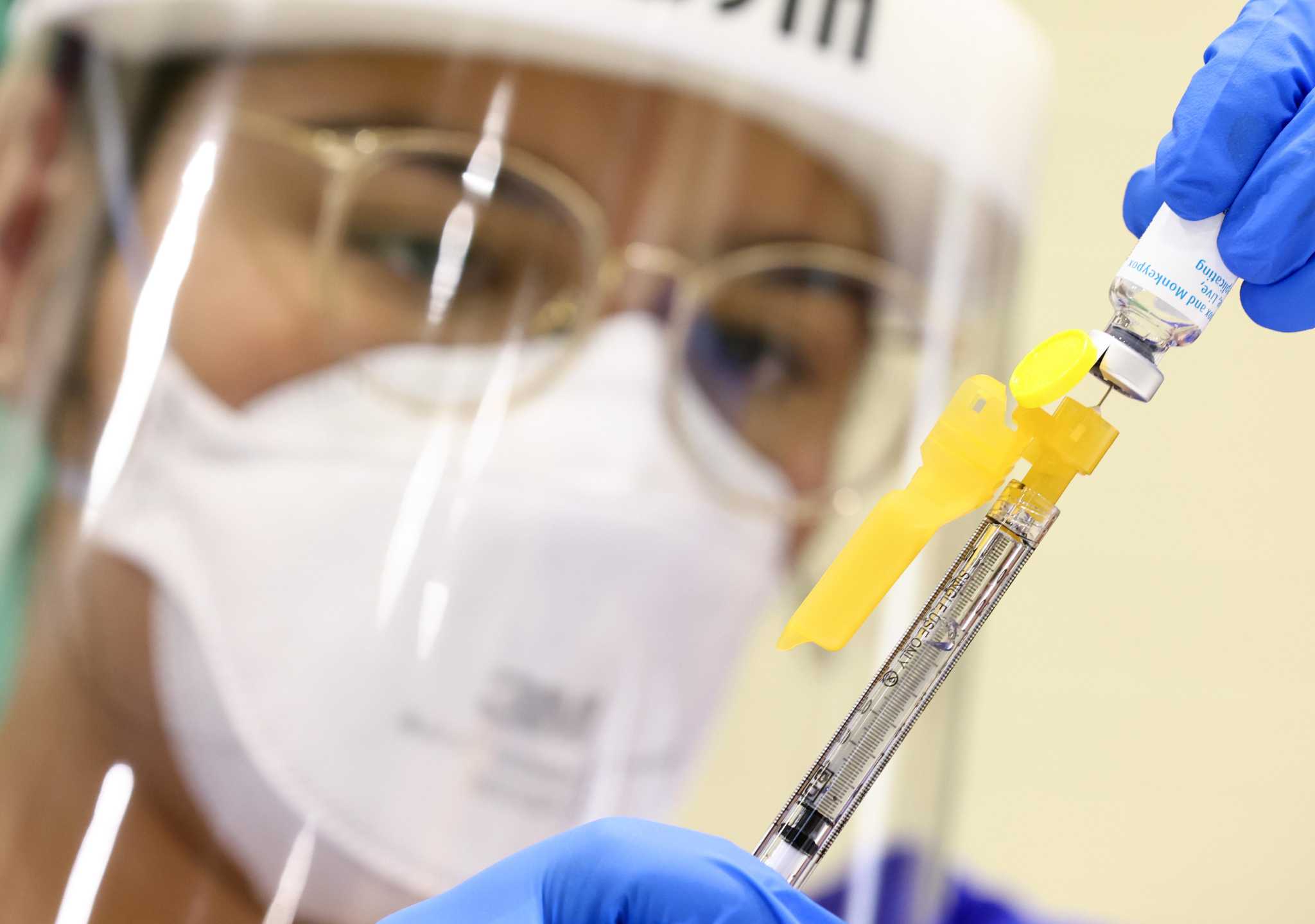
Monkeypox and children - A leading virologist explains
Though the CDC has stated there are no confirmed cases of the monkeypox virus among patients under 18 in Connecticut, a handful of cases involving children have been reported across the country. Paulo Verardi, associate professor of virology and vaccinology at UConn, is taking on some of the important questions about monkeypox and children and offering his expertise and clarity regarding a topic that has many Americans and parents concerned: Are children specifically at risk? A: “Anyone is at risk of contracting monkeypox and spreading it to other people, typically by direct, close contact, such as skin to skin contact. That includes touching monkeypox lesions that sometimes can be hard to notice, or touching and using objects such as toys, clothes, and bedding of someone that is infected. “In this context, it is important to point out that the virus can stay in the environment without losing infectivity for quite some time. Children are very active, social, and tactile, so spread in settings like schools and day care facilities is something we need to consider, particularly if the outbreak continues to evolve and infections become more widespread in diverse populations.” Does the disease traditionally present differently in younger people? Is the symptomology different? A: “In general, symptoms are similar in adults and children, although for this outbreak with this specific strain of the virus, our clinical experience in children is limited because we have had only a few cases so far. “Rash or skin lesions are typical, and fever and swollen lymph nodes (lymphadenopathy) are also common symptoms. However, children may be at higher risk of more severe disease and complications from monkeypox, particularly if they are very young, have skin conditions like eczema, or are immunocompromised.” If you are a journalist looking to cover this topic, let us help with your stories. Paulo Verardi is a virologist who specializes in vaccine research and development and is a member of the Center of Excellence for Vaccine Research. Dr. Verardi is available to speak with media regarding virology, monkeypox, COVID-19, and other viruses – simply click on his icon now to arrange an interview today.


Women in STEM Careers Face Bias
Women are excluded from promotions when firms look at potential, rather than proof, says Dr. Nishtha Langer, an associate professor in the Lally School of Management at Rensselaer Polytechnic Institute. Promotions are an accepted way for firms to attract and retain talent. In an ideal world, promotion for employees would be purely merit-oriented, and thus, performance – or potential for performance – would be a firm’s most important criteria for career advancement. But, according to Dr. Langer, we don’t live in this idyllic world – we live in a world where women are evaluated differently than men, and often endure biases in the work environment that men don’t face. Dr. Langer believes that several factors contribute to such deleterious workplace practices. Promotions rely less on absolute merit and more on relative merit. Thus, prejudiced ideas of potential capabilities, for instance, those relying on gender-role orientation – or the ability of a woman to do what may be perceived to be a masculine task – may prevent senior managers responsible for promotions from realizing the potential of their female colleagues. Women in STEM or technology often suffer from this bias. This prejudice may further bias how women are evaluated. Especially in those jobs where women are a minority, the in-group versus out-group biases would affect the visibility of women vis-à-vis men for promotions. Another factor that may inhibit women from being promoted on the basis of potential – or even indeed with proof – is what researchers term the compensatory stereotype. If men succeed, it is because of their abilities; if women succeed, it is because of factors other than their abilities. Unfortunately, the potential or abilities of women are misattributed to luck or team factors, inhibiting them from the starting line. Finally, promotions are a way for firms to ensure valuable talent does not leave. In that sense, managers may be less sensitive to women’s outside prospects and may thus ignore their potential and choose to not promote them. They do so at their peril and fail to take advantage of the multitude of abilities women bring to the table. Dr. Langer, an authority in the field of business and the societal value of IT and IT human capital, has long focused her research on women in technology careers. She is available to speak to this and other concerns about equality in the workplace.


Podcast: The nine behavioural habits needed to become a trusted executive
Executive trust model designed by business author who researched Doctorate at Aston Business School Nine behaviours sit under the three pillars of trust: ability, integrity and benevolence Company bosses urged to follow example of former Unilever chief executive Successful business leaders need to rely on the power of trust, rather than just trusting in power. And helping them to make that step-change is a self-confessed “trust geek” who carried out his research at Aston Business School before setting up a not-for-profit organisation to help bosses become “trusted executives”. Dr John Blakey has published a book called The Trusted Executive: Nine Leadership Habits that Inspire Results, Relationships and Reputation, which was based on his Doctorate in Business Administration (DBA). He has since founded the Trusted Executive Foundation, based in Solihull but with clients all over the UK and overseas. He spoke about his experiences in the latest episode of the ‘Aston means business' podcast series, presented by journalist Steve Dyson. Dr Blakey said: “The global financial crisis of 2008-09 was clearly a sign that we were losing trust in business life, and that’s what sparked me to enrol on the DBA at Aston University. I wanted to go back into the classroom and do the research to get to grips with this word ‘trust’, and to help other leaders who are looking to build high-trust cultures.” He said it was important for businesses to know where their leaders stand, and “whether you stand for power or trust as the currency of your leadership”. He explained that every leader therefore needs to ask themselves a very important question: “Are they leaders who trust in power or leaders who rely on the power of trust?” Dr Blakey, who first began his own business in executive coaching with Olympic medal-winning rower Bill Barry over 20 years ago, admitted to being a “bit of a trust geek”. While existing research had discovered the three pillars of trust, namely ability, integrity and benevolence, he set out to build on that to find out the “behavioural habits” under each one. He added: “Each habit is important in terms of building and inspiring trustworthiness, whether in a leader, in a team, or in a brand.” Dr Blakey said the habits under the pillar of ability are deliver, coach, and be consistent. “As a business leader it’s important to be competent at what we do, to deliver on time, to budget, to quality,” he said. “Coaching is all about helping other people deliver ... through coaching I can tap into the potential in people and help them grow, and I have to do this delivery and this coaching consistently, day in, day out.” Dr Blakey said that as a researcher not a week goes by without a new case study around integrity, not least that of Boris Johnson and the leadership of the Conservative Party. “There are three habits under this pillar of integrity: be honest, be open, be humble. And when we talk about our political leaders, I think we are particularly talking about honesty, as we have been quizzing our prime minister around his honesty.” He said being open was about “sharing more of yourself” and went on: “I was brought up as a leader not to show weakness … but I think increasingly in the world of trust leaders are being encouraged to show a bit of vulnerability at the right time and place.” Being humble was the opposite of being arrogant, and Dr Blakey cited the recent case of P&O whose leaders, he claimed, showed a “degree of arrogance and dismissiveness about other people’s needs”. The final pillar of benevolence consists of evangelise, be brave, and be kind. He said: “It’s common human care, compassion, kindness, and if you want to be trusted, it’s equally important to be benevolent as it is to have that integrity.” Dr Blakey said a good example of his model is Paul Polman, former chief executive of Unilever, which was recognised for the way it takes care of its people, while also leading on sustainability and protecting the environment. “Paul demonstrates that you can pursue what I call the triple bottom line of profit, people and planet, and do these things in parallel. The single biggest factor in building a high-trust culture is the behaviour of the CEO and the senior leadership team leading by example.” Dr Blakey said he and his team at the Trust Executive Foundation are now helping leaders who want to stand for trust. He added: “The sweet spot for us is helping the leaders lead from the top.”

MEDIA RELEASE: Ten travel tips Ontarians should consider before flying this summer
CAA South Central Ontario (CAA SCO) has compiled a list of ten things that Ontarians should be aware of if they are considering travelling this summer – both inside and outside the country. “Those who are considering booking a trip should make sure they understand the scope of what travel looks like at the moment,” said Nadia Matos, manager external communications, CAA SCO. “The checklist for planning a trip has changed and we want to help people navigate this new environment. “Airports are experiencing delays with varying degrees of impact, and Ontarians should be prepared.” Through consultation with its top travel agents, CAA SCO has identified ten key considerations that potential travelers may not be aware of. Anyone who is considering travel in the current environment should remember that travel requirements and regulations are continually changing. Expect itinerary changes. CAA SCO travel agents say our members are experiencing schedule changes for flights. Subscribe to the airline’s text message service to be immediately notified of any changes, and book connecting flights with more time in between than you normally would if available. A travel agent is also a valuable resource if this happens. Consider packing a carryon instead of checking luggage. Potential baggage delays mean that your luggage may not arrive with you or take extra time to be unloaded off the plane. If you bring a carryon, make sure it fits the size requirements for all the airlines you are flying on, and with any tour operators. When using a carryon to travel, you still need to follow the 3-1-1 rule: three ounces of liquid, gel, aerosol, cream or paste that fit in one quart-sized resealable bag. If you are checking luggage, make sure your carryon has your hygiene essentials, any medications, and a change of clothing. Expect longer wait times at the airport. The old standby of being at the airport one hour before takeoff for domestic flights and two hours before international flights no longer apply. CAA currently recommends arriving at the airport a minimum of two hours before domestic flight departures and at least three hours for international flights. Make sure all your documentation is in order before you book. Your passport should still be valid six months after your travel date, as this is required in several countries. Passports themselves are taking longer than usual to renew, so it should be done several months before you travel. Each destination has varying documentation requirements, so make sure you fully understand what information you need to have ready and in what format. Buy travel insurance and understand what is covered. Make sure you have $5 million in coverage for emergency medical situations and that illness related to COVID-19 is included. Understand your entitlements for situations like denied boarding in the event of a positive test, trip cancellation or delays, what luggage is covered and what isn’t. Car rentals need to be booked months in advance. High demand as well as a shortage of vehicles means a shortage of rental cars. Some rental agencies, particularly on the east and west coasts, are not allowing vehicles to be rented in one city and left in another. A travel agent can help you navigate this. COVID-19 is still a major consideration. Confirm the COVID-19 situation at destination prior to booking. Understand the risk level associated with travel to a particular destination by checking the Government of Canada Travel Advice and Advisories website. Individual travel advisories remain on a country-by-country basis. It is important that Ontarians understand the ongoing uncertainty associated with international travel, whether that be related to the continued community transmission of COVID-19, or state of health care systems in destinations hit hard by the pandemic. Canadians returning home must have all required documentation loaded onto the ArriveCAN App or website. Stay connected. It is important to have access to trusted, up-to-date information while travelling so you can monitor changing conditions and requirements and adapt accordingly. Bookmark the Global Affairs Canada website prior to departure and check it regularly while abroad. It is also a good idea to sign up for Registration of Canadians Abroad and stay in touch with a family or friend that has knowledge of your travel plans. Find these and more information at www.caasco.com/travel Confirm change and cancellation flexibility with your travel service provider. Many airlines and hotels have been providing more flexibility when it comes to refunds and changes to bookings. Make sure you understand any key dates related to cancellation and changes and whether you are entitled to a refund or a future travel voucher or credit at the time of booking. Be patient, be kind. Around the globe, airlines are dealing with staff shortages and luggage handling back-ups. Keep in mind that the staff at the airports are there to help you, and that things may take longer than usual.
