
Experts Matter. Find Yours.
Connect for media, speaking, professional opportunities & more.
With lasers, smoke and a wind tunnel, UF helps federal agency investigate deadly Hurricane Maria
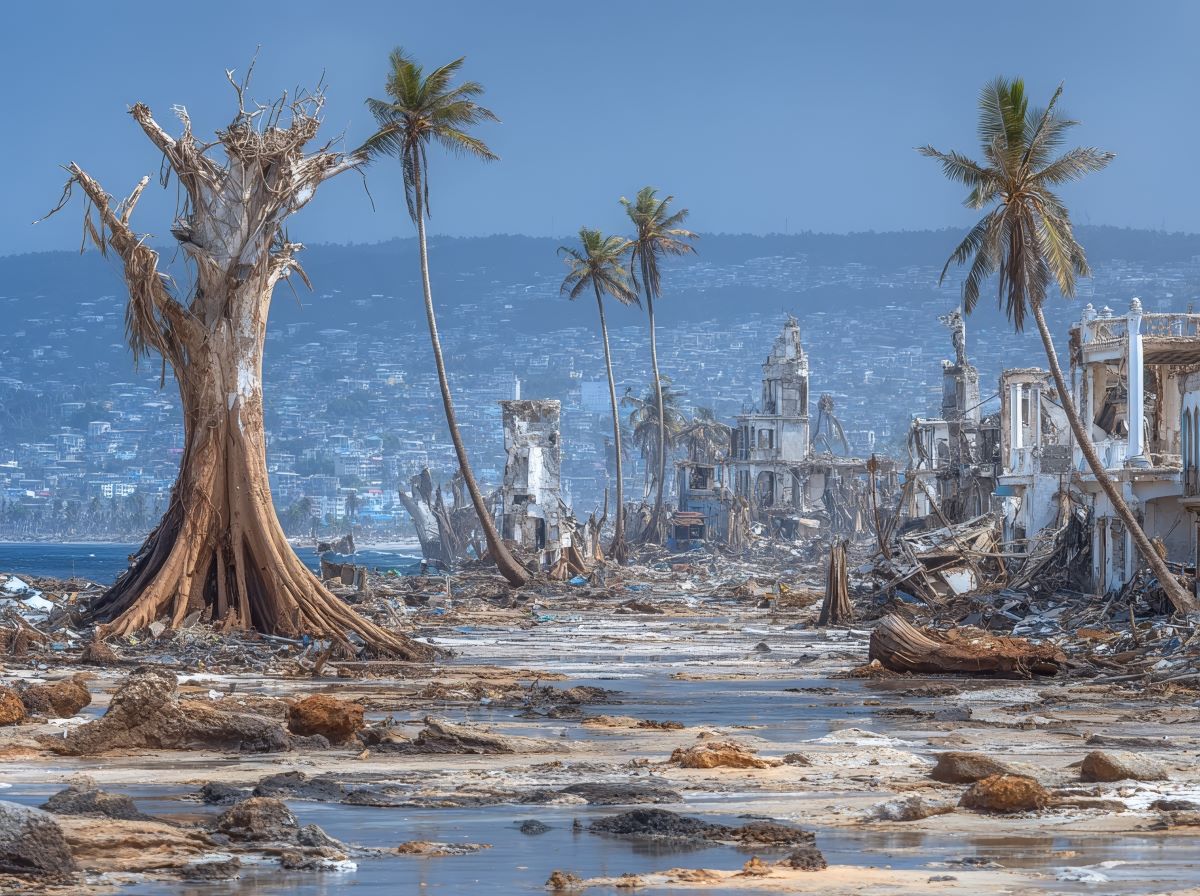
As Floridians brace for hurricanes amid the wild weather of 2025, some University of Florida researchers have their eyes on 2017’s Hurricane Maria, the deadly Category 4 storm that pummeled Puerto Rico. Engineering professor and natural hazards researcher Brian Phillips, Ph.D., is leading UF’s efforts in a Hurricane Maria investigation conducted by the National Institute of Standards and Technology, known as NIST. The goal is increased safety and resilience amid deadly conditions. Maria killed nearly 3,000 people and caused more than $90 billion in damage. Most of the island’s wind sensors and weather stations failed as the storm raged, leaving responders and investigators with few reliable weather measurements. What went wrong? Phillips and UF storm researchers are helping answer that question — and provide safety and structural recommendations — as part of NIST’s Hurricane Maria investigation. The full report will be released in 2026, but NIST recently published preliminary findings; some of the hazard and structural load data was derived from wind tunnel tests at UF's NHERI Experimental Facility in the Powell Family Structure and Materials Laboratory on UF’s East Campus in Gainesville. “Our wind tunnel has a strong reputation in the wind-engineering community for its unique flow control and measurement capabilities We worked with NIST to develop a test campaign to study the wind conditions Puerto Rico’s mountainous terrain and the resulting loads of critical infrastructure,” said Phillips, a civil and coastal engineering professor with UF’s Engineering School of Sustainable Infrastructure & Environment. “UF,” he added, “has one of the premier research wind tunnels in the country and it enables us to pursue impactful research like this.” As part of the NIST investigation, Phillips and his team created 1-to-3100 scale topographic models of regions in Puerto Rico — about 12 kilometers shrunk down to four meters, Phillips said. They set up those models in the wind tunnel and replicated wind flow over the topography. “These initial tests were designed to understand the influence of the complex topography had on the wind,” Phillips said. Flow was measured using velocity probes and particle image velocimetry (PIV). These topographic model tests were followed by 1-to-100 scale tests on models of two hospitals in Puerto Rico. In addition to surface pressure measurements, the team conducted qualitative flow visualization tests using smoke, lasers, and high-speed cameras. “The capabilities of the UF wind tunnel enabled us to investigate the hurricane winds at two different scales,” said NIST’s lead Hurricane Maria investigator, Joseph Main, “so we could measure how the winds were accelerated by Puerto Rico’s mountainous topography and then how those winds translated into loads on critical buildings.” Maria’s flooding blocked roads to hospitals and shelters. The hospitals themselves were heavily damaged by the storm, NIST reported. Reduced access to healthcare was a major factor in the death toll. “It's good to take a step back,” Phillips said about the overall investigation. “Researchers are approaching the disaster from multiple angles, including the better understanding of the hazard, the performance of critical infrastructure, public response and recovery. “This holistic approach is needed to capture the complete picture and maximize what we can learn from the event. UF's primary contribution was understanding the hurricane wind field and the resulting structural loads, which is a critical piece of that puzzle.” In finding infrastructure vulnerabilities, researchers contend the goal is integrating their findings into design standards for Puerto Rico’s unique topography and building codes. The findings also could be valuable to other storm-prone regions with complex topography. NIST launched the investigation in 2018, noting Hurricane Maria “set off a cascade of building and infrastructure failures across Puerto Rico that had lasting impacts on society, including health care, business and education.” “Our goal is to learn from that event to recommend improvements to building codes, standards and practices that will make communities more resilient to hurricanes and other hazards, not just in Puerto Rico but across the United States,” Main said. The complete report is scheduled to be released in 2026, and NIST noted some findings may change before its release. But in July, NIST released some preliminary findings. They include: Peak wind speeds over flat terrain reached 140 mph. They accelerated to over 200 mph in some areas due to the steep hills and mountains. The mountains also intensified the rainfall, which reached 30 inches in some areas. Only three out of 22 weather stations were fully functional during the hurricane. 95.3% of schools on the island lost power for an average of over 100 days. “One important preliminary finding from the study is that emergency preparations work,” NIST reported. “Businesses, schools and hospitals that took specific measures to prepare before Hurricane Maria were able to resume operations more quickly” said Maria Dillard, NIST’s associate lead Hurricane Maria investigator. Preparations included pre-established emergency plans, designated risk mitigation funds and backup power sources.


AI gives rise to the cut and paste employee
Although AI tools can improve productivity, recent studies show that they too often intensify workloads instead of reducing them, in many cases even leading to cognitive overload and burnout. The University of Delaware's Saleem Mistry says this is creating employees who work harder, not smarter. Mistry, an associate professor of management in UD's Lerner College of Business & Economics, says his research confirms findings found in this Feb. 9, 2026 article in the Harvard Business Review. Driven by the misconception that AI is an accurate search engine rather than a predictive text tool, these "cut and paste" employees are using the applications to pump out deliverables in seconds just to keep up with increasing workloads. Mistry notes that this prioritization of speed over accuracy is happening at every level of the organization: • Junior staff: Blast out polished looking but unverified drafts. • Managers: Outsource their ability to deeply learn and critically think in order to summarize data, letting their analytical skills atrophy. • Power users: Build hidden, unapproved systems that bypass company oversight. A management problem, not a tech problem "When discussing this issue, I often hear leaders blame the technology. However, I believe that blaming the tech is missing the point; I see it as a failure of leadership," Mistry said. "When already overburdened employees who are constantly having to do more with less are handed vague mandates to just use AI without any training, they use it to look busy and produce volume-based work. Because many companies still reward the volume of work produced rather than the actual impact, employees naturally use these tools to generate slick but empty deliverables." "I believe that blaming the tech is missing the point; I see it as a failure of leadership. Because many companies still reward the volume of work produced rather than the actual impact, employees naturally use these tools to generate slick but empty deliverables." The real costs to organizations and incoming employees Mistry outlines three risks organizations face if they don’t intervene: 1. The workslop epidemic "These programs allow people to generate massive amounts of workslop, which is low-effort fluff that looks good but lacks substance. It takes seconds to create, but hours for someone else to decipher, fact-check, and fix," Mistry notes. "This drains money (up to $9 million annually for large companies) and destroys morale. As an educator, researcher, and a person brought into organizations to help fix problems, I for one do not want to be on the receiving end of a thoughtless, automated data dump, especially on tasks that require real skill and deep thinking." 2. Legal disaster He also states, "When the cut and paste mentality makes its way into professional submissions, the risks to the organization are real and oftentimes catastrophic. Courts have made it perfectly clear: ignorance is no excuse. If your name is on the document, you own the liability. Recently, attorneys have faced severe sanctions, hefty fines, and case dismissals for blindly submitting fake legal citations made up by computers." Click here for a list of cases. 3. A warning for incoming talent For new graduates entering this environment, Mistry offers a warning: Do not rely on AI to do your deep thinking. "If you simply use AI to blast out polished but unverified drafts, you become a replaceable 'cut and paste' employee," he says. “To truly stand out, new grads must prove they have the discernment to review, tweak, and challenge what the computer writes. The hiring edge is no longer just saying, 'I can do this task,' but 'I know how to leverage and correct AI to help me perform it.'" Four ideas to fix it To survive and indeed thrive with these new tools and avoid the unintended consequences of untrained staff, organizations should: 1. Reinforce the importance of fact-checking and editing: Adopt frameworks that teach employees how to show their work and log how they verified computer-generated facts. 2. Change the incentives: Stop rewarding busy work, useless reports, and massive slide decks. Evaluate employees on accuracy and results. 3. Eradicate superficial work: Don’t use automation to speed up ineffective legacy processes. Instead, use it to identify and eliminate them entirely. 4. Make time for editing: Give yourself and your employees the breathing room to actually review, tweak, and challenge what the computer writes instead of accepting the first draft. Mistry is available to discuss: Why AI is causing an epidemic of corporate "workslop" (and how to spot it). The leadership failure behind the "cut and paste" employee. How to rewrite corporate incentives to measure impact instead of volume in the AI era. Strategies for implementing safe, effective AI policies at work. How new college graduates can avoid the "workslop" trap in their first jobs. To reach Mistry directly and arrange an interview, visit his profile and click on the "contact" button. Interested reporters can also send an email to MediaRelations@udel.edu.

Strategic Closure of Strait of Hormuz Puts Pressure on U.S., Threatens Global Oil Trade Stability
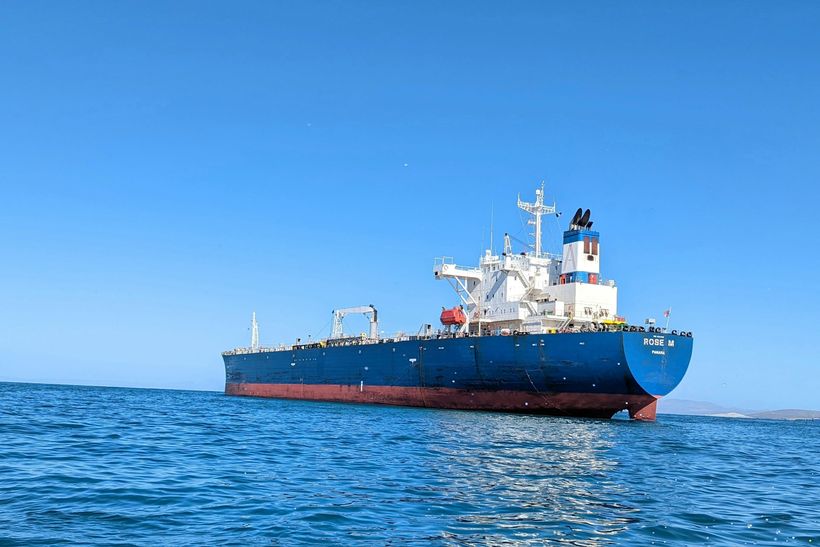
Less than a week after the onset of the war in Iran, and amid escalating conflict in the region, Iran effectively closed the Strait of Hormuz to shipping tankers moving oil from the Middle East by threatening attacks against any vessel who entered the waterway. Thus, the small body of water, which moves a large percentage of the world’s crude oil, has become one of the most discussed places in the world in recent days. Frank Galgano, PhD, is a professor of Geography and the Environment at Villanova University. He is an expert in military and Middle East geography and has also studied global maritime shipping and access to natural resources. Dr. Galgano says there geographic, geopolitical, military and economic factors at play, along with widespread potential consequences, as Iran holds steady on their closure of the strait and the U.S. considers how, or if, it will attempt to help escort oil ships through. Geography and Significance of Strait of Hormuz Situated between Iran to the north and Oman and the United Arab Emirates to the south, the Strait of Hormuz is a narrow shipping lane that connects the Persian Gulf to the Gulf of Oman and, further out, the Arabian Sea. It is one of the most vital chokepoints in the Middle East, along with the Suez Canal, Straits of Tiran, Bab al-Mandab and the Turkish Straits. “Right now, because of oil, it is the most important,” Dr. Galgano said. “Every day, roughly 20 percent of global petrochemical use goes through Hormuz.” The strait itself is barely over 20 nautical miles at its narrowest, but only a small portion of that is shipping lanes. Depth constraints limit shipping to two lanes, each two miles wide, with a two-mile buffer between. “You’re essentially looking at all of that shipping constrained to six nautical miles, and the ships are relatively slow,” Dr. Galgano said. “There are usually about 14-25 tankers every 24 hours transiting the Gulf, so there is always a ship in line." By Iran threatening military action against any oil-carrying ships in Hormuz—and by shipping companies refusing to attempt to traverse it— one-fifth of the global oil trade is essentially cut off indefinitely. That is concerning, given that it takes very little to send global oil prices skyrocketing. Dr. Galgano referenced the 2010-11 Somali pirate issue that caused supertankers—which cost upward of $50,000 a day to operate—to be rerouted. “That alone caused gas prices to raise 10 cents per gallon,” he said. In this case, the biggest impact will be felt throughout Asia, which relies more heavily on oil imports. But the U.S., despite being the second-biggest producer of crude oil last year, will still feel significant effects, since oil is traded globally. “It takes these supertankers eight or 12 days to reach the East Coast from Hormuz,” Dr. Galgano said. “So, a few days later you might see diminished supplies, but there is a critical point where we would face a real shortage.” Attempting to Move Ships Through Hormuz Poses Huge Danger Unlike the Iranian-backed Houthi rebels attacks on Israeli ships and those belonging to its allies in the Red Sea last year, Iran itself has far more sophisticated weapons, along with a strong motive to do whatever it can to put pressure on the U.S. and involved allies. In addition to drones designed for attacking ships—like the ones used by Houthis—Iran also possesses Chinese and Russian anti-ship missiles, according to the professor. “Ships are very vulnerable,” he said, then referencing the 2000 bombing of the USS Cole by Al Qaeda operatives. “That was just two guys in a rubber boat with an explosive device, and it almost sunk the whole ship. If one is carrying oil, it becomes almost like a large fuel bomb.” The United States has weighed the idea of sending a convoy to help escort and protect these ships. They did as much in the late 1980s in Operation Earnest Will, in which President Reagan ordered Kuwaiti supertankers—which were being fired at—to reflag under the U.S. flag so the Navy could legally escort them. But weapons technology has changed, and while U.S. naval ships could certainly defend themselves, “supertankers are slow and it is still an incredibly dangerous operation,” Dr. Galgano said. “The convoy would have to be lucky 100 percent of the time. Iran would only have to be lucky once to hit a ship and cause an immediate fiasco, both physically and in the media.” Global Dependance on Shipped Goods According to Dr. Galgano, between 75 and 90 percent of all items you handle on a day-to-day basis come from inside the hull of a ship: shocks on your car, clothes on your back, or components of your computer. When shipment is disrupted, it can cause supply chain and cost issues. “During the pandemic, Ford was waiting on chips for F-150s, and HP was waiting in chemicals to make ink,” Dr. Galgano said. “Even the ship that got stuck in the Suez Canal a few years ago caused $10 billion in losses per day due to the backup.” For commodities like oil, the indefinite inability to utilize perhaps the most important shipping lanes in the world due to large scale conflict quickly raises the economic stakes to even greater levels. “Iran absolutely knows that, and they see this as a bargaining chip,” Dr. Galgano said. “Cause economic pain to force cessation of the attacks.”


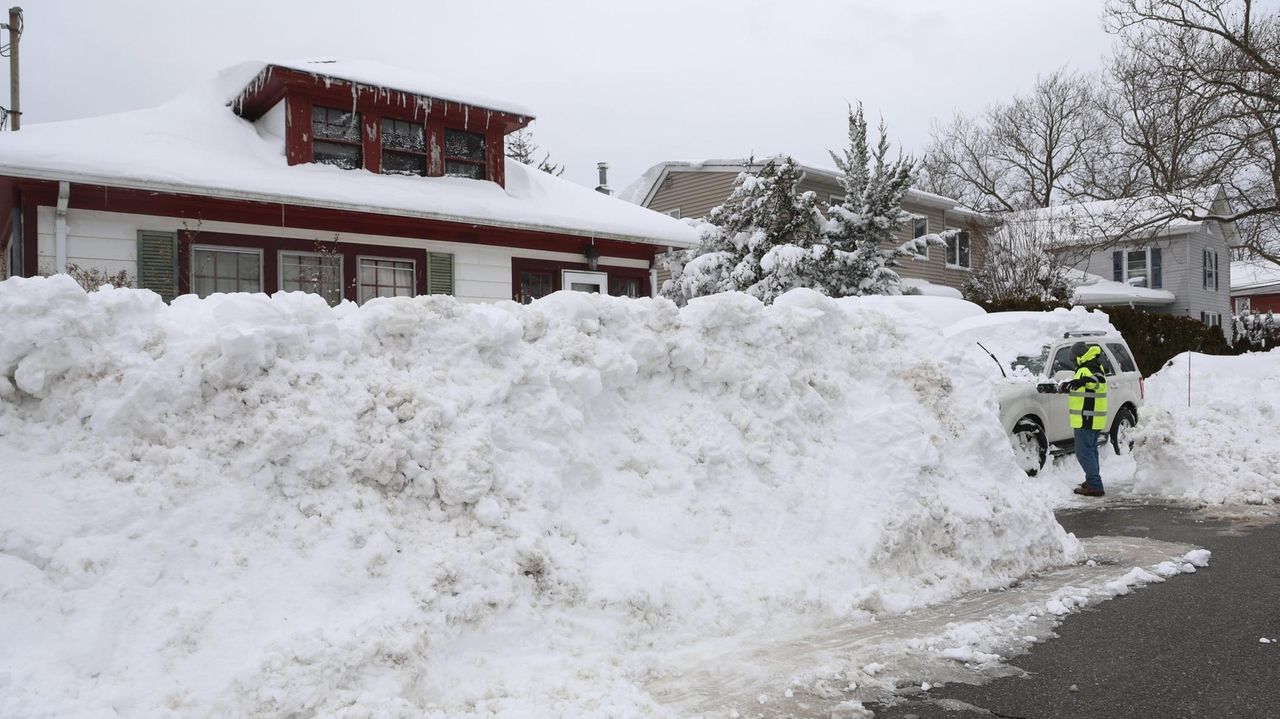
Blizzard of ’26 – One for the History Books
“The blizzard of ‘26 will be remembered in meteorology circles,” Dr. Jase Bernhardt told Newsday about the historic storm this week that dropped approximately 30 inches of snow on parts of Long Island. The Hofstra University associate professor of geology, environment, and sustainability and director of meteorology explained the blizzard hit what’s known as the “70/40 benchmark." That’s 40 degrees north latitude and 70 degrees west longitude, geographic coordinates for a spot over the Atlantic Ocean: “That’s the sweet spot,” said Dr. Bernhardt. “Say it tracks 50 miles south and east, that means the heaviest snow shifts farther away. If it tracks closer, oftentimes, it’s bringing in warm air closer to the center [of the storm], and if it tracks too close, it might yield heavy precipitation, but it’s going to be too warm for all snow.”


Pennsylvania Officials Highlight Snow Squall Safety
Research by Dr. Jase Bernhardt, Hofstra University associate professor of geology, environment, and sustainability, was recently highlighted during a press conference held by several state agencies in Pennsylvania on snow squall safety. The Pennsylvania Department of Transportation (PennDOT), Pennsylvania Turnpike Commission (PA Turnpike), Pennsylvania Emergency Management Agency (PEMA), Pennsylvania State Police (PSP), and the National Weather Service (NWS) highlighted investments by Governor Josh Shapiro’s administration that have led to an average of 7% fewer winter crashes and a 34% decrease in serious injuries and fatalities in those crashes. Media outlets that covered the press conference included the Times News Online.
Two rising cancer researchers from ChristianaCare’s Cawley Center for Translational Cancer Research were recognized for outstanding scientific contributions at the University of Delaware’s Annual Biology Research Day Conference on January 30, 2026. The awards highlight the strength and impact of colorectal cancer research underway at the Cawley Center. Anh Nguyen, a third year Ph.D. student, received the conference’s first place poster award for his project, “FGF19/FGFR4 Axis: A Key Driver in Tumor Growth and Treatment Resistance in Colorectal Cancer.” His research explores a signaling pathway that may lead to new strategies for targeting treatment resistant disease. Molly Lausten, a fifth year Ph.D. student, earned third place for her presentation, “Investigating the role of miR 27a 3p in the WNT signaling pathway and chemoresistance in colorectal cancer stem cells.” Her work examines a key microRNA that may influence resistance to therapy, a major challenge in treating aggressive tumors. “These awards reflect far more than individual excellence,” said Bruce M. Boman, M.D., Ph.D., MSPH, FACP, senior scientist and director of Cancer Genetics at the Cawley Center. “They show the power of rigorous, curiosity driven science to move the field forward. Molly and Anh are tackling some of the hardest questions in colorectal cancer, and their success speaks to the innovative environment we are building at ChristianaCare. I could not be more proud of their achievement and their commitment to improving outcomes for patients.”

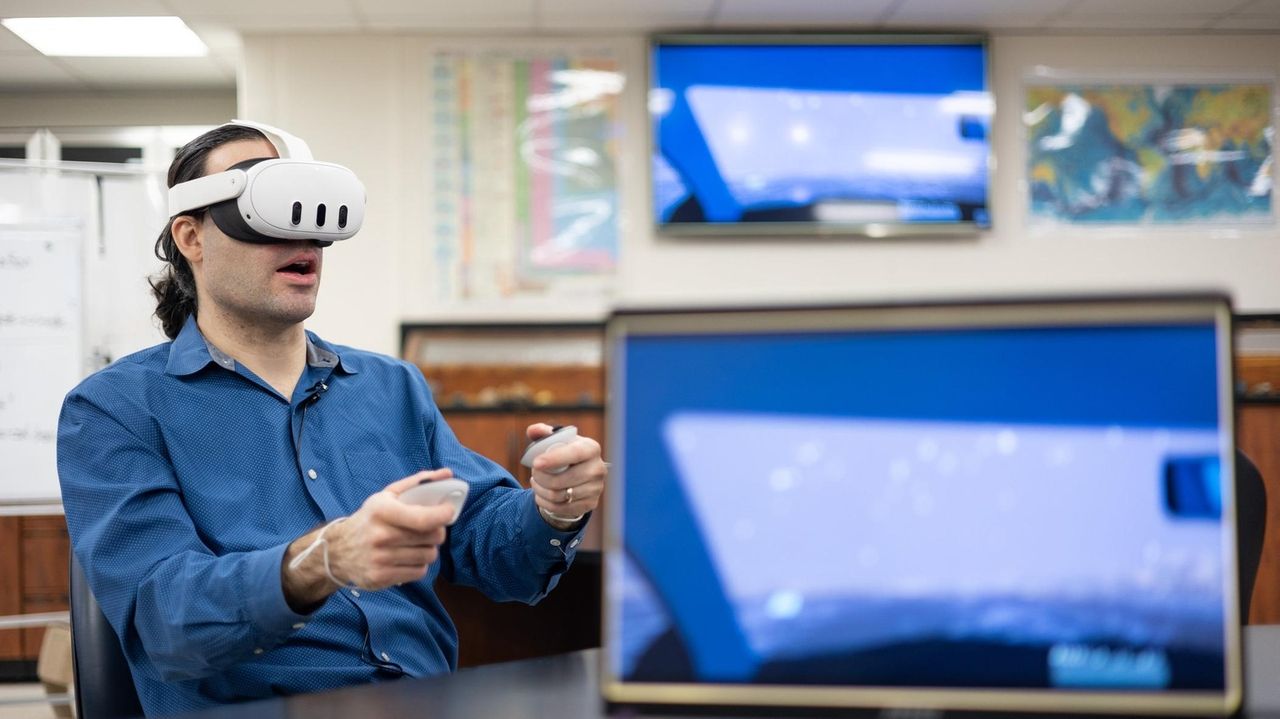
VR Teaches the Danger of “Short-Fuse” Weather Events
Dr. Jase Bernhardt, associate professor of geology, environment, and sustainability and director of Hofstra University’s meteorology program, was interviewed by Newsday about the use of virtual reality technology to teach the public about the danger of driving in a snow squall.
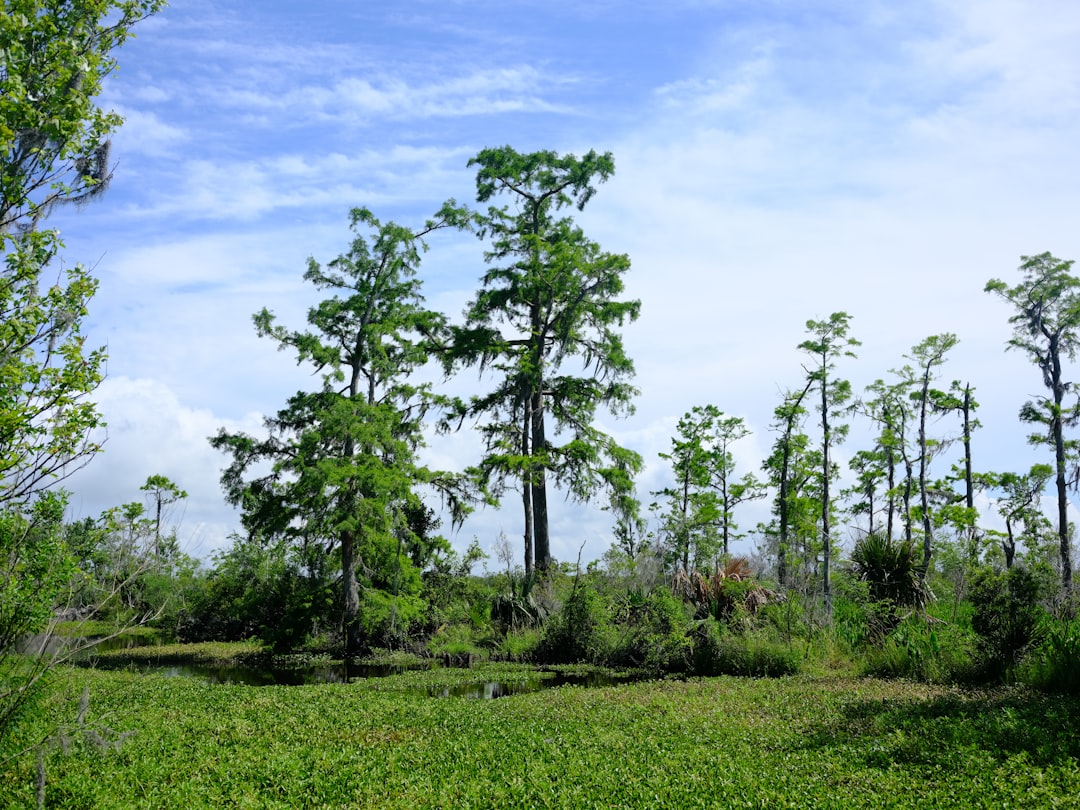
Wetlands: Nature’s First Line of Defense for Our Coast and Communities
Since the 1930s, Louisiana’s coastline has been reshaped by the relentless advance of the Gulf, with over 2,000 square miles of land disappearing beneath its waters and representing the largest loss of coastal land anywhere in the continental United States. This dramatic transformation has far-reaching consequences, threatening local economies, delicate ecosystems, and heightening the state’s exposure to hurricanes. In the face of these urgent challenges, LSU’s College of the Coast & Environment (CC&E) stands at the forefront, leading pioneering research and bold initiatives that not only protect Louisiana’s coast, but also build stronger, more resilient communities. Below are just a few examples of how CC&E is driving meaningful solutions for our coastal future. Wetlands are vital to protecting our coast, and CC&E researchers are actively investigating the role of both constructed and natural wetlands in reducing coastal flooding hazards. Through several projects funded through the US Army Corps of Engineers, Drs. Robert Twilley, Matthew Hiatt, and CC&E Dean Clint Willson, along with collaborators across campus, are conducting research on coastal ecosystem design - a framework that leverages the benefits of natural and nature-based coastal features, such as wetlands, environmental levees, and flood control gates – and how that could be integrated into engineering design and urban planning. Through the State of Louisiana’s ambitious Coastal Master Plan, administered by the Louisiana Coastal Protection and Restoration Authority, wetland construction and restoration play a huge role in managing the Louisiana coastal region. Such innovative techniques leveraging natural and nature-based features require evaluation to determine the success of such projects, and CC&E researchers are using cutting-edge science to advance this endeavor. Dr. Tracy Quirk and her students are investigating the success of marsh restoration by comparing structural and functional characteristics (e.g., vegetation, elevation, hydrology, accretion, and denitrification) between two created marshes and an adjacent natural reference marsh along the north shore of Lake Pontchartrain, Louisiana. Wetlands not only serve as a buffer from storms and sea level rise but also play a major role in regulating greenhouse gas emissions and contribute to productive vibrant ecosystems. In large collaborative project funded by the National Science Foundation, Dr. Giulio Mariotti is using computer models to forecast how coastal marshes may change in size, shape, and salinity in the future, and how these changes could affect methane emissions. As part of the same project, Drs. Haosheng Huang and Dubravko Justic are creating high-resolution hydrodynamic and biogeochemical models to predict changes in methane emissions in coastal Louisiana. In another project, with funding from Louisiana Center of Excellence, National Science Foundation, Louisiana Sea Grant, and the National Oceanic and Atmospheric Administration, Drs. Matthew Hiatt and John White have established a network of sensors to measure water levels and salinity throughout the wetlands in Barataria Bay, Louisiana, a region that has experienced significant land loss and storm impacts. The goal is to establish an understanding of the drivers of saline intrusion in marsh soils, and to ultimately determine what this means for the ecological resiliency of wetlands experiencing rapid change. CC&E’s leadership in wetlands science is recognized nationwide. It is the only college in the United States to have six faculty members—Drs. John White, John W. Day, Jr., Robert Twilley, William Patrick, James Gosselink, and R. Eugene Turner—honored with the prestigious National Wetlands Award. No other institution has had more than one recipient. Presented annually by the Environmental Law Institute, this award celebrates individuals whose work demonstrates exceptional innovation, dedication, and impact in wetlands conservation and education. CC&E’s unmatched record reflects decades of pioneering research and a deep commitment to safeguarding the nation’s most vulnerable coastal landscapes. Every day, CC&E channels this expertise into action—protecting Louisiana’s coast and, in turn, the communities, wildlife, and ecosystems that depend on it. Through bold research, collaborative partnerships, and a vision grounded in science, the college is shaping a more resilient future for coastal regions everywhere. CC&E is building teams that win in Louisiana, for the world. Article originally published here.


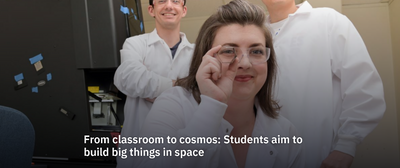
From classroom to cosmos: Students aim to build big things in space
In the vast vacuum of space, Earth-bound limitations no longer apply. And that’s exactly where UF engineering associate professor Victoria Miller, Ph.D., and her students are pushing the boundaries of possibilities. In partnership with the Defense Advanced Research Projects Agency, known as DARPA, and NASA’s Marshall Space Flight Center, the University of Florida engineering team is exploring how to manufacture precision metal structures in orbit using laser technology. “We want to build big things in space. To build big things in space, you must start manufacturing things in space. This is an exciting new frontier,” said Miller. An associate professor in the Department of Materials Science & Engineering at UF’s Herbert Wertheim College of Engineering, Miller said the project called NOM4D – which means Novel Orbital and Moon Manufacturing, Materials, and Mass-efficient Design – seeks to transform how people think about space infrastructure development. Picture constructing massive structures in orbit, like a 100-meter solar array built using advanced laser technology. “We’d love to see large-scale structures like satellite antennas, solar panels, space telescopes or even parts of space stations built directly in orbit. This would be a major step toward sustainable space operations and longer missions,” said team member Tianchen Wei, a third-year Ph.D. student in materials science and engineering. UF received a $1.1 million DARPA contract to carry out this pioneering research over three phases. While other universities explore various aspects of space manufacturing, UF is the only one specifically focused on laser forming for space applications, Miller said. A major challenge of the NOM4D project is overcoming the size and weight limitations of rocket cargo. To address these concerns, Miller’s team is developing laser-forming technology to trace precise patterns on metals to bend them into shape. If executed correctly, the heat from the laser bends the metal without human touch; a key step toward making orbital manufacturing a reality. “With this technology, we can build structures in space far more efficiently than launching them fully assembled from Earth,” said team member Nathan Fripp, also a third-year Ph.D. student studying materials science and engineering. “This opens up a wide range of new possibilities for space exploration, satellite systems and even future habitats.” Miller said laser bending is complex but getting the correct shape from the metal is only part of the equation. “The challenge is ensuring that the material properties stay good or improve during the laser-forming process,” she said. “Can we ensure when we bend this sheet metal that bent regions still have really good properties and are strong and tough with the right flexibility?” To analyze the materials, Miller’s students are running controlled tests on aluminum, ceramics and stainless steel, assessing how variables like laser input, heat and gravity affect how materials bend and behave. “We run many controlled tests and collect detailed data on how different metals respond to laser energy: how much they bend, how much they heat up, how the heat affects them and more. We have also developed models to predict the temperature and the amount of bending based on the material properties and laser energy input,” said Wei. “We continuously learn from both modeling and experiments to deepen our understanding of the process.” The research started in 2021 and has made significant progress, but the technology must be developed further before it’s ready for use in space. This is why collaboration with the NASA Marshall Space Center is so critical. It enables UF researchers to dramatically increase the technology readiness level (TRL) by testing laser forming in space-like conditions inside a thermal vacuum chamber provided by NASA. Fripp leads this testing using the chamber to observe how materials respond to the harsh environment of space. “We've observed that many factors, such as laser parameters, material properties and atmospheric conditions, can significantly determine the final results. In space, conditions like extreme temperatures, microgravity and vacuums further change how materials behave. As a result, adapting our forming techniques to work reliably and consistently in space adds another layer of complexity,” said Fripp. Another important step is building a feedback loop into the manufacturing process. A sensor would detect the bending angle in real time, allowing for feedback and recalibration of the laser’s path. As the project enters its final year, finishing in June of 2026, questions remain -- especially around maintaining material integrity during the laser-forming process. Still, Miller’s team remains optimistic. UF moves one step closer to a new era of construction with each simulation and laser test. “It's great to be a part of a team pushing the boundaries of what's possible in manufacturing, not just on Earth, but beyond,” said Wei.

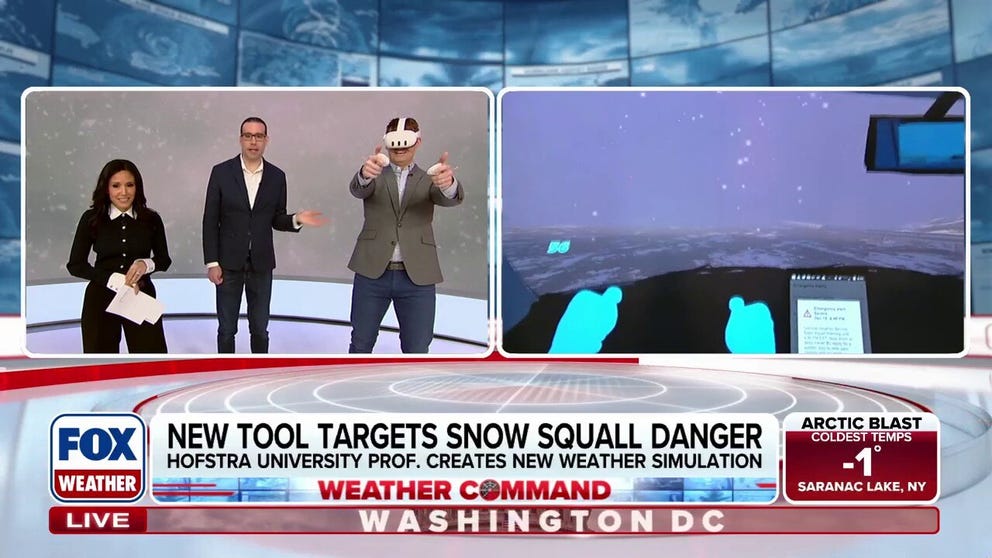
Teaching Driving Safety During a Snow Squall
Dr. Jase Bernhardt, associate professor of geology, environment, and sustainability and director of Hofstra University’s meteorology program, was interviewed by Fox Weather about a virtual reality tool he developed that simulates the danger of driving in a snow squall.