
Experts Matter. Find Yours.
Connect for media, speaking, professional opportunities & more.

ChristianaCare Launches a New Speakers Bureau: Is This the Future of Healthcare Communications?
Only just a few months after their win of an IABC Gold Quill Award (shared with ExpertFile), the ChristianaCare healthcare communications and digital team has once again made major moves to make their organization even more accessible to the community with the launch of their new ChristianaCare Speakers Bureau. As one of the leading healthcare systems in the United States, Delaware based ChristianaCare is home to a wide variety of medical experts. Now live, the ChristianaCare Speakers Bureau features 80 experts who are currently available for speaking engagements on a wide variety of health topics including: Aging and Senior Health, Cancer, Children’s Health, COVID-19, Diabetes, Pregnancy and Childbirth. Sports Medicine, Stroke, Weight Management and Women’s Health. Designed with the ExpertFile platform, the ChristianaCare Speakers Bureau provides easy discovery and access to experts, including their biographies, downloadable photographs, samples of past presentations, languages spoken and more. The site can be viewed here. Screenshot from the new ChristianaCare Speakers Bureau launched Aug. 2023. The site provides easy discovery and access to experts, with the ability to search by topics and keywords. Detailed profiles for experts include biographies, downloadable photographs, samples of past presentations, languages spoken and more. How a Speakers Bureau boosts thought leadership A Speaker's Bureau is an initiative within an organization that assembles a team of expert speakers who can represent the organization and speak authoritatively on its behalf. While media appearances are often the core focus for experts in organizations, a Speakers Bureau opens up additional opportunities to speak at events such as in-person conferences, webinars, podcasts. Speakers ideally represent a diverse group of professionals from within the organization, and can share their knowledge, insights, and experiences on a range of topics relevant to the organization's mission, values, and field of work. Through event appearances, these experts help to enhance the organization's visibility, foster community engagement, and solidify the organization's reputation as a thought leader in its field. Speakers Bureaus provide effective and efficient way to promote the organization's initiatives, achievements, and viewpoints to the wider public. Creating New Connections Between Experts and the Community Following a string of successes that followed the launch of their ChristianaCare Experts site that resulted in major increases in national media coverage and SEO performance, the formation of a Speakers Bureau was a smart move that will further extend the reach of the ChristianaCare brand. Events provide an excellent way to connect meaningfully with a wider audience to help ChristianaCare make progress on key goals such as delivering effective community health education and improving healthcare equity. “At ChristianaCare, our mission of service to the community includes a commitment to provide timely, accurate health information so that people can make informed decisions about their health,” said Karen Browne, vice president of marketing and communications. “Through our new speakers bureau, we’ve expanded our capacity to meet these needs in the community.” The Benefits of a Speakers Bureau Given the fragmentation of traditional media channels and the massive growth in events such as webinars and podcasts, Speakers Bureaus are fast gaining popularity as a proven way to personify your organization and build a stronger connection to your brand. So far the ChristianaCare Speakers Bureau appears to be off to a solid start. "We had a huge response to our media release when we launched earlier this week and in the first day alone we had multiple organizations sending speaking opportunities for our medical experts. We're also seeing a great response internally as more of our experts requested to join the Speakers Bureau once it went live," said Hiran Ratnayake, Senior Manager of Media Relations at ChristianaCare who played a key role in developing the Speakers Bureau with his colleagues Shane Hoffman, Communications Director and Tom Hendrich - Senior Digital Content Editor at ChristianaCare. Is a Speakers Bureau Right For Your Organization? Here are some key benefits to consider in determining if a speakers bureau makes sense for your organization: Bolsters Community Engagement: An active Speaker's Bureau helps create a bridge between your organization and the community you serve. Promotes Diversity and Inclusion: A Speaker's Bureau offers an exciting opportunity to showcase the diverse voices and unique experiences within your organization. Enhances Organizational Visibility: The increased exposure at events can lead to greater recognition in the industry, more opportunities for collaborations, and ultimately, a wider reach for your healthcare services. It also is a proven way to boost SEO pagerank and domain authority in search engines and also provides a lot of additional content for your social channels. Develops Professional Skills: For healthcare professionals who participate, a Speakers Bureau offers an excellent opportunity to develop public speaking skills, foster leadership abilities, and establish themselves as thought leaders in their respective fields. Facilitates Knowledge Sharing: A Speaker's Bureau cultivates a more dynamic learning environment, which can lead to new ideas, innovations, and improved patient care within your organization. Strengthens Crisis Management Readiness: Having a pool of trained speakers ready to contribute can be incredibly beneficial in times of crisis. These professionals can help your communications team more effectively communicate critical information to the public, media, and other stakeholders. Enhances Employee Engagement: Employees who are given the opportunity to share their knowledge and represent their organization publicly, often feel more valued and invested in their work. Going Beyond the Walls of Your Medical Facility In the constantly evolving world of healthcare, accurate and timely information is critical to informed patient decisions and effective treatments. Organizations such as ChristianaCare understand that their role as a prominent healthcare system is to deliver information that extends beyond their immediate medical responsibilities. It’s simply no longer adequate to provide care within the walls of a medical facility. Today there is a critical demand for a more engaged approach, requiring hospitals and healthcare systems to leverage their in-house expertise for community education. A more informed community, armed with knowledge, which can make empowered decisions about their healthcare. While the public has an abundance of medical information at their fingertips, to help them participate more actively in their healthcare, much of the information found on social media today often lacks clarity, context, and credibility, leading to confusion and misinterpretations. Healthcare experts, leaders, and executives can play a pivotal role in dispelling myths and offering credible, evidence-based insights. An engaged, approachable healthcare professional is a reassuring sight, reinforcing the community’s faith in the system. It’s a win-win for these experts and the healthcare institution they represent. And most importantly it's a win for the communities they serve, as people identify potential health issues earlier, adopt healthier lifestyles, and reduce emergency hospital visits. This puts less burden on the region’s healthcare system, and better utilizes resources to reach a broader audience. After all, healthcare is not just about curing the sick; it’s about educating, engaging, and empowering the community for a healthier future. Congratulations to the entire team at ChristianaCare for creating such a valuable resource for your community. And thank you for letting us be a part of this exciting journey.


Today’s global business environment has led to rising demand for more advanced qualifications. Aston University’s Geoff Parkes explains how a DBA degree can help leaders meet employer demands and identify cutting-edge solutions to business problems. In recent years, the Doctor of Business Administration (DBA) has emerged as a prestigious qualification that equips aspiring business leaders with the skills and knowledge necessary to address complex challenges in the corporate world. Delivered online, Aston University’s Executive DBA programme is designed to accommodate professionals’ busy schedules and exemplifies the flexibility and relevance that DBA degrees offer in today’s dynamic business environment. Turning theory into practice DBA programmes, like their doctoral counterparts, require candidates to delve deeply into advanced business topics and contribute to their chosen field through original research presented in a thesis. What sets DBA graduates apart is their ability to bridge the gap between theory and practice. They are trained to apply their extensive knowledge directly to real-world business problems, making them invaluable assets to their employers. While DBA students are generally not inventing new theories, they are applying existing models in innovative and creative ways that contribute new knowledge both to academia and practice. Universities and business schools that offer DBA programmes will have a cadre of academic supervisors and faculty who can combine scholarly rigour with practical business experience. This is what students look for in their choice of institution. According to the Global DBA Survey from Compass, the typical DBA candidate boasts an impressive 15 years of professional experience on admission to the programme. It’s the norm for DBA students to complete their research while holding middle or senior management positions, showcasing their commitment to career advancement and expertise development. In fact, a DBA candidate’s thesis is usually directly related to a live work issue that requires this level of rigour. Rising educational expectations In the rapidly evolving business landscape of the 21st century, businesses worldwide are seeking leaders who can seamlessly navigate new challenges without extensive training. While a bachelor’s degree coupled with professional experience was once sufficient, the demand for more advanced qualifications has grown substantially. For many, the Master of Business Administration (MBA) has therefore supplanted the Bachelor of Business Administration (BBA) as the requisite ‘entry-level’ degree, with DBA degrees elevating candidates even further. A recent report from EFMD Global found that DBAs are on a growth trajectory, with 86 per cent of institutions offering the qualification expecting an increase in enrolments in the near future. Career advancement and reputation are key growth factors for those seeking to study the qualification. The main driving motivations are the transformation of careers (cited by 81 per cent of respondents), the ambition to achieve the recognition of ‘Doctor’ (cited by 76 per cent) and the need for research with managerial impact (71 per cent). Business as an international language The proliferation of DBA education globally is a relatively recent phenomenon, with many programmes established in the last decade. This trend is not confined to a specific geographic location – the aforementioned Global DBA Survey from Compass indicates that 42 per cent of programmes are based in Europe, 28 per cent in North America and 22 per cent in Asia. DBAs are demonstrating their ability to impart business knowledge that transcends borders. Moreover, the survey highlights an 80 per cent increase in demand for DBA programmes worldwide, with no region experiencing decreased interest and significant growth in the Middle East and Asia. Aston University’s Executive DBA programme, with its flexible distance learning approach, exemplifies this global trend. Taking an academic approach to business Contrary to popular culture perceptions, business leaders rely on a foundation of knowledge acquired through rigorous academic and professional development. A guide in US News & World Report outlines the various stages of a typical DBA online programme, emphasising that candidates undergo multiple phases of research and evaluation to become workplace-ready executives. The journey includes: Research methods: DBA programmes commence with research methods courses that equip students with essential skills for business research. These practical courses introduce students to valuable sources and questions, preparing them for their thesis projects. Thesis and defence: After completing research methods courses, DBA candidates propose their doctoral theses, refining them with faculty supervisors. Supervisors ensure that thesis topics are original and contribute knowledge to the field. Candidates then conduct research and present their findings in a viva, which determines whether they have met the required standard for a doctorate. Benefits of DBA completion DBA graduates stand to enjoy several benefits, including: 1. Increased salary: DBAs command significantly higher salaries compared to other business degrees. PayScale data reveals that while graduates of a bachelor’s degree in business earn an average of GBP£34,000, MBA graduates earn median salaries of £52,000. DBA degree holders stand to earn even more, in executive positions that might include operations director (£87,989), vice-president (£92,800) and finance director (£102,078). 2. Multiple career paths: Unlike PhD programmes that primarily prepare students for academic careers, DBAs offer participants the flexibility to pursue both academic and business careers. Aston University’s Executive DBA programme, in line with global trends, focuses on preparing students for senior management roles. DBA candidates align their research projects with their career paths, showcasing their advanced knowledge and expertise in specific domains. In conclusion, the rise of DBA programmes is driven by the growing demand for advanced business education, the globalisation of business knowledge and the need for leaders who can integrate academic rigour with practical expertise. DBA graduates are well-equipped to meet employer demands and explore innovative solutions to contemporary business challenges, making them invaluable assets in the ever-evolving world of business. Dr Geoff Parkes is DBA programme director and associate professor in marketing and strategy at Aston Business School, Aston University. Following a career in industry, he graduated with a DBA in 2015 Discover Aston University’s online Executive DBA programme Aston University is a public research university situated in Birmingham, England. In 2020, Aston University was named ‘University of the Year’ by the Guardian and ‘Outstanding Entrepreneurial University’ in the Times Higher Education Awards. Aston was also shortlisted for ‘University of the Year’ in the Times Higher Education Awards 2021


Jacqueline Ortiz Honored for Increasing Patient Access to Interpreter Services
Fifty-eight years ago, a young man from Argentina wound up in surgery at a California hospital after stomach pains turned out to be peritonitis, a potentially life-threatening inflammation of the membrane lining the abdominal wall. He was discharged to his wife’s care, with one problem — neither the man nor his wife had any idea how to care for the open wound in his abdomen. Jacqueline Ortiz The couple did not understand the lengthy instructions delivered in English, and there was no interpreter to explain to them in their native Spanish what to expect. So, when the man tried to take a bath and discovered the gauze was stuck to his wound, he didn’t know what to do. Fear and uncertainty compounded an already stressful time. Jacqueline Ortiz wasn’t yet born when her father’s health care emergency took place, but growing up she heard the story over and over. It was more than family lore for Ortiz — it was a lesson. Ortiz said she wanted her mother, pictured with her at the DVTA event, to see the growing number of people working as interpreters to ensure people get the information they need in the language they understand. Ortiz, now the vice president for Health Equity and Cultural Competence at ChristianaCare, saw firsthand how the experience left her parents terrified of the medical environment. Removing barriers to good health Years later, Ortiz is a leader in advocating for patients to have access to qualified, culturally responsive medical interpreting services to remove communication barriers with providers and ensure the best possible care and outcomes. “Language access is what fills my heart and soul,” Ortiz said. Her pioneering efforts and enthusiasm for promoting the use of trained interpreters in health care earned Ortiz the inaugural Making an Impact Award from the Delaware Valley Translators Association (DVTA) during an event Sept. 9 at Widener University. In her role at ChristianaCare, she builds the organization’s capacity to reduce the incidence of disease and improve health outcomes, advance equitable health care services, and reduce health disparities for identified conditions and target populations through culturally competent care, including providing health care in patients’ native languages. She has over 20 years of experience researching, teaching and working in cultural competence and health equity, social networks, and economic sociology. “Language access is what fills my heart and soul,” Ortiz said. A vision for serving everyone Eliane Sfeir-Markus, CHI, president of the DVTA, said the award recognizes the efforts of those working to make interpreting and translation more available to people with limited English proficiency, and those who are deaf or hard of hearing. Ortiz’s pioneering work to expand language services for patients and implement comprehensive cultural competence training at ChristianaCare have set a standard for caring for patients in their native languages. “Jaki’s vision for a health care system that truly serves everyone, regardless of their cultural or linguistic background, is inspiring,” Sfeir-Markus said. “We as patients deserve someone who knows our culture to take care of us.” ChristianaCare has more than 20 health care interpreters and over 100 caregivers who have undergone additional training to provide interpreting services when needed. ChristianaCare has more than 20 health care interpreters — who wear eggplant-colored uniforms — and over 100 bilingual caregivers who have undergone special training to serve as interpreters in some settings. “Jaki is a well-known name in the field of interpreting and translation because she has advocated for education and professionalization of interpreters in health care,” said Claudia Reyes-Hull, MArch, CMI, CHI, manager of Cultural and Linguistic Programs at ChristianaCare. “Thanks to her advocacy, more health care systems are recognizing the need to have trained interpreters for their patients.” In accepting the award, Ortiz said interpreters play a critical role in health care by making it possible for patients — and their families — to take an active role in their own care and decrease the anxiety over visiting a health care provider. She credited the success of ChristianaCare’s interpreting and translations services and its continued growth to the collaborative spirit and camaraderie among its team of caregivers, particularly Reyes-Hull. Ortiz said her family’s personal experience with a lack of interpreting services during a hospital stay made them anxious about health care for years. “Probably all of us in this room have walked into a courtroom or a lawyer’s office or a hospital room or a clinic and introduced ourselves and seen that immediate response and relaxation in the person we were speaking with,” Ortiz said to the translators at the DVTA event. “You make those interactions within our legal, educational and health care systems so much better.”



For the second consecutive time, ChristianaCare has earned the Joy in Medicine™ recognition from the American Medical Association (AMA). ChristianaCare earned Gold Level recognition, the highest level of recognition in the Joy in Medicine™ Health System Recognition Program. It was one of only 10 health systems nationwide to achieve Gold Level. The recognition underscores ChristianaCare’s demonstrated commitment to the well-being of clinical care team members. “Receiving the Joy in Medicine Award the first time was certainly an honor, but achieving gold level status a second time is an even greater achievement, as the requirements are more exacting,” said ChristianaCare Chief Wellness Officer Heather Farley, M.D., MHCDS, FACEP. “It is a testament to the fact that at ChristianaCare and our Center for WorkLife Wellbeing, we are not comfortable resting on our laurels. We continue to raise the bar in our efforts to support the well-being of our caregivers, effectively respond to the changing health care landscape and foster an environment where each of our caregivers can thrive.” Continued Excellence in Support of Caregivers In 2022, ChristianaCare’s Center for WorkLife Wellbeing launched Psychological First Aid training to help organization leaders build skills to identify and support colleagues impacted by stress. More than half of ChristianaCare leaders completed the training in 2022. The training is now available to all caregivers. In addition, ChristianaCare’s peer support program, known as Care for the Caregiver, offers confidential individual peer support and group support following a range of stressful events at work. The program completed nearly 2,500 encounters from 2015 to 2022. ChristianaCare also has established the Workplace Civility Steer Team, which provides strategic direction in establishing an environment that is safe and free of violence for caregivers, patients and visitors. The team performs this through program and process development for the identification, prevention and response to workplace violence, a challenge increasingly faced by health care workers nationwide. “Health organizations that have earned recognition from the AMA’s Joy in Medicine Health System Recognition Program are leading a national movement that has declared the well-being of health professionals to be an essential element for providing high-quality care to patients, families and communities,” said AMA President Jesse M. Ehrenfeld, M.D., M.P.H. “Each Joy in Medicine recognized organization is distinguished as among the nation’s best at creating a culture of wellness that makes a difference in the lives of clinical care teams.” Burnout rates among the nation’s physicians and other health care professionals spiked dramatically as the COVID-19 pandemic placed acute stress on care teams and exacerbated long-standing systemic issues. While the worst days of the pandemic have passed, the lingering impact of work-related burnout remains an obstacle to achieving national health goals. Since its inception in 2019, the Joy in Medicine™ Health System Recognition Program has recognized more than 100 organizations across the country. In 2023, a total of 72 health systems nationwide earned recognition with documented efforts to reduce system-level drivers of work-related burnout and demonstrated competencies in commitment, assessment, leadership, efficiency of practice environment, teamwork and support.
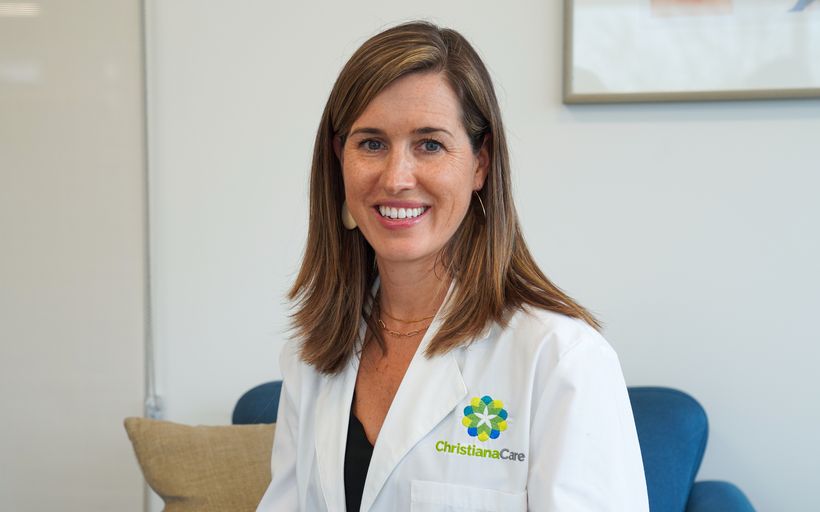
Hospital at Home: Understanding How It Works
As the ChristianaCare Hospital Care at Home program grows, we see the benefits of improving the way we deliver care to our patients. With each patient we care for, we are reminded that a big part of recuperating and getting better is not just physical but mental and emotional. Being home allows patient to visit with loved ones, cuddle with pets and sleep in their own bed. It also helps our health care providers better understand a patient’s living environment, making it possible for us to provide the individual services they need. Q. What is hospital care at home? A. I think of a virtual hospital as three components: a command center, technology and in-home care. The command center is a 24/7, 365-day- a-week center staffed by physicians, nurses, advanced practice clinicians and patient digital ambassadors. This team of health care providers is tethered to patients in the home by way of our technology. We give our patients a tablet that lists their daily schedule so they know who to expect in their home and the time our health care providers will arrive. It also allows them to contact the command center at any time by pressing a button. When they do that, a nurse appears on the screen right away. Edwin Bryson Sr. said ChristianaCare made it easy to treat his diabetes complications from the privacy and comfort of his own home. With hospital care at home, he said, “all I do is hit the button and a nurse comes on to assist me with anything I need. It was 24-hour service here, just like I was in the hospital.” Technology also allows us to monitor patients’ vital signs at home as we would in the traditional hospital setting. We use Bluetooth technology to upload that information into the electronic medical record. In-home care is made up of a team that goes into the home to deliver the services that a particular patient needs. This includes radiology (X-rays and ultrasound), blood tests, intravenous medications, physical therapy, occupational therapy and more. A licensed professional, such as a nurse, also visits the patient at home at least twice a day. Q. Who is eligible for hospital care at home? A. There are requirements for participation. Patients need to live within 25 miles from our Delaware hospital campuses which are in Newark and Wilmington. We also are looking for patients that meet our acute, inpatient level of care. So if they’re in observation status, for example, they wouldn’t be a good candidate. We also need patients who don’t require continuous monitoring: If a patient has telemetry monitoring or if they’re in the intensive care unit or a step-down unit, they would not be a good candidate. Our team works every day with caregivers at both Delaware hospitals to identify patients who would benefit from hospital care at home. Q. What are common sicknesses that can be treated at home? The first 20 patients we admitted into this program had 20 different diagnoses. But after treating more than 500 patients, the most common diagnoses that we see are cellulitis, sepsis, pneumonia, chronic obstructive pulmonary disease (COPD) exacerbation and congestive heart failure. Hospital at home may not be the solution for all patients, but in many cases it can help patients get better quicker and in a place where they most feel comfortable. As ChristianaCare strives for greater access to care, home may be where the health is.

Inspired by Palm Trees' Resilience, Florida Tech Researcher Seeks to Strengthen Made Materials
Inspired by the tiny, circular vessels in the trunks of palm trees that allow the iconic plants to bend but not snap in strong winds, an assistant professor of aerospace engineering is researching how to recreate Mother Nature’s handiwork in additive manufacturing. Mirmilad Mirsayar received a three-year, $200,627 research grant from the National Science Foundation’s highly competitive Mechanics of Materials and Structures program under the Division of Civil, Mechanical and Manufacturing Innovation to study the mechanics and physics of crack propagation in functionally graded cellular structures made by additive manufacturing. That’s the process of creating an object by building it one layer at a time. Mirsayar is the sole principal investigator of the project, “Understanding Mixed-Mode Fracture Mechanics in Additively Manufacturable Functionally Graded Microcellular Solids.” His research is inspired by cellular patterns seen in palm trees and butterfly wings. For example, unlike oak trees and some others, the palm tree’s center contains those vessels, distributed non-uniformly throughout the trunk, that help it survive in Florida’s windy environment. Other biological systems, such as bone, honeycombs and marine sponges, also serve as inspirations from nature. “I’m enjoying this research because I’m learning from nature and I’m applying fundamentals of physics and mathematics to solve a very important engineering problem while training the next generation of engineers and researchers,” Mirsayar said. Materials with cellular structures, such as aircraft wings and artificial bones, are widely used in industries such as aerospace and biomedical. As additive manufacturing has advanced, materials with cellular structures and increasingly complex geometrical patterns can be precisely manufactured. Mirsayar is looking at ways to optimize these strong and light cellular structures made by additive manufacturing to achieve the highest resistance against failure under complex operational loading conditions, such as bending tension, compression and torsion. What could this mean for additive manufacturing? How could stronger materials change what or how we build? Contact Florida Tech Media Communications Director Adam Lowenstein at adam@fit.edu to schedule an interview with Dr. Mirsayar.


Five Tips to Choose Sustainable Fashion
Getty Images Fast Fashion is the most popular trend in retail fashion today. Fast Fashion isn’t a specific style but rather clothing produced quickly and cheaply to respond instantly to consumer demand. Low prices and popular online retailers allow people to purchase clothing more often but at a devastating cost to the environment. According to EarthDay.org, the fashion industry is one of the largest global polluters, creating 4% of all greenhouse gas emissions, 40 million tons of landfill waste and 35% of microplastics in the ocean. According to fashion expert Jay Yoo, Ph.D., associate professor of apparel merchandising in the Robbins College of Health and Human Sciences at Baylor University, consumers are learning more about the environmental impacts of fashion and searching for better options. Fashion expert Jay Yoo, Ph.D., associate professor of apparel merchandising in the Robbins College of Health and Human Sciences at Baylor University Fashion expert Jay Yoo, Ph.D. Yoo’s research shows that purchasing apparel products that help reduce negative impacts on the environment has emerged as a lifestyle. “Fashion-conscious consumers are ready and willing to forgo fast fashion for more sustainable options produced in an ecologically and socially responsible way,” said Yoo. Yoo recommends five ways you can use your purchasing power to support sustainable fashion. Choose natural fibers - organic cotton, linen or hemp. Avoid clothing that requires dry cleaning. Donate to and shop at resale stores. Purchase from retailers that are committed to sustainability. Encourage your friends to join you in supporting sustainable fashion. Although fashion is often understood to center on apparel choices, fashion impacts nearly every aspect of human lives, Yoo said, including health, social responsibility and environmental issues involving consumptive behaviors. His additional research interests include appearance-related behaviors and their implications for individual and social well-being from consumer perspectives, from body-tanning behaviors, body image and quality of life among cancer patients, retail therapy and mental health, and irrational shopping and extreme body modification.


Expert comment on new NHS childhood obesity clinics
Dr Duane Mellor, Senior Teaching Fellow, Centre for Health & Society Aston Medical School and Associate Dean Public Engagement is available for comment on new NHS childhood obesity clinics "It would be about supporting the whole person living with obesity alongside their family. It is important that higher body weight is not a choice, but the result of biology and our modern environment. Families and young people need support to make healthier lifestyle choices easier. We need to focus on kind and effective ways to improve health, weight change is just a product when health behaviours change and should not be seen as the only or main aim." For more details contact Nicola Jones Press and Communications Manager 07825 342091 or n.jones6@aston.ac.uk


Aston University wins £1.8m to boost West Midlands low carbon markets
• Aston University and local industry to develop technology to convert organic material into commercially valuable products • Sawdust, diseased trees and dried chicken litter among what can be transformed into sustainable bioproducts • West Midlands companies are invited to join a cluster to develop new low carbon products for growing markets. Aston University is to receive £1.8 million to transform the West Midlands into a powerhouse of low-carbon product development and commercialisation. The University will be building on its existing research facilities to lead the region’s Biochar CleanTech Accelerator as part of the West Midlands Innovation Accelerator. The project was set up with the aim to secure export contracts for low carbon products worth over £200 million, to be made by a regional industrial cluster. It is hoped that the development of a low-carbon business cluster in the West Midlands will open up new domestic and export markets to help rebuild the region’s engineering and manufacturing status. Biochar, a sustainable form of charcoal, can be used as a soil and plant growth enhancer. It stores carbon in the ground, so there are fewer greenhouse gases in the atmosphere. Other products such as oils can be used as low carbon fuels for boilers and engines and the liquid by-product can be used for low carbon weedkiller, fungicide and plant growth. Aston University’s innovative technology is installed at its urban biochar demonstrator in south Birmingham. The project is based on the strengths of the University’s Energy and Bioproducts Research Institute (EBRI) and its Centre for the Circular Economy and Advanced Sustainability (CEAS). Tim Miller, director of engagement at EBRI, said: “This new development has the potential to rebuild product development, engineering and manufacturing in our region. “The project aims to commercialise knowledge, facilities and the results of long-term university research for the benefit of the environment and our regional economy. “Using the University’s existing expertise and facilities we have the potential to launch new technology-based opportunities as they emerge and mature, The Biochar CleanTech Accelerator is part of the West Midlands Innovation Accelerator which was first announced in the government’s 2022 Levelling up White Paper and started this spring. It is funded through a share of a £100m from Innovate UK, to be divided by three regional innovation accelerators over the next two years. Launched by the West Midlands Combined Authority (WMCA) in March 2023, it will target investment on projects enabling new solutions around Medical and Clean Technologies, to further reinforce the region’s position at the frontier of the UK innovation revolution. The University will also play a key role in two other projects in the West Midlands Innovation Accelerator. Companies interested in joining the cluster can get further information at https://www.aston.ac.uk/biochar-cleantech-accelerator or emailing biochar@aston.ac.uk

Aston University appoints new Deputy Vice-Chancellor Academic
Professor Osama Khan has nearly 20 years’ experience as an academic leader and innovator He will lead academic strategy, new educational model and student experience strategy in line with Aston 2030 Strategy Osama will join Aston University in October 2023. Aston University has appointed Professor Osama Khan as its new Deputy Vice-Chancellor Academic. With a successful career in higher education for nearly 20 years, Professor Khan will be joining Aston University from the University of Surrey where he is currently Pro-Vice-Chancellor Academic, leading on education strategy, teaching excellence and student learning experience. In his new role, he will play a central part in the development of Aston University’s academic strategy in line with the University 2030 Strategy. Responsibilities will include leading the University's academic portfolio incorporating education, curriculum, digital offerings, careers and placements, library and information services, student experience and services. Educated at Independent University, Bangladesh, University of Surrey and University of Cambridge, Osama began his academic career as a lecturer (and then senior teaching fellow) at University of Surrey in 2004. He moved to Solent University in 2012, where he held a variety of roles including director of learning and teaching at Solent Learning and Teaching Institute. He was appointed the first Pro Vice-Chancellor, Students and Teaching at Solent University leading on curriculum, digital services, learning space transformation. He was appointed as Vice-Provost, Education at University of Surrey in 2019. Subsequently his remit extended to form the Pro Vice-Chancellor, Academic portfolio with responsibility for education, curriculum, student services, digital transformation, and learning spaces. He has 25 years of teaching experience in corporate finance at various renowned universities. Professor Aleks Subic, Vice-Chancellor and Chief Executive of Aston University, said: “I am delighted to welcome Osama to Aston University and the executive team at a crucial time when we are shaping our bold strategy for 2030 and beyond. “Osama is a proven academic leader and innovator, who has who has achieved sector leading outcomes in student experience and educational quality. His strong commitment to values-based leadership is aligned well with our approach to working with our people and the diverse communities we serve. “I look forward to working with Osama to position Aston University as the leading university in the United Kingdom for student experience, employability and social mobility.” Professor Osama Khan said: “Aston University's unwavering commitment to academic excellence, coupled with its dedication to equality, diversity and inclusion, resonates deeply with me. Moreover, I commend Aston University's efforts in narrowing the awarding gaps, striving for equity in education and promoting fairness in the academic journey, for it is through education that we empower generations and create lasting impact. “I am honoured to join this creative institution as its next Deputy Vice-Chancellor Academic, where we will prioritise inclusive education and foster an environment where every individual can thrive and succeed. “I eagerly look forward to working with our exceptional faculty, dedicated staff, and talented students to shape the next chapter of excellence through the new Aston University 2030 strategy. Together, we will transform lives, foster innovation and forge a path towards a brighter tomorrow." Professor Khan will be taking up his post in October 2023.