Experts Matter. Find Yours.
Connect for media, speaking, professional opportunities & more.

Amanda Hewes, MS, education program manager at ChristianaCare’s Gene Editing Institute, has been named one of the 2023 Outstanding Delaware Women in STEM by Million Women Mentors, an international movement dedicated to encouraging girls and women to pursue careers in science, technology, engineering and math (STEM). Hewes’ selection spotlights her dedication to engaging young people in the science of gene editing by introducing the Gene Editing Institute’s CRISPR in a BoxTM educational toolkit into classrooms across Delaware and her commitment to bridging disparities in STEM education. “I’m overjoyed to be honored among so many amazing women in this state,” Hewes said. “It’s humbling to be considered and to stand alongside them. All of these women foster and lead dynamic communities of young women that inspire me every day. I hope that I can do the same by making young women in this state feel empowered through the work that I do.” Hewes joined ChristianaCare’s Gene Editing Institute in 2017 with a focus on expanding its CRISPR gene editing system in a cell-free environment. She was first author in a publication in Nature that established the highly innovative “gene editing on a chip” protocol that allowed CRISPR to edit DNA outside of the cell for the first time. This methodology enables researchers to take fragments of DNA extracted from human cells, place them in a test tube and precisely engineer multiple changes to the genetic code. This gene editing system eventually led to the creation of the CRISPR in a Box™ toolkit. This innovative educational resource provides a way for students to learn about this exciting frontier of science through a hands-on exercise in which they use CRISPR gene editing to disrupt a synthetic gene within a plasmid. The simplicity of this experiment allowed for the reaction to be developed into a remarkable teaching tool that can be brought into most school laboratories containing basic laboratory equipment. Once CRISPR in a Box™ was developed, Hewes recognized the potential it could have for high school and college students. She took on a new role as education program manager and expanded the Gene Editing 360™ platform, which is the Gene Editing Institute’s suite of educational tools for engaging students and the public. “Amanda has set us on a tremendous path toward providing more educational opportunities for Delaware students,” said Eric Kmiec, Ph.D., director of ChristianaCare’s Gene Editing Institute. “She’s inspired young women in multiple states and has created so much of this program with her own ingenuity and passion.” Hewes was honored alongside 10 other women by Gov. John Carney, Lt. Gov. Bethany Hall-Long and others at the Delaware State House with the signing of a proclamation to declare March 24, 2023, as “Delaware Women and Girls in STEM Day.”


Aston University celebrates becoming a University of Sanctuary with official event
Aston University officially celebrated becoming a University of Sanctuary with an event held on 16 May for all those who contributed to achieving this status. The University was awarded University of Sanctuary status in December 2022, joining a network of higher education institutions across the UK working to develop support for those displaced by humanitarian crises. The celebration was hosted by Aston University Vice-Chancellor and Chief Executive, Professor Aleks Subic. Guests included Councillor John Cotton, Birmingham City Council Cabinet member for Social Justice, Community Safety and Equalities, who made a special award presentation. The event programme also included a performance by poet Loraine Masiya Mponela, who herself was an asylum seeker and conversations with recipients of Ernest Edward Scholarships, a sanctuary scholarship scheme for students who have sought refuge in the UK. The scheme was set up by Aston University in 2022 due to a generous donation by prominent businessperson Matthew Crummack. Universities of Sanctuary is an initiative to recognise and celebrate the good practice of institutions welcoming people seeking sanctuary through facilitated access to higher education, supporting local refugee communities and taking an active role in learning about the issues and obstacles faced by this group in pursuing university-level education. Professor Aleks Subic, Vice-Chancellor and Chief Executive of Aston University, said: “I am delighted to have had this opportunity to host a celebration event to thank everyone who has helped us achieve the University of Sanctuary status. “Aston University is committed to supporting people seeking sanctuary through its efforts to deepen our understanding of the issues surrounding asylum seekers and refugees, providing a welcoming environment for sanctuary students, and working with individuals and communities beyond the campus to promote the values and principles of sanctuary. “Being a University of Sanctuary is key to our Civic Agreement: our commitment to make Birmingham a better place for everyone who lives, works, and studies here. Birmingham." Councillor John Cotton, Birmingham City Council Cabinet member for Social Justice, Community Safety and Equalities, said: “Birmingham is proud to be a City of Sanctuary, with its long history of offering refuge to those fleeing war, persecution and tyranny around the globe. In these troubled times, standing up for the principles of sanctuary and refuge is more important than ever. “I’m delighted that Aston University has joined the family of Universities of Sanctuary and is one of the many important institutions in our city that actively extends the hand of friendship to those seeking refuge and the chance to rebuild their lives here in Birmingham.”


As technology continues to advance, so do the methods that hackers use to steal personal information. One such method that even the FBI has taken notice of is juice jacking, a technique where hackers use public charging stations to install malware onto your device or steal your personal information. The specific danger is very real, experts say. Steve Weldon, director of the Cyber Institute at Augusta University’s School of Computer and Cyber Sciences, said people need to understand there is risk when plugging a phone into a USB port at a public charging station. “USB uses pins for data and power. When we plug devices in to charge, the data pins are also connected,” said Weldon. “No big deal if we’re in an environment we trust. However, do we trust the public charging stations to have access to our data pins and being able to make data transfers? Probably not and that’s the gist of the recent warning.” There are ways to avoid the risk. “The best advice is to bring your own cables and adaptors. Then we can plug directly into power outlets,” Weldon said. If you must use a public charging station, he suggests using a data blocking USB cable. These cables only allow power to flow through, preventing any data transfer between the charging station and your device. Also, be aware if you are using your phone while charging it. “When using public charging stations we should, at a minimum, watch for strange behaviors, weird popups, and being asked questions about trusting the device or drive we’re connected to. Those are danger signs, and we’d want to disconnect quickly,” added Weldon. Another option to protect your phone from juice jacking is to use a wireless charger. These chargers do not require a physical connection between your device and the charging station. While wireless charging is typically slower than using a cable, it is a safe alternative when you’re on the go and need to charge your device. Keeping your personal information safe is crucial in today’s digital age. Protecting your phone from juice jacking is just one way to prevent hackers from accessing your sensitive data. Looking to know more? Connect with our expert today. Steven Weldon is the Director of Cyber Institute at the School of Computer and Cyber Sciences at Augusta University and is an expert in the areas of cellular and mobile technology, ethics in computer science, scripting and scripting and automation. Steve is available to speak with media - simply click on his icon now to arrange an interview today.


ChristianaCare Named one of Mogul’s Top 100 Companies with Inclusive Benefits
Recognition affirms ChristianaCare’s deep commitment to inclusion and diversity ChristianaCare has been recognized as one of the Top 100 Companies with Inclusive Benefits by Mogul, a diversity recruitment platform that partners with the world’s fastest-growing companies to attract and advance top diverse talent. ChristianaCare was recognized for both its “diverse hiring practices” and “progressive workplace resources.” “At ChristianaCare, we embrace diversity and show respect to everyone, and we reinforce these behaviors through purposeful actions that enable all our caregivers to serve our neighbors with love and excellence,” said Neil Jasani, M.D., MBA, FACEP, chief people officer at ChristianaCare. “By offering a wide array of inclusive benefits, we more fully support our caregivers in their commitment to being exceptional today and even better tomorrow.” The honor by Mogul is the latest recognition for ChristianaCare’s commitment to inclusion and diversity. ChristianaCare, Delaware’s largest private employer, has committed to being an anti-racism organization and works to ensure that this commitment is reflected through the organization’s policies, programs and practices. (Read more about ChristianaCare’s anti-racism commitment here.) ChristianaCare President and CEO Janice E. Nevin, M.D., MPH, has signed the CEO Action for Diversity & Inclusion Pledge. This pledge outlines a specific set of actions the signatory CEOs will take to cultivate a trusting environment where all ideas are welcomed and employees are empowered to have discussions about diversity and inclusion. More than 3,100 of ChristianaCare’s caregivers also have signed the pledge. ChristianaCare’s inclusion and diversity efforts feature 11 employee resource groups, which connect caregivers who have a common identity or bond with one another. Formed by employees across all demographics – including disability, race, military status, national origin and gender identity – these voluntary, grassroots groups work to improve inclusion and diversity at ChristianaCare. More than 1,350 caregivers participate. ChristianaCare has developed LeadershipDNA, a leadership development program that is specifically targeted to underrepresented caregivers early in their careers. ChristianaCare’s deep commitment to inclusion and diversity also includes: Providing $500,000 in scholarships to 10 high school students in Delaware who plan to pursue degrees in health care. Supporting Project Search, which is a nationally recognized program dedicated to providing education and training to young adults with intellectual and developmental disabilities. Participation in Project Hope, a partnership with external agencies that provides support to individuals who were involved with the criminal justice system. This program creates pathways to meaningful and sustainable employment within ChristianaCare. Participation in Project Veteran through career fairs that target veterans. Elimination of bias in hiring through biannual education for all hiring managers, along with leader demographic scorecards to support building a diverse workforce. Parental leave of 12 weeks for the bonding, care and wellbeing of a newborn, adopted children or foster care children. This policy applies to both birthing and non-birthing caregivers. Behavioral health services for employees that include access to professionals who specialize in mental health care and substance use disorder. A work life employee assistance program that provides free and confidential resources designed specifically for caregivers and their families. Coverage in employee health plans for gender affirmation surgery, which consists of medical and surgical treatments that change primary sex characteristics for individuals diagnosed with gender dysphoria. Autism spectrum disorders benefits – such as diagnostic assessment and treatment – to the children of caregivers who are under 21 years of age. “Our commitment to inclusion and diversity touches all areas of our organization – including our benefits packages,” said Natalie Torres, director of Inclusion & Diversity at ChristianaCare. “We know that when we offer an inclusive benefits package that anticipates the needs of our caregivers, they can better support their families and provide better care to our community.”
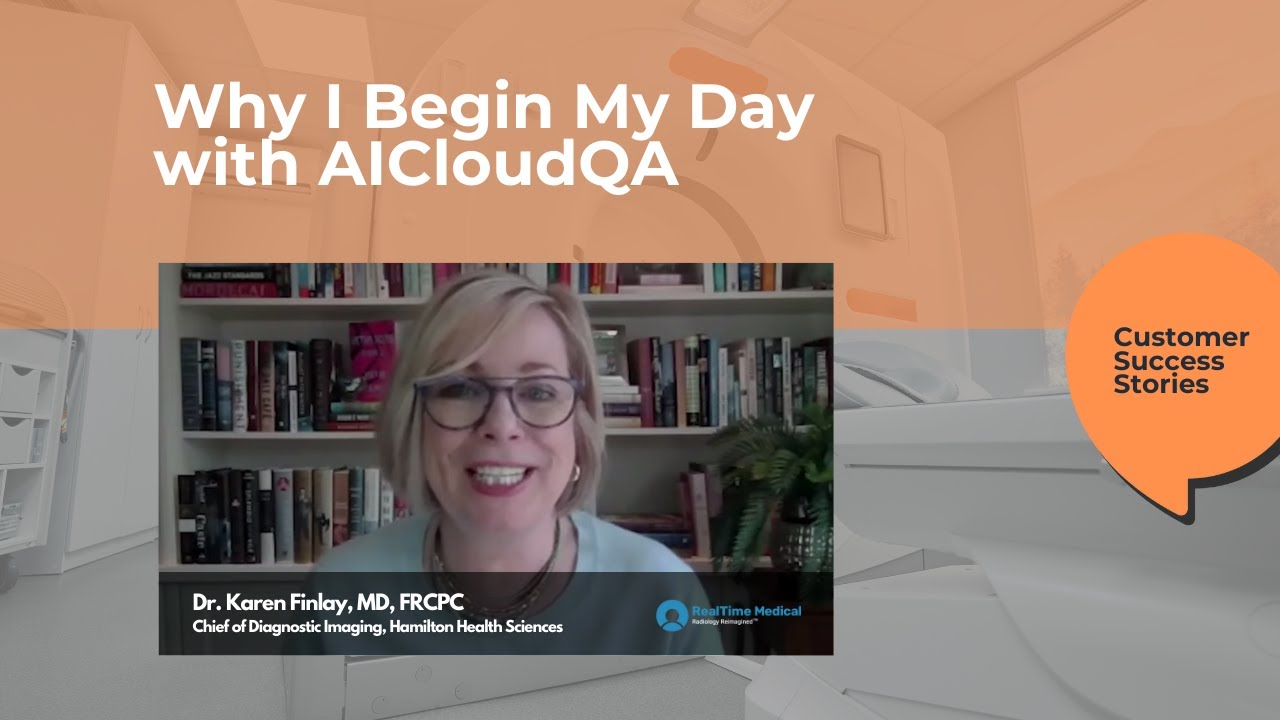
Why I Begin My Day with AICloudQA?
What benefits would make you want to start every day with a certain piece of software? Learn what makes Dr. Karen Finlay and the team at Hamilton Health Sciences and Hamilton St. Joseph’s want to start their day with AICloudQA and how it contributes to the working environment for radiologists. Learn more here: https://realtimemedical.com/software-solutions/ #radiology #teleradiology #diagnosticimaging


Infant seating devices may reduce language exposure
When a parent needs to cook dinner or take a shower, often they will place their baby in a bouncy seat, swing, exersaucer, or similar seating device intended to protect the baby and grant a degree of independence to both the parent and infant. For many parents, these devices represent a helpful extra set of hands; for babies, the freedom to safely explore their immediate surroundings. As useful as these devices are to both parents and infants, they may present trade-offs regarding their effect on infants’ exposure to adult language, which is critical for language development. That’s according to a new study by researchers at the Stress and Early Adversity Lab at Vanderbilt Peabody College of education and human development. Within infants’ natural environments and daily routines, the study explored interactions between their exposure to adult language and their placement in seating devices, which support posture and promote the infant’s ability to play with objects or observe their surroundings without direct support from a caregiver. The researchers found that infants were exposed to fewer words when spending time in seating devices compared to when spending time in other placements. They also found that infants who spent the most time in seating devices heard nearly 40 percent fewer daily words compared to infants who spent the least amount of time in seating devices. Infants with more, compared to less, seating device use also had less consistent exposure to adult language throughout the day. Sixty mothers and their 4- to 6-month-old infants participated in this study. For three days, a Language Environment Analysis audio recording device (i.e. “talk pedometer”) captured language exposure. The mothers inserted the audio recorder into the pocket of a vest their babies wore. Automated software estimated from the recordings the total number of adult words spoken to or near the infant over the course of a day. To record real-time behaviors of infant placement, the mothers responded to 12 brief surveys per day about their infant’s current location and use of seating devices. Caregiver reports of their child’s placement in seating devices accounted for 10 percent of an infant’s daily exposure to adult words, which the researchers say is a striking finding due to the complex nature of language exposure and how many other factors may influence children’s exposure to speech (e.g. caregiver’s talkativeness, presence of other siblings). Kathryn Humphreys, assistant professor of psychology and human development and expert in infant and early childhood mental health, is the senior author of the study. She notes that infant seating devices can provide a convenient way to keep infants safely contained while caregivers attend to other tasks. However, given the potential for frequent and prolonged use of these devices, she says that parents may want to be intentional about interactive opportunities while the infant explores their surroundings as well as consider wearing or otherwise carrying their infant on their body as much as possible to create more opportunities for engagement through speech. “While we need more research to be certain that seating devices reduce the richness of infants’ language environments, these findings are influencing my own decisions about intentional placement with my 6-month-old." - Kathryn Humphreys Kathryn Humphreys She suggests that safe and convenient places are a boon for both infants and their caregivers, but that there is a risk for reduced levels of interactions when infants are stationary and not moving to where their caregivers are active.


AI-powered cruise control system may pave the way to fuel efficiency and traffic relief
The CIRCLES Consortium, consisting of Vanderbilt University, UC Berkeley, Temple University and Rutgers University-Camden, in coordination with Nissan North America and the Tennessee Department of Transportation, concluded a five-day open-track experiment on Nov. 18. Congestion Impacts Reduction via CAV-in-the-loop Lagrangian Energy Smoothing (CIRCLES) Researchers tested an AI-powered cruise control system designed to increase fuel savings and ease traffic using 100 specially equipped Nissan Rogue vehicles. The experiment—which ran from Nov. 14 through Nov. 18 on a sensor-filled portion of Interstate 24—is based on the results from an earlier, closed-track study where a single smart vehicle smoothed human-caused traffic congestion, leading to significant fuel savings. A single AI-equipped vehicle could influence the speed and driving behavior of up to 20 surrounding cars, causing a kind of positive ripple effect in day-to-day traffic. The CIRCLES Consortium will spend the next several months analyzing data collected on the AI-equipped vehicles and their impact on the flow of traffic over the duration of the experiment. The test was conducted on the recently opened I-24 MOTION testbed, the only real-world automotive testing environment of its kind in the world. Stretching for four miles just southeast of downtown Nashville, the smart highway is equipped with 300 4K digital sensors capable of logging 260,000,000 vehicle-miles of data per year. The CIRCLES Consortium research is supported by the National Science Foundation and the U.S. Departments of Transportation and Energy. Support was also provided by Toyota North America and General Motors. The experiment included Toyota RAV4 and Cadillac XT5 vehicles. Preliminary vehicle and traffic flow detection in the I-24 Mobility Technology Interstate Observation Network (MOTION). “On November 16 alone, the system recorded a total of 143,010 miles driven and 3,780 hours of driving. The I-24 MOTION system, combined with vehicle energy models developed in the CIRCLES project, provided an estimation of the fuel consumption of the whole traffic flow during those hours. The concept we are hoping to demonstrate is that by leveraging this new traffic system to collect data and estimate traffic and applying artificial intelligence technology to existing cruise control systems, we can ease traffic jams and improve fuel economy,” the CIRCLES team said in a joint statement. “Nissan has always been a pioneer in automotive innovation, and with our long-term vision, Nissan Ambition 2030, we know our future is autonomous, connected and electric,” said Liam Pedersen, deputy general manager at the Nissan Alliance Innovation Lab in California’s Silicon Valley. “CIRCLES shares our common goal of building a safer, cleaner world by empowering mobility.” “When it comes to transportation and mobility in Tennessee, we are at a critical juncture,” said Deputy Governor and TDOT Commissioner Butch Eley. “Traffic congestion is now becoming more prominent throughout Tennessee, and not just in urban areas. Addressing these challenges will force us to think critically about solutions, as transportation infrastructure projects traditionally are not identified nor completed before traffic congestion more dramatically affects our quality of life. One of these solutions is greater use of technology to enhance mobility. We are confident that this project and others like it will further strengthen Tennessee’s reputation for being a hub of automotive excellence.” “The I-24 MOTION project is a first-of-its-kind testbed, where we’ll be able to study in real time the impact connected and autonomous vehicles have on traffic in an open road setting,” said Meredith Cebelak, adjunct instructor in civil and environmental engineering at Vanderbilt and Tennessee transportation and transportation systems management and operations department leader at Gresham Smith. “The permanent infrastructure has been designed and installed, meaning the testbed will always be ‘on’ and available to researchers. By unlocking a new understanding of how these vehicles influence traffic, vehicle, infrastructure, and traffic management strategies, design can be optimized to reduce traffic concerns in the future to improve safety, air quality and fuel efficiency.” “Partnership across universities, government and the private sector is the key to pioneering projects like this one,” Vice Provost for Research and Innovation Padma Raghavan said. “From its earliest inception, all the partners in this effort have played vital roles. That trusted collaboration continues as the team analyzes results to seek new insights to address pressing challenges in transportation in Tennessee and beyond.”


#Expert Insight: Price Image Formation: When is HILO low?
When consumers choose where to shop, they often consider a store’s price image —does the store have a reputation for having lower or higher prices than its competitors? A store’s reputation for lower prices doesn’t happen by chance. Choosing a pricing strategy is one of the biggest pricing decisions a retailer makes. In “When is HILO Low? Price Image Formation Based on Frequency versus Depth Pricing Strategies,” a recently published paper in the Journal of Consumer Research, co-authors Ryan Hamilton, associate professor of marketing, Ramnath Chellappa, associate dean and Goizueta term professor of information systems and operations management, and Daniel Sheehan, associate professor of marketing and supply chain at the University of Kentucky’s Gatton College of Business and Economics, explore a gap in existing pricing strategy research. “Our research doesn’t threaten the validity of the previous research,” said Hamilton, “but what it does do is point to the limited generalizability of the previous research.” This is because previous pricing strategy research used the same research paradigm: It emphasized consumers’ perspectives as they compared prices simultaneously across multiple stores. Hamilton, Chellappa, and Sheehan wondered what would happen if they studied consumers as they compared prices of products within a store, instead of across stores. When they did so, the authors found that “many of the prominent findings of previous research are reversed,” they wrote. “We propose that when stores’ prices are evaluated one at a time, or in isolation, consumers will rely on the most salient contextual clues available—within-category price information—when forming a price image.” For example, rather than research the price of peanut butter across multiple grocery stores, shoppers often evaluate the price of peanut butter by comparing the prices of the brands on the shelf in front of them. To illustrate their point, the authors explore two basic pricing strategies: a frequency pricing strategy and a depth pricing strategy. Every Day Low Pricing (EDLP) is a frequency strategy where stores offer small price advantages over their competitors on many items. Walmart employs an EDLP strategy. A common depth strategy is a high-low (HILO) pricing strategy. HILO offers infrequent, but deep, price advantages over competitors. Macy’s utilizes this strategy. “The conventional wisdom is that EDLP equals low price,” explained Hamilton. But he and his co-authors argue that in a non-theoretical environment, the effectiveness of EDLP strategies is less clear. The trio hypothesized that the context in which consumers encounter prices has important implications. Specifically, that the frequency advantage of EDLP identified in earlier research was limited to those scenarios where customers were able to simultaneously compare prices across multiple stores. In contrast, they argue that a depth advantage, one resulting from HILO pricing, will be more likely when consumers evaluate store prices separately. “Without simultaneous comparisons across stores, consumers shift from using across-store prices as reference points to using within-category reference prices. As a result of this shift, deep price advantages are easier to evaluate than frequent price advantages and therefore more influential on customers’ formation of price image,” they write. “Because our theoretical account is based on within-category external reference prices, we predict that a depth store is likely to be evaluated as having a lower price image than a frequency store even when consumers are exposed to the prices of just one store,” they write. The authors tested their hypothesis using six separate experiments. All but one of the experiments studied national brands commonly found in grocery stores. (The other experiment used televisions.) In the experiments where participants saw store prices simultaneously, the experiment replicated the frequency advantage noted in previous research. But when participants did not have simultaneous price information across stores, the previous findings didn’t hold “What we found is that if you distance those prices comparisons even a little bit -showing a price on one webpage and then seeing a price on another webpage - that’s enough to completely reverse the findings,” explained Hamilton. In an isolated setting, “a couple of really low prices” will better communicate a store’s low-price image, said Hamilton. “That’s the big story.” While excited about the findings of their research, Hamilton is quick to point out the limits of their hypothesis, such as when pricing information isn’t readily available or when the consumer isn’t familiar with the brands of the product they wish to buy. “People want a simple answer that works everywhere, but it’s more nuanced than that,” said Hamilton. “This [hypothesis] is going to work better under certain set of circumstances than others because people process price information differently.” The insights aren’t only useful for retailers. While using a store’s price image to shop can be efficient from a consumer standpoint, assuming that the prices are low solely because the store has a reputation for low prices isn’t always the case. A retailer’s price image has vulnerabilities. Not everything at Costco is cheaper than it is at Whole Foods. Southwest Airlines may not always be cheaper than Delta Air Lines. “If you’re shopping for things you really care about,” advised Hamilton, “it might be worth doing more across-store price comparisons.” Chellappa is excited about how the paper addresses gaps in traditional economic models of pricing. “While much research in economics and information systems focuses on the availability of information for price comparison, the cognitive aspect of ‘how’ consumers compare and process such information is only explicated by studies such as ours. Looking at pricing through a behavioral lens, capturing consumers’ real shopping behavior reveals great insights that will be useful for firms,” he said. Interested in learning more about consumer behavior and Price Image Formation Based on Frequency versus Depth Pricing Strategies? Then let us help with your coverage and questions. Ryan Hamilton and Ramnath Chellappa are both available to speak regarding this important topic - simply click on either expert's icon now to arrange an interview today.




Goizueta Faculty Member Uncovers Impact of Remote Learning on Educational Inequality
In 2020, the world went into lockdown. Learning in school became learning from the couch. Rather than listening to teachers in-person behind a desk, high school students had to find a computer to stream their lectures and lessons. What happens to educational inequality in a digital-first, remote-learning environment? Whereas students are traditionally bound by their brick-and-mortar schools and the limitations of funding in those areas, what happens when the walls are removed and students have access to the teachers, knowledge, and peers from other areas? Ruomeng Cui and co-researchers, Zhanzhi Zheng from University of North Carolina at Chapel Hill and Shenyang Jiang from Tongji University, decided to find out. In their 2022 paper, currently under review, Cui and her colleagues looked at the performance of high school students in developing and developed regions of China. We thought that remote learning might reduce the inequality gap in education because when students are learning off-line, they’re restricted by their local resources. “It’s quite obvious that developing regions don’t have good resources, experienced teachers, or competitive peers—they often have inferior educational resources in comparison to developed regions,” explains Cui, associate professor of information systems and operations management. “We thought the accessibility of remote learning could help reduce this knowledge gap and help students in developing regions improve their learning outcomes.” Analyzing Education in Developed and Developing Areas The idea for the paper, “Remote Learning and Educational Inequality,” published earlier this year, stemmed from another of Cui’s papers, which looked at the academic productivity of women as a result of the COVID-19 lockdowns. “We wanted to study whether the switch to remote learning impacts educational inequality. Does it make it better or worse?” says Cui. “We are the first ones to offer empirical evidence on such a granular level about a large-scale data set.” The group analyzed the Chinese college entrance exam from 2018 through 2020, which students take during the last few weeks of high school; the test score is a requirement for undergraduate admission in China. It’s common for high schools to announce the number of students who scored 600 or higher (out of 750 total points). Using 1,458 high school exam results from 20 provinces, the group found that in 2020, when remote learning became the norm, “the number of students scoring above 600 points in developing regions increased by 22.22 percent,” in comparison to developed regions. Remote learning significantly improved learning outcomes of students in developing regions. We should think about encouraging the adoption of remote learning in education However, Cui and her co-researchers wanted to go a step further. Because the entrance exams are summaries of student data, they surveyed 1,198 students to drill down and ensure that these results came from remote learning rather than other factors. Respondents were asked to rate aspects of their remote-learning experience, such as access to digital devices, their proficiency in using software, how reliable their internet was, how they interacted with peers and teachers, and their access to online educational resources. The researchers found that students in developing regions were able to better connect with peers and teachers, and the students believed that “their learning efficiency was greater” because of the remote learning. Education inequality is not only a problem in China. It’s everywhere. It’s across the world. Having access to better educational resources online can be applied anywhere. However, the one caveat to their findings: Remote learning is beneficial, but students need devices and the infrastructure to support online learning, which is often lacking in developing regions or underserved areas. “We need to support, build, and develop the digital technology capability that enables the effectiveness of remote learning,” says Cui. Are you a reporter looking to know more about the impact COVID had on education and how inequality plays a role in how we educate students during a pandemic? Then let us help with your coverage and questions. Ruomeng Cui is an Associate Professor of Information Systems & Operations Management at Emory University's Goizueta School of Business. Ruomeng is available to speak with media regarding this topic - simply click on her icon now to arrange an interview today.


Birmingham City Council Cabinet Member Cllr Majid Mahmood met with sustainability experts from across Aston University Cllr Mahmood is responsible for the city’s sustainable waste strategy Knowledge exchange projects between the city council and Aston University were discussed. Birmingham City Council’s Cabinet Member for Environment visited Aston University on 30 November to meet with academics working on sustainability challenges. Cllr Majid Mahmood is responsible for developing a financially and environmentally sustainable waste strategy for the city and engaging in citywide and national policy development to tackle the causes and consequences of climate change, among other accountabilities. Cllr Mahmood’s visit included seeing the chemical engineering and applied chemistry labs run by Dr Jiawei Wang and Dr Matthew Derry who are investigating methods for generating energy from waste and creating new, more sustainable materials. He also met with Professor Patricia Thornley, director of the Energy Bioproducts Research Institute (EBRI) along with other colleagues including Dr Katie Chong, who showcased EBRI’s world-leading research into bioenergy and bioproducts and heard from Dr Luciano Batista on the work he is leading at the Centre for Circular Economy and Advanced Sustainability which provides practical answers to tackle world-critical sustainability challenges. During the visit, Cllr Mahmood was able to share some of the challenges and opportunities facing Birmingham City Council, particularly around sustainability, the environment and waste management. He discussed with academics how Aston University’s research could feed into Birmingham City Council’s future waste and energy management plans and how the lived experience of the city should shape the direction of research. A number of knowledge exchange opportunities were also discussed, including using the city council’s experience to develop undergraduate student projects and academics being invited to visit Birmingham’s waste management depots. Cllr Majid Mahmood said: “It has been brilliant to visit Aston University today and to learn about the innovative ways that different academics are tackling the sustainability challenges facing the world. “As the largest metropolitan local authority in the UK, Birmingham is uniquely placed to develop sector leading waste and energy management processes. Working closely with universities like Aston University will help us to achieve this. “I look forward to developing our working relationship and combining our practical experience and research excellence to drive innovation in the sector.”