
Experts Matter. Find Yours.
Connect for media, speaking, professional opportunities & more.

Top 6 reasons to study in Canada: Advantages for International Students
Canada is one of the most attractive destinations for international students wishing to study abroad. The country is known for its world-class education system and a wide variety of study programs for undergraduate, graduate, and post-graduate students. If you’re exploring the option of studying overseas, the fact that Canada is home to some of the top universities in the world is reason enough to add it to your list of study destinations. Nine Canadian universities feature in the top 200 academic institutions worldwide, according to the U.S. News & World Report’s Best Global Universities 2022, which compared institutions across 90 countries. Besides the quality of education and institute rankings, there are many other reasons that make Canada a great study destination. This article compares some of the most popular study destinations and outlines six factors that make Canada one of the best countries in the world for international students. Why is Canada an attractive study destination? 1. Affordable study programs compared to other countries As an international student, one of your key criteria for choosing a study destination may be tuition fees. While the cost of education abroad can be quite high, the average tuition fee for study programs in Canada is lower compared to other popular study destinations like the United States (U.S.), the United Kingdom (U.K.), and Australia. 2. Better quality of life and lower cost of living in Canada Tuition fees will not be your only expense when you’re studying abroad. You’ll also need to account for non-tuition fees, such as additional university fees, health insurance, and ancillary fees. And of course, you need to budget for your living expenses, which include accommodation costs, the cost of food, travel, your phone bill, and more during your period of study. In Canada, international students can expect to spend between $19,000 and $28,000 CAD on living expenses in their first year. This includes the cost of accommodation (on- or off-campus), food, transportation, insurance, books, and other personal expenses. In addition, you’ll also need to pay the application fees for your study permit or student visa and for the institutions you’re applying to. According to a recent cost of living comparison, the cost of living plus rent indices for Canada, the U.S., the U.K., and Australia are 54.62, 57.60, 53.24, and 61.51 respectively (these indices are relative to New York City). This means that it’s comparatively more expensive to live in the U.S. and Australia than in Canada. On average, living in the U.K. is slightly more economical than in Canada, but the cost of living may be higher in larger cities where universities are located. Quality of life is usually a factor of several aspects, such as quality of education, health care, employment, job security, environmental quality, and individual freedom. In the recent 2021 Best Countries Ranking, Canada was ranked the best country to live in. Australia ranked #6 on the list, but the U.S. and the U.K. did not make it to the top 10. 3. It can be easier to get admission into Canadian study programs Compared to the U.S., it can be relatively easier to get admission into Canadian universities or colleges. For admission into bachelor’s programs as an international student, Canadian universities typically take your high school academic track record into account. In the U.S., international students applying for undergraduate programs also need to get a good score on the SAT or ACT exam and there’s more emphasis on overall extra-curricular development. If you’ve been focusing on academics over these other criteria, you may have better chances of getting accepted to a Canadian university. Australia and the U.K. have eligibility criteria similar to Canada. Canadian universities also tend to have a better acceptance rate compared to similarly ranked U.S. institutions, so your chances of securing admission into an institute and study program of your choice are higher. 4. Ample post-graduate job opportunities in Canada As an international student, one of your criteria for choosing a study destination might be the possibility of staying and working abroad after your graduation. In most cases, this will mean applying for and getting a work permit, and being able to find a suitable job after you graduate or complete a higher education program. In Canada, the process of getting a Post-Graduation Work Permit (PGWP) is fairly simple and you can apply for one immediately after finishing your study program or within 180 days of its completion. You may be eligible for a work permit if you’ve studied at an authorized Designated Learning Institution (DLI) with a valid study permit and if you were enrolled in a full-time study program that was at least eight months long. The validity of your work permit in Canada will depend on the length of your study program and can range from eight months to three years. So if you’ve completed a Bachelor’s program in Canada, you’ll likely qualify for a three-year PGWP. The Canadian PGWP is an open work permit, so you can choose to work in any field, regardless of whether it’s related to your study program. There are no restrictions on the time period within which you must find employment. It is also comparatively easier to find for international students to find a job in Canada after completing their studies. With a PGWP, you can choose to work part-time, full-time, or start your own business in Canada. In comparison, the post-graduate work permits or Graduate visas granted by the U.K. are typically two years long for international students who’ve completed their undergraduate or graduate program on a valid student visa or Tier 4 (General) student visa in the U.K. A three-year work permit is only issued to international students who’ve completed a doctoral program in the country. This visa allows students to work, or look for work, at any skill level. In the U.S., international students who’ve completed a study program that’s at least one year long on an F-1 visa are eligible to apply for a one-year Optional Practical Training to gain work experience related to their education. Students in STEM majors can get a 24-month extension on their OPT. However, international students on OPT cannot remain unemployed for more than 90 days, which means that you’ll need to find and start a job within three months of completing your degree. While you’re completing your OPT, your employer can sponsor an H-1B work visa lottery application on your behalf once per year. However, since the H-1B visa is lottery-based, not everyone who applies will get it. 5. Multicultural classrooms and workforce Another advantage of studying in Canada is that you’ll usually be a part of a multicultural classroom, and after graduation, a diverse workplace. Canada welcomes international students from all parts of the world and consequently, you’ll have a chance to stay connected to your roots and learn about other cultures. As an international student, understanding cultural differences within the classroom fosters an environment of inclusivity and respect, which will help you be better prepared as you enter the global workforce. Canada’s leading university, the University of Toronto, for instance, has around 21 per cent of international students who come to study in Canada from 168 countries. In comparison, the top U.S. universities have between 11 and 17 per cent of international students enrolled. 6. Canadian immigration pathways for international students One of the main reasons Canada is a popular study destination among international students is because it’s easier to immigrate and get permanent residence (PR) after your study program. The country offers many immigration pathways, and for Express Entry streams like Canadian Experience Class (CEC), Federal Skilled Worker (FSW) program, and Federal Skilled Trades Program (FSTP), you may be able to get extra points for your Canadian education to improve your Comprehensive Ranking System (CRS) score. Some of these streams require you to have Canadian work experience for which you’ll first need to apply for a Post Graduate Work Permit after completing your education. Many Provincial Nominee Programs (PNPs) also have specialized streams for international students who’ve completed a study program in specific Canadian provinces. Depending on the immigration stream you choose, you may be eligible to apply for Permanent Residence soon after graduation or with 12 to 24 months of Canadian work experience. Once you receive your PR, the duration of your residency in Canada as an international student and temporary foreign worker can also be taken into account while determining when you’ll be eligible to apply for citizenship. Canada plans to welcome over 400,000 new permanent residents per year between 2021 and 2023, and getting a Canadian degree or diploma can increase your chances of being selected for PR. In comparison, in the U.S., fewer green cards are issued and there may be long wait times, depending on your country of birth, even if you do qualify. In the U.K., you’ll need to complete five years in a post-graduation job to be eligible for an “indefinite leave to remain (ILR) Visa”. As an international student, choosing a country to go to for higher education is a big decision. You’ll need to evaluate not just the quality of universities and study programs, but also the opportunities the country offers to work and stay after your graduation. Canada’s world-class education system, coupled with the immigration pathways the country offers, makes it one of the best study destinations for international students. Original article located here, published by Arrive. About Arrive Arrive is powered by RBC Ventures Inc, a subsidiary of Royal Bank of Canada. In collaboration with RBC, Arrive is dedicated to helping newcomers achieve their life, career, and financial goals in Canada. An important part of establishing your financial life in Canada is finding the right partner to invest in your financial success. RBC is the largest bank in Canada* and here to be your partner in all of your financial needs. RBC supports Arrive, and with a 150-year commitment to newcomer success in Canada, RBC goes the extra mile in support and funding to ensure that the Arrive newcomer platform is FREE to all. Working with RBC, Arrive can help you get your financial life in Canada started – right now.


The Rise of "Don't Weigh Me" Cards
Stepping on the scale is an inherent part of the American healthcare experience. But does it have to be? Healthcare professionals and patients say not necessarily. For patients struggling with mental health, eating disorders, or other body-related concerns, being forced to step on the scale may cause significant distress. Because of this, the "don't weigh me" card has become increasingly popular. Born from the desire to make a trip to the doctor a more inclusive, less stressful experience, the cards sit in waiting rooms across the country and allow patients to discreetly make a choice: Would I like to be weighed today? Similar in size and shape to a business card, patients may grab a card and hand it to the provider before the start of the appointment, indicating the patient should not be weighed and that any discussion around weight should only occur if permission is given. According to Rebecca Shenkman, MPH, RDN, LDN, director of the MacDonald Center for Obesity Prevention and Education at Villanova University, "to be effective and emphatic providers, it is important to ensure a safe and comfortable environment and for the patient to feel seen and heard—and one such way is asking permission to be weighed (if the medical situation does not require a weight)." "This shows patients that their provider respects their voice and choice” Shenkman says. "'Don't weigh me" cards are a tool that providers should recognize as a good 'pause button' that allows them to re-center patient care on the individual and not have a conversation guided by a scale number or attribute certain symptoms or conditions to weight." Healthcare providers may express weight biases that prevent patients from receiving effective care. The provider may correctly or incorrectly attribute a patient's health concerns to weight and overlook additional factors not correlated with obesity. And while obesity is certainly a chronic and progressive medical disease that should not be ignored, there is more to a patient than a number on a scale. "A barrier to effective healthcare utilization is the prevalence of weight bias towards individuals with obesity. A first step to reducing bias is to acknowledge the issue exists and to recognize one's own biases, which may intentionally or unintentionally result in unfavorable behaviors and attitudes towards individuals with obesity," says Shenkman. While communication about weight-related health is important and many times necessary, to center the dialogue on weight alone means missing out on other potential issues. "By letting patients lead the conversation, having an open dialogue and practicing shared decision-making, and approaching the discussion around eating habits and weight-related behaviors within the broader context of health, patients are likely to be more receptive to medical advice given and seek future care." When patients are allowed to choose to be weighed, they are empowered to make their own decisions surrounding their care. "Don't weigh me" cards help provide peace of mind and a comfortable environment for all people, allowing providers to act more effectively and patients to seek out effective care more often.


Kelley expert: Olympics could be targeted by hacktivists, others seeking to embarrass Beijing
Scott Shackelford, associate professor of business law and ethics at Kelley, IU Cybersecurity Risk Management Program chair and director of the Ostrom Workshop Program on Cybersecurity and Internet Governance, said the high-profile diplomatic breach leading up to the games — including the boycott led by the United States – “means that the games could be targeted by hacktivists and other groups seeking to embarrass or otherwise harass Beijing.” Scott Shackelford “There are always issues associated with the Olympics given that they are a target-rich environment for criminals seeking to target athletes and spectators alike,” Shackelford said. “Beijing’s harsh data localization, cybersecurity, and cyber sovereignty laws also raises human rights concerns for athletes and reporters attending the games.” He also noted that ironically while the Olympic games generally often coincide with a peaceful break from ongoing geopolitical tensions, this might not last long. “Witness the Russian invasion of Crimea three days after the 2014 Sochi games concluded,” he said. Shackelford can be reached at sjshacke@indiana.edu.


Across America it seems deliveries are delayed; shelves are looking increasingly bare and there’s an elevated sense of anxiety when it comes to what lies ahead for America’s economy. All of these important topics are forefront in the minds of many and reporters are covering these stories locally and nationally on a daily basis. It's making news, and that’s why we’ve asked Dr. Richard M. Franza, the Dean of the James M. Hull College of Business at Augusta University, a few quick questions that we’re seeing pop up in media coverage across Georgia. Q 1 - What is causing shortages here at home, especially in grocery stores? “Like most things, it is complicated, not a lot of easy answers, but there are clearly a few things in play here. First, companies have been having a hard time finding workers throughout the supply chain. It starts at the producer level, whether it is meat processing plants or producers of other foods and sundry items, production levels are down due to limitations on workers. Then, there have also been worker issues at the transportation/logistics part of the supply chain. Particularly in the area of trucking. So, even when producers have enough supply, they are having difficulty getting it to the stores. Finally, there are issues at the grocery stores themselves. Both at their distribution locations and the store themselves, they have been short on labor unloading and picking items, again delaying products from getting on the shelves. The problem has gotten worse in the past few weeks due to the COVID spikes due to omicron. While omicron is causing less serious results, it appears to be easier to catch. So, lots of people are getting it, making people have to miss work for five days, putting a further crunch on the labor force.” Q 2 - Is this a problem we are likely to see continue through the first quarter or half of the year? “I am optimistic that we can get past the omicron crunch in the coming weeks (by mid to late February, if not sooner). So, things should get better this quarter. However, this will just put us back to where we were pre-omicron, with still some lingering issues. I am hopeful that as the pandemic evolves into an endemic, things will resemble a more normal environment. While this virus has been unpredictable, I am hopeful that we can return to more normal environment no later than the end of the second quarter.” Q 3 - What we can we expect once the pandemic finally subsides? “I am extremely optimistic concerning our economy post-COVID. We have been pretty resilient to date, so I think if COVID transitions to endemic, I think we will see more spending and more people going to work.” If you’ve got more questions to be answered, or if you’d like to speak with him one on one – then let us help. Dr. Richard M. Franza is available to speak with media about important issues like America’s supply chain and the economy – simply click on his icon now to arrange an interview today.



Ask an Expert - Are American Fan-Based Businesses at Risk for Decreased Revenue?
Modern fandom, according to Mike Lewis, is about having a passion for something—a sports team, entertainer, politician, fashion brand, a university—something. Lewis, professor of marketing and faculty director, Emory Marketing and Analytics Center (EmoryMAC) and host of the podcast, Fanalytics, considers fandom important because what people are fans of defines a modern culture. We can laugh at the sports fan with the painted face and the open shirt and the spikes on the sleeves, but the reality is, the traits that drive that level of enthusiasm and commitment are the traits that change the world outside of the arena. Mike Lewis, professor of marketing and director of EmoryMAC To better understand modern fandom and its effect on culture, Lewis, along with Yanwen Wang, Associate Professor of Marketing and Behavioral Science, and Canada Research Chair in Marketing Analytics, University of British Columbia, created EmoryMAC’s “Fandom Analytics Initiative.” The Fandom Analytics Initiative’s first report, Next Generation Fandom Survey, Generation Z: The Lost Generation of Male Sports Fans, published in September 2021, examines the results of a national survey the initiative commissioned. Nearly 1,400 people across four demographic groups—Generation Z, Millennials, Generation X and Baby Boomers—participated in the survey. Is Gen Z the Lost Generation of Male Sports Fans? The results reveal a somewhat troubling trend: Generation Z males (those born between 1990 and 2010) “seem to be increasingly indifferent and negative to traditional sports,” Lewis and Wang write in their report. “Generation Z’s relative lack of passion for sports and other categories is troubling for fandom-based businesses and a curiosity for those interested in the state of American society.” While only 23 percent of Generation Z defined themselves as “avid sports fans,” 42 percent of Millennials did, along with 33 percent of Gen Xers and 31 percent of Baby Boomers. Perhaps even more revealing is the percentage of respondents who considered themselves “anti-sports fans”—a startling 27 percent of Generation Z tagged themselves as “anti-sports” compared to 7 percent of Millennials, 5 percent of Gen X, and 6 percent of Baby Boomers. “That was unexpected,” says Lewis, who thought Generation Z would line up similar to Millennials, given that both groups are digital natives. “I’m still more and more surprised at how different Generation Z is than Millennials and, frankly, everyone else.” When Lewis and Wang took a look at the differences between male and female Generation Zers, things got even more interesting. In traditional sports categories (football, basketball, hockey, baseball, soccer), more Generation Z females defined themselves as “avid sports fans” than did their male counterparts. When it came to football, 20 percent of both Generation Z males and females described themselves as avid fans (the lowest percentage of all the demographic groups). But in every other traditional sport, Generation Z “avid sports fan” females outnumbered males by a discernable margin. Only when it came to eSports did Generation Z males outnumber Generation Z females. “I think there’s a very deep issue going on,” says Lewis. “Something fundamental has shifted.” The survey included questions about fandom-related psychological traits, specifically, community belonging and self-identity. On both, Generation Z males scored lower than Millennials. “The findings related to sports are particularly germane from a cultural perspective,” states the report. “Part of the lack of Generation Z fandom is due to younger individuals having less intense feelings of group belonging in general.” Beyond the Playing Field, How Does Loyalty Shine? While the report doesn’t take a deep dive into the psychology behind Generation Z’s fandom differences, it does note that Generation Z came of age during a time of “ubiquitous social media, dramatic demographic changes, and a hyper-partisan political environment,” they write. “These dramatic changes may fundamentally alter how members of Generation Z engage with cultural industries.” Overall, Millennials were shown to have the “highest preference across all sports,” according to the report. Millennials are not only willing to watch games, but they also enthusiastically wear team gear. Baby Boomers are up for watching games but are less interested in following teams on social media. As it turns out, note the authors, Generation Z isn’t totally disconnected. Across the entertainment categories, Generation Z is similar to other generations. “Sports fandom is the outlier,” they state. In addition to sports, Lewis and Wang looked at six other fandom segments: new and now celebrities, social justice culture, athletic excellence, old school personalities, brand fanatics, and Trump Fans. Lewis points to the fact that whatever one thinks of Donald Trump, he does generate fandom. “That passion for whatever it is—sports, politics, movies, music—that’s really what drives the world,” says Lewis. Because of its importance, fandom is, notes the study, “increasingly actively managed,” whether to garner viewers, money, or votes. Recent trends such as streaming across devices, the ubiquity of social media, an increase in demographic diversity (not to mention a once-in-a-lifetime pandemic), have affected mainstream sports and entertainment. As a result, Lewis believes it’s important to study how fans are changing across generations. Leagues, teams, networks, studios, celebrities, and others need to understand why there is less engagement to formulate strategies for acquiring the next generation of fans. Authors Mike Lewis and Yanwen Wang As sports leagues and teams see more growth opportunities with women and increasingly diverse fan bases, Lewis wonders if some sports teams may alienate their current fan bases by marketing to non-traditional groups. “If you’re a league or a team, you’ve got a real dilemma at this point,” he explains. “If the NFL wants positive press, it has to market to the non-traditional fan segments. If they do that, are the traditional fan segments going to be less interested? Perhaps.” EmoryMAC’s research on fandom in the modern age is ongoing. A study into how eSports’ fandom differs from traditional sports fandom is also in process—as is research on how younger demographic groups see colleges and universities as institutions worthy of fandom. EmoryMAC will continue to make data and insights available on its fandom analytics website. “Looking at the fandom and passion of young groups now will tell you a lot about what the world will look like in 20 years,” says Lewis. I suspect that the era of sports being a mass marketing product and also a cultural unifier is probably going to end. Mike Lewis While that strikes Lewis as sad, he and EmoryMAC are merely following the data. “It may be the reality of where this is going,” he adds. If you're a reporter looking to know more - then let us help. Professor Michael Lewis is an Associate Professor of Marketing at Emory University’s Goizueta Business School. In addition to exploring trends in the overall marketing landscape, Lewis is an expert in sports analytics and marketing. He is available for interview - simply click on his icon to arrange a discussion today.



Georgia Southern University has established a new research and outreach center, the Institute for Water and Health, to investigate the complex interactions between water and human activities, and protect and restore public health in a changing environment. As part of the University’s focus on public impact research, the center will foster collaboration among scientists, government agencies, industry, nonprofit organizations and communities. Coastal Georgia is the perfect location for such an institute to conduct interdisciplinary research because it lies at the intersection of many social, economic and ecological issues. The center supports the region through research, workforce training for students, and actively involving communities in water resource management decision-making process, said Asli Aslan, Ph.D., associate professor in Georgia Southern’s Jiann-Ping Hsu College of Public Health Department of Biostatistics, Epidemiology and Environmental Health Sciences. Now also director of the Institute for Water and Health, Aslan is a water microbiologist, and her research program bridges ecosystem and human health. She has ongoing funded projects on tracking sources of water pollution and assessing health risks associated with exposure to chemical and microbial contaminants. She works with local communities and nonprofit organizations to encourage water stewardship behaviors. Aslan has served in various federal and state agencies and organizations as an adviser, reviewer, scientific committee member and affiliated faculty. She is also the founder and currently the co-chair of the Water and Health Committee of the American Public Health Association. “We want to create a nationally recognized institution that provides meaningful solutions for community needs,” said Aslan. “Our immediate plan is to develop a coalition with all stakeholders in the region to address issues related to increased water demand, impact of sea-level rise on water resources, and potential emerging contaminants in our urban and rural water infrastructure. We are in the process of establishing a community advisory group consisting of scientists from academic institutions, representatives from local and state governments, community leaders, non-profit organizations and businesses to identify and prioritize community needs in water research and education.” For example, she said, although one in every six households in Georgia has a private well, few residents realize any water testing, treatment or well maintenance is the sole responsibility of the property owner as per the Safe Drinking Water Act. Aslan said the Institute for Water and Health will work with the homeowners to help them recognize potential risks and provide solutions that will keep families safe in the long term. “We also look at sources of contaminants using state-of-the-art-methods. And if you know where the pollution is coming from precisely, it’s easier to go fix that problem once and for all, which has a direct impact on the decision-making process to protect water resources.” she said. These new techniques allow researchers with the institute to provide test results within a few hours, which helps end-users to be informed the same day instead of days where most water testing methods currently take about 48 hours. The implications of these methods are broad, as they can be used to identify pathogens in storm water or in household drinking water pipes; assess how new sustainable water treatment technologies efficiently remove contaminants, or provide same-day results for recreational beach monitoring. “We can do all this fancy research in the lab, but it will be very important for us to go out into the community and talk to people, ask them what their immediate needs – our goal is to involve communities from the very beginning of our research so that we co-develop meaningful solutions that will improve the quality of their everyday lives,” Aslan said. “Our group at Georgia Southern consists of established researchers from multiple disciplines such as environmental education, public health, social and behavioral sciences, environmental and computational engineering, coastal ecology, and we are growing everyday”. Carl L. Reiber, Ph.D., Georgia Southern’s provost and vice president for academic affairs, said the center will pull together faculty from across the University, many of whom have already established themselves as water experts within their own discipline. He expects the center to take a very visible role for the University and is renovating space in Savannah near the Armstrong campus to house the center and its labs. “The Institute for Water and Health will bring to southeast Georgia an awareness of the importance of water quality, water management and how tightly these areas are aligned with our health,” Reiber said. “The public impact of this institute is immeasurable and will ultimately increase the quality of life in our community.” If you're a journalist looking to know more about this topic or are looking to cover - then let us help. Asli Aslan, Ph.D., is a water microbiologist, and her research program bridges ecosystem and human health. She has ongoing funded projects on microbial source tracking, health risk assessment of water resources, and the ecology of pathogens in the aquatic environment. She is available to speak with reporters – simply click her icon now to arrange an interview today.


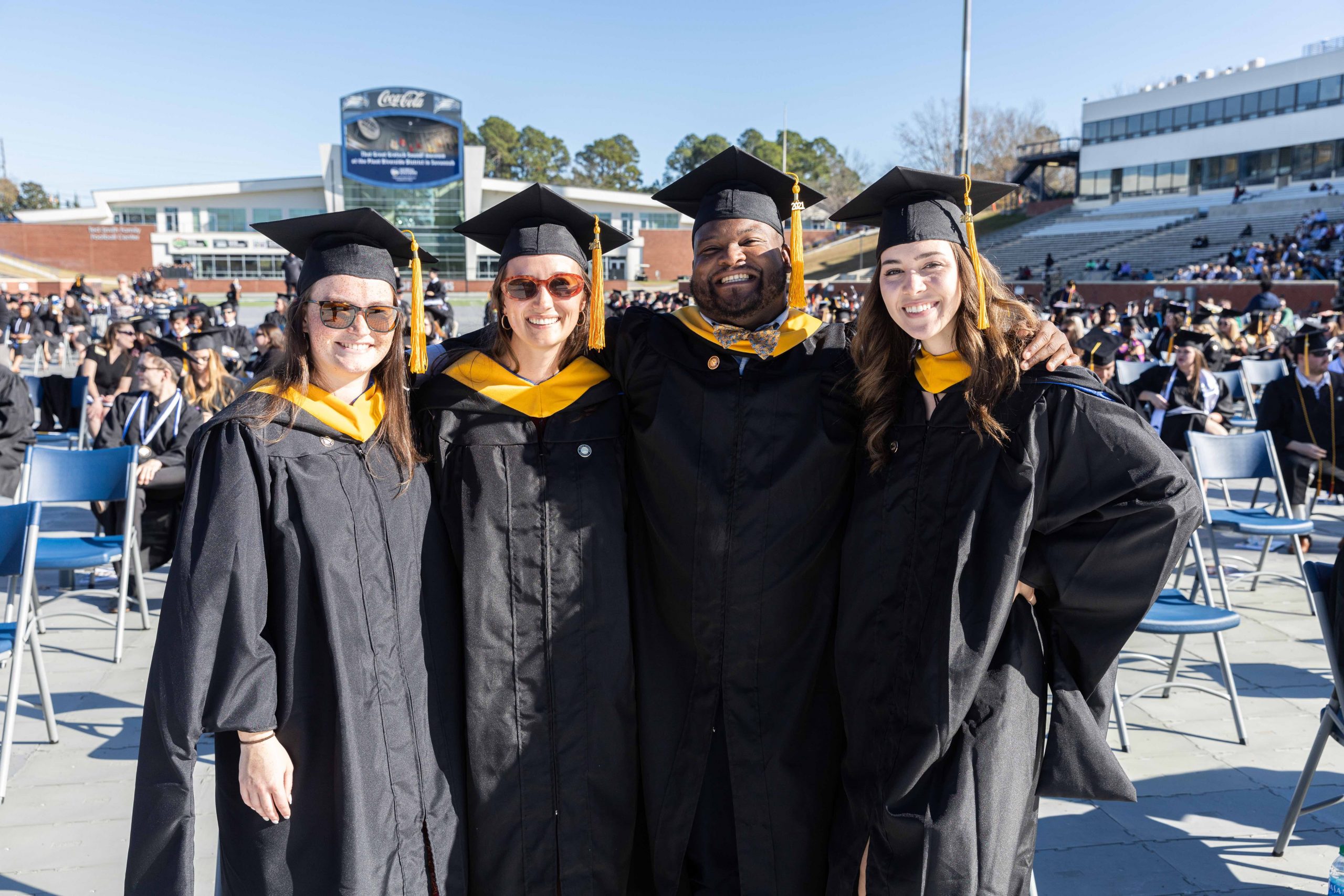
Hats off to the 2,100 graduates at Georgia Southern
Last week, approximately 2,100 undergraduate and graduate students from Georgia Southern University’s Statesboro, Armstrong and Liberty campuses received associate, baccalaureate, master’s, specialist and doctoral degrees in three Fall 2021 Commencement ceremonies. Georgia Southern President Kyle Marrero welcomed the graduates and their families to the University’s Fall Commencement ceremonies, held at the Savannah Convention Center in Savannah on Dec. 11, and the Allen E. Paulson Stadium in Statesboro on Dec. 13 and 14. He commended the graduates on their achievements and tenacity. “Graduates, I don’t need to tell you about your unique college journey, which has been challenging for all of us,” said Marrero. “I am very proud of how, together, we have persevered allowing us to have a successful semester and today, our commencement ceremony. You, our graduates, deserve great recognition.” During the Savannah ceremony, Georgia’s 2022 Teacher of the Year Cherie Dennis (Armstrong ‘10), who teaches English to Speakers of Other Languages at Hesse K-8 School in Savannah-Chatham County Public Schools, addressed the packed house with a call for kindness. “My hope for you is that you go out into the world with your eyes and your hearts wide open,” she said. “That you go out into the world and make something beautiful out of its cracks and imperfections. A world that is bound together by the irrefutable strength and integrity of kindness. Be the repairers of the world; the menders of the world; the bridge builders; the constructive, contributive citizens who nurture communities large and small. And that may sound daunting, but really it all starts with something so very simple, something so very possible and within your reach. Something you knew how to do even as a child. Just being kind.” Sachin Shailendra, chair of the University System of Georgia Board of Regents and president of SG Contracting, Inc. in Atlanta, spoke at the first ceremony in Statesboro. “Georgia Southern – which in a few minutes will be your alma mater – is one of the shining stars among our 26 institutions,” he said. “It ranks as one of Georgia’s best comprehensive universities, with a growing reputation for research that impacts not only vital industries but the environment and our communities. The degree you earned lets everyone know you learned from outstanding faculty, top staff and talented fellow students. “The opportunities ahead of you are many. I know this because of my own experience. I was born in Georgia, but my father was not. I am only a generation away from the farmers my family were in India. Education has been a game changer for both me and my family, and I know it’s a major accomplishment for many of you. I hope your degree will inspire you to take the next steps in building your future. So go out into the world and create a worthy future, not only for yourselves, but one that will represent Georgia Southern, our entire university system, and this state as well…Your education has already changed you. It also has the power to change your community, and move our state forward in exciting ways.” To read the full release please see the attachment below. This is a great moment for Georgia Southern University and if you are looking to learn more about this year's graduating class or the school - then let us help. Simply reach out to Georgia Southern Director of Communications Jennifer Wise at jwise@georgiasouthern.edu with your questions or to arrange an interview today.

Can oily fish, cherries or milk help you sleep? Here’s what the evidence shows
Almost one in five British people report they don’t get enough sleep each night. The problem is so bad that in total the UK public are losing around a night’s worth of shut-eye each week. There are a lot of popular beliefs about foods and drinks helping people get a good night’s rest, but many of them are not based on scientific evidence. Here’s what we know. Chemistry of food and sleep Our diet has an influence upon sleep patterns by affecting the sleep hormone melatonin. For example, foods rich in the essential amino acid tryptophan are commonly cited as helping sleep, as tryptophan helps produce melatonin. Additionally, some vitamins and minerals may help sleep, such as vitamin D, magnesium and zinc. Oily fish: Evidence suggests the more oily fish, such as salmon or herring, you eat the better you sleep. Oily fish contain healthy fats such as omega-3 oils which have been shown to improve sleep in children and are involved in serotonin release. Serotonin, a brain chemical linked to mood, also regulates the sleep-wake cycle which may also explain how eating oily fish can help. Tart cherries: A number of studies have looked at consumption of tart cherries, usually in the form of a drink, and sleep. Evidence suggests that tart cherries improves sleep in older adults, probably due to their ability to increase melatonin levels. And tart cherries are also rich in nutrients, including magnesium, which also may improve your sleep. Kiwi fruit: The evidence for kiwi fruit helping you sleep is mixed. One study suggested four weeks of kiwi fruit consumption improved multiple sleep measures, while another, admittedly in sufferers of insomnia, found no effect. Based on these findings it is not clear yet that eating kiwi fruit will benefit sleep for most people. Oysters: In 1888 W F Nelsom wrote “He who sups on oysters is wont on that night to sleep placidly…”. There is some evidence to back up this statement, with zinc-rich foods, including oysters, being reported to benefit sleep. However, on balance eating oysters before bedtime is unlikely to be beneficial to your night’s sleep. Alcohol and other drinks Alcohol causes brain activity to slow down and has sedative effects that can induce feelings of relaxation and sleepiness> But consuming alcohol is actually linked to poor sleep quality and duration. Although drinking alcohol may cause more rapid sleep onset, this can affect the different stages of sleep, decreasing overall sleep quality. If you want a good night’s sleep, avoiding alcohol is sound advice. But are there any non-alcoholic drinks that might help? Warm milk: Research conducted in the 1970s suggested that a glass of warm milk before bed could improve sleep quality. This research was performed in a very small group however, and little research has been done since. Drinking milk does increase melatonin levels which could help. But there isn’t enough evidence to support the claim that a glass of warm milk definitely makes you nod off. Bone broth: Bone broth commonly crops up in online articles as a food that can aid sleep. This may be due its high content of the amino acid glycine. Glycine has been shown to improve sleep in rodents and humans, possibly by lowering body temperature. There are however no studies specifically looking at bone broth consumption and sleep. Herbal teas: The range of herbal teas aimed at the sleep market has grown and grown. Evidence for valerian, a common ingredient, to aid sleep is inconclusive. Decaffeinated green tea has been reported to improve sleep quality, which might be linked to the relaxing qualities of L-theanine, an amino acid it contains, but in general, avoiding caffeinated teas is a wise choice. If you like herbal teas, then they can be part of a relaxing pre-bedtime routine – but they are unlikely to improve your sleep quality. A bedtime routine Having a bedroom environment and daily routines that promote consistent, uninterrupted sleep are important. These include keeping to the same time to head off to bed, making your bedroom free of disruptions and having a relaxing pre-sleep routine. But many of the foods that have claimed benefits for sleep have little or no evidence behind them, to the point there are no legally recognised health claims for food assisting sleep approved in the UK or Europe. If any one of these things helps you to sleep well, there’s no reason to stop. But just remember the other basics of a good nights sleep too, including relaxing before bed and avoiding too much blue light from electronic devices.


Consumer behavior expert and former "Survivor" contestant on holiday deals and scarcity
Kelly Goldsmith, professor of marketing, is available for commentary on holiday deals and anticipated scarcity due to supply chain issues. Kelly is a former Survivor contestant, which influenced her research into consumer behavior in the wake of scarcity. She is an expert in how people think and act when faced with limited availability of what they need and how they perceive competition when it comes to purchasing items that are in limited supply. Topics she can discuss include: How and why the combination of sales and perceived scarcity prompts consumers to behave selfishly (such as buying out entire stock) and other anticipated consumer behaviors and attitudes this holiday season How to plan ahead and find the best deals well in advance and stick to a budget when there are too many good deals to pass up How to keep your cool in the demanding, stressful environment



Six popular beliefs about colds: experts explain the facts
As we return to pre-lockdown levels of social mixing, colds are starting to become all too common. A TikTok video has gone viral involving putting garlic up your nose as a cold cure, just one in a long line of claimed treatments or cures. We asked two experts to examine some commonly held beliefs around colds. 1. Can you get a cold by getting cold? Colds become more common in winter. Like other upper respiratory tract infections (in the nose, throat and windpipe) they are normally caused by a virus. There might be a little truth in the idea that getting cold can give you a cold, because as the temperature changes this can alter the lining of our throat and windpipe, which can possibly make it easier for viruses to infect cells. However, the main reason we get more colds in winter is spending more time inside, closer to other people – the perfect environment to transmit viruses. 2. Does sticking garlic up your nose help? The TikTok trend involves putting cloves of garlic up your nose because it claims to act as a decongestant. Sticking something up your nose blocks the flow of mucus, so when it is removed, the flow starts and the mucus drips or even runs out of your nose. Mucus not only helps trap and remove pathogens including viruses, but also contains antibodies and can reduce how infectious and spreadable viruses are. So this is not a good idea. Garlic contains a range of compounds which might irritate the nose, and remember sticking anything up your nose isn’t a great idea. It could damage the lining and lead to bleeding or even get stuck. So it doesn’t really help and could be harmful. 3. Can herbal remedies prevent colds? Various herbal remedies claim to either prevent or speed up recovery from a cold. People often mention echinacea, a family of plants that grow in North America. Some trials have suggested a small preventative effect, but the evidence does not show statistically significant reductions in illness levels. Turmeric is also touted as a preventative medicine, but there is no robust evidence for its effectiveness either. 4. Can vitamin C help? Nobel prize-winning scientist Linus Pauling suggested that vitamin C in high doses could be an effective treatment for many viral infections. But a Cochrane review, a very robust system in which researchers assess evidence, found that vitamin C did not prevent colds, but may reduce their duration, in some people. As vitamin C supplements of around 200mg per day are considered low risk, some suggest this is a reasonable strategy to shorten the effects of a cold. 5. Does vitamin D prevent colds? Vitamin D has moved from being the sunshine vitamin associated with healthy bones, to being linked to reducing the risks around everything from heart disease and diabetes to viruses. This has included a lot of interest in vitamin D as a way of helping us fight off flu and more recently COVID-19. Laboratory experiments show that vitamin D is important in supporting immunity and this is critical in fighting off viruses. The problem may be that some people have inadequate vitamin D levels. Sunshine allows us to make our own vitamin D - but that happens less in winter. So it is likely that taking vitamin D supplements as advised by the UK government over winter is sensible so that you get enough, and this may help prevent you from getting a cold. 6. What about chicken soup? Chicken soup has been used through the ages to treat colds, and like honey it might have some benefits in managing symptoms. But it is unlikely to make a big impact on driving out the infection. The water in the soup will help with hydration, which is a often a problem when we have a cold. Like most hot drinks it can help to relieve painful sinuses. There are studies looking at the effect on our immune system cells, but the evidence from these is far from conclusive. Sadly, there are no miracle cures for the common cold. Some suggestions may be helpful, and are generally not harmful, such as getting enough vitamin C and D. But others are definitely not worth trying and could be risky, such as putting garlic up your nose. The best thing to do is get plenty of rest and drink plenty of fluids to stay hydrated.