
Experts Matter. Find Yours.
Connect for media, speaking, professional opportunities & more.

Taming "The Bear": Villanova Professor Examines Workplace Toxicity in FX's Acclaimed Series
In the latest season of FX’s award-winning series “The Bear,” lead character and chef Carmen “Carmy” Berzatto finds himself at a crossroads. A culinary genius, Carmy has successfully overseen the reinvention of his family’s Italian beef shop as a high-end restaurant—shepherding a dedicated, if unpolished, crew of sandwich makers into a world of haute cuisine, fine wine and elevated service. However, over the course of this transition, his exacting standards have contributed to a culture of anxiety, dysfunction and resentment in the workplace. Despite staff members’ professional and personal growth, tempers still flare like burners on a range, with Carmy’s obsessive attention to detail and single-minded pursuit of perfection spurring conflict. By season’s end, grappling with the fallout from a mixed review seemingly influenced by the back-of-house “chaos,” the chef is forced to confront a complicated and thorny question: Am I getting in the way of my own restaurant’s success? Carmy’s dilemma, while fictional, reflects the very real challenges many modern businesses face when excellence is prioritized at the expense of psychological safety and workplace harmony. Per Manuela Priesemuth, PhD, who researches toxic work climates, aggression on the job and organizational fairness, the warning signs are all too frequently overlooked in high-pressure environments like restaurants. “Some high-stakes industries have a characteristic of having toxic behavior more accepted,” says Dr. Priesemuth. “When it’s more accepted or normed, it’s a real problem.” As she explains, workers in the food service industry, much like medical professionals in an operating room or military personnel in a combat zone, have a tendency to view measured communication and thoughtful interaction as a luxury or even, in some cases, a hindrance. Essentially, there’s a common misconception that working with an edge—yelling orders, avoiding dialogue and berating “underperformers”—gets the job done. “In all of these high-stakes environments where it’s thought there’s leeway to talk negatively or disparagingly, people are mistaken in the productivity result,” Dr. Priesemuth says. “It actually changes for the better in positive climates, because people who are treated with dignity and respect are better performers than those who are mistreated.” To Dr. Priesemuth’s point, research increasingly shows that workplace culture, not just talent or technical ability, is an essential driver of organizational success. In an environment like Carmy’s kitchen, where pride and passion often give way to personal attacks and shouting matches, the on-the-job dynamic can effectively undermine productivity. What may begin as an intended push for excellence can instead result in burnout, high turnover and weakened trust—outcomes that are especially problematic in collaborative, fast-paced industries like hospitality. “There’s even evidence that abusive behavior in restaurant settings can lead to food loss,” shares Dr. Priesemuth. “So, there is a sort of retaliation from the employees who are going through this experience, whether it’s measured [in profit margins] or impact on the customer.” In order to prevent these less-than-ideal outcomes, businesses should take steps proactively, says Dr. Priesemuth. More specifically, they should clearly articulate their values and expectations, considerately engage with their staff’s opinions and concerns and consistently invest in their employees’ growth and development. In the world of “The Bear,” a few of Carmy’s managerial decisions in the second season could be seen as moves in the right direction. At that juncture, he was leveraging his industry connections to provide his restaurant’s staff with the tools and training necessary to thrive in Chicago’s fine dining scene, building skills, confidence and goodwill. “If you give people voice—such as input on the menu, for example, or more autonomy in completing a certain task—it boosts morale,” says Dr. Priesemuth. “It helps people feel that they have input and that they are valued members of the team; it’s this sort of collaborative, positive relationship that increases commitment and performance.” Establishing this type of work culture, grounded in open communication, mutual respect and a shared sense of mission, takes concerted effort and constant maintenance. In situations in which toxicity has already become an issue, as it has in Carmy’s kitchen, the task becomes decidedly more difficult. Typically, it demands a long-term commitment to organizational change at the business’ highest levels. “Adjusting the tone at the top really matters,” says Dr. Priesemuth. “So, if the owner were to treat their chefs and waiters with the dignity and respect that they deserve as workers, that also trickles down to, for example, the customer.” A leader’s influence on workplace morale, she contends, is nuanced and far-reaching. When those in charge model a lack of empathy or emotional distance, for instance, a sort of toxicity can take root. Likewise, when they repeatedly show anger, animosity or frustration, those same feelings and attitudes can have an ingrained effect—regardless of a staff’s talent or ability. Given the outsized role owners, supervisors and managers play in shaping organizational culture, Dr. Priesemuth further notes, “Leaders must also feel that they’re being supported. You can’t have someone who’s exhausted, works 80 hours a week and has relationship and money issues and expect them to say, ‘What are your problems? What do you need?’” In many ways, her insights speak directly to the struggles Carmy faces and prompts throughout “The Bear’s” run. At every turn, he’s dogged by family and relationship troubles, mounting financial pressures and unresolved trauma from a past role. Ultimately, as would happen in real life, his difficulty in healthily processing and addressing these issues doesn’t just harm him; it affects his staff, manifesting itself as a need for control and a crusade for perfection. “There are spillover effects from your own personal life into your job role. In the management field, that has become increasingly clear,” says Dr. Priesemuth. “Whatever you’re going through, whether it’s from an old job or something personal, it will automatically spill over into your current work life and your interactions. And, vice versa, what’s happening to you at work will [impact you off the clock].” In dramatic fashion, the fourth season of “The Bear” concludes with Carmy acknowledging as much. Determining that there are other aspects of his life desperately in need of attention, he surrenders the reins of his business to chef de cuisine Sydney “Syd” Adamu and maître d’hôtel Richard “Richie” Jerimovich, appointing them part-owners. While the soundness of this decision remains a subject for the show’s next season, Carmy justifies the move with a blunt admission: “It’s the best thing for the restaurant. We have to put the restaurant first… I don’t have anything to pull from.” In the end, in both “The Bear” and management studies, there’s an understanding that building healthy and productive work environments requires active engagement and positive reinforcement on the part of leadership. In a sense, creating a strong work culture is shown to be a lot like preparing a phenomenal meal; it’s a matter of attentiveness, patience and care. Without those ingredients, the result could very well be a recipe for disaster.


ChristianaCare and Children’s Hospital of Philadelphia (CHOP) today announce a new strategic affiliation to expand access to world-class pediatric care in Delaware and surrounding communities. The collaboration, which is expected to begin in spring 2026, will enhance access to specialized pediatric care by bringing CHOP’s renowned expertise closer to home for families in the communities ChristianaCare serves in Delaware, Maryland, Pennsylvania and New Jersey. By integrating CHOP’s services with ChristianaCare’s established network, the collaboration will improve care delivery, making advanced pediatric treatments more accessible and reducing the need for families to travel long distances for care. A Bold Step Forward in Pediatric Care “This collaboration brings together two amazing organizations that are already nationally recognized for clinical excellence—and we’re going to be even better together,” said Janice E. Nevin, M.D., MPH, president and CEO of ChristianaCare. “Our affiliation with CHOP marks a bold step forward in our mission to provide the highest quality care to children and families across the communities we serve. These are uncertain times for many parents with young children in need of routine or complex medical care. ChristianaCare and CHOP are joining forces to provide world-class care, close to home, at a time when it’s needed most.” “Bringing seamless, family-centered care to our patients is a priority at Children’s Hospital of Philadelphia,” said Madeline Bell, CEO at Children’s Hospital of Philadelphia. “As one of the region’s most dynamic health systems, ChristianaCare has earned a national reputation for its bold approaches to both clinical care and innovation. Our new affiliation is driven by a shared vision: redefining what is possible in health care and ensuring that every patient — at every stage of life — receives the highest standards of care, from infancy through adulthood.” “Our team at ChristianaCare is excited to work closely with Children’s Hospital of Philadelphia to bring even more specialized care to our community,” said Megan Mickley, M.D., chair of Pediatrics at ChristianaCare. “CHOP’s leadership in pediatric medicine will complement the outstanding care already provided at ChristianaCare, ensuring that our youngest patients receive the most advanced treatments in a compassionate and supportive environment.” Initial Focus and Future Growth This affiliation between ChristianaCare and CHOP represents a significant increase in access to world-class pediatric care for communities in Delaware, Maryland, southeast Pennsylvania and southern New Jersey. CHOP, a global leader in pediatric care and research for over 165 years, is consistently ranked among the top children’s hospitals in the country, known for pioneering breakthroughs across a breadth of pediatric care areas. The affiliation will include all ChristianaCare hospitals and locations where pediatric emergency and inpatients are cared for. The collaboration will initially focus on pediatric and neonatal services. Patients at ChristianaCare will have access to CHOP’s expertise in rare and complex diseases and a wide range of newborn and pediatric services, including surgery, cardiology, neurology, radiology, ophthalmology and genetics, as well as educational and research opportunities. As the collaboration grows, it will explore further opportunities to expand pediatric care and improve health care delivery in the region.



Dr Katie Edwards studied the feeding practices of parents of children with ‘avid’ eating traits, which can lead to obesity Focusing on health or deciding when it is time for a meal or snack helps parents to use supportive feeding practices. Supportive feeding practices could include involving children in decisions about food, or sitting together for mealtimes New research from Aston University has shone a light on the best ways for parents to encourage healthy eating in their children. The team of academics from Aston University’s School of Psychology, led by Professor Jacqueline Blissett, with Dr Katie Edwards as the lead researcher, looked at the meal- and snack-time practices of parents of children with ‘avid’ eating behaviours. ‘Avid’ eaters, who make up around 20% of children, particularly love food, are often hungry and will eat in response to food cues in the environment and their emotions, not just when they are hungry. They are the most susceptible to obesity and therefore encouraging a healthy, balanced diet is vital. Feeding children with avid eating behaviours can be challenging and the researchers wanted to understand how factors in everyday life, such as parent mood or eating situations, influence the feeding practices that parents use. Understanding this can help to create better support for families around meal and snack times and reduce the risk of children developing obesity. Dr Edwards says that the research shows that when parents prioritise children’s health or decide when it is time for a meal or snack, parents are more likely to use supportive feeding practices which create structure around meal or snack times or encourage children to be independent with their food choices. For example, parents could sit and eat with their children, choose what food is available for their children, or involve children in decisions about what food to eat. She adds that there are three main things that parents can do to help encourage healthy eating behaviour. The first is to focus on health, by providing nutritious and balanced meals. The second is to ensure a calm and positive atmosphere during eating occasions. The final recommendation is that parents should take the lead on setting meal- and snack-times, with a good structure being three meals and two snacks a day. These recommendations are linked to parents’ use of supportive feeding practices which are known to encourage children’s healthy eating. To carry out the research, the team recruited parents of children aged 3-5 with avid eating behaviour and asked them to download an app to their smartphones. The app sent four semi-random reminders per day for a 10-day period, asking them to complete a survey with information about mood and stress levels. Every time a child had a meal or a snack, or asked for food, parents completed another survey to give information about feeding practices (including those which give children structure, or independence, around food), mealtime goals (such as prioritising healthy eating), and information about the mealtime setting (such as the atmosphere). Previous research from this team at Aston University identified four main eating traits in children. As well as ‘avid’, the other traits, not studied here, are ‘typical’ eaters, who have no extreme behaviours, ‘avoidant’ eaters, who are extremely fussy, and ‘emotional’ eaters, who eat in response to emotions but do not necessarily enjoy food in the way that avid eaters do. Dr Edwards was also involved in the team’s research at Aston University that showed that parents’ eating behaviour influences that of their children. Dr Edwards said: “Given the challenges that parents may face and the risk of childhood obesity, we will use these findings to develop feeding support for families. Encouraging parents to use feeding practices which provide structure around meal and snack times, or promote children’s independence with food, could be helpful for supporting children’s healthy eating. Read the full paper in the International Journal of Behavioral Nutrition and Physical Activity at https://doi.org/10.1186/s12966-025-01768-x.


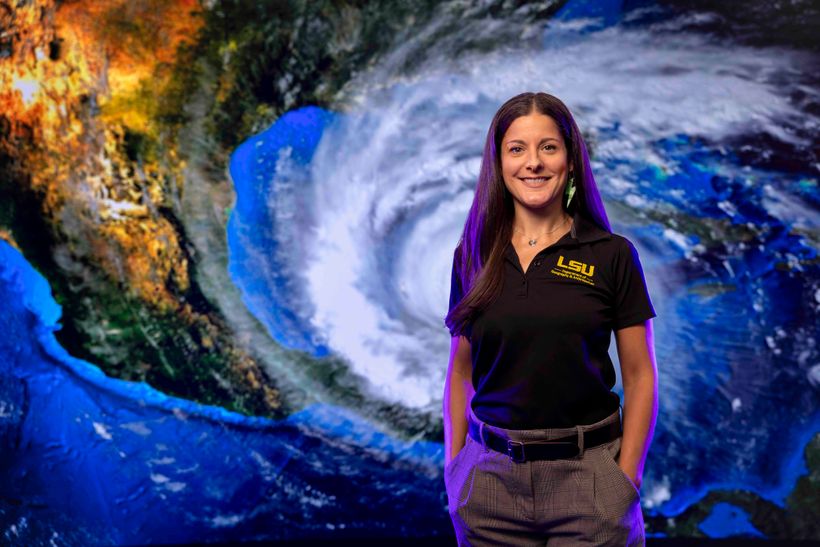
LSU’s Jill Trepanier Educating K-12 Louisiana Students About the Environment
What began in 2018 as a single rooftop weather station on LSU’s campus as a tool to help freshmen connect to the science happening around them, has grown into an educational network in the southern part of the state, connecting K-12 students with the sky through real-time data, interactive technology, and hands-on learning. Trepanier, a professor and department chair in LSU’s Department of Geography & Anthropology, leads a project that now includes 10 weather stations installed at or near K–12 schools from Lake Charles to Grand Isle. “The environment is harsh in Louisiana. Beautiful, but harsh,” Trepanier said. “The more students know about it, the better they can protect themselves and their families. For me, that’s what it is all about.” The project all started to help college students in Trepanier’s meteorology and physical geography classes connect more deeply with the material by using weather data collected from the air around them. “These were 400 freshmen every semester who were not geography majors, so they didn't really love the science of the atmosphere. But they were able to connect with the information because they could see the data on an app on their phone as they were living in it.” Installed across South Louisiana, each weather station is solar-powered and connected to a console that uploads data to an online web platform and displays it on a dashboard. Then an app shows the local students the current conditions and records for the day. “When we look at data from the community, it might be many miles from where you are. And most people live within a few miles or less of their schools. It allows them a close-up view of what is happening, instead of relying on something miles away,” she said. Teachers can use the data with certain lessons or during a passing storm. But the available data also educates them on things like solar radiation, “It also helps aid things like seasonality and our relationship with the sun. It extends well beyond just rain.” The material is also aligned with the Louisiana Student Science Standards for environmental and Earth sciences. “By allowing students to compare real data across space and time, it helps them to understand how systems are connected. And most of these science standards have them focusing on system theory, in one way or another,” Trepanier said. Read the full story here.


FAST nanotechnology unveiled at Rome Global Congress by AU scientist
Stephen Hsu, PhD, a professor at the Dental College of Georgia at Augusta University, unveiled his groundbreaking nanotechnology, known as FAST, during a keynote address at the 8th World Congress on Infectious Diseases in Rome, Italy. FAST, or Facilitated Self-Assembling Technology, offers a revolutionary way to convert compounds that are difficult to dissolve in water into stable nanoparticles. This innovation could transform drug development, viral infection prevention, hospital hygiene and more. “FAST takes a completely different approach from traditional nanotechnology,” Hsu explained. “Unlike methods that rely on polymers, metals, surfactants, fat-based carriers or complex engineering processes, FAST allows compounds to self-assemble into nanoparticles with minimal effort. This makes drugs that were once nearly impossible to formulate in water stable, effective and practical for medical and consumer use.” At the heart of this innovation is EC16, or EGCG-palmitate, a lipid-soluble compound derived from green tea. Known for its antioxidant, anticancer, anti-inflammatory and antimicrobial properties, green tea has long been studied but is challenging to use in clinical settings due to stability issues. FAST overcomes these limitations, transforming EC16 and other hydrophobic compounds into water-friendly nanoparticles. “You can’t even tell the particles are there,” said Hsu. “They look just like water. I made several different formulations in one afternoon in my lab. It’s that fast and simple.” A natural solution to global challenges Hsu’s work is the culmination of decades of research and a deeply personal journey. He credits green tea with helping him survive illness during his youth in a labor camp in China. Now, he’s turning its natural properties into cutting-edge therapies with the hope of helping more people. “I’ve been drinking green tea my entire life,” Hsu said. “Now, we’re turning its benefits into medical-grade treatments.” Supported by over $600,000 in NIH grants, Hsu’s team is developing applications like alcohol-free disinfectants and nasal sprays to prevent respiratory virus infections. One promising product is an EC16-based disinfectant that is natural, non-toxic and highly effective against tough pathogens, like norovirus and C. difficile, a bacterium that can cause severe diarrhea. “That’s a big deal for schools, hospitals and places like cruise ships, where these infections spread easily,” he said. Tackling long COVID and beyond Among FAST’s most promising applications is a nasal spray developed to prevent or treat long COVID and other respiratory illnesses. The spray, currently undergoing preclinical testing, targets viral entry points in the nasal mucosa, where infections often begin. “Our goal is to help immunocompromised patients and those with lingering symptoms like brain fog and loss of smell,” Hsu said. “We’ve already seen strong in vitro results against human coronavirus and norovirus.” In addition to nasal and topical treatments, Hsu’s team has developed oral formulations of EC16 that remain stable through the stomach’s acidic environment, critical for treating gastrointestinal viruses and potentially inflammatory bowel diseases like Crohn’s. “We found that even without direct contact with the virus, the EC16 nanoparticles taken by mouth can reduce infection,” Hsu explained. “That’s a major step forward in treatment of digestive tract viral infections.” A platform for the future of medicine FAST isn’t limited to green tea compounds. Hsu’s method can transform a wide range of hydrophobic compounds like cannabidiol, ivermectin, quercetin, procyanidin and retinoic acid, as well as hundreds of existing drugs, into nanoparticle suspensions that are stable and water-friendly. This has huge implications,” said Hsu. “Up to 90% of new drug candidates have poor water solubility and low bioavailability, which limits their effectiveness. With FAST, we can change that.” His lab is already exploring applications in Alzheimer’s research, cancer therapy, oral health and even anti-biofilm coatings to prevent hospital infections. These products, along with the nasal spray, are expected to hit the market this fall. Hsu is currently finalizing publications and preparing patent filings to protect and expand the reach of FAST. While optimistic, he remains cautious. “The results so far are phenomenal. FAST could be a new chapter in how we fight disease and deliver medicine,” Hsu said. Looking to know more about FAST nanotechnology and the research happening at Augusta University? To connect with Dr. Stephen Hsu - simply contact AU's External Communications Team mediarelations@augusta.edu to arrange an interview today.


Kyle Davis wins NSF CAREER Award for pioneering research on climate-resilient food systems
University of Delaware assistant professor Kyle Davis has received a National Science Foundation (NSF) CAREER Award—one of the most competitive and prestigious honors for early-career faculty—for his work advancing the climate resilience of global food systems. Davis, who holds joint appointments in the College of Earth, Ocean and Environment and the College of Agriculture and Natural Resources, leads cutting-edge research at the intersection of agriculture, sustainability and global environmental change. His focus? Making food production more efficient, climate-smart and socially equitable—especially in regions grappling with limited water resources. With a growing global population and increasing pressure on land and water, Davis’s research is helping to answer one of the most critical questions of our time: How can we feed the world without destroying the planet? His lab’s work recently led to the development of MIRCA-OS, a groundbreaking open-source dataset that offers high-resolution global data on irrigated and rain-fed croplands across 23 crop types. The tool, co-created with UD doctoral student Endalkachew Kebede and published in Nature Scientific Data, allows researchers, farmers and policymakers to assess how crop choices, rainfall and irrigation interact with water systems and food security. Some of the thirstiest crops are grown in the most water-stressed areas Davis said. Shifting crop mixes to crops that require less water but still ensure farmer profits is a promising way to reduce the amount of water needed to irrigate crops and to avoid conditions of water scarcity. Davis’s research spans continents, with active projects in the United States, India, China and Nigeria, where his team is exploring solutions to water scarcity, crop nutrition and agricultural sustainability. His work has appeared in Earth.com, Phys.org and major scientific journals. In 2023, he was recognized with the American Geophysical Union’s Global Environmental Change Early Career Award. In addition to research, Davis is a dedicated mentor, guiding graduate students from around the world. “So much of my research is the result of their passion, abilities, drive and creativity,” Davis said. Davis is available for interviews on topics including sustainable agriculture, water use, climate adaptation, food systems and the power of data science in global development. He can be contacted by clicking the "View Profile" button.


Meet “The Beast”: The Rare Flower That Smells Like Death and Draws Crowds
When a corpse flower, one of the world’s rarest and most extraordinary blooming plants, bursts into bloom, it’s more than a quirky spectacle. It’s a moment that invites deeper stories about plant biology, conservation, biodiversity, and the science that helps preserve rare species. Last season, Wendy Overbeck Dunham, Senior Horticulture Manager at Frederik Meijer Gardens & Sculpture Park, was interviewed by reporters from ABC News and ARC West Michigan (CBS News) covering this rare event. Wendy Overbeck Dunham is the Director of Horticulture at Frederik Meijer Gardens & Sculpture Park in Grand Rapids, Michigan. She leads the horticulture team that oversees the care and presentation of the organization’s living collections - ranging from tropical conservatories and outdoor gardens to seasonal displays - connecting guests to art, design, and the natural environment. View her profile Why This Bloom Is So Rare and Newsworthy Corpse flowers (Amorphophallus titanum) are famous for their massive size, unpredictable bloom cycles, and powerful odor that mimics rotting flesh , an evolutionary strategy for attracting specific pollinators. These blooms can take many years to develop, and their spectacular emergence - open only for a short window -attracts crowds and widespread attention. Last year, as one such plant prepared to bloom at Frederik Meijer Gardens, anticipation built across West Michigan and beyond, with extended visiting hours so the public could witness, and smell, this rare phenomenon. Wendy Overbeck Dunham offered a vivid description of what made this bloom such an unforgettable experience and also showed both the humor and educational value of the moment, a reminder that science can be fun, fascinating, and even a bit funky. “No matter how you describe it, this plant, which we've nicknamed ‘The Beast,’ is definitely going to stink here in the next few days.” Wendy Overbeck Dunham leads horticultural strategy and rare plant cultivation at Frederik Meijer Gardens & Sculpture Park. Her leadership focuses on nurturing exceptional plant specimens, interpreting botanical phenomena for the public, and providing an expert voice on topics ranging from plant biology to conservation and ecological storytelling.


Video Insights: What Boards of Directors Need to Know About Tariffs
Boards of directors globally are confronting unknown circumstances as a result of the current quickly shifting tariff and trade environment. Business risks and opportunities are magnified during such times, compelling boards to seek the right strategies in order to meet these challenges. In this video, Brian Gleason, John Peiserich, James E. Malackowski, and Mariano de Alba – experts in business turnaround, supply chain, intellectual property, and political risk – outline emerging considerations for boards of directors in light of changing tariff policies, including: • Tracking the financial impact of tariffs and effects on company supply chains • Understanding changes to regulatory requirements and whether internal policies need to be modified • Planning for short- and long-term effects on intellectual property • Adjusting communications between the board and senior management To view more of our Tariffs and Trade Series expert analysis and commentary, visit: Looking to know more or connect with John Peiserich and James E. Malackowski? Simply click on either expert's icon now to arrange an interview today. If you are looking to connect with Brian Gleason or Mariano de Alba - contact : Kristi L. Stathis, J.S. Held +1 786 833 4864 Kristi.Stathis@JSHeld.com


A path to fair minerals trade: Researcher champions global trust model
As the world races to build cleaner energy systems and powerful AI technologies, the demand for critical minerals—like lithium, cobalt, and rare earths—is soaring. But with this demand comes rising global tension over who controls these resources. University of Delaware Professor Saleem Ali, an international expert in environmental policy and chair of UD's Department of Geography and Spatial Sciences, is suggesting a new way forward. In a new article published in Science, along with a United Nations policy brief, Ali and his coauthors propose the creation of a Global Minerals Trust. The article notes how the international plan would help countries work together to manage and share critical minerals fairly and sustainably—avoiding political fights, price shocks and environmental damage. “Without a shared framework, we risk deepening global inequalities, triggering unnecessary resource conflicts and undermining our ability to deliver on climate goals,” says Ali, who also leads the Critical Minerals and Inclusive Energy Transition program at the United Nations University Institute for Water, Environment and Health. The proposed Trust would use independent checks—similar to those used in nuclear safety—to make sure countries are meeting environmental and social standards. Each nation would keep control of its own resources but agree to prioritize sales of those minerals at market prices so that they can be used for clean energy infrastructure. The article builds on a TED Talk that Ali gave last year as part of the Rockefeller Foundation's "Big Bets" initiative. Ali is available for interviews on the topic and can be reached by clicking on his profile.


ChristianaCare has once again been recognized by the American Association of Critical-Care Nurses (AACN) for its exceptional complex care. The AACN has awarded the Beacon Award for Excellence to three intensive care units at Christiana Hospital in Newark, Delaware: the Medical Intensive Care Unit (MICU), the Surgical Critical Care Complex (SCCC), and the Transitional Surgical Unit (TSU) Beacon Awards honor critical-care nursing units that demonstrate exceptional patient care, improved patient health outcomes, a supportive work environment and opportunities for collaboration. The Beacon Award is widely considered to be the most prestigious award in critical-care nursing. “The Beacon Award shines a light on individual nursing units for their commitment to providing critically ill patients with exceptional care and evidence-based practices,” said Danielle Weber, DNP, MSM, RN-BC, NEA-BC, chief nurse executive at ChristianaCare. “These awards reflect nursing excellence and commitment to exceptional health outcomes, an outstanding work environment and superior patient experience.” AACN President Jennifer Adamski, DNP, APRN, ACNP-BC, CCRN, FCCM, applauds the commitment of the caregivers at ChristianaCare for working together to meet and exceed the high standards set forth by the Beacon Award for Excellence. These dedicated healthcare professionals join other members of our exceptional community of nurses, who set the standard for optimal patient care. “The Beacon Award for Excellence recognizes caregivers in outstanding units whose consistent and systematic approach to evidence-based care optimizes patient outcomes. Units that receive this national recognition serve as role models to others on their journey to excellent patient and family care,” Adamski said. Consecutive successes Each of these units has received multiple Beacon Awards. • The MICU has been continuously recognized as a Beacon unit since 2009. It is the sixth time that the MICU—Delaware’s first Beacon Award-winning unit—has received the national award, with four silver and two gold recognitions. The unit holds the most Beacon Awards in Delaware. • The SCCC received a silver-level award for the fourth time. • The TSU received a gold-level award for the first time, after receiving two silver-level awards. “For us to be designated for such a consecutive amount of time is a testament to the ongoing, intensive work that we do and the focus on excellence that we have,” said Carol Ritter, MSN, RN, CCRN, CNML, nurse manager for the MICU. “It’s an affirmation of the care that the nurses provide and the excellence that they bring every day, using advanced protocols and the latest technology and research.” Beacon-designated units are renowned for their healthy work environments and high morale, which results in strong relationships among the nurses and outstanding patient care. “Our nurses are committed to providing exceptional care and patient outcomes,” said Amanda Latina, MSN, MBA, RN, TCRN, nurse manager of the TSU and SCCC. “They embody what it means to be a critical-care nurse.” Of the seven Beacon Award-winning patient care units currently in Delaware, all are at Christiana Hospital in Newark. These include the Neuro Critical Care Unit (silver), the Cardiovascular Stepdown Unit 4E (silver), the Cardiovascular Critical Care Complex (three-time gold winner), the Transitional Medical Unit and the 3C Intermediate Medical Unit (both silver).
