
Experts Matter. Find Yours.
Connect for media, speaking, professional opportunities & more.
UCI experts can discuss unfolding crisis in Afghanistan
UCI faculty members Dr. Heidi Hardt, associate professor of political science, and Dr. Mark LeVine, professor of modern middle eastern history, are available to speak about the crisis in Afghanistan. Dr. Heidi Hardt Dr. Hardt can talk about NATO's contribution to Afghanistan, implications for NATO's legitimacy, security concerns for Afghan women and provide broader context on military interventions and operations. She can address more specific questions related to the two decades long allied operation. About Dr. Hardt: Dr. Hardt has expertise in transatlantic security, national security and European security and defense, including NATO, the EU and OSCE. Issue areas include transatlantic security cooperation, collective defense, crisis management, military operations (e.g. Afghanistan), coalition warfare, strategy, learning, adaptation, organizational change, gender and diplomacy. She's the author of two books: NATO's Lessons in Crisis: Institutional Memory in International Organizations (Oxford UP, 2018) and Time to React: The Efficiency of International Organizations in Crisis Response (Oxford UP, 2014). She's the recipient of a 2021-2022 Council on Foreign Relations International Affairs Fellowship and will soon be working as a foreign policy fellow for the Office of Congresswoman Katie Porter. Contact: hhardt@uci.edu Dr. Mark LeVine Dr. Levine was in Kabul in 2019. His point of view on Afghanistan includes: • “Why did the US abandon the embassy when the agreement with the Taliban specifically allowed to diplomatic staff to remain in Afghanistan and there was no imminent threat by the Taliban to the embassy and in fact the US was coordinating with them. They could have certainly kept the lights on and not looked like cowards running, which set the tone for everything else.” • “It seems pretty clear that there was an internal military coup. The Taliban did not just waltz into Kabul without coordination with senior military people who are already handing over parts of the country to them in the days before. Some kind of deal had been worked out behind the scenes and without the knowledge of the president, which is why he felt he had no choice but to flee.” About Dr. LeVine: Dr. LeVine completed his Ph.D at NYU’s Dept. of Middle Eastern Studies in 1999, after which he held postdoctoral positions at Cornell University's Society for the Humanities and the European University Institute's Robert Schuman Centre for Advanced Studies, in Florence, Italy before coming to UCI. His research and teaching focus on the following issues: histories, theologies and political and cultural economies of the Middle East and Islam in the modern and contemporary periods; Palestine/Israel; cultural production, revolution and resistance in the Middle East and Africa; modern and contemporary Iraq, Egypt, Tunisia and Morocco; art and conflict in West Africa (especially Ghana and Nigeria, but also Senegal, Mali and Kenya); comparative studies of imperialism and colonialism, urban planning and architecture (history and theory); critical theory and globalization studies with a comparative focus on popular cultures and religion in Europe and the Muslim world; peace and conflict studies; and comparative nationalisms. Contact: mlevine@uci.edu


Homelessness expert on eviction moratoriums
Marybeth Shinn, Cornelius Vanderbilt Chair, Department of Human and Organizational Development, is available for commentary on eviction moratoriums and how they work. An expert on the topic of homelessness and affordable housing, Shinn is also the author of a recently published book, "In the Midst of Plenty: Homelessness and What to Do About It." Shinn can speak to: How an eviction moratorium works and consequences for it ending, including accumulated rents being due The health hazard that evictions and potential homelessness or congregate housing cause, especially as we continue to endure COVID Her view that we know what causes homelessness (lack of affordable housing, rising inequality, etc.) and have the resources to end it, but lack the political will Suggested government assistance to end the crisis and how affordable housing is the first step to getting people back on their feet (everything else, such as employment, comes second)


Working while studying in Canada: What you need to know
Working during your studies in Canada can be a great way for international students to gain experience, make new connections in Canada, and earn extra money to pay the bills (or treat yourself to something special!). However, there are some restrictions on who can work while studying in Canada and what types of work they can do. Here’s what you need to know before you start your job search. Who can work while studying in Canada It’s important to make sure you qualify to work while studying in Canada before starting a job because, if you do so without qualifying, you could be asked to leave Canada. Your study permit will include information about whether you’re able to work on- or off-campus. International students can work on-campus without a work permit if they meet all of these requirements. (Note that you must stop working on campus the exact day your full-time study ends.) 1. You are a full-time post-secondary student at either: a public post-secondary school, a private college-level school in Quebec that’s at least 50 per cent funded by government grants, or a Canadian private school that can legally award degrees under provincial law. 2. You have a valid study permit. 3. You have a Social Insurance Number (SIN) International students can work off-campus without a work permit if they meet all the following requirements. (Note that you can only start work in Canada once your study program officially begins.) You’re a full-time student at a Designated Learning Institution (DLI) You’re enrolled in either a post-secondary professional, vocational, or professional training program or a secondary-level vocational training program (Quebec only) You’re in a study program that’s at least six months long and leads to a degree, diploma, or certificate You’ve already started studying You have a Social Insurance Number (SIN) If you’re a part-time student, you must meet all of the above requirements and only be studying part-time because you’re in the last semester of your program and don’t need a full course load to complete it. Types of work permitted On-campus work On-campus work means any jobs located in the buildings on your school campus. If your school has more than one campus, you can normally only work on the campus you study at. You can, however, work at other locations if you’re a teaching or research assistant, or if your work is related to a research grant. An on-campus employer can be your school, a faculty member, a student organization, a private contractor that provides on-site services, or even yourself if you run a business that’s physically located on campus. There is no limit to the number of hours you can work on campus. You can learn more about working on-campus here. Off-campus work If you meet all of the requirements for off-campus work, you may work up to 20 hours a week during regular school terms/semesters. During school breaks, such as winter or summer holidays, you’re free to work overtime or take two part-time jobs that add up to a higher than usual number of hours. Note you have to be a full-time student both before and after a break to qualify. This means the summer breaks before and after your study term are not included. You can find more information about off-campus work here. Internships and co-op placements Some study programs include work experience as part of their curriculum. If this applies to your program, you can apply for a co-op or intern work permit as long as you meet these requirements: You have a valid study permit Work is required to complete your program of study in Canada You have a letter from your school that confirms all students in your program need to complete work placements to earn their degree Your co-op or internship makes up less than 50 per cent or less of your study program During COVID, the Canadian government has made some exceptions for remote co-ops and internships. You can learn more about these here. Tips for working while studying in Canada Plan your schedule well. Between work and school, it can be easy to overcommit yourself– especially in your first year of study. It may be best to give yourself some time to adjust to your new schedule before seeking out additional work. Look for opportunities aligned with your field of study or ones that allow you to develop new skills (such as improving your English or French!). Jobs can have more benefits than just making money. Take this opportunity to learn outside the classroom and even make some valuable connections in your field. Consider future employment prospects with your employer. Canadian companies often offer full-time jobs to former interns or employees they’ve already worked with on a part-time basis. Use your co-op or part-time gig as a chance to get your foot in the door. Network in the workplace and ask your manager to give you a referral on LinkedIn to show future employers you’re a valuable asset to their team. In Canada, many positions are filled through recruiters networks, so building your network will be key to hearing about job opportunities. Take this opportunity to meet others in your field. Even if they don’t end up hiring you down the road, they may know someone else looking to fill a position. Be proactive. Don’t be afraid to ask your manager for additional opportunities or express your interest in working on a particular project. If you don’t ask, you don’t get! Ask for help when you need it. Canadian companies tend to be very team-oriented and encourage employees to ask for help when they need it. Asking a colleague or manager for help can be a learning and networking opportunity. Working while studying in Canada is a great way to make the most of your study permit. Finding the right job, internship, or co-op placement gives you an opportunity to learn new skills, make valuable connections, and further define your future career goals. Get access to more career resources and tips for international students by downloading the Arrive app. Original full article located here, published with edits by Arrive.

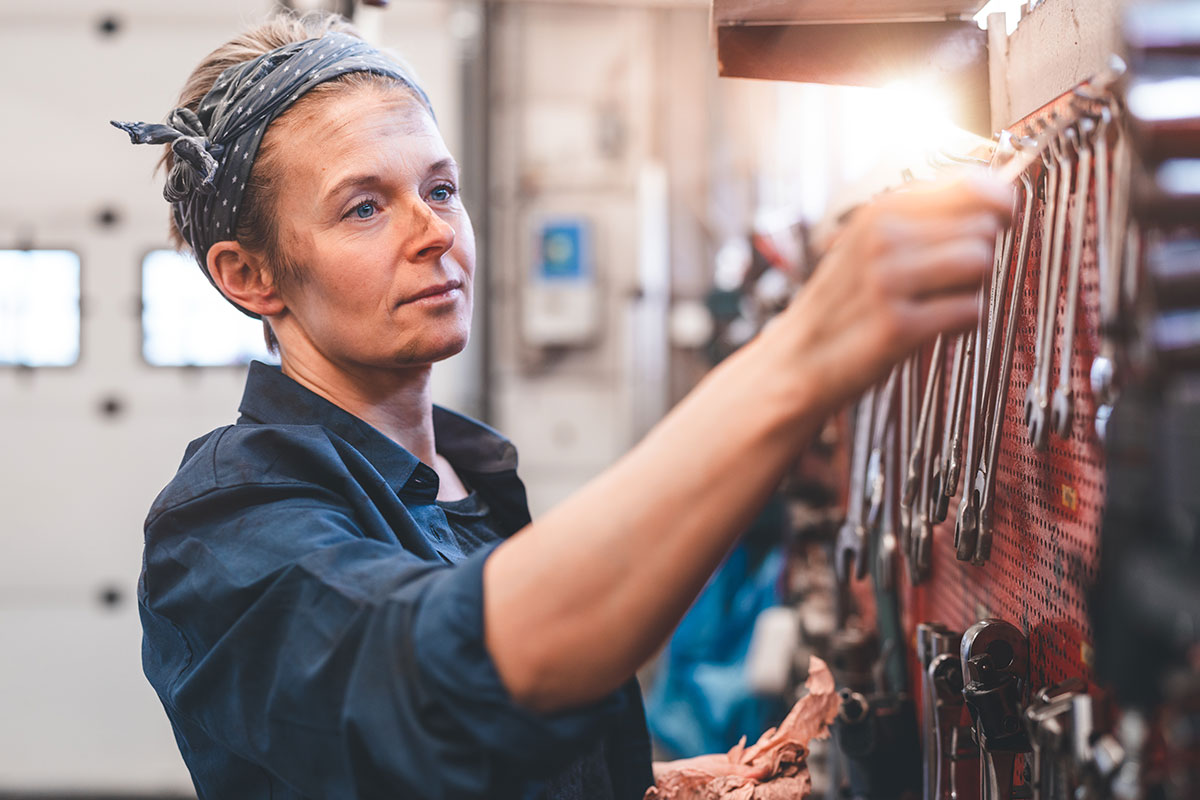
Social class has a significant role to play in career success in the United States. A growing body of research is shedding disquieting light on the extent to which working class Americans face discrimination in recruitment, pay and promotion – despite having a college degree. This demographic is up to four times less likely to get hired, 34% less likely to accede to leadership roles, and earns around 17% less on average than counterparts from middle or upper-class backgrounds. But while research is starting to document how class can impede or accelerate professional success, it remains unclear why these discrepancies exist. What are the mechanisms or dynamics at play that make it so much tougher for working class people to succeed than others? Goizueta Business School Assistant Professor of Organization & Management Andrea Dittmann has an interesting hypothesis. She believes that employees from different backgrounds can bring inherently different strengths and weaknesses to the workplace; advantages and disadvantages that speak to certain norms governing how we think about work and leadership. And it boils down, she says, to the way we work with others. “People from working-class backgrounds—those with blue-collar parents, who might be the first in their family to get a college degree—typically relate a certain way to other people. They are better connected to others, more team-like in their approach, than their middle-class counterparts who see themselves as more independent or unique,” says Dittmann. This team spirit could be working against lower-class employees, she says, in the sense that they see themselves or are perceived by bosses as being less adept at working autonomously or as individuals within organizations; and are therefore viewed by others as less poised to advance into roles of greater responsibility. On the flip side, this very capacity to work well with other people could actually give working class employees an advantage in team-based activities or cultures; an advantage that might translate into concrete benefits for organizations. To put this to the test, Dittmann conducted a series of studies aimed at unpacking how individuals perceive themselves within the context of work, and at the interactions that occur between employees and the workplace. Among these studies were qualitative interviews with MBA students from different social class backgrounds about their experiences navigating white-collar workplaces after graduating from college. She also ran a number of experiments to assess how well working-class people performed in teams and individually, and how environments that prioritize collaborative dynamics or interdependence might produce better experiences and outcomes for employees than environments geared to working individually or independently. A full article detailing Dittmann’s work is attached here and offers very compelling research showing how social class plays out in the workplace. It covers important aspects such as: The Catch-22 of Working Well with Others “It’s a kind of catch-22. Working class kids don’t make it into the gateway settings of school or college as much as middle-class kids in the U.S. They are significantly underrepresented in leading business schools like Goizueta, at roughly 15% of the student population,” she notes. “So, the higher-educational context—the talent pool for corporate America—is very much geared to a different social demographic and dynamic; one that inherently favors independent work ethics and approaches and sees them as the norm. Other ways of working, collaborating, and contributing risk are being undervalued as much as they are underrepresented.” When Considering Diversity, Companies Stand to Benefit “We know that companies that are more diverse perform better than others, and diversity needs to extend to social class. What my research and others are showing is that people from a working-class background tend towards behaviors that are more relational, that they are better at working together. If they fail to make it into the workforce in a more representative fashion, companies are basically missing out on opportunities to form better teams.” Faculty research like Dittmann’s is a critical element in Goizueta Business School’s drive to develop principled leaders who are better prepared to engage in the business of tomorrow. If you are interested in learning more, then let us help. Andrea G. Dittmann is an Assistant Professor of Organization & Management at the Goizueta Business School. She is an expert in the areas of diversity and inequality, particularly employees' social class backgrounds, aiming to promote equity and inclusion at work. Dr. Dittmann is available to speak with media about this research – simply click on her icon now to arrange an interview today.


Rensselaer Experts Available To Discuss Federal Infrastructure Proposal
Federal lawmakers are discussing sweeping infrastructure improvements to transportation, manufacturing, and digital infrastructure, among other projects. Researchers at Rensselaer Polytechnic Institute, the country’s first technological research university, are leaders in improving the sustainability, safety, and performance of transportation systems, energy systems, and wireless networks, among other areas. Experts in civil and environmental engineering, electrical engineering, and mechanical engineering are available to discuss what impact large-scale infrastructure projects could have on a multitude of systems that impact people across the country. Improving Transportation and Freight Systems: José Holguín-Veras, the director of the Center for Infrastructure, Transportation, and the Environment at Rensselaer, and Cara Wang, an associate professor of civil and environmental engineering at Rensselaer, are leading experts on the role of infrastructure on freight systems and transportation, and the environmental impacts of both. Their research focuses on improving transportation and freight systems in order to increase efficiency, reduce traffic congestion and, in turn, reduce vehicle emissions. Professors Holguín-Veras and Wang are available to discuss the ways in which improved roads, bridges, railways, and ports could affect shipping and delivery of goods, congestion in cities, and emissions in the environment. They can also discuss what their research has uncovered that could guide policymakers as new projects are planned. Expanding Broadband: Alhussein Abouzeid, a professor of electrical, computer, and systems engineering, is an expert in networked systems, the smart grid, and the Internet of Things. Some of his research focuses on modeling wireless networks, as well as wireless spectrum and policies to optimize its use. Koushik Kar, also a professor of electrical, computer, and systems engineering, researches communication networks, particularly modeling, analysis, and optimization of the internet and wireless networks. Both researchers are available to discuss the ways in which digital infrastructure can meet future needs. Next-Generation Manufacturing: Part of the President’s infrastructure plan would allocate $300 billion to manufacturing. Next-generation manufacturing is a central area of expertise at Rensselaer, with the Institute’s Manufacturing Innovation Center and the Rensselaer Manufacturing Innovation Learning Lab. Faculty and staff from both state-of-the-art centers, including John Wen, the head of the Department of Electrical, Computer, and Systems Engineering, who is an expert in robotics, are available to discuss the role that Rensselaer research plays in preparing the manufacturing sector for the nation’s current and future needs. Upgrading Electric Grid, Investing in Clean Energy: Joe Chow, Jian Sun, and Luigi Vanfretti, all professors in the Department of Electrical, Computer, and Systems Engineering, hold extensive expertise in modeling, monitoring, and optimizing the electric power grid. Their work will be integral to the development of a cleaner, more resilient power grid, especially as clean energy sources are increasingly integrated. Christopher Letchford, the head of the Department of Civil and Environmental Engineering, is a global expert in wind engineering. His expertise includes wind power modeling, wind climatology, and the impacts of climate change on infrastructure, transportation, and energy production. Each of these experts is available to discuss the importance of upgrading the nation’s electric grid, and the move toward clean and renewable energy. Boosting Electric Vehicle Numbers: Part of President Biden’s plan focuses on increasing the number of electric vehicles on the road. A key component of improved and more cost-efficient electric vehicles is greener, cheaper, more efficient, and longer-lasting batteries. Nikhil Koratkar, an endowed chair professor of mechanical engineering, is a leading expert in energy storage technologies. He has dedicated his research to improving the batteries that society already uses, while also developing batteries of the future. He can discuss current battery technology and how advancements in energy storage research could help put more electric vehicles on United States roads. Upgrading Water, Wastewater, and Stormwater Systems: Chip Kilduff, an associate professor of civil and environmental engineering, is an expert in managing water quality and water treatment. He has a particular focus on water treatment approaches like membrane and adsorption-separation processes. Kilduff is available to discuss the importance of upgrading water and wastewater systems and what his research has uncovered about the best methods for managing water quality.


Baylor Consumerism Expert Shares Five Tips to Make the Most of Your Stimulus Check
With President Joe Biden’s $1.9 trillion American Rescue Plan Act, citizens nationwide received a second round of stimulus checks in the form of $1,400 per person and an additional $1,400 per dependent. The Rescue Plan also brought increased child tax credits and unemployment benefits. James Roberts, Ph.D., The Ben H. Williams Professor of Marketing in the Hankamer School of Business, is an internationally recognized expert on consumerism and the author of “Shiny Objects: Why We Spend Money We Don’t Have in Search of Happiness We Can't Buy.” He said the latest round of stimulus funds offer consumers bright opportunities, but he also cautioned against pitfalls in uncertain times. Roberts said that people should first consider building up their emergency savings funds – a step, he said, more Americans seem to be taking during this time of pandemic and economic fluctuation . “Over the last 20 years or so, Americans have not saved much. However, in the first nine months of the pandemic, the U.S. savings rate increased by a whopping 100 percent. By some estimates we are at a national savings rate that hovers around 20 percent – which is incredible,” Roberts said. Roberts shared a few tips on how to get the best value for your stimulus check and prepare for times ahead: 1. Enhance your savings. Save a portion of your stimulus check for the inevitable rainy days ahead. Start with $1,000 to your short-term emergency fund. If possible, every family should have a $2,500 emergency fund. This provides peace of mind and avoids having to borrow from friends or family, or even worse, max out your credit cards or take out a “payday” loan, which I strongly advised against. 2. Invest in experiences. Given that a lot of Americans have significantly increased their savings and lowered their credit card debt, I say people should splurge a little on something for themselves or their families with the remaining $400. Remember, experiences bring more lasting happiness than buying stuff. Good mental health is critical to our well-being. 3. Start early. Don’t forget that the $1,400 stimulus check is only a small part of the money that may come your way. The child tax credits are a great opportunity to save for your children’s college. The earlier you start saving, the better. This is the beauty of compounding interest. 4. Save while unemployed I suggest any extra boost you might get in your unemployment check be saved for the days ahead. Don’t let money burn a hole in your pocket. 5. Plan ahead. Every family’s goal should be to set aside six months in living expenses so if you do lose your job, it doesn’t put you and your family into an immediate financial death spiral. ABOUT DR. JAMES ROBERTS James Roberts, Ph.D., is The Ben H. Williams Professor of Marketing in Baylor University’s Hankamer School of Business. He is a nationally recognized expert on consumer behavior and has been quoted extensively in the media and has appeared on the CBS Early Show, ABC World News Tonight, ABC Good Morning America, NBC The Today Show, Yahoo.com’s “The Daily Ticker,” and has been quoted and/or featured in The New York Times, The Wall Street Journal, National Public Radio, USA TODAY, TIME, FOX News, The Doctors on CBS, US News & World Report, Cosmopolitan, Glamour, and many other media. His books include “Shiny Objects: Why We Spend Money We Don’t Have in Search of Happiness We Can't Buy” and “Too Much of a Good Thing: Are You Addicted to your Smartphone?” ABOUT BAYLOR UNIVERSITY Baylor University is a private Christian University and a nationally ranked research institution. The University provides a vibrant campus community for more than 19,000 students by blending interdisciplinary research with an international reputation for educational excellence and a faculty commitment to teaching and scholarship. Chartered in 1845 by the Republic of Texas through the efforts of Baptist pioneers, Baylor is the oldest continually operating University in Texas. Located in Waco, Baylor welcomes students from all 50 states and more than 90 countries to study a broad range of degrees among its 12 nationally recognized academic divisions. ABOUT HANKAMER SCHOOL OF BUSINESS AT BAYLOR UNIVERSITY At Baylor University’s Hankamer School of Business, top-ranked programs combine rigorous classroom learning, hands-on experience in the real world, a solid foundation in Christian values and a global outlook. Making up approximately 25 percent of the University’s total enrollment, undergraduate students choose from 16 major areas of study. Graduate students choose from full-time, executive or online MBA or other specialized master’s programs, and Ph.D. programs in Information Systems, Entrepreneurship or Health Services Research. The Business School also has campuses located in Austin and Dallas, Texas. Visit baylor.edu/business.


Baylor Expert Shares Four Keys to Leadership from Ulysses S. Grant’s Reflections on Civil War
Near the end of his life, as he battled spiraling health and an empty bank account, former United States President – and iconic Civil War General – Ulysses S. Grant penned his memoirs and gave the world a glimpse into the mind of one of the nation’s most celebrated figures. The book, “Personal Memoirs of U.S. Grant,” was published in 1885 and has been pored over for more than 135 years. Peter Campbell, Ph.D., author, associate professor of political science at Baylor University and a nationally recognized scholar on military strategy and international security, recently wrote an essay about Grant and his memoirs for Classics of Strategy and Diplomacy. He said Grant’s personal reflections provide valuable insights into his view and practice of leadership, specifically as he led Union forces in the Civil War. Below, Campbell offers four keys to leadership that he found in Grant’s writings. 1. Know Yourself. Grant was a careful observer of himself. He was able to reflect on his experience, see where he had made errors and learn from them. In July 1861, moments before what Grant thought would be his first engagement as a commander in the Civil War, he was terrified. His heart was in his throat. When he and his forces crested a rise that they thought would reveal the enemy force, they saw that the enemy had fled. “My heart resumed its place,” Grant wrote. “It occurred to me at once that [the enemy] had been as much afraid of me as I had been of him. This was a view of the question I had never taken before; but it was one I never forgot afterwards.” Grant absorbed this lesson and it transformed him as a leader and planner. 2. Know Your Enemy. The great Chinese strategists counseled that commanders must know their enemies. Grant shows us what this looks like in practice. Rather than dwelling on his fears, those things that his opponent might do that would spell disaster, Grant put himself in the shoes of his adversary and asked himself: What would my gravest fears be, were I in his position? He then designed his plan of campaign to raise the specter of his enemy’s fears, knowing that this would compel the enemy to be blinded by fear and compel them to react. To be fair, this was easier for Grant because in the Civil War he was fighting against fellow graduates of West Point and veterans of the Mexican War, including Robert E. Lee. Grant was not in awe of Lee. “I had known [Lee] personally,” Grant wrote, “and knew that he was mortal; and it was just as well that I felt this.” This does not diminish, but rather reinforces, the importance on studying one’s adversary carefully in any kind of competition. 3. Know Your People. As Grant rose in the ranks of the Union Army, he was pulled away from the sound of the guns and the command of troops in battle. This is true in any organization – the higher one rises the further one gets from the ground truth, whether in an army or a Fortune 500 company. Grant recognized that to influence the battles he could no longer superintend, he had to select the right subordinates for the job and then give them the authority to exercise the initiative in their area of responsibility. This meant that Grant also had to be a careful observer of the strengths and weaknesses of his subordinates. Even a hero of the Battle of Gettysburg like Major General Gouverneur Warren was not spared Grant’s penetrating character assessments. Warren’s weakness, Grant wrote, was that he could not trust his subordinates to carry out his orders, which meant that he could not be give a large command. “[Warren’s] difficulty was constitutional and beyond his control,” Grant wrote. “He was an officer of superior ability, quick perception, and personal courage to accomplish anything that could be done with a small command.” When you know your people, you know where to place them where their strengths will reinforce success and their weaknesses will be least disastrous. 4. Unleash the Power of Humility. The most decisive virtue that Grant practiced was humility. As a leader he did not allow pride in his own designs to blind him to the wisdom of his subordinates. Late in the war, Grant wrote up a campaign plan for attacking the Shenandoah Valley, the key source of supply to the Confederacy. He brought the plan to General Philip Sheridan for execution. However, when he met with Sheridan, the cavalry officer presented Grant with his own plan. Grant wrote that Sheridan “was so clear and so positive in his views and so confident of success, I said nothing about [my campaign plan] and did not take it out of my pocket.” When you lead, don’t let pride get in the way of the best ideas bubbling up from your subordinates. ABOUT PETER CAMPBELL, PH.D. Peter Campbell, Ph.D., is an associate professor of political science in Baylor University’s College of Arts & Sciences. He is the author of two books: “Military Realism: The Logic and Limits of Force and Innovation in the U.S. Army” and “Farewell to the Marshal Statesman: The Decline of Military Experience Among Politicians and its Consequences.” Campbell studies international security, civil-military relations, strategy and national security decision-making, international relations scholarship and policy relevance, insurgency and counterinsurgency, the just war tradition, unconventional warfare and advanced military technology, military culture, and the effects of cyber capabilities on conflict escalation. ABOUT BAYLOR UNIVERSITY Baylor University is a private Christian University and a nationally ranked research institution. The University provides a vibrant campus community for more than 19,000 students by blending interdisciplinary research with an international reputation for educational excellence and a faculty commitment to teaching and scholarship. Chartered in 1845 by the Republic of Texas through the efforts of Baptist pioneers, Baylor is the oldest continually operating University in Texas. Located in Waco, Baylor welcomes students from all 50 states and more than 90 countries to study a broad range of degrees among its 12 nationally recognized academic divisions. ABOUT THE COLLEGE OF ARTS & SCIENCES AT BAYLOR UNIVERSITY The College of Arts & Sciences is Baylor University’s largest academic division, consisting of 25 academic departments and eight academic centers and institutes. The more than 5,000 courses taught in the College span topics from art and theatre to religion, philosophy, sociology and the natural sciences. Faculty conduct research around the world, and research on the undergraduate and graduate level is prevalent throughout all disciplines. Visit baylor.edu/artsandsciences.


Research Reveals Uptick in Hostility toward Black Americans during Tough Economic Times
Goizueta Experts Encourage Business Leaders to Double Down on Diversity, Equity, and Inclusion Efforts. Do recessions stoke racial tension? When there’s an economic downturn, are White Americans more likely to feel distrust or even animosity towards their Black peers? Researchers have long wondered about the broader societal impact of financial recessions, but until recently their effects on race relations have been unclear. In a recent paper, Emily Bianchi, associate professor of organization and management, Erika Hall, assistant professor of organization and management, and Sarah Lee 19PhD, assistant professor of management, Dominican University of California and visiting professor of organizational behavior, Pepperdine University, find that there is indeed a subtle uptick in hostility towards Black Americans during bad economic times. Their paper, Reexamining the Link Between Economic Downturns and Racial Antipathy, examines publicly available data on attitudes, political trends, and behavioral patterns in the U.S. Sarah Lee 19PhD While businesses tend to cut diversity, equity, and inclusion efforts during economic downturns, Bianchi and Hall underscore that these efforts may be even more critical during these times. To study this phenomenon, the researchers analyzed more than 20 years of data from the American National Election Survey (ANES), a biannual survey capturing political affiliations and perceptions of political candidates from 1964 until 2012. They analyzed how White Americans’ attitudes towards Blacks changed depending on the state of the economy and found that in worse economic times, Whites felt more negatively about Blacks. As Bianchi notes: “we were able to analyze the responses of more than 30,000 individuals who identified as White. And we do find that for decades – between the 1960s and the first part of the 21 century – White Americans feel less warmly about Black Americans during times of financial hardship.” Emily Bianchi, associate professor of organization and management In a second study, Bianchi, Hall, and Lee examined data from Project Implicit, a popular website that allows people to test their own implicit bias and also gauges racial attitudes. Again, the authors found that in worse economic times, White Americans held more negative implicit and explicit attitudes about race. In particular, during the Great Recession, they found that White’s attitudes towards Blacks became substantially more negative in states that were hard hit by the economic crisis compared to states in which the economic downturn was less severe. Having established that economic conditions affected fluctuations in attitudes towards race, the authors then examined whether these emotional shifts translated into actual behavioral outcomes. In other words, if Whites felt more negatively towards Blacks during recessions would this mean that Black professionals were less likely to be successful when the economy floundered? They tested this possibility by looking at two domains of public activity: record sales and voting patterns. First, they examined data from the Billboard Top 10 American songs between 1980 and 2014 and recorded the race of each musician who secured a Billboard hit. They found that in bad economic years, Black musicians were 90% less likely to have a top 10 hit, presumably because White consumers (by far the biggest consumer group during this period) were less likely to support them. Next, they examined the results of more than 8000 elections to the U.S. House of Representatives over the same period. They found that in bad economic times, Black politicians were 21% less likely to win elections. Interestingly, the converse also appears to be true. In good times, Black musicians and politicians fared much better in the polls and the charts – pointing to a certain fluidity in attitudes, says Bianchi. “Across these very different domains, studies, and sample sizes, we find the same consistent pattern: when times are tough, White Americans feel more animosity towards Black Americans and are less likely to support Black musicians or politicians. When things pick up, White Americans have more positive attitudes towards Black Americans and are more likely to endorse Black musicians and Black candidates.” The authors attribute these effects to innate human feelings of fear in the face of threat. Economic threats or shocks tend to evoke uncertainty and fear about what is to come. This translates into greater distrust of others, particularly those perceived as different in some way. And it’s an effect, they argue, that should be very much on the radar of businesses and decision-makers. Erika Hall, assistant professor of organization and management The research cites, “Anecdotally, we know that when times are good, organizations will tend to prioritize their efforts in the area of diversity and inclusion. But while this is critically important at all times, our research suggest that these efforts are probably even more important when times are tough.” All of this points to a need to attend to these issues more acutely when there’s a downturn, says Bianchi. And she cautions that this is likely to be counterintuitive to most leaders, who are likely more inclined to sideline diversity efforts when the economy slides. In terms of the current debate around race relations in the US, however, Bianchi stresses that the economic dimension is just one piece of a “very complicated puzzle.” “What we have seen and are seeing in 2020 and 2021 is a confluence of many major factors: a pandemic that has put a lot of people out of work, and that has put everyone on edge, punctuated by some horrific and well documented instances of violence against Black citizens,” Bianchi says. “So many of these things are in the mixing pot, that it’s hard to pinpoint one specific cause behind the current race crisis in the U.S. So many things coming together at once that have put us in this moment.” Only time will tell how this might play out compared to what we saw in the 80s and 90s, which were economic fluctuations rather than a complete drop off a cliff, she says. It will be more difficult to tease apart the effect of the economy versus the effect of the pandemic versus the effect of police violence on America’s race relations – a situation that Bianchi describes as a “cauldron of mess.” That said, she stresses that for business leaders, now is a good time to double down on efforts to drive diversity and inclusion. “I’d suggest leaders be especially mindful that at times of economic stress such as we are currently experiencing, there is a very real danger of heightened racial animosity.” We’ve attached a full article with even more advice and helpful information from our experts – but if you are looking to learn more or cover this topic, we can help. All of our faculty are available to speak with media, simply click on either expert’s icon now – to book an interview today.


How does the job market look for the Class of 2021 ? The answer: much better, says IU expert
As the class of 2021 graduates this weekend to embark on new challenges and careers, Rebecca Cook, executive director of undergraduate career services at the Indiana University Kelley School of Business, reflects on the current job market and offers insights into what summer internships may be like for current students. “The summer of 2020 was a mess for student internships and full-time roles, with pretty much all either going virtual or, in the case of many internships, being cancelled altogether as companies tried to figure out business during the pandemic. Luckily, the job outlook for both full-time roles and internships in May 2021 looks a lot different – and a lot better. “The job market is hopping right now with a significant number of internship and full-time opportunities, as companies open up and business grows. Industries such as professional services, technology, health care, manufacturing and financial services are all seeing significant upticks in job postings. Even companies hard-hit by the pandemic, such as retail and hospitality, are picking up their hiring. “While hiring is back to pre-pandemic levels in many industries, the level of competition for those roles has increased significantly. In a normal year, the majority of job seekers are that year’s graduates. However, this year we have 2021 grads plus some 2020 grads who still are seeking plus those who went to graduate school to put off job hunting during the pandemic and are now graduating. This all leads to a much more competitive job market and one where a student needs to work to stand out from the crowd, particularly through networking and reaching out to potential connections at their companies of interest. “We recommend that students spend a lot more time networking than they may have in the past, creating a focused list of companies they are interested in and then spending the time to connect and speak with employees at those companies. Leverage any ‘warm’ connections possible, such as friends, family members, fellow Kelley alumni, faculty and staff recommendations. “An important point to remember is that roughly 75 percent of jobs are never advertised publicly, so the only way to find out about them is through networking. Many new jobs, as well as internships, may start out virtual “It’s important to note that many roles that students are entering will still be virtual, at least for the time being, as companies are very mixed as to if they are back in the office already, not returning to the office until early fall, or staying remote entirely. Internships in particular are likely going to be virtual, while full-time jobs are looking to be mixed, with many starting out virtual but then likely moving in-person when offices open up. While being virtual once again is probably disappointing, students should remember that they can be just as successful with a virtual full-time role or internship as an in-person one. “The key is staying connected with their supervisor and co-workers on a regular basis. They should also network with as many people in their full-time or internship company as possible, taking the initiative to set up Zoom (or whatever video conferencing tool that the company uses) meetings regularly in order to learn as much about the company and role as possible, as well as to build their network for future opportunities. “Overall, there are a lot of available opportunities out there for students – they just need to put in the time to network and get their name and brand known.” To schedule an interview with Cook, contact George Vlahakis at vlahakis@iu.edu.

Kelley School expert who studies causes and effects of recalls available to discuss Peloton
Peloton Interactive Inc. on May 5 announced that it is recalling its treadmills in a statement from CEO John Foley who also apologized for the company’s initial refusal to comply with federal safety regulators’ prior request for this action. George Ball, assistant professor of operations and decision technologies and Weimer Faculty Fellow at the Indiana University Kelley School of Business, studies the causes and effects of product recalls. Below are comments from Ball. He can be reached at gpball@indiana.edu. “Recall decisions like this are very difficult for managers to make, especially the ones that are high profile and associated with consumer injury. Managers have to balance the firm financial health with consumer safety. Thus, this is a rich area of research. The research that my colleagues and I undertake in this field deal both with the regulator and the firm. My comments will attempt to address both perspectives. “I will start with the regulator. I am currently involved in a research project with two colleagues that is specifically critiquing the Consumer Product Safety Commission for situations very similar to this Peloton recall. There are three main regulators in the US that oversee product quality and in particular recalls: the FDA, NHTSA and the CPSC. “Of those, CPSC is the least proactive and in my view, least successful in properly managing product recalls and their timeliness. This is because there are two main ways in which a firm can push firms to recall; they can force them to, or they can work with the firm management to help encourage them, or nudge them, to recall. The FDA is very good at influencing firms while NHTSA is quite good at mandating recalls. CPSC does neither well. “In particular, the FDA frequently chooses to use their relationships with senior quality executives at firms to nudge them to recall when FDA feels it may be necessary and the firm has not yet acted upon the quality problem. Conversely, NHTSA mandates approximately 20 to 30 percent of auto recalls, such that they choose to force instead of nudge. However, in both cases, while neither industry (medical products and autos) are perfect when it comes to recall timeliness, and both have suffered unfortunate well-known examples of firms dragging their feet in the recall decision, both have a well-developed approach. “CPSC mandates practically no recalls and they do not, from my research, have strong relationships with firm executives that can help them nudge firms to make the quick recall decision. Thus, this Peloton example is one of many in which consumer product firms may take too long to recall. “From the firm perspective. There are several potential red flags that may indicate the firm took too long. The longer a consumer product industry CEO has been in their role, the slower they are to make recall decisions. This is because the longer a CEO is in the role, the less open they are to taking responsibility for such high-profile mistakes. Interestingly, a new CEO, such as one who has been in their role for two to three years, is much more likely to recall a faulty product. “The CEO of Peloton definitely falls into the category of a fairly long-tenured CEO who has his reputation tied closely to the firm’s success. Secondly, the more stock a CEO owns in their firm, the slower they are to make the recall decision, because they are trying to protect their financial welfare. The CEO of Peloton appears to have a significant fortune at stake in Peloton stock, which would be consistent with our research. The more stock a CEO owns, the slower the firm take to recall defective products.”