
Experts Matter. Find Yours.
Connect for media, speaking, professional opportunities & more.
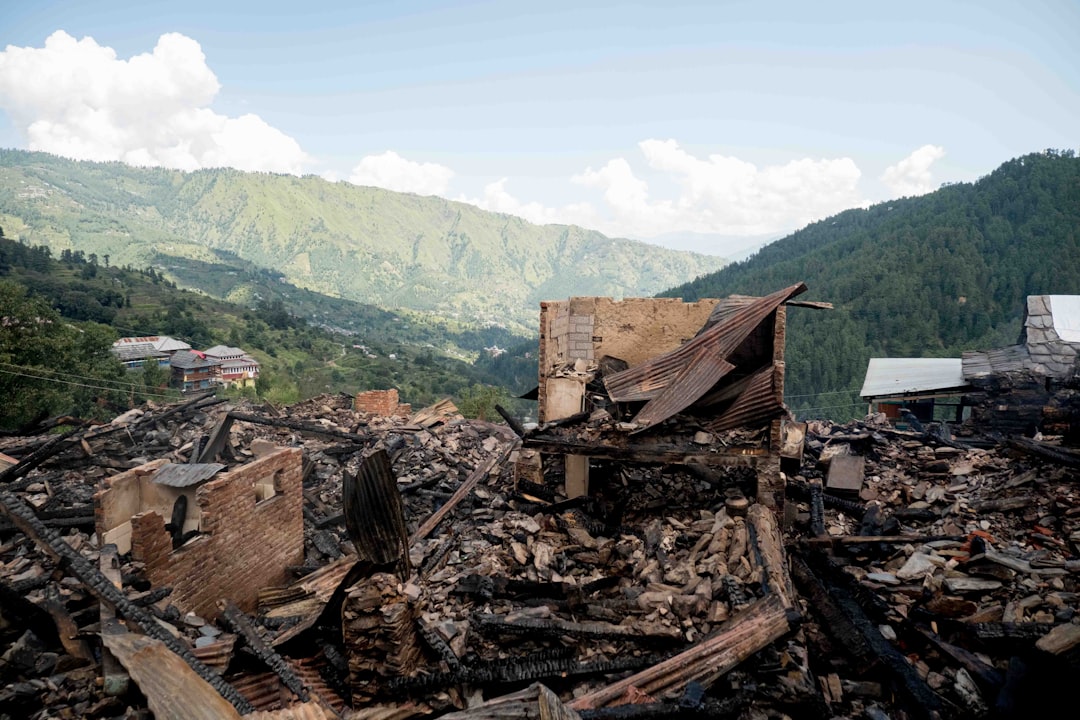
Faculty from the University of Delaware’s renowned Disaster Research Center are available to comment on the back-to-back earthquakes in Venezuela. These experts can discuss critical infrastructure failures, public health threats, emergency logistics and community-led response efforts in the region. Available experts include: Jennifer Horney (Professor of Epidemiology) Focus: Public health impacts, post-disaster waterborne/vector-borne disease outbreaks and the breakdown of healthcare delivery due to damaged roads and disrupted communication networks. Tricia Wachtendorf (Co-director, Disaster Research Center) Focus: Disaster response logistics, community improvisation, neighbors as first responders and how to donate effectively to maximize impact. Sarah DeYoung (Associate Professor, Sociology and Criminal Justice) Focus: Maternal and infant health/feeding in emergencies, pet and companion animal evacuations and community-level crisis decision-making. To contact these experts directly and arrange an interview, visit their ExpertFile page and click on the contact button. Interested reporters can also email MediaRelations@udel.edu.


World Cup 2026: The Business Behind the Game
As the 2026 FIFA World Cup unfolds across North America, Emory University’s Goizueta Business School experts are available to help media explore the business stories behind the world’s biggest sporting event, from the economics of hosting and ticket pricing to global sponsorship, player brands and the psychology of fandom. Goizueta’s World Cup 2026 Business Hub brings together faculty who can provide timely, research-backed commentary on the commercial, cultural and consumer forces shaping the tournament as it moves from match to match, city to city and story to story. Featured Topics The Economics of Hosting Infrastructure investment, tourism revenue, real estate, local labor markets and the broader financial impact of hosting World Cup matches. The Science of Fandom What drives global fan devotion, audience loyalty and engagement across stadiums, broadcasts and digital platforms. Ticket Pricing and Demand Dynamic pricing, hospitality packages, travel costs and how extraordinary demand shapes the fan experience at major global events. Brand Strategy and Global Sponsorship How companies evaluate World Cup sponsorships, build global campaigns and measure the return on major sports partnerships. The Rise of the Player Brand How star footballers build, extend and monetize personal brands that reach far beyond the pitch. Media can visit Goizueta’s World Cup 2026 Business Hub to explore available experts and connect directly with the right source for their story.




In 1926, Robert H. Goddard launched the world’s first liquid-fueled rocket in Auburn, Mass. Goddard’s 10-foot-tall rocket was airborne for just 2.5 seconds, reaching speeds of 60 miles per hour before landing 184 feet away from the launch site. A century later, the aerospace industry is booming, with new technology and missions making headlines every day—some with incredible success, and others encountering challenges that send scientists back to the drawing board. In February 2026, NASA delayed the launch of Artemis II—its next mission to the moon—citing issues with helium flow in the rocket’s systems. By April, the mission was on track again, and Artemis II completed the first crewed flight to the moon in more than half a century. Crew members for the upcoming Artemis III mission were also recently announced, as well as a timeline and overview for Artemis IV, the first planned crewed mission to the lunar South Pole in 2028. Amid these successes and setbacks, researchers continue to innovate the field and develop new technologies designed to help expand our knowledge of the vast universe. That innovation comes from diverse and unique places, including Villanova University. Research in Flight Student interest in aerospace led to the creation of a Master of Science in Aerospace Engineering (MSAE) program at Villanova University, which began in the Fall 2025 semester. Sergey Nersesov, PhD, associate professor of Mechanical Engineering, was instrumental in the inception of the MSAE program and helped develop courses in space flight mechanics, applied aerodynamics, aerospace structures analysis and advanced flight dynamics and control, among others. The idea for the graduate program was inspired by the growing popularity of the College of Engineering’s Minor in Aerospace Engineering. The minor attracts students from across the university, drawing from other majors and colleges at Villanova. For example, Dr. Nersesov recently collaborated on a research project focused on spacecraft and satellite control systems with Aedan Disanto ‘26 CLAS, an astrophysics and planetary sciences major and aerospace engineering minor. “If you look up at the sky, sometimes you see satellites chasing each other,” said Dr. Nersesov. “Dynamics and control researchers develop algorithms to ensure proper spacing between the satellites so they can function correctly.” The spacing between satellites is crucial to avoid collision, which is also a potential issue when a spacecraft approaches a space station to dock. In this situation the velocities, rotation and orientation of both vehicles are carefully controlled so that docking mechanisms align correctly, which requires up to 12 variables to be coordinated simultaneously. Dr. Nersesov and Disanto analyzed the algorithms needed to guarantee perfect satellite function and built upon them, discovering more efficient ways to operate vehicles in space. This summer, Dr. Nersesov and his students will also begin designing a prototype for a new kind of drone. Typical drones use ample amounts of energy to become airborne and capture photos or video content because they rely entirely on thrust to hold themselves up. To improve effectiveness, Dr. Nersesov and his students aim to create a drone in the style of an airplane, with vertical takeoff and landing (VTOL) capability. The drone will take off vertically, like a helicopter, but then transition to flying horizontally like an airplane, allowing lift from the wings to reduce the energy needed to stay airborne. As a result, it could stay in the air up to ten times longer than a hovering drone. While the project focuses on a single aircraft design, it represents the type of forward-thinking research driving the aerospace field today. Aerospace Engineering with Biology Elsewhere, Qianhong Wu, PhD, chair of Mechanical Engineering in the College of Engineering, is exploring a concept called super-lubrication, inspired by the way red blood cells move through the human body. Blood cells travel through capillaries narrower than their own diameter without damaging themselves or the vessel walls. A soft, porous layer called the endothelial glycocalyx within the vessels allows cells to glide through, reducing friction. In studying this biological process, an idea emerged that could potentially be translated to the aerospace field. Dr. Wu’s team is currently applying their deep understanding of biomechanical processes to applications that might reduce aerodynamic friction on aircraft surfaces by more than 90 percent. This lower friction may also improve fuel efficiency and extend flight endurance for drones or other aircraft. “Our work is an example of how thinking outside your traditional field can lead to innovation,” said Dr. Wu. “Sometimes the solution comes from a completely different subject, like biology.” A Century of Momentum One hundred years after Goddard’s brief but groundbreaking flight, aerospace innovation has expanded far beyond its earliest experiments. Today, progress in the field depends not only on major missions and milestones, but also on the steady work of researchers refining systems and exploring new ideas. At Villanova, that work is taking shape across disciplines—from spacecraft control systems to biologically inspired materials. Together, these efforts reflect how the field continues to evolve through collaboration and creativity.


World Cup 2026: Hofstra experts on the science, health, and business behind the tournament.
The 2026 FIFA World Cup comes to the New York metro area, and Hofstra University is ready. From the training room to the boardroom, Hofstra faculty bring research-backed expertise to the stories journalists are chasing this tournament season. Featured Topic The Cultural Game Why soccer means what it means and what this World Cup moment represents The World Cup has always been about more than the game. Brenda Elsey, Professor of History, studies soccer as a cultural and political force across the Americas -- from grassroots identity to gender and power. She can speak to what this tournament represents as a historical moment, on and off the field. Expert Brenda Elsey - History Featured Topic Health and Performance on the World Stage Expert insight on what it takes to compete and recover at a World Cup. Competing at this level means managing the body and the mind across weeks of high-stakes matches with almost no recovery time. Hofstra's health and kinesiology faculty are your sources for the stories behind the performance. Experts Jayne Ellinger - Athletic Training Katie Sell - Exercise Physiology Anna Len - Physical Therapy Genevieve Weber - Mental Health Featured Topic Beyond the Pitch What the World Cup does to cities, economies, and public health systems From local business impact and tourism economics to disease surveillance and emergency preparedness - Hofstra faculty are ready to talk. Experts Andy M. Forman - Marketing & Tourism Lauren Hindman - Management Martine Hackett - Population Health Meshack Achore - Population Health


World Cup 2026: Georgia Southern University Experts on the Game Behind the Game
Atlanta is one of the World Cup's biggest host cities. Georgia Southern faculty across economics, health sciences and international studies are ready to speak to the stories behind the tournament. Featured Topic The Atlanta Advantage: Regional Economics of Hosting the World Cup What it means for local businesses, tourism, and the long-term economic legacy of a host city Atlanta's World Cup moment is as much an economic story as a sporting one. Georgia Southern University economics professors Michael Toma, Ph.D., and Anthony Barilla, Ph.D., can speak to tourism revenue, infrastructure investment and what host cities actually gain — and manage —- when the world comes to town. Experts Michael Toma, Ph.D. - Regional Economics and Development Anthony Barilla, Ph.D. - Economics and Public Policy Featured Topic Playing Across a Continent: The Physical Demands of a 48-Team Tournament What elite athletes face competing across climates, time zones and a month-long schedule 48 teams. Multiple cities. Almost no recovery time. Georgia Southern health sciences and kinesiology professor Samuel Wilson, Ph.D., and sports psychologist Brandonn Harris, Ph.D., can explain how a World Cup schedule affects the human body and how elite teams prepare for it. Experts Samuel Wilson, Ph.D. - Health Sciences and Athletic Performance Brandonn Harris, Ph.D. - Kinesiology and Exercise Science Featured Topic More Than a Match: The World Cup as Cultural and Political Exchange How the world's biggest sporting event becomes a stage for diplomacy, identity, and soft power When 48 nations converge on American soil, the game is only part of the story. Political science and international studies expert Christopher M. Brown, Ph.D., can speak to the geopolitical dimensions — national identity, soft power and what it means for the U.S. to host global soccer for the first time in a generation. Experts Christopher M. Brown, Ph.D. - Political Science and International Studies


Inside the Partnership Between Texas Christian University and Taylor Sheridan’s Four Sixes Ranch
A unique partnership between Texas Christian University and the legendary Four Sixes Ranch is giving students hands-on experience helping shape the future of one of the most recognizable brands in the American West. Recently featured at a major national rodeo event, the ranch’s newly designed retail booth, created by TCU faculty and students, blends heritage-inspired design with modern merchandising, reflecting the ranch’s growing national profile under the ownership of Taylor Sheridan and Nicole Sheridan. “We’re now written into the history of the Four Sixes Ranch.” The collaboration spans fashion merchandising, branding and business strategy, allowing students to contribute directly to product development, retail design and digital marketing initiatives. For students involved, the project offered a rare opportunity to see classroom ideas become real-world products tied to an internationally recognized Texas brand. Faculty members say the partnership reflects TCU’s focus on experiential learning while helping preserve and evolve an important piece of Texas cultural identity. Check out the video TCU and Four Sixes Ranch, and you can read more about this project in the full article below: Looking to connect with Chares Freeman, Kevin Smith, Nicole Bettinger or Rima Shrestha about this exciting project? Simply contact Holly Ellman, Associate Director of Communication, at h.ellman@tcu.edu today.

![[Webinar] Make your university the visible authority featured image](http://media-speakerfile-pre.s3.amazonaws.com/spotlightv2_images/d82e2936-f426-4958-b1d9-872abbad0048_l.png)
[Webinar] Make your university the visible authority
Your university has the expertise. The question is whether the world can find it. In this webinar, we'll show you exactly how leading institutions are building topical Authority Hubs that get their faculty in front of journalists, students, and partners at the moments that matter most. DATA & TIME Wednesday, July 15, 2026 - 11:00 am EDT We'll walk through three real examples: Performing Arts -- Carnegie Mellon University The exclusive higher education partner of the Tony Awards since 2014. With 60+ alumni wins and 15 consecutive years of nominations, CMU built an Authority Hub that makes decades of genuine institutional strength finally visible and media-ready. Papacy & Catholic Studies -- Villanova University When Pope Leo was elected, Villanova had qualified scholars ready. Their topical hub connected journalists with the right experts within hours -- showing what it looks like when a university moves at the speed of the news cycle. Sports Events & Research -- University of Delaware Multiple topical hubs built around major events and enduring institutional strengths -- serving media relations, prospective students, and research partners with one repeatable, scalable approach. WHAT YOU'LL LEARN How to identify the moments and topics where your institution already has authority How to structure faculty expertise so journalists and AI platforms can find it How to go from idea to live hub fast -- without technical resources or coding What makes an Authority Hub perform over time, not just at launch WHO SHOULD ATTEND University communications and media relations teams, research communications leads, and anyone responsible for faculty visibility and institutional reputation.



Tony Awards: CMU Experts Unpack Broadway’s Biggest Night
As Broadway prepares for the 2026 Tony Awards this Sunday, Carnegie Mellon University experts are available to help media explore the stories behind the stage, from the business of Broadway and the economics of major productions to costume design, theatre history and the behind-the-scenes teams that bring performances to life. CMU’s Tony Awards expert page brings together faculty and specialists who can provide timely commentary on the artistic, cultural and economic forces shaping Broadway’s biggest night. The Business of Broadway Production costs, commercial risk, tourism, jobs, touring productions and Broadway’s wider economic impact. Behind the Scenes The directors, designers, stage managers, technicians and production teams who turn a show into a fully realized theatrical experience. Costume in Theatre How costume design shapes character, period, mood and storytelling on stage. The History of Theatre and Broadway Broadway’s evolution, cultural influence and place within the broader history of theatre. Media can visit CMU’s Tony Awards page to explore available experts and connect directly with the right source for their story.
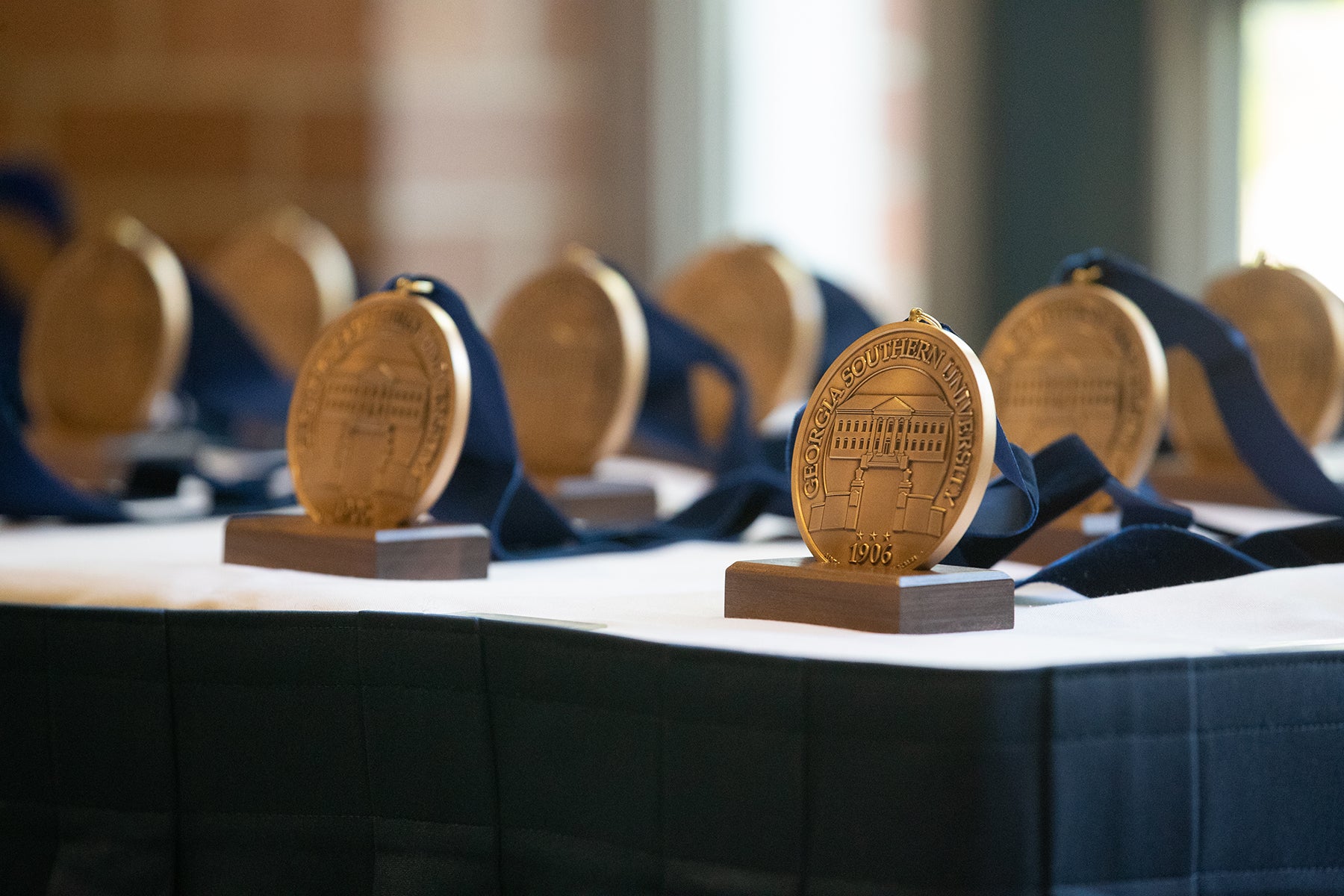
Georgia Southern recognized by Forbes on list of America’s Best Employers for Company Culture 2026
Georgia Southern University has received high honors from Forbes in recognition of its commitment to institutional culture with the recent announcement of the publication’s list of “America’s Best Employers for Company Culture 2026.” Out of 600 companies on the list, Georgia Southern impressively landed in the top tier at #33. “At Georgia Southern, we prioritize investing in our people, being accountable leaders, and fostering an environment of high performance, evidenced by results aligned with institutional goals and ultimately, student success. It is that alignment and commitment to continuous growth (growing ourselves to grow others) that creates a positive institutional culture at Georgia Southern University,” said Georgia Southern University President Kyle Marrero. “The successful implementation of our strategic plan and the achievement of our institutional goals, aligned with our strategic priorities, are only accomplished if each and every faculty and staff member is actively engaged.” This is the second year Forbes has published the list, and the University was recognized this year for the first time. Representing the education industry, Georgia Southern was second on the list behind Columbia University (#10). Marrero emphasized that persistent efforts to strengthen institutional culture must produce measurable results that positively impact faculty and staff. To support this, the institution tracks its initiatives, evaluates them through ongoing feedback, and uses key performance indicators to assess their effectiveness. “A positive culture is maintained through continuous communication and connecting to the ‘why’ and ‘how,’ empowering the collective intellect to help be part of solving the challenges (solve and evolve),” he added. “We are in this together, always focused on the ‘why’ of student success!” Georgia Southern University has also been recently recognized on the Forbes lists for America’s Best Large Employers 2026 (#171), America’s Best Employers by State 2025 (#58 – Georgia), and America’s Top Colleges 2026 (#243 in Research Universities and #100 in the South). Looking to know about these awards or Georgia Southern University? Simply contact Georgia Southern's Director of Communications Jennifer Wise at jwise@georgiasouthern.edu to arrange an interview today.

Georgia Southern selected as Census Bureau hub
Georgia Southern University’s Statistical Consulting Unit (SCU) in the College of Science and Mathematics has been selected as the Census Bureau Higher Education Consortium – Southern Hub. The partnership places the University as an access point between regional experts and the public to make the vast data of Census reports usable for research, business and individual discovery. SCU director Divine F. Wanduku, Ph.D., says that cooperation is the key element of the program. “We want to facilitate high-level access to this data and the tools to apply it,” noted Wanduku. “We are the liaison between other universities, the government and those who could use this information if they can learn how it works.” As a regional Census hub, Georgia Southern will host a series of webinars. Experts from Georgia Southern, partner universities and the Census Bureau will address specific methods to access and analyze otherwise overwhelming data. Wanduku says the partnership opens up development opportunities for everyone involved. “This will help students prepare for jobs in the federal government or anywhere that uses government data because they get to try it out themselves,” said Wanduku. “It also helps to show how faculty are able to impart knowledge of research and then make recommendations to the Census Bureau about what works. So the federal government helps higher education institutions provide access to the raw material and then we help the Census Bureau by making recommendations on where our research is going and what data is most useful.” Beyond the webinar series, Wanduku sees the partnership as a stepping stone to future collaborations. “This expands our network with everyone from other universities to contractors,” said Wanduku.”We get to meet each other and find out what we’re all working on separately and turn it into projects we can work on together.” Looking to know more about the Census Bureau Higher Education Consortium or Gerogia Southern University? Simply contact Georgia Southern's Director of Communications Jennifer Wise at jwise@georgiasouthern.edu to arrange an interview today.