
Experts Matter. Find Yours.
Connect for media, speaking, professional opportunities & more.
On August 3, 2019, a white power-inspired gunman killed 24 people and injured 22 others at a Wal-Mart in El Paso, Texas. We tend to understand mass shootings as isolated events committed by “lone wolf” gunmen who might have mental health problems, but what we know about the El Paso gunman – as well as the terrorists who carried out mass killings at the Al Noor Mosque and Linwood Islamic Center in Christchurch, New Zealand in March 2019, the Tree of Life Synagogue in Pittsburgh in 2018, and at the Emanuel African Methodist Episcopal Church in Charleston, South Carolina in 2015 – tell a different story. The evidence investigators have complied shows that these white-power terrorists had never met one another, but that they lived in an on-line world created by 4chan, 8chan, and white-power organizations’ websites, where they consumed racist ideas and propaganda that shaped their decision to kill African-Americans, Muslims, Jewish people, and Mexicans and Mexican-Americans. We also know that white-power terrorists have particular goals in mind. Message boards like 8chan reveal a competition among participants about who can top the number of people killed in the last mass shooting. There is also a strong belief expressed on-line that killing racial minorities will foment a race war and allow white-power advocates to create an all-white world. I describe these terrorists as advocates of white power because it is important to understand that “white power” and “white nationalism,” a term often used in the media to describe the perpetrators of recent mass killings and the movement that animates them, are not the same thing. White nationalism calls to mind an effort to shore up the interests of white people within the American nation as it currently exists. The white-power movement, on the other hand, imagines a transnational, Aryan nation of white people living in an all-white world after wiping out non-whites. This might sound far-fetched, but does not mean that those who carry out mass killings in pursuit of this goal are mentally ill. Rather, their actions are the result of a white-power ideology fostered and spread on-line. What is new about how white-power advocates communicate with each other is that some of it now happens on-line. Interaction between racists who never met one another, however, has a long history in the United States. Approximately 4,100 African Americans were lynched between the end of the Civil War in 1865 and the 1960s. The white perpetrators of these lynchings lived hundreds of miles apart and often did not know one another, but they were united in a collective effort to enforce Jim Crow white supremacy in the American South (I use “white supremacist” here because white southerners who carried out lynchings did not, broadly speaking, subscribe to white power as the current movement defines it: the creation of a transnational, Aryan nation of white people living in an all-white world after wiping out non-whites). Lynchings were sometimes public events that drew hundreds or thousands of people with the purpose of “teaching” southern African Americans what would happen to them if they violated the rules of Jim Crow. Southern newspapers ran stories that justified lynchings; perpetrators took pieces of flesh, body parts, and hair from lynching victims as souvenirs and passed them around; and white southerners took lynching photographs, turned them into postcards, and mailed them to friends, family, business associates, and fellow travelers in the white supremacist movement. This racist community building had the goal of creating and maintaining white supremacy and, of course, it all happened without the help of the Internet. Communication, whether on-line or through the more traditional means has played an integral role in fostering and perpetuating racial violence and hatred. If you are a reporter covering this topic – let one of our experts help. Dr. Anthony DeStefanis is an associate professor of history at Otterbein University. He specializes in modern U.S. history with an emphasis on labor and the working class and immigration, race, and ethnicity. Dr. DeStefanis is available to speak with media regarding the history of racial violence in America – simply click on his icon to arrange an interview.


October is Breast Cancer Awareness Month – Let our experts help with your coverage
October is Breast Cancer Awareness Month and if you are a reporter looking to know more or considering covering this topic, here are a few key facts to get started according to Breastcancer.org: About 1 in 8 U.S. women (about 12%) will develop invasive breast cancer over the course of her lifetime. In 2019, an estimated 268,600 new cases of invasive breast cancer are expected to be diagnosed in women in the U.S., along with 62,930 new cases of non-invasive (in situ) breast cancer. About 2,670 new cases of invasive breast cancer are expected to be diagnosed in men in 2019. A man’s lifetime risk of breast cancer is about 1 in 883. About 41,760 women in the U.S. are expected to die in 2019 from breast cancer, though death rates have been decreasing since 1989. For women in the U.S., breast cancer death rates are higher than those for any other cancer, besides lung cancer. Besides skin cancer, breast cancer is the most commonly diagnosed cancer among American women. In 2019, it's estimated that about 30% of newly diagnosed cancers in women will be breast cancers. In women under 45, breast cancer is more common in African-American women than white women. A woman’s risk of breast cancer nearly doubles if she has a first-degree relative (mother, sister, daughter) who has been diagnosed with breast cancer. Less than 15% of women who get breast cancer have a family member diagnosed with it. At Augusta University, we have leading experts who can help with any of your questions, assist with your coverage and ensure your story has all the facts and details it requires to be a compelling and effective piece. Dr. Alicia Vinyard is a Board-Certified General Surgeon and Fellowship Trained Breast Surgical Oncologist at the Georgia Cancer Center and Medical College of Georgia at Augusta University. Dr. Vinyard is also an expert in breast cancer, cancer surgery and cancer survivorship. She is available to speak to media about Breast Cancer Awareness Month – simply click on her icon to arrange an interview.



Experts available to discuss vaping and new tobacco products
A host of new tobacco products, including e-cigarettes like JUULs, have entered the market in recent years, bringing new public health concerns with them. Researchers at the University of North Carolina at Chapel Hill are studying the health and societal impacts of emerging tobacco products. UNC-Chapel Hill experts are available to discuss topics including e-cigarettes’ health impacts, their failure as smoking cessation tools, the differences in how smoking and vaping affect the body, and e-cigarette explosions and the resulting chemical burn injuries. If you’d like to speak with an expert, call (919) 445-8555 or email mediarelations@unc.edu. Dr. M. Bradley Drummond is an associate professor of medicine at UNC School of Medicine and the director of the Obstructive Lung Diseases Clinical and Translational Research Center. He can discuss the health consequences of these new tobacco products and how they vary from traditional cigarettes. He can also discuss how these products exacerbate other conditions like chronic obstructive pulmonary disease, asthma and other chronic lung diseases. Dr. Adam Goldstein is a professor in the UNC department of family medicine, the director of tobacco intervention programs at UNC School of Medicine, and a member of UNC Lineberger Comprehensive Cancer Center. He can discuss the potential drawbacks versus any potential benefit of using these products as smoking cessation tools and can share evidence-based strategies to stop smoking. He can also speak to trends in teen tobacco use. Dr. Ilona Jaspers is a professor of pediatrics and microbiology & immunology, director of the Curriculum in Toxicology, and deputy director of the Center for Environmental Medicine, Asthma and Lung Biology all at the UNC School of Medicine, and professor of Environmental Sciences and Engineering at the UNC Gillings School of Global Public Health. She can discuss the current scientific understanding of the health effects of vaping or juuling, a subject on which she has published widely. Kurt Ribisl is a professor and chair of the department of health behavior at UNC Gillings School of Global Public Health and the program leader for Cancer Prevention and Control at UNC Lineberger Comprehensive Cancer Center. Ribisl specializes in tobacco policy and regulation and can speak to taxation, advertising and marketing of new tobacco products and recommendations for preventing youth access. Robert Tarran is a professor of cell biology and physiology at UNC School of Medicine, a member of UNC Marsico Lung Institute, and a member of UNC Lineberger Comprehensive Cancer Center. He can discuss the science of vaping, including how e-cigarettes impact a person’s lungs, including their genes and what happens to the lung’s immune system. He can also speak to the varying toxic effects of different e-cigarette flavors. Rebecca Williams is a research associate at UNC Lineberger Comprehensive Cancer Center. She is a leading expert on internet tobacco sales, age verification, technology and emerging tobacco products, including the wide variety of vaping devices available today. Her research has shown that online e-cigarette vendors routinely sold to minors, a finding that underscores the need for regulations requiring and enforcing age verification for the online sale of e-cigarettes. She can discuss the sales and marketing practices of websites that sell emerging tobacco products, and underage access to these online products.


When people hear the term “assisted living,” they might think “nursing home” or “old folks’ home.” But what people don’t know is that interior designers are working hard to ensure that these facilities provide a sense of comfort and a sense of home to their residents. “Designing for assisted living environments requires careful consideration of the needs of the residents living there. But really, in that way, it is no different from designing for any population,” said Elise King, assistant professor of interior design in Baylor University’s Robbins College of Health and Human Sciences. Baby boomers would rather live at home or in a residential setting, according to SeniorLiving.org. This will require more locations to have independent and assisted living available. With the baby boomer generation transitioning into retirement, many will require additional care but don’t want to be in nursing homes like their parents. “You should always begin by understanding the users of the space and assessing their needs and requirements,” King said. “And what you’ll find is that across the lifespan, while there are different needs which must be met by various functional requirements, our innate desires are not that different.” 1. Bring outdoors inside by incorporating nature into facility design. One way designers enhance facilities is by incorporating nature into their design and bringing the outdoors inside. At Baylor, Debra Harris, Ph.D., associate professor of interior design — who has researched the impact of health care facility design on patients, families and health care workers — teaches a sustainability course that addresses some aspects of nature in design. “We reinforce all aspects of indoor environmental quality through research activities and through the entire design process,” Harris said. “For years, architects have discussed the concept of organic architecture and more recently, the term ‘biophilic design’ has been used,” King said. “And in the past 30 or so years, we’ve seen a growing body of research that supports what we’ve assumed for a long time, essentially that humans desire a connection with nature and that nature can have a positive impact on health and well-being.” She said one way this can be accomplished is by having ample windows, particularly those that look onto greenspaces or treetops. It also is important to consider that some residents will be using walkers, canes or wheelchairs. Window height should be considered so that all residents can benefit. Another way to incorporate nature into the design is by using natural materials when possible or using materials that have textures or patterns reminiscent of nature. Harris agrees that incorporating nature into a facility’s design is important and beneficial to the residents living there. “Direct access to nature, like gardening or nature walks, and indirect access to nature, through a window, provide real tangible benefits,” Harris said. 2. Access to natural light, as well as artificial light that mimics daylight, provides benefits to seniors that are associated with well-being. Harris said having access to natural light provides benefits associated with well-being, such as reinforcing our natural clock, known as circadian rhythms, which helps with the quality of sleep and may contribute to management of chronic conditions. Designing to provide access to nature through gardening and walking also can increase physical activity and social interactions, she said. Artificial lighting is also an important factor in interior design, especially for seniors. Harris said there are lighting systems that can mimic daylight, changing over the course of the day to support our circadian rhythms, which can lead to an elevated sense of well-being. This may contribute to other aspects, such as social interactions, physical activity, and satisfaction, she said. 3. Designing for all five senses is critical for making a facility feel more like home. King said it’s important to design for all the senses, not just the visual aspect of the facility. She said sound, smell and touch are other critical aspects that need to be taken into consideration to make a facility feel more like a home. “Designers have to use research to understand how we can best address the specific needs of a mature population through design,” King said. “By creating environments that value and support these innate needs — self-actualization, esteem, love and belonging, safety needs and physiological needs — we’re reinforcing a sense of place and hopefully, a sense of home.” ABOUT BAYLOR UNIVERSITY Baylor University is a private Christian University and a nationally ranked research institution. It provides a vibrant campus community for more than 17,000 students by blending interdisciplinary research with an international reputation for educational excellence and a faculty commitment to teaching and scholarship. Chartered in 1845 by the Republic of Texas through the efforts of Baptist pioneers, Baylor is the oldest continually operating University in Texas. Located in Waco, Baylor welcomes students from all 50 states and more than 90 countries to study a broad range of degrees among 12 nationally recognized academic divisions. ABOUT ROBBINS COLLEGE OF HEALTH AND HUMAN SCIENCES AT BAYLOR UNIVERSITY The Robbins College of Health and Human Sciences at Baylor University was established in 2014, a result of identified priorities for strengthening the health sciences through Baylor’s strategic vision, Pro Futuris, and the University’s Illuminate strategic plan. The anchor academic units that form Robbins College – Communication Sciences and Disorders; Family and Consumer Sciences; Health, Human Performance and Recreation; Public Health; and Division of Health Professions – share a common purpose: improving health and the quality of life. The College’s curricula promotes a team-based approach to transformational education and research that has established interdisciplinary research collaborations to advance solutions for improving quality of life for individuals, families and communities. For more information, visit www.baylor.edu/chhs.



Privilege Creates a Different Starting Line in “Race to the Jobs”
College is a unique microcosm of society where students from a variety of backgrounds come together in one place. Many times, students have not been exposed to people from backgrounds that differ from their own. I consider this an opportunity to teach my students at Otterbein University about social inequality and privilege. In my Sociology of Sport course, I illustrate to students that the societal “playing field” isn’t always equal for everyone in visible or obvious ways. I use athletics as an entry point to teach them about the different privileges – or disadvantages – each of us have. I take students to the football field, where everyone starts at the 25 yard line facing the end zone. Standing in the end zone, I represent each student’s dream job or career path. Then I proceed to read statements out loud – and if that statement applies to them, students take a step forward or step back, depending on the directions given. My statements range from “if you have immediate family members who are doctors, lawyers, or other professionals, take one step forward” to “if you were ever called names or ridiculed because of your race, ethnicity, or social class background, take one step backward.” Each of the statements read are beyond the students’ control. Once I’m through reading all of the statements, I ask students to look around, noticing who is in front of them, who is behind them. Then they sprint to my position, and the first one to reach me is the winner of the race, representing the competition to the dream job.. However, through this activity, it’s clearly seen that not everyone had the same advantages as the others. Before they begin the race to me in the end zone, ready to run toward their dream job, students are already noticing the advantages some have over others. It really begins to sink in once they look around and see how everyone is staggered across the field. There is no even starting line – we all start from positions on the field. This Race to the Jobs activity, originally conceived by social justice activist Paul Kivel, becomes a springboard in our class for a better understanding of our own privilege and how we can all help create more opportunities for those who need help to overcome an obstacle. Doing this active learning makes it that much more impactful and poignant. Taking a different approach to showing these issues can make a big difference in student’s perceptions. They open their minds up to new – and sometimes difficult or challenging concepts of privilege and oppression – becoming more self-aware. The students begin to see that, just as in our classroom discussions and course readings, not everyone can be a LeBron James, born into a relatively difficult situation, and rise to his level of success on luck or talent alone. We need to examine our own privilege because if we don’t know who we are, we will never see our blind spots. Kristy McCray, Ph.D., is an Otterbein assistant professor in sport management. Contact her if you have any questions or wish to arrange an interview by clicking on her icon at the top.

Baylor expert’s new book offers hope for addressing America’s hunger crisis
As the founder and director of Baylor’s Texas Hunger Initiative, Jeremy Everett (MDiv ’01) is literally considered an expert on fighting hunger. Recently, he’s followed in the footsteps of many experts before him — by authoring his first book on his area of expertise. The book, I Was Hungry, offers an assessment of the current hunger crisis in America and a strategy for addressing the problem. Everett focuses on scripture, calling Christians to listen to Matthew 25:35 and work intentionally across ideological divides to effectively end America’s hunger crisis. “Approximately 40 million Americans experience food insecurity,” Everett told Christianity Today last month. “My view is that this particular group bears the weight of all the brokenness in our social systems. Often, we look at Americans experiencing hunger or food insecurity and place them in different categories than Americans who, say, lack access to healthcare, live in poverty, or struggle to find good jobs. But the reality, on the local level, is that these groups are all part of the same family. Their struggles are interconnected.”


Baylor’s Jeff Levin Named a Fellow of Prestigious International Society
Baylor scientist Jeff Levin, Ph.D., M.P.H., has been invited to become a Fellow of the prestigious International Society for Science and Religion (ISSR), a multidisciplinary learned society based at Cambridge University. Founded in 2002, ISSR is the world’s preeminent scholarly organization devoted to the intersection of science and religion. The Society has only about 200 Fellows, mostly from the physical and biological sciences, philosophy, history and theology. Levin is one of the few Fellows with a background in the biomedical sciences. Levin, an epidemiologist and religious scholar, holds a distinguished chair at Baylor, where he is University Professor of Epidemiology and Population Health, professor of medical humanities and director of the Program on Religion and Population Health at the Institute for Studies of Religion. He also serves as adjunct professor of psychiatry and behavioral sciences at Duke University School of Medicine and as an affiliated member of the Center for Medical Ethics and Health Policy at the Baylor College of Medicine. Levin is a founding father of the field of research devoted to the influence of religious faith and spirituality on physical and mental health. He has been conducting studies on this subject since the early 1980s. He came to Baylor in 2009. Levin’s work “is the culmination of a lifetime of diligent scholarship, for which he is rightly renowned worldwide, said Stephen G. Post, director of the Center for Medical Humanities, Compassionate Care and Bioethics at Stony Brook University, and an ISSR Fellow. “It is hard to imagine that any one scholar could have made such a pioneering contribution across this interface, but Jeff has been digging deep for nearly 40 learned years,” Post said. Levin’s colleagues at Baylor were excited to hear about this honor. “This is an amazing honor for a world-class scholar. This recognition is a true testament to his many important publications and remarkable career,” said Byron Johnson, Ph.D., co-director of ISR and Distinguished Professor of the Social Sciences. Among the ISSR’s distinguished Fellows are several Templeton Prize laureates, Gifford lecturers and leading academic scientists and theologians in Europe and North America. “I never expected this and wasn’t sure I was even on their radar,” Levin said. “The science and religion field has become a major intellectual endeavor, but the subject of religion and health up to now has not really been acknowledged by the field or accepted in it. So this is a first—an honor for me, for sure, but also recognition of the work that so many of my colleagues and I have been doing since the 1980s.” Levin has been published in more 220 scholarly publications, including 11 books. His most recent book is “Religion and Medicine: A History of the Encounter Between Humanity’s Two Greatest Institutions,” forthcoming this fall from Oxford University Press. ABOUT BAYLOR UNIVERSITY Baylor University is a private Christian University and a nationally ranked research institution. The University provides a vibrant campus community for more than 17,000 students by blending interdisciplinary research with an international reputation for educational excellence and a faculty commitment to teaching and scholarship. Chartered in 1845 by the Republic of Texas through the efforts of Baptist pioneers, Baylor is the oldest continually operating University in Texas. Located in Waco, Baylor welcomes students from all 50 states and more than 90 countries to study a broad range of degrees among its 12 nationally recognized academic divisions. ABOUT THE BAYLOR INSTITUTE FOR STUDIES OF RELIGION Launched in August 2004, the Baylor Institute for Studies of Religion (ISR) initiates, supports and conducts research on religion, involving scholars and projects spanning the intellectual spectrum: history, psychology, sociology, economics, anthropology, political science, epidemiology, theology and religious studies. The Institutes mandate extends to all religions, everywhere, and throughout history, and embraces the study of religious effects on prosocial behavior, family life, population health, economic development and social conflict.


How to talk to your family about fake news
A recent segment hosted by ABC’s “The Debrief” examined fake news and how older generations are influenced by its use, with Professor of Cinema and Television Arts Naeemah Clark offering her insights. During the Aug. 2 show, Clark joined host Kimberly Brooks by video to discuss how to talk to your family about understanding what is and is not fake news. Specifically, the segment addressed why old generations more frequently share inaccurate news than other demographics. According to Clark, this trend is the result of the exponential growth in news media since the mid- to late-20th century. “In previous generations, the news … was trusted and it was believed because that is what they had,” Clark said during the interview. “There were three channels … and the 6 o’clock news was what you trusted, what you were dependent on. Now that there are so many more sources, it is more difficult" … to identify what is truthful. Watch the entire segment here. If Dr. Clark can assist with your reporting about these complex immigration issues, please reach out to Owen Covington, director of the Elon University News Bureau, at ocovington@elon.edu or (336) 278-7413. Dr. Clark is available for phone, email and broadcast interviews.


Careful what you click – FaceApp is all the rage, but should we be more careful with what we share?
You can’t avoid it…just about everywhere you venture this week on social media, you’ll see friends, family members and even celebrities posting pics of what they’ll supposedly look like as they age gracefully into the future. It’s done with a new downloadable app, FaceApp, and it seems harmless enough until you read the fine print. “You grant FaceApp a perpetual, irrevocable, nonexclusive, royalty-free, worldwide, fully-paid, transferable sub-licensable license to use, reproduce, modify, adapt, publish, translate, create derivative works from, distribute, publicly perform and display your User Content and any name, username or likeness provided in connection with your User Content in all media formats and channels now known or later developed, without compensation to you. When you post or otherwise share User Content on or through our Services, you understand that your User Content and any associated information (such as your [username], location or profile photo) will be visible to the public.” – FaceApp terms of use For the more than 100 million people who have already used FaceApp, there are a few questions to be asked: Is this standard for downloadable apps or are these terms a new trend? What could FaceApp actually use this data for and what value does it hold? What are the concerns about privacy and protection of personal information? Is there a real reason to worry and can lawmakers take any recourse? If you are a reporter looking to learn more about FaceApp and data protection – let our experts help. Sarah Rees is the director of Augusta University’s Cyber Workforce Academy and she is an expert in the areas of cyber security and information protection. She’s available to speak to media regarding FaceApp – simply click on her icon to arrange an interview.
A global commitment to democracy
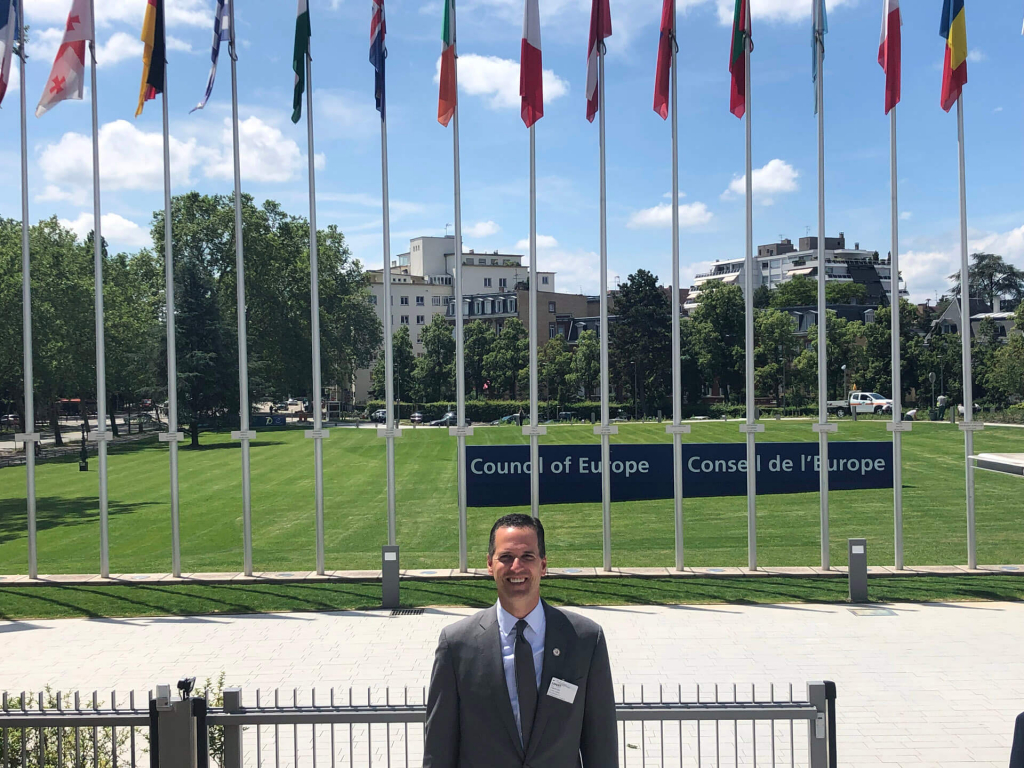
When I was invited to attend the Global Forum on Academic Freedom, Institutional Autonomy, and the Future of Democracy held this June in Strasbourg, France, I jumped at the chance. I was proud to add Otterbein’s support to a movement of global leaders committing to protecting democracy. I attended the forum along with more than 100 higher education leaders from around the world. Since its founding, Otterbein has stood for the rights of academic freedom and autonomy, as well as the freedom of speech of individuals, and we continue to stand resolute today. Otterbein believes that all voices from different walks of life must be represented, respected and valued, and we are committing to be a national and global leader in preserving democratic societies and values. The Global Forum was co-organized by the Council of Europe; the International Consortium for Higher Education, Civic Responsibility, and Democracy; the Organization of American States; and other partners, notably the International Association of Universities and the Magna Charta Observatory. It gathered higher education leaders and representatives of public authorities and NGOs from Europe and the United States, as well as smaller numbers from Australia, Asia, Africa, the Middle East and Latin America. - John Comerford Are you a journalist covering topics about democracy and how it is being threatened around the world? What role does higher education play in global democracy? And what countries or regions are the most at risk? There are a lot of questions regarding this topic – and that’s where we can help. John Comerford is an expert in higher education, regional and national topics. He is the President of Otterbein University and is available to speak with media regarding this issue and how higher-education needs to be made available to everyone in America regardless of income, family name or background. Simply click on his icon to arrange an interview.