Experts Matter. Find Yours.
Connect for media, speaking, professional opportunities & more.

Trump, tariffs and the long game
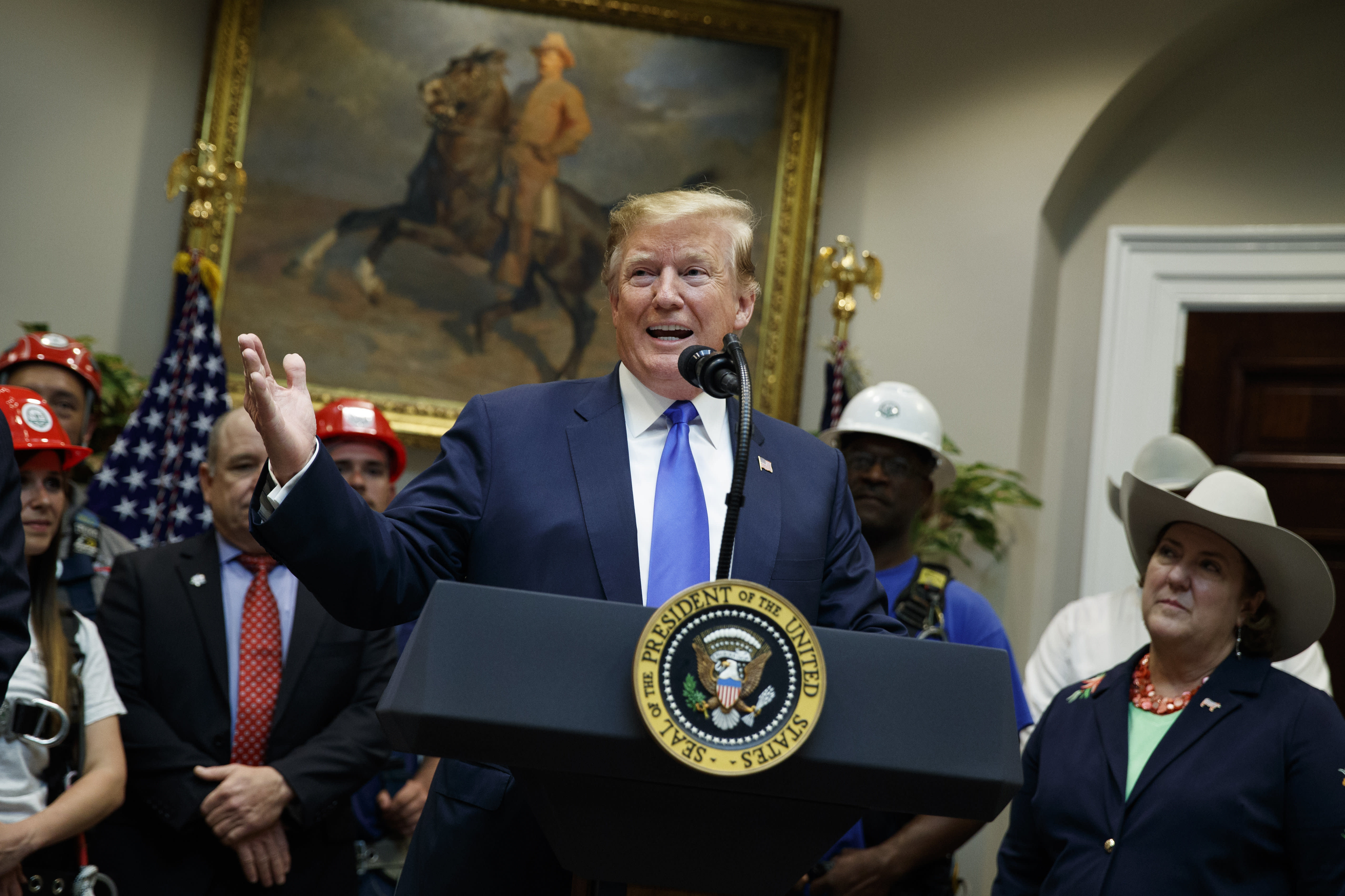
He said he’d get tough on China and make sure America was getting the better end of any trade deal – and President Trump seems bound and determined, despite the critics and advice from his own cabinet, that massive tariffs and a trade war with China is a good thing for America. Last week Trump more than doubled tariffs on $200 billion in Chinese goods. China reacted with tariffs on American agricultural and other products. The response, Trump is now looking at approximately $300 billion in import levies on more Chinese goods. As far as trade wars go, this one could be epic in its scale and economic proportions. But who will blink first, who will win and ultimately – who is paying the costs and taking on the burden of all the financial collateral damage at the end of the day? Is this a matter of short-term pain for long-term gain for America’s economy? Or is this political posturing that will at the end of the day hurt the country’s bottom line? There are a lot of questions to be asked and that’s where two of the experts from Cedarville can help. Dr. Glen Deurr's research interests include nationalism and secessionism, comparative politics, and international relations theory. Jeff Haymond, Ph.D. is Dean, School of Business Administration at Cedarville ad is an expert in finance and trade. Glen and are both available to speak to media regarding the current trade war with China – simply click on either expert’s icon to arrange an interview.


Is Wall Street hedging on a Trump win in 2020? Let our experts tell you why.
“The economy, stupid!” It’s a famous quote that Bill Clinton campaigner James Carville used in 1992. And the Ragin’ Cajun was right – odds are, when it comes to Americans casting a vote in presidential elections – the economy calls the shots on how they vote. And despite the scandals, the Tweets, the gaffes and the indictments – the economy under President Donald Trump is booming. So, while convention and traditional politics would likely write of the presidency of Donald Trump as a one term wonder - an article about a recent report commissioned by Goldman Sachs says Democrats and pundits shouldn’t be so sure to write him off. ‘In a comprehensive report released late Saturday, the investment bank gave its preliminary thoughts on a general election that’s still more than a year away. While Trump re-election is far from assured, Goldman’s economists believe the president is bolstered by “the advantage of first-term incumbency and the relatively strong economic performance,” in what is sure to be a “close call” election.’ - Yahoo! Finance Are you covering the race for 2020? Should Democrats change their focus away from the scandals and the Mueller Report and focus on economics? If not, what are the issues that will sway undecideds next year? And what will a potential run by an Independent candidate mean for the race? There are so many storylines already at play and a long way to go before November 2020 – but the election is already daily news and that’s where our experts can help. Dr. Marc Clauson is a professor of history and law at Cedarville. Marc is an expert in the fields of political and economic philosophy Dr. Clauson is available to speak with media – simply click on his icon to arrange an interview.

A new year with new changes for how small businesses are taxed.
The only thing surer than death and taxes, might be the annual changes and adjustments to the way small businesses are taxed in Canada. New restrictions, and rates can have positive and negative impact on business owners and their companies. This coming year, changes to Employment Insurance and the Canada Pension Plan could make the bottom line of some small businesses tighter. However, the overall corporate tax rate applicable to many small businesses in Ontario has fallen to 12.5%. We may see more money going back in the pocket of owners or their growing companies. “We know that the average small business owner doesn’t know a lot about these changes.” Bill Moreau, Minister of Finance There are a lot of changes to the current system this year; as small business owners prepare to file, it is in their best interest to contact an expert. The government itself has even admitted that some businesses might not be fully up to speed, that’s where our team can help! Cleo Melanson, Tax Partner at Freelandt Caldwell Reilly LLP practices in the areas of tax and owner-managed businesses. To contact Cleo, simply click here to arrange an appointment regarding this topic. Article: https://globalnews.ca/news/4804039/tax-changes-canada-cpp-ei-small-business/


Brexit, political rancor may cause long-term damage to British economy
Sandeep Mazumder, associate professor of economics and UK native, is available to comment by phone or email on the ongoing power struggle over control of Britain’s planned exit from the European Union. “Uncertainty abounds in the United Kingdom – both in Parliament, and with regards to Brexit. At this point, there are several outcomes that could result from Theresa May's proposed deal being voted down by the UK’s Members of Parliament," Mazumder says. "As it stands, the UK could be on course for a hard Brexit in March with no deals in place with the European Union. A lack of trade deals, in particular, will likely be very damaging to the British economy." "But, a hard Brexit is not a given either. Changes in the political set-up could open doors for other outcomes as the world waits to see what will happen,” says Mazumder. For now, the uncertainty surrounding Brexit is most likely to harm markets involving British firms, he adds. Mazumder is an expert in macroeconomics, monetary policy and international finance.


U.S. economy to remain strong through most of 2019, with output averaging 3 percent
Higher than expected economic growth in 2018 should continue into next year, with U.S. output averaging 3 percent and continued strong gains in domestic job growth. Indiana will continue to outperform the nation, with output growing at a rate of 3.2 percent, according to a forecast presented today by Indiana University's Kelley School of Business. A year ago, members of Kelley's Indiana Business Outlook Tour panel predicted that U.S. gross domestic product would grow by 2.6 percent this year and about 3 percent if tax reform were enacted. Indiana was forecast to see growth of 2.8 percent. Friday's release of GDP data for the third quarter supports their view that 2018 should end up with output growth above those levels. "The tax cut has produced an acceleration in the U.S. economy during 2018 to well above the new normal status quo of 2 percent growth," said Bill Witte, associate professor emeritus of economics at IU. "We expect output growth in 2019 to average 3 percent, but with deceleration as the year proceeds. By this time next year, quarterly growth will be heading toward equilibrium growth at a little below 2.5 percent." The story in Indiana and the greater Indianapolis area is very similar. "The state economy appears poised to see its strongest growth in the first quarter of 2019, after which growth rates are expected to slow but remain strong through the end of the year," said Ryan Brewer, associate professor of finance at Indiana University-Purdue University Columbus and author of the panel's Indiana forecast. "It is most likely Indiana will continue to experience growth across the board -- in jobs, numbers of establishments, income levels, wages as well as gross state product." The Kelley School released its forecast this morning at the Indianapolis Artsgarden and will present it again at 11 a.m. today in Bloomington. The Business Outlook Tour panel also will present national, state and local economic forecasts in eight other cities across the state through Nov. 28. The national labor market has exceeded expectations for two years now. A year ago, the panel felt the U.S. economy would create jobs at a monthly rate of about 175,000 and that the unemployment rate would fall to 4 percent. Instead, monthly job creation through September has averaged nearly 200,000, and the jobless rate has fallen to 3.7 percent. These job creation trends are expected to continue into 2019, with average monthly job gains of 200,000, and the participation rate -- which measures the percentage of the U.S. population that was employed or looking for a job -- remaining flat. "The labor market will be increasingly tight," Witte said. "The unemployment rate could decline a little, but firms unable to find workers will remain an important theme." Risks to the forecast include the effects of political uncertainty, further trade disputes and economic concerns being felt in other parts of the world, including China and Europe. The panel also expressed reservations about the impact of further Federal Reserve interest rate hikes. They expect the federal funds rate to rise above 3 percent by the end of 2019. Kyle Anderson, clinical assistant professor of business economics and author of the forecast for an 11-county area that includes Indianapolis, Carmel and Anderson, said the region is at full employment, and continued job growth will ensure it stays there. Economic growth in the area will average about 2.5 percent. "Communities around Central Indiana are finding it necessary and important to invest in projects that improve quality of life and provide amenities for residents," Anderson said, referring to examples of this in downtown areas of Indianapolis and Speedway and in Carmel. "The message to community leaders is clear: Investing in infrastructure to improve quality of life is necessary to maintain a healthy local economy. "Tax incentives are not sufficient to draw in businesses and residents. Bike trails, community centers and connected neighborhoods were once seen as luxuries, but now are important economic development tools," he added. "This trend will continue, especially if the economic expansion continues nationally." Other highlights from today's forecast: · Consumer spending will continue to grow, although at a rate less than in 2018. · Business investment will be good, but held back by trade concerns. · Housing will resume growth with a small boost from the aftermath of hurricanes Florence and Michael. Elsewhere, including in Central Indiana, 30-year mortgage rates, nearly a full point higher than a year ago, could dampen enthusiasm for new housing and constrain prices. · Government spending will be strong early in the year, but growth could slow significantly toward year end. · The trade balance will show increasing deficits. A detailed report on the outlook for 2018 will be published in the winter issue of the Indiana Business Review, available online in December. For more assistance, contact George Vlahakis, associate director of communications and media relations at the IU Kelley School of Business, 812-855-0846 (o) or 812-345-1500 (m), vlahakis@iu.edu.


Former U.S. Attorney Available to Discuss Fallout for Trump Administration in Light of Cohen Plea
Wheaton College Professor David Iglesias, a former U.S. Attorney in New Mexico whose areas of expertise include federal prosecutions, is available for interviews regarding the fallout for the Trump administration in light of Michael Cohen’s guilty plea in federal court on 8 criminal counts, including violation of campaign finance laws. “President Trump is now in a place few presidents have ever been,” Iglesias says. “At this point, he is basically an unindicted co-conspirator to federal crimes.” “I wouldn’t call it the beginning of the end, but it’s certainly the end of the beginning.” Iglesias is an associate professor of politics and law and director of the Wheaton Center for Faith, Politics, and Economics. He can discuss topics including: -The process of presidential pardons -How federal prosecutors treat indicted persons who cooperate with information concerning the crimes of other persons, and the quid pro quo for getting an individual to cooperate with law enforcement -Guilty pleas, hung juries, and sentencing in federal court -Impeachment (What Iglesias calls “the nuclear option for removing a sitting President of the United States”), the process, and why it has happened so rarely in U.S. history -Whether a sitting president can be indicted for crimes -The importance of the rule of law (Why is America the world leader for holding all accountable for their actions? What message is being sent if wealthy and powerful people can avoid criminal exposure for their actions?) -Watergate as a precedent, and similarities/differences with the current situation -Rules of federal investigations (How do federal agencies conduct investigations? What is public and what is non-public? Why are prosecutions that are considered "political" so dangerous for law enforcement?) To request an interview with Professor Iglesias, e-mail Wheaton College Director of Media Relations LaTonya Taylor at latonya.taylor@wheaton.edu. Source:


What can the Big Mac tell us about our economy?
McDonald’s is celebrating Big Mac’s 50th anniversary by giving away MacCoins, which customers can use to buy a Big Mac in 50 countries. The idea of creating this burger currency, according to the company, originated from the “Big Mac Index,” which The Economist has used since 1986 to compare real currencies across the globe. Because McDonald’s has more than 36,000 restaurants in more than 100 countries, the price of its top-selling burger, locally produced in more than 80 countries, has been used to indicate the purchasing power of a country’s economy. What does burgernomics tell us about our economy? Dr. Simon Medcalfe is a professor of economics and finance at Augusta University and is available to discuss: • How the Big Mac Index is calculated • What the latest Big Mac Index says about the U.S. dollar and the U.S. economy • Why the Big Mac has been called the nearly perfect commodity for currency comparison Medcalfe has published academic articles in the areas of sports and health economics and economic education as well as contributed to labor economics and entrepreneurial finance textbooks. Contact us to schedule an interview with Dr. Medcalfe or learn more about his expertise. Source:


Electronic health records and the impact on workflow and costs
Healthcare practitioners and hospitals were initially slow to implement electronic health records (EHR) due to the perceived cost. The financial incentives from Medicare/Medicaid to adopt EHRs helped alleviate some of that concern, but the actual impact on workflow and profits, irrespective of those incentives, are still under investigation. In a research study, Steven D. Culler, adjunct associate professor of finance, along with David J. Ballard (Baylor Health Care System); Edmund R. Becker (Emory University); Dunlei Cheng (U of Texas); Briget da Graca (Baylor Health Care System); Neil S. Fleming (Baylor Health Care System); and Russell McCorkle (HealthTexas Provider Network) analyzed administrative, payroll, and billing data from 26 primary care practices in a Dallas-Fort Worth, Texas-based fee-for-service network that implemented EHRs from June 2006 through December 2008. In the 12-month period following implementation, staffing expenses increased 3 percent and practice costs increased 6 percent. The data revealed that “productivity, volume, and net income decreased initially, but recovered to/close to preimplementation levels after 12 months.” Given the recent rollout of EHRs across the country, the researchers noted the need for a longer-term investigation of the impact on productivity and costs. Source:


The link between corporate alliances and returns
Strategic alliances are agreements between two or more firms to pursue a set of agreed upon objectives while remaining independent organizations. Alliances are formed for a number of reasons, including licensing, marketing or distribution, development or research, technology transfer or systems integration, or some combination of the above. Tarun Chordia, R. Howard Dobbs professor of finance, and coauthors Jie Cao (Chinese U of Hong Kong) and Chen Lin (U Hong Kong) find evidence of return predictability across alliance partners. If the alliance partner or partners have high (or low) returns this month, then the firm has high (or low) returns over the next two months. Using a sample of alliances over the period 1985 to 2012, the authors find that a long-short portfolio sorted on lagged one-month returns of strategic alliance partners provides a return of over 85 basis points per month. This long-short portfolio return is robust to a number of specifications, including different adjustments for risk, controlling for different proxies for cross-autocorrelations, and excluding partnerships with customer-supplier relationships, as well as controls for industry returns. They theorize, “If investors are fully aware of the impact of strategic alliances on returns and pay attention to the firm-partner links, then the stock price of a firm should quickly adjust to price changes of its partners’ stocks.” The evidence suggests that investor inattention may be the source of a firm’s underreaction to its partners’ returns. Source:


Dubious loan origination and the housing collapse
Gonzalo Maturana, assistant professor of finance, and coauthor John M. Griffin (U of Texas) argue that securitization was not the only factor in the recent housing crisis. Their new research indicates that questionable mortgage origination practices played a significant role in the distortions in the 2003 to 2012 real estate boom and bust. Specifically, the underreporting of the true risk profiles of borrowers, including the misreporting of second-liens, helped to drive housing demand and, ultimately, contributed to the crisis. They note, “The process of underreporting key loan attributes can have the by-product of facilitating credit to borrowers who have little ability to repay.” The researchers tested their theory by using county deed records, securitized loan information, house price statistics, and home loan application data from a number of reliable sources to detail the 2003 to 2006 run-up of housing prices and its subsequent 2007 to 2012 collapse. After controlling for securitization, they determined that “originator malfeasance” in certain areas also served to raise the credit supply. Maturana and Griffin concluded that dubious originator practices helped to cause house prices in certain zip codes to increase relative to other areas and eventually led to larger price crashes. Source: