
Experts Matter. Find Yours.
Connect for media, speaking, professional opportunities & more.

Cyber attacks and ransomware are incidents that are happening more and more often. They are threatening America’s energy supply, food chain and critical infrastructure. Recently, two Georgia hospitals were victims of a recent attack. Media from across the country asked experts like Frank Katz, director of Georgia Southern University's Center for Applied Cyber Education, who is vulnerable and why. Katz, who directs the Center for Applied Cyber Education at Georgia Southern University’s Armstrong Campus in Savannah, said hospitals can be targets for extortion as well as sources of personal identifying information that can aid in further fraud. “They are more likely to pay than another type of business because it’s a life and death situation,” Katz told WSAV-TV. “It really has become a situation of money, pure and simple. These are thieves that know they can extort the money and often get it.” June 21 – Associated Press Frank Katz, director of the Center for Applied Cyber Education at Georgia Southern University, says hospitals are often easy targets. Having so many employees, he says user IDs and passwords can be easy to figure out. Plus, they’re dealing with emergency medical care. “They are more likely to pay than another type of business because it’s a life and death situation,” Katz said. June 21 – NBC News If you are a reporter looking to cover this subject and speak with Frank Katz, Georgia Southern’s Director of the Center for Applied Cyber Education – then let our experts help. Frank Katz, director of the Center for Applied Cyber Education is available, simply click on his icon or reach out to Georgia Southern Director of Communications Jennifer Wise at jwise@georgiasouthern.edu and she’ll assist with connecting you for an interview today.


America in the 1950’s was all about building highways to pump up the post-war economy and make sure everyone could criss-cross a connected America by car. Urban planners didn’t hesitate to bulldoze neighborhoods that were in the way of this progress. However, history shows that most of those communities that were destroyed housed Black and lower income residents. The result left areas with hot pavement, few green spaces and little tree canopy to provide shade. Recently, UMW’s Pamela Grothe joined the host of With Good Reason to talk about how America needs to undo these past mistakes and make better choices. Grothe recently worked with Jeremy Hoffman, chief scientist at the Science Museum of Virginia, who also appears on the episode, and UMW 2021 graduate Allison Grant on research that explores how redlined communities in Richmond, Virginia, designed to keep Black residents in less desirable neighborhoods, show records of being significantly hotter over the last 30 years than white neighborhoods, which has resulted in more heat-related health issues for Black and lower income residents. Aside from jumping in a pool, trees are our best bet to cool summer heat. Pamela Grothe says we have to be intentional about putting trees in the right places. If you’re a journalist looking to learn more about this topic, then our experts are here to help. Dr. Pamela Grothe is an assistant professor in the Department of Earth and Environmental Sciences as the University of Mary Washington, who earned a Ph.D. in the Paleoclimatology Lab at the Earth and Atmospheric Sciences department at Georgia Institute of Technology. She’s an #expert in climate change and is available to speak with media – simply click on her icon to arrange an interview.



Did you know in America more than 6 million people are living with Alzheimer’s disease? June is Alzheimer's and Brain Awareness Month and the experts from Georgia Southern University have been busy talking with reporters and media about the importance of brain health and how to monitor your memory for any signs that may require attention. Earlier this month, Georgia Southern’s Adrienne Cohen spoke to NBC News about Dementia and the many types of brain disorders. Alzheimer’s is one of the many types of Dementia, a brain disorder that causes the brain to create gaps, initially effecting the short-term memory. “It can have several stages,” said Adrienne Cohen, Ph.D, associate professor and director, Center for Social Gerontology . “It can effect your memory, it can effect your mood, it can effect the way you interact with other people. It’s a slow progression, initially people might just be confused or can’t remember things and sadly that happens to all of us.” For many, it can be difficult to determine whether a person’s forgetfulness is caused by a number of underlying factors, like vitamin deficiencies or metabolic-related issues, or if it could potentially be something more serious. June 07 – NBC News With nearly six million Americans effected by Alzheimer’s disease, the chance of being effected doubles every five years for every American as they age after 65. This is an important topic and if you are a reporter looking to cover this subject – then let our experts help. Simply reach out to Georgia Southern Director of Communications Jennifer Wise at jwise@georgiasouthern.edu and she’ll assist with connecting you with Dr. Cohen today.

The sand dunes of Tybee Island have taken a beating in recent hurricane seasons. Georgia Southern University biology graduate student Shannon Matzke is researching ways to combat the destruction of the dunes for her restoration project by collecting data on the effects of various planting techniques to see which technique best increases the longevity of the dunes. As a part of the project, Matzke collects monthly data on the growth and survival of plants, as well as on the sand accumulation associated with different planting densities and groups of species. She also spends time analyzing data, exploring new techniques and tools to use in the field, researching dunes and vegetation, and conducting outreach for the project. “Working on the beach has been such a fun experience,” Matzke said. “It has also been rewarding to learn new techniques and how to use new equipment to answer more questions about the success of the restoration project. Perhaps my favorite part though has been the outreach associated with my project. The overall dune construction and beach nourishment is so important to island locals, and I’ve enjoyed being able to explain how my work fits in with the larger project.” Of the plants surveyed, 95% survived the first growing season. On average, plants doubled in height and canopy cover when compared to their size when initially planted. Matzke is also collecting data in areas of the constructed dune that were left bare to compare against the vegetated sites. Unlike the vegetated dunes, bare sites are experiencing erosion, which further relates the importance of adding native vegetation to any new dune construction. Matzke said she was drawn to Georgia Southern and the biology department because of proximity to the coast. She also appreciated her advisor Lissa Leege, Ph.D., who has worked with native and endangered plant species. “I am so glad that I chose to earn my master’s at Georgia Southern because I have been able to make connections with researchers inside and outside of my department, as well as with industry and government professionals,” she said. “I have also enjoyed being able to work on Tybee and the convenience of having the Armstrong campus close to where I live in Savannah.” Matze, who will graduate in fall 2021, hopes to continue her work with native plant ecology. “After I graduate from Georgia Southern, I’d like to work for a state or local agency continuing in the natural resources management field,” Matzke said. “I am interested in continuing working on invasive species research, endangered plant conservation and habitat restoration using native species. My research at Georgia Southern is the perfect introductory experience to the type of work that I would like to continue doing.” If you're a journalist looking to learn more about this exciting research — simply reach out to Georgia Southern Director of Communications Jennifer Wise at jwise@georgiasouthern.edu.

Climate Change-Related Natural Disasters Impact Short-Lived Assets and Interest Rates
For decades, scientists across the globe have warned about the effects of climate change. Given that these changes—global warming, rising sea levels—happen over time and that their disastrous results may not be obvious for decades, studying the effects of climate change on financial markets has posed a problem. According to Christoph Herpfer, assistant professor of finance, Goizueta Business School, most of the existing literature that deals with the effect of climate change on financial markets considers “indefinitely lived assets,” such as owning stock or owning a home—assets that “don’t have an expiration date,” explained Herpfer. To evaluate the effect of climate change in the long run on these assets then requires discount models—ways to value something today based on what it could be worth decades from now. Herpfer, a banking and corporate finance specialist, studies short-lived assets that, on average, expire after 4.5 years. Herpfer wondered if there could be “an alternative channel in which climate change already impacts companies today,” he explained. One that didn’t have to deal with all the “challenges associated with long run discount rates,” he added. In “The rising tide lifts some interest rates: climate change, natural disasters, and loan pricing,” Herpfer and his colleagues—Ricardo Correa, deputy associate director, Board of Governors of the Federal Reserve System, Ai He, assistant professor of finance, University of South Carolina, and Ugur Lel, associate professor, Nalley Distinguished Chair in Finance, University of Georgia, Terry College of Business—consider this question by studying corporate borrowing costs. In 2020, the paper received the best paper award at the Boca Corporate Finance and Governance Conference. The foursome had a novel idea: In recent years, there has been scientific consensus that climate change fuels natural disasters. So Herpfer and his fellow authors wondered if financial institutions took climate change-amplified natural disasters into account when pricing short-term loans. Their answer was, unequivocally, “yes.” Their work and research is captured in a recent article in Emory Business - it's attached and well worth the read. If you're a journalist looking to know more - then let us help. Christoph Herpfer is an assistant professor of finance at Goizueta Business School. He is also a financial economist working at the intersection of banking, law, and accounting. Christoph is available to speak with media about this research - simply click on his icon now to arrange an interview today.

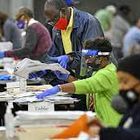
Fourth time a charm? Election audits are getting political in the Peach State
If at first you don’t succeed – try and try again. And Republicans did in Georgia, demanding multiple audits of last November’s presidential election, looking under every ballot box for evidence of election fraud, tampering or other shenanigans that could be used to put the results in doubt. So far, nothing has been found. But that’s not stopping those with an eye on a political future from backing down. In fact, election audits are now a hot topic for those looking to occupy the governor’s mansion in Atlanta. In a bid to bolster former President Donald Trump's lies about widespread fraud in the 2020 election, Trump's Republican allies are now seeking Arizona-style audits in other swing states – including Georgia, where the former President's false claims have set off an intraparty war. A day after Trump said in a statement that Georgia should follow Arizona's lead, former Georgia state Rep. Vernon Jones, a Trump supporter who is challenging incumbent Republican Gov. Brian Kemp in next year's GOP primary, proposed an audit Wednesday. "Georgians still have questions about irregularities found in the 2020 election and they deserve answers," he said in a statement. "We must get to the bottom of all of this and other irregularities to restore trust in our election process. If Mr. Kemp refuses to demand an audit, then I will when I am elected to replace him." Jones' characterization of the election was false: Georgia has already tallied the results to confirm Biden's victory there three times and conducted an audit of absentee ballot signatures. The state found no evidence of fraud, and Kemp and other Republican state officials have backed the findings. May 19 – CNN “This call for yet another ballot review is nothing but political theater," says Dr. Gregg R. Murray, professor of political science at Augusta University. "It’s extremely unlikely it would uncover anything that would overturn the 2020 election or substantial irregularities. It would be a huge waste of taxpayer money.” Despite the findings, this is an issue that won’t likely be going away soon, and if you are covering this topic, then let our expert help with your story. Dr. Gregg R. Murray, is available to talk about the election audit and what it might mean for voters in Georgia and across the country. Murray’s research focuses on political behavior and psychology with specific interests in voter mobilization and turnout. He is also executive director of the Association for Politics and the Life Sciences. Simply click on Murray's icon to arrange an interview today.


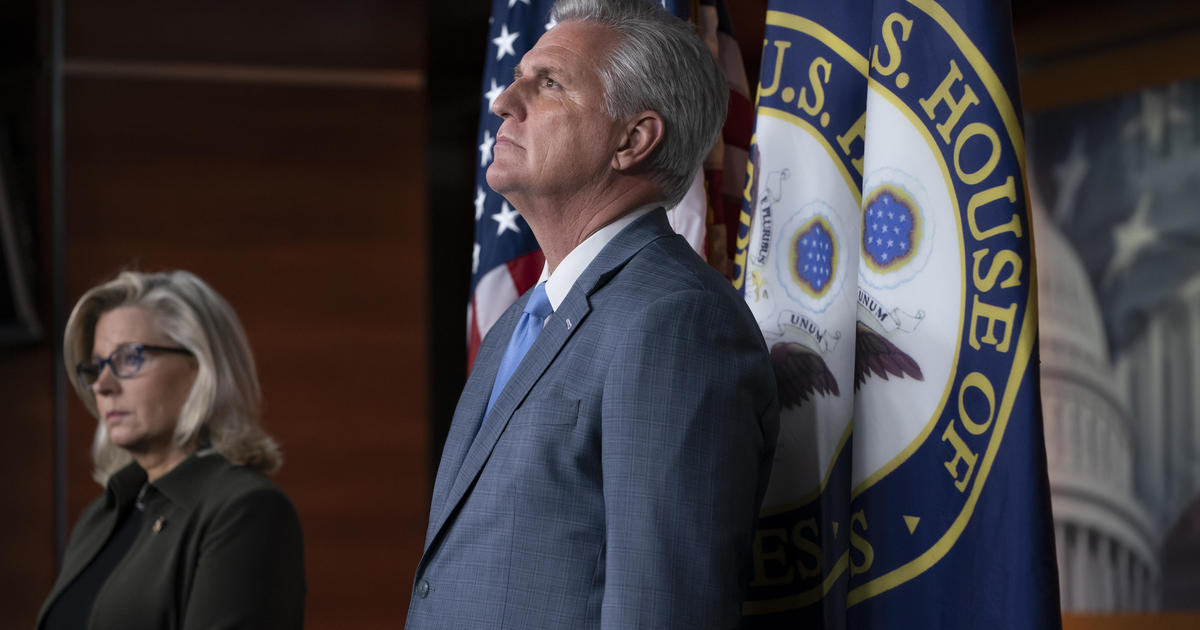
She was once seen as the rising star of the Republican Party, but for Wyoming Congresswoman Liz Cheney, the tides have shifted, and she now finds herself on the outs with the leadership of the GOP. Cheney’s vote to impeach President Donald Trump gained her national attention and accolades from across the aisle, and consequently, several enemies within her own party. Cheney comes with pedigree, profile and a strong following, but with Republicans boasting a record 35 women in Congress, the ousting of Cheney might not have the impact it once did. “It remains to be seen if this decision is a reflection of the Republicans’ willingness to remove a woman from leadership when they aren’t worried about having a ‘woman problem’ in their delegation,” said Dr. Mary-Kate Lizotte, an expert in gender difference in politics and associate professor of political science at Augusta University. What happened Wednesday may have short- and long-term consequences for the Republican party, including how it shapes itself for mid-term elections and the 2024 presidential election. If you are a journalist covering this topic, then let our experts help. Dr. Mary-Kate Lizotte is an expert in political behavior and the implications of gender differences in public opinion. She is available to talk about discuss gender roles in politics and the upcoming Senate runoffs in Georgia. Click on her name to schedule an interview.


The Food and Drug Administration and the Centers for Disease Control and Prevention recently lifted the pause on the Johnson & Johnson COVID-19 vaccine. The agencies had shelved the vaccine after it was linked to cases of an extremely rare blood clotting disorder. Public health officials are now concerned that as news gets out about the potential side effects of the Johnson & Johnson vaccine, some members of the Black and Hispanic communities may opt out of what could be a life-saving act. “To the Black and Hispanic communities, there has been a long history of untrustworthy behavior by health care systems, and the current issue with Johnson & Johnson may have worsened some hesitancy,” said Dr. Justin X. Moore, an epidemiologist in the Department of Population Health Sciences at the Medical College of Georgia. “To overcome this barrier, companies must continue being open about side effects of the vaccine, and health care workers must be empathetic and listen to their patients’ concerns.” Vaccine safety and the importance of everyone being vaccinated is crucial as America looks to get to the light at the end of this pandemic. If you are a journalist covering COVID-19 and the issues surrounding vaccine hesitancy, then let our experts help. Dr. Justin Moore is an expert in spatial epidemiology and an associate professor at the Institute of Public and Preventive Health at Augusta University. He is available to speak with media regarding this topic – simply click on his name to arrange an interview.
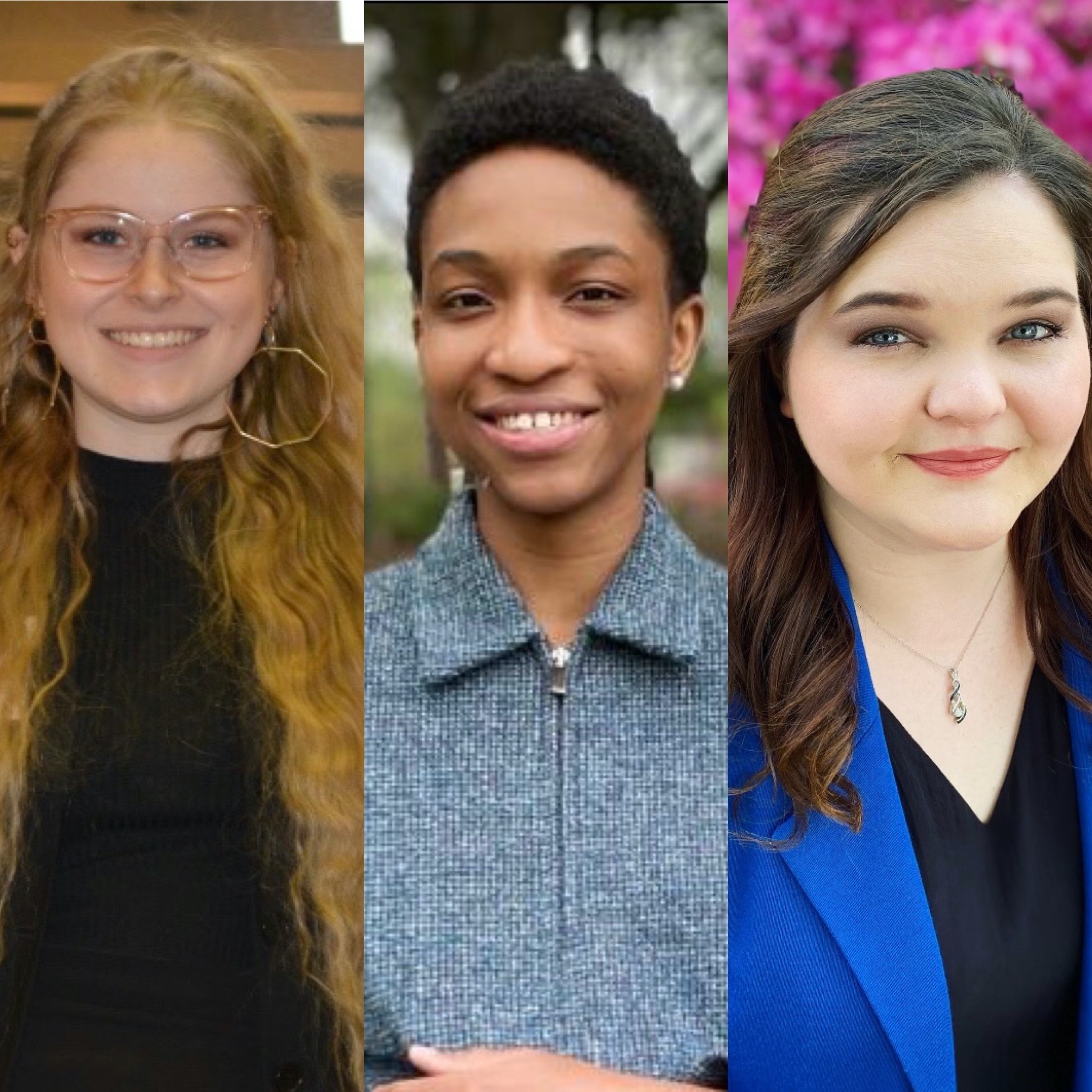
Ambitious student research collaborations with faculty members often lead to much more than good grades. The mentorships encourage professional growth, confidence and creativity, even in the midst of a pandemic. Georgia Southern University’s Spring 2021 Honors Research Symposium, which is being held virtually April 26 through April 30, will showcase faculty-student partnerships through a broad range of scholarly and creative research projects produced by more than 100 honors students across multiple disciplines on the Statesboro and Armstrong campuses. A few of the presenters include: Chelsea Riley, a triple major in international studies, political science and Spanish, worked with political science and international studies professor Srobana Bhattacharya, Ph.D., on her thesis, “The Culture Gap: The Role of Culture in Successful Refugee Settlement.” History and English major Jacey Thomas, mentored by associate professor of history Alan Downs, Ph.D., will present, “Irish Rock Music amid a Time of Troubles: Thin Lizzy and U2 as a Bridge During a Time of Division.” Biology major Susan Ihejirika’s presentation, “A Forward Genetic Screen to Identify Human Genes of Interest and Their Roles in Ovarian Cancer,” was guided by biology assistant professor Dongyu Jia, Ph.D. The Honors College, as the university-wide center for excellence in undergraduate education, plays a crucial role with undergraduate research at Georgia Southern. Since the beginning of the College, students have been required to complete honors theses or capstone projects. The faculty-mentored projects have spanned traditional research models, applied research and creative activities in all academic colleges and majors. “Through faculty-mentored research and scholarly activities, honors students create new knowledge and the Honors Research Symposium is the venue where we share it with the broader scholarly community,” said Honors College Dean Steven Engel, Ph.D. “ I am proud of the fact that they have been able to complete these projects despite the challenges of the past year.” Presentations will be posted on YouTube and the comments section will be open for audience engagement with presenters. If you're a journalist looking to learn more about this year’s Honors Research Symposium — simply reach out to Georgia Southern Director of Communications Jennifer Wise at jwise@georgiasouthern.edu.
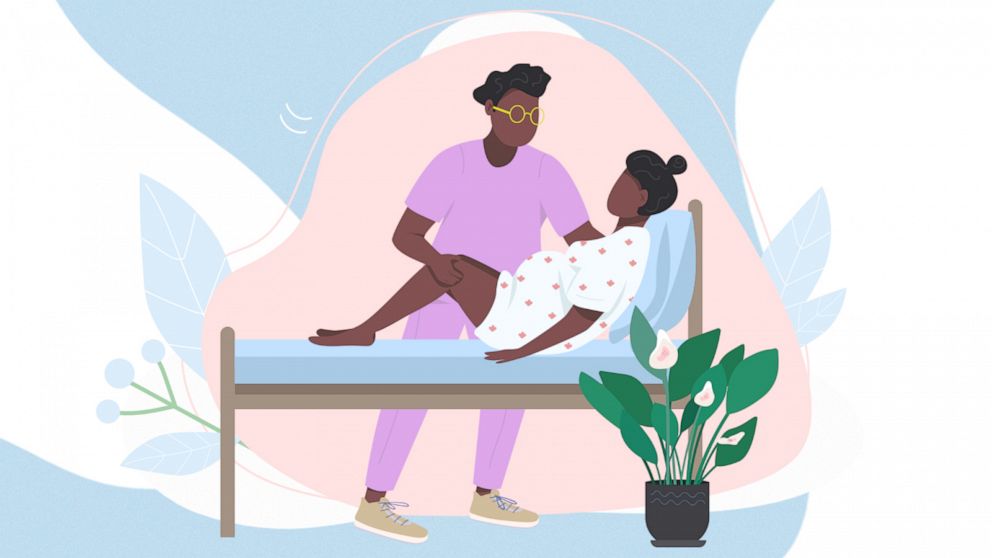
Earlier this week, President Joe Biden proclaimed that April 11 thru 17 would be Black Maternal Health Week in America. In Georgia, the state has consistently been ranked as one of the most dangerous places in this country to be a new mother. Approximately 26 Georgia women die from pregnancy complications for every 100,000 live births, compared to the national average of about 17 women. But even more devastating is the fact that about 60% of the state’s maternal deaths between 2012 and 2016 were found to be preventable, according to the Georgia Department of Public Health. And the mortality rates are much more tragic for Black women in Georgia. African American women are almost three times more likely to die from a pregnancy-related cause than white women in Georgia. Black mothers in rural areas of Georgia are at an even higher risk. “Maternal and infant mortality are really significant indicators of the quality of health in any area, so my colleagues around Georgia really felt challenged to do something that we hadn’t done in a long time in our state, which was to get the data,” says Dr. Chad Ray. “Because you can’t really fix something unless you know who and why. And then you assemble the stakeholders to formulate a plan to make a dent and to move the needle on something that is just so important.” This is an important topic that impacts mothers in Georgia and across the entire United States. And if you are a journalist looking to cover this topic – then let us help. Dr. Chad Ray is the Interim Section Chief of the Department of Obstetrics and Gynecology at the Augusta University Medical Center. He is an expert in the areas of maternal mortality & global women's health initiatives. Dr. Ray is available to speak with media about Black Maternal Health Week - simply click on his icon now to arrange an interview today.
