Experts Matter. Find Yours.
Connect for media, speaking, professional opportunities & more.

My friend, Linda, retired at 66 after 35 years as a school principal. She had done everything right. Pension. Savings. No debt. A financial plan so airtight that her advisor framed it. On her first Monday of retirement, she drove to the grocery store, stood in front of the fancy olive oil, and put the $23 bottle back on the shelf. She grabbed the $10 one instead. That night, she called me, genuinely distressed. "Sue," she said, "I don't know how to spend the money." Linda is not alone. Her problem is not a math problem. It is a brain problem. Welcome to the neuroscience of aging and money, where biology is ageist, your prefrontal cortex is quietly retiring before you do, and the financial industry has somehow spent decades teaching you to save without ever explaining how to stop. What Is Actually Happening in That Brain of Yours As we age, the prefrontal cortex, the part of your brain responsible for planning, decision-making, and impulse regulation, starts to lose its edge. Meanwhile, the amygdala, the emotional centre, gains more influence. The result? Decisions that feel more emotional, more risk-averse, and sometimes more impulsive, depending on which way your wiring maps. Research published by Agarwal, S., Driscoll, J. C., Gabaix, X., & Laibson, D. found that financial decision-making peaks around age 53 and then declines steadily. This is not because older adults are less intelligent, but because the cognitive systems that weigh risk and reward begin to operate differently. Biology is ageist, as evidenced by the fact that your brain begins to change its relationship with money before you have even figured out what to do with it. A recent study from the National Bureau of Economic Research found that older adults are significantly more likely to make financial mistakes on both ends of the spectrum: excessive caution and excessive spending. The brain does not uniformly tighten the purse strings. It amplifies whatever pattern was already there. If you were a careful saver, you would become an Olympic penny-pincher. If you were a spender, you would become a one-person economic stimulus package. You become an exaggerated version of your younger self. Which is charming in theory and occasionally catastrophic in practice. Team Tight-Wad: All Chips, No Salsa You know the type. Actually, you might be the type. These are the people who still have their first chequebook, who compare per-unit prices for paper towels with the focus of a neurosurgeon, and who have not eaten at a restaurant without a coupon since the second Harper government. They are not cheap. They are terrified. As the prefrontal cortex loosens its grip on rational future planning, the fear of running out, what I call FORO (Fear of Running Out), takes the driver's seat. It whispers things like: what if the market crashes, what if I get sick, what if I live to 102 and run out of money at 99? And so the tight-wad doubles down. The $23 olive oil goes back on the shelf. The vacation gets postponed. The grandchildren's birthday gifts get slightly less grand. All chips, no salsa. You have built a pile of financial security and are sitting on it, stiff, virtuous, and mildly hungry, while the dip goes untouched. The tight-wad's greatest risk is not poverty. It is regret. Researchers at Cornell University found that people in the final chapters of their lives consistently reported regretting what they did not do far more than what they did. That trip not taken. That renovation not done. That bottle of good olive oil not purchased. FORO kept them safe and small, and the memory of that smallness stings. Team Spend-Thrift: All Salsa, No Chips On the other side of the spectrum, we have the spend-thrifts. As the emotional centres become more active and impulse regulation less reliable, some people lean into the "you only live once" philosophy. They book the trip to Portugal. They buy the golf club they do not need. They pick up the tab for dinner for eight people they met three hours ago. They are generous, spontaneous, and occasionally mystified by their bank statements. Research from Harvard Business School confirms that spending money on experiences and on others generates a meaningful boost in wellbeing. Spend-thrifts are onto something. The problem is sustainability. If the prefrontal cortex is not doing its job by asking "do we actually need this," the credit card bill arrives, and this is why we can't have nice things. Spend-thrifts also tend to underestimate longevity. A 65-year-old Canadian woman today can expect to live, on average, past 87. That is more than two decades of retirement to fund. All salsa, no chips is a delicious way to start a party and a terrible way to sustain it. The Gap Nobody Talks About: Permission to Spend Here is where I want to say something that gets almost no airtime in the financial services industry. We have an enormous education gap on this side of retirement. The entire financial industry, including the advisors, the institutions, the calculators, the seminars, and the books, has spent decades teaching people how to accumulate money. How to save. How to invest. How to sacrifice the latte. The message has been so relentless that it has rewired the way people feel about spending. And then retirement arrives. And nobody says: Okay, you can stop now. You can actually use this. This is what it was for. Switching from accumulation to decumulation requires real support, real education, and genuine permission. It is not a switch you flip. It is a gear shift that many people never make successfully. They arrive at retirement financially prepared but psychologically stuck. Honestly? The mother of all eye rolls is reserved for the financial institution that still calls it a savings account when you are 72. You are not saving anymore. You are managing a spending pool. Here is my modest proposal: once you turn 65, your savings account becomes your spending account. Not a radical rebranding. A psychological one. Words matter. Framing matters. Every time you log in and see the word "spending," your brain starts to normalize the idea that this money has a purpose, and that purpose is your life. Clients need financial therapists as much as they need financial planners. They need someone to look them in the eye and say: you earned this, you saved this, and spending it wisely and joyfully is not a failure of discipline. It is the entire point. Self-Awareness Is the Cheapest Investment You Will Ever Make Recognizing your pattern is step one. If you have not bought anything for yourself that was not on sale in the past calendar year, that is data. If you cannot remember the last time you checked your balance before a purchase, that is also data. Neither is a character flaw. Your brain is doing what it is supposed to do. Step two is to get the right support and give yourself explicit permission. A good retirement income specialist asks what you want your money to do for you now, not just how long it needs to last. A financial therapist helps you untangle your emotional history with money. At some point, you write it down: I am allowed to spend on things that bring me joy, keep me healthy, and connect me to the people I love. Post it somewhere you will see it when you are standing in front of the fancy olive oil. The Punchline Linda eventually bought the $23 olive oil. It took four months, a conversation with her advisor, and an honest chat with her daughter, who pointed out that Linda had about 90 jars of tomato sauce in her basement and no good reason to be rationing condiments. The brain changes that come with ageing are real. They are not personal failures. They are biology doing biology things, loudly and without your consent. But brains are also remarkably responsive to information, reframing, and the occasional kick in the pants from someone who loves you. You spent decades building financial security. The goal was never to die with the most money. It was a good life. All chips AND salsa. The full spread. The $23 olive oil on the good bread, with the people you love. Your spending account is waiting. Honestly, it has been waiting long enough. Because nobody wins a prize for being the richest person in the graveyard. Don’t Retire…Re-Wire! Sue



Inside the Partnership Between Texas Christian University and Taylor Sheridan’s Four Sixes Ranch
A unique partnership between Texas Christian University and the legendary Four Sixes Ranch is giving students hands-on experience helping shape the future of one of the most recognizable brands in the American West. Recently featured at a major national rodeo event, the ranch’s newly designed retail booth, created by TCU faculty and students, blends heritage-inspired design with modern merchandising, reflecting the ranch’s growing national profile under the ownership of Taylor Sheridan and Nicole Sheridan. “We’re now written into the history of the Four Sixes Ranch.” The collaboration spans fashion merchandising, branding and business strategy, allowing students to contribute directly to product development, retail design and digital marketing initiatives. For students involved, the project offered a rare opportunity to see classroom ideas become real-world products tied to an internationally recognized Texas brand. Faculty members say the partnership reflects TCU’s focus on experiential learning while helping preserve and evolve an important piece of Texas cultural identity. Check out the video TCU and Four Sixes Ranch, and you can read more about this project in the full article below: Looking to connect with Chares Freeman, Kevin Smith, Nicole Bettinger or Rima Shrestha about this exciting project? Simply contact Holly Ellman, Associate Director of Communication, at h.ellman@tcu.edu today.


Tony Awards: CMU Experts Unpack Broadway’s Biggest Night
As Broadway prepares for the 2026 Tony Awards this Sunday, Carnegie Mellon University experts are available to help media explore the stories behind the stage, from the business of Broadway and the economics of major productions to costume design, theatre history and the behind-the-scenes teams that bring performances to life. CMU’s Tony Awards expert page brings together faculty and specialists who can provide timely commentary on the artistic, cultural and economic forces shaping Broadway’s biggest night. The Business of Broadway Production costs, commercial risk, tourism, jobs, touring productions and Broadway’s wider economic impact. Behind the Scenes The directors, designers, stage managers, technicians and production teams who turn a show into a fully realized theatrical experience. Costume in Theatre How costume design shapes character, period, mood and storytelling on stage. The History of Theatre and Broadway Broadway’s evolution, cultural influence and place within the broader history of theatre. Media can visit CMU’s Tony Awards page to explore available experts and connect directly with the right source for their story.


World Cup: Expert Sees World History in Motion
Most soccer fans watch the FIFA World Cup for the goals, the stars, and the drama. Pablo Sierra Silva sees a lot more. “You’re seeing empire, migration, nationalism, labor, religion, commercialization, and identity all unfolding in real time,” says Sierra Silva, a University of Rochester history professor who teaches a course called “World History Through Soccer.” He adds: “The World Cup is never just 22 players kicking a ball.” As the largest World Cup field ever unfolds across North America, Sierra Silva says the tournament offers a unique lens into the forces shaping the modern world. Fans need only look for it. Take the scheduled Group Stage game between France and Senegal. The matchup reflects centuries of shared history, from French colonial rule in West Africa to contemporary migration patterns and diaspora populations. The crowd, the flags, the chants, and even who is playing can reveal as much as the final score. The same is true for players like Spain’s teenage superstar Lamine Yamal, whose Moroccan and Equatorial Guinean heritage reflects broad changes in European society. “He is redefining what it means to be Spanish,” Sierra Silva says. “This is one of the stories of modern Europe, and soccer makes it visible.” Sierra Silva also studies how the World Cup has evolved into a global cultural phenomenon shaped by social media, celebrity, commerce, and fandom. Even seemingly simple traditions — such as collecting Panini World Cup stickers — offer lessons about geography, migration, and national identity. For journalists looking for unique angles on the World Cup, Sierra Silva can provide expert commentary on: • The history and politics behind international soccer rivalries • Migration, diaspora communities, and national identity • Race, religion, and representation in global sport • Sports marketing, fandom, and media culture • The World Cup as a reflection of world history and its various impacts on nations “People feel connected to histories and identities through these teams,” Sierra Silva says. “That’s why it matters.” To connect with Sierra Silva, contact University of Rochester media relations specialist David Andreatta at david.andreatta@rochester.edu.


The World Cup Beyond the Pitch
As the FIFA World Cup kicks off this month across Canada, the United States, and Mexico, global attention will focus on the action on the field. But some of the most important stories surrounding the tournament may happen beyond the final score. A recent Hofstra University article 'Hofstra History Professor Plays Key Role in 2026 World Cup Antidiscrimination Efforts' highlighted the work of historian and soccer scholar Brenda Elsey, who has been involved in efforts to address discrimination, inclusion, and fan culture issues connected to major international football events. Her work examines how race, gender, politics, identity, and social change intersect with the world's most popular sport. Dr. Brenda Elsey is a leading soccer scholar whose research explores the intersection of football, politics, gender, and society in Latin America. She has written extensively on the history and cultural impact of the sport, including its role in shaping identity, social movements, and international events. View her profile here For journalists, the 2026 World Cup presents opportunities to explore topics ranging from fan behaviour and inclusivity to the social and cultural impacts of hosting one of the largest sporting events on the planet. Questions around accessibility, equity, nationalism, gender representation, and the evolving role of sport in public life are expected to be part of the broader conversation surrounding the tournament. Brenda Elsey is a leading expert on the history, politics, and culture of soccer, with particular expertise in issues of gender, discrimination, and social justice in sport. Her research has examined how major international tournaments reflect broader societal trends and challenges, making her a valuable source for media looking to provide deeper context beyond match results and standings. Whether covering host cities, fan experiences, emerging controversies, or the legacy of the tournament, journalists seeking expert insight into the broader cultural significance of FIFA World Cup 2026 should consider connecting with Brenda Elsey.

Expert Spotlight: Tiananmen Square - 37 Years Later, Why the World Still Remembers
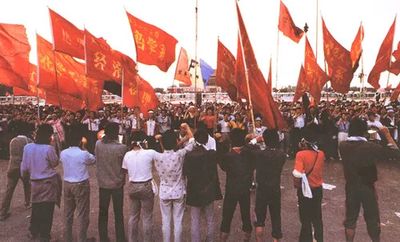
Thirty-seven years after the events in Beijing's Tiananmen Square, the anniversary continues to spark global reflection on democracy, freedom of expression, state power, and the importance of preserving historical memory. While discussion of the events remains heavily restricted within China, commemorations continue around the world as scholars, journalists, policymakers, and human rights advocates examine the lasting significance of what occurred in the spring of 1989. The movement began in April 1989 following the death of reform-minded Chinese leader Hu Yaobang. What started as student-led gatherings evolved into a nationwide protest movement calling for political reform, greater transparency, accountability, and action against corruption. Hundreds of thousands of demonstrators occupied Tiananmen Square, while similar protests spread to cities across China. After weeks of escalating tensions, martial law was declared. On the night of June 3 and into June 4, Chinese troops and tanks moved into Beijing to clear the protests. The exact number of deaths remains disputed and unknown, with estimates ranging from hundreds to thousands. The Chinese government has never released a full accounting of those killed, injured, detained, or disappeared. Perhaps the most enduring image from the crackdown is that of the unidentified "Tank Man" who stood alone before a column of tanks on June 5, 1989. The photograph became a global symbol of individual courage in the face of overwhelming state power and remains one of the most recognizable images of the twentieth century. Why Tiananmen Still Matters Beyond its historical significance, Tiananmen remains relevant because it raises enduring questions about civil liberties, government accountability, censorship, collective memory, and the role of citizen activism. Researchers continue to study how societies remember contested events and how governments shape historical narratives. The anniversary also serves as a reminder of the importance of preserving documentary evidence and firsthand accounts for future generations. Today, remembrance efforts continue through archives, academic research, museums, oral histories, and public commemorations outside mainland China. Recent reports highlight ongoing attempts by scholars, journalists, and activists to preserve photographs, diaries, eyewitness accounts, and other records associated with the 1989 protests and crackdown. Expert Perspectives Available Journalists covering the Tiananmen anniversary may wish to connect with experts in: Chinese history and politics Human rights and international relations Collective memory and historical preservation Democracy movements and social protest Media censorship and information control East Asian studies and contemporary China The Tiananmen Square anniversary remains more than a historical milestone. It continues to influence conversations about freedom, political participation, historical accountability, and the power of memory in shaping the future. If you're covering - connect now! See all of our experts at www.expertfile.com
Pride Month: From Protest to Global Celebration
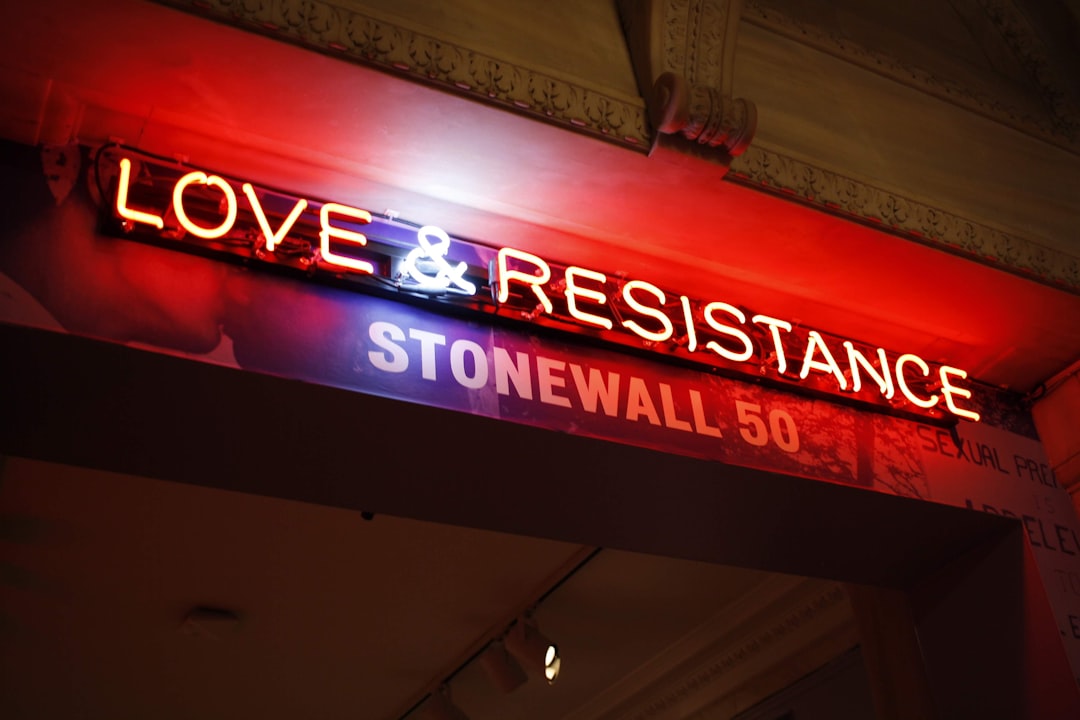
Pride Month is celebrated each June to honour the 1969 Stonewall Uprising in New York City, when LGBTQ+ patrons resisted a police raid at the Stonewall Inn. The uprising lasted several days and became a defining moment in the modern LGBTQ+ rights movement. One year later, the first Pride marches were held, transforming public protest into an annual call for visibility, dignity, safety, and equality. Today, Pride is marked around the world in many different ways. In Canada, the United States, and much of Europe, celebrations often include parades, festivals, concerts, flag-raisings, community events, and public education campaigns. In places such as Brazil, Mexico, South Africa, Japan, India, and Australia, Pride can blend celebration with activism, reflecting local histories, cultures, and legal realities. In countries where LGBTQ+ rights remain restricted or unsafe, Pride may take the form of smaller gatherings, private events, online campaigns, or human-rights advocacy rather than large public parades. What makes Pride powerful is that it is both celebration and protest. It recognizes progress, honours those who fought for change, and draws attention to the discrimination, violence, and legal barriers still faced by LGBTQ+ people in many parts of the world. For journalists, Pride Month offers a timely opportunity to explore history, human rights, culture, public policy, youth identity, corporate participation, faith communities, education, health, and the changing meaning of inclusion across borders. Connect with experts who can speak to the history of Pride, LGBTQ+ rights, identity, culture, and how communities around the world continue to mark this important month. Discover all of our experts here: www.expertfile.com

UD English professors reveal 2026 beach reads, tying summer picks to big themes in today’s culture
When summer rolls around, the best beach reads do more than just pass the time—they somehow capture what everyone’s talking about right now. That’s the vibe behind University of Delaware’s professor-picked list: books that are fun to sink into, but also surprisingly sharp about the world we’re living in. Think big feelings, messy relationships, culture shifts, and the kind of stories that make you look up from the page and go, “Yep, that tracks.” "There Is No Antimemetics Division" By qntm A Reddit novel turned print bestseller, "There Is No Antimemetics Division" is a surreal horror story that follows an X-Fileish government division fighting aliens whose battlefield is the human mind. How do you fight an enemy whose existence you cannot remember? – Siobhan Carroll, Associate Professor "The Briar Club" By Kate Quinn I'm a big fan of Kate Quinn. Her books never disappoint. Her writing is wonderful and captivating, and the voices and characters are authentic. This book, set in the 50s, is a post-war reflection on a group of tenants in a boarding house who, over food (recipes included!), become friends and navigate McCarthyism, conspiracies and fear. It is historical fiction written to remind us that history repeats itself. – Christine Cucciarre, Professor "Guido Brunetti mysteries" By Donna Leon I've gotten completely hooked on these mysteries set in Venice. Fans will tell you the best is the fifth book in the series, "Acqua Alta," but be sure you read the first book to meet the characters! – Emily S. Davis, Director of Graduate Studies "When We Cease to Understand the World" By Benjamin Labatut An English professor recommending a book detailing the lives of physicists, scientists and mathematicians? Yes! History, heady concepts, madness, melancholy and beautiful prose come together in a haunting way. – Viet Dinh, Associate Professor "Dungeon Crawler Carl series" By Matt Dinniman What if you smushed role-playing video games/tabletop games with The Running Man? Plus, there's a sassy cat who talks! – Lowell Duckert, Associate Professor "Just Kids" By Patti Smith I've recently read "M Train" by Patti Smith, and now I'm looking forward to reading the book for which she won the National Book Award. Smith's memoirs can be impressionistic, but they often come down to some unexpected detail or some ongoing longing. If you know her music, you can sometimes hear it in the background, or you can spot those moments in her life when music would almost necessarily emerge as a great force gathered by her authentic approach to life. She's one of those writers who can change how you look for and find what most matters to you, how you look for and embrace your own soul. – John Ernest, Chair in English "Prairie Fires: The American Dreams of Laura Ingalls Wilder" By Caroline Fraser I loved reading the "Little House" books as a child. It seemed like a life full of adventure and love, even through "The Long Winter." But this biography of author Laura Ingalls Wilder reveals a life full of struggle and loss behind the calico dresses and the fiddle lullabies. Caroline Fraser won the 2018 Pulitzer Prize for "Prairie Fires," using unpublished manuscripts, letters, diaries, and land and financial records to pull back the pioneer spirit curtain and show readers the reality of life on the prairie. – Dawn Fallik, Associate Professor "The School for Good Mothers" By Jessamine Chan Warning: Do not bring this book to the beach without plenty of sun screen, because you will not put it down and that might make YOU a candidate for enrollment in The School. Second Warning: The book is compelling precisely because it will make you mad and freak you out. My wife gave it to friends as a Mother's Day present, and every mother who read it could relate. – Peter X Feng, Associate Professor "Audition" By Katie Kitamura This book has been on my bedside table for months now, just waiting for the semester to end. I am a sucker for books that shift perspective in the middle (see also: Susan Choi's "Trust Exercise"). – Peter X Feng, Associate Professor "The Road to Tender Hearts" By Annie Hartnett You might not expect a book that features domestic violence, children being orphaned and a 63-year-old man still pathetically dependent on his ex-wife to be funny. But I laughed out loud multiple times—and had some tears as well—as I read this novel! Follow the adventures of PJ, two children from his town, and a death-predicting cat as they road trip across the country. "The Road to Tender Hearts" was the best book I read all year! – Jill Flynn, Professor "The Stories of John Cheever" By John Cheever One of the finest collections of short fiction ever published. Witty, magical, often devastating portraits of people navigating mid-century New York. – McKay Jenkins, Cornelius Tilghman Professor of English "Vacationland: True Stories from Painful Beaches" By John Hodgman This book is a collection of nonfiction essays by John Hodgman (Daily Show writer and "Judge John Hodgman" podcast and The NY Times Magazine column). It is laugh-out-loud funny in a very self-deprecating, Gen X way. – Matthew Kinservik, Professor "Cloud Cuckoo Land" By Anthony Doerr This is one of the best novels I've ever read. Ever. It follows three stories set in very different times and places (15th-century Constantinople, 21st-century Idaho, and the not-too-distant future on a spacecraft headed to a new planet that will support human habitation). It's a book about the value of books and human storytelling. The stories eventually get braided together in moving and surprising ways. Amazing. – Matthew Kinservik, Professor "The Wilderness" By Angela Flournoy Have you wondered how your friendships in your early 20s might follow you into middle age? "The Wilderness" focuses on the friendships between four women: Desiree, Monique, Nakia and January from 2008 until 2027, when they are in their early 40s. They support one another through marriage, divorce, career anxiety, loss and a persistent set of questions about who they each want to be in the world and the lives they want to live. "The Wilderness" is told from many perspectives and details how culture, place, habits, friendships and childhood experiences combine to make and remake our adult lives. – Davy Knittle, Assistant Professor "Kin" By Tayari Jones "Kin" is about two motherless girls from Louisiana who find themselves as grown women on two very different paths, looking to other mother figures along the way. The writing is beautiful and engaging! I could not put this book down. I truly fell in love with all of the characters, and even the locations come alive. – Meg McGuire, Associate Director of First-Year Writing "How to Solve Your Own Murder" By Kristen Perrin This truly is a cozy mystery about a woman called Frances Adams—a resident of the moody Castle Knoll. When Frances is a teenager, she encounters a fortune teller who portends Frances's murder. Frances then spends most of her life sort of obsessively surveilling everyone around her, trying to figure out who will kill her. When she does die, her great niece Annie is surprised to learn that the late Frances has left Annie her entire estate, even though they have never actually met. When Annie arrives in Castle Knoll and at the estate, she follows in her great aunt's footsteps by holding all of the town's quirky characters at arm's length while she tries to discover who killed her late great aunt. This is an easy-breezy read, even if it does include a murder mystery at the center. Perfect for a day at the beach. Best of all, if you fall in love with the characters and the place, it's part of a series of three books, so you can keep going! – Cathryn Molloy, Professor "The Order of Time" By Carlo Rovelli You could read any Rovelli book, really—I am reading the one on the birth of science at the moment— but this is the one that drew me in. He merges a physics/science‒centered approach to time with a human/experienced‒centered view of it, which I just cannot get enough of. It is beautifully written, at times verging on poetic, while also bringing in a lot of the information and knowledge I seem to have skipped over as a terrible science student. It's joyful and intense and meditative. And yes, this is what I read for fun! – Amish Trivedi, Assistant Professor "The Season of Styx Malone" By Kekla Magoon Two young Black boys in small-town Indiana fall under the spell of Styx Malone, a mysterious new kid who arrives for the summer and stirs things up by persuading them to pursue their biggest dreams and breaking a few rules along the way. I collect multicultural kids books and stumbled across this one six years ago. It captured me because it celebrates family and friendship, depicts young people with rich interior lives, and mixes in a little mystery and humor. There's something sweet and down-home about it. It's a refreshing little respite from, well, everything ... – Délice Williams, Associate Professor To speak to the professors more about what makes these books the perfect summer reads, email mediarelations@udel.edu.


Hunter-Gatherer ‘Egalitarianism’ Is More Complicated Than We Thought
Hunter-gatherer societies are often portrayed as models of equality, cooperation and selfless food-sharing. However, Baylor University anthropologist Duncan N.E. Stibbard-Hawkes, Ph.D., and an interdisciplinary team of researchers have found that this familiar picture oversimplifies how egalitarianism actually functions in everyday life. Their research, published in the journal PNAS Nexus, examined the Hadza, a contemporary hunter-gatherer population in Tanzania, and found that relatively equal outcomes are often maintained not only by altruism, but through social pressure and what anthropologists call “demand sharing.” In a previous study, Stibbard Hawkes and co-author Chris von Rueden, Ph.D., professor of Leadership Studies at the University of Richmond, conducted a wide-ranging review of hunter-gatherer populations that are typically characterized by equality. They found that, although many of these societies did “function with relative equality, even the most egalitarian hunter-gatherer groups display inequality in one area or another.” To further understand this, Stibbard Hawkes and the research team tested their ideas of egalitarianism through a behavioral economic experiment employing a give-and-take behavioral economy game with Hadza participants. “We find that equality was achieved only under conditions of disadvantageous inequality – where the person playing the game had less than others – suggesting that taking is more important in achieving redistributive equality than giving,” Stibbard Hawkes said. “This mirrors real life – if someone has too much, there’s often a lot of demanding shares from other people.” “Looking at the actual motivations and mechanisms of redistribution and limiting power gives us a more realistic approach and a clearer view of what egalitarianism actually is." - D. Stibbard Hawkes, Ph.D. Behavioral economy games Many anthropologists and ethnographers investigate fairness in societies by employing behavioral economic games, such as the “dictator game.” By giving participants an endowment of tokens, researchers can understand how equality ideals function within that group based on how individuals keep or give away the tokens, Stibbard Hawkes said. “When you play these economic games, people are often more selfish in hunter-gatherer societies than they are in America or Europe,” Stibbard Hawkes said. “Which is surprising because these societies are well known for being egalitarian.” To better reflect real-world Hadza food-sharing practices, Stibbard Hawkes and team redesigned the experiment so participants could take resources as well as give them – and the results changed dramatically. “We changed the rules of these economic games and ended up with equality – but only in the condition where people could take from other people,” he said. “That resulted in a relatively equitable distribution.” Only 40.9% of participants shared when they had more food than others, while 30% claimed additional items. When starting with fewer resources, 58.8% took from their partner – often beyond what was necessary for balance. Across both conditions, taking everything was the most common behavior. Importantly, the motivations behind those outcomes were not always idealistic. “Though we saw a lot of generosity, the individual motivations underlying this equality were actually often quite self‑interested,” Stibbard Hawkes said. Equality without altruism Rather than reflecting an intrinsic desire to be fair, Hadza sharing behavior reflects asymmetric incentives and immediate needs. “If I have a big pile of food and I’m not sharing it,” Stibbard-Hawkes explained, “the people around me are going to say, ‘No, you need to share this, and you’re going to give this to me.’ And, when everyone does this, the result is equality.” He emphasized that these interactions are often personal and direct. “It’s not just a societal expectation,” he said. “It’ll often be a direct dyadic interaction. Someone in the room next to you might be like, ‘Well, you’ve got a lot – you should give me some.’” How egalitarianism works Hunter-gatherer societies have long been used to help explain humanity’s evolutionary history. But Stibbard-Hawkes said popular writing often turns these societies into an idealized moral example. “When this gets roughly translated into popular science books,” Stibbard Hawkes said, “the idea is very much like we lived in this Edenic garden of freedom and plenty where everything was good and there were no difficulties.” That framing, he said, misses how egalitarianism is actually maintained. “Egalitarian societies exist – they’re not mythical,” Stibbard Hawkes said. “But if you actually look at the mechanics of how egalitarianism and relative political equality are maintained, it’s often people who are arguing, demanding shares and even insulting people who have too much.” Market integration and changing norms The study also found that Hadza individuals with greater exposure over the last decade to Tanzania’s broader market economy and farming were slightly more accepting of unequal outcomes. “These are things with a very different resource base, and what I'm finding is that – while traditionally forage foods like hunted meats, people expect sharing – when you ask people about cash or grain, their notions of what should be shared are very different,” Stibbard Hawkes said. Egalitarianism is not a myth Egalitarianism is not a myth—but it is often misunderstood. Generosity is not uncommon – but nor are people in egalitarian societies uniquely altruistic. Rather than arising from innate altruism or a lost utopia, equality in hunter-gatherer societies is actively produced through social pressure, negotiation and demands that limit accumulation and power. “Looking at the actual motivations and mechanisms of redistribution and limiting power gives us a more realistic approach and a clearer view of what egalitarianism actually is,” Stibbard Hawkes said.

Pope Leo XIV Releases First Encyclical, "Magnifica Humanitas"
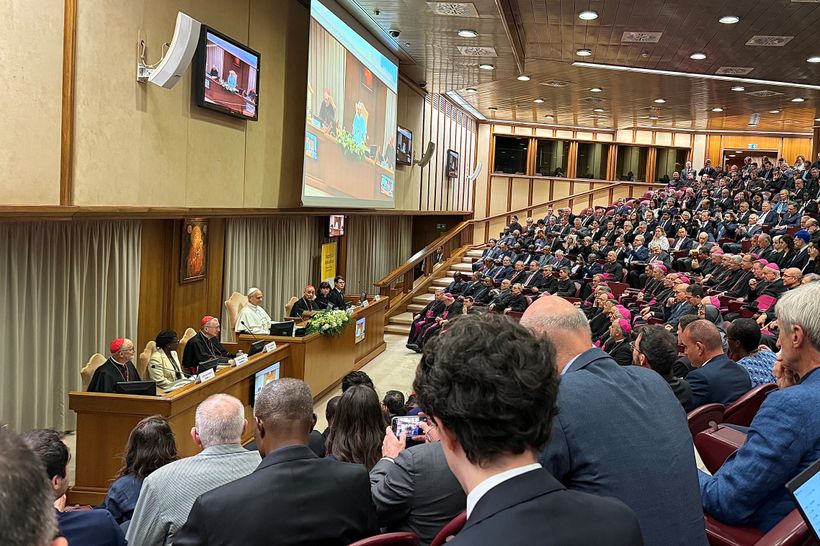
On May 25, 2026, Pope Leo XIV released his first papal encyclical, “Magnifica Humanitas: On Safeguarding the Human Person in the Time of Artificial Intelligence.” The letter—true to its title’s meaning of “magnificent humanity”—addresses how society, collectively, must preserve human virtues in a time of rapid technological advancement. The 42,000-word document features five distinct chapters, exploring various elements of the broader issue at hand and serving as a guidepost for moral and ethical use of technology, through the lens of Church teachings. It covers everything from the development and principles of Church social doctrine to technological responsibility, the culture of power, building civilization through love and preserving humanity through truth, work and freedom. “In recent years, it has become increasingly evident how rapidly and profoundly digitalization, artificial intelligence (AI) and robotics are transforming our world,” wrote Pope Leo in the encyclical’s introduction. “Technology should not be considered, in itself, as a force antagonistic to humanity. On the contrary… “Over the centuries, technological development has significantly improved the living conditions of humanity. At the same time, each phase of progress has also revealed the ambiguity of tools that can cause harm when not oriented toward the good… The power and prevalence of emerging technologies are interwoven into the fabric of daily life, shaping decision-making processes and deeply affecting the collective imagination: ‘Never has humanity had such power over itself.’ “[Most] people are watching and waiting, observing from afar and merely hoping for the best. For this very reason, crucial questions impose themselves on our conscience and can no longer be avoided: Where are we going? Toward what goal do we wish to orient ourselves? What direction should we choose as a people and as a human community?” What Is a Papal Encyclical? Popes have written more than 300 encyclicals—or “circulating letters”—since the mid-18th century. They were initially used to clearly communicate doctrine and guidance to priests throughout the world who were facing religious, political or social issues, which was especially useful as the world grew more interconnected and the Church grew larger. Beginning with Pope Leo XIII’s Rerum Novarum and continuing today, some papal encyclicals have been referred to as “social encyclicals” because they address a pervasive social issue through the lens of Catholic Social Teaching and are written not only for those within the Church, but laypeople as well. Some examples of those included Pope Saint John Paul’s 1987 Sollicitudo Rei Socialis on international inequality, and Pope Francis’ 2015 Laudato Si’ on environmental care and social justice. “[Pope Leo XIII and his successors] were developing a new way of teaching the world how to order itself according to Catholic principles, now translated into a vocabulary that would be intelligible to the larger world,” said Patrick Brennan, JD, Chair of Catholic Legal Studies at Villanova University Charles Widger School of Law, on LiveNow From Fox. “They try to address important social questions in ways that any person of goodwill can read and understand.” “Encyclicals contribute to our collective wisdom for how to live as community,” wrote Sally Scholz, PhD, professor of Philosophy at Villanova, in her recent contribution to Church Life Journal titled “What to Look For in Pope Leo XIV's First Social Encyclical.” “The principles and various themes they discuss offer guidance for day-to-day interpersonal interactions as well as for how to participate as a Catholic and as a “person of good will” at every level of social existence: in our families, our communities, our institutions, our states and in our ‘one human family.’” Observations From Magnifica Humanitas A New Twist on a Longstanding Issue While the types of technology being discussed in the letter—particularly artificial intelligence—are unique to our modern times, encyclicals addressing how to interact with contemporary technology are far from it. “Discussion of the relationship between humans and technology appears in many of the previous social encyclicals,” wrote Dr. Scholz in Church Life Journal. “It is a social phenomenon with so much promise but inspires so much fear for how it will change work and the workplace, communication, global trade, war and the family.” “Technology is integral to evolution. Understanding technology's relationship to human welfare means grasping its role within the flow of biological and human life,” wrote Sister Ilia Delio, OSF, PhD, the Josephine C. Connelly Endowed Chair in Christian Theology in the 2025 Global Sisters Report. What Pope Leo argues in his lengthy letter, boiled down to a few sentences, is that while technological advancements, and AI in particular, can be beneficial to society, they must never supersede human dignity, moral responsibility and the common good. A society that allows systems to replace human judgment, concentrate power or exploit workers risks dehumanization. For Jaisy Joseph, PhD, assistant professor of Theology and Religious Studies at Villanova University, particularly striking was something not written in the document itself, but rather spoken at the official promulgation of the letter in Rome. There, Pope Leo was joined in powerful reflection by Anthropic co-founder Christopher Olah. Olah analogized the current reality with bringing a fictional character to life, citing that while technical fields build the machinery of AI, “what character we choose, how it interacts with the world, how it ought to interact with the world— these are more clearly questions for the humanities, for religion, for philosophy, for society at large.” On that front, he then enlisted the help of the Church in addressing three pressing concerns related to AI and human flourishing, before ending with a request for the Church to continue to be an unyieldingly moral voice and informed critic. “The dynamic dialogue and discernment between Leo and Olah reflect a significant continuity with the Francis papacy,” Dr. Joseph said, referencing the late pontiff’s encouragement of “theology to adopt a transdisciplinary method that recognized how this discipline is part of a web of relationships among disciplines.” Technology Through the Lens of Augustinian Theology Throughout Magnifica Humanitas, Pope Leo’s ubiquitous thoughts and guidance on safeguarding humanity—particularly in the context of modern technology—are infused with references to the teachings of St. Augustine. “[Augustine’s teachings say] we need standards to guide our judgements and actions,” said Terence Sweeney, PhD, assistant teaching professor of Humanities at Villanova. “Pope Leo XIV, ‘a son of St. Augustine,’ offers us standards for how we judge our world in the age of AI. “One surprising standard in a document on Big Tech is that ‘a litmus test for social justice today is the treatment of migrants, refugees and those forced to move.’ Why this litmus test? Leo is shaped by Augustine’s rejection of communities of perfection where only the pure, powerful and perfect are welcome.” “Pope Leo beautifully aligns himself with traditional Catholic Social Teaching while grounding his vision in the theology of St. Augustine,” Dr. Joseph added. “The result is a groundbreaking defense of the human person in our new age of artificial intelligence.” Pope Leo, through a scriptural metaphor of the Tower of Babel, “resurrects Augustine’s famous warning that human history is a constant struggle between two loves fighting for our hearts,” Dr. Joseph said. He references how the builders of the tower tried to create “a single language, a single technology, a single direction” without reference to God. “The concluding paragraphs of chapter three highlight Pope Leo XIV’s distinctively Augustinian approach to evaluating the place of technology and scientific progress in the world,” said Emma Kennedy, PhD, assistant professor of Christian Ethics at Villanova University. “What we love, ‘both as individuals and as a society,’ will guide us to participate in ‘the rebuilding of Jerusalem’ or ‘the construction of Babel’––a contrast that hearkens back to Augustine’s ‘two cities.’” “Pope Leo [also] draws on an Augustinian spirituality that highlights fundamental desiring in the shared search for truth,” added Tim Hanchin, PhD, associate professor of Practical Theology at Villanova. “Our desire for truth, or wonder, reflects humanity’s transcendent origin and end. That we are created in the image and likeness of the Triune God (Genesis 1:26-27) distinguishes human knowing from mere data processing.” A Discussion on Slavery, Past and Present Intermixed with Pope Leo’s chapter four thoughts on modern slavery—such as various forms of human trafficking that he says are “directly linked to the digital economy”—he made an historic recognition and apology for the Church’s role in the transatlantic slave trade centuries ago. Tia Noelle Pratt, PhD, special assistant to the Vice President of Mission and Ministry at Villanova University, assistant professor of Sociology, and editor of the Journal of Catholic Social Thought, said that what makes this acknowledgement so important is how it differs from the way previous popes have addressed the issue, which have condemned slavery but remained at the individual level. “They spoke of their papal predecessors and those popes’ actions, but stopped short of invoking the institution itself and the institution's role in the promulgation of slavery,” Dr. Pratt said. Tying it back to current affronts on human dignity fueled by the digital age, Pope Leo penned his own papal version of the famous saying that “Those who cannot remember the past are condemned to repeat it.” “If we want to avoid the need to ask for pardon again in the future for having failed to respect the treasure of human dignity that is required by our faith, it falls to us today to denounce, clearly and firmly, trafficking in its many forms,” he wrote. “Pope Leo is telling us today that we cannot have detachment between the past and the present,” Dr. Pratt said. “We must see how these things are connected.” Inspired by Rerum Novarum, but Far From a Repeat Pope Leo XIV signed Magnifica Humanitas on May 15—the 135th anniversary of the release of Pope Leo XIII’s Rerum Novarum. That was the most famous social encyclical issued by the long-reigning pontiff and is considered to be a foundational text of modern Catholic Social Thought. It addressed numerous issues facing the working class during the time of the Industrial Revolution. On May 10, 2025—just two days after his election—Pope Leo referenced his namesake’s 1891 encyclical in an address to the College of Cardinals, foreshadowing the attention he intended to pay to the modern version of the same issue. “Pope Leo XIII in his historic encyclical Rerum Novarum addressed the social question in the context of the first great industrial revolution,” Pope Leo said in that address. “In our own day, the Church offers to everyone the treasury of her social teaching in response to another industrial revolution and to developments in the field of artificial intelligence that pose new challenges for the defense of human dignity, justice and labor.” Yet, while he was explicitly inspired by the 19th-century pontiff and his text, Pope Leo makes it clear early in Magnifica Humanitas that “While Leo XIII spoke in his time of ‘new things’ (rerum novarum), today we cannot limit ourselves simply to repeating his insightful teachings. “Instead, we must ask God for the wisdom to interpret the great trends of our time, particularly technological advances.”