
Experts Matter. Find Yours.
Connect for media, speaking, professional opportunities & more.
The Grace to Fail: My MBA Journey (Part 3)
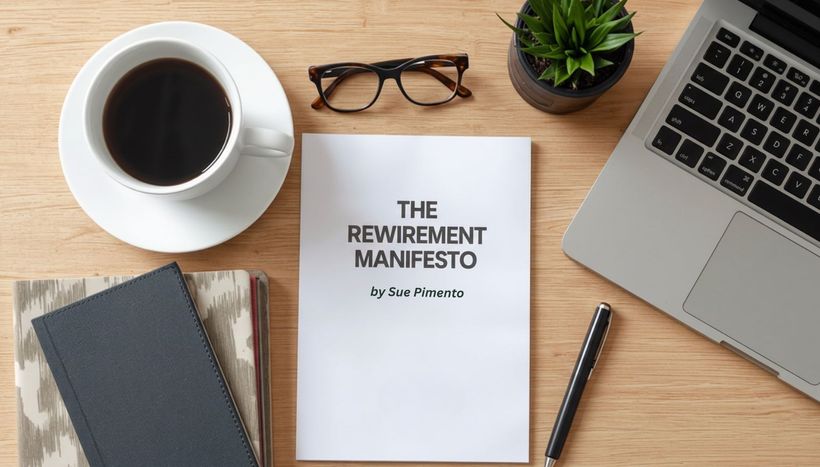
I have a confession to make. My wife Bonnie and I are addicts. Not the kind that requires an intervention, exactly, but close. We are addicted to home improvement. We are always planning the next upgrade, the next project, the next thing to tear apart and make better. It gives us genuine pleasure and a profound sense of accomplishment. Bonnie leads most of these endeavours. She is remarkably capable with power tools and can pull off a tool belt like she is strutting down a Home Depot runway (aisle). Our shared obsession has even spawned a series of Facebook posts called the 2 Capable Women, where we document everything from felling trees to the deeply humbling art of Ikea assembly. So there we were, driving in traffic, and Bonnie was telling me about her next project: removing the circa-1960 wood panelling and replacing it with modern shiplap. Mid-conversation, she went quiet for a moment and said, almost to herself, “I guess I need to allow myself the grace to fail.” I nearly drove off the road. You must understand something about Bonnie. She is a self-declared perfectionist. Not casually. She is committed to being a perfectionist at being a perfectionist. So, hearing those words come out of her mouth, unprompted, while discussing a renovation project, was like hearing your accountant quote Oprah. It stopped me completely. The truth has a certain ring to it. I heard that bell loud and clear. Because sometimes wisdom does not arrive in a lecture hall or a leadership book or a TED talk. Sometimes it arrives in a car, in traffic, from the person sitting next to you holding a coffee and thinking about shiplap. That phrase has not left me since. Many of us do this. We replay mistakes endlessly, convinced that self-criticism is somehow productive. We lie awake revisiting conversations and missteps, assuming that if we beat ourselves up long enough, we will emerge wiser. All we accomplish is a thorough self-beating followed by self-flagellation. Lots of noise. Zero progress. Zero calories burned. This is not just a problem for people climbing mountains or starting businesses. It plays out in perfectly ordinary moments. You send an email and immediately wish you had worded it differently. You make a comment at dinner that lands wrong and spend three days replaying it. You make a small error at work and carry it around like luggage for a week. The inner courtroom convenes regardless. Most of us are not failing spectacularly. We are just living, occasionally getting things slightly wrong, and treating that as evidence of something deeply and permanently wrong with us. It is not. It is just Tuesday. I have been thinking about this a lot lately because I am in the middle of my MBA at the Sprott School of Business. I wrote about My MBA at age 69 in Part I and Part II. Back in graduate school after four decades in the workforce, opportunities to feel uncomfortable, uncertain, and occasionally like you have wandered into the wrong building are plentiful. A recent assignment on crafting Team Charters and enhancing my leadership skills inspired me to write a personal manifesto for my graduate studies and to take a closer look at myself. You can read mine here. While working through it, I made a surprising discovery. Most of the commitments I was making to myself had nothing to do with school. They were about life. Read the instructions carefully. Ask for help sooner. Pay attention to what your emotions are trying to tell you. Trust your experience. Hold yourself to your own standards. And this one, which stopped me cold, and sounded very familiar: Allow yourself the grace to fail. There was that bell again. Those six words turned out to be the most important thing I wrote. Not because failure is something to celebrate, but because the willingness to risk it is the price of admission for virtually everything worth doing. Failure is not a topic most of us rush toward. It is about as pleasant as stubbing your toe in the dark. Yet every meaningful thing I have ever done required me to risk it. Starting a new career. Leading a sales team. Launching a business. Climbing a mountain. Writing a book. Going back to school at 69. None of it came with guarantees. All of it came with uncertainty, mistakes, and moments where I genuinely wondered whether I had lost my mind. The jury is still out on some of those. The irony is that failure and growth are inseparable. Dweck (2006) found that people who view setbacks as learning opportunities rather than evidence of inadequacy are more likely to persevere and ultimately succeed. Duckworth (2016) agreed, and in Grit, one of my favourite books, long-term success depends less on talent and more on the willingness to keep going after things fall apart. Neff (2023) added that people who respond to failure with self-compassion rather than harsh self-judgment show greater improvement and are more likely to try again. The friction produced by failure is often exactly what generates learning, but only if we give ourselves enough grace to stay in the game. I see this everywhere. Professionals are staying in jobs they no longer enjoy because starting over feels too risky. Retirees hesitate to try something new because they might not be good at it right away. Students who will not ask a question because they do not want to appear uninformed. And if I am being honest, I see it in myself. Every time I hesitate to contribute to class because everyone else seems younger and sharper. Every time I catch myself wondering whether I belong in the room. One exercise has helped me enormously. When I catch myself spiralling into negative self-talk, I imagine my five-year-old self standing beside me, listening. Would that little girl feel encouraged? Not a chance. So why do we think inner dialogue helps us? A recent example: I made a point in a meeting that got a polite nod and complete silence. You know the silence. The one that could mean anything from “interesting” to “what on earth did she just say?” I replayed that moment for two days. Eventually, I asked a colleague how the meeting had gone, and she said she barely remembered it. The forensic investigation was conducted entirely in my own head. I am not suggesting we lower our standards. We should hold ourselves accountable, learn from our mistakes, and strive to do better. But there is a meaningful difference between accountability and cruelty. Between reflection and rumination. Between learning from a mistake, and building a summer cottage on top of it, and checking in every long weekend. I worry about what this means for the generation behind us. Research by Professor Gabriel Rubin at Montclair State University found that despite living in one of the safest periods in history, Gen Z perceives risk virtually everywhere (Rubin, 2023). They have grown up knowing that at any moment, someone has a phone. One stumble, one terrible dance move, and the clip is posted before you catch your breath. Permanent, searchable, shareable public failure is something entirely new, and the consequences are showing up in surprising places. Monocle magazine noted young people standing completely still on nightclub dance floors, phones in hand, unable to lose themselves to the music. The club has become a stage, and the crowd has become the content. Instead of dancing, people film. Instead of connection, there is performance. This is not a small thing. Dancing is how humans have always signalled availability, built trust, and found each other. It requires a willingness to look slightly absurd. If we have raised a generation so terrified of being captured mid-stumble that they will not move to the music, we have handed surveillance culture a victory it does not deserve. Calculated risks lead to new opportunities, foster innovation, and teach lessons that comfort never could (Rubin, 2023). Risk aversion makes short-term sense. As a way of life, it quietly closes doors that were never meant to stay shut. Give yourself and the young people around you, explicit permission to be unpolished in public. To dance badly. To say the wrong thing and survive it. The phone will always be there. So, fortunately, will the music. Here is what I keep learning inside this MBA: wisdom arrives disguised as failure. The assignments that challenge me teach me more than the ones that come easily. The questions I most resist asking are usually the most important. I did not expect graduate school to teach me this. Then again, I did not expect to be here at seventy. I no longer think in terms of Wins and Losses. Those categories are too simple. I think in terms of Wisdom and Learning. Success builds confidence. Setbacks build insight. Both move us forward. Read that again. So the next time you find yourself at two in the morning replaying something you said three days ago, ask whether your five-year-old self would find your internal monologue useful. If the answer is no, offer yourself a little grace. Which brings me back to Bonnie. Last weekend, she pulled off that 1960s panelling. Every last piece. It was messy and uncertain, and at several points she was unsure what she would find underneath. There were surprises. There were moments of doubt. She kept going anyway. By the end of the weekend, the shiplap was going up, clean and bright and exactly right. She did not do it perfectly. She did it anyway. And it is beautiful. That is the whole lesson, right there, delivered by a woman with a pry bar and a tool belt, on a weekend in June. Failure is not the enemy. Most of the time it is just fear wearing a funny hat. And if you are lucky, it will teach you something genuinely worth knowing. Sometimes it comes from a research paper. Sometimes it comes from your wife, in a car thinking out loud about shiplap. Either way, listen for the bell. Writing my manifesto was one of the most clarifying things I did this year. Not because it solved anything, but because it forced me to decide, on paper, who I was going to be when things got hard. I want that for you, too. So I created the ReWirement Manifesto: a simple template for anyone navigating a new chapter, a big transition, or simply a Tuesday that did not go as planned. It is not a bucket list. It is not a vision board. It is a set of honest commitments you make to yourself, in your own words, that you can return to when your inner courtroom calls you to order. Download your free ReWirement Manifesto template here. Fill it in. Keep it somewhere you can find it. And the next time you are staring at a wall of 1960s panelling, wondering if you are in over your head, remember: the grace to fail is not a consolation prize. It is the whole point. Don’t Retire…Re-Wire! Sue My Book is Now Available for Pre-Order I hope you will consider pre-ordering a copy of Your Retirement Reset for you, a friend or loved one. It's available September 8, 2026 published by ECW Press - You can now order at Indigo or Amazon. And if you love supporting Canadian booksellers, please also check with your local independent bookstore. Most can easily order it for you.



From Economic Crisis to Global Influence: The Evolution of the G7
The world's attention is once again focused on the G7 as leaders meet this week in Évian-les-Bains, France. The summit brings together the leaders of Canada, France, Germany, Italy, Japan, the United Kingdom, the United States, and representatives of the European Union to discuss some of the world's most pressing challenges, including Ukraine, economic stability, artificial intelligence, global security, and international development. From Economic Crisis to Global Leadership Forum The G7 traces its origins to 1975, when leaders from six industrialized democracies met in Rambouillet, France, amid economic turmoil following the 1973 oil crisis. The gathering was designed to create an informal forum where leaders could have candid discussions about economic recovery, inflation, energy security, and trade. Canada joined the following year, creating what became known as the G7. Unlike formal international organizations, the G7 has no permanent headquarters or treaty structure. Its influence comes from the economic and political weight of its members and the ability of leaders to coordinate policy responses to global challenges. Major Milestones in G7 History 1975 – Rambouillet, France The first summit established a new model for direct dialogue among world leaders during a period of economic uncertainty. 1980s – Managing Economic Volatility Summits focused heavily on inflation, energy security, trade liberalization, and coordination among major economies as globalization accelerated. 1998 – Expansion to the G8 Russia joined the group, transforming it into the G8 and reflecting hopes for greater post-Cold War cooperation. 2002 – Kananaskis, Canada Following the September 11 attacks, security and counterterrorism became central themes. The summit also launched major international development initiatives. 2014 – Return to the G7 Russia was suspended following its annexation of Crimea, and the forum returned to its current G7 structure. 2023 – Hiroshima, Japan Leaders met in the world's first city devastated by an atomic bomb, reinforcing commitments to peace, international security, and nuclear non-proliferation. 2025 – Kananaskis, Canada The summit marked the 50th anniversary of the first G7 gathering and focused on energy security, digital transformation, emerging technologies, and strengthening international partnerships. Why the G7 Still Matters While the global economy has evolved dramatically since 1975, the G7 remains a critical venue for coordination among advanced democracies. The agenda has expanded far beyond economics to include climate policy, international security, public health, emerging technologies, cybersecurity, artificial intelligence, and responses to international conflicts. This year's summit in France reflects that evolution. Alongside discussions on Ukraine and global economic imbalances, leaders are expected to focus on the opportunities and risks presented by AI, debt challenges facing developing nations, and growing geopolitical tensions around the world. Connect With An Expert Journalists covering the 2026 G7 Summit, international relations, global governance, economic diplomacy, trade policy, international security, or the evolving role of multilateral institutions can connect with experts from your institution through ExpertFile. Whether examining the summit's historical significance or its impact on today's geopolitical landscape, expert insight can help provide context behind the headlines. Visit all of our experts at www.expertfile.com

World Cup 2026: Story Angles Beyond the Pitch
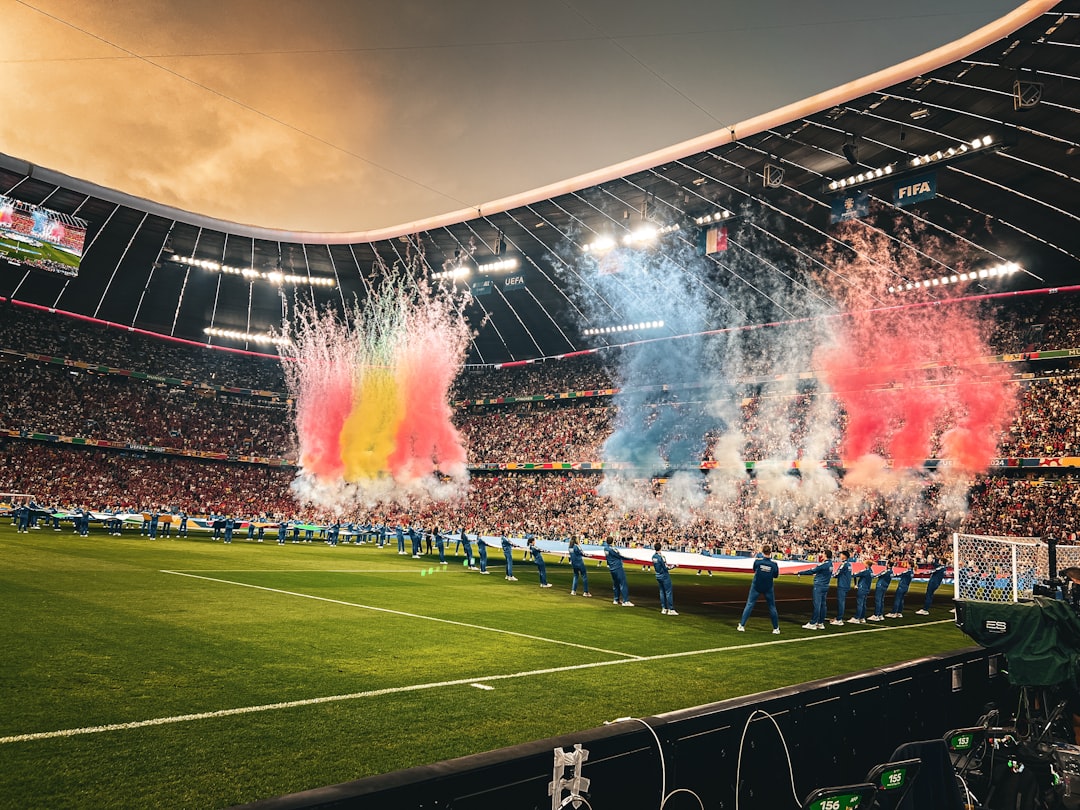
The 2026 FIFA World Cup will be one of the biggest sports stories of the year, with matches taking place across Mexico, Canada and the United States. But the story will reach well beyond the field. As the tournament moves from city to city, it will bring host communities, public agencies, local businesses and civic leaders into the spotlight. That creates a wide range of story angles for journalists, from public health and safety, tourism and economic impact to sports technology, fan culture, athlete performance, national identity and the politics of international sport. Institutions using ExpertFile are helping media cover these broader World Cup stories through dedicated Topic Authority Hubs, Spotlight posts and expert profiles featuring trusted sources across health, business, technology, public policy, culture and sport. Featured World Cup Expert Hubs With the World Cup coming to the New York metro area, Hofstra University’s hub brings together experts on athlete health, recovery, injury prevention, mental performance, public health, tourism, local business impact and the cultural history of soccer. Explore Hofstra’s World Cup 2026 Hub. Source: Hofstra University The University of Delaware’s hub focuses on player safety, concussion research, sports analytics, tourism, youth development, fan behavior, shared experiences and the science behind elite competition. Explore the University of Delaware’s World Cup 2026 Hub. Source: University of Delaware Carnegie Mellon University’s hub looks at the tournament through the lenses of geopolitics, diplomacy, sports marketing, fan engagement, AI, robotics, biomechanics, human performance and emerging sports technologies. Explore Carnegie Mellon’s World Cup 2026 hub. Source: Carnegie Mellon University Story Angles As coverage plans take shape, these are some of the World Cup 2026 story angles journalists may want to explore. The Topic Authority Hubs featured above offer a helpful starting point, with Spotlight posts and expert profiles connected to many of these issues. Journalists can also search directly on expertfile.com to find additional academic experts who can bring depth, context and clarity to their coverage. The politics behind the tournament The World Cup is never just about sport. It can become a global stage for diplomacy, national pride, protest, soft power and political tension, with countries not only competing on the field but also presenting themselves to the world. For journalists, that creates timely story opportunities around national identity, international relations and the political flashpoints that often surface around major global sporting events. The next generation of fans A World Cup can shape how young people connect with sport, family, community and national identity. For many children and teenagers, this may be the first tournament they experience in a big way — at school, at home, in their community or through local soccer programs. The mental pressure of representing a country Few sporting events carry the emotional weight of the World Cup. Players are not just competing for clubs or contracts. They are carrying national expectations in front of a global audience, often under intense media and social media scrutiny. The science of movement under pressure World Cup matches are full of moments that happen almost too quickly to see: a sudden change of direction, a hard landing, a collision, a late tackle, a split-second decision to accelerate or pull back. Experts can help explain the biomechanics behind elite soccer movement, how the body absorbs stress during competition, and why injuries such as ACL tears and concussions remain such important issues at the highest level of the game. How technology is changing the game AI, sports analytics, wearables, robotics, motion tracking and virtual experiences are changing how soccer is played, trained, analyzed and watched. Some of this technology is visible to fans. Much of it is happening behind the scenes. The hidden science behind the tournament Some of the most important parts of the World Cup are easy to overlook. Playing surfaces, stadium preparation, natural grass requirements, turfgrass systems and venue logistics all play a role in the quality of the tournament. What host cities gain — and what they have to manage The World Cup can bring major attention to host cities, along with increased demand on hotels, restaurants, transportation systems, small businesses and public services. The story is not only how many people visit, but who benefits and what remains after the tournament moves on. Sports analytics in action Data is now part of how elite soccer is understood, taught and analyzed. From performance trends to real-time decision-making, analytics can help explain what is happening inside the game and how teams, coaches and analysts evaluate play at the highest level. Soccer as culture and identity For many fans, soccer is tied to family, community, immigration, history and belonging. The World Cup offers a chance to tell stories about fan culture, grassroots soccer, Latin American soccer history, gender and power in the sport, and why watching together can feel so meaningful. Public health and mass gatherings Millions of fans travelling across borders and gathering in stadiums, fan zones and public spaces create important public health questions. Cities need to think about disease surveillance, emergency preparedness, health system readiness and health equity — all while hosting one of the most visible events in the world. About ExpertFile ExpertFile helps organizations become the most trusted and visible source of expertise in an AI-driven world. The platform combines expert profiles, content publishing, inquiry management, analytics and media distribution into a single Visible Authority infrastructure - enabling universities, healthcare organizations, corporations and associations to improve how their expertise is discovered, cited and engaged across search engines, AI assistants and media channels. Built-in workflow orchestration, governance controls and compliance oversight help organizations reduce risk and achieve greater impact with existing resources. Trusted by leading institutions including Carnegie Mellon University, the Massachusetts Institute of Technology (MIT) and ChristianaCare, ExpertFile helps organizations unlock the full value of their expertise at scale. The ExpertFile Mobile App connects journalists, conference organizers, policymakers, researchers and industry partners with authoritative expertise across more than 50,000 topics.


Reconstruction Reconsidered: Manisha Sinha Brings Historical Context to New Obama Podcast Series
As the United States marks its 250th anniversary, a major new podcast series is drawing renewed attention to the Reconstruction era and its lasting impact on American democracy. Reconstruction: The Unfinished Promise, hosted by Malcolm Gladwell and featuring former President Barack Obama, examines the turbulent decades following the Civil War and the ongoing struggle to define citizenship, equality, and political participation in the United States. Among the historians featured in the series is Manisha Sinha, a leading scholar of the Civil War, abolition, and Reconstruction. Her participation brings decades of research and scholarship to a national audience at a time when Americans are revisiting the people, events, and ideas that shaped the nation. Manisha Sinha is the James L. and Shirley A. Draper Chair in American History at UConn and past president of the Society for Historians of the Early American Republic. She is an expert in American political history, the Civil War, and Reconstruction. View her profile Sinha is the author of The Rise and Fall of the Second American Republic: Reconstruction, 1860–1920, a widely acclaimed examination of Reconstruction that challenges conventional timelines and interpretations of the era. Her work argues that Reconstruction was not confined to the years immediately following the Civil War, but instead represented a broader struggle over democracy, citizenship, civil rights, and political inclusion that continued well into the twentieth century. In interviews discussing her research, Sinha has emphasized the transformative nature of Reconstruction and its importance in understanding the development of modern America. Her scholarship explores how debates over voting rights, constitutional protections, racial equality, and citizenship during Reconstruction continue to influence public life today. As interest in Reconstruction grows through America 250 programming and broader public discussions about democracy and civil rights, Sinha's expertise offers valuable historical context for understanding the era's enduring significance. Connect with an Expert Manisha Sinha is available to discuss: The history and legacy of Reconstruction Why Reconstruction remains relevant today The concept of America's "Second Republic" The evolution of citizenship and voting rights in the United States The relationship between Reconstruction, civil rights, and democratic reform Historical perspectives connected to America 250 commemorations How historians are rethinking the traditional timeline of Reconstruction For journalists and audiences seeking deeper insight into one of the most important periods in American history, Sinha offers expert analysis on the debates, achievements, and unresolved questions that continue to shape the nation more than 150 years later.


My friend, Linda, retired at 66 after 35 years as a school principal. She had done everything right. Pension. Savings. No debt. A financial plan so airtight that her advisor framed it. On her first Monday of retirement, she drove to the grocery store, stood in front of the fancy olive oil, and put the $23 bottle back on the shelf. She grabbed the $10 one instead. That night, she called me, genuinely distressed. "Sue," she said, "I don't know how to spend the money." Linda is not alone. Her problem is not a math problem. It is a brain problem. Welcome to the neuroscience of aging and money, where biology is ageist, your prefrontal cortex is quietly retiring before you do, and the financial industry has somehow spent decades teaching you to save without ever explaining how to stop. What Is Actually Happening in That Brain of Yours As we age, the prefrontal cortex, the part of your brain responsible for planning, decision-making, and impulse regulation, starts to lose its edge. Meanwhile, the amygdala, the emotional centre, gains more influence. The result? Decisions that feel more emotional, more risk-averse, and sometimes more impulsive, depending on which way your wiring maps. Research published by Agarwal, S., Driscoll, J. C., Gabaix, X., & Laibson, D. found that financial decision-making peaks around age 53 and then declines steadily. This is not because older adults are less intelligent, but because the cognitive systems that weigh risk and reward begin to operate differently. Biology is ageist, as evidenced by the fact that your brain begins to change its relationship with money before you have even figured out what to do with it. A recent study from the National Bureau of Economic Research found that older adults are significantly more likely to make financial mistakes on both ends of the spectrum: excessive caution and excessive spending. The brain does not uniformly tighten the purse strings. It amplifies whatever pattern was already there. If you were a careful saver, you would become an Olympic penny-pincher. If you were a spender, you would become a one-person economic stimulus package. You become an exaggerated version of your younger self. Which is charming in theory and occasionally catastrophic in practice. Team Tight-Wad: All Chips, No Salsa You know the type. Actually, you might be the type. These are the people who still have their first chequebook, who compare per-unit prices for paper towels with the focus of a neurosurgeon, and who have not eaten at a restaurant without a coupon since the second Harper government. They are not cheap. They are terrified. As the prefrontal cortex loosens its grip on rational future planning, the fear of running out, what I call FORO (Fear of Running Out), takes the driver's seat. It whispers things like: what if the market crashes, what if I get sick, what if I live to 102 and run out of money at 99? And so the tight-wad doubles down. The $23 olive oil goes back on the shelf. The vacation gets postponed. The grandchildren's birthday gifts get slightly less grand. All chips, no salsa. You have built a pile of financial security and are sitting on it, stiff, virtuous, and mildly hungry, while the dip goes untouched. The tight-wad's greatest risk is not poverty. It is regret. Researchers at Cornell University found that people in the final chapters of their lives consistently reported regretting what they did not do far more than what they did. That trip not taken. That renovation not done. That bottle of good olive oil not purchased. FORO kept them safe and small, and the memory of that smallness stings. Team Spend-Thrift: All Salsa, No Chips On the other side of the spectrum, we have the spend-thrifts. As the emotional centres become more active and impulse regulation less reliable, some people lean into the "you only live once" philosophy. They book the trip to Portugal. They buy the golf club they do not need. They pick up the tab for dinner for eight people they met three hours ago. They are generous, spontaneous, and occasionally mystified by their bank statements. Research from Harvard Business School confirms that spending money on experiences and on others generates a meaningful boost in wellbeing. Spend-thrifts are onto something. The problem is sustainability. If the prefrontal cortex is not doing its job by asking "do we actually need this," the credit card bill arrives, and this is why we can't have nice things. Spend-thrifts also tend to underestimate longevity. A 65-year-old Canadian woman today can expect to live, on average, past 87. That is more than two decades of retirement to fund. All salsa, no chips is a delicious way to start a party and a terrible way to sustain it. The Gap Nobody Talks About: Permission to Spend Here is where I want to say something that gets almost no airtime in the financial services industry. We have an enormous education gap on this side of retirement. The entire financial industry, including the advisors, the institutions, the calculators, the seminars, and the books, has spent decades teaching people how to accumulate money. How to save. How to invest. How to sacrifice the latte. The message has been so relentless that it has rewired the way people feel about spending. And then retirement arrives. And nobody says: Okay, you can stop now. You can actually use this. This is what it was for. Switching from accumulation to decumulation requires real support, real education, and genuine permission. It is not a switch you flip. It is a gear shift that many people never make successfully. They arrive at retirement financially prepared but psychologically stuck. Honestly? The mother of all eye rolls is reserved for the financial institution that still calls it a savings account when you are 72. You are not saving anymore. You are managing a spending pool. Here is my modest proposal: once you turn 65, your savings account becomes your spending account. Not a radical rebranding. A psychological one. Words matter. Framing matters. Every time you log in and see the word "spending," your brain starts to normalize the idea that this money has a purpose, and that purpose is your life. Clients need financial therapists as much as they need financial planners. They need someone to look them in the eye and say: you earned this, you saved this, and spending it wisely and joyfully is not a failure of discipline. It is the entire point. Self-Awareness Is the Cheapest Investment You Will Ever Make Recognizing your pattern is step one. If you have not bought anything for yourself that was not on sale in the past calendar year, that is data. If you cannot remember the last time you checked your balance before a purchase, that is also data. Neither is a character flaw. Your brain is doing what it is supposed to do. Step two is to get the right support and give yourself explicit permission. A good retirement income specialist asks what you want your money to do for you now, not just how long it needs to last. A financial therapist helps you untangle your emotional history with money. At some point, you write it down: I am allowed to spend on things that bring me joy, keep me healthy, and connect me to the people I love. Post it somewhere you will see it when you are standing in front of the fancy olive oil. The Punchline Linda eventually bought the $23 olive oil. It took four months, a conversation with her advisor, and an honest chat with her daughter, who pointed out that Linda had about 90 jars of tomato sauce in her basement and no good reason to be rationing condiments. The brain changes that come with ageing are real. They are not personal failures. They are biology doing biology things, loudly and without your consent. But brains are also remarkably responsive to information, reframing, and the occasional kick in the pants from someone who loves you. You spent decades building financial security. The goal was never to die with the most money. It was a good life. All chips AND salsa. The full spread. The $23 olive oil on the good bread, with the people you love. Your spending account is waiting. Honestly, it has been waiting long enough. Because nobody wins a prize for being the richest person in the graveyard. Don’t Retire…Re-Wire! Sue My Book is Now Available for Pre-Order I hope you will consider pre-ordering a copy of Your Retirement Reset for you, a friend or loved one. It's available September 8, 2026 published by ECW Press - You can now order at Indigo or Amazon. And if you love supporting Canadian booksellers, please also check with your local independent bookstore. Most can easily order it for you.

Inside the Partnership Between Texas Christian University and Taylor Sheridan’s Four Sixes Ranch
A unique partnership between Texas Christian University and the legendary Four Sixes Ranch is giving students hands-on experience helping shape the future of one of the most recognizable brands in the American West. Recently featured at a major national rodeo event, the ranch’s newly designed retail booth, created by TCU faculty and students, blends heritage-inspired design with modern merchandising, reflecting the ranch’s growing national profile under the ownership of Taylor Sheridan and Nicole Sheridan. “We’re now written into the history of the Four Sixes Ranch.” The collaboration spans fashion merchandising, branding and business strategy, allowing students to contribute directly to product development, retail design and digital marketing initiatives. For students involved, the project offered a rare opportunity to see classroom ideas become real-world products tied to an internationally recognized Texas brand. Faculty members say the partnership reflects TCU’s focus on experiential learning while helping preserve and evolve an important piece of Texas cultural identity. Check out the video TCU and Four Sixes Ranch, and you can read more about this project in the full article below: Looking to connect with Chares Freeman, Kevin Smith, Nicole Bettinger or Rima Shrestha about this exciting project? Simply contact Holly Ellman, Associate Director of Communication, at h.ellman@tcu.edu today.


Tony Awards: CMU Experts Unpack Broadway’s Biggest Night
As Broadway prepares for the 2026 Tony Awards this Sunday, Carnegie Mellon University experts are available to help media explore the stories behind the stage, from the business of Broadway and the economics of major productions to costume design, theatre history and the behind-the-scenes teams that bring performances to life. CMU’s Tony Awards expert page brings together faculty and specialists who can provide timely commentary on the artistic, cultural and economic forces shaping Broadway’s biggest night. The Business of Broadway Production costs, commercial risk, tourism, jobs, touring productions and Broadway’s wider economic impact. Behind the Scenes The directors, designers, stage managers, technicians and production teams who turn a show into a fully realized theatrical experience. Costume in Theatre How costume design shapes character, period, mood and storytelling on stage. The History of Theatre and Broadway Broadway’s evolution, cultural influence and place within the broader history of theatre. Media can visit CMU’s Tony Awards page to explore available experts and connect directly with the right source for their story.

World Cup: Expert Sees World History in Motion
Most soccer fans watch the FIFA World Cup for the goals, the stars, and the drama. Pablo Sierra Silva sees a lot more. “You’re seeing empire, migration, nationalism, labor, religion, commercialization, and identity all unfolding in real time,” says Sierra Silva, a University of Rochester history professor who teaches a course called “World History Through Soccer.” He adds: “The World Cup is never just 22 players kicking a ball.” As the largest World Cup field ever unfolds across North America, Sierra Silva says the tournament offers a unique lens into the forces shaping the modern world. Fans need only look for it. Take the scheduled Group Stage game between France and Senegal. The matchup reflects centuries of shared history, from French colonial rule in West Africa to contemporary migration patterns and diaspora populations. The crowd, the flags, the chants, and even who is playing can reveal as much as the final score. The same is true for players like Spain’s teenage superstar Lamine Yamal, whose Moroccan and Equatorial Guinean heritage reflects broad changes in European society. “He is redefining what it means to be Spanish,” Sierra Silva says. “This is one of the stories of modern Europe, and soccer makes it visible.” Sierra Silva also studies how the World Cup has evolved into a global cultural phenomenon shaped by social media, celebrity, commerce, and fandom. Even seemingly simple traditions — such as collecting Panini World Cup stickers — offer lessons about geography, migration, and national identity. For journalists looking for unique angles on the World Cup, Sierra Silva can provide expert commentary on: • The history and politics behind international soccer rivalries • Migration, diaspora communities, and national identity • Race, religion, and representation in global sport • Sports marketing, fandom, and media culture • The World Cup as a reflection of world history and its various impacts on nations “People feel connected to histories and identities through these teams,” Sierra Silva says. “That’s why it matters.” To connect with Sierra Silva, contact University of Rochester media relations specialist David Andreatta at david.andreatta@rochester.edu.


The World Cup Beyond the Pitch
As the FIFA World Cup kicks off this month across Canada, the United States, and Mexico, global attention will focus on the action on the field. But some of the most important stories surrounding the tournament may happen beyond the final score. A recent Hofstra University article 'Hofstra History Professor Plays Key Role in 2026 World Cup Antidiscrimination Efforts' highlighted the work of historian and soccer scholar Brenda Elsey, who has been involved in efforts to address discrimination, inclusion, and fan culture issues connected to major international football events. Her work examines how race, gender, politics, identity, and social change intersect with the world's most popular sport. Dr. Brenda Elsey is a leading soccer scholar whose research explores the intersection of football, politics, gender, and society in Latin America. She has written extensively on the history and cultural impact of the sport, including its role in shaping identity, social movements, and international events. View her profile here For journalists, the 2026 World Cup presents opportunities to explore topics ranging from fan behaviour and inclusivity to the social and cultural impacts of hosting one of the largest sporting events on the planet. Questions around accessibility, equity, nationalism, gender representation, and the evolving role of sport in public life are expected to be part of the broader conversation surrounding the tournament. Brenda Elsey is a leading expert on the history, politics, and culture of soccer, with particular expertise in issues of gender, discrimination, and social justice in sport. Her research has examined how major international tournaments reflect broader societal trends and challenges, making her a valuable source for media looking to provide deeper context beyond match results and standings. Whether covering host cities, fan experiences, emerging controversies, or the legacy of the tournament, journalists seeking expert insight into the broader cultural significance of FIFA World Cup 2026 should consider connecting with Brenda Elsey.


Expert Spotlight: Tiananmen Square - 37 Years Later, Why the World Still Remembers
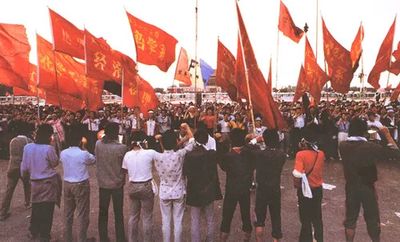
Thirty-seven years after the events in Beijing's Tiananmen Square, the anniversary continues to spark global reflection on democracy, freedom of expression, state power, and the importance of preserving historical memory. While discussion of the events remains heavily restricted within China, commemorations continue around the world as scholars, journalists, policymakers, and human rights advocates examine the lasting significance of what occurred in the spring of 1989. The movement began in April 1989 following the death of reform-minded Chinese leader Hu Yaobang. What started as student-led gatherings evolved into a nationwide protest movement calling for political reform, greater transparency, accountability, and action against corruption. Hundreds of thousands of demonstrators occupied Tiananmen Square, while similar protests spread to cities across China. After weeks of escalating tensions, martial law was declared. On the night of June 3 and into June 4, Chinese troops and tanks moved into Beijing to clear the protests. The exact number of deaths remains disputed and unknown, with estimates ranging from hundreds to thousands. The Chinese government has never released a full accounting of those killed, injured, detained, or disappeared. Perhaps the most enduring image from the crackdown is that of the unidentified "Tank Man" who stood alone before a column of tanks on June 5, 1989. The photograph became a global symbol of individual courage in the face of overwhelming state power and remains one of the most recognizable images of the twentieth century. Why Tiananmen Still Matters Beyond its historical significance, Tiananmen remains relevant because it raises enduring questions about civil liberties, government accountability, censorship, collective memory, and the role of citizen activism. Researchers continue to study how societies remember contested events and how governments shape historical narratives. The anniversary also serves as a reminder of the importance of preserving documentary evidence and firsthand accounts for future generations. Today, remembrance efforts continue through archives, academic research, museums, oral histories, and public commemorations outside mainland China. Recent reports highlight ongoing attempts by scholars, journalists, and activists to preserve photographs, diaries, eyewitness accounts, and other records associated with the 1989 protests and crackdown. Expert Perspectives Available Journalists covering the Tiananmen anniversary may wish to connect with experts in: Chinese history and politics Human rights and international relations Collective memory and historical preservation Democracy movements and social protest Media censorship and information control East Asian studies and contemporary China The Tiananmen Square anniversary remains more than a historical milestone. It continues to influence conversations about freedom, political participation, historical accountability, and the power of memory in shaping the future. If you're covering - connect now! See all of our experts at www.expertfile.com