Experts Matter. Find Yours.
Connect for media, speaking, professional opportunities & more.
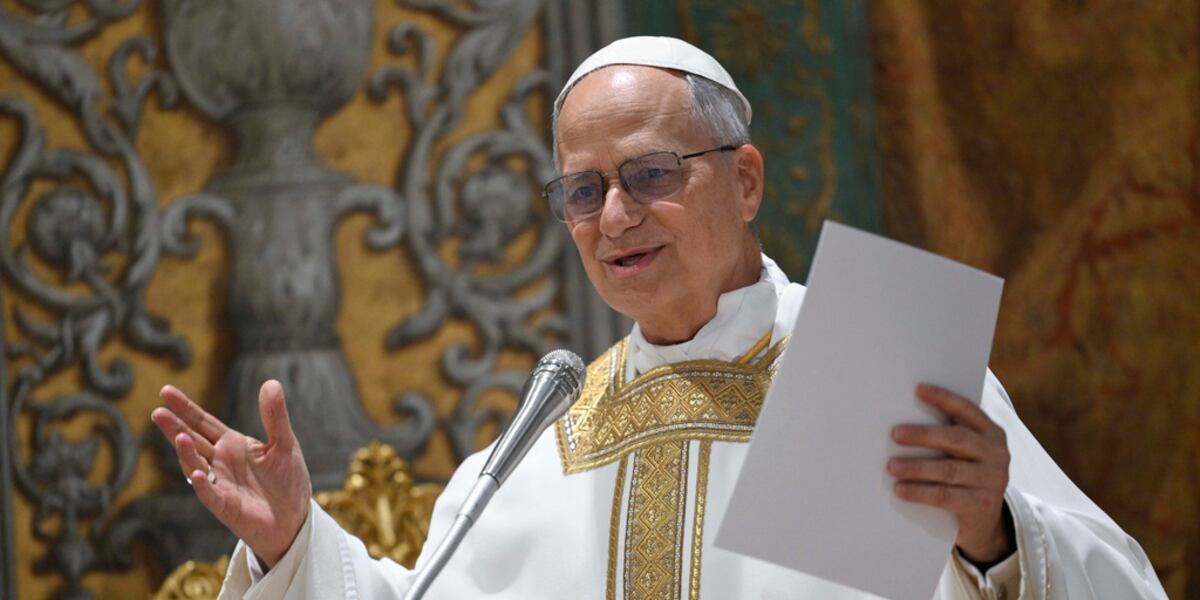
Expert Q& A: ‘The Pope is also a monarch’
Kathleen Comerford, Ph.D., professor of history at Georgia Southern University, specializes in Catholic history in the 16th and 17th centuries. She is also an associate editor for the Journal of Jesuit Studies, which focuses on the work of the Society of Jesus (Jesuits), a religious order within the Catholic Church. Pope Francis was the church’s first Jesuit pope. With the global significance and rarity of the conclave, Comerford answered frequently asked questions about how the conclave works, how the conclave process has evolved over time, and what the passing of a pope means for the Catholic Church and the world. Question: What does the passing of a pope mean for the world? Comerford: Multiple things! First of all, there are 1.4 billion Catholics in the world scattered in many different countries. The pope is a unifying figure for all of the Catholics. He represents something immediate in the sense that he’s the head of the church and is a recognizable figure. The pope is also a monarch. I was just talking with my classes about this. He is the head of the government of the Vatican City State, which is the smallest independent state in the world. It has a very long history itself. Pretty much everybody who lives in Vatican City works for the Vatican. The pope is one of the few elected monarchs in history. He is responsible for financial and political decisions, and he has ambassadors around the world as a result of his role in global policy. Question: How is a new pope selected? Comerford: The College of Cardinals will meet for an election called a conclave, and they actually stay in a dormitory-like place in Vatican City for it. They are sequestered from the public, and they take some time to meet, pray and vote. The cardinals aren’t supposed to be sitting around talking about who would be a really good pope, but we don’t know whether they do because they’re sequestered and nobody is supposed to talk about it. They will likely take a vote on the first day, but that’s not required. Every subsequent day, they can take a maximum of four votes; two in the morning and two in the afternoon until a candidate gets a two-thirds majority. Question: What does the voting look like? Comerford: There are ballots, and the cardinals write their preferred candidate on the ballot, and then they put their vote in a chalice. To count the votes, there’s a group of three people who are in charge of counting and then announcing the results to the fellow cardinals. There are 252 cardinals, but only 135 of them are eligible to vote because anyone over the age of 80 is ineligible. The procedure where only cardinals can elect the pope dates from 1059. The secret ballot and the two-thirds majority requirement is from 1621. The sequestration for the process dates from 1271 because they argued about who the new pope would be for two years and nine months; a total of 33 months. And so, they decided that the only way to make sure that this didn’t happen again would be to create this scenario with the cardinals locked in a room with a key. Question: When one of the candidates receives a two-thirds majority and becomes the next pope, how will it be announced? Comerford: Well, this is kind of fun, because they have four votes every day until one of the candidates receives a two-thirds majority. After they take the votes, the papers used to vote are burned. How the news is shared to the crowds outside is based on the color of smoke. If the smoke is black, that means no one received the majority and there’s no new pope yet. If there’s white smoke, it means there’s a new pope. This practice really only dates to the early 19th century. At first, it was just if there was smoke, there was no pope; if there was no smoke, then there was a pope. In 1914, they changed this aspect of the election so that black smoke means “no pope” and white smoke means “new pope.” Question: It’s expected that the next pope will be one of the cardinals in the room when they vote, yes? Comerford: Yes, but it doesn’t have to be. There have been a lot of popes, but in the last 200-300 years, there hasn’t been somebody who wasn’t in the conclave that was elected. Theoretically, they could nominate somebody who’s not a cardinal and the whole room could say, “yes, that’s the person we want as pope.” However, they don’t vote by acclamation anymore. They stopped doing that in the 19th century. Question: Pope Francis appointed 108 of the cardinals, so that’s a total of 80% of those eligible to vote for the next pope. How likely is it that we see a pope similar to the late Francis, considering he provided the electorate for his successor? Comerford: First of all, he deliberately went out and created cardinals in places where there had never been cardinals before. And he didn’t do that by saying, “I’m going to find somebody who’s like-minded to me.” He just said, “There are a lot of Catholics in Myanmar and they’ve never had a cardinal. So I’m going to make sure that there’s a cardinal now.” Most of these new cardinals are in places like Rwanda, Cape Verde, Tonga, Myanmar, Mongolia and so on. So these are non-European cardinals. Now, less than 40% of the voting cardinals are European. So to speculate on how similar they are to Francis, you have to break down what Francis was. There has been his entire pontificate about how he’s the first American pope, but his parents were born in Italy. He didn’t grow up speaking Italian, but it was a dialect of Italian as well as Spanish, because he grew up in Argentina. He was the most European you can get and still be an American. Another part of the question is, will the new pope be somebody who is of a similar mind to Francis in terms of his governance, which was very devolved. He introduced this idea of “synodality,” which is about fairly consistent communication with groups of people. Pope Francis was not particularly monarchical or hierarchical. There is also the aspect of his thinking that leans more to the left than the right on a number of social issues like immigration, women’s rights, the rights of minorities and immigration. He opened a lot of conversations, which the very right leaning portions of the church have been very uncomfortable with. If you're interested in learning more about this topic and want to book time to talk or interview with Kathleen Comerford then let us help - simply contact Georgia Southern's Director of Communications Jennifer Wise at jwise@georgiasouthern.edu to arrange an interview today.


Aston University researcher to help uncover hidden impact of painkiller overuse among older people
The HOPE-AO project led by the University of Plymouth will look at the potential harms of overprescribed pain medication in older people in the UK Aston University’s Professor Ian Maidment will bring his expertise in pharmacy and work with patient groups on medicine optimisation The project has been funded by the National Institute for Health and Care Research (NIHR) A new study led by the University of Plymouth will explore chronic pain prescribing in older adults across the UK, with the aim of understanding whether current treatments and processes meet their needs. The HOPE-AO: Helping to Optimise Pain control in the Elderly experiencing Analgesic Overprescribing project is being supported by the National Institute for Health and Care Research (NIHR) and includes Aston University’s Professor Ian Maidment. It will investigate whether certain groups of the older population are more likely to have analgesic (pain relief) medication overprescribed to them, and any side effects or other harms these medications can pose if taken for long periods. It aims to identify alternative treatment solutions to reduce the use of unnecessary pain medicines, working with patients to develop a list of acceptable strategies that could be tested and implemented across the UK. Around 4m older people across the UK live with varying degrees of chronic pain as a result of conditions including arthritis, diabetes or frailty. While some people benefit from pain relief medicines, many end up receiving long-term repeated prescriptions – for medications ranging from paracetamol and ibuprofen to opioids and antidepressants – for weeks, months or years at a time. The project is being led by researchers from the University of Plymouth, working with colleagues at the University of Exeter, Aston University, University of Aberdeen and the North East London Foundation NHS Trust. It is funded by through a Programme Development Grant from the National Institute for Health and Care Research (NIHR). The project team comprises experts in the care of older people – including healthcare researchers, nurses, consultants, GPs, pharmacists and psychiatrists working across the UK – as well as medical statisticians and health economists. It also involves an advisory group of patients with lived experience of receiving repeat prescriptions for pain medication. During the project, the team will speak to patients aged 65 and over with a history of chronic pain for which they are taking, or have taken, medication and families who cared for and supported relatives with chronic pain. They will also speak to healthcare professionals who are either prescribing or supporting older adults taking medication for chronic pain management. Alongside this work, the team will analyse anonymised healthcare data to understand more about older adults who are prescribed medication for chronic pain. This includes patterns in prescribing, health and demographic factors associated with pain medication use, and potential health outcomes, and will help identify those likely to benefit most from support. Professor Maidment, from Aston Pharmacy School, will bring his expertise in pharmacy, medication use in day-to-day clinical practice and working with diverse groups of patients to support medication optimisation. He said: “From my experience in community pharmacy, the use of pain medicines is very common in older people. We need to work with older people to understand how we can help older people to use other potentially safer approaches.” Patricia Schofield, professor of clinical nursing at the University of Plymouth and one of the study’s chief investigators, said: “Very often, older people are told by a doctor that the most effective means of treating a health condition is through some form of pain relief. But they often don’t get any form of follow-up appointment and, as a generation, are less likely to seek one as they either feel pain is part of the ageing process or they don’t wish to be seen as a burden. The result is that they end up getting repeat prescriptions, potentially for pain medications they no longer need and also at significant cost to the NHS. “This study will give us a clearer understanding of the scale of the issue which we can use to develop ways of benefitting patients and their families, and the healthcare professionals working to treat and support them.” Victoria Abbott-Fleming MBE, founder of the charity Burning Nights CRPS Support, is the chair of the Patient and Public Involvement and Engagement group for the HOPE-AO study. It will be made up of several adults over the age of 65 who live with chronic pain and have received repeat prescriptions for pain medication. Victoria has herself lived for more than 20 years with a chronic pain condition, Complex Regional Pain Syndrome (CRPS), and set up Burning Nights to support those affected by it on a day-to-day basis and their families. She is also chair of the Expert Patient and Carer Committee at the British Pain Society. She said: “I’m excited to support this study that places the voices of older adults and their carers at the heart of pain management. All too often, those living with chronic pain – especially older adults – are prescribed medication without regular review or consideration of alternative approaches. This study is a vital step towards more informed and balanced care, helping ensure that older people living with chronic pain are not just treated, but truly heard and supported.”


A New Pope Has Been Chosen - Connect with Our Experts if You're Covering
White smoke has risen above the Sistine Chapel, the signal that cardinals have chosen a new pope on the second day of the conclave. Who is Leo XIV and what is is history as a Catholic leader? What will his mission be for a flock of close to 1.5 billion Catholics? And what issues will he inherit in his new role to navigate. There are a lot of angles to cover - so connect with our experts today for your questions, coverage and ongoing stories: Check out our other experts here : www.expertfile.com


Covering the Conclave? Our Expert Can Help.
The world is watching the Vatican as cardinals from across the globe gather for the papal conclave. The monumental event, which involves cardinals closing themselves off in the Sistine Chapel to elect a new pope, is steeped in history, mystery, and speculation. The new pontiff will be expected to make difficult decisions about the future direction of the Catholic church, which has almost 1.4 billion followers worldwide, and address the Vatican's strained finances and its sexual abuse scandals. If you're a reporter looking for an expert who can provide valuable insight, perspective and opinion on any angle of the events unfolding in Vatican City, consider reaching out to Jack Downey, the John Henry Newman Professor of Roman Catholic Studies at the University of Rochester. Downey and his scholarship have been featured in media outlets such as The Washington Post, National Public Radio, and Time Magazine. Simply click on his icon now to arrange an interview today.



Retirement: For Better, For Worse, and for Much More Time Together
Retirement is supposed to be your golden reward—freedom from alarm clocks, endless Zoom meetings, and performance reviews. But no one warned you about the relationship performance review that arises when you and your partner suddenly find yourselves spending over 100 hours a week together. For some, it’s bliss; for others, it feels like a full-time job without an HR department. While grey divorce (divorce after age 50) is on the rise in Canada, separation isn’t inevitable. However, marital harmony is also not guaranteed. The truth lies somewhere in between—and that’s where things become interesting. Retirement isn't merely a lifestyle change—it’s a complete identity shake-up, which can create stress even in the strongest relationships. Grey Divorce: An Increasing Trend Though Canada’s overall divorce rate reached a 50-year low in 2020, divorce among people over 50 is increasing—this trend is dubbed grey divorce. According to Statistics Canada, this demographic is increasingly re-evaluating their relationships as they retire (CBC News, 2024). The same pattern is unfolding south of the border, with the AARP reporting a steady rise in senior divorces in the U.S. Grey divorce isn’t just emotionally taxing—it can be financially devastating. Women, in particular, bear the brunt. A study by the National Center for Family & Marriage Research found that divorced women over 50 have 45% less wealth than their married peers. In Canada, the Canadian Institute of Actuaries has warned that divorce later in life can significantly erode retirement savings and delay or derail financial plans. Role Confusion One retired executive shared that after decades of being chauffeured to work, he assumed retirement meant his wife would now be his driver. “I thought she’d just take over that role, as he climbed into the back seat,” he said, genuinely confused. She had other plans that did not involve sitting behind a wheel, taking coffee orders, or navigating roundabouts. He had not yet made the emotional or physical shift from being served to becoming equal. That transition is more complicated than it sounds—and more common than you'd think. When one partner’s identity is career-driven and the other manages the home, retirement necessitates a complete recalibration. Power dynamics shift, control issues surface, and resentment simmers if left unacknowledged. Housework ≠ Heartwork If you're home full-time now, guess what? You’re not a guest anymore. The dishes, the vacuuming, the grocery runs—these are now shared responsibilities. Nothing breeds resentment faster than an unequal workload. Retirement doesn’t mean “relax”; rather, it signifies redistributing the work of life. Unspoken truths will find their voice. Let’s face it—decades of unexpressed frustrations don’t remain buried. They begin to comment on how someone folds laundry, stacks the dishwasher, or leaves the cap off the toothpaste. Retirement magnifies everything: the quirks you used to laugh off? Mansplaining! What habits did you ignore because life was busy? Now they’re front and center. And what bad habits did you have before? They don’t improve with age—they get worse. Emotional and Mental Health Insights Relationship difficulties can trigger anxiety, depression, and loneliness, especially among men who may have smaller support networks outside their marriages. A 2020 study in the Journal of Gerontology found that post-divorce social isolation is closely linked to declining physical and mental health in later life. Not all couples want to—or need to—divorce to find peace. Increasingly, older Canadians are exploring “Living Apart Together” (LAT) arrangements, where partners maintain separate residences while remaining in a committed relationship. Research by the Vanier Institute and AARP suggests that LAT relationships allow for autonomy while maintaining emotional connection—a potential middle ground for couples who struggle with full-time togetherness in retirement. For many, retirement means the loss of structure, identity, and purpose, particularly for those who have closely tied their sense of self to their professional roles. This loss can create irritability, aimlessness, and tension in a partnership. As Harvard Business Review put it, retirement can be especially tough for men because “so many men are bad at retirement” (HBR, 2021). This emotional void often spills over into the relationship, testing its resilience. Retirement often brings a sudden reshuffling of roles at home. Many men who may have spent decades focused on their careers struggle to adjust to a more balanced domestic lifestyle. The Canadian Centre for Policy Alternatives notes that retirement can expose long-standing gendered inequalities in household labour, leading to friction, resentment, and, at times, relationship breakdown. How to Thrive—Together or Apart The goal isn’t perfection; it’s peace, fulfillment, and ample personal space to breathe. Here’s how to get there: creatively, practically, and honestly. 1. Have the Real Conversations Ask the questions you avoided when life was too busy: • “Are we happy?” • “What do you want out of the next ten years?” • “Are there things we’ve never talked about that matter now?” Unspoken expectations are relationship landmines. Bring them to light—gently and often. 2. Separate Bedrooms, United Front Don’t frown; they are more common than you might think and less scandalous than it sounds. Separate sleep equals better rest, less irritation, and sometimes a more intentional intimate life. Please don’t consider it a breakup; position it as a better mattress strategy. 3. The Basement Suite or In-Law Apartment Plan This represents the sweet spot between staying together and going entirely separate. Living in the same house with clearly defined zones provides each partner with breathing room and independence, especially when you’ve grown apart but don’t want to disrupt finances or family. Ground rules are essential: • Who is responsible for what costs? • Shared meals or separate? • New partners—yay or nay? It’s not perfect, but it can be practical. 4. A Second Space: Cottage, Trailer, or Tiny Cabin A humble trailer or rustic cabin might save your marriage. It’s not about luxury—it’s about space, autonomy, and silence when needed. Whether alternating weekends or solo sabbaticals, having a backup place to go can restore harmony at home. 5. Travel Separately (Sometimes) One of you wants to hike Machu Picchu, while the other prefers to nap in Muskoka. You don’t have to compromise; you can take turns. Alternate between solo trips, friend getaways, or short solo retreats. You’ll both return refreshed—and more engaged. 6. Discover New Purpose (or Income) A restless, lost, or bored partner can quietly sabotage the household. Encourage: • Volunteering • Consulting or part-time work • Mentoring • Taking courses or teaching others • Rediscovering old passions If Divorce Is the Best Option At times, the most honest act is to end a marriage with kindness. If this is the only option, there are important factors to consider: Financial Reality Check • Assets will be divided, including the house, pensions, RRSPs, etc. • Expenses double: two homes, two insurance policies, and two fridges to stock. • Retirement income may not be sufficient for both lives. • Legal costs and timing matter more than ever now—because the time to recover financially is limited. There are no pensions in tears. Therefore, if you choose this route, plan ahead. Family Impact • Adult children might feel shocked—or even angry. • Grandchildren can pose challenging questions. • Long-term friendships may weaken. • Shared traditions may require reinvention. This process can be amicable. A new term has emerged among women caring for their ill or aging ex-husbands: “Wasbands.” These women step up with empathy rather than obligation. Vows no longer bind them; instead, they are guided by compassion. Honestly, humanity wins in these situations. There is still love, respect, and history—even if it’s no longer romantic. That is not failure; it is growth. Rewrite the Rules Retirement is not a dead end; it’s a creative reawakening—if you approach it that way. Retirement is a significant life transition—not just financially, but relationally. Like any other chapter in life, it requires renegotiation, mutual respect, and a willingness to evolve. Some couples find deeper intimacy, while others redefine their relationships entirely. The good news? Whether it's under one roof or two, retirement can still be a time of connection, discovery, and, yes, romance. But it also requires some good, old-fashioned adulting. Yes, *adulting*—that modern word we usually reserve for paying bills, booking dental appointments, and reading the fine print. It turns out it’s equally essential in retirement. Emotional maturity, communication, boundary-setting, and a shared approach to evolving roles are all keys. Think of it like the Sonnet Insurance commercials that cheekily remind us adulting is hard but worth it. Retirement is also a factor, especially when approached with intention and a sense of humour. This is your last chapter. Make it a good one. Whether you stay together, sleep apart, live separately under one roof, or consciously uncouple, do it with clarity, kindness, and courage. The goal isn’t a perfect love story; it’s a fulfilling life for both of you. When in doubt, take a walk (alone if necessary). Share a joke. Communicate like adults. And for the love of long-term care insurance, remember: resentment compounds faster than interest. If you enjoyed this article or thought, “Oh wow, this is exactly what my friend/parent/relative needs to read,” please share it. You can also subscribe to the Retirement Literacy newsletter for more smart, candid, and occasionally cheeky insights on navigating life after full-time work. Let’s make retirement not just the end of work, but the start of something meaningful, fulfilling, and a little fabulous. Don’t Retire…Rewire! p.s. Know someone who’s about to retire?— Why not share this worksheet? It’s the best pre-retirement checklist they never knew they needed. 6 Questions to Ask Before Retiring Together Retirement reshapes your schedule, your identity—and your relationship. Before you hand in your keycard, ask these candid questions with your partner. Because the toughest part of retirement isn’t money—it’s time. And you’ll be spending a lot more of it together. 1. What Do You Want This Chapter of Life to Look Like? Dreams misaligned can lead to daily friction. Do you crave adventure while your partner seeks peace and quiet? Map it out—together. 2. How Much Time Do We Really Want to Spend Together? “Always together” sounds sweet—until it feels stifling. Define your ideal balance between shared time and personal space. 3. What Roles Are We Playing Now—And Do They Need to Change? Retirement often means rebalancing housework, caregiving, and emotional labor. What’s fair now that you’re both at home? 4. Are There Any Long-Standing Frustrations We’ve Avoided Talking About? Retirement shines a spotlight on old resentments. It's better to talk than to silently stew over how the dishwasher is loaded. 5. How Will We Handle Money Decisions as a Team? With changing income and more shared expenses, financial transparency and joint planning are more crucial than ever. 6. What Will Give Each of Us a Sense of Purpose—Individually? A restless or bored partner can bring tension into the home. Talk about passions, volunteer work, or part-time pursuits that bring meaning. Want more smart, candid insights? Visit www.retirementliteracy.com to start rewriting your next chapter with clarity and confidence.


#ExpertSpotlight: India-Pakistan Conflict: Historical Roots and Ongoing Tensions
The India-Pakistan conflict remains one of the most enduring and complex geopolitical disputes in modern history. Rooted in the partition of British India in 1947, the conflict has evolved over decades to include territorial disputes, religious and cultural divisions, and nuclear rivalry. With both countries possessing significant military power and global influence, tensions between India and Pakistan have far-reaching consequences for regional stability, international diplomacy, and global security. As new developments continue to emerge, understanding the conflict’s origins and timeline is critical for comprehensive reporting. Key story angles include: The Partition of 1947 and Its Aftermath: Examining the division of British India, the creation of Pakistan, and the resulting violence and mass displacement. Kashmir: A Disputed Territory: Analyzing the root of territorial disputes over Kashmir, including the wars of 1947, 1965, and 1999, and ongoing claims from both nations. Nuclear Deterrence and Military Escalation: Exploring the impact of both nations becoming nuclear powers and how this has shaped diplomatic and military strategy. Cross-Border Terrorism and Insurgency: Investigating allegations of state-sponsored terrorism, militant activity, and their role in inflaming tensions. Peace Initiatives and Diplomatic Breakdowns: Highlighting past attempts at peace talks, confidence-building measures, and why many efforts have faltered. Global Implications and International Mediation: Assessing how global powers like the U.S., China, and the U.N. view the conflict and what role they play in de-escalation efforts. As tensions between India and Pakistan continue to affect regional and international relations, revisiting the historical context and current stakes provides crucial insights for journalists covering conflict, diplomacy, and security. Connect with an expert about India and Pakistan: To search our full list of experts visit www.expertfile.com

Hidden History of Bermuda is Reshaping the Way We Think About Colonial America
Early colonialism in the Americas tends to conjure images of Jamestown and Plymouth Colony. But long before settlers there acclimated to the New World’s growing conditions and overcame starvation conditions, an English settlement established in Bermuda in 1612 was wealthy and prosperous. University of Rochester historian and archaeologist Michael Jarvis has been uncovering the hidden history of Smith’s Island in Bermuda and its pivotal role in reshaping the understanding of colonial America. Nicknamed “Chainsaw Mike” by his students, he has spent 14 years excavating Smith’s Island and one of the first English settlements in the New World. Jarvis argues that Bermuda’s role in supplying Jamestown with food and influencing early colonists make it a cornerstone of America’s origin story rather than the historical footnote to which it has largely been relegated. His research on Smith’s Island was recently the cover story of Smithsonian magazine and was featured on the History Unplugged podcast. Jarvis is an expert on colonial America, the international and intercolonial networks of trade at the time, and settlement patterns in eastern North America, Bermuda, the Bahamas, and the communities surrounding European gold- and slave-trade forts in West Africa. He can be reached at 585-275-4558 and michael.jarvis@rochester.edu.

Alcatraz Island, once home to America’s most infamous prison, remains a powerful symbol in the nation’s historical, cultural, and political landscape. Originally a military fortification before becoming a federal penitentiary, Alcatraz gained notoriety for housing high-profile criminals like Al Capone and “Machine Gun” Kelly. Yet its legacy extends far beyond crime and punishment—it was also the site of a landmark Indigenous occupation that helped spark a national conversation about Native rights. Today, Alcatraz continues to fascinate as a tourist destination, a case study in penal reform, and a platform for telling underrepresented stories. Journalists looking to explore the island’s rich past and present may consider: The transformation of Alcatraz from military post to maximum-security prison Daily life behind bars and profiles of the prison’s most infamous inmates The 1969–1971 Indigenous occupation and its impact on Native American activism Alcatraz’s role in shaping modern conversations about incarceration and justice reform The cultural legacy of Alcatraz in film, literature, and popular imagination How the National Park Service is preserving and interpreting the island’s layered history Alcatraz offers more than just a tale of escape—it’s a gateway into deeper stories of resistance, rehabilitation, and remembrance. Connect with an expert about Alcatraz: To search our full list of experts visit www.expertfile.com

BATON ROUGE – Since the Big Bang, the early universe had hydrogen, helium, and a scant amount of lithium. Later, some heavier elements, including iron, were forged in stars. But one of the biggest mysteries in astrophysics is: How did the first elements heavier than iron, such as gold, get created and distributed throughout the universe? A new answer has come from an unexpected place – magnetars. Neutron stars are the collapsed cores of stars that have exploded. They are so dense that one teaspoon of neutron star material, on Earth, would weigh as much as a billion tons. A magnetar is a neutron star with an extremely powerful magnetic field. On rare occasions, magnetars release an enormous amount of high-energy radiation when they undergo “starquakes,” which, like earthquakes, fracture the neutron star’s crust. Starquakes may also be associated with powerful bursts of radiation called magnetar giant flares, which can even affect Earth’s atmosphere. Only three magnetar giant flares have been observed in the Milky Way and the nearby Large Magellanic Cloud, and seven from other nearby galaxies. Astrophysicist Eric Burns and his team of researchers at Louisiana State University in Baton Rouge study magnetars extensively through the observation of gamma-rays. These are the most energetic photons, most famous for turning Bruce Banner into the Incredible Hulk. Burns joined with researchers at Columbia University and other institutions to see if we could use gamma-rays to understand if magnetar giant flares forge the heaviest elements, and unexpectedly found the smoking-gun signature in decades-old data. The study, led by Anirudh Patel, a doctoral student at Columbia University in New York, is published in The Astrophysical Journal Letters. “It’s answering one of the questions of the century and solving a mystery using archival data that people had just forgotten about, demonstrating something that occurred when the Universe was younger,” said Burns. “Giant flares should occur just after the first stars died, meaning we have identified what could be the origin of the first gold in the universe.” How could gold be made at a magnetar? Patel and colleagues, including his advisor Brian Metzger, Professor at Columbia University and senior research scientist at the Flatiron Institute in New York, have been thinking about how radiation from giant flares could correspond to heavy elements forming there. This would happen through a “rapid process” of neutrons forging lighter atomic nuclei into heavier ones. Protons define the element’s identity on the periodic table: hydrogen has 1 proton, helium has 2, lithium has 3, and so on. Atoms also have neutrons which do not affect identity, but do add mass. Sometimes when an atom captures an extra neutron the atom becomes unstable and a nuclear decay process happens that converts a neutron into a proton, moving the atom forward on the periodic table. This is how, for example, a gold atom could take on an extra neutron and then transform into mercury. In the unique environment of a disrupted neutron star, in which the density of neutrons is extremely high, something even stranger happens: single atoms can rapidly capture so many neutrons that they undergo multiple decays, leading to the creation of a much heavier element like uranium. When astronomers observed the collision of two neutron stars in 2017 using NASA telescopes and the gravitational wave observatory LIGO, they confirmed that this event could have created gold, platinum, and other heavy elements. “LIGO tells us there was a merger of compact objects, and Fermi tells us there was a short gamma-ray burst. Together, we know that what we observed was the merging of two neutron stars, dramatically confirming the relationship,” said Burns. But neutron star mergers happen too late in the universe’s history to explain the earliest gold and other heavy elements. Finding secrets in old data At first, Metzger and colleagues thought that the easiest signature to study from the creation and distribution of heavy elements at a magnetar would appear in the visible and ultraviolet light, and published their predictions. But Burns in Louisiana wondered if there could be a gamma ray signal bright enough to be detected, too. He asked Metzger and Patel to work out what that signal could look like. Burns looked up the gamma ray data from the last giant flare that was observed, which was in December 2004. He realized that while scientists had explained the beginning of the outburst, they had also identified a smaller signal from the magnetar, in data from ESA (European Space Agency)’s INTEGRAL, a retired mission with NASA contributions. “It was noted at the time, but nobody had any conception of what it could be,” Burns said. Metzger remembers that Burns thought he and Patel were “pulling his leg” because the prediction from their team’s model so closely matched the mystery signal in the 2004 data. In other words, the gamma ray signal detected over 20 years ago corresponded to what thought it should look like when heavy elements are created and then distributed in a magnetar giant flare. "This is my favorite discovery I've contributed to,” said Burns. “My colleagues found this signal in the past, but nobody knew what it could be at the time. Once these models were ready, everything fit like a perfect puzzle, which is extremely rare in science." Researchers supported their conclusion using data from two NASA heliophysics missions: the retired RHESSI (Reuven Ramaty High Energy Solar Spectroscopic Imager) and the ongoing NASA Wind satellite, which had also observed the magnetar giant flare. Other collaborators on the new study included Jared Goldberg at the Flatiron Institute. Next steps in the magnetar gold rush Patel’s study estimates that magnetar giant flares could contribute about 10% of the total abundance of elements heavier than iron in the galaxy. Since magnetars existed relatively early in the history of the universe, the first gold could have been created this way. LSU PhD candidate Aaron Trigg, a NASA FINESST (Future Investigators in NASA Earth and Space Science and Technology) fellow, who works with Burns, is responsible for finding more magnetar giant flares to study. “These are gargantuan outbursts of energy from the strongest magnets in the Universe, which are powerful enough to affect Earth’s atmosphere,” said Burns. Trigg’s work will help us better understand these sources.” NASA’s forthcoming COSI (Compton Spectrometer and Imager) mission can follow up on these results. COSI, a wide-field gamma ray telescope, is expected to launch in 2027 and will study energetic phenomena in the cosmos, such as magnetar giant flares. COSI will be able to identify individual elements created in these events, providing a new advancement in understanding the origin of the elements. LSU is one of the lead science institutes for COSI. Burns and LSU Assistant Professor Michela Negro have key responsibilities in the mission, and Trigg is working through how best to study giant flares with COSI. These LSU astrophysicists will be growing their research group as they approach launch in 2027. “I have so many questions about the cosmos and our place in it,” said Trigg. “This research allows me to explore those questions and share the answers with the world.”


An Expert Guide to the Papacy and Pope Francis
The death of Pope Francis marks a pivotal moment for the Catholic Church, ending a papacy that redefined the Church's relationship with the modern world. As the College of Cardinals prepares to gather in conclave, Catholics across the globe are closely watching to see whether the next pontiff will build upon Francis' legacy or chart a new course. The following experts are available to provide insight into a range of related topics, including Pope Francis' enduring impact and what lies ahead for the world's 1.4 billion Catholics: Massimo Faggioli, PhD Professor, Theology and Religious Studies Dr. Massimo Faggioli is a world-renowned expert on the history and administrative inner workings of the Catholic Church, with specific expertise in the papacy, Vatican II, the Roman Curia, liturgical reform, new Catholic movements and Catholicism and global politics. As quoted on NPR: "Historically, we see in different conclaves a certain swinging of the pendulum. What the conclave and the next pope cannot do is to ignore and deny the changing features of global Catholicism, which is much less European, much less white, less North American and more Global South..." Kevin Hughes, PhD Chair, Theology and Religious Studies Dr. Kevin Hughes is a leading historical theologian, offering insights into the life, legacy and impact of Pope Francis. He can also speak to the significance of the Pope in Catholicism and the influence of his teachings on the global Catholic Church. As quoted on Scripps News: "[Pope Francis' selection] was really the Church extending beyond the limits of its European imagination. His Latin American identity was really crucial to embracing a new moment within the Church and opening the door in so many ways, and I think he bore witness to that throughout his papacy." Jaisy Joseph, PhD Assistant Professor, Systematic and Constructive Theology Dr. Jaisy Joseph is a trained ecclesiologist, able to address a wide range of topics relating to the papacy, conclave process and Catholic Church. Previously, she has commented on the Church's presence in Asia and the Global South, offering expert commentary on its growth, challenges and shifting influence. As quoted by ABC News Digital: "[The election of someone from the Global South would be] a move in that direction of how to be a global church. That move from a Eurocentric church to a truly global church—I think that's what Francis really inaugurated." Patrick Brennan, JD Professor of Law; John F. Scarpa Chair in Catholic Legal Studies Professor Patrick Brennan is an expert on the conclave process and the main rules that govern it. He can also speak to topics such as the contemporary and historical importance of secrecy in the conclave, what the cardinals may be looking for in the next Pope and the factors that cause similarities and differences from one conclave to the next. As quoted on Fox 29's Good Day Philadelphia: "The purpose of the general congregation is for the cardinals, who don't know each other in some cases, to get to know each other better as they learn about the current state of the Church and together decide on the needs of the Church and priorities for the new pontificate." Brett Grainger, ThD Associate Professor, Study of Spirituality and American Religious History Dr. Brett Grainger is a go-to source for discussions of the changing face and role of modern spirituality in America. He serves as an expert on contemporary religious trends and can also speak to the broader public reaction to Pope Francis' passing, especially outside of the Catholic faith. As quoted by Courthouse News Service: "People are disaffiliating from a tradition—that doesn't necessarily mean in fact that they don't believe in God anymore...What's more important is 'Is this giving me life? Is this making my life more meaningful? Is this giving me the kind of energy and purpose that I'm looking for?' That's where religion is going." Michael Moreland, JD, PhD Professor of Law and Religion; Director, Eleanor H. McCullen Center for Law, Religion and Public Policy Dr. Michael Moreland is a renowned scholar of constitutional law, religious freedom, public policy and ethics. He can provide expert commentary on items related to the Catholic right and the state of religious politics in the United States. As featured on NBC News Digital: Michael Moreland said the mass appeal of "Conclave" captured how, even in a secular modern age, there is still pervasive intrigue around "the ancient rituals of the Catholic Church." "The significance of the theological and spiritual aspects of Catholicism and this process of electing a pope was kind of reduced into partisan politics," he said. Ilia Delio, OSF, PhD Josephine C. Connelly Endowed Chair in Christian Theology Sister Ilia Delio addresses topics in her work such as theology and evolution, technology and human becoming and understandings of Catholicity in a world of complexity. She can provide expert insight into Laudato si', Pope Francis' position on the environment, the relationship between science and religion and integral ecology. As featured in the National Catholic Reporter: "We are clearly an Earth in crisis," with a reversal necessary to secure a sustainable future, said Ilia Delio... Delio posed a series of questions: about the relationship between religion and science; what Laudato si', and Christianity more broadly, can offer ecological movements; and whether the concept of kinship or creation as family might better reflect humanity's place within nature than "care for creation." To speak with any of these faculty experts, please contact mediaexperts@villanova.edu.