
Experts Matter. Find Yours.
Connect for media, speaking, professional opportunities & more.

Sunday is Cinco de Mayo. Do you know the history behind the day?
Celebrated annually on May 5th, Cinco de Mayo commemorates the Mexican army's victory over French forces at the Battle of Puebla in 1862. While often associated with festive gatherings and cultural celebrations, Cinco de Mayo also holds significant relevance beyond its historical origins, offering various story angles that appeal to a broad audience. Cultural significance and heritage preservation: Explore the historical context of Cinco de Mayo and its importance in Mexican culture, highlighting the traditions, food, music, and art associated with the holiday. Immigration and identity: Examine how Cinco de Mayo is celebrated in different parts of the world, particularly in the United States, and its role in shaping the Mexican-American identity and fostering cross-cultural understanding. Political implications and national pride: Investigate the political undertones of Cinco de Mayo, considering its significance in Mexican nationalism and its portrayal in international relations. Economic impact and tourism: Analyze the economic implications of Cinco de Mayo festivities, including the boost in tourism, sales of Mexican-themed products, and the commercialization of cultural heritage. Education and historical awareness: Discuss the educational value of Cinco de Mayo in schools and communities, examining how it promotes historical awareness, tolerance, and multiculturalism. Social justice and activism: Explore how Cinco de Mayo intersects with social justice movements, addressing issues such as immigration reform, cultural appropriation, and representation in media and politics. By covering these angles, journalists can provide their audiences with a deeper understanding of Cinco de Mayo beyond its surface-level festivities, fostering meaningful dialogue and engagement with the holiday's historical, cultural, and societal significance. Connect with an Expert about Cinco de Mayo: Margarita R. Ochoa Associate Professor and Associate Chair of History · Loyola Marymount University Timothy Matovina Chair, Department of Theology · University of Notre Dame Rodrigo Vargas Professor, Ecosystem Ecology and Environmental Change · University of Delaware Heather Chiero, PhD Associate Professor of History, Anthropology and Philosophy · Augusta University To search our full list of experts visit www.expertfile.com Photo Credit: Daniel Lloyd Blunk-Fernández


A monumental anniversary approaches as we commemorate the 1931 opening of the Empire State Building, an architectural marvel that has stood as an emblem of innovation and human achievement for nearly a century. Beyond its towering presence on the New York City skyline, this anniversary is a poignant moment to reflect on the enduring legacy of this iconic structure and its resonance with the public, encapsulating themes of perseverance, ingenuity, and urban development. Here are several compelling story angles that journalists may find ripe for exploration: Historical significance and architectural marvel: Delve into the fascinating backstory of the Empire State Building, exploring the engineering feats and human endeavor that brought this skyscraper to life. Evolving skyline and urban identity: Examine how the Empire State Building has shaped the cultural and visual landscape of New York City, and its enduring significance in an ever-changing metropolis. Sustainable initiatives and environmental impact: Explore the building's initiatives toward sustainability and energy efficiency, offering insights into its role as a model for sustainable urban development. Economic impact and tourism: Investigate the economic impact of the Empire State Building on local communities, tourism, and its enduring appeal as a global tourist destination. Cultural resonance and popular culture: Uncover the building's rich cultural legacy, from its appearances in film, literature, and art, to its symbolic significance in popular imagination. Preservation efforts and historical conservation: Shed light on ongoing efforts to preserve and maintain the architectural integrity and historical significance of this iconic landmark for future generations. Connect with an Expert about Architecture and the Empire State Building: Dana Cupkova Associate Professor · Carnegie Mellon University Richard Campanella Associate Dean for Research, Senior Professor of Practice - Architecture and Geography · Tulane University Eric Corey Freed Founding Principal · OrganicARCHITECT Peter Christensen Arthur Satz Professor of the Humanities and Professor of Art History · University of Rochester Dennis Shelden Director, Center for Architecture Science and Ecology (CASE) · Rensselaer Polytechnic Institute To search our full list of experts visit www.expertfile.com Photo Credit: Ben Dumond
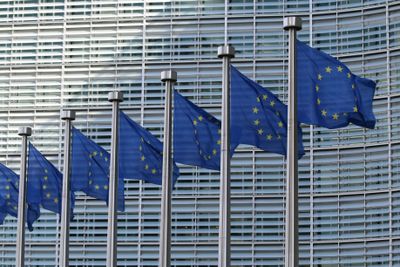
Two decades ago, the European Union welcomed ten new member states, including Cyprus, Czech Republic, Estonia, Hungary, Latvia, Lithuania, Malta, Poland, Slovakia, and Slovenia. This historic expansion not only reshaped the geopolitical landscape of Europe but also holds significance for global politics, economics, and cultural integration. Understanding this event's importance requires recognizing its impact on various fronts, from fostering regional stability to influencing trade dynamics and promoting cross-cultural exchange. Key sub-topics that may interest journalists and the public include: European Integration and Unity: Exploring how the expansion has contributed to the European Union's efforts towards unity, cooperation, and peace among member states. Economic Implications: Analyzing the economic effects of the expansion on both existing and new member states, including trade patterns, investment flows, and disparities in development. Political Dynamics: Investigating the political changes within the European Union, such as shifts in power dynamics, decision-making processes, and the challenges of governance in a larger union. Cultural Exchange and Identity: Examining the cultural exchange and diversity resulting from the inclusion of new member states, and how it has enriched the European cultural tapestry. Challenges and Achievements: Assessing the successes and ongoing challenges faced by the European Union post-expansion, including issues related to migration, integration, and institutional reforms. Future Prospects: Speculating on the future of the European Union, considering factors like potential further expansions, the rise of Euroscepticism, and the Union's role in global affairs. The 20th Anniversary of the Expansion of the European Union marks a significant milestone in the continent's history, offering journalists and the public alike a chance to reflect on the achievements, challenges, and the future trajectory of European integration. Connect with an Expert about the EU: Carolyn Dudek Professor of Political Science · Hofstra University Dr Martin Brenncke Lecturer in Law · Aston University David R. Dorondo Professor · Western Carolina University To search our full list of experts visit www.expertfile.com Photo Credit: Guillaume Périgois

Success Is Sweet: Ferrero's Crown Jewel, Nutella, Turns 60
Six decades ago, on April 20, 1964, the first jar of Nutella left Gruppo Ferrero's factory in the Italian town of Alba. In its gooey wake, the chocolate-hazelnut treat would spread across continental Europe, and then the world, like a healthy schmear on toast. Today, Nutella is the crown jewel of Ferrero's confectionary empire, propping up a business that generates roughly 17 billion euros in revenue each year. Annually, a whopping 365,000-plus tons of the stuff are sold across 160 countries, and nearly one quarter of all hazelnuts harvested are devoted to its production. Luca Cottini, PhD, is an associate professor of Italian in Villanova University's College of Liberal Arts and Sciences and an expert on modern Italian culture, history and society. He also is the author of a book on Michele Ferrero, the mastermind behind Nutella and its meteoric rise: Il fabbricante di cioccolato. To mark the iconic Italian brand's 60th anniversary, Dr. Cottini shared some thoughts on its Willy Wonka-like creator, early (accidental) origins and recipe for international success. Here's a taste: Q: According to Business Insider, a jar of Nutella is sold every 2.5 seconds—just about the time it takes to finish this sentence. How did we get so "nuts" for Nutella, anyway? Dr. Cottini: Well, much of the success of Nutella relates to its novelty, to the idea of spreadable chocolate. At one point, to think that spreading chocolate would be popular was as crazy as to predict that spreadable coffee would be a hit. The idea developed because, in the mid-to-late 1940s, Michele Ferrero's father Pietro was to combine the scarcity of cocoa in his area with hazelnuts, which was the ingredient most available in Alba. It seemed like condemnation that they should have only hazelnuts. Well, he combined them with cocoa to produce this mix—it's called "gianduja" in Italian—and he sold it. But when the Ferreros sold it in southern Italy, they had a problem: The chocolate was melting with the summer heat; and a lot of the workers in Naples, to not waste it, started to spread it on slices of bread. And it's interesting. The Ferreros have a completely non-moralistic approach to failure. You sell chocolate; it melts. This is somewhat embarrassing. But their approach was instead to see this situation as the beginning of a new idea, of a new concept. Q: Is Nutella's story unique in this respect? DC: Several Italian innovators have similar stories to the Ferreros', especially during the 1930s. [Salvatore] Ferragamo, for instance, developed the wedge shoe because there was a shortage of steel, with an embargo imposed on Italy. So, he used Sardinian cork as a replacement, and that generated the wedge shoe. [Guccio] Gucci, during a leather shortage, started using hemp and decorating the hemp with a double "G," and that became the trademark of the company. [Alfonso] Bialetti, who produced the modern coffeepot, used the only metal that was allowed during Fascism, which was aluminum, since the Partito Nazionale Fascista would not import iron or prime metals. But Bialetti took this poor, hybrid ore and made it something that could become valuable. And so, he invented the moka coffeepot in 1933, which is one of the symbols of Italian design. That’s one of the keys of the Italian model of entrepreneurship: producing objects that are not just trendy for one season, but eventually become evergreen or classic. Q: What inspired the name "Nutella?" DC: It was the product of 18 years of research. For all intents and purposes, "Nutella" first came out in 1946. It was called "SuperCrema" and, before that, "Cremalba." But in 1962, there was a law in Italy that prevented companies in the food industry from using prefixes like "super" or "extra." So, that led Ferrero—by then, under the leadership of Michele Ferrero—to figure out a new alternative to SuperCrema. At the same time, the company was expanding into Germany and France, and they needed a brand name that could be pronounced easily. So, Ferrero joined the "ella" sound from mozzarella, stella, caramella—Italian words that people could recognize—with the word "nut," like the English "nut," which gave their product an international feel. It's really a "glocal" [global and local] name. It was conceived as a very rooted enterprise with a global horizon. Q: In 1964, were Ferrero's global ambitions practical? DC: It was honestly a bit of a gamble. In 1957, the European Economic Community was established, which is the beginning of the European Union. And that same year, Michele Ferrero organized in Rome the first conference of his company, which was by then somewhat national, to plan exportation in Europe. In the Italy of the 1950s and 1960s, this was very pioneering. Michele Ferrero was actually one of the first businesspeople to export products to Germany in the 1950s, at a time when there was a lot of resentment against Italians because of everything that happened during the Second World War. So, he entered this incredibly difficult market, and still today, Ferrero and Nutella are strong. Q: What do you think accounts for Nutella's continued popularity, 60 years after its introduction? DC: Michele Ferrero thought of his products as speaking products. It's something very common to the automobile industry in Italy. This is characteristic of Ferrari and Lamborghini; they produce cars that are appealing not just because they're "super cars," but because they say something. Nutella is a food that says something. When someone puts it on the table, it compels people to jump in and share their own stories—of trying it with a friend, of having it on a hike or of taking part in "Nutella Day." Today, if you're in the market for a chocolate-hazelnut spread, you might find products that are even better than Nutella. Actually, surely better. But they will never replicate the appeal and the grasp that Nutella has. Because Nutella has that aura of storytelling and mythmaking other products simply don't have.


Covering the tensions in the Middle East - our experts are here to help with your stories
Photo credit: Timon Studler With escalating tensions in the Middle East, the situation seems to be changing on a daily basis. Robert Rabil, Ph.D., is an expert in political Islam, terrorism, U.S. foreign policy, and U.S.-Arab relations at Florida Atlantic University, and can speak about the current climate in the region, as well as offer expertise on its deep history. Simply click on Rabil’s icon now to arrange a time to speak to him.


Major League Baseball celebrates Jackie Robinson Day | Media Advisory
Today professional baseball commemorate Jackie Robinson Day, where the league, players and fans across the world not only honor a baseball legend but also celebrate a pivotal moment in the ongoing struggle for racial equality and social justice. This day marks Robinson's historic debut in Major League Baseball on April 15, 1947, breaking the sport's color barrier and paving the way for future generations. Beyond its significance in sports history, Jackie Robinson Day serves as a reminder of the enduring impact of one individual's courage and determination in challenging systemic racism. Key story angles for journalists to explore include: Legacy of Jackie Robinson: Reflecting on his contributions to sports and civil rights activism. Continuing fight for racial equality in sports: Examining current initiatives and challenges in promoting diversity and inclusion. Impact of Robinson's legacy beyond baseball: Exploring his influence on other fields such as business, politics, and social activism. Diversity in Major League Baseball today: Assessing progress and remaining barriers for minority players and personnel. Educational initiatives inspired by Jackie Robinson: Highlighting programs that use his legacy to teach lessons of tolerance, resilience, and leadership. Intersection of sports and social justice: Investigating how athletes and sports organizations continue to advocate for change on and off the field. Connect with an Expert about Jackie Robinson For journalists with questions or looking to cover the history of Jackie Robinson and how he changed the game, here is a select list of experts. To search our full list of experts visit www.expertfile.com Curt Smith Senior Lecturer · University of Rochester Christopher Philips Associate Professor · Carnegie Mellon University Michael Lewis Professor of Marketing· Emory University, Goizueta Business School Mark Feinsand Sports Reporter · New York Daily News Photo Credit: The New York Public Library

Podcast: Equality must become the norm, not just a box ticking exercise
Equality, diversity and inclusion (EDI) must become “everybody’s business” EDI can reduce pay gaps and open up opportunities for SMEs Aston University now celebrating Athena Swan Gold award for gender equality. Equality, diversity and inclusion (EDI) needs to become “the norm” in organisations to escape “disappointing” government criticism that it is a waste of time. That’s the guidance coming from the latest episode of ‘Aston means business’, a podcast from Aston University presented by journalist Steve Dyson. Professor Shivani Sharma, the new deputy dean of people, culture and inclusion at the University’s College of Business and Social Sciences, explained that EDI cultures must become “everybody’s business” to address the existing gender and ethnicity pay gaps. Responding to recent government criticisms of EDI schemes, Professor Sharma said: “Not enough investment has gone into these roles because, if we look at the history, it tells us that just relying on everybody to do the right thing doesn’t work.” Also interviewed in the podcast was Omar Rashid, a director of The HR Dept, a human resources franchise for Birmingham Central & Wolverhampton. Mr Rashid, who specialises in diversity and recruitment, said that government criticism of EDI initiatives was “disappointing”. But he acknowledged: “I understand where they’re coming from because, if it’s seen as a scheme, as something we’ve got to do, and it’s not done properly, then maybe it is a waste of time and a waste of money. It has to be seen as the norm.” He said people need to realise they live in a multicultural world, with a diverse workforce, supply chain and customers, and that if implemented properly the benefits of EDI are there. Mr Rashid, who is also president of the Asian Business Chamber of Commerce in Birmingham, specialises in diversity and recruitment. He added: “There is opportunity there through different skills. “Each individual, whether it’s race, religion, will bring their own perspectives, their own unique skills, even people with a disability. It shouldn’t be seen as a barrier.” He said examples of a “tick box mentality” were where businesses might adopt Black History Month but do nothing for the other 11 months of the year, or provide a prayer room during Ramadan but not at any other time. He added: “When it’s tick box, it’s not worth it because you’ll have a business or someone who will do something for a short period of time. They half-heartedly did something without the conviction. Diversity shouldn’t be just a little bit here and there.” Professor Sharma went on to say that ‘world days’ such as International Women’s Day can act as a catalyst to focus attention on an issue. But she added: “It’s really important that why you’re doing that is clear, and that the strategy of raising awareness, to remove barriers to women, equitable inclusion in the workplace or in society, continues throughout the year.” She said that Aston University had recently gained an Athena Swan Gold award for promoting gender equality in higher education, but that the “scale” of the problem meant there was still lots more to achieve. She explained that proportions of women entering as students into higher education was really positive, as were degree completion rates. But she pointed to the fact that around 80 per cent of university vice chancellors identified as men, with low representations of ethnic minority women among professors. Professor Sharma added: “It will take a sustained effort to undo that over time.” She also praised the Inclusive Aston networking initiative at Aston University, with senior leaders mentoring colleagues of minority ethnic heritage. Mr Rashid said SMEs needed to look at the opportunities that a diverse workforce and culture can bring to their business. He added: “One SME business engaged with someone from an Asian background, wanted to tap into India, and guess what? He has the connections and they were able to open a branch in India.” Catch up on all of the previous ‘Aston means business’ podcast episodes here.


Freedom House 'Nations in Transit 2024' Report | Media Advisory
The annual release of the Freedom House 'Nations in Transit' report serves as a critical barometer for assessing the state of democracy, human rights, and governance across the countries of Central and Eastern Europe, the Balkans, and Eurasia. As governments and societies navigate various political, economic, and social challenges, this report provides invaluable insights into the progress and setbacks in the region's democratic development. The report's findings are pertinent to the public because they shed light on the status of fundamental freedoms, rule of law, and democratic institutions, influencing regional and global policies. Key angles for coverage could include: Democratic Erosion and Backsliding: Analysis of countries experiencing democratic decline and the factors driving it. Civil Society and Activism: Profiles of grassroots movements and civil society organizations advocating for change. Media Freedom and Disinformation: Examination of threats to press freedom and challenges posed by disinformation campaigns. Corruption and Governance: Investigations into corruption scandals and efforts to enhance transparency and accountability. Human Rights and Minorities: Coverage of human rights abuses and discrimination against marginalized communities. Geopolitical Dynamics: Discussions on the geopolitical implications of democratic trends in the region and their impact on international relations. The 'Nations in Transit 2024' report is not just a documentation of regional developments; it's a reflection of the ongoing struggle for democracy and human rights, making it a crucial resource for journalists and policymakers alike. Connect with an Expert about the 'Nations in Transit 2024' For journalists with questions or looking to cover the Freedom House 'Nations in Transit' report, here is a select list of experts. To search our full list of experts visit www.expertfile.com Muqtedar Khan Professor, Political Science and International Relations · University of Delaware Jane Landers Gertrude Conaway Vanderbilt Professor of History · Vanderbilt University Christopher Fettweis Associate Professor · Tulane University Lowell Gustafson, PhD Professor of Political Science | College of Liberal Arts and Sciences · Villanova University Heangjin Park Assistant Professor of Asian and Asian American Studies · Loyola Marymount University Photo Credit: Yannhis H

30th Anniversary of the Rwandan Genocide
This Saturday is the 30th anniversary of the Rwandan genocide is a solemn occasion that holds profound significance for the public, reminding us of the horrors of mass violence and the importance of remembrance, reconciliation, and prevention. This event matters as it serves as a stark reminder of the devastating consequences of ethnic hatred and political violence, urging us to confront past atrocities and work towards building a more just and inclusive society. By reflecting on the lessons learned from the Rwandan genocide, we can strive to prevent similar tragedies from occurring in the future and promote peace, tolerance, and understanding. Story angles of interest to a broad audience may include: Commemorating the victims and survivors of the Rwandan genocide Examining the root causes and historical context of the genocide The role of international community in responding to the genocide and lessons learned Efforts towards reconciliation, justice, and healing in Rwanda Addressing the long-term impact of the genocide on Rwandan society and its diaspora Strategies for preventing genocide and mass atrocities in the future. Connect with an Expert about the Rwandan Genocide For journalists with questions or looking to cover the Rwandan Genocide, what caused it and the state of Rwanda today here is a select list of experts. To search our full list of experts visit www.expertfile.com Richard A. Wilson, Ph.D. Gladstein Distinguished Chair of Human Rights and Board of Trustees Distinguished Professor · University of Connecticut Glen Duerr, Ph.D. Professor of International Studies · Cedarville University Stephen Sloan, B.B.A., M.A., PhD. Director of Institute for Oral History, Associate Professor of History · Baylor University Lisa A. Costello Professor, Writing and Linguistics & Director, Women's, Gender and Sexuality Studies Program · Georgia Southern University Photo Credit: Reagan M

NATO Turning 75 | Media Advisory
The 75th anniversary of the North Atlantic Treaty Organization (NATO) holds immense significance for the public as it marks three-quarters of a century of collective defense, cooperation, and peacekeeping among member nations. This event matters as it symbolizes NATO's enduring commitment to safeguarding the freedom and security of its member states in an ever-changing global landscape. As the world faces new security challenges, NATO's role in promoting stability, democracy, and international cooperation remains vital to ensuring peace and prosperity for generations to come. Story angles of interest to a broad audience may include: The historical context and founding principles of NATO NATO's contributions to peacekeeping and crisis management operations Evolving security threats and NATO's adaptation to meet modern challenges NATO's partnerships with non-member states and international organizations The role of NATO in addressing emerging security threats such as cyber warfare and terrorism The future of NATO and the importance of transatlantic cooperation in an increasingly uncertain world. Connect with an Expert about NATO For journalists with questions or looking to cover the history, purpose and role the North Atlantic Treaty Organization plays on the global stage, here is a select list of experts. To search our full list of experts visit www.expertfile.com David R. Dorondo Professor · Western Carolina University Frank Costigliola, D.Phil. Distinguished Professor, Department of History · University of Connecticut Craig Albert, PhD Professor of Political Science and Graduate Director of the Master of Arts in Intelligence and Security Studies · Augusta University Randall Stone Professor of Political Science and Director of the Skalny Center for Polish & Central European Studies · University of Rochester Glen Duerr, Ph.D. Professor of International Studies · Cedarville University Photo Credit: Marek Studzinski