
Experts Matter. Find Yours.
Connect for media, speaking, professional opportunities & more.

The new device is designed to reduce the risk of injuries when medicines being delivered into a vein enter the surrounding tissues It detects this problem at the earliest stages, before it is visible to the human eye The project is being supported by SPARK The Midlands at Aston University, a network to support technology development for unmet clinical needs. Clinicians at Birmingham Women’s and Children's NHS Foundation Trust (BWC) have joined with academics at Aston University to create an innovative sensor to reduce the risk of injuries caused when drugs being delivered into a vein enter the surrounding tissue. This complication, called extravasation, can cause harm and, in the most severe cases, life-changing injuries and permanent scarring. It happens most often when infusing medicines into peripheral intravenous (IV) devices, such as a cannula, but can also occur when infusing into a central venous access device. By joining together, BWC and Aston University are combining clinical, academic and engineering expertise to create a sensor that can detect extravasation at its earliest stages. Karl Emms, lead nurse for patient safety at BWC, said: “We've done lots of work across our Trust that has successfully reduced incidents. While we've made fantastic progress, there is only so much we can do as early signs of extravasation can be difficult to detect with the human eye. “The next step is to develop a technology that can do what people can't - detection as it happens. This will make a huge impact on outcomes as the faster we can detect extravasation, the less likely it is that it will cause serious harm.” The focused work to date addressing the issue has recently been recognised by the Nursing Times Awards 2024, winning the Patient Safety Improvement title for this year. This new project is supported by SPARK The Midlands, a network at Aston University dedicated to providing academic support to advance healthcare research discoveries in the region. SPARK The Midlands is the first UK branch of Stanford University's prestigious global SPARK programme. It comes as a result of Aston University’s active involvement in the delivery of the West Midlands Health Tech Innovation Accelerator (WMHTIA) – a government-funded project aimed at helping companies drive their innovations towards market success. The SPARK scheme helps to provide mentorship and forge networks between researchers, those with technical and specialist knowledge and potential sources of funding. SPARK members have access to workshops led by industry experts, covering topics such as medical device regulations, establishing good clinical trials, and creating an enticing target product profile to engage future funders. Luke Southan, head of research commercialisation at Aston University and SPARK UK director, said: “I was blown away when Karl first brought this idea to me. I knew we had to do everything we could to make this a reality. This project has the potential to transform the standard of care for a genuine clinical need, which is what SPARK is all about.” Work on another potentially transformative project has also begun as the team are working to develop a medical device that detects the position of a nasogastric feeding tube. There is a risk of serious harm and danger to life if nasogastric tubes move into the lungs, rather than the stomach, and feed is passed through them. Emms explained: “pH test strips can usually detect nasogastric tube misplacement, but some children undergoing treatment can have altered pH levels in the stomach. This means this test sometimes does not work. “A medical device that can detect misplacement can potentially stop harm and fatalities caused by these incidents.” SPARK will bring together engineers, academics and clinicians for both projects to develop the devices for clinical trial, with a goal of the technologies being ready for clinical use in three to five years. Southan said: “BWC is one of our first partners at SPARK and we're really excited to work with them to make a vital impact on paediatric healthcare in the Midlands and beyond." Notes to editors About Aston University For over a century, Aston University’s enduring purpose has been to make our world a better place through education, research and innovation, by enabling our students to succeed in work and life, and by supporting our communities to thrive economically, socially and culturally. Aston University’s history has been intertwined with the history of Birmingham, a remarkable city that once was the heartland of the Industrial Revolution and the manufacturing powerhouse of the world. Born out of the First Industrial Revolution, Aston University has a proud and distinct heritage dating back to our formation as the School of Metallurgy in 1875, the first UK College of Technology in 1951, gaining university status by Royal Charter in 1966, and becoming the Guardian University of the Year in 2020. Building on our outstanding past, we are now defining our place and role in the Fourth Industrial Revolution (and beyond) within a rapidly changing world. For media inquiries in relation to this release, contact Helen Tunnicliffe, Press and Communications Manager, on (+44) 7827 090240 or email: h.tunnicliffe@aston.ac.uk About Birmingham Women’s and Children’s NHS Foundation Trust Birmingham Women’s and Children’s NHS Foundation Trust (BWC) brings together the very best in paediatric and women’s care in the region and is proud to have many UK and world-leading surgeons, doctors, nurses, midwives and other allied healthcare professionals on its team. Birmingham Children’s Hospital is the UK’s leading specialist paediatric centre, caring for sick children and young people between 0 and 16 years of age. Based in the heart of Birmingham city centre, the hospital is a world leader in some of the most advanced treatments, complex surgical procedures and cutting-edge research and development. It is a nationally designated specialist centre for epilepsy surgery and also boasts a paediatric major trauma centre for the West Midlands, a national liver and small bowel transplant centre and a centre of excellence for complex heart conditions, the treatment of burns, cancer and liver and kidney disease. The hospital is also home to one of the largest Child and Adolescent Mental Health Services in the country, comprising of a dedicated inpatient Eating Disorder Unit and Acute Assessment Unit for regional referrals of children and young people with the most serious of problems (Tier 4) and Forward Thinking Birmingham community mental health service for 0- to 25-year-olds. Birmingham Women’s Hospital is a centre of excellence, providing a range of specialist health care services to over 50,000 women and their families every year from Birmingham, the West Midlands and beyond. As well as delivering more than 8,200 babies a year, it offers a full range of gynaecological, maternity and neonatal care, as well as a comprehensive genetics service, which serves men and women. Its Fertility Centre is one of the best in the country, while the fetal medicine centre receives regional and national referrals. The hospital is also an international centre for education, research and development with a research budget of over £3 million per year. It also hosts the national miscarriage research centre – the first of its kind in the UK - in partnership with Tommy’s baby charity. For interview requests please email the Communications Team on bwc.communications@nhs.net



ExpertSpotlight: The True History of Thanksgiving in America
Thanksgiving is often seen as a time for gratitude and togetherness, but its origins tell a far more complex story that intertwines indigenous history, colonialism, and the reshaping of cultural narratives. Understanding the true history of Thanksgiving invites reflection on the ways history is remembered, celebrated, and taught. As the holiday approaches, uncovering its deeper meaning is vital to fostering awareness of indigenous perspectives, historical accuracy, and the evolution of American traditions. This topic presents rich opportunities for journalists to explore its broader societal implications, with story angles including: Indigenous Perspectives on Thanksgiving: Highlighting how Native American communities view the holiday, including the National Day of Mourning and efforts to preserve indigenous cultures and histories. The Pilgrim-Indian Narrative: Investigating the historical accuracy of the widely taught Pilgrim-Indian story and its role in shaping American identity and myth-making. The Role of Thanksgiving in National Unity: Exploring how Thanksgiving was solidified as a national holiday during the Civil War and its significance in fostering unity amid division. Food, Culture, and Tradition: Examining how Thanksgiving has evolved as a culinary and cultural tradition, including the blending of indigenous and immigrant foodways. Education and Historical Accountability: Analyzing how schools and institutions teach the history of Thanksgiving, with efforts to address inaccuracies and promote indigenous voices. Thanksgiving and Modern Social Issues: Investigating the holiday’s intersection with modern challenges, such as food insecurity, consumerism, and environmental sustainability. Revisiting the history of Thanksgiving offers a chance to deepen public understanding of American history, honor indigenous contributions, and spark meaningful conversations about cultural heritage and national identity. Connect with an expert about the History of Thanksgiving: To search our full list of experts visit www.expertfile.com


NATO, Russia and a New Approach to Foreign Policy
The election of Donald Trump for a second time as the President of the United States may have come as a surprise to many, for world leaders it means an immediate shift when it comes to global issues. Trump campaigned on dealing with the war between Russia and Ukraine and the wars Israel is fighting on multiple fronts himself, and resolving these delicate and complex conflicts with little regard to those at NATO or other leaders around the world. Trump has also indicated that serious changes will be coming to how America handles trade -which will also put how his administration deals with President Xi Jinping in China and the newly elected President of Mexico, Claudia Sheinbaum in the spotlight on center stage. There is already a lot of speculation an even a few glimpses at what lies ahead for US foreign policy, and if you're a reporter covering the lead up to this much hyped event - then let our experts help with your coverage. Louis DeSipio examines how democratic nations incorporate new members, including policymaking in the areas of immigration. Jeffrey Wasserstrom specializes in modern Chinese cultural history & world history, who has written on many contemporary as well as historical issues. Eric Swanson is an expert on inflation, recessions and what changes in interest rates mean for the economy. Heidi Hardt is an expert on NATO, defense, security, foreign policy, organizations, the EU, UN, operations, gender, climate and change. Tony, Jeffrey, Eric and Heidi are available to speak with media - simply click on either expert's icon now to arrange an interview today.


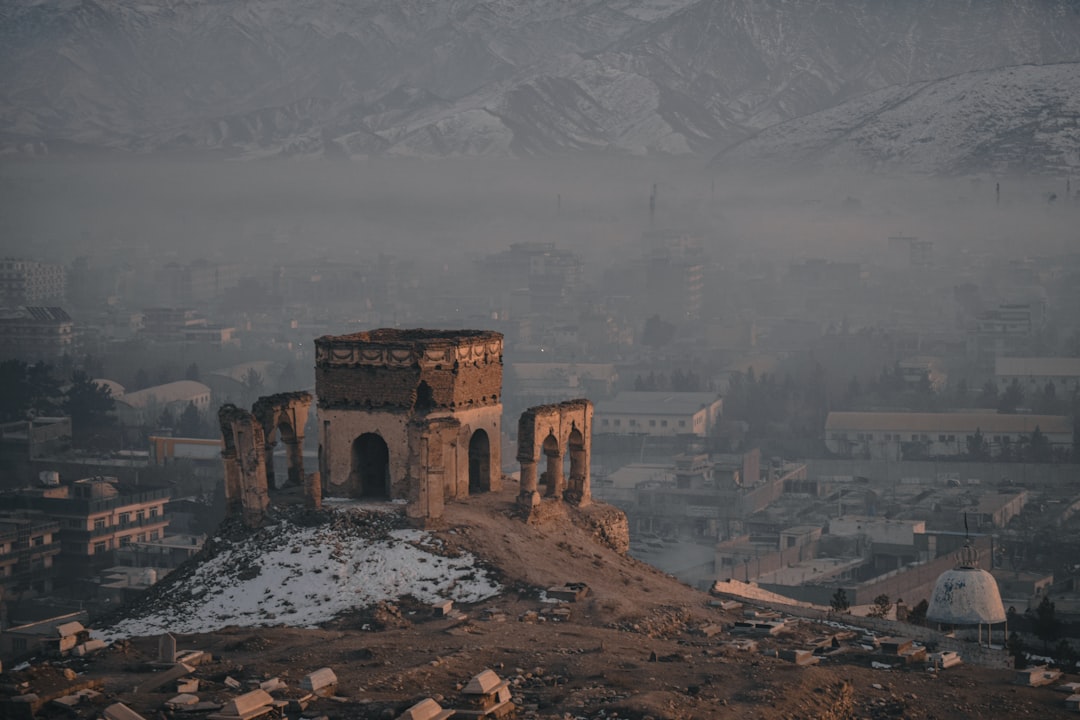
#ExpertSpotlight: A look at Afghanistan
Afghanistan has been at the center of international focus since 2001, enduring decades of conflict, social change, and efforts toward rebuilding. This topic remains significant as the world reflects on the lasting impact of the Afghanistan war, the country's evolving human rights landscape, and the enduring resilience of its people. For the public, understanding Afghanistan's history and current situation is essential to grasp the broader issues of international policy, humanitarian needs, and global security. This subject also highlights the importance of accountability and the role of the international community. Key story angles that may interest a broad audience include: The impact of foreign intervention on Afghan society: Exploring how two decades of international involvement have reshaped the country politically, economically, and socially. Human rights challenges and progress: Analyzing the state of women’s and minority rights, including access to education and healthcare under various regimes. Refugee crises and displacement: Examining the large-scale displacement of Afghans over the years and the humanitarian response by neighboring and Western nations. The resilience of Afghan culture and identity: Highlighting how art, music, and traditions have survived despite conflict, and how cultural preservation remains vital to Afghan communities. The future of Afghanistan’s youth: Discussing the aspirations and challenges facing a generation born into conflict, and the role of education and innovation. The international community’s role and response: Assessing current global engagement, diplomatic efforts, and the responsibilities of the U.S. and allied countries toward Afghanistan. Connect with an expert about the History of Conflict in Afghanistan: To search our full list of experts visit www.expertfile.com

November 11 - a Day of Remembrance
Observed globally, Remembrance Day on November 11 and Veterans Day in America honors the sacrifices of military personnel in times of conflict and serves as a poignant reminder of the human cost of war. Recognized in Commonwealth countries and beyond, this day holds deep significance as nations reflect on peace, memory, and the ongoing impact of past conflicts. Veterans Day is a federal holiday in the United States observed annually on November 11, for honoring military veterans of the United States Armed Forces. Both days matters to the public because it fosters historical awareness, strengthens national unity, and promotes a global dialogue on peace and reconciliation. Key story angles that may interest a broad audience include: The history and symbolism of Remembrance Day: Exploring the origins of the day, the role of the poppy symbol, and its evolution across generations. Global observances and traditions: Highlighting how different countries commemorate November 11 and the unique rituals they observe. Veterans' experiences and perspectives: Featuring stories from veterans and their families, focusing on the impact of service and the importance of recognition and support. The role of education in remembrance: Examining how schools and communities educate younger generations about the history of wars and the importance of honoring service members. Peace-building efforts inspired by Remembrance Day: Showcasing initiatives and organizations working toward conflict resolution, veteran support, and international cooperation. Post-war recovery and mental health: Discussing resources and support systems for veterans dealing with PTSD, physical injuries, and reintegration challenges. Connect with an expert about Remembrance Day : To search our full list of experts visit www.expertfile.com

International Education Week: University of Delaware leads the way in global studies
The University of Delaware has a lot to boast about in regards to International Education Week, which takes place from Nov. 18-22. This includes a four-year academic program that immerses students in both culture and classrooms of host countries; a mentoring program for international students on UD's campus; and the oldest study abroad program in the nation. UD's World Scholars program offers students a four-year global education that begins with a semester of study in Greece, Italy, England, New Zealand or Spain where students earn credits in their majors while becoming immersed in the culture and history of the respective host country. The 101-year-old Study Abroad Program – the oldest program founded by a U.S. institution – offers programs in 40 countries. More than 30 percent of UD undergraduates study abroad at least once, and while one in 10 American students study abroad, at UD the number is 3 in 10. Finally, UD’s Center for Global Programming and Services offers the iBuddy Mentoring Program, which pairs incoming international students with trained and experienced UD student mentors. After undergoing iBuddy training, these mentors offer friendship and guidance on academic matters, social life, housing options and more. They also organize events to help them get socialized.


From collecting candy to carving pumpkins, Halloween is defined by its traditions, and few are as time-honored as the telling of ghost stories. Whether recounted by crackling campfires, read from well-worn books or streamed on big-screen TVs, supernatural tales seem to take on a special resonance in the lead-up to October 31. And, on the whole, we seem more than comfortable enduring chills and braving thrills to enjoy them. But what draws our attention, season after season, to things that go bump in the night? And what makes the paranormal such a powerful, and persistent, storytelling device? Mary Mullen, PhD, is an associate professor of English at Villanova University and the instructor of the course "Ghostly Matters," which delves into haunting's role in culture, history and society. From her perspective, our longstanding fascination with spirits, specters and phantoms speaks as much to our concern for the world around us as to our interest in the hereafter. "At their core, ghost stories unsettle us," says Dr. Mullen. "They raise questions about what we consider normal, what we view as 'everyday life,' what we value as 'modern' and whether the past is still with us or not." As Dr. Mullen explains, when we're presented with something that's "haunted," we're essentially being asked to consider the reasons why. The very existence of spirits, emerging from beyond the grave, compels us to reflect on their presence's meaning—and to think about what developments might draw the ire, intrigue or intervention of the dead. (When watching Steven Spielberg's "Poltergeist," for instance, a viewer might feel the movie's ghosts are completely justified in terrorizing the profit-hungry real estate firm that disturbed their eternal slumbers.) Spirits, in turn, consistently set our focus on items left unsaid, unconsidered or overlooked. Departed yet still present, drifting somewhere between this plane and the next, they often challenge the living's notions of progress, propriety and success—and signal a last-ditch effort at preserving something that has all but faded from recollection. In effect, they bring the past into dialogue with the present for the sake of the future. "Ghost stories are really useful for contemplating transition and change and what's lost in the process," says Dr. Mullen. "They give a name to things that are liminal… For example, Luke Gibbons [a professor at Maynooth University] says that ghost stories, in modern Irish writing, are frequently connected to memories that haven't yet become public history. So, they speak to facets of social life that exist, or have existed, but are not present in monuments or official accounts." From Virginia Woolf's "A Haunted House" to Toni Morrison's "Beloved," tales of the supernatural provide us with what Dr. Mullen terms "glimmers of possibilities." They serve to mirror and embody our complicated feelings on transformative happenings, whether personal, communal or generational, and they afford us the language and vocabulary to express sadness over what is done and hope for what is yet to come. "There are certainly ghost stories, like Elizabeth Bowen's 'The Demon Lover,' that end in absolute terror with no seeming resolution," says Dr. Mullen. "But I think that, in a lot of these tales, haunting leads to reconciliation, or different kinds of healing or important acknowledgements—of things that need to be acknowledged." As Dr. Mullen proceeds to explain, it's no coincidence that the roots of the contemporary ghost story can be traced to the 19th century, a period of great social upheaval, cultural displacement and scientific and technological advancement. The product and reflection of a tumultuous "new age," the genre, as we know it, took hold as a means of reckoning with that which was lost, actively transpiring and still to occur. Perhaps it's no surprise then that, as the leaves begin changing and autumn starts giving way to winter, we have an affinity for tales that center on visits from the afterlife, bridging the past, present and future. "I think that we tell ghost stories when we're open to moving beyond our sense of 'the everyday,'" says Dr. Mullen. "And there are certain points of the year, like the holidays and gatherings with family and friends, that are so rich with emotion and memory that the boundary between this world and the 'otherworld' seems maybe—just maybe—capable of being crossed."


Halloween, one of the most celebrated holidays worldwide, has a rich history rooted in ancient traditions, evolving through centuries of cultural exchange and adaptation. This topic is of public interest not only because of its widespread celebration but also due to its fascinating mix of religious, cultural, and folk origins that shape how Halloween is experienced today. From ancient Celtic rituals to modern festivities, exploring Halloween's origins offers insights into the lasting impact of folklore and tradition in society. Key story angles that may interest a broad audience include: The ancient Celtic festival of Samhain: Delving into the pagan roots of Halloween and its transformation over time. Halloween and religious traditions: Exploring the holiday's connection to Christian observances like All Saints’ Day and its integration with local customs. The commercialization of Halloween: Analyzing the economic impact of Halloween on the retail and entertainment industries, from costumes to candy. Halloween symbols and superstitions: Investigating the origins of classic symbols like pumpkins, ghosts, and witches, and their meanings in different cultures. Modern-day Halloween traditions: Highlighting how different countries celebrate Halloween uniquely, reflecting local customs and beliefs. The psychology of fear and fantasy: Examining why people are drawn to the spooky, the macabre, and the thrill of Halloween. Connect with an expert about the origins of Halloween : To search our full list of experts visit www.expertfile.com

New light technique could revolutionise non-invasive medical diagnostics Orbital Angular Momentum could be harnessed to improve imaging and data transmission through biological tissues Could eventually have potential to make procedures such as surgery or biopsies unnecessary. An Aston University researcher has developed a new technique using light which could revolutionise non-invasive medical diagnostics and optical communication. The research showcases how a type of light called the Orbital Angular Momentum (OAM) can be harnessed to improve imaging and data transmission through skin and other biological tissues. A team led by Professor Igor Meglinski found that OAM light has unmatched sensitivity and accuracy that could result in making procedures such as surgery or biopsies unnecessary. In addition it could enable doctors to track the progression of diseases and plan appropriate treatment options. OAM is defined as a type of structured light beams, which are light fields which have a tailored spatial structure. Often referred to as vortex beams, they have previously been applied to a number of developments in different applications including astronomy, microscopy, imaging, metrology, sensing, and optical communications. Professor Meglinski in collaboration with researchers from the University of Oulu, Finland conducted the research which is detailed in the paper “Phase preservation of orbital angular momentum of light in multiple scattering environment” which is published in the Nature journal Light Science & Application. The paper has since been named as one of the year’s most exciting pieces of research by international optics and photonics membership organisation, Optica. The study reveals that OAM retains its phase characteristics even when passing through highly scattering media, unlike regular light signals. This means it can detect extremely small changes with an accuracy of up to 0.000001 on the refractive index, far surpassing the capabilities of many current diagnostic technologies. Professor Meglinski who is based at Aston Institute of Photonic Technologies said: “By showing that OAM light can travel through turbid or cloudy and scattering media, the study opens up new possibilities for advanced biomedical applications. “For example, this technology could lead to more accurate and non-invasive ways to monitor blood glucose levels, providing an easier and less painful method for people with diabetes.” The research team conducted a series of controlled experiments, transmitting OAM beams through media with varying levels of turbidity and refractive indices. They used advanced detection techniques, including interferometry and digital holography, to capture and analyse the light's behaviour. They found that the consistency between experimental results and theoretical models highlighted the ability of the OAM-based approach. The researchers believe that their study’s findings pave the way for a range of transformative applications. By adjusting the initial phase of OAM light, they believe that revolutionary advancements in fields such as secure optical communication systems and advanced biomedical imaging will be possible in the future. Professor Meglinski added: "The potential for precise, non-invasive transcutaneous glucose monitoring represents a significant leap forward in medical diagnostics. “My team’s methodological framework and experimental validations provide a comprehensive understanding of how OAM light interacts with complex scattering environments, reinforcing its potential as a versatile technology for future optical sensing and imaging challenges.” ENDS https://www.nature.com/articles/s41377-024-01562-7 Light: Science & Applications volume 13, Article number: 214 (2024) August 2024 https://doi.org/10.1038/s41377-024-01562-7 Authors: Igor Meglinski, Ivan Lopushenko, Anton Sdobnov & Alexander Bykov About Aston University For over a century, Aston University’s enduring purpose has been to make our world a better place through education, research and innovation, by enabling our students to succeed in work and life, and by supporting our communities to thrive economically, socially and culturally. Aston University’s history has been intertwined with the history of Birmingham, a remarkable city that once was the heartland of the Industrial Revolution and the manufacturing powerhouse of the world. Born out of the First Industrial Revolution, Aston University has a proud and distinct heritage dating back to our formation as the School of Metallurgy in 1875, the first UK College of Technology in 1951, gaining university status by Royal Charter in 1966, and becoming The Guardian University of the Year in 2020. Building on our outstanding past, we are now defining our place and role in the Fourth Industrial Revolution (and beyond) within a rapidly changing world. For media inquiries in relation to this release, contact Nicola Jones, Press and Communications Manager, on (+44) 7825 342091 or email: n.jones6@aston.ac.uk

#ExpertSpotlight - Remembering the invasion of Grenada
The U.S. invasion of Grenada in 1983 stands as a key moment in Cold War history, reflecting the complex dynamics of American foreign policy in the Caribbean. Known as Operation Urgent Fury, this military action was a response to political instability on the island and perceived threats to U.S. citizens and interests. The invasion not only shaped Grenada’s future but also influenced global perceptions of U.S. interventionism, raising questions about sovereignty, international law, and regional geopolitics. The significance of this event continues to resonate, offering numerous story angles for journalists. Key sub-topics include: Cold War Geopolitics and U.S. Foreign Policy: Exploring the broader Cold War context, the U.S.’s strategic interests in the Caribbean, and how the invasion shaped subsequent American foreign policy decisions. Debates on Sovereignty and International Law: Investigating the legal and ethical implications of the invasion, including debates about military intervention, national sovereignty, and international diplomacy. Impact on Grenada’s Political and Social Landscape: Examining the long-term effects of the invasion on Grenada’s political stability, economy, and society, and how the event is remembered locally. Media Coverage and Public Opinion: Analyzing how the invasion was covered by the media at the time, the public’s reaction in the U.S. and globally, and how it shaped perceptions of U.S. military power. The Role of Regional Powers and Alliances: Looking at the involvement of regional organizations like the Organization of Eastern Caribbean States (OECS), and how the invasion impacted relationships between the U.S., Latin America, and the Caribbean. Lessons for Modern U.S. Military Interventions: Reflecting on the invasion’s legacy and what it teaches about the risks, justifications, and consequences of U.S. military interventions in other nations. As the anniversary of the U.S. invasion of Grenada approaches, this event offers an opportunity to revisit critical discussions on international intervention, geopolitical strategy, and the balance between national interests and global governance. Connect with an expert about the 1983 U.S. invasion of Grenada : To search our full list of experts visit www.expertfile.com Photo credit: Encyclopedia Britannica