Experts Matter. Find Yours.
Connect for media, speaking, professional opportunities & more.

New study suggests Florida Chagas disease transmission
Researchers from the University of Florida Emerging Pathogens Institute and Texas A&M University gathered their resources to investigate the potential of vector-borne transmission of Chagas in Florida. The 10-year-long study, published in the Public Library of Science Neglected Tropical Diseases, used data from Florida-based submissions, as well as field evidence collected from 23 counties across Florida. Chagas disease is considered rare in the United States. Since it is not notifiable to most state health departments, it is quite difficult to know exactly how many cases there are and how frequently it’s transmitted. Chagas disease is caused by the protozoan parasite Trypanosoma cruzi. Nuisance blood-sucking insects known as kissing bugs spread the parasite to humans when exposure to their feces penetrates the mucus membranes, breaches the skin or gets orally ingested. Interestingly, it is believed that most companion animals, like dogs and cats, acquire the parasite from eating the kissing bug itself. The first record of kissing bugs, scientifically known as Triatoma sanguisuga, harboring T. cruzi in Florida was from an insect in Gainesville in 1988. However, kissing bugs have been calling the state home for far longer than humans have. Currently, there are two known endemic species of kissing bugs in the Sunshine State: Triatoma sanguisuga, the species invading homes, and the cryptic species Paratriatoma lecticularia, which live primarily in certain Floridan ecosystems but were not found in this study. Read more ...



Carney Cares. The Tax Code Doesn’t.
Retirement analyst and author Sue Pimento looks more closely at the just-announced "Canada Groceries & Essentials Benefit Program" in the broader context of the country's overall tax-and-benefit system. A closer analysis of steep GIS clawbacks layered on top of taxes shows that some seniors face tax rates comparable to those of the country's highest earners. Pimento argues that we should address this “participation tax” to ensure seniors earn more without being penalized for their work. Prime Minister Mark Carney just announced the Canada Groceries and Essentials Benefit. The intent is good. The relief is welcome. The tax code, however, did not get the memo. Important Disclaimer (Please Read) This article is for educational and discussion purposes only and does not constitute financial or tax advice. Canada's tax and benefit system is complex, highly individualized, and subject to frequent changes. Before making any financial or tax decisions, consult a qualified professional familiar with seniors' benefits, including GIS, OAS, CPP, and related clawbacks. Now that we've cleared that up, let's talk… Here’s a quick overview of what was announced. What the Canada Groceries & Essentials Benefit Program Covers Bigger Benefit Cheques: About 12 million Canadians will receive relief. Food Bank Relief: $20 million to food banks through the Local Food Infrastructure Fund. Food Supply: Immediate expensing for greenhouse buildings to bolster domestic production. Food Security: A national strategy including unit price labelling and enforcement by the Competition Bureau. Business Support: $500 million in supply chain support to help businesses absorb costs rather than passing them on to consumers. These ideas aren’t bad. Some are very sensible. Taken together, the Government estimates in its announcement that these measures would "provide up to an additional $402 to a single individual without children, $527 to a couple, and $805 to a couple with two children. They go on to say that at these levels, Canada’s new government will be offsetting grocery cost increases beyond overall inflation since the pandemic." On paper, this looks helpful. Unfortunately, paper has never had to buy groceries. But… You knew there was a “but” coming. Government announcements are legally required to include one. A Little-Known Tax Reality That Makes You Shake Your Head New research shows Canada's tax-and-benefit system disadvantages low-income seniors who work. The issue? It's hidden in the tax code. On January 28, 2026, a Zoomer Radio Fight Back discussion hosted by Libby Znaimer highlighted the issue. Guests included: • Gabriel Giguère, Senior Policy Analyst, Montreal Economic Institute • Jamie Golombek, Managing Director, Tax & Estate Planning, CIBC Financial Planning & Advice Their conclusion? Canada's tax system discourages low-income seniors from working exactly when they need income the most. Many seniors discover (usually the hard way) that a small side hustle doesn't always pay off. It can lead to higher taxes and benefit clawbacks. Work a little more, and Ottawa takes a lot more. Why Seniors Are Still Working Because the math doesn't add up. Either way. More than 600,000 older adults live below the poverty line. Meanwhile, rent, food, utilities, insurance, and property taxes are increasing faster than pensions ever did. More seniors are employed, particularly GIS recipients. MEI analysis indicates that GIS recipients with work income increased by 56% from 2014 to 2022, rising to 64% among those aged 65–69. These seniors aren't working for "fun money." They're working to keep the lights on and purchase medication. Reviewing the details reminded me of a long-standing issue in my research on income and cash flow for Canadians aged 55 and over. Many Canadians can’t make ends meet and are forced to work well past 65. Yet Canada’s tax system punishes low-income seniors for working—exactly when they need income most. To understand why, we need to look at the Guaranteed Income Supplement. The Guaranteed Income Supplement (GIS) Program for Low-Income Seniors Here's how the GIS benefits work: • A non-taxable monthly benefit on top of Old Age Security for low-income seniors. • Roughly one-third of OAS recipients also receive GIS—over 2 million Canadians. • For a single senior with no other income, the maximum annual benefit is about $13,000. (Source: Government of Canada GIS website) The program has done meaningful work. Combined with OAS, CPP, and private pensions, Canada dramatically reduced senior poverty over the past half-century. But there’s a catch hiding in the design. Think of GIS as a hug that tightens when you try to stand up. The GIS Clawback Problem for Canadians GIS recipients can earn only $5,000 per year in employment income before clawbacks begin. After that, GIS takes back 50 cents of every dollar earned—before income tax and payroll deductions. A partial exemption applies to the next $10,000, where 25–37.5% is clawed back. The program helps seniors—right up until they try to help themselves. How the GIS Clawback Works Against Working Seniors Let me illustrate this. Meet Agnes. She is about to learn more about marginal tax rates than any bookstore employee should. Agnes is between 65 and 69 years old, lives alone, and receives OAS and CPP. Rising costs push her to take a job at a local used bookstore. She works about 15 hours a week at roughly minimum wage. Here annual gross employment income is about $13,000 Here’s what happens: • Her employment income triggers GIS clawbacks once she exceeds $5,000. • She pays income tax, CPP contributions, and sometimes EI premiums. • Between taxes and clawbacks, much of her earnings disappear. Simple version: Agnes works more hours but keeps far less than expected. When you keep 20 cents on the dollar, even capitalism looks confused. Agnes didn’t go back to work for the thrill of alphabetizing mystery novels. She did it to afford her prescriptions. A Canadian Tax System That Punishes the Wrong Thing If we’re going to test income, test investment income. Fine. Tax it. But employment income? Showing up? Working? The system treats that like misconduct. Once you add income tax, CPP contributions, and the loss of other credits, low-income seniors can face effective marginal tax rates of 70–80% on modest earnings. Nothing says “fairness” like taxing a bookstore clerk harder than a boardroom executive. As Gabriel Giguère of the Montreal Economic Institute has noted, "this level of taxation normally applies to wealthy Canadians—not seniors living in poverty." In a well-researched economic brief, Giguère and Jason Dean, Assistant Professor of Economics at King’s University College at Western Ontario, present a compelling argument for policy change. This comment by Giguère and Dean nicely sums up their key findings: "For various reasons, including insufficient pensions to maintain their living standards, seniors are increasingly turning to work. Yet the current tax-and-benefit system merits reform as it undermines their efforts, with the harshest effect on low-income seniors." One-Time Credits Don’t Fix Structural Problems At Davos, Mark Carney famously said, “Nostalgia is not a strategy.” Fair point. So why does our benefit system still behave as if retirement lasts ten years and ends with a gold watch? The system still thinks retirement lasts ten years and includes a gold watch. People are living longer. Many will spend 25 to 30 years in retirement. Some want to work. Many need to. A grocery credit helps. But a broken incentive structure still breaks people. Common Sense Tax Solutions the Canadian Government Should Consider 1. Raise the GIS earnings exemption The Montreal Economic Institute recommends raising it to around $30,000. Estimated cost: $544 million annually. Modest relative to the program’s size. 2. Exempt employment income from GIS clawbacks (at least partially) Keep testing investment income. Stop penalizing work. 3. Rethink retirement assumptions Policy built around “retire at 65 and earn almost nothing” no longer matches reality. None of these ideas are radical. They’re just… current. What to Ask Your Accountant About Your Tax Rate Get professional advice. Not generic advice. Not from Google. Not from your unemployed nephew. Ask specifically about: • Pension income splitting • Strategic RRSP contributions • Consulting or corporate structures where appropriate • Creative but compliant barter arrangements • CPP and OAS deferral strategies • Documentation. Lots of documentation. When clawbacks are involved, paperwork is your lifeboat. A Short, Honest Take Grocery relief is appreciated. The intent is good. But until Canada fixes a tax system that punishes low-income seniors for working, affordability will remain fragile. This isn’t about blame. It’s about aligning incentives with reality. Right now, it feels like we’re helping seniors swim by handing them bigger life jackets—while quietly drilling holes in the boat. And yes… I need to lie down. I feel another blog coming on. Apparently, exercising this much common sense counts as cardio. Sue Don't Retire...Re-Wire! Want more of this? Subscribe for weekly doses of retirement reality—no golf-cart clichés, no sunset stock photos, just straight talk about staying Hip, Fit & Financially Free.



On February 8, 2026, 120 million-plus viewers worldwide are expected to tune into Super Bowl LX. However, the battle on the gridiron will be a secondary attraction for many, especially those from Puerto Rico and of Puerto Rican descent (colloquially known as "Boricuas"). Their attention will be focused on this year's halftime show, headlined by Bayamón-born rapper and producer Bad Bunny. Renowned for songs like "Yo Perreo Sola," "La Canción" and "Me Porto Bonito," the pop sensation is expected to bring a distinctive Latin American flair to his set, representing Puerto Rican culture and creativity to an audience unlike any other. Héctor Varela Rios, PhD, the Raquel and Alfonso Martínez-Fonts Endowed Assistant Professor in Latin American Studies at Villanova University, specializes in popular culture and writes extensively on the Boricua community, to which he himself belongs. From his perspective, Bad Bunny's upcoming performance in the Super Bowl halftime show marks "a high point for Puerto Rican pride," both within the U.S. territory and across the globe. "He is not the first Super Bowl performer to claim Puerto Rican ancestry—Jennifer Lopez performed alongside Colombia-born Shakira in 2020—but he is the first island-born Puerto Rican to perform," says Dr. Varela Rios. "At this moment, he is our brightest superstar and absolutely adored throughout Latin America and the world." To the professor's point, Bad Bunny is among the most successful musical acts touring today, having notched more than 7 million records sold, four diamond plaques and 11 platinums all before the age of 32. His popularity has not come at the expense of his art, either, with the rapper having won six Grammy Awards over the course of his career—including three for his latest album, "Debí Tirar Más Fotos." According to Dr. Varela Rios, Bad Bunny's widespread appeal and critical acclaim can be traced to his authenticity, courage and swagger. Singing in Spanish, making deep-cut cultural references and broaching sensitive, seemingly taboo topics, the Latin American pop star has effectively built a following by unabashedly embracing his own identity. (Perhaps tellingly, he titled his second album "Yo Hago Lo Que Me Da La," or "I Do Whatever I Want.") "Bad Bunny is proud of his Caribbean roots and keenly aware of the history of Puerto Rico, which influences his work," says Dr. Varela Rios. "In addition, he is very unapologetic about the content of his lyrics and performing style. It goes beyond mere shock with him; he relishes challenging assumptions of what being an artist should be, or needs to be in order to 'sell records.'" While this daring approach has netted Bad Bunny a number of accolades and a devoted legion of fans, it has not been without its share of detractors. Still, on the biggest stages and under the brightest lights, the celebrated artist has shown no inclination to alter or tone down his act. Dr. Varela Rios predicts the pop star's Super Bowl appearance will be no different. "Bad Bunny is a businessman, and one of the best I've ever seen," he adds. "This is an artist who knows what to do and how to do it, and when the Super Bowl halftime show's lights go down, his performance will certainly be remembered."



The Double-Edged Scroll: Why Passive Screen Time Drains You More Than Active Use
Most conversations about “screen time” focus on hours. But newer research and what clinicians see in practice suggest how you use your phone may matter as much as how much you use it. A 2024 meta-analysis of 141 studies on active vs passive social media use found that, overall, effects are small, but there is a pattern: passive use (just scrolling and watching) is more consistently associated with worse emotional outcomes, while some forms of active use (commenting, messaging, posting) show small links to greater wellbeing and online social support. (OUP Academic) Other work from Frontiers in Psychology suggests that the emotional impact of passive use depends heavily on how you feel about the content: when it triggers envy, comparison or negativity, mental ill-being goes up; when it’s genuinely positive, the effect can be neutral or even slightly protective for some users. (Frontiers) Reviews also point to upward social comparison, FOMO and rumination as key pathways linking passive browsing to lower wellbeing. (ScienceDirect) Psychotherapist Harshi Sritharan, MSW, RSW works with teens and adults who feel “wiped out” by their feeds and draws a sharp line between passive and active tech use: “Don’t do passive tech use — that doom scrolling, or content just being thrown at you,” she says. “I want people to engage in active tech use. Go and search something up, choose the long-form video you actually want, talk to your friends. Don’t let the app decide everything you see — especially for kids, who are getting content they’re not ready for and didn’t sign up for.” She notes that many of her clients describe feeling “numb, anxious or wired” after long passive sessions, a sign that their nervous system is being pulled around by unpredictable, emotionally loaded content rather than chosen experiences. She also discussed the short term recall related to scrolling: "Some of my clients can't even remember what content they consumed right after scrolling. However, we know that what we pay attention to and what we show our brains has an impact on our thoughts, mindset, feelings and overall internal world." Offline.now founder Eli Singer frames this as a design problem, not a moral failing. The platform’s research shows people already spend about 10 of their 16 waking hours on screens; the realistic goal is to upgrade some of that time, not pretend we can all go offline. His advice: instead of vowing to “get off your phone,” start by swapping just 20 minutes a day from passive to active use; for example, messaging a friend to meet up, learning something specific, or planning an offline activity. “When people tell us they feel overwhelmed by their screen habits, it’s not laziness, it’s a crisis of confidence,” Singer says. “We don’t need perfect digital detoxes. We need small, winnable shifts, like taking one block of passive scrolling and turning it into something you actually chose.” For journalists, the story isn’t simply “screens are bad.” It’s that passive, algorithm-driven scrolling is where comparison, FOMO and emotional overload tend to pile up and that helping people change how they use their devices may be more realistic, and more effective, than focusing on raw minutes alone. Featured Experts Harshi Sritharan, MSW, RSW – Psychotherapist specializing in ADHD, anxiety, insomnia and digital dependency. She helps teens and adults understand how doomscrolling and passive feeds hijack dopamine and mood, and teaches practical shifts toward more intentional, “active” tech use. Eli Singer – Founder of Offline.now and author of Offline.now: A Practical Guide to Healthy Digital Balance. He brings proprietary data on digital overwhelm and the “confidence gap,” and shows how 20-minute “micro-wins” like upgrading one chunk of passive screen time can change people’s relationship with their phones without extreme detoxes. Expert interviews can be arranged through the Offline.now media team.




Aston University economists say Prime Minister can reduce UK trade vulnerability with China visit
Greenland episode exposed UK’s lack of effective response to economic coercion from allies Research shows tariff retaliation would have cost the average UK household up to £324 per year Economists say China visit is “portfolio risk management” – diversification reduces vulnerability. The Prime Minister’s visit to China – the first by a British PM since 2018 – is an opportunity to reduce the UK’s vulnerability to economic coercion, according to new research from Aston University. A policy paper from Aston Business School’s Centre for Business Prosperity analyses the January 2026 Greenland tariff episode, when President Trump threatened and then withdrew tariffs on eight European countries. The researchers found that the UK had no good options: retaliation would have made Britain worse off, while absorbing the tariffs left Europe without credible deterrence. Director of the centre for business prosperity, Professor Jun Du, said: “The Greenland episode was a wake-up call. When your principal security ally threatens economic coercion, the old assumptions about who is safe and who is dangerous no longer hold. “The PM’s China visit should be framed as portfolio risk management – building diversified trading relationships that reduce the UK’s exposure to any single partner. Just as investors don’t put all their money in one stock, countries shouldn’t put all their trade into one basket. A UK with multiple strong partnerships is harder to pressure, whether the pressure comes from Washington or Beijing.” The research found that coordinated UK–EU tariff retaliation would have cost British households up to £324 per year – the worst outcome modelled. But the authors argue that Europe has untapped leverage elsewhere: the US runs a €148 billion annual services surplus with the EU, and mutual investment exceeds €5.3 trillion. Associate professor of economics and co-author, Dr Oleksandr Shepotylo, said: “Tariff retaliation fails because it hurts consumers and distorts the economy – the retaliator suffers similarly to the target. But Europe has cards it isn’t playing. Services, investment screening, and regulatory access are pressure points where Europe can respond effectively.” UK exports to China fell by 10.4% in the year to Q2 2025, with goods exports down 23.1% – the sharpest decline among major trading partners. The researchers argue that this closes off the UK’s largest alternative market at precisely the moment US reliability is in question. The paper identifies three priorities for UK policy: Recognise the permanent incentives behind US tariffs. US tariff revenue hit $264 billion in 2025. Trade negotiations alone cannot resolve revenue-driven policy. Build UK–EU coordination on non-tariff instruments. Services, investment, procurement, and regulation offer leverage that tariffs do not. Treat China engagement as portfolio risk management. Concentration in any single market creates vulnerability. Diversification is not about picking sides – it’s about resilience. Professor Du added: “The question for the Prime Minister is whether to use this breathing space to build resilience – or wait for the next Greenland.” To read the policy paper in full, click on this link:


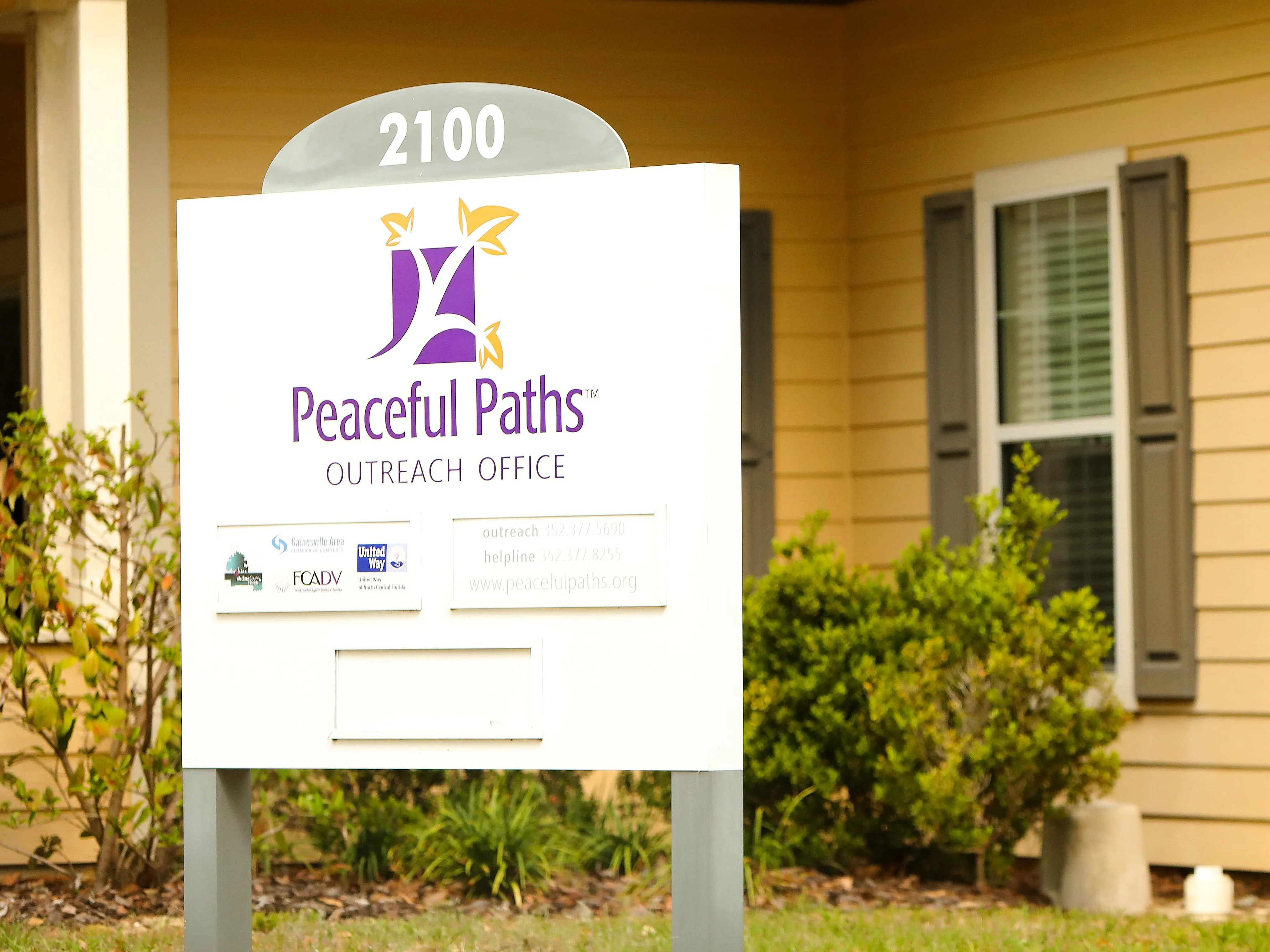
Domestic abuse affects millions of people every year, often in unseen and deeply personal ways, and online threats toward victims can be particularly harmful. To address this reality locally, the University of Florida’s Center for Privacy and Security for Marginalized and Vulnerable Populations, or PRISM, works with Gainesville-based domestic abuse support center Peaceful Paths to help people stay safe in the digital world. Kevin Butler, Ph.D., the director of PRISM and the Florida Institute for Cybersecurity Research at UF, has been researching issues related to security and privacy of technologies that affect survivors of intimate partner violence for years. He and his graduate students connected with Peaceful Paths in 2022, presenting their findings on cybersecurity and demonstrating how their research may help improve online safety for vulnerable populations. They developed a pilot study, a survey and interview protocols that are now helping those in need at the center. “[We aim to] develop principles of design that will allow for a robust technology design that really mitigates harms and improves benefits for all,” Butler said about PRISM. Educating abuse survivors has been a key component of the collaboration between UF and Peaceful Paths. For example, PRISM’s team has conducted research on the effects of stalkerware, also known as spyware, which is a type of software or app designed to be installed secretly on people’s devices to monitor their activities without their consent. Abusers may use this tool to track and harass victims, and stalkerware is regularly linked to domestic violence – a fact that is not widely known. "Even the first presentation [UF] gave enhanced our advocates' knowledge of security pieces, which helps them safety plan with survivors," said Peaceful Paths CEO Crystal Sorrow. “It actually increases the safety of everyone in the community we work with when we talk about red flags, digital dating abuse and healthy relationships.” While PRISM, which is supported by the National Science Foundation, is making an impact on the local community, its overall reach is much broader. PRISM was the first academic partner in the Coalition Against Stalkerware, which includes groups such as the National Network to End Domestic Violence, the Electronic Frontier Foundation, and law enforcement agencies throughout the United States and the world.

We Don’t Realize How Much Time We Spend With AI. Because It’s Hiding in Our Phones
If you ask most people how often they use AI, they’ll say something like: “I tried ChatGPT a couple of times” or “I don’t really use AI.” But look at their phone, and the story is completely different. Digital wellness platform Offline.now has found that we already spend about 10 of our 16 waking hours on screens, roughly 63% of our day. Founder Eli Singer calls AI “the shadow roommate inside those 10 hours”: invisible most of the time, but involved in more of our everyday taps and swipes than we realize. And we now have data to prove it. A recent Talker Research survey of 2,000 U.S. adults, commissioned by Samsung, found that 90% of Americans use AI features on their phones, but only 38% realize it. Common features like weather alerts, call screening, autocorrect, night-mode camera enhancements and auto-brightness are all powered by AI — yet more than half of respondents initially said they don’t use AI at all. Once shown a list of features, 86% admitted they use AI tools daily. (Lifewire) Singer sees this as a classic “confidence gap” problem applied to AI. Beyond the “invisible AI” on our phones, generative AI tools like ChatGPT, Claude and image generators are spreading fast. A nationally representative U.S. survey from Harvard’s Kennedy School and the Real-Time Population Survey found that by August 2024, about 39% of adults aged 18–64 were using generative AI. More than 24% of workers had used it at least once in the previous week, and nearly 1 in 9 used it every single workday. (NBER) Globally, usage is enormous. A World Bank backed analysis of online activity estimated that, as of March 2024, the top 40 generative AI tools attracted nearly 3 billion visits per month from hundreds of millions of users. ChatGPT alone commanded about 82.5% of that traffic. (Open Knowledge Repository) From a mental-health perspective, psychotherapist Harshi Sritharan, MSW, RSW says the issue isn’t just the number of visits, it’s the way AI subtly shapes the texture of our day. “Every autocorrect, every AI-sorted inbox, every ‘magic’ photo fix is a tiny cognitive hand-off,” she explains. “Individually they feel helpful. But taken together, they keep your brain in a constant state of micro-decisions and micro-rewards, which is exhausting, especially if you already struggle with ADHD, anxiety or overwhelm.” She points out that many of her clients only think of “AI time” as the hours they spend in a chatbot window. In reality, AI is involved when: Their phone decides which notifications to surface A map app reroutes them automatically Spam filters silently screen hundreds of emails “By the time they open a dedicated AI app, their nervous system has already been engaging with AI-driven features all day,” Sritharan says. “That’s part of why people end the day feeling tapped out but can’t quite explain why.” Singer worries that this “shadow AI” is quietly eating into the same finite resource Offline.now tracks with screens in general: attention. “We already know 10 hours a day on screens is unsustainable for our focus and our relationships,” he says. “Layer AI on top — systems designed to predict and nudge our behavior — and you’re not just losing time. You’re outsourcing micro-chunks of judgment, memory and choice without even noticing.” So how much time are people spending with AI? Right now, no one has a perfect number and that’s exactly the point. The best data we have suggests: Most smartphone users are already interacting with AI daily, whether they know it or not. (Lifewire) Roughly 4 in 10 U.S. adults now use generative AI, with a growing share using it at work every week or every day. (Harvard Kennedy School) Globally, billions of monthly visits are flowing into AI tools on top of our existing 10-hour screen days. (Open Knowledge Repository) “The future isn’t AI or no AI,” Singer says. “It’s: Can you be conscious about how you use it — instead of letting it hijack your attention and manage your life?” Featured Experts Eli Singer – Founder of Offline.now and author of Offline.now: A Practical Guide to Healthy Digital Balance. He brings proprietary behavioral data on screen time and digital overwhelm, and a framework (the Offline.now Matrix) for rebuilding confidence through 20-minute, real-world steps instead of all-or-nothing “detox” advice. Harshi Sritharan, MSW, RSW – Psychotherapist specializing in ADHD, anxiety and digital dependency. She explains how AI-assisted micro-tasks interact with dopamine, attention and overwhelm, and offers brain-friendly ways to renegotiate your relationship with both screens and AI. Expert interviews can be arranged through the Offline.now media team.

The AI Journal: UF and other research universities will fuel AI. Here’s why
In the global AI race between small and major competitors, established companies versus new players, and ubiquitous versus niche uses, the next giant leap isn’t about faster chips or improved algorithms. Where AI agents have already vacuumed up so much of the information on the internet, the next great uncertainty is where they’ll find the next trove of big data. The answer is not in Silicon Valley. It’s all across the nation at our major research universities, which are key to maintaining global competitiveness against China. To teach an AI system to “think” requires it to draw on massive amounts of data to build models. At a recent conference, Ilya Sutskever, the former chief scientist at OpenAI — the creator of ChatGPT — called data the “fossil fuel of AI.” Just as we will use up fossil fuels because they are not renewable, he said we are running out of new data to mine to keep fueling the gains in AI. However, so much of this thinking assumes AI was created by private Silicon Valley start-ups and the like. AI’s history is actually deeply rooted in U.S. universities dating back to the 1940s, when early research laid the groundwork for the algorithms and tools used today. While the computing power to use those tools was created only recently, the foundation was laid after World War II, not in the private sector but at our universities. Contrary to a “fossil fuel problem,” I believe AI has its own renewable fuel source: the data and expertise generated from our comprehensive public academic institutions. In fact, at the major AI conferences driving the field, most papers come from academic institutions. Our AI systems learn about our world only from the data we offer them. Current AI models like ChatGPT are scraping information from some academic journal articles in open-access repositories, but there are enormous troves of untapped academic data that could be used to make all these models more meaningful. A way past data scarcity is to develop new AI methods that leverage all of our knowledge in all of its forms. Our research institutions have the varied expertise in all aspects of our society to do this. Here’s just one example: We are creating the next generation of “digital twin” technology. Digital twins are virtual recreations of places or systems in our world. Using AI, we can develop digital twins that gather all of our data and knowledge about a system — whether a city, a community or even a person — in one place and allow users to ask “what if” questions. The University of Florida, for example, is building a digital twin for the city of Jacksonville, which contains the profile of each building, elevation data throughout the city and even septic tank locations. The twin also embeds detailed state-of-the-art waterflow models. In that virtual world, we can test all sorts of ideas for improving Jacksonville’s hurricane evacuation planning and water quality before implementing them in the actual city. As we continue to layer more data into the twin — real-time traffic information, scans of road conditions and more — our ability to deploy city resources will be more informed and driven by real-time actionable data and modeling. Using an AI system backed by this digital twin, city leaders could ask, “How would a new road in downtown Jacksonville impact evacuation times? How would the added road modify water runoff?” and so on. The possibilities for this emerging area of AI are endless. We could create digital twins of humans to layer human biology knowledge with personalized medical histories and imaging scans to understand how individuals may respond to particular treatments. Universities are also acquiring increasingly powerful supercomputers that are supercharging their innovations, such as the University of Florida’s HiPerGator, recently acquired from NVIDIA, which is being used for problems across all disciplines. Oregon State University and the University of Missouri, for example, are using their own access to supercomputers to advance marine science discoveries and improve elder care. In short, to see the next big leap in AI, don’t immediately look to Silicon Valley. Start scanning the horizon for those research universities that have the computing horsepower and the unique ability to continually renew the data and knowledge that will supercharge the next big thing in AI. Read more...


LI School District Faces Funding Cuts Over Mascot Name Change
Education Professor Alan Singer was interviewed by WCBS-TV News about the Connetquot School District on Long Island school being threatened with funding cuts if it does not reinstate its old mascot name, the Thunderbirds. The name change to T-Birds was made in 2022 to comply with a state ruling that mascot names like “Chiefs” and “Warriors” are demeaning and offensive to Native Americans. The U.S. Department of Education has ruled that these changes are a violation of federal law. Dr. Singer said Connetquot is “caught in the crossfire with the Trump administration, which is at war with blue states and diversity,” and the district’s mascot is part of a much larger political fight.


Wetlands: Nature’s First Line of Defense for Our Coast and Communities
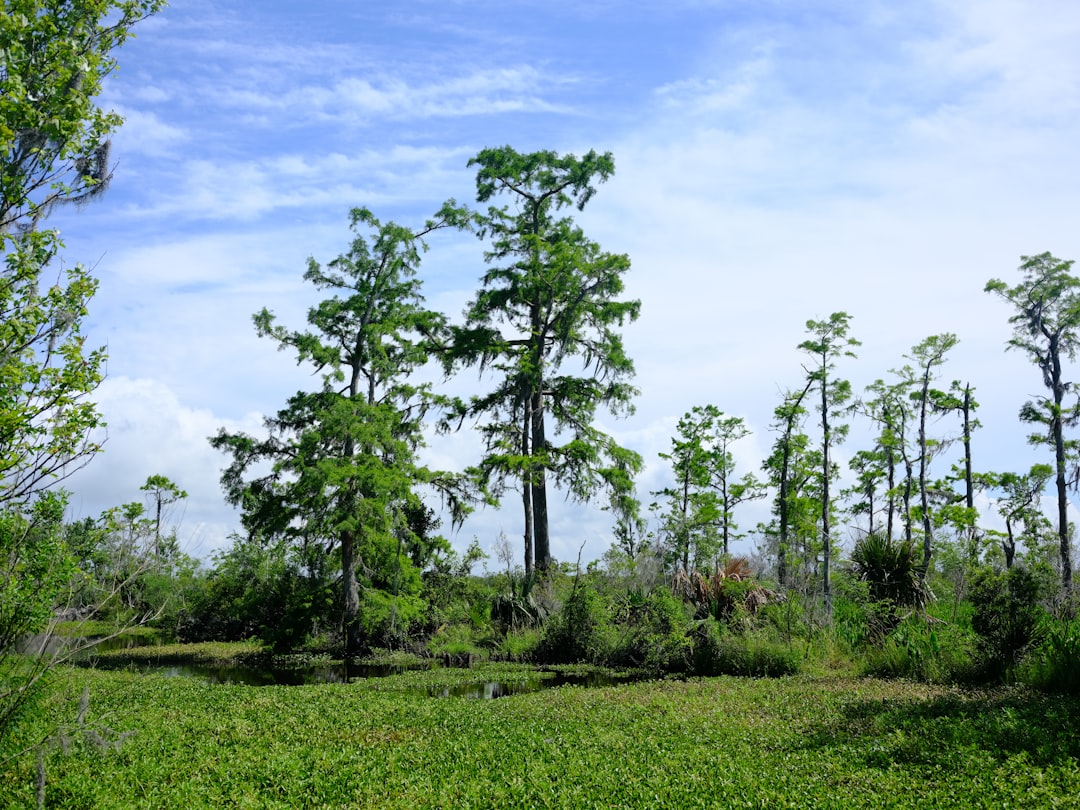
Since the 1930s, Louisiana’s coastline has been reshaped by the relentless advance of the Gulf, with over 2,000 square miles of land disappearing beneath its waters and representing the largest loss of coastal land anywhere in the continental United States. This dramatic transformation has far-reaching consequences, threatening local economies, delicate ecosystems, and heightening the state’s exposure to hurricanes. In the face of these urgent challenges, LSU’s College of the Coast & Environment (CC&E) stands at the forefront, leading pioneering research and bold initiatives that not only protect Louisiana’s coast, but also build stronger, more resilient communities. Below are just a few examples of how CC&E is driving meaningful solutions for our coastal future. Wetlands are vital to protecting our coast, and CC&E researchers are actively investigating the role of both constructed and natural wetlands in reducing coastal flooding hazards. Through several projects funded through the US Army Corps of Engineers, Drs. Robert Twilley, Matthew Hiatt, and CC&E Dean Clint Willson, along with collaborators across campus, are conducting research on coastal ecosystem design - a framework that leverages the benefits of natural and nature-based coastal features, such as wetlands, environmental levees, and flood control gates – and how that could be integrated into engineering design and urban planning. Through the State of Louisiana’s ambitious Coastal Master Plan, administered by the Louisiana Coastal Protection and Restoration Authority, wetland construction and restoration play a huge role in managing the Louisiana coastal region. Such innovative techniques leveraging natural and nature-based features require evaluation to determine the success of such projects, and CC&E researchers are using cutting-edge science to advance this endeavor. Dr. Tracy Quirk and her students are investigating the success of marsh restoration by comparing structural and functional characteristics (e.g., vegetation, elevation, hydrology, accretion, and denitrification) between two created marshes and an adjacent natural reference marsh along the north shore of Lake Pontchartrain, Louisiana. Wetlands not only serve as a buffer from storms and sea level rise but also play a major role in regulating greenhouse gas emissions and contribute to productive vibrant ecosystems. In large collaborative project funded by the National Science Foundation, Dr. Giulio Mariotti is using computer models to forecast how coastal marshes may change in size, shape, and salinity in the future, and how these changes could affect methane emissions. As part of the same project, Drs. Haosheng Huang and Dubravko Justic are creating high-resolution hydrodynamic and biogeochemical models to predict changes in methane emissions in coastal Louisiana. In another project, with funding from Louisiana Center of Excellence, National Science Foundation, Louisiana Sea Grant, and the National Oceanic and Atmospheric Administration, Drs. Matthew Hiatt and John White have established a network of sensors to measure water levels and salinity throughout the wetlands in Barataria Bay, Louisiana, a region that has experienced significant land loss and storm impacts. The goal is to establish an understanding of the drivers of saline intrusion in marsh soils, and to ultimately determine what this means for the ecological resiliency of wetlands experiencing rapid change. CC&E’s leadership in wetlands science is recognized nationwide. It is the only college in the United States to have six faculty members—Drs. John White, John W. Day, Jr., Robert Twilley, William Patrick, James Gosselink, and R. Eugene Turner—honored with the prestigious National Wetlands Award. No other institution has had more than one recipient. Presented annually by the Environmental Law Institute, this award celebrates individuals whose work demonstrates exceptional innovation, dedication, and impact in wetlands conservation and education. CC&E’s unmatched record reflects decades of pioneering research and a deep commitment to safeguarding the nation’s most vulnerable coastal landscapes. Every day, CC&E channels this expertise into action—protecting Louisiana’s coast and, in turn, the communities, wildlife, and ecosystems that depend on it. Through bold research, collaborative partnerships, and a vision grounded in science, the college is shaping a more resilient future for coastal regions everywhere. CC&E is building teams that win in Louisiana, for the world. Article originally published here.