
Experts Matter. Find Yours.
Connect for media, speaking, professional opportunities & more.

Up to four scholarships are being offered to students who have sought refuge in the UK The donor, Matthew Crummack, is CEO of Domestic & General, former CEO of GoCompare and lastminute.com and an alumnus of Aston University The Scholarships are named after the donor’s grandfather, Ernest Edward, who left school at 12 to work in a coal mine. Aston University is launching a new sanctuary scholarship scheme for students who have sought refuge in the UK. Up to four sanctuary scholarships are on offer, due to a generous donation by prominent businessperson Matthew Crummack, currently chief executive of Domestic & General. They will be known as The Ernest Edward Scholarships in memory of the donor’s grandfather, Ernest Edward Crummack, who left school aged 12 to work in a coal mine. Matthew graduated with a BSc in International Business and French at Aston University in 1993. His career to date has taken him into well-known companies such as GoCompare, lastminute.com, Expedia, Nestlé and Procter & Gamble. He was awarded an honorary doctorate by Aston University in 2016, in recognition of his professional achievements and service to the University. Ernest Edward Scholars will receive a full tuition fee waiver and up to £25,000 throughout their course to help with living costs. Language assistance will also be offered if required, as well as support from Aston University Students’ Union and professional mentoring support. To be eligible for an Ernest Edward Scholarship, applicants must be an asylum seeker, the partner or dependant of an asylum seeker or an asylum seeker/refugee/partner/dependant who has been granted Discretionary Leave to Remain (DLR) or some other form of temporary status. Applicants need to apply for an eligible Aston University course - any three-year undergraduate or one-year postgraduate programme - before applying for a scholarship. Applications will close on 12 June for the 2022 round. Speaking about his motivation for funding the scholarships, Matthew said: “My grandfather, whom I sadly never met, had little choice but to leave school at 12 to work in a coal mine. “100 years on, so many young people and especially young refugees, still find themselves challenged to grow and fulfil their potential. I hope that these scholarships will create that opportunity and pave the way for some of tomorrow’s leaders. “I strongly value my Aston University education and believe that business and individuals can take a leadership role in giving back to those facing challenge.” Saskia Loer Hansen, Interim Vice-Chancellor of Aston University, said: “Young people seeking asylum in the UK are likely to have experienced trauma and will have lost much which cannot be replaced. The Ernest Edward Scholarship can contribute to a brighter future, made possible by education. It offers hope and an opportunity for respite. “On behalf of Aston University, I would like to express my deep gratitude to Matthew for his generous and compassionate support in helping to make Aston University a safe haven. It is an act of kindness which will have a profound effect on those young lives.” More information about The Ernest Edward Scholarships is available here.


Battleground Georgia: All eyes on the Peach State with midterms in sight
The US midterm elections are quickly approaching, and with key Senate seats and the governor's mansion up for grabs in Georgia, the Peach State will be low hanging fruit for anyone looking to see where the balance of power rests in the country. With reporters across America covering the latest developments, we asked Augusta University's Mary-Kate Lizotte to answer a few questions that are top of mind for reporters and political junkies alike. The strength of endorsements? Q: What kind of an impact could Mike Pence backing Gov. Brian Kemp have going forward? It could have an influence on the willingness of Republicans who are not former President Trump supporters to contribute to the Kemp campaign and be sure to show up to vote for Kemp. But, it will likely not have much of an influence. Research does not find a huge, lasting impact of endorsements. Ultimately, Trump supporters are unlikely to stay home and not vote for Kemp given that they likely are very against Stacey Abrams becoming governor. For Abrams supporters, she has already begun to use Indiana as a comparison with Georgia to say that Indiana under Pence was more moderate, including Medicaid expansion in comparison with Georgia under Kemp. I doubt this will influence Republican voters who like Pence to vote for Abrams, but it could influence some Independents/moderates to vote for Abrams. It is important to note, however, that most Independents/moderates tend to consistently vote for one party's candidates and thus may not be influenced by this either. A fractured right? Q: Could Pence's support also divide the Republican party somewhat after former President Trump backed David Perdue? Yes, but will likely not have a substantial impact on the election. It is unlikely that Trump supporters and/or Perdue voters will stay home on election day. They will likely vote for Kemp as their most preferred candidate who is running. Goal line stand? Q: Herschel Walker won the Republican primary by a large margin. How does he stack up against Sen. Raphael Warnock in the general election? Polling is currently showing a close race within the margin of error. Warnock has not been running against Walker up until now because Walker had not won the primary, but Walker and conservative groups have been able to run against Warnock because there was no reason to believe that he would not win his primary. In terms of experience, Warnock is the incumbent and thus has more experience. Walker is a complicated and controversial public figure but also is loved among University of Georgia football fans. Warnock has focused on putting out positive campaign advertisements up to this point. But, since there are already attack ads against Warnock, the Warnock campaign or groups supporting the Warnock campaign need to begin airing attack ads against Walker to improve the Warnock standing in the polls. The research indicates that it is best to go negative once you have been attacked. Follow the money? Q: Are we likely to see a record amount of cash flow for candidates in Georgia over the next several months knowing it will be a key swing state? Definitely. People from out of state who will be watching these elections closely will likely contribute. We saw that when Abrams and Kemp ran against one another in 2018 and in the special election that elected Warnock in 2020. If you are a journalist covering this topic, then let our experts help. Dr. Mary-Kate Lizotte is an expert in political and voter behavior. She is available to talk about the upcoming midterm and gubernatorial elections in Georgia. Click on her name to schedule an interview.


Housing bubbles, student debt, stagnant salaries – America need a reset?
There’s an old saying we all know about those who don’t pay attention to history … they’re doomed to repeat it. Over and over and over sometimes. One would think after the 2008 housing crisis that nearly decimated the American and global economy – that we’d all be somewhat wiser. According to some, that may not be the case. America is once again approaching the same cliff it took a decade to climb up from. The measures that were put in place to prevent massive amounts of foreclosures a decade ago are now coming home to roost. “This massive problem of underwater homeowners could not be resolved only by shutting off the spigot of foreclosures. That is why a total of 25 million permanent mortgage modifications and other so-called 'workout plans' were put in place from 2008 until June 2018 according to data provider Hope Now. Modifying mortgages as an alternative to foreclosure just kicked the can down the road. It succeeded in bringing these delinquent homeowners into current status. Yet millions of them are re-defaulting on these modified mortgages. The number of re-defaults is increasing relentlessly around the U.S. Worse yet, many re-defaulters are on their second- or third mortgage modification.” - MarketWatch Mortgages once again are vulnerable as the housing market remains painfully out of sync with the rest of the economy. As well, with millennials facing massive student debt, a shortage of new builds means fewer people can enter the market nor can they afford to. Combine that with salaries flatlining and not keeping pace with the rising price of goods – it’s not a sunny forecast. Are you covering this potential financial crisis? What will America have to do to course correct and ensure we don’t have a repeat of the 2008 meltdown? And how did the country’s leaders allow this to happen? Did no one see this coming? There are a lot of questions and that’s where an expert from New Jersey Institute of Technology can help. Professor Michael Ehrlich's research focuses on financial markets and institutions, with an emphasis on market failures. He has written about the unintended consequences of financial market innovation and is Associate Director of the Leir Center for Financial Bubble Research. To reach Michael, simply click on the button below.



Social media interaction and well-being during a public health crisis
Yvette Wohn, assistant professor at New Jersey Institute of Technology, examines how social media and mobile technologies are used for social support, which includes emotional, informational and financial support — managing both personal and professional relationships. Wohn‘s research area is in human-computer interaction (HCI) and computer-mediated communication. She studies the role of algorithms and social interactions in livestreaming, esports and social media and how they influence well-being. Wohn is conducting research on how physical and social space influences the well-being and productivity of people living or working in enclosed spaces. Some of her experiments look at the effects of simulated nature via digital windows. As Wohn notes, "Seeing nature is important to maintain well-being. In a nutshell, seeing nature on a big screen, even if you know it is fake, can help elevate mood." Wohn is also the principal investigator of two NSF-funded projects examining the role of content moderators on social media, whose role is to keep online spaces positive and factual. Wohn is available to speak with media on topics related to how people use different technologies and social media to connect during these times. To request an interview, click on the button below.


The demands of fast fulfillment
Consumers now expect packages to arrive in hours, perhaps days but not weeks. Amazon fueled this demand with the promise of speedy delivery of nearly everything you can buy online. Indeed, your doorstep now rivals the loading dock as the main destination for goods. Supply chains are the key to such quick turnarounds: in short, how items move from manufacturers to distributors to consumers. Any hiccups along the way exasperates our increasingly demanding consumers. In short, they want fulfillment to be as easy as clicking to buy something online. Through years of research and experience, NJIT’s Sanchoy Das has become an expert on fast fulfillment, even writing a book on it. It continues to evolve, however, with the prospect of drone deliveries on the horizon. He’s versed on that as well, making him an ideal source for stories that explain how goods and services are delivered in our on-demand economy. Specifically, Sanchoy can explain Logistics Breakdowns in supply chains Industrial engineering Business operations management Data-driven technology To interview him, simply click on the button below.


Using biosensors to detect disease, pain, pollution and weapons
Air pollution, chemical weapons, diseases, drugs and signs of life on other planets — all can be detected with biosensors. The development of high tech to do this job — when canines or conventional tests aren’t practical — is a field that spurred NJIT’s Omowunmi Sadik into action. Case in point: Sadik created a sensor that detects the novel coronavirus using the power of a smartphone — "So simple it can be 3D-printed by undergraduates," she explained — and there are even biosensors that can measure pain. The latter are especially useful for those who can't accurately communicate due to age or health. Sadik, a distinguished professor of chemistry and environmental science, leads NJIT's BioSMART Center and is a fellow of the American Institute of Medical and Biological Engineering, Royal Society of Chemistry and African Academy of Sciences. To interview her, simply click on the button below.


Dissecting market failures: from root to fallout
From mining coal to mining Bitcoin, a market is always prone to collapse, triggering all types of questions, including: What were the warning signs? How will you know when it has hit bottom? At what point will investors look to capitalize? Is a subsequent upswing temporary or sustainable long-term? NJIT’s Michael Ehrlich speaks authoritatively on market failures, as director of the university’s Henry J. and Erna D. Leir Research Institute for Business, Technology and Society. He also brings real-world expertise, having run his own business and managed units of Salomon Brothers and Bear Stearns. Moreover, Ehrlich excels at explaining the most complex financial issues in plain English. To interview him, simply click on the button below.

Music in nature: from birds and cicadas to whales
When Henry Wadsworth Longfellow described music as the “universal language of mankind,” he was only partially right. Why? Because the roots of music trace all the way back to nature, specifically the animal kingdom, which uses it to communicate or simply commune. Author Michael Spitzer goes even further, describing music as our “umbilical cord” to Mother Nature, noting, “The very simple answer to where music begins is in animals, because birds sing and whales sing.” NJIT’s David Rothenberg knows this first-hand, as a composer and jazz clarinetist who jams with fish large and small and hordes of whirring cicadas – insects that spark both his heart and brain. As he explains, “Playing along with these guys is like joining into a fantastic trove with millions of singers.” As a researcher who investigates the musicality of animals, Rothenberg speaks authoritatively and animatedly about the music of fish, birds and yes, cicadas, identifying three distinct sounds they make during their massive mating call every 17 years. In short, if you want to know what makes nature sing, why and how, he’s your source. To interview him, simply click on the button below.


Sharks, remoras, cavefish: how they move
Anatomy, biomechanics, physiology and hydrodynamics can tell you a lot about how fish swim, hitch rides, even walk. And that knowledge has myriad applications, including designing sensors that stay stuck to mammals and amphibious vehicles for the U.S. Navy. A pioneer in such research is NJIT’s Brooke Flammang, a Harvard-trained expert in fish locomotion. As director of the university’s Fluid Locomotion Laboratory, Flammang can answer all kinds of questions about fish but is particularly knowledgeable about: How sharks use their fins to propel themselves How remoras stay attached to whales despite relentless currents How cavefish walk As she explains, “I’m really interested in the anatomy and physiology of animals … how it works and how they’re able to just do the things that they do.” To interview Flammang, who Scientific American recognized as “one of the best shark biologists,” simply click on the button below.

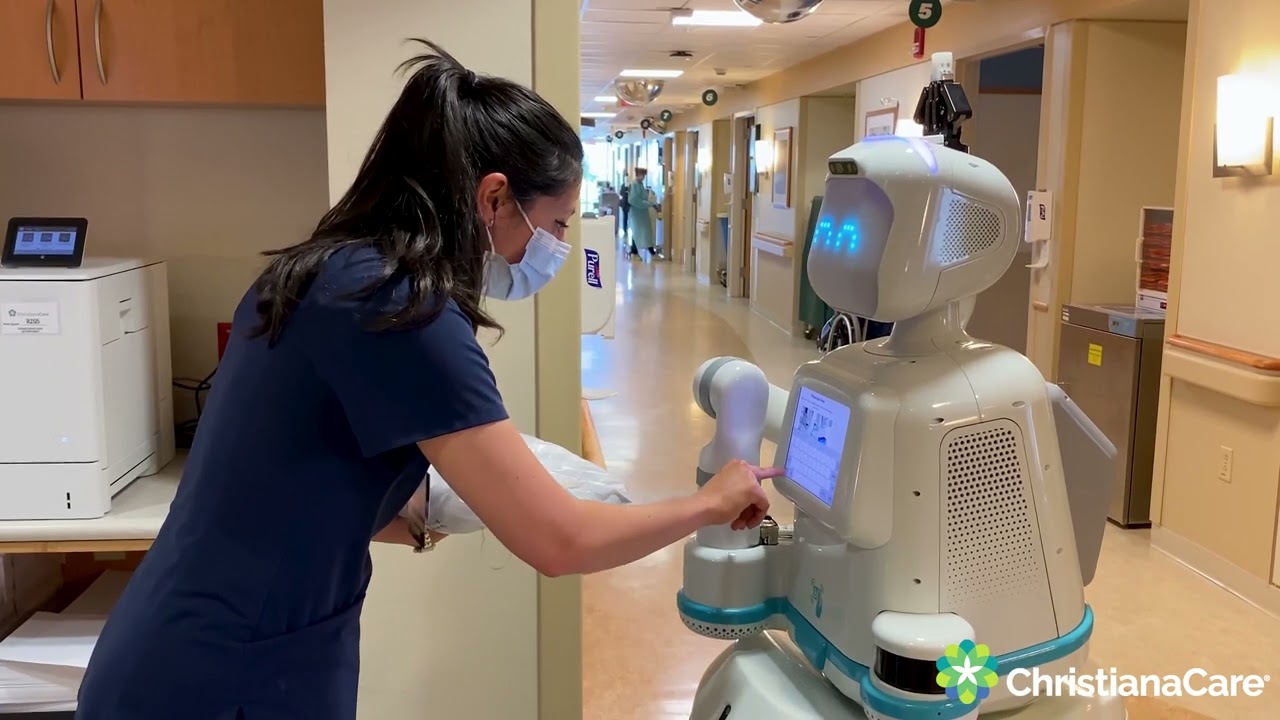
ChristianaCare is the first health system in the Philadelphia region piloting an innovative tool called Moxi, a collaborative robot — or “cobot”— that can assist in the hospital by making deliveries and performing other non-clinical tasks so that nurses and other clinical staff can spend more time focused on what they do best—caring for patients. With a landmark $1.5 million grant from the American Nurses Foundation, ChristianaCare will deploy a total of five Moxi cobots at Christiana Hospital. It is the largest single grant in the history of Nursing at ChristianaCare. Research published in the Journal of Nursing Management shows that nurses spend a significant amount of time — up to 33% of their shifts — on time-consuming but simple tasks such as dropping off lab specimens, collecting supplies or picking up medications from the pharmacy. By taking over these time-consuming but simple tasks, Moxi enables nurses to focus on patient care, where their skills are most needed. “Nurses need the time and space to deliver care and patient education at the top of their license,” said Ric Cuming, Ed.D., MSN, RN, NEA-BC, FAAN, chief nurse executive and president, ChristianaCare HomeHealth. “Moxi will be doing those hunting and gathering tasks such as getting equipment and supplies, which nurses are doing today but don’t need to be doing.” Cobots are designed to share workspace and interact directly with people. In ChristianaCare’s initiative, the Moxi cobots will be integrated with the Cerner Corporation electronic health record (EHR) platform and use artificial intelligence to proactively identify when nurses will need equipment, supplies, medications and lab tests. The Moxi cobots will be deployed to 11 inpatient units, partnering with more than 400 nurses. The American Nurses Foundation grant will enable ChristianaCare to evaluate the impact of cobots on nursing practice with the goal of scaling the technology if successful. “Moxi is not a replacement for a nurse or nursing position — or any position,” Cuming said. “It is an additional resource for nurses and their teams. “With robotic technology, we are using resources wisely and effectively, creating more efficient workflows, reducing repetitive tasks and freeing up nurses’ time for the complex clinical work that they excel at doing.” Reimagining Nursing ChristianaCare is one of 10 grant recipients from the American Nurses Foundation Reimagining Nursing (RN) Initiative. “We are proud that the American Nurses Foundation has the confidence in bold nurse-led ideas that will lead to large-scale, replicable change,” said Katherine Collard, MS, RN-BC, chief nursing informatics officer at ChristianaCare. “This grant will support nurses at ChristianaCare and our nursing colleagues across the nation in realizing their full potential, giving them the tools, resources and power to improve health care now and in the future.” With the American Nurses Foundation grant, ChristianaCare will conduct research on driving nursing outcomes through robotics. “We have a transformative opportunity to generate new knowledge and to move the science forward around robotics in nursing and in health care,” said Susan Birkhoff, Ph.D., RN, nurse scientist at ChristianaCare. “Through research, we will study Moxi’s impact to nursing caregivers that will have broad implications for nursing practice, workforce and education,” she said. ChristianaCare began exploring the potential of robotics to support Nursing with two Moxi cobots acquired in February, funded through the generosity of donors including Good Samaritan, Inc. and E.J. “Woody” Rice. With the grant, said Birkhoff, ChristianaCare will take Moxi to the next “bold frontier,” adding three more cobots with the goal of automating and optimizing nurses’ workflow without interrupting care. With five total cobots, ChristianaCare will be home to the largest number of Moxi robots in health care. The Little Bot That Can Before Moxi can become fully part of the care team, it must learn to navigate the hospital and respond to the nurses’ needs. Using artificial intelligence, Moxi is mapping out Christiana Hospital through sensors and other machine-learning technology so that the cobots can ultimately navigate and work autonomously. “When the Moxi cobots are fully integrated, we anticipate that they will complete up to 200 delivery tasks a day,” Collard said. “By making point-to-point deliveries, Moxi can save nurses hours of time and thousands of steps.” Designed to be compatible with the busy environments of hospitals, Moxi’s features include: Social intelligence: Moxi won’t bump into people or objects in hallways, waves when it sees someone new and happily poses for selfies. Mobile manipulation: Moxi can learn to use its robotic arm to operate existing automatic doors and elevator panels. Human-guided learning: The more Moxi is used, the more Moxi learns and adapts to the environment and specific ways of doing things. Friendly and safe design: With heart-shaped eyes and a friendly appearance, Moxi is designed to navigate safely and get the job done so nurses can focus on patient care. “What Moxi is doing in health systems like ChristianaCare is really transforming the way we think about health care and allowing staff to focus on the people in the hospital as opposed to the tasks,” said Dr. Andrea Thomaz, CEO and co-founder of Diligent Robotics, which created Moxi. “Robots are not something way in the future. Our robots work side-by-side with humans to ease the stress and workload of one of the most demanding jobs in society, nursing. The partnership between Diligent and ChristianaCare shows that the future is now.” Hospital Helper Directly from the Cerner EHR, Moxi will be able to anticipate clinician and patient needs and perform tasks without human involvement. Examples could include: Delivering items to patients based on nurses’ order requests. Making rounds across units to deliver lab samples on collections completed in the electronic health record. Making just-in-time deliveries of pharmaceuticals not stocked on the floor. Prioritizing tasks based on the nursing workload in a unit, so that the busiest nurses will get help first. “Connecting Moxi to the existing technology that clinicians use on a daily basis is key to making it easier to anticipate needs so clinicians can spend more time on patient care,” says Eva Karp, DHA, MBA, RN-BC, senior vice president, chief clinical and patient safety, Cerner. “Moxi could make a real difference in a nurse’s day — alleviating burnout and staffing shortages, which have become especially prevalent since the pandemic.” Incorporating the electronic health record into Moxi is part of the study funded by the American Nurses Foundation. “It’s absolutely in the best interest of our patients that Moxi can work alongside nurses so we can spend more time working directly with our patients to do what we do best,” said Pam Owen, MSN, RN-BC, nurse manager on 7E, one of the pilot units. “And Moxi brings a smile to people’s faces.” Fast Facts About Moxi Works in 22-hour shifts. Needs only two hours of charging time. Weighs about 300 pounds. Can carry a total weight of 70 pounds. Gender-neutral. Pronouns are “it” for a single Moxi cobot and “they” for more than one. Named one of America’s Greatest Disruptors in 2021 by Newsweek and one of the Best Inventions of 2019 by Time Magazine. About ChristianaCare Headquartered in Wilmington, Delaware, ChristianaCare is one of the country’s most dynamic health care organizations, centered on improving health outcomes, making high-quality care more accessible and lowering health care costs. ChristianaCare includes an extensive network of primary care and outpatient services, home health care, urgent care centers, three hospitals (1,299 beds), a freestanding emergency department, a Level I trauma center and a Level III neonatal intensive care unit, a comprehensive stroke center and regional centers of excellence in heart and vascular care, cancer care and women’s health. It also includes the pioneering Gene Editing Institute. ChristianaCare is nationally recognized as a great place to work, rated by Forbes as the 2nd best health system for diversity and inclusion, and the 29th best health system to work for in the United States, and by IDG Computerworld as one of the nation’s Best Places to Work in IT. ChristianaCare is rated by Healthgrades as one of America’s 50 Best Hospitals and continually ranked among the nation’s best by U.S. News & World Report, Newsweek and other national quality ratings. ChristianaCare is a nonprofit teaching health system with more than 260 residents and fellows. With its groundbreaking Center for Virtual Health and a focus on population health and value-based care, ChristianaCare is shaping the future of health care.

