
Experts Matter. Find Yours.
Connect for media, speaking, professional opportunities & more.

Metal-Breathing Bacteria Could Transform Electronics, Biosensors, and More
When the Shewanella oneidensis bacterium “breathes” in certain metal and sulfur compounds anaerobically, the way an aerobic organism would process oxygen, one of the materials it can produce is molybdenum disulfide, a material that could be used to enhance electronics, electrochemical energy storage, and drug-delivery devices. Shayla Sawyer, an associate professor of electrical, computer, and systems engineering at Rensselaer, has centered much of her research on the unique abilities of this bacterium. Her lab’s exploration in this area could be an important step toward developing a new generation of nutrient sensors that can be deployed on lakes and other water bodies. Compared with other anaerobic bacteria, one thing that makes Shewanella oneidensis particularly unusual and interesting is that it produces nanowires capable of transferring electrons. “That lends itself to connecting to electronic devices that have already been made,” Sawyer said. “So, it’s the interface between the living world and the manmade world that is fascinating.” Sawyer is available to talk about this unique and innovative area of research, and the potential to develop the next generation of electronics and sensors.


Free bioenergy tool launching at Aston University to accelerate bioenergy production in Global South
• Aston University team of bioenergy researchers set to launch free tool to calculate energy potential • The launch event on 1 July will allow participants to use the tool for themselves and is focused on bioenergy development in the Global South • The tool can calculate bioenergy output from waste materials including straw, nutshells and manure A simple tool which allows users to easily calculate how much bioenergy they can produce from biomass is being launched this week by researchers from the Energy and Biproducts Research Institute (EBRI) at Aston University. The easy-to-use tool, called the Bioenergy Mass-Energy Balance Model, allows the user to experiment virtually with different biomass materials in several industrial processes including cement production, tea production and food processing to understand the potential implementation. Developed with the focus on bioenergy development in the Global South, users can simply and easily calculate how much heat or electricity they can produce from the biomass. The EBRI team based at Aston University who developed the tool will be launching the model and summarising their methodologies at an online event on Thursday 1 July. Dr Katie Chong, lecturer in chemical engineering, who led the development team said they were looking forward to the launch. “This tool will be available to everyone for free and has been built in Excel to make it accessible for all. We wanted to keep it as simple as possible and we really think it will make a difference, particularly in Sub-Saharan Africa,” she said. Mirjam Röder, associate professorial research fellow at EBRI, added: “The launch event will be a chance for us to introduce the Mass-Energy Balance Model, summarise the methodologies and give participants the opportunity to use the model and generate their own results in our guided walk-through during the workshop.” The tool was developed as part of a larger two-year research programme by the team at Aston University who are a core member of the consortium implementing the Bioenergy for Sustainable local energy services and Energy Access in Africa (BSEAA). Aston University partnered with NIRAS-LTS, E4Tech and AIGUASOL. The project was funded by the UK Foreign, Commonwealth and Development Office (FCDO) as part of the Transforming Energy Access programme. To sign up for the free event which runs from 9.30am until 11.30am on Thursday 1 July, visit this link. For more details about the world-leading research taking place at EBRI, click here.



Even with a drastic reduction in driving due to the COVID-19 pandemic, Black Americans saw the largest increase in traffic-related deaths in 2020 when compared to other racial groups. An estimated 38,680 people died in motor vehicle traffic crashes in 2020 — the largest projected number of deaths since 2007 — and the number of Black people who died in such crashes was up 23 percent from 2019, according to the U.S. Department of Transportation’s National Highway Traffic Safety Administration. UConn’s Dr. Norman Garrick spoke with NBC News about the new report: Norman Garrick, a civil and environmental engineering professor at the University of Connecticut, said the numbers are saddening, but not surprising. “Black people tend to be overrepresented as walkers in this country,” Garrick said. “This is not by choice. In many cases, Black folks cannot afford motor vehicles. And people that walk in this country tend to experience a much, much higher rate of traffic fatality. We’re talking eight to 10 times more. It’s a perfect storm of a lot of horrible forces.” This most likely represents yet another way the health crisis has had an outsize effect on Black people. Even in the early days of the pandemic, the National Safety Council found that the emptier roads were proving to be more deadly, with a 14 percent jump in roadway deaths per miles driven in March. And Black people are more likely to face traffic injuries in general; from 2010-2019, Black pedestrians were 82 percent more likely to be hit by drivers, according to a 2021 report from Smart Growth America, a Washington, D.C.-based advocacy group focused on urban development. June 22 - NBC News Dr. Garrick is a professor in the UConn School of Engineering's Department of Civil Engineering and is co-director of the Sustainable Cities Research Group. He is an expert in the areas of transportation behaviors, parking, public transit, and bicycle lanes. Dr. Garrick is available to speak with media – simply click on his icon now to arrange an interview today.


"Apocalypse" - A period of mass extinction threatens insects – and the world that depends on them
UConn entomologist and professor David Wagner says all kinds of insects are at risk for “a death by a thousand cuts" -- decline attributed to multiple factors, including the climate crisis, agricultural intensification, development, deforestation, and the introduction of exotic and invasive species into new environments. He discusses the threats to the world's insect populations in this compelling new video report from UConn Today: Wagner cautions that many of these creatures will not be with us for much longer, and says people must act swiftly to help prevent these tremendous losses before it is too late. Wagner remains hopeful, and says there are many actions that can be taken now — from encouraging political leaders to enact policy changes, to simply letting part of the front lawn grow freely to provide a food-rich environment for insects. “This planet isn’t here for us to exploit,” Wagner says. Dr. David Wagner is an expert in caterpillars, butterflies, moths, insect conservation, and global insect decline, and he’s available to speak with media. Simply click on his icon now to arrange an interview today.


Covering the cicadas across America? Let our expert help.
This spring, Americans have been captivated, curious and even bugged out by the trillion cicadas that finally emerged from 17 years underground to enjoy a loud month of mating calls, feverish breeding and egg laying, all before passing into that good night. Brood X, as it is called, emerged this year as one of the largest on record. Scientists estimate their population to be about a trillion – and numbers like that won’t be seen until the next generation re-emerges in another 17 years. The bugs are harmless, and the story behind their behavior is truly unique – and there’s a lot to know about cicadas before they expire by June’s end. What do cicadas do underground for 17 years? Will climate change alter the behavior of the cicadas? Why do they only emerge every decade and a half? Why are they so loud? What characteristics do they display when they emerge? What can scientists learn as each brood surfaces? There’s a lot to ask, and if you’re looking to cover or learn more – then let our experts help. Dr. Josephine Antwi is an entomologist at the University of Mary Washington and is the go-to expert on this buzzing breed and other insects. Dr. Antwi is available to speak with media regarding cicadas, simply click on her icon now to arrange an interview today.


Cyber attacks and ransomware are incidents that are happening more and more often. They are threatening America’s energy supply, food chain and critical infrastructure. Recently, two Georgia hospitals were victims of a recent attack. Media from across the country asked experts like Frank Katz, director of Georgia Southern University's Center for Applied Cyber Education, who is vulnerable and why. Katz, who directs the Center for Applied Cyber Education at Georgia Southern University’s Armstrong Campus in Savannah, said hospitals can be targets for extortion as well as sources of personal identifying information that can aid in further fraud. “They are more likely to pay than another type of business because it’s a life and death situation,” Katz told WSAV-TV. “It really has become a situation of money, pure and simple. These are thieves that know they can extort the money and often get it.” June 21 – Associated Press Frank Katz, director of the Center for Applied Cyber Education at Georgia Southern University, says hospitals are often easy targets. Having so many employees, he says user IDs and passwords can be easy to figure out. Plus, they’re dealing with emergency medical care. “They are more likely to pay than another type of business because it’s a life and death situation,” Katz said. June 21 – NBC News If you are a reporter looking to cover this subject and speak with Frank Katz, Georgia Southern’s Director of the Center for Applied Cyber Education – then let our experts help. Frank Katz, director of the Center for Applied Cyber Education is available, simply click on his icon or reach out to Georgia Southern Director of Communications Jennifer Wise at jwise@georgiasouthern.edu and she’ll assist with connecting you for an interview today.


Aston University – inspiring more women into engineering careers
• Aston University is celebrating International Women in Engineering Day • College of Engineering and Physical Sciences photography campaign of females as #EngineeringHeroes • Campaign aims to encourage girls into engineering careers A team of female engineering heroes from Aston University’s College of Engineering and Physical Sciences has banded together to encourage girls into STEM careers. As part of International Women in Engineering Day (INWED), the world’s largest initiative to celebrate the achievements of women in engineering, Aston University’s very own team of engineers have shown themselves to be the very best STEM superheroes. Aston University Mechanical Engineering Student and STEM Ambassador Olamide Olabode Dressed in capes and taking selfies for the event on Wednesday 23 June, female ambassadors from the College, in collaboration with the Greater Birmingham and Solihull Institute of Technology, have also put together video content to show off their engineering skills and become ‘heroes’ for girls wanting to do the same. Also launching on the day will be a competition for participating schools linked to Aston University. Girls are being challenged to come up with their own superhero gadget / gizmo idea. Professor Sarah Hainsworth OBE FREng, Pro-Vice Chancellor and Executive Dean of the College of Engineering and Physical Sciences at Aston University, said they were proud to be a part of INWED2021. “It is so important to us to encourage more girls into STEM subjects. Our hope is that through our teaching, and our partnership with the Greater Birmingham and Solihull Institute of Technology with its focus on technical skills for advanced manufacturing and giving students a clear route to technical employment, many will follow in the footsteps of our incredible team and be the STEM leaders of the future. “At Aston University, we work on sustainability for the environment, bioengineering, robotics, machine learning, sensors, communications, artificial intelligence, technologies for future vehicles and the issues that shape our future. On International Women in Engineering Day (INWED 2021), our College of Engineering and Physical Sciences celebrates the amazing contribution of our women colleagues who represent the cutting edge of engineering who are making vital contributions to our health and wellbeing, our society and our planet,” she added. Katy Lewis, marketing manager, said schools invited to take part were from the Aspire to Aston progressive programme, which works with 10 schools in and around Birmingham from areas of high deprivation. “At each of these schools there are up to 40 pupils per year group who have the academic ability to aim for university but lack the knowledge and confidence to do so and are selected for the programme. Our aim is to raise aspirations and normalise the idea of going into higher education, which is why us doing challenges like this one is so vitally important, so we can’t wait to help find the STEM female stars of the future,” she said. Currently the College of Engineering and Physical Sciences has 25% female academic staff (the UK STEM staff benchmark being 17 – 19%). The amount of female students studying the engineering subjects at Aston University has also grown over the past five years from 22% - 27%, above the UK STEM benchmark of 17% – 19%. To find out more about engineering at Aston University, visit ww.aston.ac.uk/eps For more details about the Greater Birmingham and Solihull Institute of Technology, visit this link: http://gbsiot.ac.uk/

Emily Baum: Chilling academic exchanges between China and the U.S. Emily Baum is an associate professor of modern Chinese history and director of the Long U.S.-China Institute, which aims to bridge the gaps between academia, journalism and the public sector. Baum says the pandemic will likely affect study abroad for years to come, in both directions, with negative impacts on both sides. There was already a significant disparity with roughly 370,000 Chinese students studying in the U.S. and only 11,000 Americans studying in China annually. “A drop in Chinese enrollments will have major consequences for the future of higher education in the U.S., where many schools rely on the full tuition paid by international students to stay afloat,” Baum says. But equally worrisome: “The educational decoupling that had already begun before COVID-19 — and will be greatly exacerbated by it — means that there will be far fewer opportunities for each country’s students to gain firsthand knowledge of, and mutual understanding about, the other.” Reach Baum at: emily.baum@uci.edu Wang Feng: China has passed its peak Wang Feng is a professor of sociology and an adjunct professor at Fudan University in Shanghai, China. He is an expert on global social and demographic changes and social inequality. He has served on expert panels for the United Nations and the World Economic Forum, as well as he served as a senior fellow and director at the Brookings Institution Brookings-Tsinghua Center for Public Policy. Wang sees the ascendance of China in the last 40 years as the result of a unique confluence of circumstances: a dynamic leader in Deng Xiaoping, plus a significant rural population that moved to cities and provided a huge labor force. In the last 20 years, China has produced 600 billionaires — and gaping wealth disparities. “When China was poor, people thought it would be poor forever. Now that China is rich, people think it will be rich forever. But China has passed its peak,” he says. “The headwinds of an aging population, the legacy of the one-child policy, and tremendous social inequality will present enormous internal challenges in the years ahead.” Reach Wang at fwang@uci.edu. Jeffrey Wasserstrom: China’s box office changes Hollywood portrayals Jeffrey Wasserstrom is a Chancellor’s professor of history. A specialist in modern Chinese history, he has testified before a Congressional-Executive commission on China, conducted a State Department briefing on contemporary Chinese politics, and worked with the Hong Kong International Literary Festival. His articles have been published by TIME, The Nation, Wall Street Journal, Financial Times, The New York Times and others. Wasserstrom notes that Hollywood films and TV often negatively present whichever East Asian country is most feared at the time. However, the power of China’s box office is changing that. “Due to concern with the massive market for movies in the People’s Republic of China, you do not often see negative portrayals of that country on American screens,” says Wasserstrom. “A telling example of our living in a new era is that when filmmakers were setting out to make a new version of ‘Red Dawn,’ a film that originally portrayed a Russian invasion of the U.S., the plan was to have Chinese soldiers serve as the enemies. Concern about PRC box office receipts led to a change in nationality — the enemies became North Korean soldiers.” Reach Wasserstrom at: jwassers@uci.edu. Yong Chen: Chinese food in the U.S. and China Yong Chen is the author of several books including "Chop Suey, USA: The Story of Chinese Food in America" (Columbia University Press, 2014). He also co-curated “‘Have You Eaten Yet?’: The Chinese Restaurant in America” in Atwater Kent Museum, Philadelphia (2006), and the Museum of Chinese in the Americas, New York City (2004–05). He is professor of history. He points out that the COVID-19 pandemic hastened changes to culinary habits that were already underway in China, including less consumption of wild animals, greater demand for fast food, and a shift away from communal or “family style” meals. Meanwhile, in the U.S., Chinese restaurants have been hit hard by anti-Asian sentiments, while also showing signs of resilience thanks to the popularity of Chinese takeout. “If the seriously strained relationship between China and the US continues to deteriorate, it is possible that more people in America will lose their appetite for Chinese food, to say the least,” Chen says. Reach Chen at: y3chen@uci.edu.


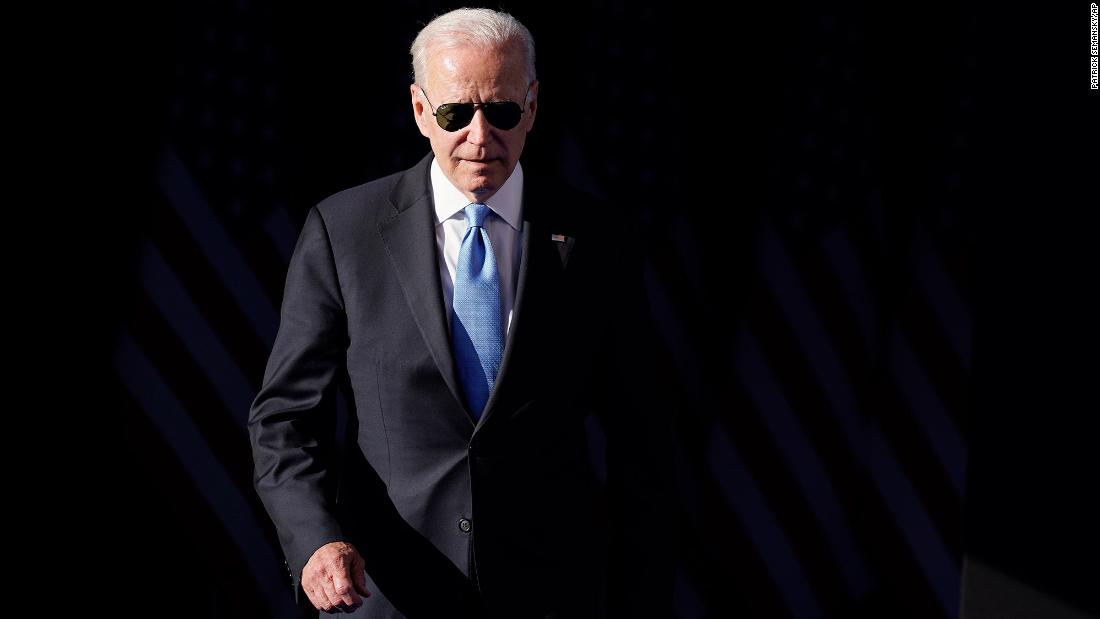
The odd couple – Can Biden and Putin find a way to thaw relations between America and Russia?
It was a meeting of two world powers that came with low expectations but much anticipation. The face-to-face meeting between American President Joe Biden and Russian President Vladimir Putin may not have accomplished much, but it did allow Biden to set a tone on his approach to foreign relations. President Joe Biden's meeting Wednesday with his Russian counterpart came after months of diplomatic wrangling over the details, days of preparation with reams of research and the elaborate construction of two separate lakeside venues for the leaders to appear afterward. But after the summit had concluded, the ornate French style manor home was locked up and the leaders were jetting in opposite directions home, the state of relations between the United States and Russia seemed about the same as before. That is not necessarily a surprise, least of all for Biden, who entered the summit with the vague and modest goal of establishing a "predictable and rational" relationship with Vladimir Putin. Putin's performance afterward was certainly predictable, if not entirely rational. Ultimately, Biden set expectations so low for his first face-to-face encounter with Putin that anything more than someone not showing up at all amounted to breaking even. June 16 - CNN What comes next is up to both leaders – but the world will be watching. Is there a chance to find common ground between the two countries? Will Russia continue to interfere in U.S. elections and hack American agencies - and how will American respond? What happens if Russian opposition leader Alexei Navalny dies in prison? And, did this meeting give Putin the elevated push he needs internationally? If you are a journalist looking to cover this subject – then let us help. Dr. Stephen Farnsworth is a sought-after political commentator on presidential politics. He has been widely featured in national media, including The Washington Post, Reuters, The Chicago Tribune and MSNBC. Dr. Farnsworth is available to speak with media any time. Simply click on his icon to arrange an interview today.


Without Trump – Is Late Night Television Struggling for New Jokes?
For four years, just about every talk show host and comedy show had a fresh supply of almost daily content. The unfiltered comments, gaffes and chaotic ongoings in the White House offered up a steady stream of material for jokes, monologues and coverage. But those days are over. Does Joe Biden's calm presidency and his capable administration mean a deficit of humor for the country’s comedians? UMW’s Dr. Stephen Farnsworth was recently featured in Variety Magazine about his perspective on the current state of late-night political content. Viewers are likely to continue to expect a robust political discussion. “In Washington, the political divisions are as intense as ever, and so it seems that there would be a ready audience for a continuing focus on political humor in late night,” said Stephen Farnsworth, co-author of the 2019 book “Late Night With Trump: Political Humor and the American Presidency” and director of the Center for Leadership and Media Studies at the University of Mary Washington. “The environment may not look all that different post-pandemic.” June 14 - Variety Magazine Dr. Stephen Farnsworth is a sought-after political commentator on presidential politics. He has been widely featured in national media, including The Washington Post, Reuters, The Chicago Tribune and MSNBC. Dr. Farnsworth is available to speak with media any time. Simply click on his icon to arrange an interview today.