
Experts Matter. Find Yours.
Connect for media, speaking, professional opportunities & more.
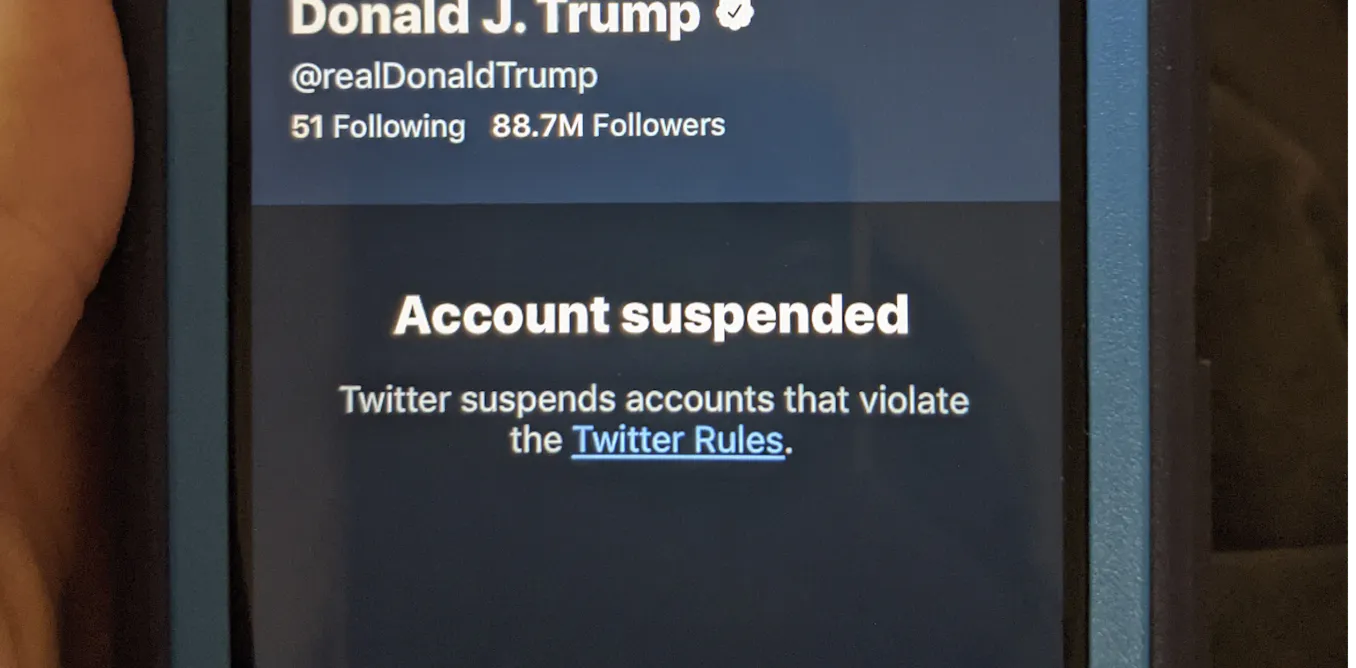
After an incited and encouraged crowd of Trump supporters stormed the Capitol buildings last earlier this month – social media, or at least the executives that run companies like Twitter and Facebook had had enough and opted to oust President Donald Trump from their platforms. Donald Trump has been ‘deplatformed’ and no longer has easy access to an audience of millions of followers. The concept of deplatforming is being widely debated. And recently, University of Connecticut’s Ugochukwu Etudo was asked to lend his expert perspective on the idea. Does the deplatforming of prominent figures and movement leaders who command large followings online work? That depends on the criteria for the success of the policy intervention. If it means punishing the target of the deplatforming so they pay some price, then without a doubt it works. For example, right-wing provocateur Milo Yiannopoulos was banned from Twitter in 2016 and Facebook in 2019, and subsequently complained about financial hardship. If it means dampening the odds of undesirable social outcomes and unrest, then in the short term, yes. But it is not at all certain in the long term. In the short term, deplatforming serves as a shock or disorienting perturbation to a network of people who are being influenced by the target of the deplatforming. This disorientation can weaken the movement, at least initially. However, there is a risk that deplatforming can delegitimize authoritative sources of information in the eyes of a movement’s followers, and remaining adherents can become even more ardent. Movement leaders can reframe deplatforming as censorship and further proof of a mainstream bias. There is reason to be concerned about the possibility that driving people who engage in harmful online behavior into the shadows further entrenches them in online environments that affirm their biases. Far-right groups and personalities have established a considerable presence on privacy-focused online platforms, including the messaging platform Telegram. This migration is concerning because researchers have known for some time that complete online anonymity is associated with increased harmful behavior online. In deplatforming policymaking, among other considerations, there should be an emphasis on justice, harm reduction and rehabilitation. Policy objectives should be defined transparently and with reasonable expectations in order to avoid some of these negative unintended consequences. January 15 – The Conversation If you’re a journalist covering deplatforming and would like to talk with Ugochukwu Etudo – simply click on his icon today and we’ll arrange an interview today.


As Flexible Voting Options Scrutinized, Expert Says Online Voting Not a Safe Alternative
The popularity of — and controversies surrounding — early voting and mail-in ballots demonstrates a demand for more flexible voting options. But online voting shouldn’t be up for consideration, according to James Hendler, the head of the Institute for Data Exploration and Applications at Rensselaer Polytechnic Institute. Hendler also chairs the U.S. Technology Policy Committee of the Association for Computing Machinery, the world’s largest and oldest society of individuals involved in all aspects of computing. In public statements expressing his own opinion and on behalf of the ACM, Hendler has discussed the vulnerabilities of online voting and the organization’s effort to press against its adoption. Hendler argues that online voting is not, and cannot be made to be, secure against malware and denial of service attacks — and that no app or underlying technology, including blockchain, holds potential to overcome those challenges. "The current state of mobile voting is that we are not ready to deploy it at scale, that it has significant technical and socio-technical aspects, particularly cybersecurity, that we need to worry about, and that there are alternatives,” Hendler said. “The ACM has worked hard as an organization to explain our evidence-based reasoning, and to express the hope that online-voting won’t be used now and in the foreseeable future.” In explaining why online voting is more complicated than online banking, shopping and other common internet activities, Hendler said, “The main reason that online voting is more complex is that it must maintain anonymity, no one is allowed to know how you voted. Securing online voting without providing access to identity is extremely difficult. There are other reasons as well including the staggering cost and the lack of a centralized US authority, but identity management remains the number one.” Under his leadership, the ACM’s U.S. Technology Policy Committee, along with leading organizations and experts in cybersecurity and computing, sent a letter to all governors, secretaries of state and other state election directors urging them not to allow the use of internet or voting app systems. Hendler has extensive experience in policy and advisory positions that consider aspects of artificial intelligence, cybersecurity and internet and web technologies as they impact issues such as online voting and the regulation of social media and powerful technologies including facial recognition and artificial intelligence. In light of ongoing political unrest, Hendler is available to speak to diverse aspects of information technology as related to the election, AI in applications like policing, and the politics related to social media.



Renowned educator and author Gloria Ladson-Billings to present Georgia Southern 2021 Fries Lecture
Gloria Ladson-Billings, Ph.D., renowned pedagogical theorist, teacher educator and author, will present the 2021 Norman Fries Distinguished Lecture, hosted by Georgia Southern University’s College of Education. In her lecture, “Culturally Responsive Pedagogy: Educating Past Pandemics,” Ladson-Billings will discuss how pandemics provide opportunities for revisioning and reimagining culturally relevant teaching practices. She suggests that instead of “getting back to normal,” it is time to get on to new and more equitable ways of educating all students and creating a more democratic society. Ladson-Billings is the former Kellner Family Distinguished Professor of Urban Education in the Department of Curriculum and Instruction and faculty affiliate in the Department of Educational Policy Studies at the University of Wisconsin-Madison. She also served as the 2005-06 president of the American Educational Research Association (AERA). Ladson-Billings’ research examines the pedagogical practices of teachers who are successful with Black students. She also investigates critical race theory applications to education. She is the author of critically acclaimed books The Dreamkeepers: Successful Teachers of African American Children and Crossing Over to Canaan: The Journey of New Teachers in Diverse Classrooms, as well as numerous journal articles and book chapters. About Ladson-Billings Former editor of the American Educational Research Journal and a member of several editorial boards, Ladson-Billings’ work has won multiple scholarly awards including the H.I. Romnes Faculty Fellowship, the National Academy of Education/Spencer Postdoctoral Fellowship and the Palmer O. Johnson Outstanding Research Award. She is a 2018 recipient of the AERA Distinguished Research Award and was elected to the American Academy of Arts and Sciences in 2018. About the Norman Fries Distinguished Lectureship series The annual Norman Fries Distinguished Lectureship series began in 2001. It is funded by an endowment in honor of Norman Fries, founder of Claxton Poultry. In his more than 50 years of business, Fries built the company from a one-man operation into one of the largest poultry production plants in the U.S. Past Fries lecturers include David Oreck of Oreck Vacuums, South African apartheid author and lecturer Mark Mathabane, NASA director James W. Kennedy, Pulitzer Prize-winning author and historian Gordon S. Wood, Nobel Prize laureate William D. Phillips, Ph.D., bestselling author Susan Orlean, concussion expert Dr. Russell Gore, and PricewaterhouseCoopers Network chief operating officer Carol Sawdye. The lecture will take place virtually via Zoom on Feb. 8 at 7 p.m. The event is free and open to the public. If you are a journalist looking to know more about the Norman Fries Distinguished Lectureship or would like to interview Gloria Ladson-Billings -- simply reach out to Georgia Southern Director of Communications Jennifer Wise at jwise@georgiasouthern.edu to set and time and date.


The U.S. House of Representatives is set to vote Wednesday to impeach President Donald Trump for inciting the deadly insurrection at the United States Capitol last week. Many House Democrats have called for Trump’s resignation and urged Vice President Mike Pence to remove him under the 25th Amendment. However, with those two options looking extremely unlikely, Democrats are preparing to impeach the president for a second time. The question is how quickly will impeachment happen? On Monday, the House introduced a single article for "incitement of insurrection," which could allow a fast-tracked floor vote on impeachment by Wednesday. Upon receiving the article, the Senate must take it up either through a vote to dismiss the charge or, if that fails, moving ahead with a trial to determine whether to convict the 45th president. There’s been a lot of coverage – and a lot of opinions shared. If you are a journalist covering this ongoing story, that’s where our experts on this topic can help. Dr. Martha Ginn, professor of political science at Augusta University, is an expert on the judicial process, constitutional law and the U.S. Supreme Court. If you have questions, let Ginn share her expertise and experience to ensure your coverage is accurate. Ginn is available to speak with media about this topic – simply click on her name to arrange an interview today.


Welcoming 2021: The Year of Resiliency
Happy New Year to all — may 2021 be a better and brighter year for everyone. It has been just over a year since I came to Japan Society as President and CEO, with a mandate to take the Society into the future while preserving its 113-year-old mission of building bridges between the U.S. and Japan. The pandemic has accelerated the pace of change for everyone, globally, nationally, locally, and within our own workplaces and households. Change is hard, but it is also necessary. In a recent email, my friend Parag Khanna wrote, “Our global system evolves the way humanity does, not through grand design or random accident but by adaptation to changing realities. The faster we react to an accelerating world, the better our chances of shaping the future to our benefit.” I’d like to speak to Parag’s point personally rather than geopolitically. The experience of leading a New York nonprofit during this time — an institution that is both deeply and historically embedded in onsite programming and tradition — has both clarified and strengthened my vision for Japan Society’s future. Bending Adversity If 2020 has forced us to prioritize, 2021 will be the year of resiliency. 2021 represents the year of the Ox in Japan, where the ox is considered an industrious, cautious, and faithful friend that is always glad to offer help. After the 2020 we’ve all had, we could use more faithful friends like the ox in 2021. We are looking toward 2021 as a year in which we as a society ultimately overcome COVID-19 through the efforts of scientists, frontline workers, and governments around the globe. We hope to see the world come together in a big way for the first time at the rescheduled Summer Olympics in Tokyo. In some ways, we have already seen the future in Japan and in Asia more broadly, with its successful response to the COVID pandemic. Japan also represents a recent example of how to bend adversity and bounce back, as it did from the Great East Japan Earthquake, tsunami and nuclear disaster of 3/11/2011. The entire country came together in solidarity to support the affected Tohoku region, including concrete measures such as limiting electricity usage at a national level to avoid rolling regional blackouts. A decade on, Japan still remembers, with the Olympic flame set to depart from Fukushima Prefecture in the torch relay that will cross the country before arriving in Tokyo for the Opening Ceremony. Out of Crisis: Opportunity Optimism and positivity are necessary to move forward. I’m optimistic not because I’m naïve about the challenges ahead as we continue to navigate these wild currents, but I am confident that we will find safe passage because of what we have learned collectively and adapted to over the past months. Japan Society’s Language Center had a record year in 2020 despite the pandemic as our teachers reached beyond our physical classrooms to virtual ones; more people joined us than ever before for our first-ever digital JAPAN CUTS, the largest festival of Japanese cinema in North America. We have opened possibilities far beyond our physical building, the original Japan House, designed by Japanese modernist architect Junzo Yoshimura 50 years ago, and named New York City’s youngest landmark in 2011. In crisis comes opportunity, and from opportunity come the possibilities for our collective future. While we are hurting without our physical programs and admissions revenue, we’ve literally been able to connect across the world, and even beyond — from Japanese astronaut Soichi Noguchi, who is currently on the International Space Station, to countless leading voices in Japan such as Olympics Director Nomura Mansai — to create unique experiences for our members. In this time, I return to the Japanese concept of kaizen (改善), continual self-improvement and change for the better. Regardless of the next challenges on the horizon, I’m committed to ensuring that we continuously improve and adapt in this spirit. I believe that our mission has never been more critical than in 2021 as we strengthen U.S.-Japan relations with new administrations in both capitals and seek opportunities to engage, explore, and educate our societies about our collective resiliency as we welcome the new year. Joshua Walker (@drjwalk) is president and CEO of Japan Society. Follow @japansociety. The views expressed in this article are the writer’s own.


Lockdown teleworking impacts productivity of women more than men
When the COVID-19 pandemic led countries all over the world to lock down their economies in early 2020, there was an unprecedented global shift to teleworking in white collar sectors. A trend that had been gathering traction was suddenly and exponentially accelerated and many of the world’s largest corporations, Google and Facebook among them, have announced plans allowing employees to work from home well into 2021 or indefinitely. Remote working not only appears to work, but it appears to have a number of advantages—savings in office maintenance costs and time spent commuting, not to mention enabling organizations to safeguard productivity when there’s a major shock or crisis. But is it all good news? Or good news for all? A new paper by Ruomeng Cui, assistant professor of information systems and operations management at Emory’s Goizueta Business School, reveals an important drop in the productivity of female academics around the world in the wake of the COVID-19 lockdowns. In fact, in the ten weeks following the initial lockdown in the United States, their productivity fell by a stunning 13.9 percent relative to that of male colleagues. And it’s likely to do with the disproportionate burden of responsibility for household needs and childcare that persistently falls on women, Cui said. “We know that gender inequality persists both in the workplace and at home, and we were curious to see how the lockdown scenario would attenuate or exacerbate the situation for women,” Cui said. Anecdotal evidence from her own field—academia—showed that in the weeks following the stay at home mandate in March, there was an upswing of around 20 to 30 percent of papers submitted to journals. However, the overwhelming majority of these were being authored by men. Intrigued, Cui teamed up with Goizueta doctoral student Hao Ding and Feng Zhu from Harvard Business School to conduct a systematic study of female academics’ productivity and output during this period. “We knew that the lockdown had disrupted life for everyone, including academics. With schools and kindergartens closed and people taking care of work and household obligations at home, we intuited that women would be affected more than men as they are disproportionately burdened with domestic and childcare duties,” Cui said. For female academics this would theoretically be particularly acute, as the critical thinking that goes into research calls for quiet, interruption-free environments. To put this to the test, Cui and her co-authors created a large data set covering all the new social science research papers produced by men and women, across 18 disciplines and submitted to SSRN, a research repository, between December 2018 to May 2019 and then from December 2019 to May 2020. From this set, they were able to extract information on titles, authors’ names, affiliations, and addresses to identify their countries and institutions, as well as faculty pages to distinguish between men and women. In total they collected just under 43,000 papers written by more than 76,000 authors in 25 countries. Looking at the data, Cui and her colleagues were able to compute the total number of papers produced by male and female academics each week and then compare the productivity of both before and after the start of the lockdown. Prior to the pandemic, the 2019 period showed no significant changes in productivity in either gender. But in the 10 weeks following the shock of lockdown, a clear gap emerges between men and women, with female academics’ productivity falling by just under 14 percent in comparison to their male colleagues. Interestingly the effect was more pronounced in top-ranked research universities. This is likely because top schools require faculty to publish research as the primary requisite for promotion, so men would be motivated to continue authoring papers before and after the lockdown. These findings lend solid, empirical clout to the notion that women do take a hit to productivity when care and work time are reorganized, Cui noted. “We see clearly that women are producing less work as a consequence of working from home. In the field of academia, that has huge implications as achieving a permanent position, or tenure, is generally linked to your research output,” she said. “So, there is a serious fairness issue there. If women are producing less because the burden of household responsibility is greater for them than for men, then you’re likely to see fewer female academics get tenure through no fault of their own.” Indeed, one of the other findings of the study shows that while productivity fell, the quality of female-authored research measured by downloads and citations did not. Then there’s the issue of teleworking and gender. With a significant proportion of the world’s white-collar organizations still working from home and unlikely to head back to the office any time soon—and as many schools and childcare facilities remain closed due to the pandemic—Cui is concerned that productivity as a measure of value and a marker of success might mean the odds are further stacked against women. And not just in academia. “We looked at universities in particular, but our findings can really be externalized to any other industry because the underlying issues here are universal. So, with remote working becoming normalized, I think there’s a real onus on organizations of every type to think about how to mitigate these unintended consequences,” she said. “There needs to be more thought about how we measure value or potential of employees.” Cui calls for organizations and institutions to consider these factors when they evaluate male and female workers in the present context and looking to the future. Among the kinds of proactive moves they might consider are to make training programs for male and female employees that explore fairness and encourage a more even distribution of responsibility in the home and for children. “There’s nothing to be gained in prioritizing productivity as a tool for evaluation and just giving women more time, say, to produce as much,” Cui warned. “You’re just left with the same scenario of women doing more than their fair share. Solving this issue is really much more about being aware of it, getting educated about it, and changing your mindset.” If you are a journalist looking to cover this research or speak with Professor Ciu about the subjects of telework and productivity, simply click on her icon now to arrange an interview today.



The 'XX' factor: Women voters and what candidates need to know for future elections
As unique as the 2020 election was, it was still similar to every other election, where winning comes down to isolating key demographics, swaying them to lend support and getting those voters out to the ballot box. There are many different blocks of voters in America based on income, education, race, geography and gender. Gender among them is key, and on Nov. 3, women ensured their votes were counted. Ask Virginia voter Mary Hayes why Joe Biden defeated Donald Trump, and she does not hesitate. “Women won this election!” says Hayes, 56, a mother of three and Biden supporter from Leesburg, Virginia. In particular, she credits two categories of voters that she herself is part of: Black women and suburban women. Trump had begged the latter group — some of whom he’d alienated by referring to them as “housewives” — to “please, please” like him. But that plea rang hollow, she says. “We showed America that suburban women are diverse, and are a beautiful collection of ethnicity, race, marital status, occupations and many other categories,” Hayes says. “Suburban women mobilized, determined to remove Trump from office.” And, she says, they succeeded. Nov. 16, Associated Press Women did play a key role in the vote as it rolled across the country. But now, the balance of power in Washington will rely on two key Senate races in Georgia. And no doubt, both sides are strongly courting female voters. If you are a journalist looking to know how important a role gender will play in the January runoffs and what all four of the candidates need to do to secure those votes, then let an expert from Augusta University help with your story. Dr. Mary-Kate Lizotte is an expert in political behavior and the implications of gender differences in public opinion. She is available to talk about the 2020 election and the upcoming Senate runoffs in Georgia. Click on her name to schedule an interview.


Are vaccine passports legal in a post-COVID-19 era? Let our experts explain
As America and the world look to slowly round the corner of the safety measures enacted during the COVID-19 pandemic, the new coronavirus vaccines are giving hope of an eventual return to normal. However, with an active anti-vaccination movement afoot and many still skeptical of getting that essential poke in the arm, the World Health Organization said some government officials are suggesting the idea of vaccine passports. A simple piece of identification would end the uncertainty that comes with travel, work and the much sought-after leisure that often means crowded places and smaller spaces. The idea has already caught on in countries in Europe and South America. It may be the safety blanket many seek, but are vaccine passports actually legal? It is a question that’s beginning to get serious coverage. “Having proof of vaccination can be essential for a number of sectors other than health, but we cannot overlook the potential discriminatory consequences that may arise,” said Dr. William Hatcher, an expert in public policy and interim chair of the Department of Social Sciences at Augusta University. Another idea being floated is immunity passports, but Hatcher suggests¬ allowing only people with immunity to work might disadvantage those who haven’t gotten sick or those without the antibodies to prove it. It’s as if, in the eyes of their employer, their lack of infection constitutes a disability. The inequality that immunity passports could foster in these situations may be illegal under the Americans with Disabilities Act. There are also other ethical, practical, and cultural aspects to consider as well. If you are covering this emerging topic and are looking to know more, our experts can help. Dr. Hatcher is a professor of political science and interim chair of Augusta University’s Department of Social Sciences. He is an expert in the areas of public administration and social, economic, and political institutions in local communities. Hatcher is available to speak with media regarding the concept of vaccination and immunity passports. To arrange an interview, simply click on his name.


After four years of scandals, gaffes, hearings, indictments and even an impeachment – President Donald Trump seemed to be coasting on a coating of Teflon that kept him virtually unscathed as nothing ever stuck or shook his grasp on evading trouble. But that might have come to an end this week as The Washington Post dropped a bombshell of a story that including a recording of Trump allegedly seeking to interfere with the results in the recent election. President Trump urged fellow Republican Brad Raffensperger, the Georgia secretary of state, to “find” enough votes to overturn his defeat in an extraordinary one-hour phone call Saturday that legal scholars described as a flagrant abuse of power and a potential criminal act. The Washington Post obtained a recording of the conversation in which Trump alternately berated Raffensperger, tried to flatter him, begged him to act and threatened him with vague criminal consequences if the secretary of state refused to pursue his false claims, at one point warning that Raffensperger was taking “a big risk.” January 03 - The Washington Post No doubt the president was passionate – but did he cross the line? And if so – what are the consequences? There’s a lot of questions to be asked about what is next and that’s where our experts can help if you are covering. The University of Mary Washington has one of the foremost political experts in the country who can help with your stories. Dr. Stephen Farnsworth is a sought-after political commentator on presidential politics. He has been widely featured in national media, including The Washington Post, Reuters, The Chicago Tribune and MSNBC. Dr. Farnsworth is available to speak with media any time regarding the election and its aftermath – simply click on his icon to arrange an interview today.



Network Science Offers Key Insights into Polarization, Disinformation, and Minority Power
People tend to think of the arena of politics as being driven by human decision and emotions, and therefore unpredictable. But network scientists like Boleslaw Szymanski, a computer science professor at Rensselaer Polytechnic Institute, have found that the country’s political activity – from American society’s ever-growing partisan divide to its grappling with the spread of misinformation online – can be explained by abstract and elegant models. These models provide insights — and even answers — to a number of pressing questions: Is increasing access to information driving us apart? Can an entrenched minority ultimately prevail? Could structural changes be made that insulate us from misinformation and reduce the polarization that divides us? Szymanski studies the technical underpinnings of our choices, how we influence one another, and the impact of the algorithms we rely upon to navigate a growing ocean of information. His work has yielded fascinating insights, including research on how a committed minority will overcome less determined opposition and the development of a parameter to determine what drives polarization in Congress. Through his research on the influence of minority opinions, Szymanski found that when just 10 percent of the population holds an unshakable belief, it will ultimately be adopted by the majority of the society. “When the number of committed opinion holders is below 10 percent, there is no visible progress in the spread of ideas. It would literally take the amount of time comparable to the age of the universe for this size group to reach the majority,” said Szymanski, a computer science professor at Rensselaer Polytechnic Institute. “Once that number grows above 10 percent, the idea spreads like flame.” In his present work, Szymanski is researching tools for measuring the level of polarization in specific news sites, search engines, and social media services, and developing remedies, like algorithms that offer better data provenance, detect misinformation, and create internal consistency reasoning, background consistency reasoning, and intra-element consistency reasoning tools. “Informed citizens are the foundation of democracy, but the driving interest of big companies that supply information is to sell us a product,” Szymanski said. “The way they do that on the internet is to repeat what we showed interest in. They’re not interested in a reader’s growth — they’re interested in the reader’s continued attention.” With the political environment becoming increasingly bitter and dubious information becoming ever more prevalent, Szymanski is available to discuss his research on polarization, disinformation, and the power of a committed minority.
