
Experts Matter. Find Yours.
Connect for media, speaking, professional opportunities & more.

Next Level Thought Leadership and Content Marketing
We are entering an era of elevated thought leadership. Thought Leadership often focuses on a select few in an organization and misses opportunities to showcase everything your organization has to offer. It’s rarely scalable, often expensive and almost always wagers on a small pool of topics in any given quarter. The fact is that you have more expertise operating behind the scenes than you’re showing off. Enter Expertise Marketing, the next generation of content marketing. Opening up a world of new opportunities, here is how Expertise Marketing stacks up against more traditional thought leadership programs. SCOPE Inclusive vs Exclusive Expertise Marketing is designed to engage a diverse set of experts throughout the organization. It focuses on broader coverage of relevant topics that engage a wider variety of audiences and expand your opportunities for valuable connections. Thought Leadership programs tends to focus on fewer select experts. Often designed as a bespoke program aimed at involving only senior executives. TIMING Sustained vs Campaign Focussed Expertise Marketing creates a sustained digital presence that leverages the content that experts are producing across the organization and distributes it across a range of channels. Most Thought Leadership programs tend to align with a specific event (such as a product launch, industry conference or social cause) that maps to a defined budget and timeframe. STRUCTURE Agile vs Controlled The agile nature of good Expertise Marketing provides the ability to quickly mobilize experts to position their expertise in the context of breaking news to create higher engagement with audiences such as the media. This compares to the more controlled approach of a traditional Though Leadership programs that requires careful planning to ensure alignment with corporate strategy and messaging - often missing time-sensitive opportunities. COST Low vs High Expertise Marketing can efficiently leverage client or agency resources and services through technology versus Thought Leadership programs that are often structured as long-term projects that require specialized resources in agencies. Take the steps to transform your content marketing overnight. Download the Expertise Marketing whitepaper or talk to us about how you can evolve quicker and generate a new competitive edge. About ExpertFile For a comprehensive look at how expertise marketing benefits the entire organization and drives measurable return on investment, follow the link below to download an industry-focussed copy of ExpertFile’s Complete Guide to Expertise Marketing: The Next Wave in Digital Strategy.





Top 9 ROI Metrics for Expertise Marketing
When it comes to digital marketing, organizations are looking for data-driven solutions that are proven to support their bottom line. Here are 9 families of quantitative and qualitative metrics that will help you measure and track the success of your organization’s Expertise Marketing. (Taken from Chapter 5 of Expertise Marketing Whitepaper: Next Wave in Digital Strategy) REPUTATION Move Brand Metrics - Position research, client work, thought leadership perspectives and achievements in the context of relevant topics in the news. MARKET AWARENESS Move Search Metrics - Boost search-engine rankings and increase overall breath of search results. LEAD GENERATION Grow Inbound Leads - Increase the number of direct lead inquiries from the following audiences: Customers | Students | Patients | Donors | Patients | Media | Recruits | Conferences | Partners | Alumni | & More... AUDIENCE ENGAGEMENT Drive Engagement Metrics - A single familiar digital touchpoint provides access to all content marketing assets and encourages enhanced content browsing. Download our Free Whitepaper Expertise Marketing: The Next Wave in Digital Strategy TALENT DEVELOPMENT Boost People Performance - Better engage stakeholders, researchers & subject-matter experts in the development and distribution of content. INTERNAL COLLABORATION Improve Teamwork & Internal Efficiency - Better coordinate the knowledge and resources across internal communications teams and other departments as they engage experts. Provide a faster, more efficient way to generate content for breaking news and events. CONTENT CONTRIBUTION Expand Reach - Increase the size of the organization’s digital footprint by aggregating more content and distributing it contextually to multiple websites and third-party databases. EFFICIENCY Deliver More with Less - Help employees get their jobs done faster and more efficiently. Enable them to find information faster, speed up internal processes and foster collaboration among people in multiple locations. LEVERAGE CURRENT & FUTURE INFRASTRUCTURE Extract More Value From Existing Investments - Properly integrated, new technology investments should integrate seamlessly to leverage existing/proposed infrastructure such as content management systems (CMS). What’s most important to you? Get in touch with Deanne and start the conversation about how ExpertFile can begin moving that dial within 6 weeks. Get Your Copy and Get Started Expertise Marketing: The Next Wave in Digital Strategy About ExpertFile ExpertFile is the world’s first Expertise Marketing Platform that helps organizations solve the challenge of creating, managing and amplifying expert content. Our software platform and services help you showcase your people and their insights to the audiences that matter across a range of channels including distribution through the Associated Press to over 15,000 newsrooms. Learn more about ExpertFile.
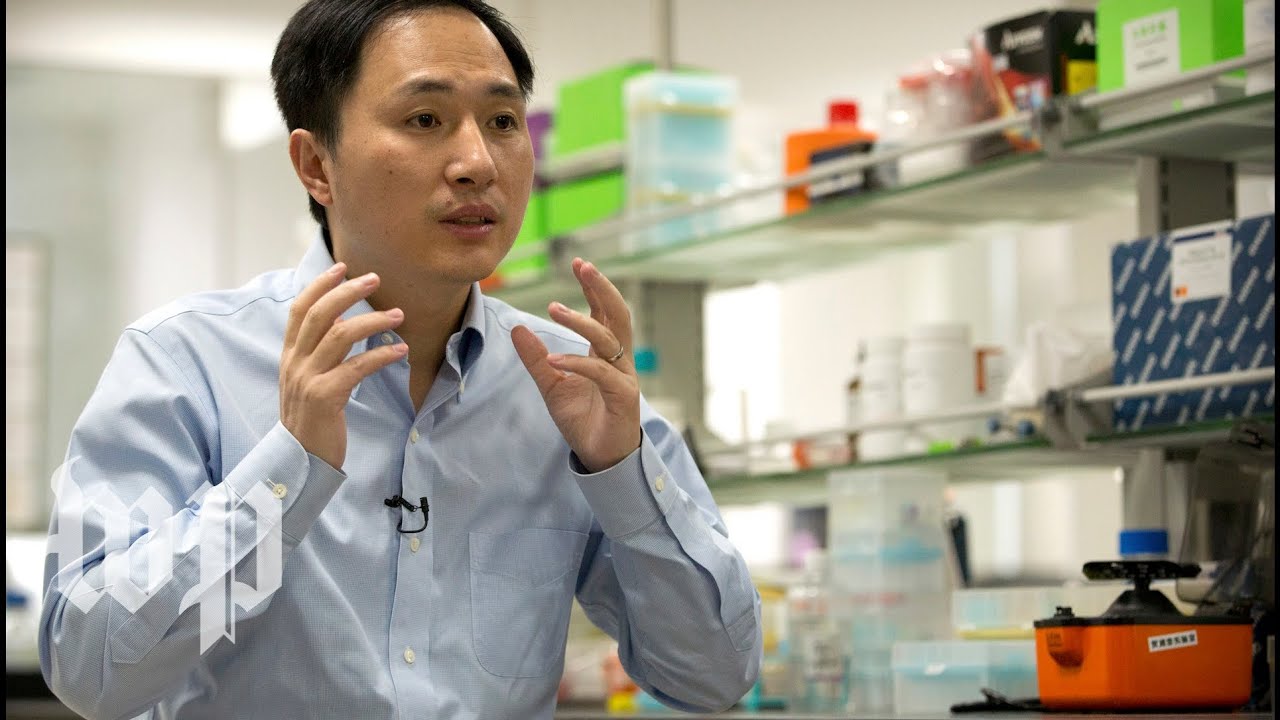
Chinese scientists are creating CRISPR babies
A daring effort is under way to create the first children whose DNA has been tailored using gene editing. When Chinese researchers first edited the genes of a human embryo in a lab dish in 2015, it sparked global outcry and pleas from scientists not to make a baby using the technology, at least for the present. It was the invention of a powerful gene-editing tool, CRISPR, which is cheap and easy to deploy, that made the birth of humans genetically modified in an in vitro fertilization (IVF) center a theoretical possibility. Now, it appears it may already be happening. According to Chinese medical documents posted online this month, a team at the Southern University of Science and Technology, in Shenzhen, has been recruiting couples in an effort to create the first gene-edited babies. They planned to eliminate a gene called CCR5 in hopes of rendering the offspring resistant to HIV, smallpox, and cholera. He Jiankui leads a team using the gene-editing technology CRISPR in an effort to prevent disease in newborns. The clinical trial documents describe a study in which CRISPR is employed to modify human embryos before they are transferred into women’s uteruses. The scientist behind the effort, He Jiankui, did not reply to a list of questions about whether the undertaking had produced a live birth. Reached by telephone, he declined to comment. However, data submitted as part of the trial listing shows that genetic tests have been carried out on fetuses as late as 24 weeks, or six months. It’s not known if those pregnancies were terminated, carried to term, or are ongoing. [After this story was published, the Associated Press reported that according to He, one couple in the trial gave birth to twin girls this month, though the agency wasn't able to confirm his claim independently. He also released a promotional video about his project.] The birth of the first genetically tailored humans would be a stunning medical achievement, for both He and China. But it will prove controversial, too. Where some see a new form of medicine that eliminates genetic disease, others see a slippery slope to enhancements, designer babies, and a new form of eugenics. Dr. Sullivan serves as professor of pharmacy practice and director of the Center for Bioethics. His research and writing interests include biomedical ethics, moral philosophy, and reproductive ethics. Contact him today for your story! Simply click on his icon to arrange an interview.


Kelley School expert explains changing market conditions leading up to GM announcement
General Motors on Nov. 26 announced plans to close five manufacturing sites and consolidate production in North America and eliminate an estimated 14,000 white collar and blue-collar jobs. Rodney Parker, associate professor of operations management at Indiana University’s Kelley School of Business, said the announcement reflects several new realities for GM. “First, it reflects the ongoing shift of consumers preferences from cars to SUVS and pickups. The announcement to discontinue several cars models and focus more on trucks mirrors Ford’s announcement in April 2018 to drop all car models other than the Mustang and Focus to concentrate on trucks. SUVs and pickups are more profitable and they are what consumers want. “Consequently, GM has numerous plants which are under-utilized but still incur substantial fixed costs, resulting in losses. The plant closures are necessary for the whole company to remain profitable and competitive with rivals which are making similar moves. “Second, despite 2017 being a very good year for GM (record operating profit, sold over 10 million vehicles), sales in China can be credited for much of that success. The recent growth in the Chinese vehicle market has benefitted GM greatly and compensates for slower growth in the US domestic market. But the sales in China will necessarily be serviced by plants in China or nearby, rather than plants in the US. Also, the shift in production to more SUVs and pickups in the US plants caters to domestic tastes, not those in China. “Third, the substantial savings accrued from these closures will be necessary for future investments in autonomous vehicles (AVs) and electric vehicles (EVs) and hybrids. In 2016, GM wisely bought Cruise Automation, an AV startup in San Francisco, and has leapfrogged a number of auto rivals in this critical area. However, further development in AVs will require considerable investment by GM in order to keep pace with Google’s Waymo unit, with the possibility of launching their own ride-sharing service in the future. “Predictions for the automobile industry frequently suggest a shift from exclusively selling vehicles to also ‘selling miles,’ where the manufacturers are providing transportation services, through a combination of per usage fee or subscription. The economic argument for the usage of AVs in ride-sharing services is compelling and GM wants a part of this. At least part of the current plant closures are being done with an eye to the future and the big down payment GM needs to make in AVs.” Parker, who also is the Fettig/Whirlpool Faculty Fellow at Kelley, can be reached at 812-855-3329 or rodp@indiana.edu.


2019's Hottest Content Marketing Trend
Content marketing has taken over the digital landscape and quickly become the strategy of choice for boosting online engagement. While many organizations want skin in the game, incremental tweaks to existing marketing plans will no longer deliver big returns. Over the past 18 months, audience behaviour has evolved and we need to make sure that we’re keeping up. Expertise Marketing is the next evolution of content marketing. Leveraging untapped expertise within your organization, it builds value by mobilizing the hidden people, knowledge and content you already have at your fingertips. This win-win solution not only gives audiences better quality content, but it also lets organizations show off their smarts. As the hottest content marketing trend of 2019, Expertise Marketing drives exponential return by: Promoting the content generated by internal experts in the manner that’s easily found by both search engines and media partners. Transforming invisible expert content that is already in your organization into lead-generating material. Using best-in-class content to nurture conversations and connections with audiences such as media, customers, partners, government and funding agencies. Download our FREE Whitepaper Expertise Marketing: The Next Wave in Digital Strategy On top of these attributes, Expertise Marketing can be easily deployed in weeks and improvements to ROI metrics can be seen almost instantly. Download our white-paper to learn more and step into this new world of opportunity and performance. Get Your Copy and Get Started Expertise Marketing: The Next Wave in Digital Strategy About ExpertFile ExpertFile is the world’s first Expertise Marketing Platform that helps organizations solve the challenge of creating, managing and amplifying expert content. Our software platform and services help you showcase your people and their insights to the audiences that matter across a range of channels including distribution through the Associated Press to over 15,000 newsrooms. Learn more about ExpertFile.

Baylor Journalism Professor, Public Relations Ethics Expert, Selected as Arthur W. Page Fellow
Marlene Neill, Ph.D., assistant professor of journalism, public relations and new media in Baylor University’s College of Arts & Sciences, has been designated as a research fellow at the Arthur W. Page Center for Integrity in Public Communication, a research center at the Penn State University College of Communications. The Page Center has asked Neill to focus on developing a response to a new report from the Commission on Public Relations Education that recommends public relations education programs offer a stand-alone ethics course, as well as integrate ethics throughout curriculum. The study found that public relations professionals ranked ethics third behind writing and communication as a necessary competency to work in public relations. In addition, public relations professionals in the study indicated that new professionals are not meeting their expectations in this area. “This is a great project because it combines my interests, the first being ethics, which is an area that I enjoy studying, and the second is a focus on public relations education,” Neill said. “I will be teaching the media ethics class in the spring for the first time, and one of the things I like about doing these studies is that it helps me gather insights from industry and then bring those insights back to the classroom.” Since receiving her invitation in June, Neill has begun preparations for research this fall with different groups across the nation, including the Public Relations Society of America. She will use the Delphi research method, where she will gather feedback from a variety of experts including senior- and middle-management executives as well as young professionals, and will then follow up with in-depth interviews, which last anywhere from 30 minutes to an hour. In addition, she will be serving on a subcommittee of the Commission on Public Relations Education, which is charged with making recommendations for public relations ethics curriculum. “On a typical study, I’ll spend about nine months going through the process of collecting the data, analyzing it, writing the papers, presenting to conferences and submitting to journals,” Neill said. “The second year will be spent preparing reports and writing recommendations based on those findings. While it sounds like a long time, when you think about it from that perspective, there’s a lot involved in doing an in-depth study like this.” In-depth interviews work well for this type of study, Neill said, because they provide specific examples of dilemmas and how people choose to handle them. “With qualitative research, you really get an understanding of the decision-making that people go through when faced with an issue and the step-by-step process they take to reach those decisions,” Neill said. “You get that inside scoop into the motivations and reasons for their actions.” Neill had previously received four grants from the Page Center, which resulted in a book, “Public Relations Ethics: Senior PR Pros Tell Us How to Speak Up and Keep Your Job,” published in 2018, as well as four journal articles, four academic conference papers and two top paper awards. In one of her most recent studies, Neill found that millennials often do not expect to face ethical dilemmas and do not feel prepared to address them. “There is a need to improve and enhance our ethics training at our colleges and universities, and by tapping in to what is actually happening in the industry, it makes it more relevant and helps better prepare students for some of the issues they will be facing today,” Neill said. As part of her subcommittee, Neill will gather sample syllabi and other teaching resources from universities across the nation and then share them with different public relations educators to help them prepare to cover ethics in ethics courses, as well as other public relations courses.



Why Some Mannequins Are Turning Blue, Taking a Dive and Putting on Weight
Baylor University fashion expert and author explains new twists in 'silent selling' -- and why frustrated customers may be relieved Women have long griped about pencil-thin mannequins in clothing displays, saying they bear little resemblance to real women’s bodies and make shopping frustrating and depressing. But the criticism is beginning to make inroads, and some members of the apparel industry are introducing changes to stop idealizing thin bodies and make mannequins more inclusive — among them creating mannequins with curvier shapes, modeling the figures after disabled people and, in a very different approach, fashioning forms that are totally unrealistic, says Baylor University researcher Lorynn Divita, Ph.D., co-author of the textbook "Fashion Forecasting” and associate professor of apparel merchandising in Baylor’s Robbins College of Health and Human Sciences. And more change may be in the works, prompted by research. A 2017 study published in the Journal of Eating Disorders found that 100 percent of the female mannequins studied in two large English cities represented an underweight body size — one that would be “medically unhealthy.” (Note: While female mannequins look scrawny, many of their male counterparts are brawny. Only 8 percent of male mannequins represented an underweight body size — although many appeared “unrealistically muscular,” researchers said.) Divita, who conducts research on the apparel industry, tracks trends and makes fashion predictions, offers some observations in this Q&A: Q: If mannequins are supposed to be a “silent seller” and a strong method for attracting customers, why are they so skinny that it is discouraging to women who are average or bigger? Why can’t their makers pack a few extra plastic pounds on them? A: For one thing, mannequins are expensive. The material for one that’s larger is going to cost more, the same way it is for plus-size garments, because you use more material. Typical department store mannequins can cost on average $500 to $900, and it can cost $150 just to repair a joint on a broken mannequin. In New York, where the retail industry is widely unionized, in some stores the sales associates are not allowed to touch the store mannequins. That responsibility is solely for visual merchandisers as a means of protecting the store’s investment. Another reason smaller mannequins have been appealing to retailers is that smaller dimensions make it easier to put on and remove clothing. Q: Wouldn’t it be worth the investment to make them bigger to showcase more realistic or inclusive figures and attract those customers? A: I recently visited the corporate offices of plus-size design company ELOQUII in New York, and their creative director, Jodi Arnold (B.S.H.E. ’88), shared with me that 65 percent of U.S. women are over size 14. Yet they represent only 17 percent of apparel spending. It’s hard to determine cause and effect: are they not spending on apparel because a wide variety of options aren’t available? Or is it that a wide variety of options are not available because this market does not spend on apparel? ELOQUII is betting on the former. In addition to their online store, they’ve recently begun opening brick-and-mortar storefronts which, unlike their website, feature merchandise on mannequins. Hopefully as the plus-sized apparel market continues to grow, the increased demand for plus-sized mannequins will result in wider representation of mannequin body types overall. Q: If most mannequins don’t reflect the majority of women’s physiques, where does the inspiration come for their sizes and shapes? A: Many mannequins can be sculpted using the measurements of live models or even have their proportions based on a celebrity who has a widely admired figure. Just like there is no standard apparel sizing system for women, there is no standard sizing system for display mannequins. Q: Besides beginning to be a bit more realistic in size, how are mannequins evolving? A: We are used to traditionally seeing mannequins in static poses like standing or sitting. With the rise in popularity of activewear, stores are devoting more floor space to this merchandise category, and it only makes sense to put those mannequins in dynamic positions like doing yoga poses or running. Another great example of dynamic poses can be found in swimwear: there are some great displays of mannequins diving. The impact of dynamic poses such as these are heightened when mannequins are displayed in groups of five or seven. Dynamic poses are currently being taken to the next level by actually suspending mannequins from the ceiling, so who knows how far this trend can go? One way to address representation is to go in the opposite direction and make a mannequin that is totally unrealistic. The last time I was shopping, I saw an entire section merchandised with glossy light-blue mannequins. This is actually a very clever way of appealing to everyone by targeting no one. Another interesting thing is that new technology allows visual merchandisers to creatively alter a mannequin’s appearance without changing it permanently by printing vinyl stickers to affix to mannequins’ faces. Merchandisers can print out bold lips or dramatic eyelashes, affix them to the mannequin in the display and easily take them off when they are done, which gives visual merchandisers yet another way to attract our attention. ABOUT LORYNN DIVITA, Ph.D. Divita is the author of the textbook “Fashion Forecasting” (Fourth edition, Fairchild Books). Her publications have appeared in the Journal of the Textile Institute and Journal of Fashion Marketing and Management, both published in England; Clothing and Textiles Research Journal and Journal of Textile and Apparel Technology and Management. She is the United States editor for the Bloomsbury Fashion Business Case Studies project and is on the editorial board of the Journal of Fashion, Style and Popular Culture. Divita received her B.A. in French and B.S. in fashion merchandising from California State University Chico, her Master’s degree in apparel manufacturing management from University of Missouri, and her Ph.D. in textile products marketing from University of North Carolina at Greensboro.


Can white evangelicals still swing the midterms?
Evangelicals overwhelmingly voted for Donald Trump in the 2016 election. And they overwhelmingly prefer Republican candidates in the midterms. They’re also reliable voters -- and support for Trump among white evangelicals remained at an all-time high with just days to go. Democrats, on the other hand, will rely on a less-certain electorate of young and diverse voters. This could make the difference in Tuesday's outcome. “Social conservatives could swing important races across the country if other voters don’t turn out in the numbers Democrats are hoping for,” writes Dylan Scott on Vox.com, which called white evangelicals “the sleeping giant of the midterms.” Still, according to The New York Times: “Young evangelicals are questioning the typical ties between evangelicalism and Republican politics. Many said it had caused schisms within their families. And many described a real struggle with an administration they see as hostile to immigrants, Muslims, L.G.B.T.Q. people, and the poor. They feel it reflects a loss of humanity, which conflicts with their spiritual call.” Emile Lester, assistant professor of political science at the University of Mary Washington, is an expert in religion and politics whose research published by the First Amendment Center has been featured in The New York Times, The American Interest, USA Today and on C-Span, NPR and various other media outlets around the nation. Emile is available to speak with reporters about the political behavior of evangelical Christian voters. Just click on his icon to arrange an interview.



Close races coal country! Our expert can help explain what might happen in Virginia this Tuesday
This Tuesday may be the most watch midterms in decades. Though it is quickly coming cliché to say this might be the ‘most important’ election to date…it is definitely the most important election since the last election. In Virginia – it’s a fight for key Congressional seats as well as for Senate. The thing to keep in mind is, midterm voters are not the same group as general election voters, in Virginia, it’s the seniors vote that shows up and demands to be heard. That could play a big part in the re-election efforts of form Vice Presidential candidate and current Senator, Tim Kaine. As well, with President Trump keeping his commitment to coal – will that play a part? There are many issues at play this week in Virginia that will impact not just the state, but potentially the country. That’s where our experts can help. Dr. Stephen Farnsworth is professor of political science and international affairs at the University of Mary Washington. A published author and a media ‘go-to’ on U.S. politics, he is available to speak with media regarding this issue. Simply click on his icon to arrange an interview.


Closing the gender gap - A record number of female candidates are on the ballot this Tuesday
There’s been an enormous amount of attention put on the 2018 midterm elections. As a divided America competes for control of both Congress and the Senate – this election has seen a solid roster of candidates looking to represent both sides of the aisle in Washington. Another positive trend that has emerged has been the number of female candidates coming forward for election. In a piece written for Vox, by University of Mary Washington’s Rosalyn Cooperman – some impressive numbers were shown, however the disparity of female candidates between the two parties can not be ignored. "While women comprise 43 percent of Democratic candidates in 2018 congressional general elections, they make up only 22 percent of Republican Senate candidates and only 13 percent of Republican House candidates. While Democratic women won House primaries at rates 20 percentage points higher than Democratic men, Republican women and men won House primaries at similar rates. Currently, 73 percent of the women serving in Congress are Democrats. While 2018 may be a record-breaking year for women candidates in many ways, the midterm elections are unlikely to significantly alter the longstanding party gap among women officeholders." So, what can be done to close the gender gap among Republicans? Is it time parties considered parity or focused more on recruiting viable female candidates? Are women discouraged from running, and if so why? There are many questions to be answered here and that’s where our experts can help. Rosalyn Cooperman, associate professor of political science at the University of Mary Washington and member of Gender Watch 2018, is an expert on women in politics. Rosalyn is available to speak with media regarding this topic – simply click on her icon to arrange an interview.
