
Experts Matter. Find Yours.
Connect for media, speaking, professional opportunities & more.

Sainthood and the legacy of Oscar Romero in El Salvador
If you’re covering the Canonization of Archbishop Oscar Romero, consider Rick Jones, who’s spent his entire career working on poverty and social justice issues in El Salvador. Rick knows first-hand that Romero’s messages are as relevant and necessary as ever. As he puts it: Changing repressive policies, calling on gangs and organized criminal groups to stop the killing, denouncing human rights abuses and caring for the victims is as urgent today as when Romero was archbishop. Based in El Salvador for more than 20 years, Rick works closely with the Church in Latin America on justice issues, including migration, internal displacement and youth violence. He understands well the poverty, violence and political divisions that compelled Romero to defend human rights in the face of death threats and even opposition from his colleagues in the Church. Oscar Romero was Archbishop of San Salvador until he was brutally assassinated on March 24, 1980 while celebrating Mass in the chapel of the Divine Providence cancer hospital where he lived. More than three decades later he was declared a martyr of the Church, killed out of hatred of the faith, and was beatified on May 23, 2015. Rick is available to speak with media regarding Romero’s legacy and what his sainthood represents for El Salvador and Latin America. To arrange an interview, simply click on his icon and we will be in touch immediately.

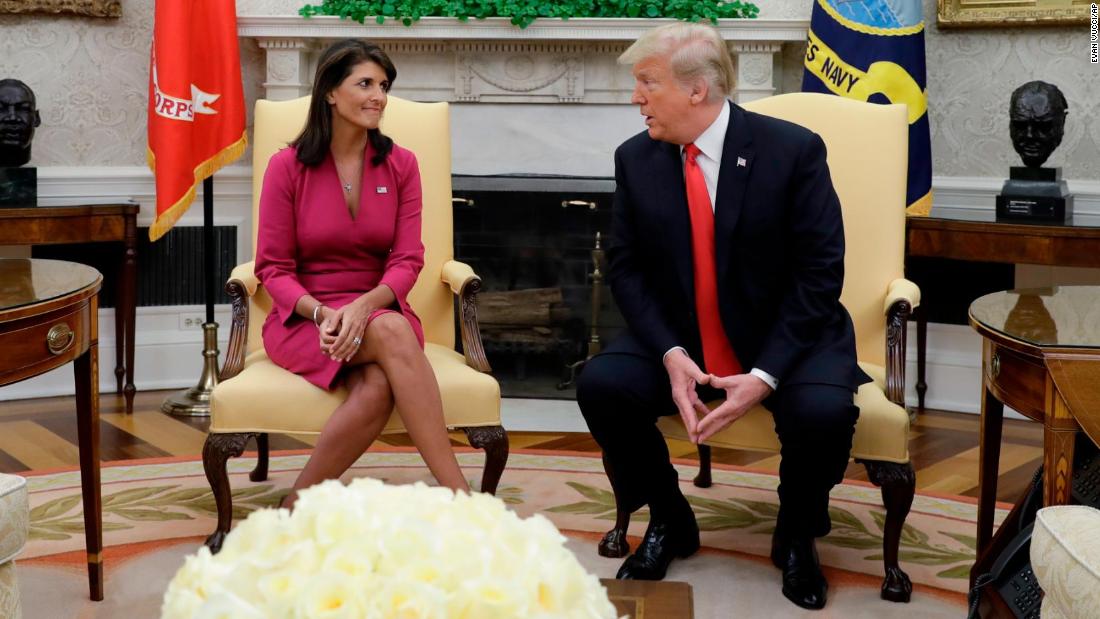
Ivanka to the United Nations? Ask our experts if it is possible!
One of the few shining stars is fading from the Washington skyline – and Nikki Haley’s departure as America’s Ambassador to the United Nations has the beltway speculating on her replacement. President Trump had eyebrows raised and tongues wagging when he trial-ballooned his daughter Ivanka as a suitable replacement. There’s also talk of Dina Powell, the well respected former Deputy National Security Advisor for Strategy to President Donald Trump. But who else is on the list and how key of a role is this as America reshapes its foreign policy. There are a lot of questions and a lot of educated guessing going on right now and that’s where the experts from Cedarville University can help. Dr. Glen Duerr’s expertise and research interests include nationalism and secession, comparative politics and international relations theory. Dr. Duerr is available to speak to media regarding this topic – simply click on his icon to arrange an interview.


Cloudhopper - What is it and should we worry?
Earlier this week, the Department of Homeland Security issued a warning that a Beijing based group of hackers -dubbed ‘cloudhopper’ was mounting a potential cyber-attack on American based institutions. The Chinese government has denied these claims vigorously and stated that China does not support hacking. So, what is cloudhopper? What businesses and institutions are most vulnerable? And does America need to increase its focus on cyber-security and digital threats? There are a lot of questions – and only a few leading experts who can help explain the situation. That’s where Cedarville can help. Dr. Seth Hamman is an assistant professor of computer science at Cedarville. Seth is an expert in cybersecurity education. Dr. Hamman is available to speak with media – simply click on his icon to arrange an interview.
Bigly: the effect of Trump's rhetoric on national security
Going against the findings of his own intelligence community, President Donald Trump has called Russian meddling into the 2016 U.S. presidential election a “hoax.” In a recent turn of events, though, the president accused China of interfering with the midterm elections. Has President Trump’s rhetoric on the intelligence community and hesitancy to hold Russia accountable influenced countries, such as China, to also try meddling in U.S. elections? “If people and foreign officials start believing President Trump’s rhetoric, there is a possibility, that we will face issues of doubt and trust concerning U.S. policy and commitments,” said Craig Albert, an expert in U.S.-Russian security affairs, director of the master of arts in intelligence and security studies and associate professor of political science at Katherine Reese Pamplin College of Arts, Humanities and Social Sciences at Augusta University. “Also, President Trump’s rhetoric helps prop up Vladimir Putin as being equal in stature to the leader of the free world and gives Kremlin and Putin greater credibility with Russian citizens and the near abroad.” Midterm elections are on the horizon, and Putin will continue election meddling regardless of Trump’s actions or rhetoric, Albert said. “Russia, under Putin’s leadership, will continue to increase its cyber activity against all sectors of the U.S., including and especially into the cognitive hacking of our electoral process,” he said. Cognitive hacking is when fake sources are used to spread fake news on social media. The success of Russia’s meddling in the 2016 election is emboldening other actors, like China. “Non-state actors like ISIS and Al Qaeda feel empowered to engage in both cognitive and source hacking in order to shift American public opinion,” Albert said. “We already believe China and Iran have engaged in similar operations. It won’t be long before ISIS utilizes the same type of intelligence operations because they are low risk, extremely high reward operations. Albert is available to discuss: • How President Trump’s rhetoric affects the U.S. intelligence community • How Trump’s apparent support for Russia empowers Putin and the Kremlin to continue meddling into U.S. elections • How Russia’s actions are emboldening other non-state actors • Why Trump’s denial of Russian meddling into U.S. elections can further damage U.S. relations with its allies Contact us to schedule an interview with Albert or to learn more about his expertise. Source:


Latest push in fake news is pushing fake experts
During the 2016 presidential election, hundreds of fake sources used social media to spread fake news. Many of these posts were traced back to the Internet Research Agency, a Russian troll farm that used social networks to create divides among Americans and influence the election. This is known as cognitive hacking and is the real scandal of the 2016 election, said Dr. Craig Albert, director of the Master of Arts in Intelligence and Security Studies program and associate professor of political science at Katherine Reese Pamplin College of Arts, Humanities, and Social Sciences at Augusta University. Fake sources using social media to spread fake news are often able to reach a large audience who may never realize the stories are false, Albert said. In some instances, entire organizations and groups have been created under false pretenses and have had millions of social media followers. “When so many people see fake news on their newsfeeds, they become a product of their belief in a fake story,” Albert said. “So, a fake story controls their opinions.” Now, Russia is taking fake news a step farther. The newest trend is creating a false persona to push fake news on U.S. news organizations. “They will have an expert create a story, and they will create credentials and a website to give credibility to this individual,” Albert said. “When media outlets try to ascertain the credibility of a person they typically visit the individual’s website or look at their resume. It appears legitimate, so the source is validated, and news outlets run the story.” In many cases, though, these are false stories by individuals with fake credentials. Albert calls this source hacking. Dr. Albert is an expert on American politics and political philosophy. He has experience with all forms of local and national news organizations and is available to speak to media regarding cognitive and source hacking. Contact us to schedule an interview with Dr. Albert or to learn more about his expertise. Source:
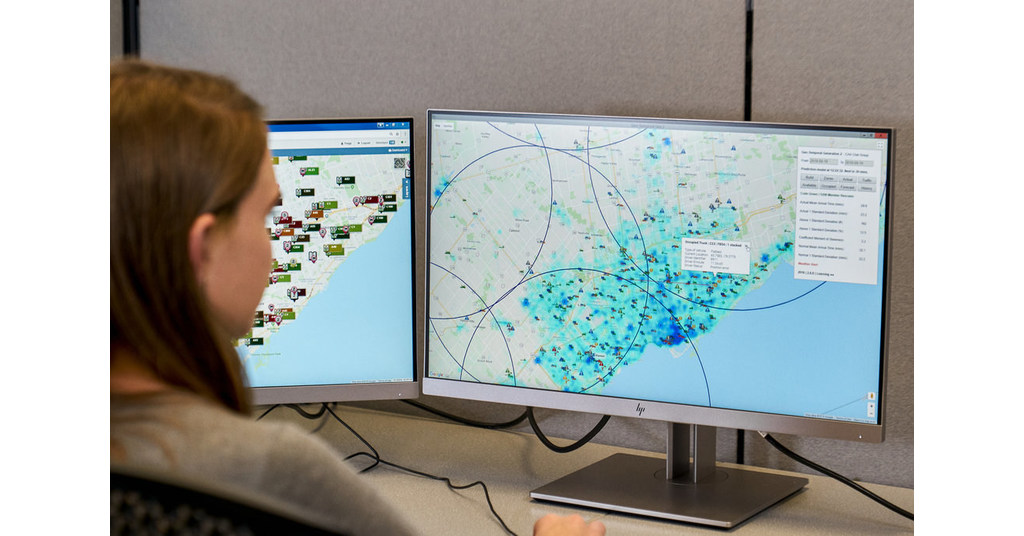
MEDIA RELEASE: CAA rolling out new predictive technology
New predictive technology, created in-house at CAA South Central Ontario (CAA SCO) can now predict the likelihood of a roadside event occurring in a specific geographic area, and send a truck to that area before a breakdown occurs. CAA's new Gen 2 predictive technology gets the right truck, to the right place, at the right time. Gen 2 is a proprietary machine-learning algorithm that leverages data from 115 years of roadside assistance service. It layers on weather and humidity indicators, along with real-time traffic and GPS information to predict roadside needs. Gen 2 was developed in-house by CAA in late 2017 and piloted in the London area in January 2018. Initial results during the pilot period showed a promising reduction in the average time of arrival for roadside service vehicles. CAA SCO was able to rescue members an average of 11 minutes faster during the summer of 2018, when compared to the summer months of 2017. The service improvement is directly tied to the roll out of CAA's new predictive technology. The system learns over time, so CAA SCO expects average wait times will continue to improve. The technology has already garnered interest from roadside assistance clubs from around the world. CAA Gen 2 is currently being operationalized across CAA SCO's territory. Source:



What to expect from the 73rd General Assembly of the United Nations?
In what is supposed to be a gathering of the world’s leaders to discuss, debate and solve global problems – that spirit of collaboration and thinking might be all but absent this session. It’s expected that President Donald Trump will be pointing both barrels directly at Iran during his speech. His accusations of Iran casing chaos and terror around the world will no doubt please his conservative base leading into November’s elections – but it may be met with resistance and even backlash from leaders from around the world. The tone could even take the unlikely turn that it is Trump and America that are the threat to peace. Times certainly have changed. So, what will come from the upcoming General Assembly? Does the UN have the influence it once enjoyed? And once the meeting is over, does any of it really matter? There are a lot of questions to be answered and that’s where an expert from Cedarville University can help. Dr. Glen Duerr’s expertise and research interests include nationalism and secession, comparative politics and international relations theory. Dr. Duerr is available to speak to media regarding this topic – simply click on his icon to arrange an interview. Source:
3 measures to improve election security
As hacking attempts to undermine our elections have become the new normal, state governments are rushing to secure their voting systems with a $380-million fund from Congress before the midterms. The big question is, where should they invest that money to protect U.S. elections? “Almost every state today is using a different electronic election system,” said Alexander Schwarzmann, former director of the Center for Voting Technology Research at the University of Connecticut and current dean of the School of Computer and Cyber Sciences at Augusta University. “While diversity of systems somewhat increases our election security, states can strengthen it by investing in three areas: They should adopt a voter-verified paper ballot system, increase their technological capability to detect and address security vulnerabilities and implement auditing of election results to build public’s confidence in the outcomes.” Schwarzmann, who provided technological expertise to the State of Connecticut in cybersecurity and integrity of electronic election systems and led state-wide technological audits of voting systems, is available to discuss: • How he helped the State of Connecticut become a leader in voting technology cybersecurity • How state governments can improve confidence in their voting systems by investing in three areas: voter-verified paper ballots, technology to detect and counter security vulnerabilities and statistical and technological election audits Schwarzmann is a nationally-recognized expert in voting technology cybersecurity, and distributed systems. His own research programs have been supported by numerous grants totaling over $8.5 million from the National Science Foundation, including NSF Career Award, Air Force Office of Sponsored Research, State of Connecticut, NSF-NATO, and U.S. Election Assistance Commission and other agencies. He has authored three books and more than 150 research articles and has edited a number of scholarly volumes on computer science research. He served on several editorial boards, including IEEE Transactions on Computers and Information & Computation, two of the most venerable and prestigious journals in computer science. Contact us to schedule an interview with Alexander Schwarzmann or learn more about his expertise. Source:


Just how vulnerable are older Americans to getting hooked on opioids?
It’s a problem that most don’t commonly associate with seniors, retirees and older adults – being hooked on opioids. But it is a problem in America and it’s growing at a frightening pace. According the article attached: ‘Researchers involved with the University of Michigan’s National Poll on Healthy Aging polled a nationally representative sample of 2,000 Americans, aged 50 to 80, about what their health-care providers talked about when prescribing opioid medication to them. In the past two years, 589 said they filled an opioid prescription. This group knew how often to take the medication, but the majority didn’t recall their doctors or pharmacists talking about the risk of addiction, the risk of overdose, or what to do with leftover pills. About 40 percent said their doctors didn’t talk to them about the side effects of opioid use or guide them on when to cut back on pain medications.’ That is a staggering and scary scenario? But what can be done? Is it simply about better communication and information? Or do stronger restrictions and regulations need to be put in place to limit the opportunity for vulnerable seniors to become addicted? As America struggles to battle the opioid epidemic – are seniors another layer of addicts that could compound this situation? There are a lot of questions and that’s where the experts from can help. Dr. Marc Sweeney is the Founding Dean of the School of Pharmacy at Cedarville University and is an expert in the fields of drug abuse, prescription drug abuse and Opioid addiction. Marc is available to speak with media regarding this growing issue. Simply click on his icon to arrange an interview. Source:
The State of Georgia wants to replace its 16-year-old voting machines with paper ballots for fear of Russian election hacking, but are paper ballots safe? “Safe from hacking? Perhaps. Safe from voter error? Not so much,” said Scott Thorp, a user-centered design expert and chair of the Department of Art and Design at Augusta University. “User-centered design for paper ballots is crucial for free and fair elections. Good design should never influence how people vote. A design mistake might actually have cost Al Gore the presidency in 2000. Who is to say it couldn’t cost the governorship in Georgia this year?” Thorp, who also worked as a professor and design coordinator at the Savannah College of Art and Design, is available to discuss: • What user-centered design is • How design can influence people’s behavior • How bad design can lead to human error • Why designing paper ballots with users in mind is crucial for free and fair elections Thorp, who is also associate vice president for research at Augusta University, has worked for more than a decade as an exhibiting artist. His research interests include user-centered design, design thinking, and the psychology of creativity. Contact us to schedule an interview with Scott Thorp or learn more about his expertise. Source:
