
Experts Matter. Find Yours.
Connect for media, speaking, professional opportunities & more.

Is repealing the Second Amendment possible or easier said than done?
On Tuesday, retired Supreme Court justice John Paul Stevens called for the repeal of the Second Amendment. It appeared an Op-Ed in the New York Times and has been taking the news and political worlds by storm. It’s not often a justice leaves his position of objectivity, even if retired. But at the age of 97, the former justice who was first appointed to the Supreme Court in 1975 by then President Gerald Ford weighed in calling the amendment a “relic of the 18th century.” However, it takes more than just a stroke of the pen or a simple impassioned vote to accomplish this. In fact, to repeal the Second Amendment would be require both houses of Congress proposing the amendment with a two-thirds vote, or two thirds of state legislatures calling on Congress to hold a constitutional convention. It would then have to be ratified by three-fourths of the states or state legislatures. There’s a lot of math involved there. As well, an equal amount of legal and constitutional perspective required. That’s where the experts from the UC Hastings College of Law can help. Joel Paul is an expert in the field of constitutional law. He is available to speak with media regarding just what it might take to repeal a constitutional amendment. Simply click on his icon to arrange an interview. Source:


Microsoft Working to Close the STEM Gap
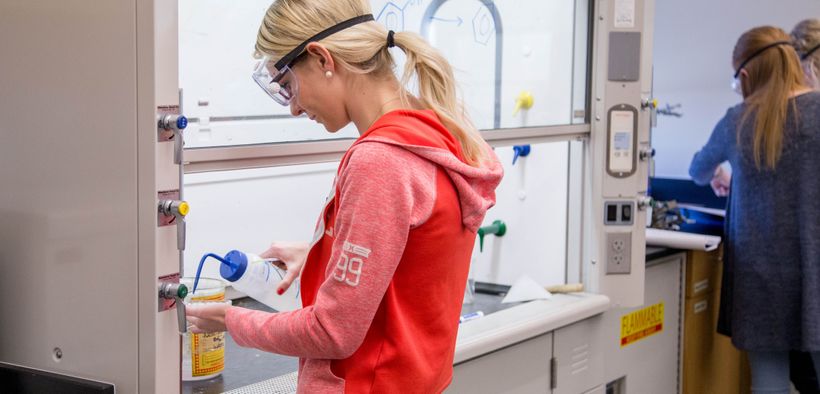
Even with a higher priority placed on science, technology, engineering, and math (STEM) throughout education in the US, only a fraction of girls are likely to pursue a STEM career. According to the National Center for Education Statistics, while more than 57 percent of college undergraduates are women, only 18 percent progress into STEM careers. With a clear gap, Microsoft set out to better understand what causes girls and women to lose interest in STEM subjects and careers, as well as what strategies have the greatest potential to reverse the trend. According to Microsoft, the goal of the study “was to inform our work in this area and to share learnings with schools, government leaders, nonprofits, employers and others. What we learned is that conditions and context can make a significant difference to girls, young women and their interest in STEM. And the solution doesn’t necessarily require a curricula overhaul.” Dr. Shalini Kesar, Associate Professor of Information Systems at Southern Utah University and advocate for women in technology, has known for years that girls and young women are a critical missing part of STEM studies and careers. “The stubborn gender disparity in STEM fields has sparked important debates on the underlying reasons,” said Kesar. “Some attribute the gender disparity to social and infrastructural factors, lack of mentors and role models, and lack of awareness about what these fields offer in terms of educational and career opportunities. Others point to studies that indicate traditional mindsets of computing as ‘boring’ and ‘only for boys’ as a major reason why girls and young women do not consider a degree or career in this field.” The study found that “we may be able to make significant strides just by showing girls and young women how STEM knowledge is applicable outside of the classroom, and how it can power their aspirations to make the world a better place.” “Recently, I was invited to collaborate with Microsoft on research which quantifies many of my observations from over 20 years of working to reduce the gender gap in STEM and computing,” said Kesar. “This work is an essential step forward in helping us learn more about how girls and young women currently perceive STEM.” Dr. Kesar was recently recognized by the Women Tech Council, receiving the Education Excellence Award at the 2016 Women Tech Awards. She is familiar with the media and available for an interview. Simply visit her profile.


Need to understand trade wars and tariffs? Goizueta's Jeff Rosensweig can explain. "These foreign nations that we're going to put these import taxes on, these tariffs, are not stupid," he tells NPR. "They're going to retaliate against our exports, and they're going to hit us where it hurts, which is often our farm exports." Source:



Baylor Professor, Public Relations Ethics Expert Shares Thoughts on Resignation of ICE Spokesman
James Schwab, spokesman for the U.S. Immigration and Customs Enforcement (ICE) in San Francisco, recently resigned his position -- alleging that Trump administration officials, including U.S. Attorney General Jeff Sessions, made false public statements after the agency’s recent Northern California sweep to arrest undocumented immigrants. Marlene Neill, Ph.D, APR, an expert on public relations ethics and coauthor of the new book "Public Relations Ethics: Senior PR Pros Tell Us How to Speak Up and Keep Your Job," said it's incredibly challenging for PR professionals when they feel their integrity is at stake or when they are at odds with their supervisors. If Schwab's accusations are founded, Dr. Neill said she feels he made the best decision. "I applaud James Schwab for his moral courage and willingness to stand firm in his values despite a high personal cost. From news accounts, it appears he tried to persuade other executives to be more forthright and truthful in their communication, but was unsuccessful in his efforts. That left him no choice but to resign. In our new book, we discuss different persuasive approaches senior executives can use to advocate for ethical communication. However, when those efforts fail, it leaves communication executives with few options to maintain their integrity. That is why it is so important to have a personal crisis plan." Dr. Neill, Ph.D., APR, is an assistant professor at Baylor University. She teaches courses in public relations and advertising. She also serves as the faculty adviser for the Baylor PRSSA chapter. Her research interests include public relations management and ethics. She has published research in the following journals: Journal of Mass Media Ethics, Public Relations Review, Journal of Communication Management and Journal of Advertising Education. Neill is an accredited member of the Central Texas Chapter of the Public Relations Society of America. She served as the chair for the Southwest District of PRSA in 2011. At the national level, Neill served a three-year term on the Universal Accreditation Board, which administers the examination for Accreditation in Public Relations; the Nominating Committee, which selects national board officers in 2012; and was appointed to the Board of Ethics & Professionals Standards in January of 2013. Dr. Neill is available to comment. Source:



Is Samsung’s Flip Whiteboard the latest ‘must have’ for modern offices?
From small-screens to big screens – Samsung is at it again. This time, it’s taking a run at Google’s Jamboard offering the Flip – a 55-inch touchscreen whiteboard that works vertically and horizontally. It can connect to your devices and imports and exports with simple USB options. It’s got everything you could think of … and it comes cheap. Flip is coming to market for approximately half the price of the Jamboard. But will it catch on? With budget conscious companies and schools always considering the bottom-line – is a whiteboard with all the bells and whistles a ‘must have’ or a luxury? Evan Hardie is an expert in all areas covering printers, hardcopy peripherals and imaging markets. Evan is available to speak to this topic, simply click on his icon to arrange an interview. Source:


Why are so many surprised? Yes, her actions are on the extreme side, but her espoused racist ideology is not unfamiliar to public education. Today, the Department of Education states that public schools across the country are composed vastly with White teachers. On the other hand, schools have become more diverse with increasing numbers of Black and Latino students. But what’s most troubling is not the race of teachers, but the ideologies they adopt toward their students of color. The idea postulated for eons that all teachers believe all students are capable is simply a fallacy. Research has shown that White teachers have less expectation for Black academic potential. In fact, it has been shown that White teachers have preconceived negative racialized stereotypes of children as young as preschool. Therefore, it is not out of this world expectation in regard to understanding the ramification. For example, it has been found that when Black students have White teachers, the teachers see them as more disruptive than their Black colleagues. But Black teachers perception of White and Latino perceptions is seen as unaffected. Black student are also suspended, expelled, placed in special education, and overlooked in terms of advanced classroom placement when they have White teachers. Therefore, every White teacher may not have a podcast that communicates Charles Murray or David Duke sentiments, but the slithered evidence of their shared ideological thinking is operating within public schools across the country. Source:


Body Cameras NOT to the Rescue
Body Cameras NOT to the Rescue! During the previous onslaught of repeated media grabbing stories and attention depicting possible police brutality, shootings, and all around unlawful prejudicial minority harassment; a recurrent solution was constantly thrown into conversations—Body Cameras. Well, it seems that expert and popular opinions were off base. The story of the 32 year old jaywalker, Johnnie Jermaine Rush, arguably illustrates the flaw in their proposed solution. Now, it is not to say that the solution is totally and utterly useless. The assumption that body camera undeniably deter people from acting unlawful or biased toward people of color due to the scrutiny of “Big Brother,” stands upon a chair missing a leg or two. The experts assume that possibly captured images of unlawful treatment by police officers exhibiting wrongful attitudes and actions toward Blacks and Brown people would not only lead to disciplinary measures, but also deter officer mistreatment. This takes one to be conscious that their racially based actions are not acceptable. But most people feel there are not racist. Most people unconsciously are blind to the white racial frame that has influenced them, their thoughts, and their actions toward people of color. They are right, while those of a different hue are wrong. They are human and civilized, and Black and Brown are not. They are worthy of human rights, and people of color are not. This mentality is difficult to keep in check when everything around you supports your ideology. Therefore, in the case of officer Senior Police Officer Christopher Hickman, he may have simply acted from an unconscious place riddled with hate and disdain. When society supports a racist ideology and preaches racialized division, how does one know they are wrong when acting in accordance to the society around them? Source:

The Empathy Gap Between White Social Workers and Clients of Color
Empathy is a core human attribute — but it is far from infallible. In social work, an empathy gap tied to racial identity can lead to worse outcomes for people of color. We like to think of ourselves and our colleagues as empathetic, but our experiences and actions can often contradict this notion. What does this mean for education and the world at large, and how can we improve this? Terence Fitzgerald, clinical associate professor at the USC Suzanne Dworak-Peck School of Social Work and scholar of institutional racism, policy and child welfare, shares his recent research on racial empathy in social work. Source:

Are Smart Speakers the next must have for Canadian connected consumers?
With Smart Speakers all the rage, connected adds-ons, extras and accessories are the logical next step in building a meaningful smart home. After all, what’s the point of an expensive smart speaker with an assistant built into it if it can’t do more than help you search for a song? Smart Speakers seem to be the trending topic for most smart homes – Google and Amazon have already established their presence in the market. Sonos and JBL aren’t far behind and are now offering their alternatives; with heavyweight, Apple standing on the sidelines waiting to enter the arena. However, with home assistants still building out interconnectivities with partnering brands, does the current ecosystem of partners limit the market’s potential to grow or does it open the flood gates for more supported devices to come? How influential will the ecosystem of supported devices be in smart device adoption? Do partnering device manufacturer’s care which home assistant is used to control their device or just that smart home devices market continues to grow? As smart-homes devices continue to proliferate and home assistants become more commonplace, competition will be fierce and it will be interesting to see who prevails. IDC launches a new Worldwide Smart Home Device Tracker this week sizing up the shipment market of such connected devices as consumers continue to build the smart home of their dreams today! Manish Nargas is a research analyst specializing in consumer and mobile research. He is an expert in emerging consumer technologies with a focus on usage trends and adoption. Simply click on Manish’s icon to arrange an interview. Source:

National Nutrition Month - Eat better, save money, live longer
March is National Nutrition Month and it couldn’t come any quicker. After a long winter and spring around the corner, many Americans are ready to start eating healthier. Healthy eating is not merely about shedding pounds. Good nutrition often leads to financial savings and enables us to reduce waste. One way to eat healthier is by cooking at home instead of eating out. Unfortunately, according to the Bureau of Labor Statistics, the average household spends about $3,008 per year on dining out and the food consumed is usually high in trans-fats, sodium and calories. Eating out is an expensive and often times unhealthy habit. That habit is also becoming an addiction – in 1900, only two percent of U.S. meals were eaten outside the home. Recently, that number has climbed to more than 50. It’s not always easy forgoing eating out, but the reward is truly worth the effort. Cost savings aside, cooking at home and eating as a family has proven to make people happier and feel more connected. RD Natalie Allen, clinical instructor of biomedical science at Missouri State University, can share insights about cooking home-cooked meals that are tasty, healthy, cost-effective and don't take a lot of time. Contact her for an interview. Source:
