
Experts Matter. Find Yours.
Connect for media, speaking, professional opportunities & more.

Unveiling the Emotional and Psychological Rewards of Gift-Giving
During the holiday season, the spirit of giving resonates with joy and warmth, extending beyond mere material exchange. Philip Gable, a professor of psychological and brain sciences at the University of Delaware, asserts that there's a science behind gift-giving, encompassing emotional nuances applicable to charitable work. Gable emphasizes that the significance of a gift contributes to the happiness derived from giving, taking various forms, from a personal investment of time to a budget-conscious monetary contribution. It transcends mere obligation, aiming to create a resonant impact. The professor has expertise in emotion and motivational science and can discuss this nuance, especially as we enter the winter holiday season. He can be reached by clicking his "View Profile" button.


Reinventing the laser diode: free public lecture by Professor Richard Hogg
Professor Richard Hogg joined Aston University in spring 2023 His inaugural lecture is about laser diodes, the tiny components that are a vital part of everyday life The free event will take place on Tuesday 28 November. The latest inaugural lecture at Aston University will explore the laser diode and what’s in store for it in the future. Professor Richard Hogg will explain how his future research might make laser diodes do some of the things that they currently can’t do. The laser diode turned 61 years old this month and the tiny components are a critical part of everyday life. Professor Hogg said: “They are now at the heart of the continuous transformation of society. “They transmit data to allow instantaneous, ubiquitous communication and data access. “They allow light to be used for cutting and welding, for sensing and imaging, for displays and illumination, and data storage. “And in the guise of a laser pointer they can even be used to entertain your cat!” He will discuss different classes of laser diode and their operation and applications. Professor Hogg joined Aston University in spring 2023 and is based at Aston Institute of Photonic Technologies (AIPT). It is one of the world’s leading photonics research centres and its scientific achievements range from medical lasers and bio-sensing for healthcare, to the high-speed optical communications technology that underpins the internet and the digital economy. The professor is also chief technology officer at III-V Epi, which provides compound semiconductor wafer foundry services. The free event will take place on the University campus at Conference Aston, on Tuesday 28 November from 6pm to 8pm and will be followed by a drinks reception. It can also be viewed online. To sign up for a place in person visit https://www.eventbrite.co.uk/e/717822585677?aff=oddtdtcreator To sign up for a place online visit https://www.eventbrite.co.uk/e/717824260687?aff=oddtdtcreator

Georgia Southern University launches ‘Together We Soar’ Campaign
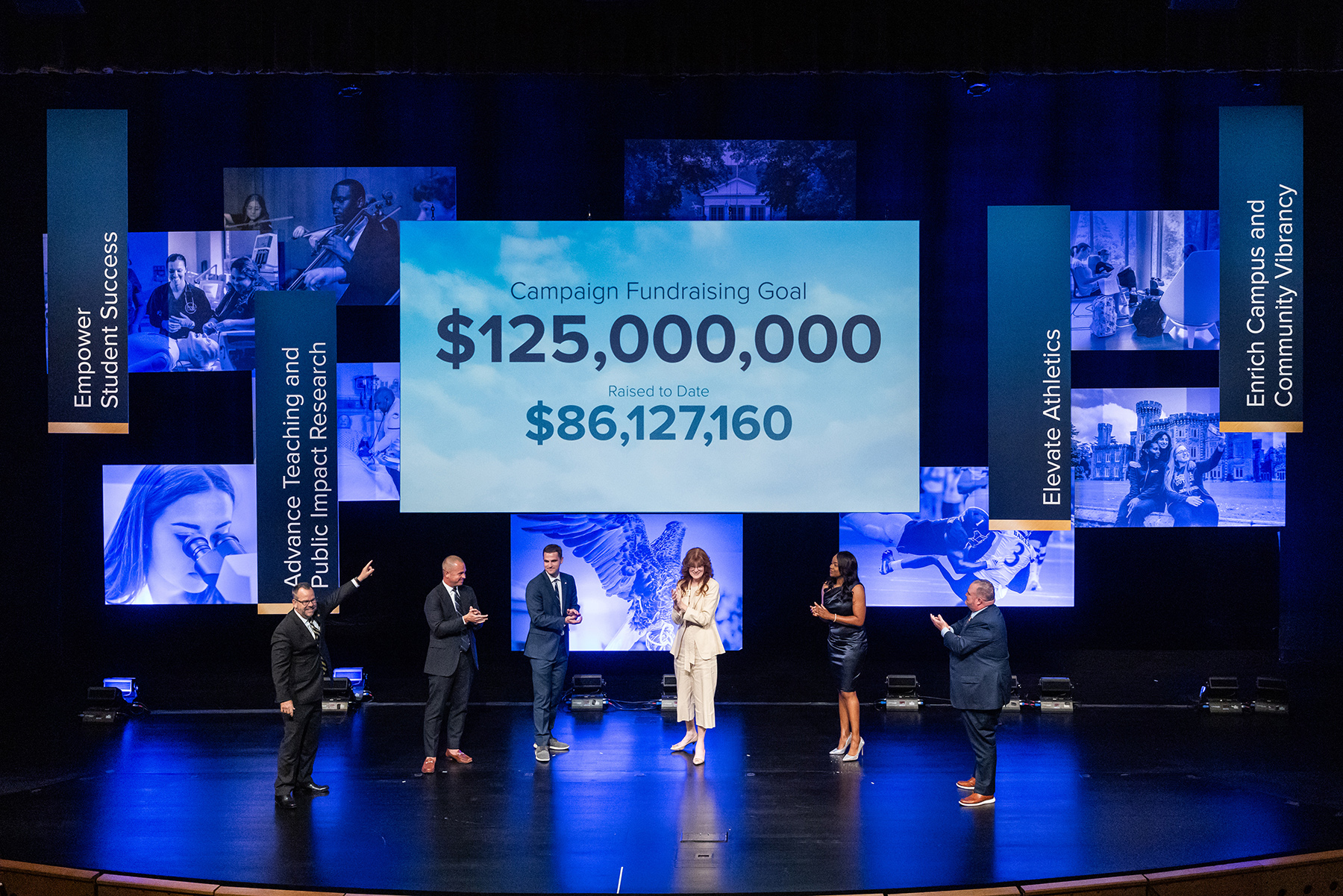
Georgia Southern University proudly announces the launch of its comprehensive campaign, “Together We Soar: The Campaign for Georgia Southern University.” This transformative initiative aims to elevate the University’s impact on students, faculty, research, athletics, and the communities it serves. Georgia Southern, renowned for its majestic campuses adorned with southern live oaks and towering pines, symbolizes not just American freedom but also the promise, achievement and boundless potential of its students. The University’s trajectory is on the rise, reaching for greater heights in education and community impact. Central to this momentum is the unwavering support from alumni, friends and the community. Publicly launched last Friday evening, Together We Soar: The Campaign for Georgia Southern University aims to raise $125 million by 2026. More than $86 million has already been secured. Dr. Kyle Marrero, President of Georgia Southern, expressed his gratitude and vision for the University. “Georgia Southern is on the move, in motion, and soaring to new heights. The ‘Together We Soar’ campaign—fueled by the generous support of our alumni, friends, and partners—will ensure our ability to drive innovation, develop talent, transform lives, and propel the economic development of a growing region.” (L-R) Georgia Southern President Kyle Marrero, Vice President for University Advancement Trip Addison, Deputy Athletics Director of Development Davis Hendrickson, Executive Director of Development Julie Gerbsch, Director of Alumni Relations Ava Edwards, and University Campaign Co-chair Leonard Bevill on stage at the Oct. 20 launch event for Together We Soar: The Campaign for Georgia Southern University. The campaign has identified four primary objectives: Empower Student Success: The campaign aims to stimulate learning by recruiting high-achieving students, increasing student access, and promoting inclusive excellence and career readiness. Advance Teaching and Public Impact Research: The focus is on meeting regional economic needs, increasing faculty expertise, and enhancing research capacity. Elevate Athletics: The campaign seeks to attract and retain elite student-athletes, provide top-notch facilities, and boost the Competitive Excellence Fund. Enrich Campuses and Community Vibrancy: The goal is to improve the communities surrounding the campuses and teach about local wildlife, among other initiatives. Campaign co-chairs Mike Sanders and Leonard Bevill shared their excitement for the campaign and what it will mean for Georgia Southern. “I could not be more excited about Georgia Southern and its possibilities. Opportunities abound for our University and the Together We Soar Campaign is the catalyst. It is time to do ‘more with more.’” - Mike Sanders “‘Together We Soar’ is spot on. From across campus to athletics and throughout our community, we’re perfectly aligned and equipped to launch to historic heights. I’m very blessed and excited to be involved.” Leonard Bevill The campaign also highlights the significant economic impact of Georgia Southern, with a regional economic contribution of $1.1 billion in fiscal year 2022. The University plays a critical role in the economic growth and transformation of Southeast Georgia. Marrero said Georgia Southern invites all its supporters, alumni and the community to join this transformative journey. With collective support, there’s no limit to how high Georgia Southern can soar. For more information or to contribute to the “Together We Soar” campaign, visit GeorgiaSouthern.edu/TogetherWeSoar.


Peer Support Program Helps Patients With Substance Use Disorders
Recognizing that stigma may keep people from accessing treatment and recovery resources, ChristianaCare Union Hospital is partnering with the Cecil County Health Department and Voices of Hope to make peer recovery specialists available at the bedside for patients who have experienced a drug overdose or live with substance use disorder. Ten peer recovery specialists are available at Union Hospital seven days a week from 8:30 a.m. to 1 a.m. to talk with patients about behavioral health care navigation, access to treatment and referrals to harm-reduction and recovery-support resources. Patients can be connected with a certified peer recovery specialist if they are brought to the Emergency Department because of a drug overdose, or if they screen positive for substance use while they are a patient in the hospital. ChristianaCare Union Hospital is partnering with the Cecil County Health Department and the Maryland nonprofit Voices of Hope to make peer recovery specialists, pictured in blue t-shirts, available at the bedside for patients who have experienced a drug overdose or live with substance use disorder. Patients are not required to speak with a peer recovery specialist, but the specialists’ unique combination of lived experience and training to help people experiencing behavioral health issues offers an opportunity for people with substance use disorder to get help without fear of judgment or stigma. “Substance use disorder continues to be a serious health problem that affects people of all ages and walks of life,” said Lanre Akinkunmi, M.D., interim chief medical officer and medical director for population health at ChristianaCare Cecil County Campus. “The good news is that it is treatable, and when people are in the hospital or the emergency department, they are often most receptive to discussions about treatment. Through this expanded use of peer recovery specialists at Union Hospital, we are making a positive impact on the health of our patients and our community.” A voice of experience Peer recovery specialists who work on the weekdays are employed by the Cecil County Health Department, supported by a grant from the National Association of County and City Health Officials. Voices of Hope, a nonprofit focused on recovery support for people in Harford and Cecil counties in Maryland, employs the peer specialists working evenings and weekends. “This program is a great example of using resources wisely and effectively. We already know the tremendous work being done by Voices of Hope and Cecil County Health Department to help our neighbors who have been impacted by substance use disorder,” said Lisa Fields, manager of Community Engagement at the Cecil County Campus. “By partnering on this important program, we are building trust with our patients and helping them to get on the road to recovery.” Since the expanded program launched in September, there have been about 40 referrals for patients to speak with peer support specialists, and more than half of them have agreed to some kind of treatment, Fields said. Unique connection “Helping people get through what I went through really warms my heart,” said Hannah Dean, a peer recovery specialist with the Cecil County Health Department who works at Union Hospital. “I love what I do.” Cecil County’s death rate from drug overdoses is nearly twice as high as the rest of Maryland and more than three times the U.S. rate. The drug overdose death rate in Cecil County more than doubled between 2016 and 2020, according to the 2022 Cecil County Community Health Needs Assessment. Because peer support specialists have lived experience with substance use disorder and recovery, along with specialized training to support people struggling with mental health or substance use issues, they can connect with patients on a personal level and offer empathetic guidance, said Lauren Levy, health officer for the Cecil County Health Department. “Allowing peer recovery specialists to engage bedside with patients who may be struggling with substance use disorders will not only enhance access to behavioral health treatment but will also help reduce stigma surrounding substance use disorders and foster a more compassionate and supportive community,” Levy said. “We are honored to be a part of this innovative private-public collaboration and to work alongside ChristianaCare Union Hospital and Voices of Hope, Inc. This project helps to break down barriers to treatment and provide immediate support to those in need.” A history of support ChristianaCare has long been a pioneer in the use of peer recovery specialists, going back to the launch of Project Engage at ChristianaCare’s Wilmington Hospital in 2008. Union Hospital first partnered with the Cecil County Health Department 10 years ago to provide a peer recovery specialist in the Emergency Department. That program, the first of its kind in Maryland, was recognized with a best practice award from the Maryland Association of Counties in 2014. However, it operated only on weekdays during daytime business hours, and its ability to connect with hospital patients slowed during the COVID-19 pandemic. This reinvigorated peer recovery program is strengthened by the high level of collaboration among these Cecil County organizations, said Erin Wright, chief operations officer for Voices of Hope. “As community-based organizations, we are in a position to make a difference, and our perspective in the care for people with substance use disorder is really valuable,” said Wright, who has been in recovery for eight years. “As someone who has been through it, we are able to have that empathy. Even if the person does not want to go to treatment, you sit with them and maybe plant a seed.” Catharine Murray hopes her role as a certified peer recovery specialist can help someone struggling with addiction see recovery as a viable option for themselves. “This wasn’t available to me when I was trying to get better. I want to make it more accessible to others,” she said.


Three strategies for dealing with toxic positivity in the workplace
Every workplace needs its cheerleaders who work lift their teammates up when the chips are down. But sometimes things really are that bad, and according to UD career expert Jill Gugino Panté, if that’s not acknowledged and dealt with, the situation will go further south. Panté, director of the Lerner Career Services Center at the University of Delaware, offered three tips for dealing with what is known as “toxic positivity.” Don’t force it. One example of toxic positivity in the workplace is always having to display and present positive emotions even when you might be feeling the opposite. So, feelings of frustration, anger or sadness are not acceptable on any given day. Forcing this type of toxic positivity can actually do the opposite and create feelings of resentment and burnout. Share with your supervisor. As an employee in this environment where toxic positivity runs rampant, you may want to have a one-on-one conversation with your supervisor to discuss the culture and ramifications of not being able to display authentic emotions. Perhaps letting your supervisor know that there are negative feelings festering under the “positive outside” that should be addressed. If you don’t feel comfortable going to your supervisor, find an advocate within the organization. And if you feel brave enough, try playing devil’s advocate in a meeting and state that discussing all angles could be helpful in problem solving. Be proactive with direct reports. Another example of toxic positivity is that everything, no matter the situation, is going to be alright. Sometimes situations are not going to turn out for the better. Sometimes situations are awful and horrible and people need to be allowed to feel that way. This constant “look on the bright side” can diminish a person’s experiences and feelings. It silences those who want to be able to express outrage, anger or sadness and doesn’t provide a supportive workplace. Eliminating this behavior starts at the top with creating an environment where people feel safe to express dissenting opinions or feelings. Panté is available for interviews. To set one up, simply click on her profile.


President Joe Biden is set to meet Chinese president Xi Jinping during this week’s APEC Summit in California, marking the first in-person communication between the two leaders since they spoke in Bali almost exactly a year ago. While this meeting is not expected to produce notable changes to the United States’ policy toward China, or new initiatives between the countries, the hope is that it will at least keep the doors cracked on such conversations moving forward. “The purpose of this summit—for both the U.S. and China—is to show that each country is willing to talk to the other,” said Preston Jordan Lim, an assistant professor of international law at Villanova University and expert in Chinese foreign policy. “The fact that both leaders are willing to meet face to face and restart their conversation could well lead to more regularized bilateral communication and, down the road, to some small, bite-sized agreements.” However, that does not mean the upcoming meeting – and the careful language from both countries during the leadup – are just for show. Lim says that it is very likely the two heads of state will discuss “topics of real concern,” noting that President Biden indicated following their talk in November 2022 that they had “been very blunt with one another.” There is even more at stake now. Tensions have been soaring over the last 12 months between the U.S. and China, figuratively and literally. The incident with the Chinese balloon flying over the U.S, along with aggressive maneuvers from Chinese fighter jets near American military planes have earned harsh condemnation from U.S. officials. Separately, China believes the U.S. is trying to “economically cripple” them through a “mix of measures,” according to Lim. Those are not the only factors fueling tensions. “The U.S. continues to express significant concerns about aggressive Chinese actions in the South China Sea,” Lim said. “U.S. officials also continue to criticize China’s ongoing genocide of the Uyghur people. “On top of that, the geopolitical situation is even more tempestuous than it was in November 2022. In addition to the Russia-Ukraine war, both countries are now dealing with the effects of the Israel-Hamas War.” These are all topics Lim thinks could be discussed this week, in a meeting he says President Xi has more incentive to go through with than President Biden. “The Chinese economy entered a prolonged economic slowdown in April and there is mounting domestic dissatisfaction with how the Party-state has handled the economy,” Lim explained. “Xi has, on several recent occasions, indicated that the two countries should cooperate more closely. After Governor of California Gavin Newsom’s recent meeting with Xi, the Chinese Ministry of Foreign Affairs emphasized that China’s U.S. policy ‘remains one of mutual respect, peaceful coexistence and win-win cooperation.’ “Clearly, Xi and the Chinese government want to give off the impression that they are willing to have cooperative conversations with the U.S. government, even if they are unlikely to respond in good faith to U.S. concerns.” That unlikeliness to respond in good faith underscores the true nature of the meeting between the two powers, despite the largely positive messaging from both parties in advance. Does simply meeting at the table mean they will break bread? “U.S.-China relations are at a nadir right now and may well decline further, even if Xi and Biden meet,” Lim said. “There are serious roadblocks standing in the way of more harmonious bilateral relations, even though cooperation between the two countries has never been so necessary. It remains to be seen whether the U.S. and China will be able to work together on areas of mutual concern given the many stressors in the relationship.”


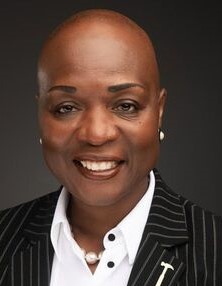
Georgia Southern University has been awarded a $1.6 million grant to help provide childcare subsidies for eligible student-parents over the next four years through the Child Care Access Means Parents In School (CCAMPIS) program. Written on behalf of the Office of Inclusive Excellence by Corine Ackerson-Jones, director of TRIO Student Support Services (SSS) on the Armstrong Campus in Savannah, the CCAMPIS grant will serve no less than 30 student-parents per year on the Armstrong Campus and the Liberty Campus in Hinesville by providing a maximum amount of $150 per week for childcare services to be paid directly to the childcare provider. Corine Ackerson-Jones The grant, a first of its kind at Georgia Southern, is fully funded by the Department of Education and will work with centers licensed and accredited through the Georgia Department of Early Care and Learning. To apply for CCAMPIS assistance student-parents must be PELL eligible. “According to recent data, the annual price of childcare can exceed the annual cost of in-state tuition at a public four-year university,” said Ackerson-Jones. “Without financial assistance, it is next to impossible for economically challenged student-parents to attend school and pay for quality, affordable childcare.” Amanda Brandmire, a student-parent studying natural resource and wildlife conservation on the Armstrong Campus, said balancing her role as a parent and a student can be challenging emotionally and financially, especially when it comes to childcare. “There have been several times where my husband and I had to get very creative with our funds to make it because of our childcare costs,” she said. “My husband and I may skip meals or go a week at a time without food because childcare is a necessity for us to work and go to school. In addition, I have to give up study time or time with my kids to go pickup a shift delivering for DoorDash just to get by. Right now we don’t have an income and we are a week behind on childcare expenses, but thankfully our daycare is working with us.” A subsidy for childcare would change the trajectory of Brandmire’s education. “For me this would be an amazing opportunity,” Brandmire said. “I am so close to finishing my undergraduate degree and plan on applying to grad school in March. Being a first-generation college student, my education is extremely important and this would help me make graduation a reality.” Brandmire feels this resource would appeal greatly to other student-parents in the greater Savannah area. “This is also a huge selling point for potential students and moms like me who want something better but can’t get over the childcare hurdle,” Brandmire said. “I appreciate Georgia Southern for taking the time to reach out and serve their non-traditional students.” Ackerson-Jones has worked on the Armstrong Campus for 17 years and assists low-income, first-generation students, and students with disabilities through the TRIO SSS program which is also funded 100% by the Department of Education. Through her role, she saw a need for student-parents like Brandmire and sought ways to make a difference in their educational journeys. “It has been evidenced in the data that the four-year graduation rate for Armstrong and Liberty campus PELL recipients falls below that of non-PELL recipients,” Ackerson-Jones said. “It has been my experience that a great number of these students are not graduating sooner due to financial hardship. They must work more hours, so oftentimes they cannot maintain a full course load. Taking less classes prolongs graduation. It was my goal to find some financial relief for these students because the threat of unaffordable childcare was a threat to them remaining in school. “There has never been a child care facility on either of these campuses nor has there been any access to financial support for student-parents to help pay for child care,” she continued. “The time seemed right to try to rectify this.” The objective of the program is that student-parents will persist from one academic year to the beginning of the next, or that they will earn a bachelor’s degree from Georgia Southern, Ackerson-Jones added. “I am excited about the addition of the CCAMPIS grant to the array of programs that serve underrepresented students, this one serving Pell-eligible students who are also parents, which complements our work in the Inclusive Excellence cluster,” said Dominique A. Quarles, Ph.D., associate vice president for Inclusive Excellence and chief diversity officer at Georgia Southern. “Mrs. Jones went beyond what’s required of her to respond to a need she saw on campus, which resulted in securing $1.6 million in grant funds to serve students in a way that will have a real and immediate impact on their ability to enroll and complete their degree at Georgia Southern.” The grant will be disbursed at $401,128.00 a year for four years for a total of $1,604,512. More information on student eligibility and the application process will be available soon. To learn more, contact the Office of Inclusive Excellence by emailing oie@georgiasouthern.edu. Interested in learning more or looking to talk with Corine Ackerson-Jones about this program? Contact Georgia Southern's Director of Communications Jennifer Wise at jwise@georgiasouthern.edu to arrange an interview today.

How Diverse Crop Mixes Can Help Solve the Water Scarcity Crisis
How exactly can alternative crop mixes come to our rescue in this water scarcity crisis? Different crops have different water needs in order to grow without stress. And it is often the case that the thirstiest crops are grown in places where little water is available. Shifting crop mixes to crops that require less water but still ensure farmer profits is a promising way to reduce the amount of water needed to irrigate crops and to avoid conditions of water scarcity. Kyle Davis, assistant professor in Geography and Spatial Sciences at the University of Delaware, can offer commentary on this. He is an expert in food systems, sustainability, global environmental change and geospatial data science among other things. Diverse crop mixes can save water, maintain economic output, and provide for the needs of aquatic ecosystems. Davis and others recently released a study that looks at issue. "These findings demonstrate strong opportunities for economic, food security and environmental co-benefits in irrigated agriculture and provide both hope and direction to regions struggling with water scarcity around the world," the study notes. Davis has been featured in publications such as Earth.com and Phys.org and was recently awarded an Early Career Award for pioneering global research in sustainable agricultural food systems. He can be contacted by clicking the "View Profile" button.


Cold and winter weather is about to settle in and CAA South Central Ontario (CAA SCO), Toronto Police Service (TPS), Ontario Provincial Police (OPP), and the Ontario Government want to know: are you winter ready? The four organizations have joined forces to help inform Ontarians that now is the time to get your winter tires installed, check your car battery and stock your car with an emergency kit with all the essentials needed for the winter months. “Our weather can be unpredictable, especially in the winter. It’s important to think ahead and prepare before driving conditions become hazardous,” says Nadia Matos, Manager External Communications, CAA SCO. “It all comes down to safety and there’s no time like the present to ensure you and your car are properly equipped.” TPS, OPP and the Ontario Government are also reinforcing the importance of driver behaviour. "The safety of Ontario’s roads is always a top priority, and we are continuing to work closely with our road safety partners to promote safe driving habits this winter season,” says Prabmeet Sarkaria, Minister of Transportation. “Road safety is everyone’s responsibility, so when you’re heading out, always remember to slow down and drive according to weather and road conditions. Together, we can keep Ontario’s roads and highways safe for everyone this winter.” “Winter driving can be stressful. Motorists need to be alert at all times when on the road, even in the most routine circumstances like driving to and from work,” says Police Constable Sean Shapiro, Toronto Police Service. “That includes slowing down and driving according to weather conditions and ensuring you give yourself plenty of time to get to your destination.” This year motorists also need to be aware of new amendments to the Highway Traffic Act. “It is now illegal to pass snowplows working side by side on Ontario highways. Only pass a snowplow if the lane is completely clear of any part of the plow, including its blade,” says Sargeant Kerry Schmidt, Ontario Provincial Police. Offenders may face a fine ranging from $150 to $1,000. This winter, before heading out on the road motorists can download and use the 511 app to check the weather and road conditions before they leave home. The 511 app can be found at 511on.ca or in the app store on your mobile device. Motorists should also refer to some other tips to help make their winter drive a safer one: Keep your gas tank at least half full at all times. Cold weather causes condensation in the system, which can lead to fuel-line freeze-up and can prevent your car from starting. Remove excess snow from your car before driving off. Any snow left on the roof might slide down onto the windshield and obstruct your vision. Keep your wiper fluid full. Keep extra fluid in your trunk. Make sure it’s rated for -40℃. Pack a fully stocked emergency kit. The kit should include a flashlight and extra batteries, warning devices (e.g., flares, reflective vests/strips), a first aid kit, blankets, jumper cables, non-perishable food and water plus a phone charger. Be sure to also keep an ice scraper, small shovel and snow brush handy in your car at all times.



Ask Our Expert: Why it’s important to get a flu vaccination
As cold and flu season approaches, it’s time to take proactive steps to ensure the health and well-being of everyone. Getting a flu vaccination is be the best defense in staying healthy this time of year. Klaus Ley, MD, founding co-director of the Immunology Center of Georgia, part of the Medical College of Georgia at Augusta University, emphasizes the significance of getting vaccinated against the flu. “The flu can have serious consequences and by getting vaccinated, you protect yourself and those around you,” Ley said. “It’s a simple yet effective way to prevent the spread of this contagious virus.” Flu vaccination is not only a responsible choice but also a crucial step in maintaining public health. The World Health Organization records about 1 billion cases of influenza each year. Severe cases often result in hospitalizations, contributing to up to 650,000 respiratory-related deaths globally. Worried about potential side effects from the vaccine? Ley said that’s a minor concern compared to the effects of the full-blown flu. According to the Centers for Disease Control and Prevention, life-threatening allergic reactions to flu shots are very rare. While severe reactions are uncommon, it’s important to let your health care provider know if you have a history of allergy or severe reaction to vaccines before getting a flu shot. “Common side effects from a flu shot could include soreness or swelling at the site of the injection, headache, low-grade fever, nausea, muscle aches or fatigue. Those minor side effects are an indication your immune system is responding as it should to the vaccination. You will experience much more severe fever, aches and other symptoms if you catch the flu without being vaccinated against it,” said Ley. Klaus Ley, MD, is the Georgia Research Alliance Bradley Turner Eminent Scholar in Immunology, founding co-director of the Immunology Center of Georgia, and a professor in the Department of Physiology at the Medical College of Georgia at Augusta University. He's available to speak with media regarding flu season and vaccinations - simply click on his icon now to arrange an interview today.

