Experts Matter. Find Yours.
Connect for media, speaking, professional opportunities & more.

What's Happening with the Iran Conflict?
Since 1997, Iran has vowed "death to America." It hasn't always been that way though, but over the course of seven decades the relationship has changed from being close allies to enemies. America isn't the only country having conflict with Iran. For over 45 years, Israel has been fighting with Iran. There are currently 10 countries that have conflict with Iran. Tensions between Israel and Iran rose higher in April 2024, when Iran launched its first-ever drone and missile attack on Israel. This conflict extended into June 2024, then grew quiet while remaining unstable. On June 13, 2025, Israel launched surprise attacks on Iran due to Iran's imminent threat of constructing nuclear bombs. America, known for being philosemitic, launched its own attack on Iran which President Trump said "obliterated" their nuclear plants. White House Press Secretary, Karoline Leavitt reminded Americans that America has "the best and most lethal fighting force in the world." While updates are continually being given on the war. President Trump is working on negotiating a ceasefire between Israel and Iran. Dr. Glen Duerr, professor of international studies at Cedarville University and a citizen of the United Kingdom, Canada, and the United States, is a nationally known expert on this subject and is available to speak to on the conflict going on in Iran and the implications it has for America. To schedule an interview, email Mark D. Weinstein, executive director of public relations at Cedarville University at mweinstein@cedarville.edu or click on his icon.


Augusta University named NIH Specialized Center of Research Excellence on Sex Differences
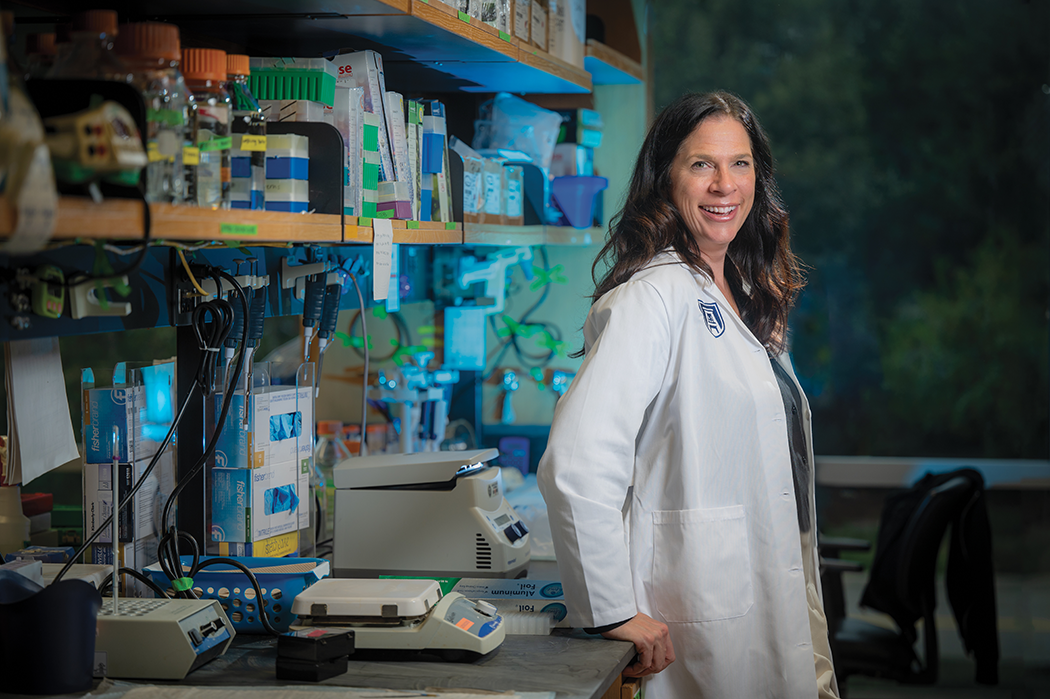
Jennifer C. Sullivan, PhD, dean of The Graduate School at Augusta University, has dedicated her research to better understand why blood pressure increases in hypertension and raising awareness to the dangers of not paying attention to heart health, particularly among women. Throughout her career, Sullivan has been continuously funded by the National Institutes of Health (NIH) and the American Heart Association since becoming a tenure-track faculty member in 2008, and now she has a chance to take her research further after securing a five-year, $7.5 million grant to have Augusta University designated as a Specialized Center of Research Excellence on Sex Differences (SCORE) by the NIH’s Office of Research on Women’s Health. It’s a distinction that places AU among 10 other leaders in research for the field, including Brigham and Women’s Hospital, Cedars-Sinai Medical Center, Emory University, Johns Hopkins University, Massachusetts General Hospital and Harvard Medical School, the Mayo Clinic, the Medical University of South Carolina, the University of Colorado and Yale University. The University of California, Los Angeles has two SCORE programs. “I’m so proud and excited for this opportunity because this has been what I have focused my research program on for my entire career, and to be able to advance it with a program like this, where we can actually build a unique program focused on an area that can make a difference, is just so much fun,” Sullivan said. “Just the fact that Augusta will be included on this list, attached to an organization of the caliber of NIH, will provide opportunities that we’ve never had before, especially for our students and younger researchers.” Sullivan’s SCORE project, “Improving awareness of women with hypertension: ROAR (Rural, Obese, At Risk),” focuses primarily on the fact that, while young women are considered “protected” from hypertension and the associated cardiovascular risk relative to age-matched men, the elimination of hypertension is projected to have a larger impact on cardiovascular disease (CVD) mortality in women. “The group of people with the highest risk of death from hypertension is in the rural South of the U.S., specifically Black women are particularly vulnerable to developing hypertension and CVD,” Sullivan said. According to Sullivan’s research and information available from the American Heart Association (AHA), approximately 19 million deaths were attributed to CVD globally in 2020, an increase of about 20% from 2010. Both Sullivan and the AHA state that cardiovascular disease remains the leading cause of death for both men and women in the United States, and that hypertension is a major modifiable risk factor for CVD. Sullivan said, “It has been suggested that eliminating hypertension would reduce CVD mortality by over 30% in men and 38% in women, but a critical barrier to limiting premature death from CVD is lack of awareness surrounding the risks of CVD. Our overall goal in this new funded project is to transform academic and community understanding of sex as a biological variable in the consideration of hypertension.” The three research projects include Sullivan’s lead project on high fat diets, a project on systemic lupus erythematosus (SLE) disproportionately affects young women led by Erin Taylor, PhD, at the University of Mississippi Medical Center, and another project looking at the role of inflammation and how immune cells are activated in SLE led by Michael Ryan, PhD, at the University of South Carlina’s School of Medicine. But there is more to SCORE than just conducting research. Each SCORE team is also responsible for a career enhancement core and a leadership administrative core. “What really sets these grants apart are the emphasis on the career enhancement and leadership administrative cores. The Career Enhancement Core is designed to be a bit open ended for each SCORE, but in talking to the NIH, what they were most excited about in our project is the community outreach piece we designed. “Our grant includes people across the entire campus, including Augusta University’s Medical College of Georgia, the College of Allied Health Sciences, the College of Education and Human Development and multiple campus partners including some of our sororities on campus and the Center for Writing Excellence,” Sullivan said. “More specifically, the COEHD is able to extend our outreach efforts to our local schools to begin educating children on the importance of screening, and our sororities are obviously connected with other chapters across the southeast which helps us spread our message, as well.” Sullivan notes that, through this portion of the project alone, there will be numerous opportunities to include students from Augusta University’s CAHS, College of Nursing, Department of Kinesiology, the Biomedical Sciences PhD program and the proposed School of Public Health. Marlo Vernon, PhD, associate professor at MCG and researcher for the Georgia Cancer Center, and Amanda Behr, chair of the Medical Illustration Program in CAHS, are also involved in various stages of the project. “The other thing the Career Enhancement Core will do is provide pilot grants to three research projects each year for early-stage investigators. We’ll also be able to fund sabbaticals for graduate students or postdocs to go someplace else and learn cutting edge techniques from other experts, so there is a lot built in that will help us support up-and-coming researchers,” Sullivan said. “We’re now part of this consortium, and they have a once-a-year, in-person meeting at the NIH offices, so we’ll go to that for the first time this year, and what’s neat about it is they’re really promoting young investigators. Each grant can bring up to eight people, the our hope is that we will have the investigators funded by the pilot projects attend next year, giving those folks the opportunity to present and talk to program officers with the NIH and develop a pipeline of investigators committed to studying women’s health and sex as a biological variable.” Sullivan is also looking to designate some of her summer graduate and undergraduate research positions to the project beginning next summer. “The Graduate School already has a summer program to support undergraduates that we will be able to piggyback off of. We have set aside five slots in that program for this that will go to students studying the sex as a biological variable, and the applications for that program, STAR, is already open,” Sullivan said. “We’re also planning a symposium in collaboration with the Physiology Department in April 2024. This is an annual event sponsored by the department, and this year they selected sex differences as the topic, so we are hoping to help increase exposure and attendance.” Looking to know more about the amazing research happening at Augusta? To connect with Jennifer Sullivan, simply click on her icon ow to arrange an interview today.


BEPI Poll: Hispanic Economic Outlook Drops Amid Tariffs, Rising Prices
As households face increasing prices for goods and talk of new tariffs, Hispanic optimism in the economy waned in the first quarter of 2025, according to a poll from the Business Economic and Polling Initiative at Florida Atlantic University. The Hispanic Consumer Sentiment Index (HSCI) decreased to 85.7 in the first quarter of 2025, down from 89.6 in the fourth quarter of 2024. When compared to the fourth quarter of 2024, there was a decrease in optimism in four out of five questions used to generate the HCSI. Looking at the year ahead, 53% of Hispanics said they expect the country to experience good business conditions, a decline from 61% in the prior quarter; and 64% of Hispanics indicated they will be better off over the next year, down from 70% in the last quarter of 2024. In terms of the long-run economic outlook of the country, Hispanics are less optimistic in the first quarter of 2025 compared to the fourth quarter of 2024 (52% vs. 58%). Only 51% of Hispanics think it is a good time to buy big-ticket items, compared to 52% in the last quarter of 2024. Only one question had an increase in confidence: 63% of Hispanics said they are better off financially than a year ago, which is 8 percentage points (55%) higher than the last quarter of 2024. “Sentiment softened in four of the five questions this quarter,” said Monica Escaleras, Ph.D., chair and director of BEPI. “Persistently high borrowing costs and everyday price pressures – together with talk of new tariffs and a possible recession – are weighing on household outlooks. These headwinds are keeping many Hispanic families cautious about the economic outlook in the United States.” The poll is based on a sample of 542 Hispanic adults over 18 years old. The survey was administered using both landlines via Interactive Voice Response data collection and online data collection using Dynata. Respondents were sampled between Jan. 1 and March 31 with a margin of error of +/- 4.21 percentage points. Responses for the entire sample were weighted to reflect the national distribution of the Hispanic population by region, education, gender, age and income according to the latest American Community Survey data. Full results can be found here: Looking to know more? We can help. Monica Escaleras is available to speak with media about the BEPI Hispanic Consumer Sentiment Index . Simply click on her icon now to arrange an interview today.


Dry eye disease is a common condition affecting one-third of the adult population and one-in-five children Professor James Wolffsohn researched the most effective blinking exercises to reduce discomfort, involving a close-squeeze-blink cycle He developed the MyDryEye app in collaboration with Alec Kingsnorth and Mark Nattriss to help sufferers An Aston University optometrist, Professor James Wolffsohn, has determined an optimum blinking exercise routine for people suffering with dry eye disease, and has developed a new app, MyDryEye, to help them complete the routine to ease their symptoms. Dry eye disease is a common condition which affects one-third of the adult population and one-in-five children, in which the eyes either do not make enough tears, or produce only poor-quality tears. It causes the eyes to become uncomfortable, with gritty- or itchy-feeling eyes, watery eyes and short-term blurred vision. It is more common in older adults and can be exacerbated by factors including dry air caused by air conditioning, dust, windy conditions, screen use and incomplete blinks, where the eye does not fully close. Professor Wolffsohn is head of Aston University’s School of Optometry and a specialist in dry eye disease. While it has long been known that blinking exercises can ease the symptoms of dry eye disease, the optimum technique, number of repetitions and necessary repeats per day are unclear. Professor Wolffsohn set out to determine the best exercises. His team found that the best technique for a dry eye blinking exercise is a close-squeeze-blink cycle, repeated 15 times, three times per day. Participants found that while they were doing their exercises symptom severity and frequency decreased, and the number of incomplete blinks decreased. Within two weeks of stopping the exercises, their symptoms returned to normal levels, showing the efficacy of the exercises. To carry out the work, Professor Wolffsohn’s team ran two studies. For the first, they recruited 98 participants, who were assessed for dry eye symptoms before and after the two weeks of blinking exercises. Participants were randomly allocated different blinking exercises to determine the most effective. A second study with 28 people measured the efficacy of the blinking exercise. Once the optimum blinking routine had been developed, Professor Wolffsohn worked withAlec Kingsnorth, an engineer and former Aston undergraduate and PhD student, and Mark Nattriss, business manager of his spin-out company, Wolffsohn Research Ltd, to develop the app, MyDryEye, which is freely available on Android and iOS operating systems. The app allows users to monitor their dry eye symptoms, assess their risk factors, add treatment reminders and monitor their compliance, complete the science-based blink exercises and find a specialist near them. Professor Wolffsohn says that the blinking exercises should be carried out as part of a treatment programme which could also include the use of lipid-based artificial tears, omega-3 supplements and warm compresses. Professor Wolffsohn said: “This research confirmed that blink exercises can be a way of overcoming the bad habit of only partially closing our eyes during a blink, that we develop when using digital devices. The research demonstrated that the most effective way to do the exercises is three times a day, 15 repeats of close, squeeze shut and reopen – just three minutes in total out of your busy lifestyle. To make it easier, we have made our MyDryEye app freely available on iOS and Android so you can choose when you want to be reminded to do the exercises and for this to map your progress and how it affects your symptoms.” Read the full paper, ‘Optimisation of Blinking Exercises for Dry Eye Disease’, in Contact Lens and Anterior Eye at https://doi.org/10.1016/j.clae.2025.102453.


The Impact of Counterfeit Goods in Global Commerce
Introduction Counterfeiting has been described as “the world’s second oldest profession.” In 2018, worldwide counterfeiting was estimated to cost the global economy between USD 1.7 trillion and USD 4.5 trillion annually, as well as resulting in more than 70 deaths and 350,000 serious injuries annually. It is estimated that more than a quarter of US consumers have purchased a counterfeit product. The counterfeiting problem is expected to be exacerbated by the unprecedented shift in tariff policy. Tariffs, designed as an import tax or duty on an imported product, are often a percentage of the price and can have different values for different products. Tariffs drive up the cost of imported brand name products but may not, or only to a lesser extent, impact the cost of counterfeit goods. In this article, we examine the extent of the global counterfeit dilemma, the role experts play in tracking and mitigating the problem, the use of anti-counterfeiting measures, and the potential impact that tariffs may have on the flow of counterfeit goods. Brand goods have always been a target of counterfeits due to their high price and associated prestige. These are often luxury goods and clothing, but can also be pharmaceuticals, cosmetics, and electronics. The brand name is an indication of quality materials, workmanship, and technology. People will pay more for the “real thing,” or decide to buy something cheaper that looks “just as good.” In many cases, “just as good” is a counterfeit of the brand name product. A tariff is an import tax or duty that is typically paid by the importer and can drive up the cost of imported brand name products. For example, a Yale study has shown that shoe prices may increase by 87% and apparel prices by 65%, due to tariffs. On the other hand, counterfeit products don’t play by the rules and can often avoid paying tariffs, such as the case of many smaller, online transactions, shipped individually. Therefore, we expect to see an increase in counterfeit products as well as a need to increase efforts to reduce the economic losses of counterfeiting. The Scale of the Counterfeit Problem In their 2025 report, the Organisation for Economic Co-operation and Development (OECD) and the European Union Intellectual Property Office (EUIPO), estimated that in 2021, “global trade in counterfeit goods was valued at approximately USD 467 billion, or 2.3% of total global imports. This absolute value represents an increase from 2019, when counterfeit trade was estimated at USD 464 billion, although its relative share decreased compared to 2019 when it accounted for 2.5% of world trade. For imports into the European Union, the value of counterfeit goods was estimated at USD 117 billion, or 4.7% of total EU imports.” In a 2020 report, the US Patent and Trademark Office (USPTO) estimated the size of the international counterfeit market as having a “range from a low of USD 200 billion in 2008 to a high of USD 509 billion in 2019.” According to the OEDC / EUIPO General Trade-Related Index of Counterfeiting for economies (GTRIC-e), China continues to be the primary source of counterfeit goods, as well as Bangladesh, Lebanon, Syrian Arab Republic, and Türkiye. Based on customs seizures in 2020-21, the most common items are clothing (21.6%), footwear (21.4%), and handbags, followed by electronics and watches. Based on the value of goods seized, watches (23%) and footwear (15%) had the highest value. However, it should be noted that items that are easier to detect and seize are likely to be overrepresented in the data. Although the share of watches declined, and electronics, toys, and games increased, it remains unclear whether this represents a long term trend or just a short term fluctuation. In general, high value products in high demand continue to be counterfeited. Data from the US Library of Congress indicates that 60% – 80% of counterfeit products are purchased by Americans. The US accounts for approximately 5% of the world’s consumers; however, it represents greater than 20% of the world’s purchasing power. Though it is still possible to find counterfeit products at local markets, a large number of counterfeit goods are obtained through online retailers and shipped directly to consumers as small parcels classified as de minimis trade. This allows for the duty-free import of products up to USD 800 in value. Counterfeit items may be knowingly or unknowingly purchased from online retailers and shipped directly to consumers, duty-free. Purchased products can be shipped via postal services, classified as de minimis trade. Approximately 79% of packages seized contained less than 10 items. Given the size and volume of the packages arriving daily, many or most will evade scrutiny by customs officials. This means of import is increasing over time. In 2017-19 it was 61% of seizures. By 2020-21, it was 79%. Economic Impact of Counterfeiting The scale of the counterfeiting problem has significant impacts on the US economy, US business interests, and US innovations in lost sales and lost jobs. Moreover, counterfeit products are often made quickly and cheaply, using materials that may be toxic. The companies producing these goods may not dispose of waste properly and may dump it into waterways, causing significant environmental consequences. Counterfeit products from electrical equipment and life jackets to batteries and smoke alarms may be made without adhering to safety standards or be properly tested. These products may fail to function when you need it and may lead to fire, electric shock, poisoning, and other accidents that can seriously injure and even kill consumers. Counterfeit cosmetics and pharmaceuticals can also lead to injuries by either including unsafe ingredients or by failing to provide the benefits of the real product. The Tariff Counterfeit Connection Tariffs may be seen as a tax on consumers and raise the price of imported products that are already the target of counterfeiters such as luxury leather products and apparel. It’s commonly understood that raising prices on genuine products can only drive up the demand for counterfeit goods. In general, consumers will have less disposable income and the brand goods they desire will cost more which is bound to increase the demand for counterfeit goods. Although recent changes removing the USD 800 tax exemption on de minimis shipments from China and Hong Kong will make it more expensive for counterfeiters to ship their goods internationally, tariffs are typically applied as a percentage of the cost of an object. This will cause the price of more expensive legitimate goods to increase even more than the cheaper counterfeit goods and likely make the counterfeit products even more attractive economically. Therefore, we expect to see an increase in counterfeit products as well as an increase in efforts to reduce the economic losses of counterfeiting. The Role of Technical Experts in Counterfeit Detection Technical experts play an important role in both the prevention and detection of counterfeits and helping to identify counterfeiting entities. Whether counterfeit money, clothing, shoes, electronics, cosmetics or pharmaceuticals, the first step in fighting counterfeits is detecting them. In some cases, the counterfeit product is obvious. A leather product may not be leather, a logo may be wrong, packaging may have a spelling mistake, or a holographic label may be missing. These products may be seized by customs. However, some counterfeit products are very difficult to detect. In the case of a counterfeit memory card with less than the stated capacity or a pharmaceutical that contains the wrong active ingredient, technical analysis may be needed to identify the parts. Technical analysis may also be used to try and identify the source of the counterfeit goods. For prevention measures, manufacturers may use radio frequency identification (RFID) or Near Field Communication (NFC) tags within their products. RFID tags are microscopic semiconductor chips attached to a metallic printed antenna. The tag itself may be flexible and easy to incorporate into packaging or into the product itself. A passive RFID requires no power and has sufficient storage to store information such as product name, stock keeping unit (SKU), place of manufacture, date of manufacture, as well as some sort of cryptographic information to attest to the authenticity of the tag. A simple scanner powers the tag using an electromagnetic field and reads the tag. If manufacturers include RFID tags in products, an X-ray to identify a product in a de minimis shipment (perhaps using artificial intelligence technology) and an RFID scanner to verify the authenticity of the product can be used to efficiently screen a large number of packages. Many products also may be marked with photo-luminescent dyes with unique properties that may be read by special scanners and allow authorities to detect legitimate products. Similarly, doped hybrid oxide particles with distinctive photo-responsive features may be printed on products. These particles, when exposed to laser light, experience a fast increase in temperature which may be quickly detected. For either of these examples, the ability to identify legitimate products, or – due to the absence of marking – track counterfeit products, allows authorities to map the flow of the counterfeit goods through the supply chain as they are manufactured, shipped, and are exported and imported to countries. For many years, electronic memory cards such as SD cards and USB sticks have been counterfeited. In many cases, the fake card will have a capacity much smaller than listed. For example, a 32GB memory card for a camera may only hold 1GB. Sometimes, these products may be identified by analyzing the packaging for discrepancies from the brand name products. In other cases, software must be used to verify the capacity and performance of each one, which is time-consuming when analyzing a large number of products. Forensic investigators, comprised of forensic accountants and forensic technologists, are heavily involved in efforts to combat this illicit trade. By analyzing financial records, supply-chain data, and transaction histories, they trace the origins and pathways of counterfeit products. Their work often involves identifying suspicious procurement patterns, shell companies, and irregular inventory flows that signal counterfeit activity. Forensic investigators often begin by mapping the counterfeit supply chain, an intricate web that often spans continents. Using data analytics, transaction tracing, and inventory audits, they identify anomalies in procurement, distribution, and sales records. These methodologies help pinpoint the origin of counterfeit goods, the intermediaries involved, and the final points of sale. By reconstructing the flow of goods and money, forensic investigators can begin to unmask activities. Cross-border partnerships are essential for tracking assets, sharing insights, and coordinating with financial regulators. Public-private partnerships further enhance the effectiveness of anti-counterfeiting efforts. Forensic investigators often serve as bridges between government agencies, brand owners, and financial institutions, facilitating the exchange of key information. These partnerships increase information-sharing, streamline investigations, and amplify the impact of enforcement actions. A promising development in this space is the World Customs Organization’s Smart Customs Project, which integrates artificial intelligence to detect and intercept counterfeit goods. Forensic investigators can leverage this initiative by analyzing AI-generated alerts and incorporating them into broader financial investigations, which allows for faster and more accurate identification of illicit networks. Jurisdictional complexity is a major hurdle in anti-counterfeiting efforts. Forensic investigators work closely with legal teams to navigate these challenges to ensure that investigations comply with local laws, and evidence is admissible and can withstand scrutiny in court, especially when dealing with offshore accounts and international money laundering schemes. Forensic investigators follow the money, tracing illicit profits through bank accounts, shell companies, and cryptocurrency transactions. Their findings not only help recover stolen assets but also support disputes by providing expert testimony that quantifies financial losses and identifies the bad actors. Conclusion Imitations of brand name products have become more convincing, harder to detect, and the sources of the counterfeit goods more difficult to identify. While counterfeiting clearly has evolved because of technological advancements, e-commerce, and the growing sophistication of bad actors, the process has now been complicated even further by the unpredictable tariff and trade policies that are affecting businesses worldwide. Consequently, companies need to take a multi-faceted approach to these new challenges introduced into the counterfeiting of products by tariffs. By engaging high-tech product authentication measures, utilizing technology-based alerts about counterfeits, and retaining the specialized skills of forensic investigators and other experts, companies will be able to navigate the risks posed by the complex and changing relationship between tariffs and counterfeit goods. To learn more about this topic and how it can impact your business or connect with James E. Malackowski simply click on his icon now to arrange an interview today. To connect with David Fraser or Matthew Brown - contact : Kristi L. Stathis, J.S. Held +1 786 833 4864 Kristi.Stathis@JSHeld.com



What's the True Story on the State of Tourism in Florida?
Tourism is one of the key economic drivers in Florida. The sector is responsible for approximately 10 percent of the Gross State Product (GSP), employs millions, and contributes billions to the state's economy. But how are things in the sector? It depends on the day, what you're reading or what you're watching: the industry in Florida is either booming or in a vulnerable situation. Here are two examples: Rising tariffs, visa delays, and shifting global travel trends have created a perfect storm, leading to a sharp drop in tourist numbers across Florida and several other U.S. states. The U.S. tourism industry is facing unprecedented challenges as international visitors choose alternative destinations amid political and economic shifts. According to recent data from the U.S. Travel Association, international visits to the U.S. saw a 14% decline in March, reflecting a broader global trend. However, the most significant impact has been felt among Canadian travelers, with a staggering 20.2% decrease in the number of Canadians visiting the U.S. This marks a troubling shift for the U.S., which has long relied on its neighboring country as a key source of international tourism. Florida, which has seen a decrease in tourism since the pandemic, is now facing a compounded crisis. The state, which historically attracted millions of international visitors, is seeing fewer long-term snowbirds, as well as a general decline in international arrivals. The state’s tourism sector, once a booming economic engine, is facing significant challenges. With both fewer foreign visitors and changes in local tourism trends, the state’s economy is under increasing strain. According to the World Travel & Journalism Council, the U.S. is on track to lose more than \$12 billion in international travel spending this year alone due to the decline in visitor numbers. June 06 - Travel and Tour World Whereas government officials are painting a very different picture. Florida welcomed 143 million visitors in 2024, setting a new tourism record for the state. State officials said this is the most visitors in a single year in Florida's history. The trend isn't slowing down, as more than 41 million people visited Florida in just the first three months of this year. May 21 - ABC News So there are questions that need to be answered: What is the current state of tourism in Florida? Have tariffs impacted visits from abroad? Does the high US dollar have anything to do with fewer people coming to the Sunshine State from outside of America? Has domestic travel increased with more Americans choosing Florida as a destination? If the sector is suffering from a decline in visitors, how can it adapt to be more attractive to tourists? If you are a reporter following the tourism industry - we're here to help. Peter Ricci is the Director of the Hospitality and Tourism Management program in Florida Atlantic University’s College of Business. He is a hospitality industry veteran with more than 20 years of managerial experience in segments including food service, lodging, incentive travel and destination marketing. Peter is available to speak with the media about tourism in Florida and the potential for gambling. Simply click on his icon to arrange an interview.


America Sees Another Surge in Political Violence
America has seen its share of political violence, the worst being the Civil War. But unrest is stirring once again in the hearts of Americans as her citizens are being divided by President Trump's deportation of illegal immigrants. Some see it as a solution to cut back violence and drugs in America, while others see it as a cruel, heartless act. Protests are rising up across America as those who oppose the deportation are showing their dislike. People in Ohio, Florida, Alaska and other states are participating in anti-ICE protests. Texas and California have been the most vocal about it, with LA featured on the news many times. As unlawful assembly escalated in LA, looted buildings, cars set on fire and blocked roads, President Trump sent 700 US Marines. This only frustrated state officials more who claimed they had it under control. While 338 arrests have occurred, there have been no reported deaths linked to the protests. This is not the first time LA, California, has seen political violence though, as they have dealt with Watts Riots in 1965, the 1992 Los Angeles riots and in 1997 the North Hollywood shootout. Dr. Stanely Schwartz is an expert on history and is available to speak to media regarding the protests and political violence throughout history – simply email mweinstein@cedarville.edu or text or call (937) 532-6885 to arrange an interview.

Neutrons by the trillions: Using computational physics to understand nuclear reactors
Zeyun Wu, Ph.D., associate professor in the mechanical and nuclear engineering department at VCU Engineering, is reshaping the future of nuclear power. Nuclear reactors are among the most complex engineered systems on earth, with different physical processes interacting simultaneously across various scales. Even the world's most powerful computers cannot simulate every detail of an operating reactor at once. With a background in computational reactor physics, Wu’s research develops modeling and simulation techniques crucial to understanding next-generation nuclear reactors. By creating these advanced tools, his research eliminates the need for costly physical experimentation while ensuring the safety, efficiency and environmental sustainability of future nuclear power plants. Wu's research focuses on understanding reactor behavior through two aspects: multi-physics and multi-scale modeling. The multi-physics approach integrates various physical phenomena, such as nuclear physics reactions, fluid dynamics, heat transfer and structural mechanics, into a unified simulation framework. The multi-scale modeling technique addresses the vast range of physical scales involved, from subatomic neutron interactions to meter-sized reactor components. Wu’s research can simulate the complex phenomena within reactors at different scales. These models, developed using advanced numerical methods, help predict reactor behavior under various conditions. One of the models Wu uses tracks neutron behavior, a fundamental aspect to understand nuclear reactions. His simulations track trillions of neutrons as they move through various reactor materials, cause fission events and generate power. "What drives power is actually the neutron," explained Wu. "Once an atom splits, along with the nuclear energy release, lots of neutrons come out. We're talking about 1012 to 1013 neutrons per second. Our code tracks each neutron to understand where it comes from and where it goes." By understanding neutron distribution across space, time and energy domains, Wu's team can predict power distribution throughout the reactor core. This helps identify potential hotspots – areas of heightened thermal activity that could pose safety challenges. Beyond neutron behavior, Wu's research also explores how cooling fluids interact with neutrons and carry away thermal energy, a field known as thermal hydraulics, because how the reactor components are cooled significantly affects the neutron behavior as well. This also explains why the multi-physics modeling becomes essential for nuclear reactor simulations. Wu founded the Computational Applied Reactor Physics Laboratory (CARPL) to continue his research in nuclear reactor modeling and simulation. Undergraduate and master’s students learn to use established nuclear simulation codes to analyze reactor problems – skills highly valued in the industry and national labs. Ph.D. students build on theoretical foundations to deepen their understanding, enhance existing models, and develop new ones. “My area of research has been continually evolving for the past 60 years or so,” said Wu. “Most of the codes we use have been developed by national labs, like Oak Ridge National Lab, but these codes aren’t perfect. National labs hire Ph.D. level students with this niche to identify deficits in the code, correct errors and even add new functions and improve them.” Looking forward, Wu hopes his research will have a real-world impact on the upcoming shift in nuclear power in America. Over the next 20 to 30 years, the nation's approximately 90 light-water-cooled nuclear reactors reach the end of their operational lifetimes. Light water refers to ordinary water (H₂O), used in most existing reactors to both cool the system and slow down neutrons to sustain the nuclear reaction. To replace them, experts are looking toward advanced, non-light-water-cooled reactors, such as the Molten Uranium Breeder Reactor (MUBR) shown in the figure. Computational methods and tools like Wu’s research lab developed will be essential to their development and implementation. Non-light-water cooled reactors offer significant advantages over the older designs. Some can operate at higher temperatures while others produce substantially less nuclear waste, addressing one of the industry's persistent challenges. "Unlike traditional water reactors, where we have decades of operational experience and established analysis tools, these new designs present unique challenges," explained Wu. "Companies like Dominion employ large teams of analysts who use well-tested computational tools to maintain their existing reactors, but those same tools aren't calibrated for these next-generation reactors. Our research is developing the computational methods and simulations these advanced reactors will need. When these new reactors come online, the methodologies we're creating now can be quickly converted into production-level nuclear codes, providing immediate practical value to industry.”


How ChristianaCare Built a Blueprint for Better Caregiver Health and Lower Costs
By Donna Antenucci, MHA, BSN, RN, and Emily Sahm, EA We know rising health care costs can feel overwhelming for both employers and employees. As Delaware’s largest private employer — with nearly 23,000 employees, spouses and dependents enrolled in our self-funded health plan — ChristianaCare faces these challenges every day. That’s why we’re committed to finding smart, innovative solutions that improve employee health while keeping costs in check. We don’t stop there — ChristianaCare partners with businesses that have an interest in providing high-quality health care for their employees while keeping costs manageable. Prioritizing preventive care The key to a healthier, more resilient workforce is tackling health issues early in order to prevent the need for costly emergency or “rescue” care. By prioritizing prevention and early intervention, we’ve made progress in improving employee health while controlling costs. In 2023, inpatient facility costs for our employees — which include hospital admissions for surgeries, medical treatments and other care requiring overnight stays — dropped by 9%. Wellness incentives and chronic disease management that shifted care to more cost-effective outpatient settings are driving these results. One of ChristianaCare’s differentiators is CareVio®, our care coordination and chronic disease management platform. CareVio provides personalized support to help employees and their families manage conditions and stay on track with preventive care. CareVio’s diabetes program, for example, has delivered remarkable results. Nearly all participants improved their blood sugar levels in 2023, with average A1c reductions of 1.7 points. Enhancing primary care and wellness programs We’ve also focused on encouraging primary care visits through collaboration between our Population Health and Total Rewards teams. Together, we designed a voluntary wellness incentive program that rewards employees and their families for healthy choices, including support for tobacco-cessation programs to help employees quit smoking and lead healthier lives. In 2023, we expanded our wellness incentive program to include primary care visits for employees and their spouses. Over the next eighteen months, primary care utilization increased over 10%, rising from 66% to 77% as of January 2025. Employees who stay connected to primary care catch health problems early and build stronger relationships with their doctors. We’ve launched programs targeting specific health needs. Our breast cancer screening initiative, focused on women ages 52 to 74, increased participation rates from 63% to 72% in 2023, exceeding our target. Additionally, the CareVio metabolic health program is helping a growing number of participants manage complex conditions with tailored support. Flexibility is essential. That’s why we created the Center for Virtual Health, which provides virtual-first primary care to more than 1,200 employees. This program makes high-quality, preventive care more accessible. Employees can fit care into their schedules while maintaining consistent support for their health. We encourage employees to stay up to date on immunizations by offering frequent vaccination events and tying participation to eligibility for the Caregiver Rewards Program payout. By making it easy and rewarding to stay protected, we’re fostering a safer, healthier workplace for everyone. Collaborative networks and cost management In January 2023, we announced the ChristianaCare Clinical Alliance, a new clinically integrated network in partnership with Highmark. Implemented in our employee health plan in July 2024, the network connects ChristianaCare-employed and community clinicians to provide evidence-based, coordinated care. Focused on improving wellness and managing chronic conditions, the Clinical Alliance is helping caregivers and their families stay healthier while reducing costly emergency visits and hospital stays. Employees who choose Clinical Alliance providers also enjoy lower deductibles for their care. Through all these initiatives, we are making a meaningful difference for our caregivers and our costs. In 2023, thanks to our focus on prevention and smarter care delivery, we kept our overall health care cost growth below the national average. Healthier employees lead to lower expenses and a more engaged, productive workforce. By showing that we value employee health, we’re creating a stronger, more resilient workplace. To learn how ChristianaCare can help you provide better care and control costs for your workforce, contact Donna Antenucci at donna.antenucci@christianacare.org. Donna Antenucci is vice president of population health operations for ChristianaCare. Emily Sahm is vice president of Total Rewards for ChristianaCare.



Meet “The Beast”: The Rare Flower That Smells Like Death and Draws Crowds
When a corpse flower, one of the world’s rarest and most extraordinary blooming plants, bursts into bloom, it’s more than a quirky spectacle. It’s a moment that invites deeper stories about plant biology, conservation, biodiversity, and the science that helps preserve rare species. Last season, Wendy Overbeck Dunham, Senior Horticulture Manager at Frederik Meijer Gardens & Sculpture Park, was interviewed by reporters from ABC News and ARC West Michigan (CBS News) covering this rare event. Wendy Overbeck Dunham is the Director of Horticulture at Frederik Meijer Gardens & Sculpture Park in Grand Rapids, Michigan. She leads the horticulture team that oversees the care and presentation of the organization’s living collections - ranging from tropical conservatories and outdoor gardens to seasonal displays - connecting guests to art, design, and the natural environment. View her profile Why This Bloom Is So Rare and Newsworthy Corpse flowers (Amorphophallus titanum) are famous for their massive size, unpredictable bloom cycles, and powerful odor that mimics rotting flesh , an evolutionary strategy for attracting specific pollinators. These blooms can take many years to develop, and their spectacular emergence - open only for a short window -attracts crowds and widespread attention. Last year, as one such plant prepared to bloom at Frederik Meijer Gardens, anticipation built across West Michigan and beyond, with extended visiting hours so the public could witness, and smell, this rare phenomenon. Wendy Overbeck Dunham offered a vivid description of what made this bloom such an unforgettable experience and also showed both the humor and educational value of the moment, a reminder that science can be fun, fascinating, and even a bit funky. “No matter how you describe it, this plant, which we've nicknamed ‘The Beast,’ is definitely going to stink here in the next few days.” Wendy Overbeck Dunham leads horticultural strategy and rare plant cultivation at Frederik Meijer Gardens & Sculpture Park. Her leadership focuses on nurturing exceptional plant specimens, interpreting botanical phenomena for the public, and providing an expert voice on topics ranging from plant biology to conservation and ecological storytelling.