
Experts Matter. Find Yours.
Connect for media, speaking, professional opportunities & more.

The election is over, and Republicans have swept the White House and Congress
The race for the White House is over, and the Republicans have been swept into power with historic gains in Congress and control of the executive branch. What will their policy priorities be and how will the new political landscape mold the direction of the new Trump administration? What will the Democrats, now a minority opposition party, do? Can they adapt to a winning strategy in time for the midterms in two years? If you are covering American politics, how do you make sense of all the changes? How do you know what issues are going to drive decisions in Washington, D.C.? What can polling tell us about what happened? Where did the polls fall short? What will pollsters be looking at moving forward? We have an expert who can help. Kevin Wagner, Ph.D., is Florida Atlantic University’s renowned political science expert and co- executive director of Florida Atlantic University Political Communication and Public Opinion Research Lab (PolCom Lab) —the university’s extensive and nationally covered polling operation. View profile View some of Kevin Wagner's recent media here: ABC News Florida Atlantic University professor of political science Kevin Wagner says Florida’s shift started several years ago and it’s due to a variety of factors. "Certainly, there was some pretty good evidence that we had people moving from states like California and New York looking for a more conservative environment, and they brought their politics with them when they came to Florida," Wagner said. "That influx of more conservative voters certainly mattered. It's not the only thing that mattered." WINK Some voters believe the 60% mark is too high to make constitutional changes. For the threshold to change, it has to be put on the ballot for voters to decide and would need at least 60% of the vote. “Getting 60% of the voters to agree on anything is really hard and when it’s something that’s highly contested. It makes it even harder,” Florida Atlantic University Political Science Professor Kevin Wagner said. THE PINNACLE GAZETTE Political analysts point to various factors contributing to Florida’s Republican shift. Kathryn DePalo-Gould, a political scientist from Florida International University, aptly stated, “It’s now so solidly Republican it is crimson.” This sentiment was echoed by Kevin Wagner from Florida Atlantic University, highlighting how previously competitive races have now become predictable Republican wins. Indeed, Trump’s haul of 61 out of 67 counties stands as a testifier to this changing political tide. Looking to connect? He is here to answer all your questions and is available for interviews. Simply click on his icon now to arrange an interview today.


Are you a Senior, Seasoned Citizen or "Seenager"?
Summary: The article humorously explores the different identities associated with aging: Seniors, Seasoned Citizens, and "Seenagers." Seniors embrace relaxation and nostalgia, Seasoned Citizens exude wisdom with style, and Seenagers live rebelliously youthful lives. Each group showcases the joy of aging uniquely, proving that growing older can be fabulous and fun. The aging mindset and associated vocabulary Aging: the thing we can't avoid, no matter how many anti-wrinkle creams or kale smoothies we try. But hold on! Getting older doesn’t have to be all about orthopedic shoes and early bedtimes. Sometimes, we can be intentional about how we age. Bring to life the old saying, "You are only as old as you feel," or in this case, "only as old as we think. " Aging comes with its own vocabulary these days—like a senior high school class, except your class ring is arthritis-friendly. Your mindset will determine how you behave, and your behaviour will determine what label you fall under. Let’s dive into three hot buzzwords (labels) making waves in the grey hair community: Senior, Seasoned Citizen, and the fabulous Seenager. Buckle up your seatbelt (or your compression socks) because we’re about to break down what makes each term hilariously unique. Spoiler alert: the ability to laugh at yourself will help keep you young! The Senior: Official Member of the Blue-Haired Special Club Ah, Senior. It's the classic, the OG (Old Gangster) of aging terms. This one paints a picture of someone “past their prime” (which could mean they just don’t remember how Netflix works). Seniors have earned the right to relax, avoid emails, tell stories that start with "Back in my day…." and yell at the character on the TV to "speak up!" s But let’s not sugarcoat it—being called a senior can sometimes feel like being handed a ticket to the Rest-and-Retirement Express with a Has-Been Hangover. And if you’ve ever wondered why seniors are so good at discussing the weather, it's because everyone assumes their Wi-Fi password is “sunshine.” Historically, seniors are seen as a little out of touch, like trying to send a text from a rotary phone. But here’s the twist: while the term “senior” may suggest slowing down, many secretly download TikTok tutorials and know more about memes than they let on. The Seasoned Citizen: Aged Like Fine Wine, Not Expired Milk If Senior sounds too much like a countdown clock, I'd like to introduce you to Seasoned Citizen. Doesn’t that have a nice ring to it? Seasoned citizens aren’t just “old”—they’re marinated in life, baby! They’re wiser than your smartphone autocorrect and have more knowledge than an entire season of Jeopardy. "I'll take Guru for $1,000, Alex!" Seasoned citizens have been there, done that, and have the wrinkles to prove it—but in the coolest way possible. They’re like that hip grandparent who can teach you life lessons and how to win at poker. They’re the Yoda’s of society, doling out advice with just the right amount of sass. But don’t get it twisted. While they might be experts in wisdom, seasoned citizens know they’ve already done their share of life’s heavy lifting. They’re likelier to give great advice from the sidelines than participating in the next CrossFit challenge. And why shouldn’t they? With all that life seasoning, they’ve earned their spot as society’s wise sanseis. The Seenager: 70 Going on 17, and Loving Every Minute of It Then there’s the Seenager—aka the fun aunt of aging. This term combines “senior” and “teenager,” and that’s exactly how it sounds: older folks acting like rebellious teens with more fabulous cars and better credit scores. Seenagers know how to throw a wrinkle cream party, hit a Zumba class in the same evening (and still be home by 9 pm). Forget bingo; Seenagers are out here gaming on their consoles, posting selfies on social media, and flexing their fashion sense like it’s senior prom all over again. The Golden Bachelor, anyone? And don’t be surprised if they’re showing you how to work your smartphone because they’ve already FaceTimed the grandkids from halfway around the world. Seenagers are here to remind us that age is just a number that occasionally needs reading glasses. They defy the stereotype that aging means slowing down; instead, they speed up, engage in spontaneous activities, and sometimes wear questionable amounts of leather. They’re aging rebels, shaking their fists at society’s rules like, “No, I will have dessert for dinner, thank you very much!” What Kind of Fabulous Oldie Are You? So, there you have it: whether you're a Senior, a Seasoned Citizen, or a Seenager, each term brings its flavour of fabulous to the aging process. Seniors take life slow and steady; Seasoned Citizens throw wisdom around like confetti, and Seenagers party like it’s 1959 all over again (but with fewer sideburns and more disposable income). No matter which camp you fall into, one thing’s sure: getting older is a journey full of choices. You can nap through it, sprinkle sage advice everywhere, or rock that Seenager spirit with a fresh pair of Prada sneakers. The choice, dear friend, is yours—don’t forget your reading glasses! Don't Retire---Re-Wire! Sue


Consumers Face Elevated Prices Despite Waning Inflation
The years of high inflation appear to be over as inflation is now in line with the Federal Reserve’s target, though prices will likely remain permanently elevated, according to the Monthly Inflation Report produced by Florida Atlantic University’s College of Business. The Personal Consumption Expenditures Price Index (PCEPI), the Federal Reserve’s preferred measure of inflation, grew at a continuously compounding annual rate of 2.1% in September, up from 1.4% the prior month. Overall, PCEPI inflation has averaged 1.8% over the last three months and 2.1% over the last year. “The good news is that the period of high inflation appears to be in the rearview mirror. The bad news is that prices remain permanently elevated,” said William J. Luther, Ph.D., associate professor of economics in FAU’s College of Business. “The PCEPI is about nine percentage points higher today than it would have been had inflation averaged 2% since January 2020. This unexpected burst of inflation transferred wealth from savers and employees to borrowers and employers.” Core inflation, which excludes volatile food and energy prices, remains elevated. Core PCEPI grew at a continuously compounding annual rate of 3% in September. It has averaged 2.3% over the last three months and 2.6% over the last year. High core inflation is partly due to housing services prices, which grew at a continuously compounding annual rate of 3.8% in September. “If the Fed were committed to price stability, it would have helped bring prices back down to a level consistent with pre-pandemic inflation,” Luther said. Fed officials have projected another 25 basis points worth of rate cuts this year, a much smaller change than is required to return the policy rate to neutral. Since the data shows inflation is back on track, Luther says they should move more quickly. “As it stands, Federal Open Market Committee members intend to take some time reducing the policy rate to neutral, with policy likely to return to neutral sometime in 2026,” Luther said. “They might move more quickly if the economy shows signs of contraction or reduce the pace of rate cuts if they become concerned that inflation will pick back up.” William Luther, Ph.D., an assistant professor in FAU’s Economics Department, has expertise in economic growth, monetary policies, business cycles and cryptocurrencies. Luther’s research has obtained media interest across the nation, including recent coverage by The Wall Street Journal, Politico and Florida Trend. If you're looking to know more - let us help. Simply click on William's icon now to set up an interview today.


MEDIA RELEASE: Are you Ready for Winter Driving? CAA Manitoba shares winter weather readiness tips
As the cold weather begins to roll in, CAA Manitoba (CAA MB) is encouraging Manitobans to prepare themselves and their vehicles accordingly for the winter season. “All too often, motorists wait until the first snowfall before preparing their vehicles for winter driving,” says Nadia Matos, manager, external communications for CAA Manitoba. “Now is the time to get your winter tires on and check that your car battery will last the winter months. Even a fully charged battery can lose power when the temperature dips below 0° Celsius.” CAA Manitoba has compiled a list of winter readiness tips for Manitobans to help them prepare for the winter season. • Install winter tires for better traction – On cold and snowy roads winter tires can help reduce your breaking distance by up to 25 per cent. Members can call CAA before Nov. 30 to have our mobile tire service change them for you at home for a fee. • Test your car battery - If necessary, replace it before it fails. Even a fully charged battery can lose up to 30 per cent charge in temperatures below zero. CAA Manitoba will test Members’ batteries free of cost during a service call. • Ensure you have an emergency car kit – Your kit should have water, non-perishable food, jumper cables, blankets, a flashlight, batteries, waterproof matches, candles, and cat litter to help create traction under your tires. Add extra mitts, hats, socks and footwear to your emergency kit. • Have your brakes checked - If you’ve noticed any change in the feel of your brakes, or if they’re squealing or grinding, it may be time to have them serviced. With black ice and unpredictable weather, having good brakes can mean the difference between stopping and sliding. • Check your block heater- When you park– is your outdoor plug drawing power? Is your extension cord working with no missing prongs or exposed wires? • Check your lighting system - Make sure all your interior and exterior lights are working. For safe driving, ensure your headlights are aimed correctly. • Top up your fluids - Keep extra fluid in your trunk. Make sure it’s rated for -40ºC. Don’t let your gas drop below half full. • Inspect your wiper blade – Check the condition of your blades if you notice streaking on the windshield. Check for fraying or cracking and remove worn wiper blades and replace them with new ones. • Ensure you have the appropriate winter tools - Keep an ice scraper, small shovel and snow brush handy in your car at all times. While it’s important to make sure your vehicle is ready to go, it’s also important for drivers and passengers to be prepared in case of an emergency or if you are stranded. Some additional ways to be prepared include: Have a cell phone battery bank and keep it on you, as well as a charging cable that connects your phone to your vehicle. • Download and register for the CAA app and keep your CAA membership card in your wallet or vehicle so you always know how to contact CAA Manitoba if you are stranded. • Check Manitoba 511.ca for road conditions and closures if you head into a rural area. • Always tell your loved ones where you plan to go and what your route is before leaving on a longer trip in your vehicle. “Member safety is always our top priority at CAA Manitoba,” says Matos. “There’s no better time than the present to ensure you, your loved ones and your vehicle are ready to drive safely this winter season.” For more information about driving safely in winter conditions, please visit our Safe Winter Driving page at caamanitoba.com.



November 11 - a Day of Remembrance
Observed globally, Remembrance Day on November 11 and Veterans Day in America honors the sacrifices of military personnel in times of conflict and serves as a poignant reminder of the human cost of war. Recognized in Commonwealth countries and beyond, this day holds deep significance as nations reflect on peace, memory, and the ongoing impact of past conflicts. Veterans Day is a federal holiday in the United States observed annually on November 11, for honoring military veterans of the United States Armed Forces. Both days matters to the public because it fosters historical awareness, strengthens national unity, and promotes a global dialogue on peace and reconciliation. Key story angles that may interest a broad audience include: The history and symbolism of Remembrance Day: Exploring the origins of the day, the role of the poppy symbol, and its evolution across generations. Global observances and traditions: Highlighting how different countries commemorate November 11 and the unique rituals they observe. Veterans' experiences and perspectives: Featuring stories from veterans and their families, focusing on the impact of service and the importance of recognition and support. The role of education in remembrance: Examining how schools and communities educate younger generations about the history of wars and the importance of honoring service members. Peace-building efforts inspired by Remembrance Day: Showcasing initiatives and organizations working toward conflict resolution, veteran support, and international cooperation. Post-war recovery and mental health: Discussing resources and support systems for veterans dealing with PTSD, physical injuries, and reintegration challenges. Connect with an expert about Remembrance Day : To search our full list of experts visit www.expertfile.com

LI Communities Take Measures to Stem Flooding Issues
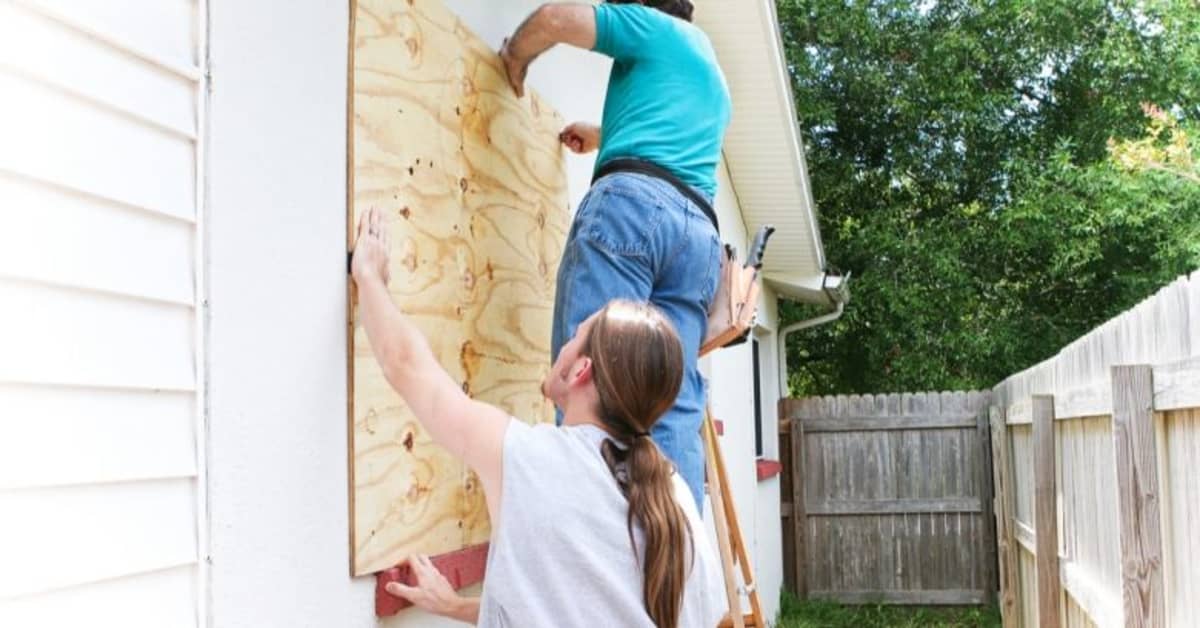
Dr. Jase Bernhardt, Hofstra associate professor of geology, environment, and sustainability, was interviewed by WCBS-TV, about measures being taken in West Islip, Long Island, to mitigate flooding issues. He also talked to MoneyGeek.com about the ways in which climate change impacts homeowners. “Climate change should certainly be taken into account if you are a prospective home buyer,” he said. “It is always worth reading up on the normal climate conditions for the location where you are purchasing a home, to see if anything jumps out at you, such as a heightened risk of hurricanes or tornadoes.”



Moths in the Mojave, with UConn's David Wagner
Did you know that there are approximately 180,000 moth and butterfly species living in California’s Mojave Desert? Moths, the winged insects famous for eating sweaters and flocking to lights at night, are a mysterious and captivating species for entomologists like UConn's David Wagner. He was part of a research study that was documented recently in The Washington Post. Each night in the desert, vast clouds of sphinx moths, some spanning the palm of your hand, speed between night-blooming flowers, sipping nectar. Ethmia, tiny black moths with spots shaped like musical notes, emerge from the dark like fairies. Thousands of geometrid moths, no bigger than your fingernail, slip by cloaked in desert hues from rusty reds to pale green. To witness them, I traveled deep into the Mojave Desert this spring with a team from the California Academy of Sciences working to ensure the survival of lepidoptera. For two days, we beat bushes, placed traps and collected thousands of moths to see what lives there — and what can be saved. Moths have inhabited our planet for at least 200 million years. But the conservation status of about 99 percent of moth species remains unknown. Some, like sphinx moths, remain abundant. Many others are probably being pushed to the brink by development, land-use changes, pesticides and pollution, and rising temperatures. “It’s not this unseen force,” says David Wagner, an entomologist at the University of Connecticut. “It’s humans.” Over two nights in the desert, I discovered just how easy it is to fall in love with an unloved insect. And why “mothing” may be the best way to discover the miracle of biodiversity in your own backyard. On the arid western edge of the Mojave, where the desert floor rises to meet the San Bernardino Mountains, sits the 306-acre Burns Piñon Ridge Reserve. We venture out in the morning with beating sticks. Hitting the branches of small oaks and rabbitbrush deposits a treasure trove of insect life into collectors made out of fabric: Crane flies, green lacewings, spiders, walking sticks and caterpillars that will one day grow into moths. Wagner and Chris Grinter, an entomologist and collection manager at the California Academy of Sciences, will catalogue the most interesting ones. The academy houses a collection of 18 million insects, 700,000 of which are butterflies and moth specimens. Many are still waiting for scientists to identify and name them. The plight of moths and caterpillars has fascinated Wagner since childhood. After 20 years, he is no less enthusiastic — or worried. Wagner traveled to Burns Piñon to help finish his magnum opus, the successor to his 500-page guide to eastern North America’s caterpillars. The guide for the west will probably run more than 1,500 pages, a testament to the region’s remarkable biodiversity. As the sun sets, the mood is anticipatory. We head out into the desert to set our traps and see what moths we’ll discover. “The nice thing,” says Grinter, “is moths will come to you.” The article is an amazing read - and the link is above. And if you are interested in knowing more about moths, insects, or the fascinating field of entomology, then let us help. Dr. David Wagner is an expert in caterpillars, butterflies, moths, and insect conservation, and he's commented extensively on the current decline of insects worldwide. Click his icon to arrange an interview today.


Expert Q&A - Craig Albert, PhD, talks election interference
Going into the final days of the 2024 election cycle there is a very real concern about election interference from both foreign and domestic actors, and it's something that will continue to be monitored even after the final votes are tallied. Craig Albert, PhD, graduate director of the PhD in Intelligence, Defense, and Cybersecurity Policy and Master of Arts in Intelligence and Security Studies programs at Augusta University, is a leading expert on propaganda, information warfare and national security studies. Albert has answered key questions about who is trying to interfere in the U.S. elections and why it matters. Q: How and when should someone vote and does it protect you more to avoid interference? The access to instantaneous news or events could affect people and their understanding of whom they want to vote for all the way up until the day they vote. Because of this ease of access, this election cycle has especially shown us how cautious we need to be in regards to scams. It's also why I know there has been a big push for early voting and mail-in voting, and it's necessary in some cases, but I prefer to vote on Election Day because you never know what type of news might come out about one of the candidates or parties. If something comes out that proves to be true, it could affect how someone might vote, but if you voted before Election Day, it's too late. At the same time, a very serious deepfake could be released that could manipulate how people choose to vote and it could mislead people, as well. Q: What are the consequences of the optics of an 'unfair' election? What the U.S. needs to be cautious about is preserving and maintaining the legitimacy of the election cycle. After the election, no matter who wins, narratives of interference and how it impacted the election are going to be shared and that's just irresponsible. Unless there's damning information and very clear evidence, you shouldn't mess around with the idea that the election was interfered with, because that could threaten the very structure of the United States. Q: What's the potential for post-election meddling? We have domestic bad actors as well as foreign maligned actors that are going to say the election was delegitimized no matter who wins. They have social media campaigns ready to post no matter which side wins, they're going to circulate false videos of ballot boxes burning or news that not all the the votes were counted and things of that nature. They're going to do all kinds of things because anybody can fake a ballot box being burned or mail in votes not being counted properly on video or something like that. The problem is if it goes out there or becomes viral, so many people will believe it and that sows discord. So, that creates distrust in the public system on a pretty big swath of the American population. Q: Who benefits from post-election doubts and chaos? You have foreign actors that really build on the type of anger that the political candidates and their parties already use through their propaganda and rhetoric. We have already seen Russia amplifying the message that somebody cheated or elections were hacked, and you have China, Iran, Venezuela, ISIS and Al Qaeda doing that, as well. You also have regular cyber criminals that just want to sew discord and distress so they can manipulate people later on and get into our banking systems and things of that nature. You have potentially hundreds, if not thousands of attack vectors coming at the United States between election night and January 20 when the new President will be sworn in. And then afterwards, they will all still be trying to create chaos, rebellion, civil unrest, or in the case of Iran, China and Russia, open civil war in the United States. Looking to know more and covering the election, Augusta University can help. Albert is available to speak with media – simply click on his name to arrange an interview today.


In stunning news, NATO just confirmed that North Korea has deployed about 12,000 troops to Russia. The troops have already been deployed to the Kursk border region of Russia. According to NATO Secretary-General Mark Rutte, this move represents “a significant escalation” in North Korea’s support of Russia and could lead to a dangerous expansion of the war. International relations expert, Dr. Glen Duerr, gave his thoughts about the impact of this strategic move in a recent interview. Here are three key points: North Korea has already been supporting Russia amid their war with Ukraine. But North Korean troops in Russia signifies an escalation. Is this move bringing to light Russia's weakness? Initially, it was reported that 3,000 North Korean troops were deployed. But it turns out there were actually 12,000 troops deployed to Russia from North Korea. How will these numbers impact not only the weary troops of Ukraine but also the tensions of the Korean Peninsula and the wider Indo-Pacific region? North Korea has one of the largest militaries in the world, in relation to their country's population. How will their support of Russia impact the future of the war? If you are a journalist covering the conflict between Russia and Ukraine, look no further than our experts for valuable insight and expert knowledge. Dr. Glen Duerr is an expert on this subject and is available to speak to media regarding the ongoing Russia-Ukraine war. Simply click on his icon to arrange an interview or contact Mark Weinstein at mweinstein@cedarville.edu.


Civil discourse will be crucial to healing after the election
As we inch toward Election Day and brace for the aftermath, learning to disagree will be as important as ever. Civil discourse – actively engaging while aiming to understand, not persuade – is the key to navigating the upcoming political minefield, says Tim Shaffer, the Stavros Niarchos Foundation Chair of Civil Discourse at the University of Delaware. Shaffer, who is also director of the Stavros Niarchos Foundation Ithaca Initiative in UD's Biden School of Public Policy and Administration, can discuss the concept of civil discourse and how it can be used to navigate a society so divided politically that it has torn friendships and families apart. Some main points: • Civil discourse emphasizes listening to understand others’ perspectives, focusing on shared values – such as family – rather than conflicting positions. • Disagreement is actually important. Society needs friction for growth and progress. • Advice for healthy discourse: Practice intellectual humility, acknowledging the complexity of issues beyond right and wrong and recognizing the importance of gray areas in life. • Staying safe and sane on social media: "People need to feel safe and included, and we need to ensure we hear differing viewpoints, so how do we balance those competing values? There’s no secret answer, but we have to figure it out collectively." • Open discussions can be a valuable tool. "I believe in the power of education—church basements, community spaces, classrooms—to make a difference," Shaffer says. Reporters can connect with Shaffer directly by visiting his profile and clicking on the contact button.

