
Experts Matter. Find Yours.
Connect for media, speaking, professional opportunities & more.

From Boring to Brilliant: Writing that Transforms Your Thought Leadership into Must-Read Content
Insights from our Webinar with Author, Rhea Wessel Ask anyone who develops Thought Leadership programs, and they will tell you that experts are essential to a successful program. But experts are busy people. That makes expert engagement strategies a very popular topic with our Comms and Media Relations pros. That’s why we invited Rhea Wessel, Founder of The Institute for Thought Leadership, to join us last week for our ExpertFile webinar. Rhea, a former tech and financial journalist and author of “Write Like a Thought Leader,” has worked with organizations such as Harvard, CFA Institute, Accenture and the Max Planck Institute to help their experts focus on developing unique story angles while getting high-quality work produced. Having seen her in action at last year's IABC Global Conference, speaking to a standing-room-only crowd, I was really impressed by Rhea’s approach. Rhea uses a system that experts and comms teams can use to brainstorm topics and craft story angles that frame expertise and research to make them more compelling. In the session, she showed us how she helps brainstorm and select the best angles for thought-leadership stories using ideas such as “origin” stories, “what if” scenarios, personal-impact stories, and opinion pieces. Experts often have issues with the "dreaded first draft.” The frameworks Rhrea showed us from her book were clever and designed to pragmatically move experts from brainstorming into a writing mode that doesn’t feel forced. Here are some key points I took away from Rhea’s session: Defining Thought Leadership An essential attribute of Thought Leaders is that they share their knowledge for free, using journalistic skills to engage their audience by articulating emerging ideas, steering conversations and influencing others. Finding the Niche Finding and framing thought leadership is not about covering a broad topic. The best topics are often very narrow. And they are best found at the intersection of the expert’s passion, purpose, and big ideas. Think Like a Journalist Write in a conversational tone and include data, quotes & statistics, but not too much. Use short sentences and paragraphs while keeping the story fast-moving. And don’t forget your sense of humor. Spend Time on the Headlines By “thinking like a journalist” and focusing on headlines, one can narrow the focus when examining research and insights to create more clarity. Quoting Author Sean Coyne, Rhea referred to headlines as having the benefit of being an “enabling constraint." "One of the curses of subject matter expertise is that your experts know a lot. They tend to pack a lot [of their knowledge] in, and for a good story, you've got to slice out a narrow bit. That’s the constraint.” Rhea Wessel Time & Place Matters Stories are best anchored in time and place. When you are working with an expert and you want to enrich a story, don’t just think about how they developed their research and insights. Also, think about “where they were” and “when did it happen?” A good origin story explains why an insight is significant for the expert, creating a more emotional, relatable connection for the audience. Frame Your Story Keep it focused on a single yet relevant problem the audience has. Then explain why this matters to your audience and why now. Based on the feedback we received from this session, we'll have Rhea Wessel join us for more conversations on topics related to storytelling. We'd love to know what you think. Details about this session are below: Full Webinar Recording bit.ly/4e9YuWb Presentation Slides To get a copy of the presentation & Templates, just hit the connect button on my profile and let me know. Enjoy!


Experts in the Media: Not a gym rat? Here’s how to get started on an outdoor exercise routine
Summer is here and there's no better time to get out and get active. And for some, the idea of going to the gym just isn't an option or a place they want to be. So recently, the Associated Press was looking for alternatives and connected with TCU's Deborah J. Rhea, Director of the LiiNK Center for Healthy Play. Rhea is also an expert in the areas of physical activity and education and the importance of unstructured play. The health benefits of spending time in nature have long been established, and exercise in general, of course, improves physical and mental well-being. Combine the two and you double down on what adults need to stay healthy, said Debbie Rhea, professor in kinesiology at Texas Christian University. “We’ve got to get outside. We’ve got to be active,” Rhea said. “If we’re going to live long lives, this is what it’s about.” May 29 - Associated Press If you're interested in learning more about the importance of being active and the different ways to do it - then let us help. Deborah J. Rhea is available to speak with media about this topic - simply click on her icon now to arrange an interview today.


The anniversary of the approval of the 19th Amendment marks a pivotal moment in history when women in the United States were granted the right to vote, symbolizing a major victory in the women's suffrage movement. This event is newsworthy because it represents a fundamental shift towards gender equality and has had profound implications for democratic participation and women's rights. Celebrating this milestone also provides an opportunity to reflect on the progress made and the ongoing struggles for gender equity. Key story angles include: Historical Context: Exploring the history and significance of the women's suffrage movement and the efforts leading up to the ratification of the 19th Amendment. Impact on Women's Political Participation: Analyzing how the 19th Amendment has shaped women's involvement in politics and governance over the past century. Contemporary Gender Equality Issues: Investigating current challenges in achieving gender equality in various sectors, including the workplace, education, and politics. Role of Women in Social Movements: Highlighting the contributions of women to various social justice movements and their leadership in advocating for change. Legal and Policy Developments: Reviewing significant legal and policy changes since the 19th Amendment that have advanced or hindered women's rights. Global Perspective: Comparing the women's suffrage movement in the United States with similar movements around the world and their respective impacts on global gender equality. Connect with an Expert about the 19th Amendment and the women's suffrage movement : Carla Bittel Professor of History · Loyola Marymount University Kathy Roberts Forde Professor of Journalism · University of Massachusetts Amherst Catherine Cerulli Director, Susan B. Anthony Center · University of Rochester Christopher M. Curtis Professor of History · Georgia Southern University Mary Anne Trasciatti Professor of Writing Studies and Rhetoric · Hofstra University To search our full list of experts visit www.expertfile.com Photo Credit: Library of Congress
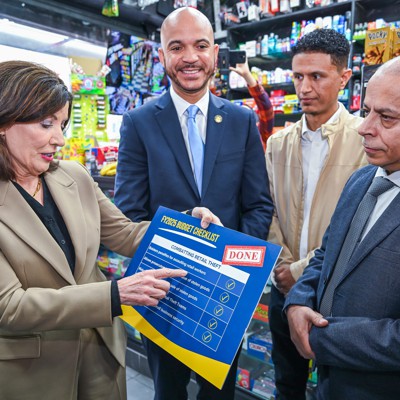
NYS Budget Provisions May Protect Incumbent Democrats
Lawrence Levy, associate vice president and executive dean of the National Center for Suburban Studies, was interviewed by City & State New York about how Governor Kathy Hochul’s budget and focus on issues like affordable housing and retail theft may provide some protection for incumbent Democrats this November. The state budget may be designed to insulate Democrats from Republican attacks, but it’s not clear that it will be the deciding factor in various races. The 2024 election cycle is an entirely different beast than 2022. Two years ago, Hochul was at the top of the ticket in New York. This year, she’s not even on the ballot. That may actually be a boon for Democrats, as many observers credited her lackluster performance with negatively impacting races down ballot and the latest Siena College polling has her favorability and job approval ratings at all-time lows. Hochul notably did not stump for Suozzi during his high-profile race in February despite her role as de facto head of the state Democratic Party. And in the weeks following the state budget, she has only visited a swing district to celebrate her policy successes in the spending plan once. Instead, President Joe Biden and Donald Trump will be at the top of the ticket, and any thoughts about the specific policies included in the state budget could be reflected by voters’ sentiments about the two presidential candidates. “With the presidential campaign at the top of the ticket, I don’t think what Hochul does, or doesn’t do, will make a particular difference in any of the competitive congressional races,” said Lawrence Levy, executive dean of the National Center for Suburban Studies at Hofstra University. “Yes, she may be cited by Republicans along with several other high-profile Democrats as supposedly insensitive to their constituents on housing and crime, to see if that still sticks, but mostly it’s going to be about Trump and Biden.” May 13 - City and State New York Covering New York politics - we have experts ready to help with any of your questions and stories. Lawrence Levy is the Executive Dean of the National Center for Suburban Studies at Hofstra University. He's available to speak with media - simply click on his icon now to arrange an interview today.


Associate Professor of Voice Emily Grundstad-Hall, DMA, left, plays the piano while members of the Savannah Song Birds sing. If you asked Alyson Brinkley what her favorite day of the week was, her answer of “Monday” might surprise you. But Monday mornings are her favorite because Brinkley, a graduate student in the Communication Sciences and Disorders (CSDS) program at Georgia Southern University, teams up with fellow students and faculty to sing and harmonize while simultaneously helping Parkinson’s disease (PD) patients with therapy. Through a unique and collaborative singing group called the Savannah Songbirds, the RiteCare Center for Communications Disorders uses this group to raise awareness of PD while providing therapeutic support through the power of music. “It is the best part of my week and the best way to start my Monday morning,” Brinkley said. “It has enhanced my experience as a student by providing a unique experience I would not have received at any other school. The Savannah Songbirds is the only choir for people with Parkinson’s in the nearby area.” Founded in 2023 by Tory Candea, clinic coordinator for the RiteCare Center, the Savannah Songbirds gather weekly for rehearsals. Inspired by The Parkinson Voice Project, the group’s formation reflects Candea’s dedication to functional communication, community engagement and enriching the lives of those battling neurological diseases. The therapeutic benefits of music and vocal exercises for PD patients are profound,” Candea said. “PD often impairs communication by affecting the muscles involved in speech production. Through singing and vocal exercises, individuals engage these muscles in a demanding yet enriching manner, enhancing communication abilities and overall quality of life.” Candea partnered with Associate Professor of Voice Emily Grundstad-Hall, DMA, from the Gretsch School of Music to enhance the Savannah Songbirds choir. Grundstad-Hall directs the choir, facilitates the rehearsals, selects music and helps organize an end-of-semester concert. “This is a great collaboration between the two departments,” said Grunstad-Hall. “There has always been a positive outlook on departments and schools working together ‘across the curriculum.’ Singing is housed in the arts and speech is housed in health professions, but singing and speaking use the same instrument/anatomy to achieve a goal. It makes sense that we would work well together.” During their sessions, the Savannah Songbirds learn a repertoire of songs, including classics like “Moon River,” “Danny Boy,” “That Old Black Magic,” “Dona Nobis Pacem” and “Give Me Your Tired.” “I have enjoyed the collaboration with my colleagues and students in the CSDS department,” Grundstad-Hall said. “The singers that participate in the choir are amazing and I benefit from the community that being in a choir can bring. We are all working toward a common goal and we get to do it by singing songs. What could be better than that?!” Participants describe the experience as both enjoyable and rewarding, highlighting the therapeutic value of music in their journey with PD, Candea said. Students like Moriah Pearce, also a graduate student in the CSDS program, see the benefits of participating. “This experience working with these individuals has cemented my passion for working with individuals with Parkinson’s disease,” said Pearce, whose interest in working with PD patients developed in her undergraduate coursework at Texas Woman’s University. “It has provided me with experience outside of a therapy room in a different environment. It is rewarding to see these individuals who are motivated and happy to be part of this wonderful group.” Like Brinkely, Pearce describes the Monday meetings as her favorite way to start the week. “The most rewarding part of being in this choir is being part of a program that provides a sense of community and camaraderie for these individuals,” Pearce said. “Our weekly meetings provide these individuals an opportunity to spend time with people who may have the same or similar experiences with PD and who have a passion for music.” Seeing the motivation of participants has also been rewarding for Brinkley. “The most rewarding part of the choir is to see the members sing when they thought that their singing voices would be diminished due to Parkinson’s,” Brinkley said. “Although Parkinson’s is a progressive neurological condition, our members show up every Monday to rehearse. Some travel from South Carolina to be a part of the choir. It is so rewarding to see such strong motivation and to create a safe space for members to sing with their new voices and recognize what they are capable of.” For the clinicians and faculty involved, the collaboration represents a unique opportunity to provide evidence-based therapy creatively and engagingly. By integrating music into therapy sessions, they aim to enhance outcomes and promote community service-minded efforts. “Overall, working with the Savannah Songbirds has been immensely educational and rewarding, and one of the most enjoyable experiences of my professional career,” Candea said. “Being afforded the opportunity to provide evidence-based speech therapy services in a less traditional way has been engaging. Learning to enhance outcomes and the enjoyment of treatment through the addition of creative arts has been eye-opening. Promoting the importance of community service-minded efforts has been gratifying.” The Savannah Songbirds will host their next performance in the Fine Arts Auditorium on the Armstrong Campus on April 29 at 11 a.m. The event is free and open to the public. The partnership between the CSDS program, music department, and RiteCare Center offers a multitude of benefits for both PD patients and the broader community. Beyond therapeutic support, the collaboration fosters awareness and education about PD while showcasing the diverse programs offered by the RiteCare Center. For those seeking assistance, the RiteCare Center for Communication Disorders, located in the Armstrong Center, offers comprehensive evaluation and treatment services for individuals of all ages impacted by speech, language, cognitive, or swallowing disorders. Interested in learning more about the RiteCare Center? Contact Georgia Southern's Director of Communications Jennifer Wise at jwise@georgiasouthern.edu to arrange an interview today.


Approximately 4,200 degrees conferred during Georgia Southern’s 2024 Spring Commencement ceremonies
In May, approximately 4,200 graduates from Georgia Southern University’s Statesboro, Armstrong and Liberty campuses received associate, baccalaureate, masters, specialist and doctoral degrees in five Spring 2024 Commencement ceremonies. Georgia Southern President Kyle Marrero welcomed the graduates and their guests to the ceremonies, held at the Allen E. Paulson Stadium in Statesboro on May 7, 8 and 9, and at the EnMarket Arena in Savannah on May 11. “Graduates, I don’t need to tell you about your unique college journey, which has been challenging,” said Marrero to the crowds. “I am very proud of how, together, we have persevered allowing us to have a successful semester and today, our commencement ceremony. This graduation is a momentous occasion for Georgia Southern University, as well as for all of you. Today, you are part of history at Georgia Southern.” Speakers included: Mackenzie Anderson (’07), global director of Corporate Communications at Nike Alton M. Standifer, Ph.D. (’12, ’14), vice provost for Inclusive Excellence and chief of staff to the provost at the University of Georgia (UGA) Kim Greene, chairman, president and chief executive officer of Georgia Power Chris Ahearn (’09), director of research and trade development for the World Trade Center Savannah Candicee Childs, M.D., (’19) an emerging beacon of inspiration in the fields of medicine and literature. At present, she is a resident physician at Massachusetts General Hospital, the largest teaching hospital of Harvard Medical School, with a focus on child and adolescent psychiatry Anderson opened the graduation ceremonies in Statesboro, following a warm introduction from Marrero, who described her leadership role at Nike. “I’m sure you probably expected me to get up here and say something like, ‘Class of 2024, go out into the world and ‘Just Do It,’” Anderson mused. “But here’s the deal. I don’t have to tell you to just do it because you just did it. You did the impossible by making it through the pandemic. “Today you aren’t just graduating with a degree in whatever is written on your diploma. You’re also graduating with a degree in doing hard things. And today we celebrate you.” She continued, saying that earning a degree in “doing hard things” has no doubt been a challenge, but the graduates will soon find out that this is also their superpower. They produced their own playbook, as unique and rare as they are. How they use the playbook moving forward is up to them — to wit, be curious, be wrong while giving yourself permission to make mistakes, be humble and be persistent. “Launch into the world,” Anderson concluded. “And whether you land just across the street, across the country like me or somewhere around the world, remember where you came from. Today you are etching your name alongside a proud Eagle alumni network of more than 147,000 strong. “It is my honor to be the first to say, ‘Georgia Southern University graduating Class of 2024, welcome to the alumni family.'” Standifer shared his own story as a young man, undecided about going to college while he worked as a cashier. A regular customer, Mr. Paul, continuously asked Standifer about whether he’d attend college, until one day Standifer told him he was going to attend Georgia Southern University. With a wide grin, Mr. Paul congratulated him and handed him a $100 bill. Incredulous, Standifer asked why he’d given him such a large tip. Mr. Paul told him it wasn’t a tip. It was an investment, and he’d continue to mentor Standifer in the following years, and remain a profound influence in his life. “I want to encourage you all to think of the Mr. Paul’s in your life,” Standifer said. “Think of the people who have helped you get to today. And then when you leave here, make the conscious effort that you will be Mr. Paul for someone else.” In Savannah, Ahearn shared his journey of discovery in Georgia Southern’s classrooms where he explored Irish film, an introduction to the United Nations, abnormal psychology, Celtic identity and conflict, psychology and law, and gangs, drugs and criminal justice. “There’s a whole menu of choices for you and experiences for you to choose from to really help you discover who you are, where you fit, what drives you, what gets your creative juices flowing, and what options are out there when you graduate from these key interactions,” Ahearn said. Following, he pursued a master’s in international relations in Ireland that gave him a deeper perspective on how the world operates and how interconnected we all are. Ensuing professional roles in higher education, international networking and fundraising, culminated in his current role at World Trade Center, Savannah. From the stage, Ahearn stressed his key takeaways: network, stay in touch with your classmates, be authentic and perhaps, most importantly, travel. “Go outside your comfort zone,” he encouraged. “Try things you’d never try. Expand your horizons. This is your opportunity to learn about different cultures, to embrace the differences and similarities we share with our fellow global citizens and find common ground.” In closing: “Many of you may stay in the region to leave your impact as this community continues to expand,” Ahearn said. “There are plenty of great employment opportunities at your fingertips. Many of you will leave to follow your careers wherever they take you. But please know that you’re part of this institution’s history. You’ll always be an Eagle, and Georgia Southern will always welcome you home." Interested in learning more about Georgia Southern University? Contact Georgia Southern's Director of Communications Jennifer Wise at jwise@georgiasouthern.edu to arrange an interview today.
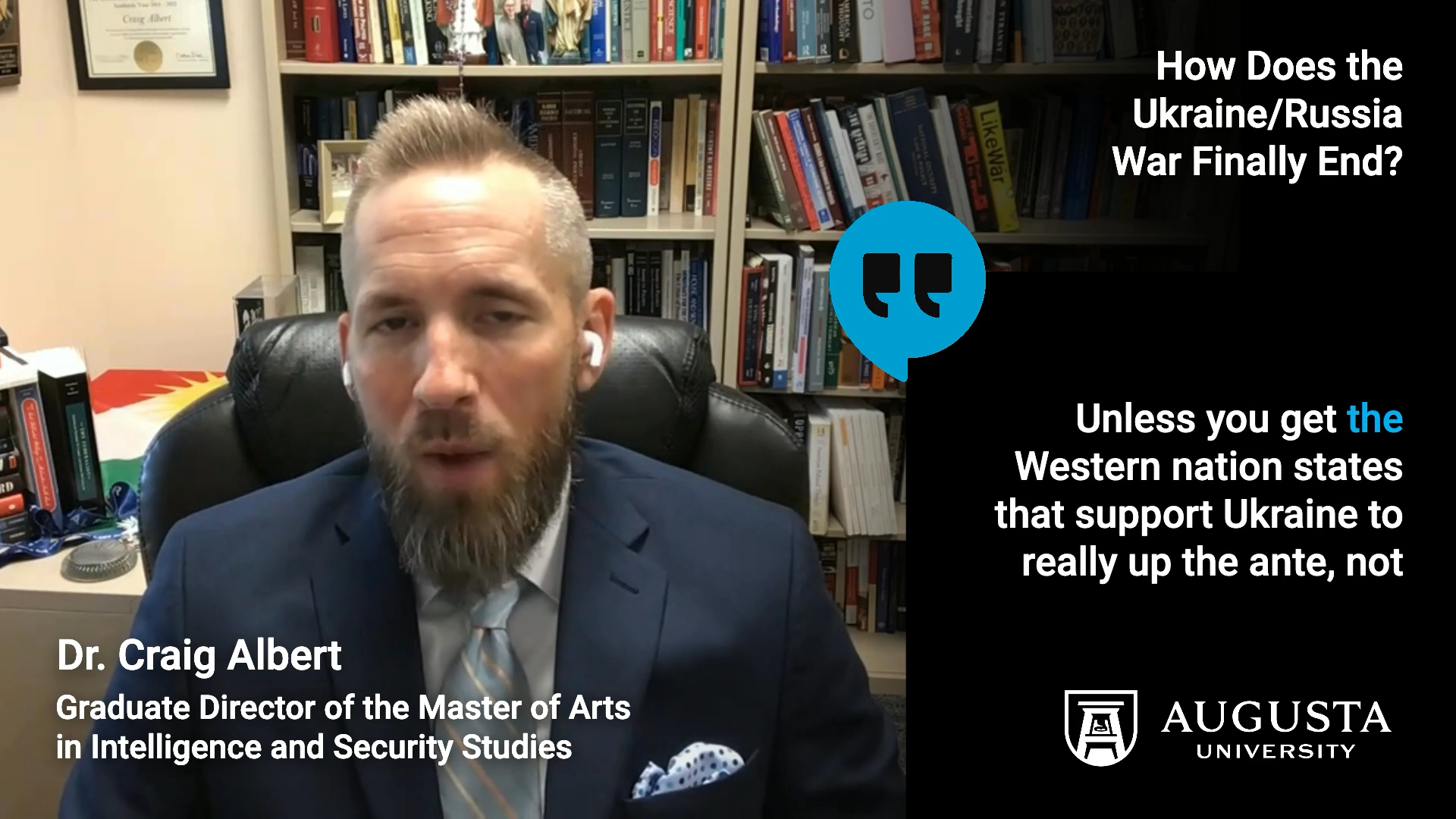
#ExpertSpot: How Does the Ukraine/Russia War Finally End?
With the war between Russia and Ukraine now approaching two and a half years - there's no end in sight. How does it end? Check out this ExpertSpot from Augusta's Dr. Craig Albert for some insight and perspective. Craig Albert, PhD, is director of the Master of Arts in Intelligence and Security Studies at Augusta University. He is a leading expert on war, terrorism and American politics. AI and the upcoming election is a serious topic. Albert is available to speak with media – simply click on his name to arrange an interview today.


#Expert Perspective: Where did all the medical appointments go?
Dr. Martine Hackett, associate professor and chair of Hofstra’s Department of Population Health, spoke to Newsday about why patients are finding it more difficult to make medical appointments and what options they have. Dr. Hackett noted over the past decade, more people have enrolled in insurance plans and sought a wider array of treatments because of the Affordable Care Act and policies that expanded the reach of Medicaid. The Medicaid and Medicare acceptance rates are plunging raising concerns as doctors tend to drop these insurance plans first because they pay lower rates. Setup is becoming illusive in an industry that has undergone immense changes in recent years, Dr. Hackett added. New Yorkers with Medicaid may want to find federally-qualified health centers, which are designed for Medicaid patients, Dr. Hackett said. People may also be able to get appointments more quickly if they see non-physician providers like nurse practitioners or midwives instead of OB-GYNs, she added. Healthcare is an important topic - and if you're covering, let us help. Dr. Martine Hackett's research focuses on public health and health inequities, particularly in the American suburbs and minority communities. She's available to speak with media - simply click on her icon now to arrange an interview today.


Changes in college football continue to be driven by dollars (and sense?)
The landscape of college sports, and particularly that of college football, has changed significantly in recent years. First, we have seen an almost constant realignment of collegiate athletic conferences, resulting in a few major mega-conferences, such as the SEC and ACC, Big Ten and Big 12, and the disintegration of a former major conference, the Pac 12. Most of the other changes related to the athletes, such as the ease with which student-athletes could transfer from one school to another and the ability for them to be paid for their name, image and likeness. All of these issues were potentially pointing to new business models in college sports, but within the last week, that landscape was shaken even further. Last week, the NCAA and its five major conferences settled multiple lawsuits to pay past and present student-athletes a total of $2.8 billion. The settlement also laid the foundation for the payments of college athletes starting in fall 2025. “The major unresolved questions are who will get paid and how much,” said Rick Franza, PhD, professor in the Hull College of Business at Augusta University. “If we ‘follow the money,’ we see that football and basketball (particularly men’s basketball) generate almost all of the revenues, and most of the revenues comes from major conferences. Therefore, most of the player payments are going to go to football and basketball, and given the size of the relative rosters, football teams will be much more costly.” Franza added that the settlement will further exasperate the revenue and cost differences between major conferences and their smaller conferences as well as between football and the so-called Olympic sports which generate little, if any revenue. It was always clear that from both a revenue and cost perspective, college football is very different from other sports. Revenues are much higher for the major conferences in football, and there is not the same extent of revenue sharing as there is in basketball due to the NCAA Tournament. On the cost side, with the new realignment of the mega conferences and expanded geographic footprints, there is a significant increase in travel costs for the Olympic sports. “While those expanded conferences were mainly driven by football revenues, they are also making all other sports more costly. Therefore, the time has come to separate football from other sports,” said Franza. One solution was first proposed by Chip Kelly, former Oregon and UCLA head football coach and now Ohio State offensive coordinator. He proposed a 64-school football conference in which the members would share all revenues, including television, which would more easily cover the NIL, and player pay costs. In recent months, similar proposals have been made for a college football “Super League,” which would include up to 80 schools. “This makes too much sense not to happen,” Franza said. “It allows the bigger football schools to share the plentiful available revenues while being able to pay the players what they will demand. At the same time, the other college sports would be able to revert to their traditional, geographical conferences and reduce travel costs driven up by the realigned mega- conferences.” He added that two conferences, the SEC and Big Ten, the most successful under the current alignment, could delay the implementation. Franza also predicts that an agreement taking the first steps toward such a structure will be reached sometime in 2024. “While it makes a lot of sense to go in this direction prior to the player settlement, it makes even more dollars and ‘sense’ now given the settlement,” said Franza. “While the SEC and BigTen currently make more money than any other conference, I think they will see the light for what is best for the future of college football.” Covering the business of sports and looking to know more? Then let us help. Richard Franza, PhD, is available to speak with media about trending issues like inflation, small business and the economy – simply click on his icon now to arrange an interview today.


MEDIA RELEASE: CAA survey reveals an increase in distracted drivers across Ontario
A recent survey conducted on behalf of CAA South Central Ontario (CAA SCO) indicates 44 per cent of Ontario drivers admit to driving distracted at one point – up four per cent compared to last year. The most concerning distractions drivers noted include: Holding a mobile device. Grooming. Making a video call. Typing in a destination. Watching TV. Eating and drinking while driving is also a growing concern. In-vehicle features, including connected apps and console screens, are another source of distraction for drivers, especially if adjusted while on the road. “Anything that can divert a driver’s eyes and mind off the road will always pose a threat while driving,” says Teresa Di Felice, assistant vice president for CAA SCO. Distracted driving remains a significant concern among 90 per cent of drivers in Ontario. Despite the growing number of self-identified distracted drivers, only three per cent admit to being charged for distracted driving. “While a vast majority of drivers recognize fines and penalties, including increased insurance rates, as the most effective ways to reduce distracted driving, our data shows that drivers have become less supportive of penalties that currently exist for distracted driving convictions,” says Di Felice. Of those surveyed, 57 per cent support increasing fines and stricter penalties for distracted driving convictions. “Currently, a driver can face a minimum fine of $615 up to $1,000, three demerit points and a three-day licence suspension for their first conviction of distracted driving,” says Di Felice. “But that’s not the only way it can cost you. A brief moment of distraction is all it takes for a collision.” Almost two-thirds of drivers in Ontario (63 per cent) have witnessed close-call collisions or traffic violations caused by distracted drivers – up four per cent compared to last year. Meanwhile, 12 per cent of drivers reported being involved in a collision due to distracted driving, mainly because of using a mobile device. “Whatever it is that you need to do – whether it’s sending that text, inputting your destination or setting up your playlist – do it all before you drive,” says Di Felice. “The risks of distracted driving are simply not worth it.”

