Experts Matter. Find Yours.
Connect for media, speaking, professional opportunities & more.

The internet has completely changed how we shop and now artificial intelligence (AI) is changing how we decide what to purchase. AI platforms have created tools to help people find the perfect gift for someone special. The technology helps brands to better learn about their customer and suggests products that fit to that customer. Goizueta Professor David Schweidel can walk you through the different platforms and how they can help shoppers find the perfect gift. Entering some key details about the gift recipient can uncover a whole new world of ideas for that hard to shop for person on the gift list. David A. Schweidel is Professor of Marketing at Emory University’s Goizueta Business School and an acclaimed author. He is available to speak with media regarding the latest advances in AI and how it is changing what we purchase. Simply click on his icon now to arrange an interview today.


Expert Perspective: Augusta University professor gives annual economic outlook for the region
For the 16th year, Augusta University’s Cree-Walker Chair and Professor of Economics in the Hull College of Business Simon Medcalfe, PhD, has given his analysis of the Augusta area economy. The biggest thing on the minds of many remains the possibility of a recession and the overall inflation nationwide. Medcalfe thinks it probably won’t look a lot different in 2024 as it did in 2023. If anything, there may be less of a chance of a recession. “I think the chances of recession have probably slipped a little. I think there’s less chance of a recession,” said Medcalfe. “Inflation is certainly still a concern. It’s running at 3.2%, which sounds kind of low, but because of the amount of inflation, we’ve had prices about 20% higher than two years ago, and it’s still a concern and still eating into people’s wages.” He indicated, looking at Google Trends and what people are searching, inflation is still a pretty high concern. As for the Augusta region, Medcalfe pointed out that Columbia County continues to see a population increase and will likely have the largest population in the area by the end of the decade on current trends. As you would expect, as the population grows, so too does the number of businesses. Looking at the different sectors of employment in the region, he said things haven’t really changed. The only sectors that have seen more than a 2% change in the share of total employment over the last 20 years are education and health services. Medcalfe also pointed out that the manufacturing industry has seen a sizable increase since 2014. He said it was the same time the Starbucks manufacturing facility arrived in South Augusta but didn’t say that was the exact reason for the increase, just a point of reference for the manufacturing industry increased ever since. “Manufacturing has showed a large increase over the last ten years or so, past post-COVID as well. So now manufacturing employment in the local area is at the highest it’s been since I’ve been here,” Medcafe said. Some research that Hull College is undertaking is the intersection of health care and business. He said it’s important to the economy in our region since Richmond, McDuffie and Burke counties all rank towards the bottom of county health rankings in Georgia. “One of the things we are looking at here in the business school and in the new School of Public Health is what are the factors that influence the population’s health but aren’t clinical? There’s a lot of things that impact people’s health. There’s socio-economic status, there’s the environment they live in, there’s education, there’s health behavior and all this kind of stuff. “About 25% of the research out of Hull College is now looking at health maps because it’s important. Not just the health of the population, but it then impacts the economy because we have a labor shortage and how much of that labor shortage is actually because some people can’t work,” said Medcalfe. Looking to know more? We can help. Simon Medcalfe, PhD, is a highly regarded economics expert in the Hull College of Business at Augusta University. Medcalfe is an expert that can talk on the national economy, as well as Georgia. He is available to speak with media – simply click on his icon now to arrange an interview today.


In a recent survey conducted by CAA South Central Ontario (CAA SCO), alarming trends indicate a significant rise in cannabis-impaired driving, particularly involving edibles. Key findings from the 2023 survey revealed that 38 per cent of cannabis-impaired drivers in Ontario consumed edibles before driving—a 12 per cent increase from the previous year and more than double the rate in 2019. “The data shows us that while drivers primarily engage in cannabis-impaired driving after smoking a joint, the prevalence of driving under the influence of edibles is on the upswing, and that poses a greater risk to road safety,” says Michael Stewart, community relations consultant at CAA SCO. “Edibles are harder to detect and can take up to two hours for the effects to kick in.” According to the survey, 7 per cent (approximately 750,000 Ontario drivers) admit to driving after consuming some form of cannabis in the past three months. The survey also found that almost three-quarters (70 per cent) of the cannabis-impaired drivers admitted to getting behind the wheel within 3 hours of consumption, and nearly half (45 per cent) have felt high while driving. “Despite the misconception that cannabis may not impair driving ability, it affects coordination, reaction time, attention, judgment, and decision-making. We want to emphasize our commitment to public education, urging motorists to stay informed about the risks and penalties of impaired driving,” says Stewart. The consequences of impaired driving are evident, with 6 per cent of Ontario drivers admitting having ever been charged— an increase from the previous year. Collisions caused by impaired driving also rose to 6 per cent in 2023, compared to 4 per cent in the preceding year. During this holiday season, CAA reminds drivers to make alternate arrangements, such as utilizing rideshare services, to ensure a safe journey home. “While edibles may be legal, CAA emphasizes that they are incompatible with responsible driving,” adds Stewart. Dig Insights conducted an online survey on behalf of CAA SCO between June 22 to July 5, 2023, of 1,518 Ontario drivers aged 19-75 who had access to a vehicle. Based on the sample size and the confidence level (95 per cent), the margin of error for this study was +/- 2 per cent.



Below is a statement from Eric Kmiec, Ph.D., founder and executive director, ChristinaCare Gene Editing Institute, regarding the expected approval by the Food and Drug Administration of exa-cel (Casgevy), the CRISPR-driven treatment for sickle cell disease and betta thalassemia. If you wish to interview Dr. Kmiec, please contact Mak Sisson, Makenzie.sisson@christinacare.org,302-623-5306 or Anna Chen, achen@burness.com, 215-262-7670. “As scientists, the fact that we have arrived at a potential curative treatment for sickle cell disease in a relatively brief period is a testament to the power of resolute researchers in this field who have never stopped. And the FDA’s expected approval comes with many firsts. For the first time we have what appears to be a safe and curative treatment for one of the most painful diseases that cuts life short. And it is remarkable that finally we are focusing on the Black population first, who are most affected by this disease. This priority is long, long overdue. The challenge, however, is the very people we want to help may not be able to get access to or afford the million-dollar treatment and the length of time it will take to be treated — weeks and weeks in the hospital. The numbers of people who can be treated are limited. We must work with the health care industry and pharmaceutical companies who will market produce and deliver the treatments to make sure that all people can get access. What can they do to make treatments more affordable and more available? What can they do to support continued research to assess the long-term effects this treatment may have? And how can we make this easier to deliver? As important as it is to have developed this new treatment, right now we must do our best to communicate well to the public what new findings like this mean. Take the time to explain it all. It cannot be oversold. We must make the communication about this first CRISPR-driven treatment as important as the science itself.” Eric B. Kmiec, Ph.D., is the founder and executive director of the Gene Editing Institute at ChristianaCare. He is also co-founder and chief scientific officer of CorriXR Therapeutics. Widely recognized for his pioneering work in the fields of molecular medicine and gene editing, Dr. Kmiec has developed CRISPR based genetic therapies for Sickle Cell Disease and Non-Small Cell Lung Cancer. He is Editor-in-Chief of the journal, Gene and Genome Editing.



Is South Florida soon to be the next Las Vegas? Our expert can tell you if it's a good a bet or not?
There's a lot of buzz in Florida around gambling right now. Legal sports betting, live roulette and live craps might soon become a reality in the Sunshine State, adding to the economic bonanza and possible social consequences that comes with allowing these activities to expand. Expectations are high, and it's an idea getting a lot of coverage. In less than a month, in-person sports betting, craps and roulette will, presumably, begin at all South Florida casinos and elsewhere in the state, though that anticipated launch may hinge on a favorable ruling from the Florida Supreme Court. The launch is expected to drive tourists and businesses to South Florida and elsewhere in the state, create jobs, and bring in billions of dollars in revenue. Though investors and hotel owners might not want to push all their chips in just yet. There are serious legal issues that still need to be overcome as well as opposition from the Seminole Tribe and the anti-casino group No Casino. The idea though, has media contacting local experts like Florida Atlantic's Peter Ricci for perspective and insight. Peter Ricci, a Florida Atlantic University professor who specializes in hospitality and tourism industry trends, thinks that South Florida will see an uptick heading into the Super Bowl, but most of what he hears from local businesses and hospitality employees is uncertainty rather than excitement. “What I’ve heard is questions about ‘when is it starting?'” he said. ” … ‘Are they hiring for blackjack dealers? What does this mean? Will they expand the hotel?’ All these questions but nothing specifically pro or con about actual sports betting itself.” November 13 - Sun Sentinel Whether Florida can become the next Las Vegas is up to the courts, but if you are a reporter following this ongoing story - we're here to help. Peter Ricci is the Director of the Hospitality and Tourism Management program in Florida Atlantic University’s College of Business. He is a hospitality industry veteran with more than 20 years of managerial experience in segments including food service, lodging, incentive travel and destination marketing. Peter is available to speak with the media about tourism in Florida and the potential for gambling. Simply click on his icon to arrange an interview.


Unveiling the Emotional and Psychological Rewards of Gift-Giving
During the holiday season, the spirit of giving resonates with joy and warmth, extending beyond mere material exchange. Philip Gable, a professor of psychological and brain sciences at the University of Delaware, asserts that there's a science behind gift-giving, encompassing emotional nuances applicable to charitable work. Gable emphasizes that the significance of a gift contributes to the happiness derived from giving, taking various forms, from a personal investment of time to a budget-conscious monetary contribution. It transcends mere obligation, aiming to create a resonant impact. The professor has expertise in emotion and motivational science and can discuss this nuance, especially as we enter the winter holiday season. He can be reached by clicking his "View Profile" button.


Reinventing the laser diode: free public lecture by Professor Richard Hogg
Professor Richard Hogg joined Aston University in spring 2023 His inaugural lecture is about laser diodes, the tiny components that are a vital part of everyday life The free event will take place on Tuesday 28 November. The latest inaugural lecture at Aston University will explore the laser diode and what’s in store for it in the future. Professor Richard Hogg will explain how his future research might make laser diodes do some of the things that they currently can’t do. The laser diode turned 61 years old this month and the tiny components are a critical part of everyday life. Professor Hogg said: “They are now at the heart of the continuous transformation of society. “They transmit data to allow instantaneous, ubiquitous communication and data access. “They allow light to be used for cutting and welding, for sensing and imaging, for displays and illumination, and data storage. “And in the guise of a laser pointer they can even be used to entertain your cat!” He will discuss different classes of laser diode and their operation and applications. Professor Hogg joined Aston University in spring 2023 and is based at Aston Institute of Photonic Technologies (AIPT). It is one of the world’s leading photonics research centres and its scientific achievements range from medical lasers and bio-sensing for healthcare, to the high-speed optical communications technology that underpins the internet and the digital economy. The professor is also chief technology officer at III-V Epi, which provides compound semiconductor wafer foundry services. The free event will take place on the University campus at Conference Aston, on Tuesday 28 November from 6pm to 8pm and will be followed by a drinks reception. It can also be viewed online. To sign up for a place in person visit https://www.eventbrite.co.uk/e/717822585677?aff=oddtdtcreator To sign up for a place online visit https://www.eventbrite.co.uk/e/717824260687?aff=oddtdtcreator

Georgia Southern University launches ‘Together We Soar’ Campaign
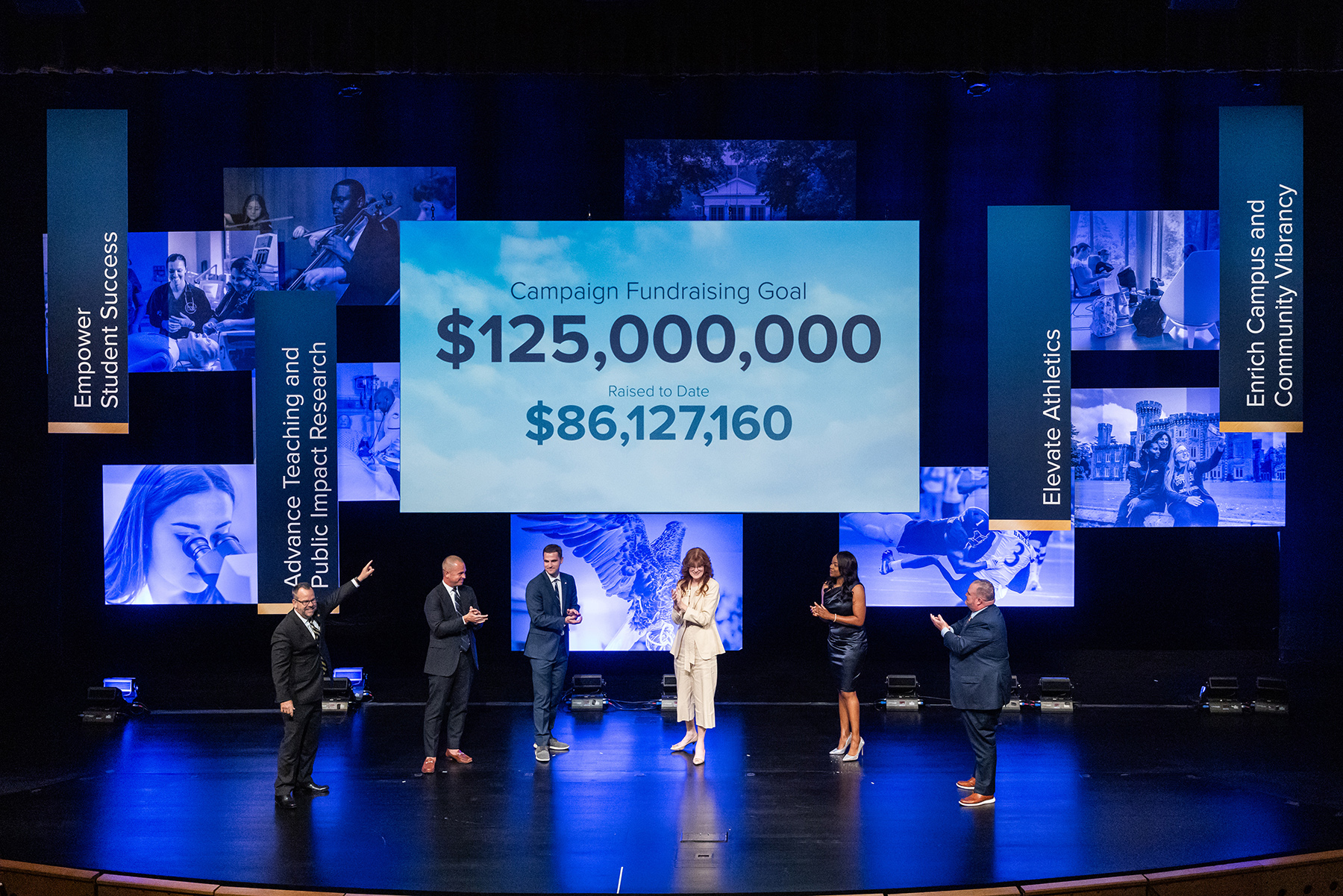
Georgia Southern University proudly announces the launch of its comprehensive campaign, “Together We Soar: The Campaign for Georgia Southern University.” This transformative initiative aims to elevate the University’s impact on students, faculty, research, athletics, and the communities it serves. Georgia Southern, renowned for its majestic campuses adorned with southern live oaks and towering pines, symbolizes not just American freedom but also the promise, achievement and boundless potential of its students. The University’s trajectory is on the rise, reaching for greater heights in education and community impact. Central to this momentum is the unwavering support from alumni, friends and the community. Publicly launched last Friday evening, Together We Soar: The Campaign for Georgia Southern University aims to raise $125 million by 2026. More than $86 million has already been secured. Dr. Kyle Marrero, President of Georgia Southern, expressed his gratitude and vision for the University. “Georgia Southern is on the move, in motion, and soaring to new heights. The ‘Together We Soar’ campaign—fueled by the generous support of our alumni, friends, and partners—will ensure our ability to drive innovation, develop talent, transform lives, and propel the economic development of a growing region.” (L-R) Georgia Southern President Kyle Marrero, Vice President for University Advancement Trip Addison, Deputy Athletics Director of Development Davis Hendrickson, Executive Director of Development Julie Gerbsch, Director of Alumni Relations Ava Edwards, and University Campaign Co-chair Leonard Bevill on stage at the Oct. 20 launch event for Together We Soar: The Campaign for Georgia Southern University. The campaign has identified four primary objectives: Empower Student Success: The campaign aims to stimulate learning by recruiting high-achieving students, increasing student access, and promoting inclusive excellence and career readiness. Advance Teaching and Public Impact Research: The focus is on meeting regional economic needs, increasing faculty expertise, and enhancing research capacity. Elevate Athletics: The campaign seeks to attract and retain elite student-athletes, provide top-notch facilities, and boost the Competitive Excellence Fund. Enrich Campuses and Community Vibrancy: The goal is to improve the communities surrounding the campuses and teach about local wildlife, among other initiatives. Campaign co-chairs Mike Sanders and Leonard Bevill shared their excitement for the campaign and what it will mean for Georgia Southern. “I could not be more excited about Georgia Southern and its possibilities. Opportunities abound for our University and the Together We Soar Campaign is the catalyst. It is time to do ‘more with more.’” - Mike Sanders “‘Together We Soar’ is spot on. From across campus to athletics and throughout our community, we’re perfectly aligned and equipped to launch to historic heights. I’m very blessed and excited to be involved.” Leonard Bevill The campaign also highlights the significant economic impact of Georgia Southern, with a regional economic contribution of $1.1 billion in fiscal year 2022. The University plays a critical role in the economic growth and transformation of Southeast Georgia. Marrero said Georgia Southern invites all its supporters, alumni and the community to join this transformative journey. With collective support, there’s no limit to how high Georgia Southern can soar. For more information or to contribute to the “Together We Soar” campaign, visit GeorgiaSouthern.edu/TogetherWeSoar.


Peer Support Program Helps Patients With Substance Use Disorders
Recognizing that stigma may keep people from accessing treatment and recovery resources, ChristianaCare Union Hospital is partnering with the Cecil County Health Department and Voices of Hope to make peer recovery specialists available at the bedside for patients who have experienced a drug overdose or live with substance use disorder. Ten peer recovery specialists are available at Union Hospital seven days a week from 8:30 a.m. to 1 a.m. to talk with patients about behavioral health care navigation, access to treatment and referrals to harm-reduction and recovery-support resources. Patients can be connected with a certified peer recovery specialist if they are brought to the Emergency Department because of a drug overdose, or if they screen positive for substance use while they are a patient in the hospital. ChristianaCare Union Hospital is partnering with the Cecil County Health Department and the Maryland nonprofit Voices of Hope to make peer recovery specialists, pictured in blue t-shirts, available at the bedside for patients who have experienced a drug overdose or live with substance use disorder. Patients are not required to speak with a peer recovery specialist, but the specialists’ unique combination of lived experience and training to help people experiencing behavioral health issues offers an opportunity for people with substance use disorder to get help without fear of judgment or stigma. “Substance use disorder continues to be a serious health problem that affects people of all ages and walks of life,” said Lanre Akinkunmi, M.D., interim chief medical officer and medical director for population health at ChristianaCare Cecil County Campus. “The good news is that it is treatable, and when people are in the hospital or the emergency department, they are often most receptive to discussions about treatment. Through this expanded use of peer recovery specialists at Union Hospital, we are making a positive impact on the health of our patients and our community.” A voice of experience Peer recovery specialists who work on the weekdays are employed by the Cecil County Health Department, supported by a grant from the National Association of County and City Health Officials. Voices of Hope, a nonprofit focused on recovery support for people in Harford and Cecil counties in Maryland, employs the peer specialists working evenings and weekends. “This program is a great example of using resources wisely and effectively. We already know the tremendous work being done by Voices of Hope and Cecil County Health Department to help our neighbors who have been impacted by substance use disorder,” said Lisa Fields, manager of Community Engagement at the Cecil County Campus. “By partnering on this important program, we are building trust with our patients and helping them to get on the road to recovery.” Since the expanded program launched in September, there have been about 40 referrals for patients to speak with peer support specialists, and more than half of them have agreed to some kind of treatment, Fields said. Unique connection “Helping people get through what I went through really warms my heart,” said Hannah Dean, a peer recovery specialist with the Cecil County Health Department who works at Union Hospital. “I love what I do.” Cecil County’s death rate from drug overdoses is nearly twice as high as the rest of Maryland and more than three times the U.S. rate. The drug overdose death rate in Cecil County more than doubled between 2016 and 2020, according to the 2022 Cecil County Community Health Needs Assessment. Because peer support specialists have lived experience with substance use disorder and recovery, along with specialized training to support people struggling with mental health or substance use issues, they can connect with patients on a personal level and offer empathetic guidance, said Lauren Levy, health officer for the Cecil County Health Department. “Allowing peer recovery specialists to engage bedside with patients who may be struggling with substance use disorders will not only enhance access to behavioral health treatment but will also help reduce stigma surrounding substance use disorders and foster a more compassionate and supportive community,” Levy said. “We are honored to be a part of this innovative private-public collaboration and to work alongside ChristianaCare Union Hospital and Voices of Hope, Inc. This project helps to break down barriers to treatment and provide immediate support to those in need.” A history of support ChristianaCare has long been a pioneer in the use of peer recovery specialists, going back to the launch of Project Engage at ChristianaCare’s Wilmington Hospital in 2008. Union Hospital first partnered with the Cecil County Health Department 10 years ago to provide a peer recovery specialist in the Emergency Department. That program, the first of its kind in Maryland, was recognized with a best practice award from the Maryland Association of Counties in 2014. However, it operated only on weekdays during daytime business hours, and its ability to connect with hospital patients slowed during the COVID-19 pandemic. This reinvigorated peer recovery program is strengthened by the high level of collaboration among these Cecil County organizations, said Erin Wright, chief operations officer for Voices of Hope. “As community-based organizations, we are in a position to make a difference, and our perspective in the care for people with substance use disorder is really valuable,” said Wright, who has been in recovery for eight years. “As someone who has been through it, we are able to have that empathy. Even if the person does not want to go to treatment, you sit with them and maybe plant a seed.” Catharine Murray hopes her role as a certified peer recovery specialist can help someone struggling with addiction see recovery as a viable option for themselves. “This wasn’t available to me when I was trying to get better. I want to make it more accessible to others,” she said.

Three strategies for dealing with toxic positivity in the workplace
Every workplace needs its cheerleaders who work lift their teammates up when the chips are down. But sometimes things really are that bad, and according to UD career expert Jill Gugino Panté, if that’s not acknowledged and dealt with, the situation will go further south. Panté, director of the Lerner Career Services Center at the University of Delaware, offered three tips for dealing with what is known as “toxic positivity.” Don’t force it. One example of toxic positivity in the workplace is always having to display and present positive emotions even when you might be feeling the opposite. So, feelings of frustration, anger or sadness are not acceptable on any given day. Forcing this type of toxic positivity can actually do the opposite and create feelings of resentment and burnout. Share with your supervisor. As an employee in this environment where toxic positivity runs rampant, you may want to have a one-on-one conversation with your supervisor to discuss the culture and ramifications of not being able to display authentic emotions. Perhaps letting your supervisor know that there are negative feelings festering under the “positive outside” that should be addressed. If you don’t feel comfortable going to your supervisor, find an advocate within the organization. And if you feel brave enough, try playing devil’s advocate in a meeting and state that discussing all angles could be helpful in problem solving. Be proactive with direct reports. Another example of toxic positivity is that everything, no matter the situation, is going to be alright. Sometimes situations are not going to turn out for the better. Sometimes situations are awful and horrible and people need to be allowed to feel that way. This constant “look on the bright side” can diminish a person’s experiences and feelings. It silences those who want to be able to express outrage, anger or sadness and doesn’t provide a supportive workplace. Eliminating this behavior starts at the top with creating an environment where people feel safe to express dissenting opinions or feelings. Panté is available for interviews. To set one up, simply click on her profile.