
Experts Matter. Find Yours.
Connect for media, speaking, professional opportunities & more.

U.S. historian and immigration expert on Afghan refugees in the U.S.
Paul Kramer, associate professor of history, is available for commentary on the arrival of Afghan refugees in the U.S. Paul is an expert in the history of immigration and related policies in the U.S. and can discuss: Historical parallels: The U.S. has a long history of opening up its refugee admissions to its allies in context of geopolitical conflict, especially during the Cold War, and a history of tension and ambivalence about refugee admissions, sometimes fearing refugees are spies for U.S. opponents, largely due to discrimination based on race and religion The rationale: The move is partly out of a sense of moral obligation, and partly out of strategic interest (if the U.S. doesn't admit refugees who helped the county abroad, it undermines U.S. foreign policy) Pros and cons: The upside is that many vulnerable people can escape immediate harm (theoretically), and the downside is that many of these vulnerable people who are not seen as U.S. allies can get shut out for foreign policy reasons


Employment law expert on COVID-19 vaccine mandates
Jennifer Shinall, professor of law, is available for commentary on employer and federal COVID-19 vaccine mandates. Shinall is an expert in employment law and discrimination and can speak to: Employers' rights to mandate the COVID-19 vaccine and enforce it as a term of employment Historical precedence of vaccine mandates Exceptions companies should consider for the unvaccinated, including masks, social distancing and testing Considerations for employees who do not want to receive the COVID-19 vaccine, including lack of unemployment benefits if terminated


Could There Be a Ninth Planet?
A new study re-examined work from 2016 and proposed additional evidence of a ninth planet. While this investigation has been met with much skepticism, Scott Engle, PhD, assistant professor of astrophysics and planetary sciences at Villanova University, contends Planet Nine's existence is a possibility. "Proposing that the Solar System contains a yet undiscovered planet is always going to be a remarkable claim, so it makes complete sense that there's been a lot of excitement from the public and also a divided response from the field," says Dr. Engle. "This recent study certainly makes a more convincing claim than in 2016. The authors seem to understand the weight behind such a claim, and they appear to have aimed this study to address some of the claim's criticisms. Naturally, though, its existence is just an interesting possibility." If Planet Nine is confirmed, what would this change in the field of astronomy? Alongside the excitement of a new planet's discovery, a swell of studies would emerge to continue to investigate the planet. "First, we'll want to pin down the planet's orbit, which will continually improve as we track the planet over time. Once we get a good idea of its orbit, there's also the possibility of going back through the image archives—maybe we'll get really lucky, and Planet Nine photobombed some image that Hubble was taking of an unrelated object." Planet Nine would be unique, particularly because of its position so far from the Sun. "Theoreticians will have a field day determining if the planet formed that far from the Sun or if it formed closer to the Sun and 'migrated out' to its current distance... and then [picking apart the] implications those results have for the current structure of the Solar System and our theories on how it formed. Astronomers will also want to know the composition of Planet Nine—whether it 'belongs' with the Solar System or is a captured rogue planet." Can we expect any extraterrestrial discoveries? Before we start to imagine life on Planet Nine, Dr. Engle noted it is probably not habitable: "Likely not in any human sense of the word. There is a wide range of properties allowed by the latest results, but as the authors state, a gas giant seems probable. Also, the planet orbits at such a distance that it receives 1/57,000th the amount of sunlight that we receive here on Earth, or less." But a discovery of a ninth planet could spark novel findings and "eureka" moments. "The detection would also serve as a great reminder that even 'right in our own backyard' there are still incredible discoveries to be made," said Dr. Engle.


Children Face Type 2 Diabetes Health Concerns After a Year at Home
Some children are facing health concerns after a year of attending school online. During the pandemic, research found cases of type 2 diabetes among children more than doubled. Lisa Diewald, MS, RD, LDN, Program Manager for the MacDonald Center for Obesity and Education weighed in on causes and potential prevention methods going forward. “We know that physical activity level, eating habits, weight status and other lifestyle factors play a significant role in the development of type 2 diabetes in adults and in children,” said Diewald. “Because of disruptions for many children in all four factors during the pandemic, (on top of pre-existing challenges), we are starting to see trickle-down health effects involving lifestyle-related chronic diseases, such as type 2 diabetes and children are not immune to these health effects.” Type 2 diabetes is related to obesity, exercise habits and diet. Children who struggle with weight may also have many social, genetic and environmental factors impacted by the accelerated risk seen through the pandemic. For example, the absence of healthy school meals while learning from home negatively impacted some children, as processed foods became replacements. Eating habits are also largely impacted by one’s mental state. “Like adults, children learn to cope with stress and anxiety in different ways. For some, this means reaching for comfort foods, which are often high in refined carbohydrates, saturated fat and sugar-all risk factors for T2 diabetes if consumed in excess,” said Diewald. “These foods can contribute to unhealthy weight gain, especially when physical activity is limited as well. The bad news is that it does not take a lot of weight gain to put a child who is already at risk at greater risk for diabetes.” But families should be aware of the good news that small changes can make a big difference and that prevention is possible. Diewald recommends a few small changes to alter a sedentary routine for parents and schools: • Build 1 minute brain breaks during the day for activity such as stretching or running up and down the stairs • Keep healthy snacks available and sugar sweetened snacks and drinks less visible • Create safe and walkable opportunities for children to add physical activity • Look for outdoor community sponsored activities that encourage physical activity that can provide safe and accessible physical activity opportunities Additional measures for parents to prevent the unhealthy coping with foods including working with children to make a list of fun alternative activities (unrelated to food) to do when boredom kicks in and posting in an accessible place in the home. Parents can act as role models and let children see that parents are working on more effective ways to cope as well. Though the risk of type 2 diabetes has been increasing during the past year, many factors can continually increase a person’s risk. These tips can provide the valuable tools for prevention in the future. “Teaching children healthier ways to cope with boredom and depression than eating are skills that can help for a lifetime, well beyond the pandemic,” said Diewald. To speak with Diewald, email mediaexperts@villanova.edu.

Offshore A’s – UMW’s David Rettinger is the go-to expert for the Varsity Blues trial
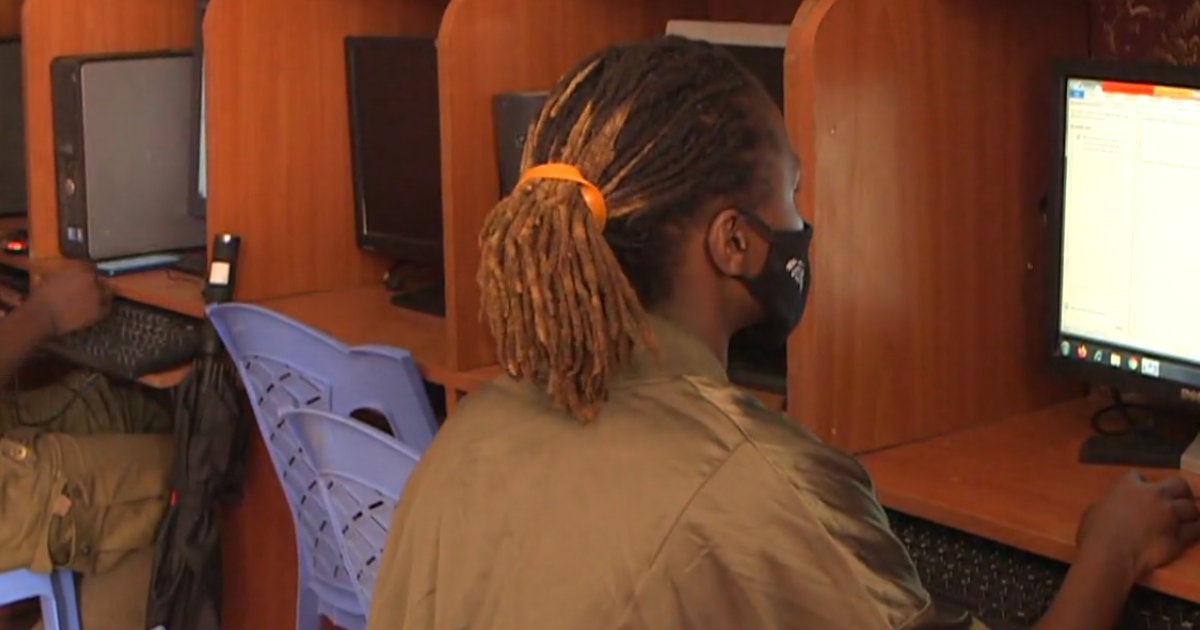
The Varsity Blues case captured headlines over two years ago, when news broke that wealthy parents paid upwards of $25 million in bribes to help their children cheat on test scores and secure college admission. As the trial gets underway this week, Professor of Psychological Science David Rettinger, who oversees Academic Integrity Programs at the University of Mary Washington, can provide unique insight into the scandal and the rise of contract cheating at colleges and universities across the country. He was recently interviewed by CBS News about the billion dollar cheating industry that has emerged in Kenya, where Americans are paying African students to do homework, write essays and in some cases, even complete degrees for them. "I think the state of cheating at colleges and universities is serious and getting more serious," David Rettinger ... told CBS News. He said that cheating is problematic because it means people can graduate from degree programs without actually being qualified in their fields. "We trust our doctors have been to medical school," Rettinger said. "Cheating leads us to overall social corruption because it leads us to having a cadre of professionals who can't actually do the work that they claim they can do." You can see the full interview and story here: Dr. David Rettinger is available to speak with media regarding this issue of cheating and academic integrity. Simply click on his icon now to arrange an interview today.


Baylor Expert: 9/11 Reshaped Every Aspect of American Life – Not Necessarily for the Better
English professor, culture expert says terror attacks damaged America, but it’s not too late to recover sense of purpose and generosity The Sept. 11, 2001, terrorist attacks on the World Trade Center and the Pentagon continue – 20 years later – to have profound effects on everything from America’s political, religious and cultural polarization to American entertainment choices, said Baylor University faith and culture expert Greg Garrett, Ph.D., professor of English. “It shouldn’t surprise anyone that an event that shook our sense of security and our identity would be reflected in every aspect of American life,” Garrett said. “But what does surprise and alarm me is the degree to which 9/11 continues to shape our attitudes about race, religion, immigration and the Other, whether that Other is in Afghanistan or just across town. The United States initiated a perpetual war against terror in response to the 9/11 attacks, and the fear that took root in the American psyche has proven difficult to shake.” Garrett, author of more than two dozen books, is internationally recognized as an expert on faith, culture, race and story, and he argues that the reaction to 9/11 can be measured just as much through literature and culture as through accounts of executive orders and covert military operations. Country music, procedurals and reality TV after 9/11 “Initially, Americans supported the War on Terror across political, religious and cultural lines,” Garrett said. “Country musicians like Toby Keith leaned into militant songs about American greatness and righteous revenge. The top-selling act the Chicks (then the Dixie Chicks) was drummed out of country music for their public stand against going to war. The TV show 24 reflected the growing darkness of America’s extra-legal approach to that war—the willingness to use torture, rendition and the opening of a dark site in Guantanamo Bay to house suspected terrorists—and it actually shaped opinion and policy as it grew in popularity and influence.” Two other types of television shows became extremely popular as a result of 9/11, Garrett said. Procedurals (shows such as CSI, Law and Order and House, M.D.) gained a new popularity because they offered viewers something the ongoing War on Terror never could or will: closure. “A serious problem was introduced in every episode, grappled with and solved by the end of an hour,” he said. Another type of show that leapt in popularity in the months and years following the attacks – reality shows – offered “train-wreck escapism,” Garrett said. “The contestants on Survivor and The Bachelor, and the wayward souls on Jersey Shore and Keeping Up with the Kardashians, presented exaggerated versions of our present moment that allowed viewers to forget about the dark actuality of the times,” he said. Springsteen, Harry Potter and critiquing ‘moral failures of the War on Terror’ Not all popular culture offered reinforcement or escapism, Garrett said, adding that some of the most powerful pop culture from 2001 onward critiqued the “moral failures of the War on Terror and critiqued the American people for so readily accepting them.” “Punk rock, always a prime medium for protest, was one of the earliest forms of dissent,” Garrett said. Green Day’s 2004 album American Idiot reached the top of the charts in the United States and 18 other countries, ultimately selling 16 million albums. But mainstream acts like Bruce Springsteen also asked complicating questions about the attacks and their aftermath. “After primarily offering empathy and comfort in The Rising (2002), Springsteen realized that America had betrayed many of its most important ideals, as revealed by songs like ‘Your Own Worst Enemy’ on the No. 1 2007 album Magic,” Garrett said. “Later novels in J. K. Rowling’s Harry Potter series, the most popular fictional narrative of all time, introduce questions of torture and terror, and powerful TV dramas like Battlestar Galactica and the British import Doctor Who also criticize the choices made by the American government and its allies.” Zombies and the Apocalypse Perhaps the most significant byproduct of 9/11 in our culture is the resurgence in apocalyptic stories such as 28 Days Later, Sean of the Dead, The Walking Dead, Game of Thrones, World War Z and The Road, Garrett said. Stories about the Zombie Apocalypse – whether in games, books, comics, TV or movies – asked serious questions about what it means to be human, and about what moral compromises a person might be willing to take to stay alive, Garrett explained. They also reflected the new 24/7 sense of encroaching menace that “seeped into our culture and lit up our phones at all hours of the day and night.” “You could fight all day every day against this menace, these creatures who look like humans but seek your destruction. And then the next morning, you still have to rise and confront it again,” Garrett said. ‘Not too late’ “People 20 years ago said that 9/11 changed everything, and so it did.” Garrett said. “But 20 years later it is not too late to recognize that the fears those attacks brought to the surface don’t have to be the way we continue to live. In my faith tradition, Jesus constantly admonishes his followers not to be so afraid. We make bad and selfish decisions out of fear. We abridge hospitality, compassion and liberty when we believe we are endangered. That’s not the America I grew up in, and it’s not the America in which I hope to die. That America, the light of the world, the city on a hill, Lady Liberty lifting her torch to welcome all, is the America that our founders dreamed, and that we can dream once again.” ABOUT GREG GARRETT, PH.D Greg Garrett, Ph.D., is a professor of English at Baylor University and Theologian-in-Residence at the American Cathedral of the Holy Trinity in Paris. An award-winning professor, Garrett has written about 9/11 and its aftermath in a number of books, including One Fine Potion: The Literary Magic of Harry Potter (Baylor University Press), Living with the Living Dead: The Wisdom of the Zombie Apocalypse, and A Long, Long Way: Hollywood’s Unfinished Journey from Racism to Reconciliation (both Oxford University Press). ABOUT BAYLOR UNIVERSITY Baylor University is a private Christian University and a nationally ranked research institution. The University provides a vibrant campus community for more than 19,000 students by blending interdisciplinary research with an international reputation for educational excellence and a faculty commitment to teaching and scholarship. Chartered in 1845 by the Republic of Texas through the efforts of Baptist pioneers, Baylor is the oldest continually operating University in Texas. Located in Waco, Baylor welcomes students from all 50 states and more than 90 countries to study a broad range of degrees among its 12 nationally recognized academic divisions. ABOUT THE COLLEGE OF ARTS & SCIENCES AT BAYLOR UNIVERSITY The College of Arts & Sciences is Baylor University’s largest academic division, consisting of 25 academic departments and eight academic centers and institutes. The more than 5,000 courses taught in the College span topics from art and theatre to religion, philosophy, sociology and the natural sciences. Faculty conduct research around the world, and research on the undergraduate and graduate level is prevalent throughout all disciplines. Visit baylor.edu/artsandsciences.



UCI scholars discuss how 9/11 changed America
In recognition of the 20th anniversary of the Sept. 11, 2001, terrorist attacks in the U.S., we asked UCI scholars a single question: How did 9/11 change America? They responded according to their expertise – which ranges from collective trauma, media, air travel, foreign relations, false narratives, political divisiveness, and the war on terror. Contact Tom Vasich at 949-285-6455, tmvasich@uci.edu, to arrange interviews. Roxane Cohen Silver, Distinguished Professor of psychological science, public health and medicine E. Alison Holman, professor of nursing Topic: Media and collective trauma Quote: “The Sept. 11 terrorist attacks – which hijacked our television screens that Tuesday morning as people who sought to do us harm hijacked four airplanes – captured people’s attention throughout the days and weeks that followed. It also ushered in 24/7 media attention to what has become known as a “collective trauma,” transmitting the horrible events of that day throughout the country and, indeed, throughout the world in a matter of seconds. …The 9/11 attacks were tragic for American residents, but they also taught us that the media can broadcast distress alongside the news it’s covering.” Jan K. Brueckner, Distinguished Professor of economics Topic: Air travel Quote: “In response to the revenue shock of 9/11 and to new competition from low-cost carriers, the major airlines behaved conservatively in adding back capacity as traffic returned, so that the carriers eventually offered fewer seats to an ultimately larger number of passengers, leading to fuller flights and today’s less comfortable flying experience. Even though 9/11 is long past, the airline industry continues to operate in a climate of fear of terrorism from the air.” Erin Lockwood, assistant professor of political science Topic: U.S. foreign policy Quote: “The attacks – and the U.S. response – set in motion decades of war, anti-Arab and anti-Islamic bias and violence, and a willingness to sacrifice military and civilian lives and civil liberties for the perception of security. As we mark the withdrawal of U.S. forces from Afghanistan this month, it’s all too apparent that many of those trends continue to reverberate today.” David Kaye, clinical professor of law Topic: National security Quote: “Despite my hopes for something better that might emerge, the attacks reinforced a cult of national security that the United States transformed into the torture of terrorism suspects, drone warfare, the invasion of Iraq, Guantanamo Bay’s indefinite detentions, anti-Muslim discrimination at home and the emergence of the contemporary surveillance state. … The predominance of national security as an ideology and apologia remains among the most significant legacies of that day, a feature of American political life that continues to constrain creativity and a return to normalcy in American law and policy.” Matthew Beckmann, associate professor of political science Topic: War on terror Quote: “To understand the legacy of 9/11 is to define the legacy of George W. Bush. For after the deadliest terrorist attacks on U.S. soil in our nation’s history, American citizens and lawmakers gave President Bush broad support and broader authority to wage the “war on terror” as he saw fit. … Twenty years after the attacks, having seen those lofty aspirations dashed in Afghanistan and Iraq, disregarded in Guantanamo Bay and black site prisons, and discounted even by our staunchest allies, the biggest legacy of Sept. 11 for the United States is that the “shining city on a hill” has less luster and a shorter reach.” David Theo Goldberg, professor of comparative literature Topic: Rise of false narratives Quote: “The events of 9/11 lent themselves to make-believe. The smoke hadn’t yet cleared when conspiracies began to abound, from “weapons of mass destruction” to “the deep state.” That the Trump administration adopted this as its own playbook while insisting on “draining the swamp” required cooking the rules. … Fabrication had become the rule book of the game. Invention and inventedness, disruption and innovation fueled the movement. The “truth” was, well, oh so yesterday.”

Bye-bye Bonnie and Clyde – Brazil is taking bank robbing to a whole new level
The media coverage reads like a scene out of a Michael Bay movie. Bank robbers using drones, strategically planting bombs across the city and taking hostages and placing them atop getaway cars. It’s surreal … but in Brazil, over the top bank heists are becoming the new normal. And the media are looking for experts to try and explain just what it is going on. That’s why the Daily Beast recently contacted Georgia Southern’s expert on Latin America, José de Arimatéia da Cruz, Ph.D. In the predawn darkness last Monday, a group of about 20 heavily armed commandos seized control of the downtown financial block in Araçatuba, a mid-sized Brazilian city in the eastern state of São Paulo. They then proceeded to rob three banks, while the surveillance drones they had deployed kept watch over head. When the heist was complete they accosted several bystanders, shot a man who had been filming them on his phone, and then bound the hostages they’d taken to the tops of their getaway vehicles so as to dissuade police from interfering with their escape…. Since 2015 these kinds of attacks have become so common that Brazilians even have a name for them: Novo Cangaço, which roughly translates into English as “New Struggle.” The name refers to a “social banditry” movement that flourished in Brazil’s hardscrabble northeast in the late 19th and early 20th centuries. The original Cangaço sought to battle back against widespread poverty and inequality. It involved Robin-Hood like figures who plagued wealthy landowners, donated to the poor, and pushed the government to jumpstart economic reforms. “The New Cangaço’s modus operandi is similar” to that of their predecessors, José de Arimatéia da Cruz , Ph.D., told The Daily Beast. The tactics might be alike, but the strategy between the old and new incarnations are quite different, according to da Cruz, who is originally from Brazil but now teaches international relations at Georgia Southern University. “The difference today is that the traditional cangaceiros [peasant bandits] were fighting against politicians. The Novo Cangaço today are attacking banks and are most basically interested in money for different purposes.” This is a sensational chain of events – and if you are a reporter covering these escalating crimes in Brazil – then let us help with your stories. José de Arimatéia da Cruz is available to speak with media regarding this topic — simply reach out to Georgia Southern Director of Communications Jennifer Wise at jwise@georgiasouthern.edu to arrange an interview today.

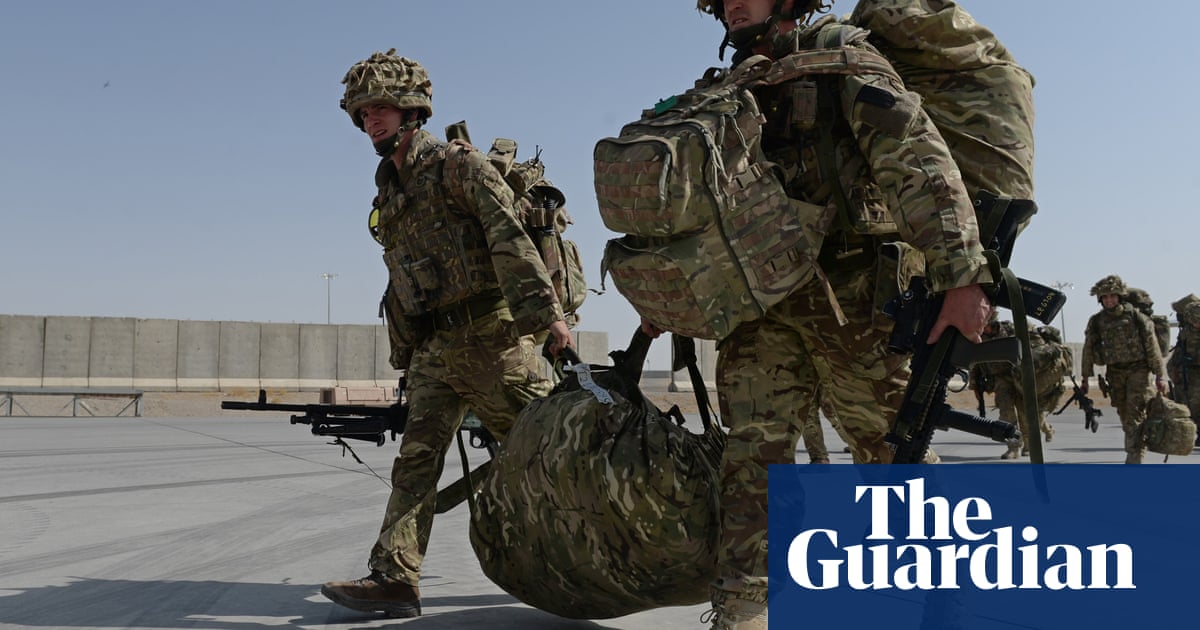
This Saturday marks the 20th anniversary of the September 11 terrorist attack. It was a day that forever changed how the United States viewed terrorism and its approach to foreign policy. The Middle East, especially Iraq and Afghanistan, has seen upheaval in the wake of 9/11. Over the last two decades, America’s approach to how it deals with enemies and how it collaborates with allies has also been drastically altered. University of Mary Washington Political Science and International Affairs Professor Jason Davidson is an expert in American foreign and security policy, and international security. He is also the author of the commissioned study, "The Costs of War to United States Allies Since 9/11," which focuses extensively on the human and monetary sacrifices made by America's allies in these conflicts. Davidson, and the document, made waves this spring, landing in the likes of Forbes, The Guardian and The Daily Mail. If you’re looking to arrange an interview with Dr. Davidson, simply click on his icon.


IDC Quarterly Tech Brief: Your Guide For The Digital-First World
September 2021 Editor's Comments Happy September! We hope you got a chance to recharge and enjoy the summer. Now that we’re looking into the last half of 2021, our experts agree that we’re not going back to the pre-pandemic normal, but we can’t help but be optimistic with recent news on vaccinations, lifting of restrictions, kids going back to school, and some of us returning to the office. As the world slowly moves from a pandemic to a digital-first state, we will see permanent shifts in the way we live, work, play and learn. IDC expects the next 3 years to remain highly fluid due to the growing range of global challenges. And now, more than ever, business and government leaders will need to operate and invest in increasingly digital-first markets, while building digital infrastructures, enabled by an intelligent, empowered, and a well-connected workforce. In this edition of IDC Canada's Quarterly Tech Brief, we’ll explore insights on the digital-first world, best practices, and digital transformation stories from Canadian tech leaders at our upcoming IDC CIO Series webinar on September 22, and as usual, we also reveal the latest research, survey results and market forecasts. And last but not least, we're happy to announce IDC Canada's biggest technology event of the year, IDC Connections 2021 is coming up on November 4th. Save your seat today! FEATURED IDC CIO Panel Series – Part 2: Building Resiliency & Innovation into Your Canadian Journey Join us on Wednesday, September 22 at 2 p.m. ET for the latest session of our IDC CIO Panel webinar series where we will dive into what digital resiliency means for you, and how to leverage the latest Digital Infrastructure and Digital Innovation trends to your advantage. Hear from industry-leading tech executives, Antoine Haroun, CIO at the Peel District School Board, Irene Zaguskin, CTO at The Printing House, and Michael Kurek, VP of Sales & Operations, Data Center Solutions at Dell Technologies as they unpack how the pandemic accelerated their digital transformation journey, and their best practices for planning and managing IT during uncertain times. Our experts will also host 3 sessions around how the Future Enterprise operates in a Digital-First World, a look ahead at the forces of change heading into 2022, the Future of Digital Infrastructure, and the need to strive for a balance between digital innovation and resiliency to remain relevant and competitive. Your Canadian Research Checklist Here are some of our most popular Canadian reports of the quarter to help you understand changing market conditions and succeed in 2021. ✓ IDC Market Glance: Service Providers in Canada, 2Q21 ✓ The Rise of Canadian Cloud Ecosystems ✓ Canadian Cybersecurity Market Snapshot, 2Q21 ✓ Canadian Cybersecurity Buyer Persona: Managed Security Services Benefits ✓ Canadian Managed Cloud Services Adoption, 2021 Forecast Highlights ✓ Canadian Wireless Services Forecast, 2021–2025: Wireless Wars 18 ✓ Canadian Internet of Things Forecast, 2021–2025 ✓ Outlook for Canadian SaaS Applications, 2021 ✓ Worldwide Managed Cloud Services Forecast, 2021-2025 ✓ IDC's Forecast Scenario Assumptions for the Canadian ICT Market, April 2021 IDC THOUGHT LEADERSHIP: DIGITAL RESILIENCY SCORECARD Explore IDC's new Digital Resiliency Scorecard Does resiliency still matter in a "post-pandemic" world? Quite simply, it does. In IDC's recent Digital Resiliency Benchmark Survey, we found that 65% of U.S. buyers and 55% of Worldwide buyers have plans to invest in resiliency over the April 2021-April 2022 timeframe. Watch The Digital Resiliency Scorecard webinar to learn more ICYMI: BLOG HIGHLIGHTS FROM THIS QUARTER Future of Customer - More Human Experience - Over 34% of executives point to transforming the customer experience as the top business function. Learn more about the Future of Customer framework with IDC’s Keyoor Adavani. Read More → Major Smartwatch Market Consolidation: A Canadian Take - In May Google announced a new unified smartwatch platform in partnership with Samsung. Learn how this partnership is expected to shake up the market dynamics in Canada with Shahd ElAshri. Read More → Telesat Vying For LEO Constellation Leadership - A new commercial space race has begun and among the entrants for Low Earth Orbit (LEO) satellite constellations, Telesat is an emerging leader in this multi-billion-dollar market. Learn more from IDC's Lawrence Surtees. Read More → Federal Budget Innovation Goals and What’s Next for Recovery - COVID-19 fast-tracked innovation and digitization. See how the federal budget plans to support digital transformation, and learn how customer centricity and AI can set you apart from the competition with IDC's Mark Schrutt. Read More → UPCOMING VIRTUAL EVENT IDC Connections 2021 Canada: Accelerating Your Path to a Digital-First Enterprise Mark your calendars! IDC Connections is back this year and we can't wait for you to take a front-row seat. Don't miss an afternoon full of IDC experts' insights, special guests, networking, and hear from the tech leaders who are driving this new era of rapid transformation. This year's highlights include: A special closing keynote on the Future of Sports and Entertainment with Humza Teherany, Chief Technology & Digital Officer at Maple Leaf Sports & Entertainment Creating digital innovation & experiences at your organization, with IDC's Chief Research Officer, Meredith Whalen Embracing digital infrastructure, with IDC Canada's Dave Pearson Leveraging new industry ecosystems, with IDC Canada's Nigel Wallis Guidance from our popular CIO Best Practices Panelists PODCASTS WORTH A LISTEN Find out why clients are raving about our new podcast series! In an era seemingly filled with uncertainty, the Future Enterprise podcast is a must-listen. It's a podcast for business and tech executives, aimed at helping you leverage technology to achieve innovative, disruptive, and productive business outcomes. Listen in as IDC host, Joseph Pucciarelli, Group Vice President & IT Executive Advisor interviews C-level executives from around the world on their digital transformation initiatives touching on each of the "Future of X" digital initiatives. Senior IDC research leaders often join in the conversation. Listen Now → Thanks for being a part of our IDC Quarterly Tech Brief Newsletter community! Don’t forget to subscribe to be notified quarterly when the next issue comes out.
