
Experts Matter. Find Yours.
Connect for media, speaking, professional opportunities & more.

Best-selling author Peter Singer talks with the Brunswick Review about winning the increasingly crowded and contentious war for attention What do Isis and Taylor Swift have in common? According to author and digital-security strategist Peter Singer, both the terrorist organization and pop star are fighting for your attention online and employing similar tactics to try and win it. ISIS kicked off its 2014 invasion of Mosul with the hashtag, “#AllEyesonISIS.” More recently, the terror group posted photos of its members holding cute cats in an effort to make them more relatable – tactics familiar to most celebrities and online marketers around the world. These online battles, the rules governing them, and their real-world impact are the focus of Mr. Singer’s latest book, LikeWar, which he coauthored with Emerson T. Brooking, at the time a research fellow with the Council of Foreign Relations. “A generation ago people talked about the emergence of cyber war, the hacking of networks. A ‘LikeWar’ is the flip side: the hacking of people and ideas on those networks. Power in this conflict is the command of attention,” says Mr. Singer, who in addition to his writing is also a strategist and Senior Fellow at the New America Foundation. Pretty much everyone who posts online – from governments to marketers to reality TV stars – is a combatant in this fight for virality, according to Mr. Singer. Triumph in a “LikeWar” and you command attention to your product or propaganda or personality. Lose and you cede control of the spotlight and the agenda. Mr. Singer recently spoke with Brunswick’s Siobhan Gorman about the trends he’s seeing in LikeWars around the world, and what companies can do to avoid being on the losing end. What were you most surprised by in researching LikeWar? One of the more interesting characters in the book was at one time voted TV’s greatest villain: Spencer Pratt, a reality TV star on MTV’s “The Hills.” He’s basically one of these people who became famous almost for nothing. But what Pratt figured out really early was the power of narrative, which allowed him to become famous through, as he put it, “manipulating the media.” In the same week, I interviewed both Pratt and the person at the US State Department who’s in charge of the US government’s efforts to battle ISIS online. And Pratt, this California bro who’s talking about how to manipulate the media to get attention, understood more of what was playing out online than the person at the State Department. Spencer Pratt, a reality TV star… understood more of what was playing out online than the person at the State Department.” How much have online conflicts changed the rules in the last few years? First, the internet has left adolescence. It’s only just now starting to flex its muscles and deal with some of its responsibilities. The structure of the network changes how these battles play out. So, it’s this contest of both psychological but also algorithmic manipulation. What you see go across your screen on social media is not always decided by you. The rule makers of this global fight are a handful of Silicon Valley engineers. Another aspect of it is that social media has effectively rendered secrets of any consequence almost impossible to keep. As one CIA person put it to us, “secrets now come with a half-life.” Virality matters more than veracity; the truth doesn’t always win out. In fact, the truth can be buried underneath a sea of lies and likes. And the last part is that we’re all part of it. All of our decisions as individuals shape which side gets attention, and therefore which side wins out. But you highlight that this is playing out differently in China. Exactly. There are two different models shaping the internet, and shaping people’s behavior through the internet, playing out in the West and in China. Essentially, internet activity in China is all combined. Look at WeChat, which is used for everything from social media to mobile payment; it’s Amazon meets Facebook meets Pizza Hut delivery. And you combine that with an authoritarian government that’s had a multi-decade plan for building out surveillance, and you get the social credit system, which is like Orwellian surveillance crossed with marketing. The social credit system allows both companies and the government to mine and combine all the different points of information that an online citizen in China reveals of themselves, and then use that to create a single score – think of it as your financial credit score of your “trustworthiness.” For example, if you buy diapers your score goes up, because that indicates you’re a parent and a good parent. If you play video games for longer than an hour your score goes down because you’re wasting time online. And it’s all networked. Your friends and family know your score. It creates a soft form of collective censorship; if your brother posts something that’s critical of the government, you’re the one who goes to him and says, “Knock it off ’cause you’re hurting my score.” And you do that because the score has real consequences. Already it’s being used for everything from seating on trains and job applications to online dating. Your score literally shapes your romantic prospects. So, you have this massive global competition between Chinese tech companies and other global tech companies not only for access to markets, but also for whose vision of the internet is going to win out. How can companies win a “LikeWar”? Everyone’s wondering: What are the best ways to drive your message out there and have it triumph over others? The best companies I’ve seen create a narrative, have a story and have emotion – in particular, they have emotion that provokes a reaction of some kind. It’s all about planned authenticity. That sounds like a contradiction, but it’s about acting in ways that are genuine, but are also tailored because you’re aware that the world is watching you. A good comparison here is Wendy’s versus Hillary Clinton. Wendy’s is a hamburger chain – not a real person – but it acts and comes across as “authentic” online and has developed a massive following. They’re funny, irreverent. Yet Hillary Clinton – a very real person – never felt very authentic in her online messaging. And that’s because it involved a large number of people – by one account, 11 different people – all weighing in on what should be tweeted out. Inundation and experimentation are also key. Throwing not just one message out there, but massive amounts of them. Treating each message as both a kind of weapon, but also an experiment that allows you to then learn, refine, do it again, do it again, do it again. How do you measure and gauge battles online now? Is it just volume? It all depends on what your battle is, what your end goal is. Is it driving sales? Is it getting people to vote for you, to show up to your conference? This is what the US gets wrong about Russian propaganda and its disinformation campaigns. We think they’re designed to make people love or trust a government. From its very start back in the 1920s, the goal of propaganda coming from the Soviet Union, and today Russia, has been instead to make you distrust – distrust everything, disbelieve everything. And we can see it’s been incredibly effective for them. First, we need to recognize that we’re a part of the battle. In fact, we’re a target of most of the battles. How effective have disinformation campaigns actually been in the US? What can be done? One of the scariest and maybe saddest things we discovered is that the US is now the story that other nations point to as the example of what you don’t want to have happen. There’s no silver bullet, of course. But one example was something called the Active Measures Working Group, a Cold War organization that brought together the intelligence community, diplomats and communicators to identify incoming KGB disinformation campaigns and then develop responses to them. We’re dealing with the modern, way more effective online version of something similar, and we haven’t got anything like that. There are also digital literacy programs. I find it stunning that the US supports education programs to help citizens and kids in Ukraine learn about what to do and how to think about online disinformation, but we don’t do that for our own students. What can people like you or me do? First, we need to recognize that we’re a part of the battle. In fact, we’re a target of most of the battles. And we need to better understand how the platforms work that we use all the time. A majority of people actually still don’t understand how social media companies make money. The other is to seek out the truth. How do we do that? And the best way is to remember the ancient parable of the blind man and the elephant – don’t just rely on one source, pull from multiple different sources. That’s been proven in a series of academic studies as the best way to find the facts online. It’s not exactly new, but it’s effective. Where will the next online war be fought? The cell phone in your pocket, or if we’re being futuristic, the augmented reality glasses that you wear as you walk down the street. It’ll come from the keepsake videos that you play on them. If you want to know what comes next in the internet there have always been two places to go: university research labs and the porn industry. That’s been the case with webcams, chat rooms and so on. What we’re seeing playing out now are called “deep fakes,” which use artificial intelligence to create hyper-realistic videos and images. There’s also “madcoms,” which are hyper-realistic chat bots that make it seem like you’re talking to another person online. Combine the two, and the voices, the images, the information that we’ll increasingly see online might be fake, but hyper-realistic. The tools that militaries and tech companies are using to fight back against the AI-created deep fakes are other AI. So, the future of online conflict looks like it’ll be two AIs battling back and forth. Let me give you a historic parallel, because we’ve been dealing with these issues for a very long time. The first newspaper came when a German printer figured out a way to monetize his press’s downtime by publishing a weekly collection of news and advice. And in publishing the first newspaper, he created an entire industry, a new profession that sold information itself. And it created a market for something that had never before existed – but in creating that market, truth has often fallen by the wayside. One of the very first newspapers in America about a century later was called the New England Courant. It published a series of letters by a woman named Mrs. Silence Do-good. The actual writer of the letters was a 16-year-old apprentice at the newspaper named Benjamin Franklin, making him the founding father of fake news in America. In some sense it’s always been there, using deception and marketing to persuade people to your view.



Under Armour’s response to a cyber attack achieved the seemingly impossible: Rather than fueling outrage, it actually drew praise. Brunswick’s Siobhan Gorman reports. In late March last year, Under Armour learned that its MyFitnessPal app, which tracks diet and exercise, had a data breach that affected 150 million users. It’s not uncommon for companies to take several weeks—or even months—to publicly announce a cyber attack of that scale. Under Armour did so in four days. Tokë Vandervoort on What Made The Difference 1. Relationships External relationships are how we found out about the breach, and they’re how we knew which advisers and expertise to bring on board right away. We had those in place and had put a lot of effort into maintaining them and keeping them up to date. Internally, the trust we’d built allowed us to move as quickly as we did. Both paid huge dividends. 2. Preparedness I don’t know anybody whose incident response team meets every other week, but ours does. Sometimes we’re just shooting the breeze, but other times we’re asking: “What’s going on in the business? What are you hearing? What’s happening?” We enjoy a great relationship with the product team, the engineering team, the IT security team, the IT team ... It’s not just sharing information, but also getting to know one another, which ties back to the importance of relationships—knowing what’s going on and who to call. 3. Practice We do a table top every year for a data incident. I’ve heard people say table tops are too expensive—we make up our own. Security and privacy get together and create a two- or three-hour game. One year it’ll be a supply chain issue, another year it’ll be a data event. We invite decision-makers from across the organization so that people then have a sense of what it feels like to make decisions without full information and to have to do so under a lot of pressure. People appreciate not just how hard these decisions are, but they know who the other people are, and the issues that they’re confronted with. The companies that have the most confident response are the ones where everybody knows their roles—not some giant team of people who have never worked together. When you have complete clarity of purpose, focus and leadership, you can get anything done.
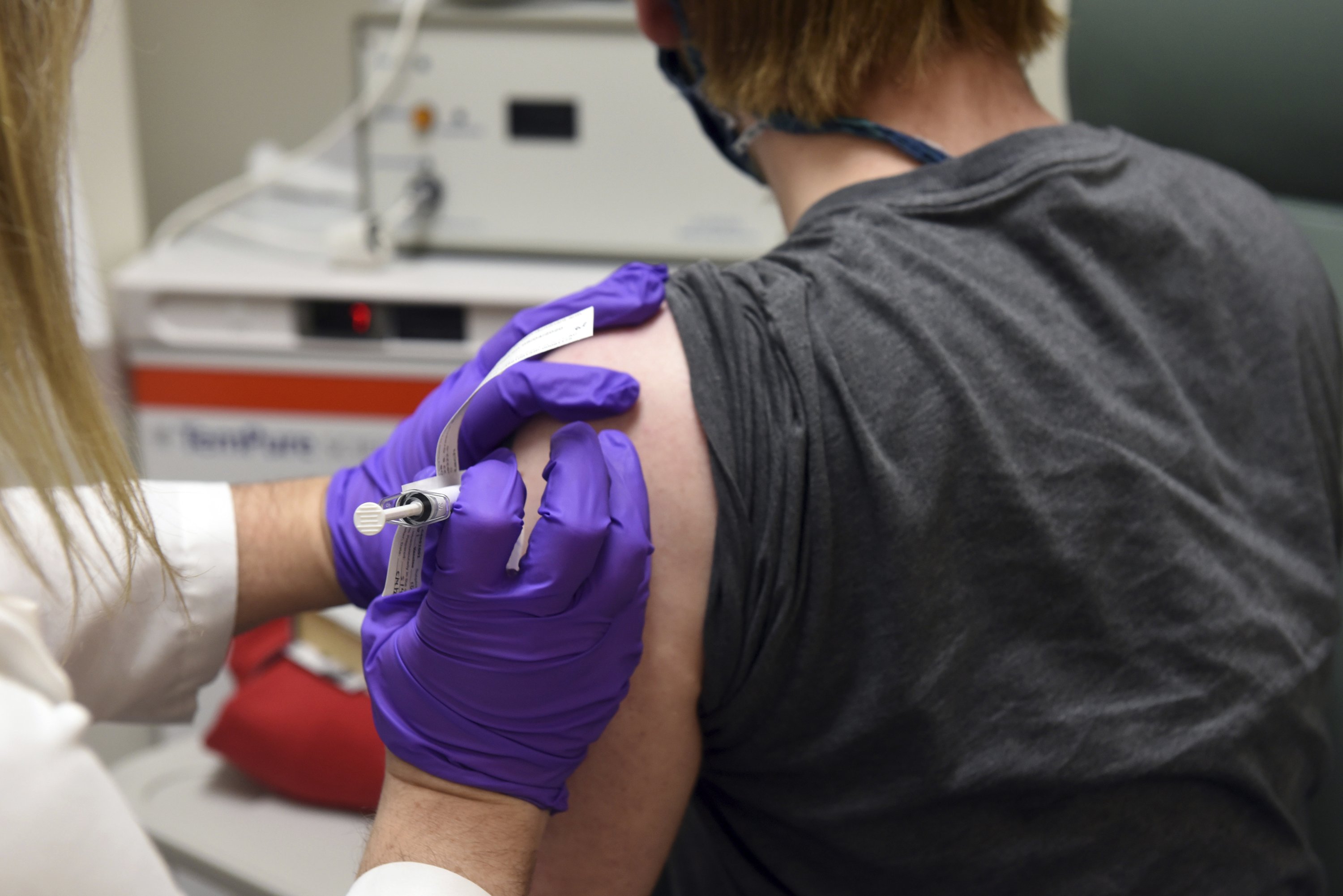
Are we on the verge of a vaccine? Let our COVID-19 expert explain if you are covering
It’s breaking news that is dominating headlines, impacting financial markets and perhaps finally relieving some of the anxiety that has been growing across America since late winter. On Monday, Pfizer announced that early results from its coronavirus vaccine indicate that it is 90 percent effective at preventing COVID-19. The pharmaceutical giant expects to be applying as soon as this month for emergency use approval from the Food and Drug Administration. If you are covering this breaking news and need to know about: What is the testing process for vaccines? How they are developed? What is involved in final approval? How will it be administered? And how quickly will it take to show positive results in our population? Then let the experts from UConn help with your coverage. Dr. Paulo Verardi is a virologist who specializes in vaccine research and development. He is an Associate Professor at UConn and a member of the Center of Excellence for Vaccine Research. Dr. Verardi is available to speak with media regarding this emerging development – simply click on his icon now to arrange an interview today.



Why posting to multiple channels drives virality of online videos
Back in the summer of 2012, South Korean pop star Psy released a music video on YouTube. Running at just under four minutes, “Gangnam Style” rapidly became a global sensation. Within just two months of its release, the video was attracting a daily average of nine million viewers. In late September, Guinness World Records confirmed it to be the “most liked” video on YouTube. By December it had become the first piece of content on the platform to garner more than one billion views. As of 2020, the Gangnam Style video has been seen by more than 3.7 billion people around the world. Pys’s official YouTube channel has around 14.1 million followers—a significant user base. But even assuming that each one of these followers had watched the video several times and shared it with others, it still doesn’t account for the sheer volume of views the video has racked up over time. So what’s going on? What is behind the super virality of Gangnam Style and other pieces of content that, like it, appear to defy the rules of probability on the social web? Rajiv Garg, associate professor of information systems & operations management at Emory’s Goizueta Business School, has put a new hypothesis to the test. And he’s found that there’s a clear link between virality and what he calls the “spillover effect” of posting content onto multiple platforms at specific times. “We know that when celebrities and popular figures post videos, there’s likely to be a strong response from their follower base, depending on the content. But over time, user consumption reaches a saturation point—the novelty simply wears off. And this happens around 10 days after a video is posted,” Garg said. “Yet some videos just keep on going, getting successive waves of views on the same platform in quantities that eclipse the follower base. We hypothesized that this is affected by launching on different sites and platforms, but we really wanted to understand the mechanisms behind this and figure out why this activity was occurring on the original platform as well as others—as in the Gangnam case.” Together with Vijay Mahajan (McCombs, UT Austin) and Haris Krijestorac (HEC Paris), Garg looked at the diffusion patterns for viral content on the social web. First analysis confirmed that content sharing by users was the chief primary driver of virality; indeed, views typically increased after a video would appear on a second or third platform. But this didn’t explain why those views were growing back on the original platform too. In fact, the finding ran contrary to the established view that platforms compete for content—that posting to one platform leeches user views from another. “The reasoning until now has been that social platforms cannibalize content. In other words, when you post Gangnam Style onto Vimeo, you’ll get fewer views on YouTube as a result,” Garg said. “Users will move to the other platform and watch it there instead.” But in fact, the opposite was happening. Intrigued, Garg and his coauthors deployed synthetic control—a comparative statistics methodology—to test the causal effects of sharing content to one platform versus posting it to multiple sites. This methodology involved posting 381 viral videos on 26 video-hosting sites. In addition, they ran a randomized field experiment with 30 videos that were randomly seeded onto new platforms at random times. The results across both methods were consistent. Users who were finding the videos once they had been posted to a second (or third, or fourth) platform were still sending viewers to the original platform to view the content. And viewers were coming in droves. “What seems to be happening is that content is going viral as it’s consumed on the original platform—YouTube, say—and then shared to other channels. Here, on the second channel—Vimeo, Daily Motion or others—these videos reach new audiences,” explained Garg. “But for whatever reason, once they’ve discovered the video, many of these new users prefer to go to the original channel and watch it there. And this is happening consistently and in highly significant numbers of users.” This spillover effect could be due to a number of things, says Garg. It could be that for certain audiences, content is simply more readily discoverable on certain platforms—but that these platforms are not the first choice in viewing preferences. It could also be that the content is visible to users but not viewable on the second platform. “Say Gangnam Style is seen on YouTube by a viewer and shared. It then appears on Vimeo, and a second user discovers it; but maybe this user doesn’t like Vimeo or perhaps Vimeo isn’t available in their region or country. What happens then?” noted Garg. “The simple answer is that these new users end up Googling Gangnam Style and find it on YouTube—the original platform. The novelty and virality of the first wave of users has died down, but this new wave of users comes in, creating a spillover effect that boosts the popularity of the video all over again.” Looking again at the results of their analyses, Garg and his colleagues were able to determine that the spillover effect is strongest immediately after a video is introduced onto a secondary platform, as well as at the 18- and 42-day marks. “We analyzed the effect of introducing a video onto a new platform on the increase in views it generates on the original platform over time,” said Garg. “It appears the spillover mechanism is strongest during the first week but experiences spikes later on. In the long-run, we were able to generate twice as many views back on the original platform as we would otherwise have expected. So the effect really is huge.” It is also limited, however. The researchers found diminishing impact in posting content to a succession of different platforms. By the time the video is shared to a fourth or fifth platform, Garg and his coauthors saw no returns. The findings are nonetheless hugely significant for content creators, he says. “We’ve seen that content shared on different platforms sends users back to the original, and that debunks the idea that online channels cannibalize each other’s content,” Garg noted. “And we’re able to say with precision that this effect is strongest during the first week with later spikes, suggesting these may be the best times to introduce content onto new platforms.” Content creators looking to ‘viralize’ their material would do well to take a strategic, omni-channel approach based on these insights, says Garg. Multi-platform sharing is an effective way of spreading word of mouth content and reaching new audience bases—and not just nationally, he stresses. “The effect is not limited to borders or languages. Savvy content creators can create their first ripple on a YouTube or Vimeo and, as the views start falling off, go on to propagate to a second or third channel, including foreign ones,” he said. “The spillover effect is just the same. Staging and staggering your content this way, you reach completely new audiences, many of whom will spill over onto your original platform.” If you are a journalist looking to cover this topic – then let our experts help with your story. Rajiv Garg from Emory’s Goizueta Business School is available to speak with media – simply click on his icon now to arrange an interview today.


Optimizing the delivery speed promise can boost sales
After the coronavirus pandemic forced most of the country into lockdown, online shopping soared. According to CCInsights.org, by the end of April 2020 there was a 146% year-over-year increase in U.S. and Canadian online retail orders. Amazon was so overwhelmed by the combination of increased demand, logistical nightmares, and warehouse worker safety issues that the company announced significant delays in its Amazon Prime shipping speeds. When the company announced it would prioritize the shipping of essential items, the online retailer’s third-party sellers were left to manage their own shipping — something Amazon usually did for them. Shoppers who placed orders for non-essential products at the end of March sometimes received estimated delivery dates of more than a month away. While consumers often received their orders sooner than the 30-day estimate, for Prime shoppers used to getting their items delivered for free the next day, the change in delivery speed was a shock. Amazon shoppers turned to alternative outlets that promised much quicker delivery speeds. Companies with strong e-commerce positions and supply chains, such as Walmart, took advantage of Amazon’s situation. “People are very sensitive to delivery and how fast they can get products,” said Ruomeng Cui, assistant professor in information systems & operations management. “Maybe, just maybe, Amazon would be able to deliver faster than one month, but they chose to promise customers one month — that was their choice.” Unfortunately for Amazon, by setting conservative delivery speed promises, they exacerbated an already bad situation. According to Cui’s paper “Sooner or Later? Promising Delivery Speed in Online Retail” (Ruomeng Cui, Tianshu Sun, Zhikun Lu and Joseph M. Golden), optimizing delivery speed promise can have a substantial effect on a company’s sales. How substantial? Without changing the actual delivery speed itself — only the delivery speed promise — Cui’s research showed that when the retailer promised customers one day faster shipping, sales increased, profits increased, and customers spent more on each order. “It’s a very critical decision for retailers to try to determine how to manage delivery and how to manage the information aspect of delivery,” added Cui. The study is attached and found two key findings: The value of communicating delivery times From a customer satisfaction standpoint, the conservative disclosure lowered customer satisfaction while the aggressive disclosure didn’t affect the company’s satisfaction score, although it did increase product returns when shipping speed was overly aggressive and products were delivered late. “These results indicate that in our research context, promising customers a faster delivery speed can boost sales and profitability but at the cost of a higher product return rate,” the researchers wrote. They go on to caution retailers that promising a conservative shipping speed can be costly. “It’s a careful balance that companies need to think about — how to manage customers’ expectations properly,” explained Cui. Crafting the delivery promise Given online retailers’ adoption of machine learning, Cui believes companies could tweak their algorithms to explore what products and which types of customers are more tolerant to over-promising as it relates to the delivery speed promise. “Companies can then use the analysis to customize and differentiate the types of products that adopt different types of information strategies,” Cui said. “Just change your algorithm, learn and incorporate some of the data-driven decisions and methods.” Going forward, Cui hopes to customize algorithms for companies in an effort to help them dynamically optimize how to promise the correct delivery speed to customers. While many companies, like Collage.com, don’t own their own delivery function and can’t change the actual delivery speed by changing infrastructure, these companies can “manage the information,” said Cui. “It’s easy, and I think it should be the retailer’s responsibility and job to optimize.” “I want to advocate for all retailers to think strategically in their information aspect,” said Cui. “Don’t let such an easily fixed lever just sit there at almost zero cost.” If you are a journalist looking to cover this study or speak with Professor Ciu about subjects like online shopping and operations management, simply click on her icon now to arrange an interview today.


Kamala Harris Is First Woman, and Woman of Color, Elected Vice President
History was made on Saturday, November 7, when Kamala Harris was elected vice president of the United States, 100 years after women first won the right to vote. "Although our new president will look like almost all the others we have had in our history, the fact that we will have a woman of color in the second highest position in our executive branch for the first time ever has an importance that cannot be understated," says Teresa Boyer, EdD, director of the Anne Welsh McNulty Institute for Women's Leadership at Villanova University. "When it comes to our highest office, Americans have been famously resistant and behind other countries in selecting a woman for the role. Perhaps having a woman in the vice presidency could shift that barrier that we haven't seemed to get past." Dr. Boyer adds, "We will also have a record number of women in this congressional delegation. Although Democrats have historically sent the most women to Congress, this year, the Republicans are the ones who set a record, with at least 32 women in the House and Senate—two more than their previous record of 20 in 2006. Democrats still have the greater representation of women, though, with at least 102." "Themes of gender and race have been threaded throughout this election, as they underlie many of the crises we are currently facing as a nation. The tight races mixed with progress on women's representation indicate a national culture on the cusp of change—one exploring openness to diverse identities in the role of public leader. Not so much a wave as a slow inching forward—but forward nonetheless." "Many have said Biden will be a transitional president—due to his age, and his role as a party elder—but perhaps he would be better noted as a potentially transformational president, or a conduit to the diverse America reflected in our leadership."


On the morning of Saturday, November 7, Joe Biden was announced by numerous media outlets as the projected winner of the 2020 U.S. presidential election. President-elect Biden will be only the second Roman Catholic to occupy the nation's highest office. Massimo Faggioli, PhD, is a professor of historical theology at Villanova University. He recently discussed the significance of Biden being only the second Catholic elected president and the work he has in front of him. "Biden is a 'Pope Francis Catholic'—much more aligned to the political culture of the pontificate than John Kerry was as a 'Pope John Paul II Catholic' in 2004, or Kennedy, a good Catholic in 1960. When Kennedy, the first Catholic president, was elected in 1960, U.S. Catholicism was much less divided and in much better relations with the Vatican compared to today," Dr. Faggioli said. "It's the first time we have a Catholic president since the return of religion in the public square." "Anti-Francis Catholicism in the U.S. goes much deeper than Trump Catholics and includes a number of U.S. bishops. It will be difficult for Biden to navigate the triangular relations between Vatican-White House-U.S. bishops," continued Dr. Faggioli. "The U.S. Conference of Catholic Bishops is paralyzed and—especially on social issues—it is difficult to take distance from a rhetoric that is very similar to the GOP, and this will show in dealing with a Biden presidency. Biden as a Catholic will have against him a powerful Catholic media system in the U.S. that makes no mystery of its fierce opposition against Biden's and Francis' Catholicism."
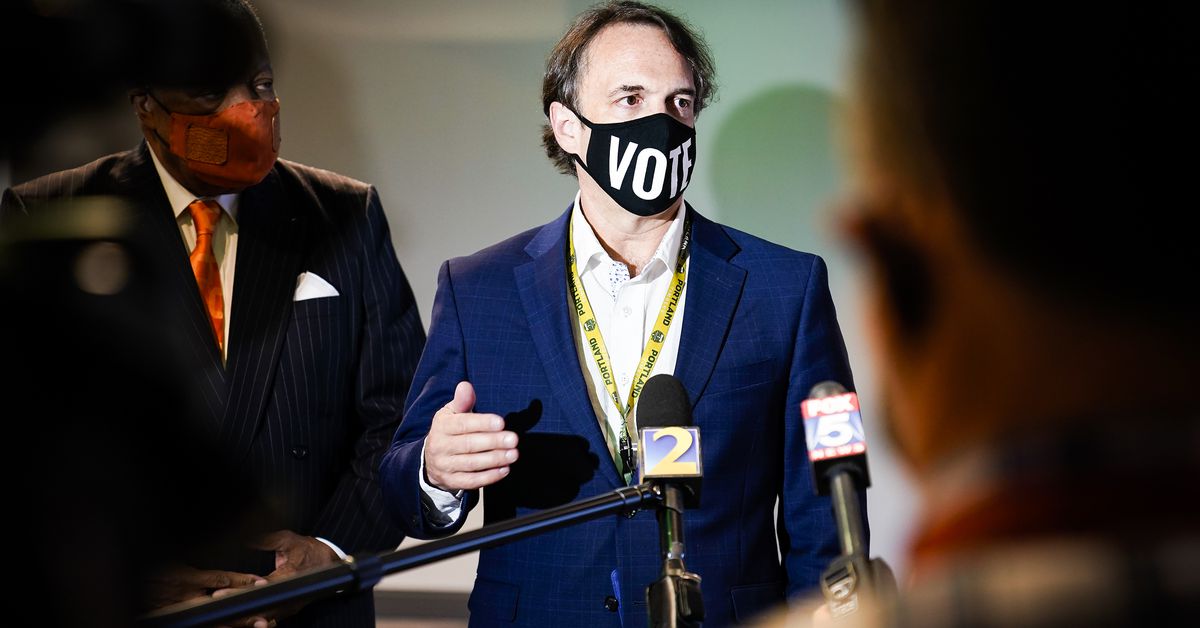
Is it time to stop taking Georgia for granted? The state voted blue – let our experts explain why
As the final few votes still remain to be counted, the state of Georgia has taken a political turn it has not seen in more than two decades. After a long stretch as a presumptively Republican stronghold, in 2020, voters in Georgia made their voices heard and likely shifted the balance of power in Washington. What has changed? Are more voters engaged and showing up to vote? Have demographics shifted? Has the population changed? Have Peach State citizens changed their outlook on issues and politics? Moving forward, few will take the state’s 16 electoral college votes for granted. Is Georgia now one of the battleground states that will shape presidential elections in the future? If you are covering this topic, then let our experts help with your story. Dr. Gregg R. Murray, professor of political science at Augusta University, is available to talk about the presidential race and election results. Murray’s research focuses on political behavior and psychology with specific interests in voter mobilization and turnout. He is also executive director of the Association for Politics and the Life Sciences. Simply click on Murray's icon now to arrange an interview today.


Rob Campbell on why it pays to shake things up
Rob is a mischief-maker and passionately believes in culture, creativity and chaos. He’s worked with names like NIKE, Virgin and Metallica at agencies including Cynic, Wieden+Kennedy and R/GA and has proudly been called an “asshole” by Lars Ulrich, Richard Branson and Dan Wieden. I ask Rob what’s he’s done in his life that has perhaps raised some eyebrows, but that he’s most proud of. He tells us his COVID story, and shares positive insights. We hear how three African American women fundamentally changed his view on the world, and how being exposed to completely different cultures have shaped his life.


The tug between protecting privacy and building brand loyalty
The coronavirus pandemic has put much of normal life on hold, but it hasn’t stopped hackers. According to Securityboulevard.com, in the first quarter of 2020, more than 8.4 billion records from healthcare institutions, technology, software, social media, and meal delivery companies were exposed — a 273 percent increase from Q1 2019. While data breaches are costly to companies — a recent Ponemon Institute data breach report found that data breaches cost organizations an average of $7 million in the U.S. — their frequency is enough to cause some consumers to wonder if their private information is safe with their favorite brands. The increase in data breaches is concerning, noted Jesse Bockstedt, associate professor of information systems & operations management, but several studies have found that the out-of-pocket expense to consumers due to identity theft is less than $1,000. “Which isn’t zero, but it’s not like a few years ago when [identity theft] ruined your life and destroyed your credit,” Bockstedt said. As for the companies, he added, “It’s not a brand killer anymore.” Yet despite consumers’ growing unease, Goizueta faculty say the relationship between privacy and brand loyalty is a bit more intricate. While a data breach can nick a firm’s reputation, it’s the data that is purposely collected beyond the name and vital statistics that worry consumers more. Our experts found the following key points were necessary when it comes to finding the safe ground between privacy and brand loyalty. In fact, we have an expert from Goizueta who can explain each one: Building digital trust “Companies are increasingly worried that people will buy less from their brand if they’re perceived to be fast and loose with customer data,” said Daniel McCarthy, assistant professor of marketing. For instance, after political data-analytics firm Cambridge Analytica secretly collected data on roughly 87 million Facebook users, back-lash followed. In an effort to regain users’ trust, Facebook founder and CEO Mark Zuckerberg laid out a “privacy-focused vision” for Facebook, but those efforts were widely criticized as not going far enough. Advertising boycotts followed. Trust: the key to customer loyalty Minus regulatory guardrails, the differentiating factor is trust, explained Jagdish Sheth, the Charles H. Kellstadt Chair in Marketing. “Trust is built over time by doing what you promise to do and by company behavior that is considered appropriate or right,” Sheth said. Loyalty programs such as those with airlines, hospitality companies and grocery stores are founded on a relationship between a consumer and a brand. “Loyalty programs mean relationships, and in all relationships, trust and commitment are key,” he added. Let’s make a deal “Brands that are able to deliver a personalized experience in a privacy-friendly manner will have a competitive advantage,” explained David Schweidel, professor of marketing, in a recent “Goizueta Effect” podcast. “Putting a premium on privacy means forgoing the benefits that come from allowing organizations to collect data they use to deliver a better experience. From a commercial standpoint, the onus is on the marketers to make the case that the benefits outweigh privacy concerns.” We’ve attached a full article with even more advice and helpful information from our experts – but if you are looking to learn more or cover this topic, we can help. All of our faculty are available to speak with media, simply click on either expert’s icon now – to book an interview today.

