
Experts Matter. Find Yours.
Connect for media, speaking, professional opportunities & more.

What will the “new” NAFTA mean for business in Canada?
The "new" NAFTA - officially renamed as the Canada-United States-Mexico Agreement (CUSMA) in Canada, but is referred to as the United States-Mexico-Canada Agreement (USMCA) in the media - could be a benefit for businesses. While tariffs are being lifted and reduced trade talks thaw – it appears that the USMCA is a win/win/win for businesses on every side of the border. The new trade accord has free-trade when it comes to manufacturing, importing, exporting and resourcing. The USMCA sounds great, but will those rays reach areas like Northeastern Ontario? Will our resource and mining industries benefit? Also, what about our emerging technology sector? There is a lot to be figured out as this new trade deal goes through the approval process in Canada and America. Luckily, we have experts who can help! Marc Boivin, Manager at Freelandt Caldwell Reilly LLP, is an expert in the areas of organizational finance, assets acquisition, business valuation and transactions. Contact Marc to arrange an appointment regarding this topic by clicking the contact button below. Sources:


Need an expert to chat about movies and tv? We’ve got just the person for your coverage!
UMW’s experts are in the news and just recently Antonio Barrenechea, associate professor of English, was interviewed for two articles in the web magazine MEAWW. The first was on the relationship between summer and romantic comedies and why that season in particular seems to hold the ideal climate for on-screen love. "The Canadian literary theorist, Northrop Fry, provides insight into its origins. As with the seasons of the year, genres deploy archetypes of birth, maturation, decay, death, and rebirth, all within natural cycles," said Antonio Barrenechea, Professor of English at the University of Mary Washington. Professor Barrenechea opines that for Fry, comedy belongs to spring, and romance to summer. "Nature as background thus directs the foreground of social ordering and human affairs. Greenery and florals are to the romantic comedy as deserts are to the Western, and dark places and climates are to horror," Barrenechea added. This is translated beautifully on screen in movies like 'Call Me By Your Name', 'My Best Friend's Wedding', and the 'Before Sunrise' movies. The second probed the link between intelligence and dark humor. In this piece, our expert explained our passion for dark humor and death. Antonio Barrenechea, Professor of English at the University of Mary Washington has a different opinion of 21st Century's vicarious morbidity fans. "Dark humor responds to our absurd condition with the armor of world-weariness. Except that, of course, we also know we can't really laugh such troubles away — which is why dark humor has a fatalistic dimension built into it," he said. Between Netflix, streaming services, TV, cable and the big screen – we are always talking about movies. If you are covering, don’t hesitate to let one of our experts help with your stories. Antonio Barrenechea, associate professor of English, specializes in literature of the Americas and the cinema. He’s available to speak with media, simply click on his icon to arrange an interview.



Do you go to the school of your choice, your parent’s almamater or as far away from home as humanly possible? Picking a college or university is a challenge at the best of times and one that impacts most American families in one way or another. A study completed by Professor of Psychology Holly Schiffrin was cited in an article in The News Minute entitled “How Much Freedom do Students have while Choosing their Undergraduate Course?” “One study in the Journal of Child and Family Studies found that parents’ excessive involvement in their children’s lives yields unfavourable results. The lead author Holly Schiffrin argues, ‘Parents are sending an unintentional message to their children that they are not competent.’ This is in turn, could result in feelings of depression and dissatisfaction.” The path to university and college is never easy and is always a journey filled with pressure and unsolicited advice. All the factors involved, well intended or not can come with consequences and outcomes. It’s an interesting topic and if you are covering, let one of our experts help. Dr. Holly Schiffrin is an internationally known expert on intensive and helicopter parenting. She is available to speak with media, simply click on Holly’s icon to arrange an interview.


China Employs Mass Surveillance as Authoritarian Tool in Xinjiang Province
China has been engaged in high-tech surveillance of citizens in its Xinjiang province, according to a New York Times report, creating “an incubator for increasingly intrusive policing systems” that could expand automated authoritarianism across the country and abroad. One of the prime motivators, ostensibly, is to monitor and subdue minority religious and ethnic groups. This practice presents obvious, multi-faceted ethical issues, says Benjamin R. Mitchell, PhD, an assistant professor in Villanova’s Department of Computing Sciences with expertise in computer ethics. “The Chinese government surveillance project in Xinjiang is a perfect example of why we must be cautious and thoughtful about the deployment of technology. Most of the basic technologies being deployed were not originally developed for this application, and many of them have alternative uses which are potentially beneficial, or at the very least less clearly harmful to human rights. But applying these technologies to the surveillance and oppression of large groups of citizens still requires a large, intentional effort, making this as much a social and moral problem as it is a technological one.” Modern technologies, constantly being refined and developed, have brought us closer to the potential spread of totalitarian states, Dr. Mitchell says. “George Orwell’s 1984 was intended as a cautionary tale, but there have always been authoritarian regimes that have viewed it as a how-to manual. In the past, however, the manpower requirements for implementing such a system made it impractical to scale up to very large target groups. Modern technologies like automatic facial recognition and machine learning are now beginning to make widespread deployment of such systems possible.” Decreasing costs of technological surveillance systems will make their misuse even more likely, and those that employ them are justly open to criticism and opposition, Dr. Mitchell noted. “While the cost and manpower requirements are still likely too high to deploy such a system nationwide, the costs are steadily being driven down through research and development, meaning the development of a totalitarian information state is easier than ever before. It is entirely appropriate to critique governments, companies, or individuals who knowingly contribute to the construction and deployment of systems intended to oppress.” Although technology plays a key role in the Chinese attempt to oppress or eliminate targeted groups within its own borders, it is certainly not the first of its kind to do so through authoritarian surveillance, says Dr. Mitchell. “We can look at examples like Nazi Germany or Soviet East Berlin to see how this type of surveillance and suppression has been used in the past; the technological sophistication may have been less, but the risks to human dignity and freedom were broadly the same. The technology is certainly an enabling factor, but the fundamental problems presented here are not new ones. Security is important for human flourishing, but we must remember that the targets of pervasive surveillance can never feel secure; in pursuing security thoughtlessly, we can destroy it. If we are to be moral, we must consider the security of all people, not just those in a position of power,” he concluded.


Hurricane Season Starts June 01 – Are We Ready?
It’s that time of year again … where the warm winds of summer bring us tropical storms and hurricanes. Forecasters looking at the 2019 Atlantic Hurricane Season are predicting a slower year. It looks like El Niño is currying favor and its cooling temperatures mean less frequency of storms. So far, experts expect 12 to 14 tropical cyclones this season. Of those, five to seven could become hurricanes and two to four are predicted to become major hurricanes. But as we’ve learned from the past, it takes only one storm to devastate an area. In a previous post, Michael Prietula was featured and lent his expertise to show how communities and governments need to be prepared. Michael J. Prietula (PhD, MPH) is Professor in the Goizueta Business School and a senior faculty member in Emory's Center for Neuropolicy. He is an expert in the areas of organizations is crisis and is an expert in preparedness. He is available to speak with media, simply click on his icon to arrange an interview.


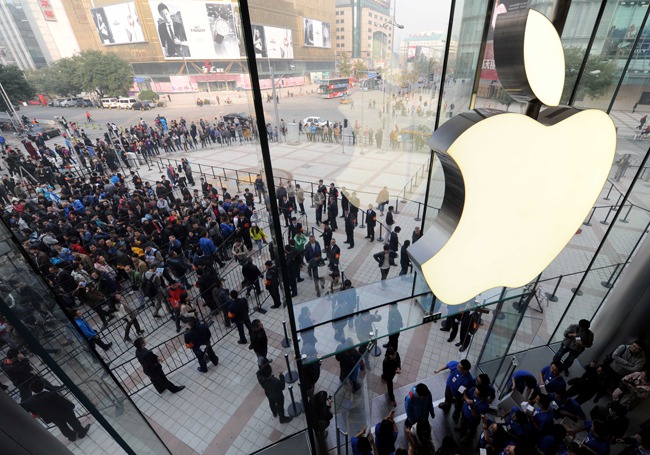
Apple continues to shine atop the Forbes Most Valuable Brands List
It’s a list that reads like the uniform of a NASCAR pit-crew. The top names and logos of some the most popular and well-known companies in the world. And this year, it’s once again Apple sitting on top of the list of Forbes World’s Most Valuable Brands. Rounding out the top 10 were also some of the heaviest hitters and most well-known names in the market. Here’s the list. 1. Apple 2. Google 3. Microsoft 4. Amazon 5. Facebook 6. Coca-Cola 7. Samsung 8. Disney 9. Toyota 10. McDonald’s Now building a bran in not easy. And one bad news story or misstep can taint a brand forever – just ask British Petroleum or the Weinstein Company. So, what does it take to build, maintain and preserve a brand for decades? It’s not as easy as you might think. If you’re covering or curious let one of our experts help. Professor Ryan Hamilton is a consumer psychologist, whose research investigates shopper decision making. In particular, he is interested in how brands, prices and choice architecture influence decision making at the point of purchase. Ryan is available to speak with media regarding brands and brand reputation – simply click on his icon to arrange an interview.


Belief in the ‘Prosperity Gospel’ Does Not Turn People into Successful Entrepreneurs
But the belief that God financially rewards the faithful can fuel values linked to entrepreneurial thinking, Baylor University study finds Belief in the “Prosperity Gospel” — that God financially blesses faithful followers — does not turn individuals into successful entrepreneurs. But prosperity beliefs can fuel values linked to entrepreneurial thinking, such as power and achievement, according to a Baylor University study. However, researchers found no direct relationship between prosperity beliefs and willingness to take risks, and little connection to recognizing opportunities. Risk-taking and identifying opportunities are typical traits of entrepreneurs, according to the national study. “As revealed in our findings, a belief that God will provide financial benefit to the faithful is not enough to push someone to launch a business,” said lead author Kevin D. Dougherty, Ph.D., associate professor of sociology in Baylor’s College of Arts & Sciences. “The relationship between prosperity beliefs and starting a business is indirect and inconsistent.” The study — Prosperity Beliefs and Value Orientations: Fueling or Suppressing Entrepreneurial Activity” — is published in the Journal for the Scientific Study of Religion. For the study, researchers analyzed data from a nationally representative survey of 1,066 working adults. Their goal was to connect prosperity beliefs, human values, entrepreneurial attitudes and entrepreneurial action. They found that values — both by themselves and in conjunction with religious beliefs — are important predictors of how and whether individuals might launch a business. Participants responded to a three-item scale to measure beliefs that faith and faithful behavior lead to success at work and in business. The items included: “God promises that those who live out their faith will receive financial success;” “Believers who succeed in business are evidence of God’s promised blessing;” and “I believe faithful believers in God receive real financial benefits in this life.” Participants also responded to questions relating to The Theory of Basic Human Values, which recognizes such universal values as openness to change, achievement, security, power and benevolence. In general, “entrepreneurs tend to think differently than non-entrepreneurs, prizing achievement and self-direction while downplaying tradition and conformity,” said co-author Mitchell J. Neubert, Ph.D., professor of management in Baylor’s Hankamer School of Business. Value orientations of self-enhancement and openness to change are associated with recognizing opportunities and taking risks — entrepreneurial behaviors that correlate with creating new businesses. While prosperity beliefs by themselves show little direct impact on entrepreneurship, they do influence the impact of values and attitudes related to creating a business. Prosperity beliefs can strengthen the relationship between self-enhancement values and opportunity recognition, but they seem to reduce the relationship between openness to change and willingness to take risks. Another significant finding pertains to gender. Men and women who accept prosperity beliefs are no different in their willingness to take risks or start businesses, said co-author Jerry Z. Park, Ph.D., associate professor of sociology in Baylor’s College of Arts & Sciences. In general, risk-taking and business startups are more common among men. The study also shows that education and experience are key predictors of entrepreneurship, but those resources may be difficult to acquire for some prosperity believers because of social and economic circumstances. While individuals in that group have hope, it seems contingent on divine action rather than human action, Neubert said. “Can prosperity preachers Joel Osteen and T.D. Jakes save the U.S. economy? Probably not. But nor are they damning it,” Dougherty said. “The type of positive, self-help gospel they preach can enhance specific value orientations that are related to entrepreneurial thinking and entrepreneurial behavior.” *The research was supported by a National Science Foundation grant. ABOUT BAYLOR UNIVERSITY Baylor University is a private Christian University and a nationally ranked research institution. The University provides a vibrant campus community for more than 17,000 students by blending interdisciplinary research with an international reputation for educational excellence and a faculty commitment to teaching and scholarship. Chartered in 1845 by the Republic of Texas through the efforts of Baptist pioneers, Baylor is the oldest continually operating University in Texas. Located in Waco, Baylor welcomes students from all 50 states and more than 90 countries to study a broad range of degrees among its 12 nationally recognized academic divisions. ABOUT THE COLLEGE OF ARTS & SCIENCES AT BAYLOR UNIVERSITY The College of Arts & Sciences is Baylor University’s oldest and largest academic division, consisting of 25 academic departments and seven academic centers and institutes. The more than 5,000 courses taught in the College span topics from art and theatre to religion, philosophy, sociology and the natural sciences. Faculty conduct research around the world, and research on the undergraduate and graduate level is prevalent throughout all disciplines. Visit www.baylor.edu/artsandsciences.




:no_upscale()/cdn.vox-cdn.com/uploads/chorus_image/image/63865958/1145120928.jpg.0.jpg)
Polling is always a big part of any political campaign, debate or election strategy. And as pollsters and market researchers dig down, one thing that’s being revealed is that the often-promoted divide among women and men might not be as dramatic as some think. In fact, when it comes to some key issues, it is usually a lot more about being blue or red than male or female. Just recently, a Vox article revealed that women and men were usually more aligned on topics like abortion not just in America, but also in most parts of the western world. Where they differed was often on matters of the size of government and the military. It’s an interesting finding and one that will certainly play a factor as the race toward 2020 shifts into high gear. Augusta University’s Mary-Kate Lizotte is an expert in public opinion and the origins and implications of gender differences or "gender gaps” and was contacted by Vox to contribute to that article. If you are covering topics about gender and how it may play an influential role in the upcoming elections and would like to speak with Dr. Lizotte, simply click on her icon to arrange an interview.


Big Brother is watching (literally)…let our experts explain the new social credit system
There’s a new way of life coming to China, and for most observers it feels a lot like the book 1984. As officially explained, China’s new ‘Social Credit System’ – it is designed to enforce accountability, keep the public safe and as the Chinese government put it – to create a “culture of sincerity” that will “restore social trust.” What it will do is shame, embarrass, hamstring and potentially ruin the social and economic opportunities for anyone who falls out of line with strict government regulations and rules. It sounds frightening to us, but according to Chinese officials, it’s just a concept Westerners are to ‘unsophisticated’ to comprehend. Here’s a snapshot from the article attached below outlining some of the social shaming and consequences: “And the punishments are shocking. The government algorithm will go as far as to install an “embarrassing” ring tone on the phones of laolai, shaming them every time they get a call in public. But an embarrassing ring tone, flight bans and slow trains are just the beginning of the dystopian nightmare that is now daily life in China for tens of millions of people. A low social credit score will exclude you from well-paid jobs, make it impossible for you to get a house or a car loan or even book a hotel room. The government will slow down your internet connection, ban your children from attending private schools and even post your profile on a public blacklist for all to see. According to Australia’s ABC News, the government has produced a “Deadbeat Map” via an app on WeChat, which shows a radar-style graphic identifying every laolai in the vicinity of the user. “Tapping on a person marked on the map reveals their personal information, including their full name, court-case number and the reason they have been labeled untrustworthy. Identity-card numbers and home addresses are also partially shown,” ABC reported.” New York Post It’s as astounding as it is almost Orwellian. And it is happening. Are you covering and do you need to know more? That’s where our experts can help. Dr. Glen Duerr's research interests include nationalism and secessionism, comparative politics, and international relations theory. Glen is available to speak to media regarding the rise of extremism – simply click on his icon to arrange an interview.


Expert perspective on a trade war with China and how it could impact a Trump presidency
Trade negotiations between the United States and China have continued to deteriorate over the last few weeks. In efforts to pressure the Chinese to make reforms to trade-related issues such as forced technology transfer and intellectual property rights, the United States has raised tariffs on nearly all Chinese exports. While there is a consensus among experts that these trade issues harm U.S. producers and must be dealt with, there is not universal agreement that a trade war is the best way to make it happen. Who will feel the effects? It is apparent that both consumers and producers in the U.S. will feel the effects of the trade war. Producers will not be able to absorb the increased costs from the raising tariffs and will need to pass them along to consumers. Consumers will begin to see the prices increase on a host of retail goods, such as clothing and apparel, toys, and home goods. Partners replaced? In addition, as the Chinese retaliate with increased tariffs on U.S. exports, such as agricultural goods, producers from other countries with lower tariffs are stepping in to take the place of the U.S. exporters. For example, Brazilian soybean producers are more than happy to sell their product to China at a lower cost. Once lost, it may be difficult for U.S. farmers to regain these important Chinese markets. A political price to pay? It appears that the effects of the trade war may hit the Trump administrations base, in agricultural and manufacturing regions, disproportionately. However, the administration may see the trade war as beneficial to Trump’s 2020 reelection campaign, as Trump is being perceived as being tough with the Chinese and holding them accountable to unfair trade practices. That appears to resonate with his base. However, it remains to be seen how long his base will continue to support this approach as both producers and consumers continue to feel the economic pinch of the growing trade war with China. There’s a lot to know about the short and long-term impacts of a trade war with China and that’s where or experts can help. Matt has taught business and marketing courses at Saint Mary’s University of Minnesota since 2008. Prior to Saint Mary’s, he worked in both the banking and the non-profit sectors, most recently with a non-governmental organization (NGO) with operations in more than a dozen countries. Matt is an expert in political and economic development and is available to speak with media. Simply click on his icon to arrange an interview.
