
Experts Matter. Find Yours.
Connect for media, speaking, professional opportunities & more.

Is Samsung’s Flip Whiteboard the latest ‘must have’ for modern offices?
From small-screens to big screens – Samsung is at it again. This time, it’s taking a run at Google’s Jamboard offering the Flip – a 55-inch touchscreen whiteboard that works vertically and horizontally. It can connect to your devices and imports and exports with simple USB options. It’s got everything you could think of … and it comes cheap. Flip is coming to market for approximately half the price of the Jamboard. But will it catch on? With budget conscious companies and schools always considering the bottom-line – is a whiteboard with all the bells and whistles a ‘must have’ or a luxury? Evan Hardie is an expert in all areas covering printers, hardcopy peripherals and imaging markets. Evan is available to speak to this topic, simply click on his icon to arrange an interview. Source:


Why are so many surprised? Yes, her actions are on the extreme side, but her espoused racist ideology is not unfamiliar to public education. Today, the Department of Education states that public schools across the country are composed vastly with White teachers. On the other hand, schools have become more diverse with increasing numbers of Black and Latino students. But what’s most troubling is not the race of teachers, but the ideologies they adopt toward their students of color. The idea postulated for eons that all teachers believe all students are capable is simply a fallacy. Research has shown that White teachers have less expectation for Black academic potential. In fact, it has been shown that White teachers have preconceived negative racialized stereotypes of children as young as preschool. Therefore, it is not out of this world expectation in regard to understanding the ramification. For example, it has been found that when Black students have White teachers, the teachers see them as more disruptive than their Black colleagues. But Black teachers perception of White and Latino perceptions is seen as unaffected. Black student are also suspended, expelled, placed in special education, and overlooked in terms of advanced classroom placement when they have White teachers. Therefore, every White teacher may not have a podcast that communicates Charles Murray or David Duke sentiments, but the slithered evidence of their shared ideological thinking is operating within public schools across the country. Source:


Body Cameras NOT to the Rescue
Body Cameras NOT to the Rescue! During the previous onslaught of repeated media grabbing stories and attention depicting possible police brutality, shootings, and all around unlawful prejudicial minority harassment; a recurrent solution was constantly thrown into conversations—Body Cameras. Well, it seems that expert and popular opinions were off base. The story of the 32 year old jaywalker, Johnnie Jermaine Rush, arguably illustrates the flaw in their proposed solution. Now, it is not to say that the solution is totally and utterly useless. The assumption that body camera undeniably deter people from acting unlawful or biased toward people of color due to the scrutiny of “Big Brother,” stands upon a chair missing a leg or two. The experts assume that possibly captured images of unlawful treatment by police officers exhibiting wrongful attitudes and actions toward Blacks and Brown people would not only lead to disciplinary measures, but also deter officer mistreatment. This takes one to be conscious that their racially based actions are not acceptable. But most people feel there are not racist. Most people unconsciously are blind to the white racial frame that has influenced them, their thoughts, and their actions toward people of color. They are right, while those of a different hue are wrong. They are human and civilized, and Black and Brown are not. They are worthy of human rights, and people of color are not. This mentality is difficult to keep in check when everything around you supports your ideology. Therefore, in the case of officer Senior Police Officer Christopher Hickman, he may have simply acted from an unconscious place riddled with hate and disdain. When society supports a racist ideology and preaches racialized division, how does one know they are wrong when acting in accordance to the society around them? Source:

The Empathy Gap Between White Social Workers and Clients of Color
Empathy is a core human attribute — but it is far from infallible. In social work, an empathy gap tied to racial identity can lead to worse outcomes for people of color. We like to think of ourselves and our colleagues as empathetic, but our experiences and actions can often contradict this notion. What does this mean for education and the world at large, and how can we improve this? Terence Fitzgerald, clinical associate professor at the USC Suzanne Dworak-Peck School of Social Work and scholar of institutional racism, policy and child welfare, shares his recent research on racial empathy in social work. Source:

Are Smart Speakers the next must have for Canadian connected consumers?
With Smart Speakers all the rage, connected adds-ons, extras and accessories are the logical next step in building a meaningful smart home. After all, what’s the point of an expensive smart speaker with an assistant built into it if it can’t do more than help you search for a song? Smart Speakers seem to be the trending topic for most smart homes – Google and Amazon have already established their presence in the market. Sonos and JBL aren’t far behind and are now offering their alternatives; with heavyweight, Apple standing on the sidelines waiting to enter the arena. However, with home assistants still building out interconnectivities with partnering brands, does the current ecosystem of partners limit the market’s potential to grow or does it open the flood gates for more supported devices to come? How influential will the ecosystem of supported devices be in smart device adoption? Do partnering device manufacturer’s care which home assistant is used to control their device or just that smart home devices market continues to grow? As smart-homes devices continue to proliferate and home assistants become more commonplace, competition will be fierce and it will be interesting to see who prevails. IDC launches a new Worldwide Smart Home Device Tracker this week sizing up the shipment market of such connected devices as consumers continue to build the smart home of their dreams today! Manish Nargas is a research analyst specializing in consumer and mobile research. He is an expert in emerging consumer technologies with a focus on usage trends and adoption. Simply click on Manish’s icon to arrange an interview. Source:

National Nutrition Month - Eat better, save money, live longer
March is National Nutrition Month and it couldn’t come any quicker. After a long winter and spring around the corner, many Americans are ready to start eating healthier. Healthy eating is not merely about shedding pounds. Good nutrition often leads to financial savings and enables us to reduce waste. One way to eat healthier is by cooking at home instead of eating out. Unfortunately, according to the Bureau of Labor Statistics, the average household spends about $3,008 per year on dining out and the food consumed is usually high in trans-fats, sodium and calories. Eating out is an expensive and often times unhealthy habit. That habit is also becoming an addiction – in 1900, only two percent of U.S. meals were eaten outside the home. Recently, that number has climbed to more than 50. It’s not always easy forgoing eating out, but the reward is truly worth the effort. Cost savings aside, cooking at home and eating as a family has proven to make people happier and feel more connected. RD Natalie Allen, clinical instructor of biomedical science at Missouri State University, can share insights about cooking home-cooked meals that are tasty, healthy, cost-effective and don't take a lot of time. Contact her for an interview. Source:


Will Samsung Reclaim the Smartphone Throne with the S9?
It’s coming on March 16 – and after some early reviews, it appears Samsung’s latest offering – the Galaxy S9 – has its sights set on the Apple X. With a lot of serious bells and whistles including a leading-edge camera, intelligent scanning for locking and unlocking, AR avatars mapping the user’s face to create a 3D image, and a jack (lesson learned) for the headphones Samsung has given consumers just about every reason to com back into the fold. There’s also one more, it’s a premium device – but also substantially cheaper than Apple’s latest offering. And if you still can’t afford it – there’s monthly financing available. Will the S9 see Samsung return as the go-to provider for smartphones? How will Apple and others like Google react? Or, is the idea of a premium phone costing close to a thousand dollars a unit getting too expensive for limited marketplace? That’s where the experts from IDC Canada can help. Steve Yang analyzes the Canadian communications market, specifically focusing on mobility. He provides insights to Canadian wireless players around mobile phones and tablets. Simply click on Steve’s icon to arrange an interview to learn more. Source:
Misleading our children – is revisionist history harming the education of our nation’s students?
It’s astounding and almost as if it’s a scene from a movie – meddling, mid-level politicians trying to revise and alter curriculums to ensure children in classrooms are only getting certain points of few and perspectives when it comes to key moments in American history. It’s a level of petty-propaganda usually associated with paranoid regimes in far-away countries. But these days, it’s a homegrown problem. In Texas, the state Board of Education is being slammed for altering facts, twisting perspectives and intentionally omitting moments in history from it’s curriculum. According to USA Today, “The state is considering revisions to the 2010 standards, which a group of academics slammed in a report Thursday. Among their complaints: lessons downplaying slavery as the Civil War's cause, exaggerating the influence of Moses on U.S. democracy and applauding the National Rifle Association and Newt Gingrich's Contract with America. "The quibble over wording here could not be more misleading," said Emile Lester, a report co-author and political science professor at the University of Mary Washington in Virginia.” So how does this happen and how is it allowed in modern America? And how common is this throughput the country? Is it a matter of too much power in the hands of those with an agenda or a reflection on an education system in a sate of neglect by elected officials? There are a ton of questions that need to be asked. That’s where an expert from at the University of Mary Washington can help. Dr. Emile Lester, associate professor of political science at the University of Mary Washington, an expert in church and state issues is available to speak with media regarding this issue. Simply click on Emile’s icon to arrange an interview. Source:



Is there any room left in the crowded home assistant market?
The tech world is abuzz with rumours that Spotify is potentially wading into the ‘home assistant’ marketplace. It’s a billion dollar business and could be the future for consumers wanting ‘smarter’ houses – but it is already a crowded market. The rumours are based on speculation as job postings for a project manager and analyst for a new hardware project to be developed and released. For Spotify to enter this space – it makes sense. However, is Spotify just a little too late to the party? As well, when you are last on the field and your opponents are Amazon, Google and Apple – the task ahead is daunting if not dangerous for the hundreds of millions of dollars in development and marketing that will be required. Is this just speculation for attention or will Spotify jump in and try to stand out? It’s not easy to decipher or decide. But that’s where the experts from IDC Canada can help. Jean Philippe (JP) Bouchard is Vice-President, Mobility and Consumer Research and is an expert in the areas of modeling and market forecasting, mobile device and platforms, go to market strategies, strategic marketing and product management. Simply click on JP’s icon to arrange an interview. Source:
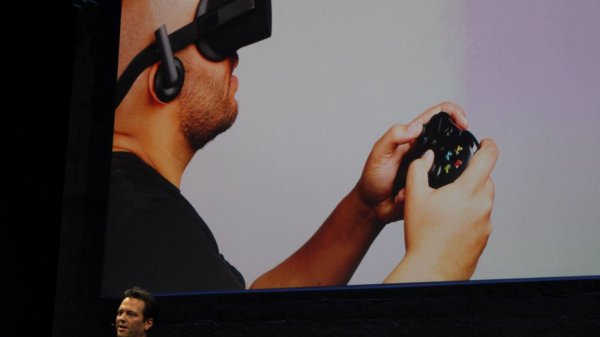
Oculus Go is coming – the market is about to evolve
Oculus Go is an all-in-one virtual reality (VR) headset that will offer 1,000s of games, 360-degree experiences without wires or even a PC to attach to. It’s coming – according to Facebook in early 2018 - but Canadian availability remains somewhat of a mystery. But the marketing has begun. There is a lot of hype when it comes to virtual reality – but will this technology be the gamechanger that shifts the market towards virtual reality experiences without wires and away from screenless viewers (headsets that require users to insert their smartphone)? Or will it take longer for VR to become mainstream, altering how we all consume games, media and virtually every experience that requires or incorporates technology? Is Oculus set to be the next Apple or Amazon? What will the future look like – and who will benefit most from VR? Which VR experiences are of most interest to Canadian consumers? These are early days, what will VR look like in a decade? As the market evolves, it seems VR's market potential has been diminished by the emergence of mobile AR as a rival platform. Even with the market pushing towards standalone headsets, premium VR might not accelerate until second-generation, standalone VR headsets break out starting over the next few years. There are a lot of questions about virtual reality and that’s where the experts from IDC Canada can help. Emily Taylor is a senior research analyst in the areas of consumer service and technology markets. She also can provide unique and intelligent insight into new landscape of virtual reality and augmented reality technologies for both consumers and businesses in Canada. Watch her video for more information on the VR/AR market in Canada, then simply click on her icon to arrange an interview. Source: