
Experts Matter. Find Yours.
Connect for media, speaking, professional opportunities & more.
Hospital at Home: Understanding How It Works
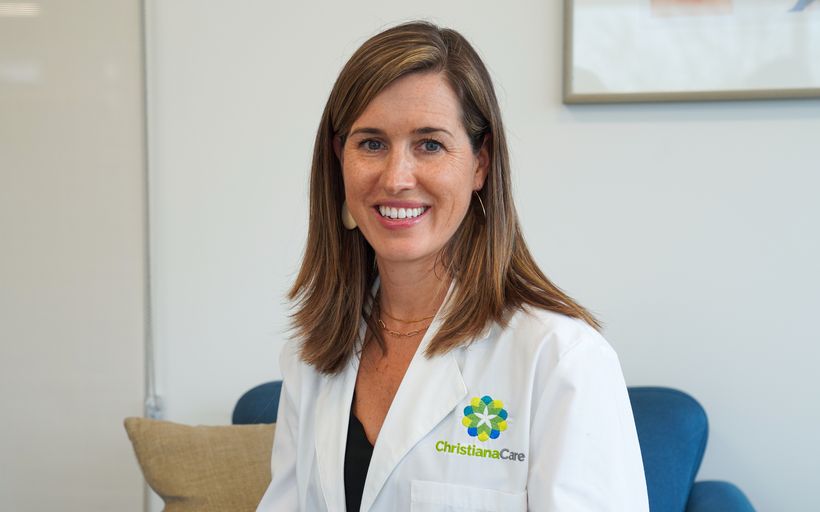
As the ChristianaCare Hospital Care at Home program grows, we see the benefits of improving the way we deliver care to our patients. With each patient we care for, we are reminded that a big part of recuperating and getting better is not just physical but mental and emotional. Being home allows patient to visit with loved ones, cuddle with pets and sleep in their own bed. It also helps our health care providers better understand a patient’s living environment, making it possible for us to provide the individual services they need. Q. What is hospital care at home? A. I think of a virtual hospital as three components: a command center, technology and in-home care. The command center is a 24/7, 365-day- a-week center staffed by physicians, nurses, advanced practice clinicians and patient digital ambassadors. This team of health care providers is tethered to patients in the home by way of our technology. We give our patients a tablet that lists their daily schedule so they know who to expect in their home and the time our health care providers will arrive. It also allows them to contact the command center at any time by pressing a button. When they do that, a nurse appears on the screen right away. Edwin Bryson Sr. said ChristianaCare made it easy to treat his diabetes complications from the privacy and comfort of his own home. With hospital care at home, he said, “all I do is hit the button and a nurse comes on to assist me with anything I need. It was 24-hour service here, just like I was in the hospital.” Technology also allows us to monitor patients’ vital signs at home as we would in the traditional hospital setting. We use Bluetooth technology to upload that information into the electronic medical record. In-home care is made up of a team that goes into the home to deliver the services that a particular patient needs. This includes radiology (X-rays and ultrasound), blood tests, intravenous medications, physical therapy, occupational therapy and more. A licensed professional, such as a nurse, also visits the patient at home at least twice a day. Q. Who is eligible for hospital care at home? A. There are requirements for participation. Patients need to live within 25 miles from our Delaware hospital campuses which are in Newark and Wilmington. We also are looking for patients that meet our acute, inpatient level of care. So if they’re in observation status, for example, they wouldn’t be a good candidate. We also need patients who don’t require continuous monitoring: If a patient has telemetry monitoring or if they’re in the intensive care unit or a step-down unit, they would not be a good candidate. Our team works every day with caregivers at both Delaware hospitals to identify patients who would benefit from hospital care at home. Q. What are common sicknesses that can be treated at home? The first 20 patients we admitted into this program had 20 different diagnoses. But after treating more than 500 patients, the most common diagnoses that we see are cellulitis, sepsis, pneumonia, chronic obstructive pulmonary disease (COPD) exacerbation and congestive heart failure. Hospital at home may not be the solution for all patients, but in many cases it can help patients get better quicker and in a place where they most feel comfortable. As ChristianaCare strives for greater access to care, home may be where the health is.


#Expert Q&A: Amid the Wildfire Haze, NJIT's Alexei Khalizov Explains What's in the Air
The soot that permeated the air in New Jersey and New York this summer — courtesy of massive wildfires in Canada — is exactly what a New Jersey Institute of Technology professor is studying to determine its impact on climate change. Alexei Khalizov, an associate professor of chemistry and environmental science, is partnering with Associate Professor Gennady Gor on the three-year project, which began last year and is supported by a $620,000 grant from the National Science Foundation. Specifically, they’re examining the soot created by wildfires and the burning of fossil fuels in hopes of better predicting its impact on climate. Khalizov, who’s been at NJIT since 2013, took time out from his research to explain what millions of residents of N.J. and N.Y. are experiencing as a result of the wildfires hundreds of miles to the north. Q: What’s in the smoke? Small particles and some gas chemicals. These particles and chemicals were released by wildfires and they were picked up by the air mass and carried all the way to New Jersey from Canada. Those particles are extremely small: you can stack maybe a hundred of such particles across single human hair thickness. Q: Is breathing it the equivalent of smoking a pack of cigarettes? That would be a reasonable comparison. A cigarette is made of plant material. When it smolders and burns it releases particles that are very much like those particles from wildfires. Maybe the only difference is that the wildfires have no nicotine. But they have lots of other chemicals. Q: What factors contribute to the density of the smoke? Well, it's a major wildfire. It covers a huge territory in Canada. And the meteorology is such that this smoke is carried all the way from Canada to the U.S. without significant dilution. And due to that, the concentration of those particles is very high. Q: When did we last experienced something of this magnitude? We had some Canadian and Alaskan wildfires a few years ago. And air mass transport brought the smoke all the way to New Jersey, but it wasn't as bad as what we are observing today. Q: What about in terms of EPA standards? The Environmental Protection Agency has a list of criteria pollutants. One of those pollutants is particles smaller than 2.5 microns. And typically, if the concentration of those particles exceeds 35 micrograms per cubic meter, the air is considered unhealthy. When I looked at the map of pollution today (June 7, 2023), it showed that throughout the majority of New Jersey, the concentration is around 90 micrograms, which is two to three times higher than this unhealthy threshold. And actually, there is a location, I believe it's around Paterson, where the concentration is 140 micrograms, which is four to five times above the threshold. Q: Can the wildfires in South Jersey be contributing to this? It's possible, but probably it's not a major contribution. Also, if you look at the wind pattern, it's probably not a major factor at all. Q: Why is wind unable to disperse the smoke? For the wind to disperse the smoke, one needs to mix clean air with all this contaminated air and the amount of contaminated air is so high that there’s no clean air around to actually produce any dilution. Q: Why is there so much haze? It’s because of the continuous inflow of air, which is contaminated by emissions from the wildfires. The haze itself has a relatively short lifespan. Q: How does temperature change affect the smoke? If the temperature increases that may accelerate the rate of some chemical reactions that will also be accelerated by the sunlight. And that's one reason why the smoke that was released in Canada is not exactly the same smoke that we experience in New Jersey. As this haze is traveling over three to six hundred miles, it undergoes a number of chemical reactions and even the smell changes. You know how freshly released wood smoke smells — it's actually pretty pleasant. What we're smelling now, it's not pleasant at all. That's the result of those chemical reactions, which makes this even more unhealthy. Q: Will rain immediately clear the smoke? Yes, it will. If we could have rain, then the rain would remove the majority of these particles. And in fact, I believe we've been experiencing the smoke for several days, almost a week now. It would go up and decrease. And we’ve had several rains and those rains did really clear out some smoke. Q: What can we do individually and collectively to protect ourselves? We can help ourselves by staying indoors and wearing masks if you have to go outside. Certainly, exercising outside is not a good idea even while wearing a mask. Also, if you have a central air conditioning system, you can turn on the fan to run the air through the filter, which will remove some of these particles. It depends on what kind of filter you have — high efficiency or regular. Q: What kind of mask? Make sure that it's an N-95 mask, not a surgical mask. A surgical mask is not is not going to help you at all. Q: How does what we’re experiencing relate to your research? My collaborator and I received a major grant from the National Science Foundation to study the particles released by combustion. As they travel through the air, they change both in shape and in composition. And these changes affect their toxicity and they affect their impact on climate. These particles actually are one of the warming agents. So, we hope that within about three years of working on this project, we’ll be able to explain better what happens and then modelers will be able to predict the impacts of such events with better accuracy. Looking to know more - we can help. Alexei Khalizov is available to discuss this important topic with media - simply click on his icon now to arrange an interview.


Widening rift with Canada puts India's relations with the West at risk
Relations between India and Canada continue to devolve after Canadian Prime Minister Justin Trudeau accused India of playing a part in the assassination of a Sikh activist on its home soil. Following India's denial, both countries expelled senior diplomats. In a new video posted on his YouTube channel, Professor Muqtedar Khan said relations are spiraling toward a dangerous place. And, he added, if the situation continues to devolve, it could have a major impact on India's relations with the entire Western world. Khan, a professor of political science and international relations, is an expert on issues surrounding U.S. foreign policy in the Muslim World as well as national security and counter-terrorism. He can also discuss: The Khalistan Movement: The Sikh separatist movement that has taken many lives since the 1980s including the assassination of India's former PM Indira Gandhi. How Canada's large Sikh population 770,000 (2.1%) makes it a hotbed of Sikh activism. In 1985, Canadians Sikh exploded an Air India flight from Montreal to London killing 329 people The assassination of Hardeep Singh Nijjar and its diplomatic fallout. The dispute between Canada and India is over the killing of Nijjar, a Canadian Sikh who was organizing an illegal referendum on separatism. Khan is the author of "Islam and Good Governance: A Political Philosophy of Ihsan." Video of Khan discussing the concept of Ihsan can be found here. He has also drawn a large following with his "Khanversations" channel on YouTube. To schedule an interview, click on the contact button found in his ExpertFile profile.


#Expert Insight: Let’s Talk About Maternal and Postpartum Health
With increased maternal mortality rates in the news, and births involving inductions and c- sections on the rise despite their risks, Elizabeth Johnson-Young asks: 'What communication choices and strategies do women use after a negative birth experience?' Many women define certain aspects of childbirth as traumatic – from a mother or child’s life being put at risk to a host of less serious circumstances that can cause an unfavorable natal experience – and that can pose a threat to mental health. Who will they trust next when it comes to their maternal healthcare and their future decisions regarding birth? Johnson-Young’s project, “Birth, Trauma, and Communicating Maternal Health,” uses in-depth interviews of women who define their birth experience as difficult or traumatic. It focuses on choices and perceptions, and discusses the potential outcomes of listening, language and support. This is an important topic for health care providers, families and mothers and if you are looking to know more - then let us help. Dr. Elizabeth Johnson-Young is a published expert on health communication, especially maternal and family health. She is ready to help if you are looking to cover this topic - simply click on her icon now to arrange an interview today.



Too Cool for School? Our #experts can help with a history lesson in hipness
Who decides what’s “cool?” What have been the criteria over the years for rising to the ranks of “hot,” “phat” or “lit?” Colin Rafferty teaches a course that delves into the elusive but ever-so-attractive notion of being deemed “cool.” The syllabus examines this coveted quality and the entities described by it in historical and contemporary contexts, from its roots in the post-WWI jazz-age to rappers and TikTok. “The Idea of Cool” uses books, music and movies to explore what and who rises to the top of popular opinion and why. “I am decidedly not cool,” said Rafferty, who describes himself as a middle-aged man who owns a book of crossword puzzles. “But I find cool to be a fascinating thing.” Colin is available to speak with media about “The Idea of Cool” and his very cool work . Simply click on his icon to arrange an interview.


A recent survey conducted on behalf of CAA South Central Ontario (CAA SCO) found that 82 per cent of parents in Ontario have witnessed dangerous driving behaviours in school zones – that’s a four per cent increase compared to last year. More than half (55 per cent) consider the roads around their child’s school to be unsafe. “Our children deserve to travel to and from school safely,” says Tracy Marshall, manager of community relations at CAA SCO. “As another school year begins, drivers should prepare for higher traffic periods in school zones and drive with extra vigilance.” According to the survey, some of the most common dangerous driving behaviours parents have witnessed include speeding, double parking and stopping in undesignated areas. Of those surveyed, the car remains the primary mode of transportation to and from school. Because of this, more than 80 per cent of parents report experiencing congestion around their child’s school. In fact, survey respondents believe that parents in a hurry (38 per cent), too much congestion (33 per cent) and parents not following the drop off or pick up procedures contribute the most to unsafe driving behaviours in school zones. Majority of parents say more can be done to help drivers slow down in school zones. Ninety-one per cent of parents in Ontario support lowering the speed limit in school zones with 83 per cent that say speed limits should be 30km/h or lower. When it comes to Automated Speed Enforcement (ASE): Seventy-seven per cent – an 11 per cent jump compared to last year – strongly support the use of it in school zones. Eighty-one per cent believe its presence would deter speeding around schools. Seventy-five per cent say that it should remain permanent in school zones. Drivers reminded to follow the rules of the road in school zones, especially near school buses. “It is dangerous and illegal to pass a stopped school bus with its red lights flashing and stop arm extended,” says Marshall. According to the survey, 11 per cent of parents report having ever been charged with failure to stop for a school bus. “Not only do you risk facing a fine of up to $2,000 and six demerit points for a first offense, but you are also putting the lives of others at risk,” adds Marshall. How drivers can help keep school zones safe. Drivers can also use the following CAA tips to ensure they are staying safe in school zones: Help reduce traffic with active school travel: Encourage your kids to walk or wheel to school to ease traffic congestion. If your school is a further distance, CAA encourages parents and guardians to park a block away and walk to school to reduce traffic and make school zones safer. Slow down: Know the speed limit in your neighbourhood’s school zones and respect them. Ensure you give yourself plenty of time to drop off your kids at school to avoid rushing. Choose a safe spot to drop off and pick up your children from school: Follow your school’s rules and avoid double parking or stopping on crosswalks, dropping off or picking up your kids on the opposite side of the street, and stopping in moving traffic as kids rush out. Instead, use the designated drop off areas or consider a spot a bit farther away from school that is easily accessible and safe. Make eye contact with pedestrians: With the excitement of going back to school, anticipate that children may not easily see or hear your moving vehicle, so ensure to make eye contact with pedestrians crossing the road. Watch for CAA School Safety Patrollers: When travelling to and from school, watch for CAA School Safety Patrollers in their lime green safety vests, as they play an important role in ensuring the roadway is safe before kids cross on their own. CAA supports safety in school zones through the CAA School Safety Patrol® program, developed to protect and educate elementary school children on safe road-crossing practices. CAA’s Ontario Road Safety Resource is a toolkit with valuable lesson plans for teachers to help educate students about road safety. To learn more please visit www.caasco.com/schoolzone. About the survey. The study, commissioned by CCG conducted by Dig Insights in May 2023 surveyed 1,560 Ontario parents/guardians between the ages of 18 and 74 with children attending school from kindergarten to grade 8. The margin of error for a sample of this size is plus or minus 2% at the 95% confidence level.



Exploring the role of social media in fomenting hatred and prejudice in society
Each day, it feels like there's a new social media platform to join, the latest one being Threads. While social media like Threads, Instagram, Twitter, TikTok and Facebook can be a space to bring people from different corners of the world together, it has also become a way to spread hatred and prejudice. Kassra Oskooii, associate professor of political science and international relations at the University of Delaware, studies the interplay between contextual and psychological determinants of political opinions on minority groups. He recently published work examining at how social media news consumption over the last two presidential cycles has heightened anti-Muslim views. He noted that social media works by creating information bubbles that echo and amplify views, and when political information is left unregulated, individuals can be exposed to false and prejudicial content that can shape their views toward marginalized groups. Oskooii's research was recently cited in the 2023 Economic Report of the President. He can speak about the role that social media continues to play on politics and everyday society. To arrange an interview, simply click on Professor Oskooii's profile and press the contact button.


Concerns Persist Over the State of Ecuadorian Democracy
On August 9, 2023, Ecuadorian presidential candidate Fernando Villavicencio was ambushed and killed following a campaign rally in Quito. The Alausí-born journalist-turned-assemblyman had long been a proponent of social and governmental reform, framing his election bid as a crusade against the drug traffickers, corrupt corporate interests and “political mafia” besetting his country. His assassination has, in turn, sparked concerns and discussion over the current state of democracy in Ecuador. Lowell Gustafson, PhD, is an expert on Latin American affairs and a professor of political science in Villanova University’s College of Liberal Arts and Sciences. From his perspective, Villavicencio’s murder stands as the latest chapter in a saga of malfeasance, intimidation and violence in the region. “This is not new in Latin American political history,” said Dr. Gustafson. “The role of private armies funded by economic sectors beyond state control has been an issue often for the national period. It has taken a stark turn with the riches pouring in from illegal drugs.” In Ecuador, “narco-capitalism” has emerged as a particularly corrosive force. According to Dr. Gustafson, Albanian, Mexican and South American criminal outfits established themselves within the nation by the early 2010s, drawn by the country’s vast network of ports and its proximity to coca-rich Colombia and Peru. “That became a problem for stability in 2016, when the government of Colombia signed a peace agreement with the Revolutionary Armed Forces of Colombia [or FARC],” he stated. “FARC had long controlled cocaine trafficking routes from southern Colombia to Ecuador’s ports on the Pacific Ocean. With their dominance gone, other cartels began to compete for control.” Since the opening of this power vacuum, the situation in Ecuador has grown increasingly volatile, with the governmental response ham-fisted at best and faciliatory at worst. Under the presidential administrations of Rafael Correa, Lenín Moreno and Guillermo Lasso, the cartels succeeded in infiltrating the country’s privatized ports and airports, seizing control of the nation’s prison system and contributing to an ever-growing wave of crime. “Violence against public officials and by vigilante groups have steadily increased since 2018,” Dr. Gustafson said. “With the familiar choice between bribes and cooperation or violence, it is no wonder that cartel influence throughout the Ecuadorian state and military is widely discussed.” While Dr. Gustafson acknowledges the Ecuadorian government’s culpability for this disastrous situation and its escalation, he also cites another factor: the United States’ “war on drugs.” According to the professor, the longstanding U.S. policy has only served to prop up criminal enterprises south of the border, fueling a market for illicit substances. “After a half-century of the war and over a trillion dollars spent on it, coca cultivation in Colombia in 2020 was at an all-time high,” he shared. “The war on drugs has led to the continued power of illegal drug cartels in many countries, now including Ecuador.” In Dr. Gustafson’s estimation, the recent murder of Villavicencio only brings greater attention to this unfortunate state of affairs—a state of affairs common throughout Latin America. “With his consistent and outspoken critique of the cartels’ influence in Ecuador, Villavicencio courageously knew he faced the threat of violence,” he concluded. “The assassination of a presidential candidate brings all of this to a higher level within Ecuador, but the likely reason for [his murder] plagues Mexico, El Salvador and other Latin American nations.”


Georgia Southern University’s Institute for Health Logistics and Analytics (IHLA) and the Georgia Department of Public Health (DPH) have once again joined forces to reduce the spread of COVID-19 in confinement facilities across the state. DPH has awarded the IHLA a contract worth $10 million to complete a second year of work. “Throughout the pandemic, COVID-19 was a significant cause of illness and death among confinement facility residents and employees,” said Jessica Schwind, Ph.D., director of IHLA. “SARS-CoV-2, the virus that causes COVID-19, is still circulating and we need to continue to support these facilities in reducing viral transmission.” With the funding, the IHLA assists with the purchase and coordination of allowable COVID-19 mitigation items for enrolled facilities across the state of Georgia. The focus in year two of the project is to improve air quality and offer a seamless process for confinement facilities. Recipients do not incur any direct costs and the paperwork and the procurement process is handled entirely by Georgia Southern. “We work with each facility to determine what they need,” said Kathryn Stewart, budget manager at IHLA. “We then handle the ordering, payment and delivery. For facilities that need fairly standard supplies, we have an easy order form process. For those with complex requests, we work with them individually to make sure they receive the best solution for their particular needs.” Facilities in Georgia are eligible to receive $25,000 to $250,000 of COVID-19 mitigation supplies. The amount awarded is determined by the number of detainees each facility is licensed to hold. Eligible items include portable HEPA filter units to improve air quality, personal protective equipment and cleaning and disinfecting supplies. “We are really proud of the work this institute has accomplished,” said Carl Reiber, Ph.D., Georgia Southern’s provost and vice president for academic affairs. “Not only has the IHLA maintained a focus on public impact research, it is a shining example of the significant role Georgia Southern is taking on improving health across the state.” All eligible correctional confinement facilities, which includes adult prisons and jails, youth detention centers and holding cells in the state of Georgia, are encouraged to enroll, even if they received funding in the previous cycle. This project is supported by the Centers for Disease Control and Prevention’s Detection and Mitigation of COVID-19 in Confinement Facilities Epidemiology and Laboratory Capacity Grant Program, which provided a financial assistance award to the Georgia Department of Public Health. For more information and to enroll in the program visit the project's website: The IHLA at Georgia Southern provides comprehensive solutions to improve and advance the health of populations around the world. The institute specializes in planning, evaluation, capacity building and research services to enhance the health infrastructure in organizations and communities. To learn more or to speak with Jessica Schwind, Ph.D., director of IHLA - simply contact Georgia Southern's Director of Communications Jennifer Wise at jwise@georgiasouthern.edu to arrange an interview today.


As Popularity of Weight Loss Medicine Soars, Professionals Caution Against “Magic Pill” Mindset
A growing weight-loss fad has been dominating headlines this summer. No, it isn't a new type of trendy diet, exercise regimen or social media influencer-touted superfood. It's two medications—Ozempic and Wegovy—that have skyrocketed in popularity as more Americans turn to these once-weekly injections to aid in their weight loss efforts. But, while acknowledging the drugs' effectiveness, their intended patient populations and appropriate usage has become far more nuanced and situational, and the intended outcome of long-term weight loss and health is dependent on more than just taking either of these medications once a week. "While these medications can be helpful for some people who struggle with weight loss, it's important to remember that they are not a magic solution," said Rebecca Shenkman, MPH, RDN, LDN, director of the MacDonald Center for Nutrition Education and Research at Villanova University's M. Louise Fitzpatrick College of Nursing. First, it's important to understand the components and histories of both Ozempic and Wegovy. They are prescription medications of the same drug, semaglutide, which belong "to a class of drugs known as glucagon-like peptide-1 (GLP-1) receptor agonists, originally developed to treat type 2 diabetes," per Shenkman. It was discovered by researchers that significant weight loss was a side effect of semaglutide. Ozempic is the 2017 FDA-approved drug used to help treat diabetes. Currently, it is not FDA approved for weight loss and typically not covered by health insurance when used for that purpose, per Shenkman, but is often prescribed off label for "weight management in certain individuals who do not have diabetes, but struggle with obesity or [are] overweight." Wegovy was approved by the FDA in 2021 as an anti-obesity drug used for individuals living with obesity or individuals with excess weight, but not classified as living with obesity, who also have other associated health problems. "When used correctly, the drugs can have many benefits," Shenkman said. "[Semaglutide] is shown to improve diabetes and body weight in addition to seeing improvements in cardiovascular health and risk factors." However, "correct use" is what concerns Shenkman and other health and nutrition professionals. "Anti-obesity drugs are a valuable tool for people who have not experienced adequate benefit from self-directed or professionally directed lifestyle treatment," she said. "However, what we are seeing more and more of now is that people are requesting anti-obesity medications without meeting eligibility criteria for drug use, [such as] body mass index and weight criteria, [or] having the foundational knowledge and application of healthy lifestyle behaviors prior to medication use." To Shenkman's first point, there are several factors, especially in American society, driving those who may not meet the criteria for these medicines or even truly need them to request and ultimately receive the drugs. The media's portrayal of ideal body image is an enormous influence, which can lead to "body dissatisfaction and a desire for quick weight loss solutions," said Shenkman. Advertisements for these drugs often promote those ideas, and even downplay side effects, making them more appealing. Intrinsically tied to body image is the struggle many individuals have with psychological issues related to food, such as emotional or binge eating. "They feel that their self-worth is tied to their weight, and they will do almost anything to lose weight, whether it be five or 50 pounds." Shenkman said. "These individuals might believe that medication will help them control their eating habits more effectively." Identification of such issues prior to prescription approval is something that providers need to be aware of and screen for, Shenkman said. "It is so important for providers to complete a comprehensive pre-treatment assessment of their patients who start on weight loss medications. Unsupervised or improper use can lead to malnutrition, unhealthy weight loss or even a worsening of an undiagnosed or undertreated eating disorder or mental health condition." But even users who meet all pre-treatment criteria may be turning to the drugs in haste, or believe that they alone will solve their problems, and do so quickly. "Americans are known for having that 'quick-fix mentality' where people often seek quick solutions to their problems, including weight loss," Shenkman said. "Weight loss medications might promise faster results compared to lifestyle changes, which can take time and dedication." Compounding this "quick-fix mentality" is the frustration many feel when they fail to see results after multiple unsuccessful attempts at weight management. "The abundance of information on diets, exercise routines and weight loss programs can be overwhelming… Some may turn to medications as they seem more straightforward and require less effort to understand," explained Shenkman. But, as health care providers know, they are far from straightforward. All drugs, including Ozempic and Wegovy, come with the potential for side effects, which can vary with the individual. Headlines this summer focused on reports of users experiencing gastroparesis, described by Shenkman as the "the slowing down or 'paralysis' of the digestive system and gastric (or stomach) emptying." Though most often reported to cause nausea and vomiting, complications of gastroparesis can be quite serious. "If someone continues the medication and experiences chronic gastroparesis, complications to be aware of include malnutrition, dehydration, acid reflux, blood sugar control and even bowel obstruction," Shenkman said. The American Society of Anesthesiology also recently issued guidance on the use of such drugs prior to surgery, given potential life-threatening complications. "When prescribing anti-obesity medication, it is the responsibility of healthcare providers to inform patients about potential side effects and risks associated with the medication," Shenkman said. "It is also the right of the patient/consumer to ask questions and understand what they are putting in their body. A thorough discussion about benefits and possible adverse effects can help patients make informed decisions about their treatment." Many users may also not fully understand that these drugs are usually taken long-term, even after reaching a desired weight. Stopping without the knowledge of how to keep the weight off may lead to its return. Considering the pros and cons of the drugs, Shenkman's advice is simple. "Weight loss medications should always be used as part of a comprehensive weight management plan, which includes a balanced diet, regular physical activity and lifestyle changes. Relying solely on medications without addressing other aspects of weight management is not likely to lead to long-term success no matter how long you stay on a medication."
