
Experts Matter. Find Yours.
Connect for media, speaking, professional opportunities & more.

Multi-university AI research may revolutionize wildfire evacuation
As wildfires grow wilder, the University of Florida and two other universities are developing large language models to make evacuations safer and more efficient. Armed with a nearly $1.2 million National Science Foundation grant, UF, Johns Hopkins University and the University of Utah are creating these AI-based models to simulate human behavior during evacuations – information that will help emergency managers shape more effective evacuation plans. “Strengthening wildfire resilience requires accurate modeling and a deep understanding of collective human behavior during evacuations,” said UF project lead Xilei Zhao, Ph.D., an associate professor with the Engineering School of Sustainable Infrastructure and Environment. “There is a critical need for simulation models that can realistically capture how civilians, incident commanders and public safety officials make protective decisions during wildfires.” Xilei Zhao focuses on developing and applying data and computational science methods to tackle problems in transportation and resilience. View her profile here Existing simulation models face limitations, particularly with reliable predictions under various wildfire scenarios. New AI models can simulate how diverse groups of people behave and interact during the hurried scramble to seek safety. Zhao’s team is developing a convergent AI framework for wildfire evacuation simulations powered by psychological theory-informed large language models. The project will produce simulation methods to promote teaching, training and learning, and support wildfire resilience by allowing public safety officials to use open-access tools. “This research seeks to be a transformative step toward improving the behavioral realism, prediction accuracy and decision-support capability of wildfire evacuation simulation models,” Zhao said. Zhao partnered with John Hopkins professor Susu Xu, Ph.D., and University of Utah professors Thomas Cova, Ph.D., and Frank Drews, Ph.D. The preliminary results of the study were recently presented at the 63rd Annual Meeting of the Association for Computational Linguistics. “In that paper, we started to train the model on the survey data we collected to see how we can accurately predict people's evacuation decisions with LLMs,” Zhao said. Research objectives include extending the Protective Action Decision Model for civilians and public safety officials, developing psychological theory-informed large language model agents for protective modeling and generating a realistic synthetic population as input for the simulation platform. The team also plans to develop learning-based simulations and predict human behavior under scenarios such as fire spread, warning and infrastructure damage. This research comes at a critical time, as the number of wildfires has significantly increased globally. About 43% of the 200 most damaging fires occurred in the last decade leading up to 2023, according to a recent study in Science. The intensity, size and volume of wildfires are threatening more urban areas. “If you go into the urban area, many people do not have cars, or they need additional mobility support,” Zhao said. “For example, the LA fires impacted nursing homes with a lot of elderly people, many of whom are immobile or lack the ability to drive. That's a big problem. This would be very relevant to them.” The large language models will provide important context for evacuation planning as well as real-time decision making. “We envision this tool being used during planning,” Zhao said, “so emergency managers can test different kinds of scenarios to determine how to draw the evacuation zones, where to issue the orders first and how to design the communications messaging.” This is important research and critical as wildfires become more common across North America. If you're a reporter looking to connect and learn more - then let us help. Xilei Zhao is available to speak with media - simply click on her icon now to arrange an interview today.



Why Brokers Are Canada’s New Mortgage Rockstars
There’s a quiet revolution happening in Canadian mortgage lending—well, as “quiet” as anything can be when two-thirds of Canadians are shouting, “We’d rather deal with a broker than a bank!” According to the most recent Mortgage Professionals Canada (MPC) Consumer Survey, 67% of Canadians now say they’d rather work with a mortgage broker than a bank. Among those who already have? A whopping 81% would do it again. That’s not just a statistic. That’s a standing ovation. The Great Mortgage Broker Boom According to recent MPC data, broker market share reached 33% in 2024—a four-point increase in just two years. Nearly half of all borrowers now choose brokers. The message is clear: Canadians are tired of sales reps; they want advocates who speak human, not policy manual. And who can blame them? With 1.2 million mortgages renewing in 2025 and average payments increasing by $513 a month, people aren’t just rate-shopping anymore—they’re seeking guidance, reassurance, and maybe a bit of hope. Let’s face it: they want their cake and still be able to heat their home too. Why This Matters—Especially for Seniors I work with Canadians aged 55+ every day, and about three-quarters of them are homeowners. They’ve done everything right: worked hard, paid off debt, raised families, and built wealth through their homes. But now, many feel… trapped by them. Here’s the reality: Mortgage renewals are costing hundreds more monthly (some facing 15–20% jumps) Inflation is eating into fixed incomes; and downsizing, aging in place, or tapping into home equity all feel like high-stakes decisions. Almost 80% of Canadians over 55 say their savings and pensions aren’t enough. (Source: Home Equity Bank Ipsos Survey) According to this same survey, half of respondents believe home equity is crucial for retirement—yet 76% feel pressured to downsize even if they’d rather not trade their garden for a balcony (or their favourite hairdresser for whoever’s closest to the condo). What they don’t need: A one-size-fits-all sales pitch from someone who thinks “retirement” means early-bird specials and Sudoku marathons. What they do need: A mortgage broker who listens, educates, compares options, and helps them sleep at night—not just sign on the dotted line. The Missing Link: Transactional vs. Conversion Sales Traditional mortgages are what we call commodities, sold using a transactional method. In this approach, the need is obvious—the customer wants a mortgage—and the focus is on competing for the best price and terms. It’s fast, efficient, and, let’s be honest, a little impersonal. It’s the classic hammer-and-nail approach: every client looks like a nail, and the broker just keeps swinging rates and terms until something sticks. That may work for a first-time buyer chasing the cheapest five-year fix—but for seniors? It’s about as effective as putting a Band-Aid on a broken arm. The 55+ demographic doesn’t want a hammer. They want a conversation. They want to understand how to stretch their pension income, cover rising expenses, and prepare for life’s curveballs—like healthcare costs or home repairs—without feeling like they’re going backwards financially. That’s why this is not a transactional sale; it’s a conversion sale. A transactional sale happens when someone already wants what you’re selling—you’re just facilitating the purchase. A conversion sale, however, is when the client doesn’t yet believe they need or want what you’re offering. You’re not closing a deal; you’re changing a mindset. And that’s the secret sauce for brokers working with older Canadians. You’re not selling debt—you’re offering financial flexibility. You’re helping people reframe home equity from a “last resort” into a retirement resource. How Brokers Can Shift the Conversation Lead with empathy, not economics. Ask about life goals, not loan size. Do they want to age in place, help kids, or reduce financial stress? Start with why, then move to how. Rebrand the conversation. Words matter. “Mortgage” can feel like failure. Try “home-equity strategy” or “retirement cash-flow plan.” You’re not adding debt—you’re unlocking options. Talk cash flow, not contracts. Focus on income versus expenses, inflation resilience, and emergencies. Discuss how home equity can supplement pensions, create predictable, guaranteed income (like our parents had), and—most importantly—boost that all-important sleep score. Include the family. Adult children often play a major role. Involve them early—these are emotional, multi-generational conversations, not just financial ones. Educate, don’t sell. Show examples, calculators, and real-life case studies. Transparency earns trust—and trust is the true currency in a conversion sale. When brokers shift from “rate pitching” to “retirement planning,” they go from hammer-swingers to problem-solvers—and that’s where the real magic (and business growth) happens. What Mortgage Brokers Bring to the Table The broker market is projected to grow at a 5% CAGR through 2030, driven by consumers demanding personalization over cookie-cutter lending. And the reverse-mortgage space just got a serious glow-up. Home Trust Bank has just entered the market, announcing its new Equity Access Reverse Mortgage product at this week's Mortgage Professionals Conference in Ottawa. That brings the total to four active lenders in Canada’s reverse-mortgage space: HomeEquity Bank, Equitable Bank, Home Trust Bank, and Bloom Finance Company. More lenders mean more credibility—or, as I like to call it, street cred for seniors. The kind that lets retirees walk down the street (or the fairway) with a little swagger, knowing their financial toolkit has options. With more players in the mix comes more choice, sharper pricing, and—most importantly—a sense that reverse mortgage products have finally crossed over from “fringe” to financially fashionable. Reverse mortgages are no longer the “we-don’t-talk-about-that” cousin at the financial family dinner—they’re sitting proudly at the adult table. The product is being normalized—treated as the legitimate, strategic retirement tool it has always been. So, brokers—be honest. Isn’t it time you caught up to the trend? Reverse mortgages have gone from taboo to totally credible. And if your clients still say, “We’re just not reverse-mortgage people,” that’s your cue to help them unpack that posture of financial marginalization. Because what they often mean is, “We don’t want to feel old, desperate, or dependent.” That’s not who they are—and that’s not what this product is. It’s not about retreating; it’s about reframing. Helping them see home equity as strength, not surrender. Because empowering clients to live comfortably, confidently, and cash-flow secure isn’t just good business—it’s the kind of advocacy that gives everyone involved a little swagger. Older Canadians Need Advocates—Not Just Advisors As a spokesperson for this group, I urge brokers to master Equity Literacy—the ability to explain complex tools like reverse mortgages and HELOCs in plain language. It’s about helping retirees access equity wisely, preserve benefits, and create peace of mind. Canadian reverse-mortgage debt reached $8.2 billion in mid-2024—an 18.3% year-over-year increase. (Source: Office of the Superintendent of Financial Institutions - OSFI). Canadians are catching on: their house can help them, not haunt them (could not resist the Halloween joke). Help seniors understand the range of uses for Reverse Mortgages like paying off high-interest debt, helping family through early inheritance or gifting, and supplementing retirement income to maintain independence. And here’s where brokers can really shine—by guiding family conversations about inheritance, housing, and aging in place. According to CMHC’s 2025 Mortgage Consumer Survey, 41% of first-time buyers used a gift or inheritance to cover mortgage costs. That's up from 30% the year before. Those gifts averaged nearly $80,000. The Bank of Mom & Dad just got promoted to Wealth Management HQ. To the Canadian mortgage broker industry You’re not just in the mortgage business—you’re in the dignity business. You help Canadians stay in their homes, reduce stress, and live comfortably in retirement. With home sales slowing and fewer purchase deals, this is your moment. Building expertise in the 55+ market isn’t just good karma—it’s good business. How to start: educate your database about equity-release benefits and tax-free cash flow; host workshops on “Aging in Place with Equity”; partner with financial planners, lawyers, healthcare providers—and yes, Realtors—to build a holistic approach to retirement housing. Involve adult children in every conversation; they’re tomorrow’s clients. The data says Canadians need you more than ever. And I’ll say it louder: so do I. Let’s make retirement planning better, smarter, and more human—one conversation at a time. So here’s the truth: the 55+ crowd doesn’t need rescuing—they need respect. They’re not clinging to the past; they’re funding their future. They don’t want pity; they want power—and they’ve earned it. This generation built Canada’s equity base—literally—and now it’s time they get to use it wisely, proudly, and on their own terms. Whether that means a new roof, a family gift, or finally taking that long-postponed trip to Italy, it’s not about borrowing money—it’s about buying freedom. So, brokers, financial pros, and anyone guiding retirees—remember: your role isn’t to sell products. It’s to spark possibilities. To help older Canadians move from fear to freedom, from “we’re not those people” to “why didn’t we do this sooner?” Because the real revolution in retirement isn’t about rates or renewals. It’s about reclaiming confidence, creating financially viable futures, and knowing you’ve made a real difference—something your clients will remember long after the ink dries. Trust me, that’s far more gratifying than handing out a 4.99% five-year fixed. I want to know what you think. Send me your feedback. Want more insights like this? Subscribe to my free newsletter here, where I share practical strategies, real-world stories, and straight talk about navigating retirement with confidence—not confusion. Plus, all subscribers get exclusive early access to advance chapters from my upcoming book. For Canadians 55+: Get actionable advice on making your home equity work for you, understanding your options, and living retirement on your terms. For Mortgage Brokers and Financial Professionals: Learn how to become the trusted advisor your 55+ clients desperately need (and will refer to everyone they know). This isn't just another revenue stream—it's your opportunity to build lasting relationships in Canada's fastest-growing demographic. Sue Don’t Retire…Re-Wire!


Inside the Classroom: LSU Psychologist Shares Insight on Student Attention Spans
What large changes have schools seen over the past few years regarding attention spans? "Being distracted by something in nature when trying to do a task may have been the first type of distraction, along with internal distractions, such as thinking about something else when you are trying to complete a task. Thus, distraction is not new. What’s new today is that the types of distractions are more complex and can even be individually tailored to capture someone’s attention, which can lead to more temptations to shift our attention off of one task and over to something else." What are innocuous ways students can harm their attention spans? What effect do phones have on retention ability? "One way I think that students can harm their own task progress is to believe that they can truly multitask or do more than one thing at one time. If you are completing a homework assignment and you are tempted to check your social media feed, you are causing a switch of your attentional focus. It may seem quick and somewhat harmless, but numerous studies have indicated that trying to switch back and forth between two tasks results in more errors and has the overall effect of taking longer to complete the main task. Thus, put simply, do not multitask. Set aside a time limit, say 20 or 30 minutes, to solely focus on one assignment or one study guide. Then take a break." How can a depleted attention span affect general physical and mental health in children? "Mental effort can be as tiring as physical efforts. As a field, we now understand the importance of sleep and overall health for our cognitive systems. To support the efforts of sustained attention, it is important to recognize that learning takes time and it takes energy. In terms of young children, the many processes involved in the development of the body and the mind require more sleep than older children and adults. How may fixing a memory deficit look different in a teen versus a child? "Younger children need more breaks than older children, as well as needing more sleep. However, younger children are able to maintain their focus of attention. They may need more guidance and something we call “scaffolding." This term is used to indicate that the older learners may already have a framework to use to build their knowledge, whereas younger learners are starting from scratch. Providing extra support that is relative to their age and ability helps children to perform at their maximum level." Are schools set up to most efficiently stimulate students' minds? "When I think about the classrooms of early childhood settings, such as pre-K and lower elementary schools, the classrooms are set up to encourage learning. There are brightly colored pictures and words on the walls; there are reading nooks that are comfortable and easy to reach for smaller learners; there are spaces to move the desks around the room to allow for different configurations of the space; and so forth. As children get older, the classroom spaces start to reflect these changes and allow for different interactions between the students and the material. I think about a high school science lab with tables and equipment, as compared to a history classroom with classical book titles and historical figures displayed on the walls. I believe the physical spaces of many classrooms are well-suited to match the skills and capabilities of the children as they grow, because they are designed to meet the children where they are." What tools would you recommend teachers use to help students strengthen their learning skills? "As I mentioned earlier, learning new material takes time and effort. It is important for children and adults to realize this and to allow time and space for learning. Sometimes adults can forget what it was like to learn something new for the first time, because they already have a foundation for their knowledge. Children are acquiring new information, new skills, and making new connections in their neural networks every day. We learn by associating information with things we already know, and also by making new connections. I mean this in a figurative sense, such as thinking about how one vocabulary word may relate to another one, as well as in a literal neural sense. Our brains work by making connections between neurons to create neural networks." Does knowing what kind of learner you are (audio, visual, or descriptive) help you improve your memory? "In terms of learning styles, this has been a pervasive but misleading concept. I believe it has stuck around because it is also intuitive. People have preferences. We know this, and it is very apparent in almost all aspects of life (our fashion, our food choices, etc). However, having a preference is not the same thing as being limited to learning in only one modality. In fact, research has shown that teaching new information in more than one modality is the most effective way." What has been the most surprising result from your research? "Children are incredibly capable of vast amounts of learning. I do not think we give children enough credit for the acquisition of so many skills in a relatively short amount of time. As just one example, if an adult learner has ever tried to become proficient in a second language, they will realize that it is a difficult task. However, young children can pick up a second language in a manner that seems almost effortless. This is just one example of the fantastic capabilities and flexibilities of the young mind."



University Communications Needs a Bigger Role in the Research Conversation
While attending the Expert Finder Systems International Forum (EFS), several notable themes emerged for me over the 2-day event. It's clear that many universities are working hard to improve their reputation by demonstrating the real-world impact of their research to the public and to funders, but it's proving to be a challenging task - even for the largest R1 universities. Many of these challenges stem from how institutions have traditionally organized their research functions, management systems, and performance metrics. Engaging faculty researchers in this process remains a significant challenge, despite the need for rapid transformation. While this EFS conference was very well-organized and the speakers delivered a great deal of useful information, I appeared to be one of the few marketing and communications professionals in a room full of research leaders, administrative staff, librarians, and IT professionals. There's a certain irony to this, as I observe the same phenomenon at HigherEd marketing conferences, which often lack representation from research staff. My point is this. We can't build better platforms, policies, and processes that amplify the profile of research without breaking down silos. We need University Communications to be much more involved in this process. As Baruch Fischhoff, a renowned scholar at Carnegie Mellon University, notes: Bridging the gap between scientists and the public “requires an unnatural act: collaboration among experts from different communities” – but when done right, it benefits everyone. But first, let's dive in a little more into RIM's and Expert Finder Systems for context. What are Research Information Systems (RIMs) Research Information Management systems (aka Expert Finder Systems) are the digital backbone that tracks everything researchers do. Publications, grants, collaborations, patents, speaking engagements. Think of them as massive databases that universities use to catalog their intellectual output and demonstrate their research capacity. These systems matter. They inform faculty promotion decisions, support strategic planning and grant applications, and increasingly, they're what institutions point to when asked to justify their existence to funders, accreditors, and the public. But here's the problem: most RIM systems were designed by researchers, for researchers, during an era when academic reputation was the primary currency. The game has fundamentally changed, and our systems haven't caught up. Let's explore this further. Academic Research Impact: The New Pressure Cooker Research departments across the country are under intense pressure to demonstrate impact—fast. State legislators want to see economic benefits from university research. Federal agencies are demanding clearer public engagement metrics. Donors want stories, not statistics. And the general public? They're questioning whether their tax dollars are actually improving their lives. Yet some academics are still asking, “Why should I simplify my research? Doesn’t the public already trust that this is important?” In a word, no – at least, not like they used to. Communicators must navigate a landscape where public trust in science and academia is not a given. The data shows that there's a lot of work to be done. Trust in science has declined and it's also polarized:. According to a Nov. 2024 Pew Research study, 88% of Democrats vs. 66% of Republicans have a great deal or fair amount of confidence in scientists; overall views have not returned to pre-pandemic highs and many Americans are wary of scientists’ role in policymaking. While Public trust in higher education has declined, Americans see universities having a central role in innovation. While overall confidence in higher education has been falling over the past decade, a recent report by Gallup Research shows innovation scores highest as an area where higher education helps generate positive outcomes. Communication is seen as an area of relative weakness for scientists. Overall, 45% of U.S. adults describe research scientists as good communicators, according to a November 2024 Pew Research Study. Another critique many Americans hold is the sense that research scientists feel superior to others; 47% say this phrase describes them well. The traditional media ecosystem has faltered:. While many of these issues are largely due to research being caught in a tide of political polarization fueled by a significant rise in misinformation and disinformation on social media, traditional media have faced serious challenges. Newsrooms have shrunk, and specialized science journalists are a rare breed outside major outlets. Local newspapers – once a reliable venue for highlighting state university breakthroughs or healthcare innovations – have been severely impacted. The U.S. has lost over 3,300 newspapers since 2005, with closures continuing and more than 7,000 newspaper jobs vanished between 2022 and 2023 according to a Northwestern University Medill Report on Local News. Competition for coverage is fierce, and your story really needs to shine to grab a journalist's attention – or you need to find alternative ways to reach audiences directly. The Big Message These Trends are Sending We can’t just assume goodwill – universities have to earn trust through clear, relatable communication. Less money means more competition and more scrutiny on outcomes. That's why communications teams play a pivotal role here: by conveying the impact of research to the public and decision-makers, they help build the case for why cuts to science are harmful. Remember, despite partisan divides, a strong majority – 78% of Americans – still agree government investment in scientific research is worthwhile. We need to keep it that way. But there's still a lot of work to do. The Audience Mismatch Problem The public doesn't care about your Altmetrics score. The policymakers I meet don't get excited about journal impact factors. Donors want to fund solutions to problems they understand, not citations in journals they'll never read. Yet our expert systems are still designed around these traditional academic metrics because that's what the people building them understand. It's not their fault—but it's created a blind spot. "Impact isn't just journal articles anymore," one EFS conference panelist explained. "It's podcasts, blogs, media mentions, datasets, even the community partnerships we build." But walk into most research offices, and those broader impacts are either invisible in the system or buried under layers of academic jargon that external audiences can't penetrate. Expert systems have traditionally been primarily focused on academic audiences. They're brilliant at tracking h-Index scores, citation counts, and journal impact factors. But try to use them to show a state legislator how your agriculture research is helping local farmers, or explain to a donor how your engineering faculty is solving real-world problems? There's still work to do here. As one frustrated speaker put it: "These systems have become compliance-driven, inward-looking tools. They help administrators, but they don't help the public understand why research matters. The Science Translation Crisis Perhaps the most sobering observation came from another EFS Conference speaker who said it very plainly. "If we can't explain our work in plain language, we lose taxpayers. We lose the community. They don't see themselves in what we do." However, this feels more like a communication problem masquerading as a technology issue. We've built systems that speak fluent academic, but the audiences we need to reach speak human. When research descriptions are buried in jargon, when impact metrics are incomprehensible to lay audiences, when success stories require a PhD to understand—we're actively pushing away the very people we need to engage. The AI Disruption Very Few Saw Coming Yes, AI, like everywhere else, is fast making its mark on how research gets discovered. One impassioned speaker representing a university system described this new reality: "We are entering an age where no one needs to click on content. AI systems will summarize and cite without ever sending the traffic back." Think about what this means for a lot of faculty research. If it's not structured for both AI discovery and human interaction, your world-class faculty might as well be invisible. Increasingly, you will see that search traffic isn't coming back to your beautifully designed university pages—instead, it's being "synthesized" and served up in AI-generated summaries. I've provided a more detailed overview of how AI-generated summaries work in a previous post here. Keep in mind, this isn't a technical problem that IT can solve alone. It's a fundamental communications challenge about how we structure, present, and distribute information about our expertise. Faculty Fatigue is Real Meanwhile, many faculty are experiencing serious challenges managing busy schedules and mounting responsibilities. As another EFS panelist commented on the challenges of engaging faculty in reporting and communicating their research, saying, "Many faculty see this work as duplicative. It's another burden on top of what they already have. Without clear incentives, adoption will always lag." Faculty researchers are busy people. They will engage with these internal systems when they see direct benefits. Media inquiries, speaking opportunities, consulting gigs, policy advisory roles—the kind of external visibility that advances careers and amplifies research impact. And they require more support than many institutions can provide. Yet, many universities have just one or two people trying to manage thousands of profiles, with no clear strategy for demonstrating how tasks such as profile updates and helping approve media releases and stories translate into tangible opportunities. In short, we're asking faculty to feed a system that feels like it doesn't feed them back. Breaking Down the Silos Which brings me to my main takeaway: we need more marketing and communications professionals in these conversations. The expert systems community is focused on addressing many of the technical challenges—data integration, workflow optimization, and new metadata standards — as AI transforms how we conduct research. But they're wrestling with fundamental communication challenges about audience, messaging, and impact storytelling. That's the uncomfortable truth. The systems are evolving whether we participate or not. The public pressure for accountability isn't going away. Comms professionals can either help shape these systems to serve critical communications goals or watch our expertise get lost in translation. ⸻ Key Takeaways Get Closer to Your Research: This involves having a deeper understanding of the management systems you use across the campus. How is your content appearing to external audiences? —not just research administrators, but the journalists, policymakers, donors, and community members we're trying to reach. Don't Forget The Importance of Stories: Push for plain-language research descriptions without unnecessarily "dumbing down" the research. Show how the work your faculty is doing can create real-world benefits at a local community level. Also, demonstrate how it has the potential to address global issues, further enhancing your authority. And always be on the lookout for story angles that connect the research to relevant news, adding value for journalists. Structure Expert Content for AI Discoverability: Audit your content to see how it's showing up on key platforms such as Google Gemini, ChatGPT. Show faculty how keeping their information fresh and relevant translates to career opportunities they actually care about. Show Up at These Research Events: Perhaps most importantly, communications pros need to be part of these conversations. Next year's International Forum on Expert Finder Systems needs more communications professionals, marketing strategists, and storytelling experts in the room. The research leaders, administrators and IT professionals you will meet have a lot of challenges on their plate and want to do the right thing. They will appreciate your input. These systems are being rapidly redesigned - Whether you're part of the conversation or not. The question is: do we want to influence how they serve our institutions' communications goals, or do we want to inherit systems that work brilliantly for academic audiences but get a failing grade for helping us serve the public?



ChristianaCare’s Virtual Primary Care practice at the Center for Virtual Health has earned full accreditation from the National Committee for Quality Assurance (NCQA), placing it among the first health systems in the nation to achieve this distinction. ChristianaCare was one of only 18 organizations invited to participate in NCQA’s inaugural pilot program in 2023 to develop the Virtual Care Accreditation. The recognition affirms ChristianaCare’s leadership role in shaping the future of health care and its commitment to delivering accessible, equitable and patient-centered care through innovative digital platforms. “This accreditation is a powerful validation of our vision to reimagine health care,” said Sarah Schenck, M.D., FACP, executive director of ChristianaCare’s Center for Virtual Health. “We’ve built a model that meets people where they are—at home, at work or on the go—with care that is personal, proactive and powered by love and excellence.” What Accreditation Means for Patients NCQA accreditation underscores that ChristianaCare’s Center for Virtual Health meets rigorous standards for: Clinical quality and safety: clear care protocols, escalation pathways and outcome monitoring. Access and equity: technology, language and disability-inclusive design that extends care to more people. Data privacy and security: strong safeguards to protect personal health information. ChristianaCare’s participation in NCQA’s pilot helped shape the benchmarks now used nationwide. The center delivers comprehensive virtual primary care through a multidisciplinary team that includes physicians, nurses, nurse practitioners, behavioral health specialists, pharmacists and patient digital ambassadors. Virtual Care by the Numbers In 2024, ChristianaCare’s Center for Virtual Health provided more than 7,500 patient visits, reflecting both rapid growth and strong demand for its virtual-first model. Services are offered at no copay to ChristianaCare caregivers and their dependents, while availability continues to expand across Delaware and the region “At ChristianaCare, we believe virtual care isn’t just a convenience, it’s a catalyst for better health outcomes,” said Brad Sandella, D.O., MBA, medical director, Ambulatory Care for the Center for Virtual Health. “This accreditation affirms our commitment to innovation and excellence. We’re proud to be among the pioneers defining what high-quality virtual care looks like in America.” Beginning in 2026, ChristianaCare will expand its Virtual Primary Care practice, giving a broader consumer audience convenient access to primary care. At that time, the service will be covered by most insurance carriers and continue to feature dedicated providers in areas such as behavioral health and neurology. ChristianaCare will also continue working with NCQA and other partners to advance best practices nationwide.

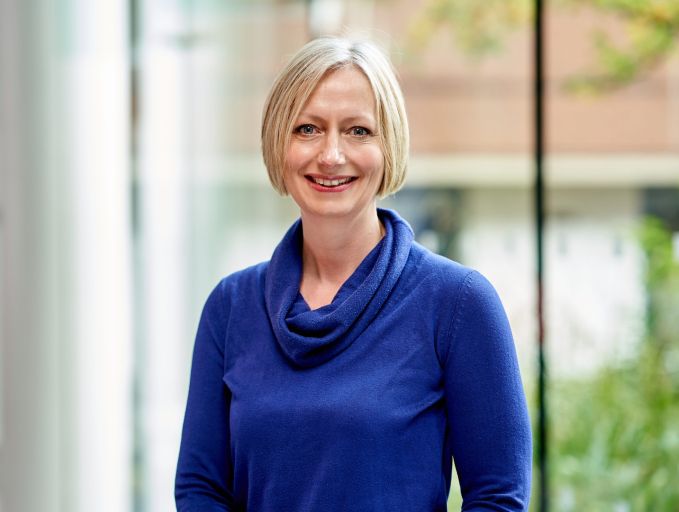
Aston University’s Dr Amanda Hall co-led the study with Dr Anisa Visram from the University of Manchester Deaf children and those with experience of childhood deafness have identified their top 10 research priorities including education and family relationships The project was funded by the National Deaf Children’s Society Deaf children and people with experience of childhood deafness from across the UK have come together to highlight what matters most to children affected by deafness and hearing loss, as part of a project funded by the National Deaf Children’s Society (NDCS). From 2023 to 2025, a team of parents, young people and health and education professionals set out to compile a list of the ‘Top 10’ most important questions that researchers should be trying to answer about childhood deafness and hearing loss. The project was co-led by Dr Amanda Hall, a senior lecturer in audiology at Aston University, and Dr Anisa Visram from the University of Manchester in conjunction with researchers at Lancaster University. The hope is that it will ultimately lead to more research into childhood deafness, in the specific areas it’s needed most. Children highlighted the potential impact of them missing out on things happening around them when interacting with their peers as their top priority, demonstrating the importance of social development for deaf children. Family relationships and educational needs ranked as high priorities for both adults and children, coming in the top 3 for both groups. Adults ranked educational needs as number 1, highlighting the importance of supporting deaf children in schools, particularly those with additional needs. Other important areas for research included understanding what support is needed for children with mild and unilateral (on one side) deafness, the impact of language deprivation on deaf children and how deaf children can be supported to understand their deafness and become empowered to advocate for themselves as they grow up into deaf adults. Several hundred respondents contributed to the project through a series of online surveys. Children were involved through activity-based focus groups. Respondents submitted over 1,200 ideas for research questions in the initial surveys. These were summarised into a list of 59 unique questions, and a second survey was used to prioritise the questions. The top 21 questions were then taken to two final full-day workshop where participants collaborated to choose their top 10 priorities. The research team used what’s known as a James Lind Alliance (JLA) priority-setting process to ensure the robustness of the project. Participants reported feeling valued as part of the project and satisfied that their feedback is reflected in the final lists. One of the children who took part in the workshop said: “I learnt that my voice matters and I can make a difference for me and other deaf children.” Dr Hall said: “It has been a real privilege to be part of this JLA partnership, working alongside deaf young people, families of deaf children and professionals to identify our two sets of top 10 research questions. We hope this is just the beginning of more research that reflects what matters most to deaf children, their families and professionals, and of more opportunities to work together.” Dr Visram said: “This has been an incredible project to work on with an amazing, committed, and diverse stakeholder group feeding into the process at all stages. We have formed important collaborations with deaf young people, parents of deaf children, and a whole range of professionals working with deaf children. The group plan to keep working together to promote the Top 10 lists and help develop research projects to start to answer these important questions.” Juliet Viney is a parent to a deaf child and has supported the project as a parent partner. She said: “It has been an absolute privilege working as a parent partner developing our Top 10 most important research questions for childhood deafness. This project has brought together and empowered deaf children and young people, parents and professionals from across the UK; using their valuable lived experiences to provide them with a strong voice to guide researchers towards addressing what is most needed to improve deaf children's educational, health, social and emotional outcomes. I am excited to see which questions will be pursued in further research and the positive impacts these will have on the lives of deaf children!” Dr Sian Lickess, Research and Analysis Lead at the National Deaf Children’s Society, said: “We are proud to have supported this important partnership, which has brought together the voices of deaf children, their families and professionals to shape future research priorities. The resulting Top 10 lists represent an important step toward ensuring research is aligned with real-world needs and is meaningful to those most affected. We look forward to the impact this work will have on improving outcomes for deaf children.” The full list of priorities identified can be found at: www.childdeafnessresearch.co.uk. As well as the National Deaf Children’s Society, several other partners have also contributed to the project. These include the Professor Kevin Munro’s National Institute for Health and Care Research (NIHR) Senior Investigator award, NIHR Manchester Biomedical Research Centre, PF Charitable Trust, Research England’s QR Participatory Research Fund to Lancaster University, and UKRI Future Leaders Fellowship MR/X035999/1.



America's literacy emergency continues; experts available with solutions
September is more than back-to-school season. It is also National Literacy Month. This return to the classroom and yearly recognition remind us of the urgent need to ensure every child has the literacy skills to thrive in school and beyond. One such example of this is Delaware. Despite recent gains in statewide test scores, Delaware leaders have warned: a literacy emergency persists. Too many children – especially those from marginalized communities – are still being left behind in reading proficiency. The University of Delaware’s College of Education and Human Development is helping to change that. CEHD’s literacy experts are advancing research, building partnerships, and equipping educators with evidence-based strategies that make an impact. Annastasia Purinton and Steve Amendum work with the WTG Foundation to strengthen school-community partnerships that bring literacy support directly to students who need it most. Stephanie Del Tufo, whose recent essay in The Conversation spotlighted the science of reading, studies how early learning and memory processes shape literacy development. Adrian Pasquarella focuses on multilingual learners, helping educators bridge language learning and literacy growth – an area of growing importance in Delaware’s diverse classrooms. Rebecca Joella and colleagues at the Delaware Institute for Excellence in Early Childhood are leading professional development efforts that equip early educators to foster strong literacy skills from the start. These experts bring research to life – translating what works in the classroom into scalable practices and policies. Their work underscores a powerful truth: literacy is not just an academic milestone, it is the foundation for opportunity, equity and lifelong success. As Delaware and the nation confront the literacy crisis, CEHD stands at the forefront with the evidence, expertise and partnerships to make a lasting difference. To speak to any of these experts, please email mediarelations@udel.edu.

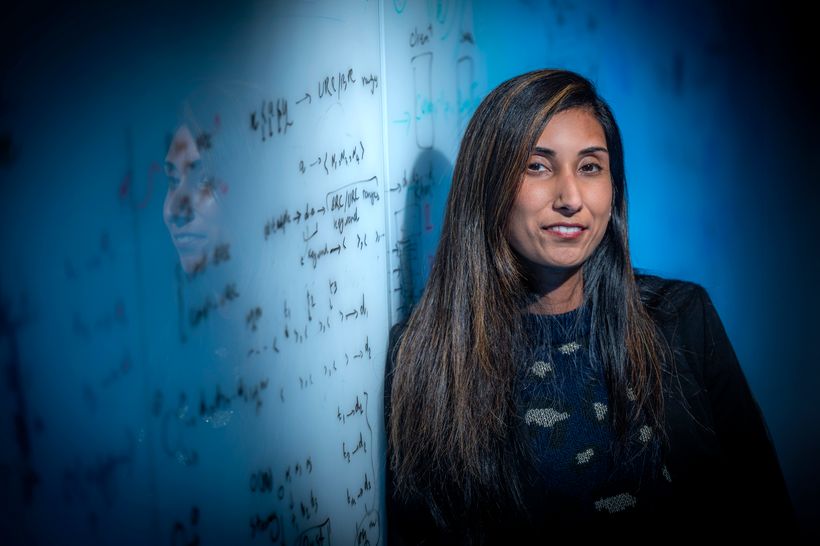
Ask an Expert: Augusta University's Gokila Dorai, PhD, talks Artificial Intelligence
Artificial Intelligence is dominating the news cycle. There's a lot to know, a lot to prepare for and also a lot of misinformation or assumptions that are making their way into the mainstream coverage. Recently, Augusta University's Gokila Dorai, PhD, took some time to answer some of the more important question's she's seeing being asked about Artificial Intelligence. Gokila Dorai, PhD, is an assistant professor in the School of Computer and Cyber Sciences at Augusta University. Dorai’s area of expertise is mobile/IoT forensics research. She is passionate about inventing digital tools to help victims and survivors of various digital crimes. View her profile here Q. What excites you most about your current research in digital forensics and AI? "I am most excited about using artificial intelligence to produce frameworks for practitioners make sense of complex digital evidence more quickly and fairly. My research combines machine learning with natural language processing incorporating a socio-technical framework, so that we don’t just get accurate results, but also understand how and why the system reached those results. This is especially important when dealing with sensitive investigations, where transparency builds trust." Q. How does your work help address today’s challenges around cybersecurity and data privacy? "Everyday life is increasingly digital, our phones, apps, and online accounts contain deeply personal information. My research looks at how we can responsibly analyze this data during investigations without compromising privacy. For example, I work on AI models that can focus only on what is legally relevant, while filtering out unrelated personal information. This balance between security and privacy is one of the biggest challenges today, and my work aims to provide practical solutions." Q. What role do you see artificial intelligence playing in shaping the future of digital investigations? "AI will be a critical partner in digital investigations. The volume of data investigators face is overwhelming, thousands of documents, chat messages, and app logs. AI can help organize and prioritize this information, spotting patterns that a human might miss. At the same time, I believe AI must be designed to be explainable and resilient against manipulation, so investigators and courts can trust its findings. The future isn’t about replacing human judgment, but about giving investigators smarter tools." Q. What is one misconception people often have about cybersecurity or digital forensics? "A common misconception is that digital forensics is like what you see on TV, instant results with a few keystrokes. In reality, it’s a painstaking process that requires both technical skill and ethical responsibility. Another misconception is that cybersecurity is only about protecting large organizations. In truth, individuals face just as many risks, from identity theft to app data leaks, and my research highlights how better tools can protect everyone." Are you a reporter covering Artificial intelligence and looking to know more? If so, then let us help with your stories. Gokila Dorai, PhD, is available for interviews. Simply click on her icon now to arrange a time today.


University of Delaware secures $13.1M grant to transform Alzheimer’s research and prevention
A new five-year $13.1 million grant will greatly expand the ability of University of Delaware researchers to pursue ways to prevent and treat Alzheimer's disease. The gift from the Delaware Community Foundation (DCF) is one of the largest in state history for Alzheimer’s research. UD's Christopher Martens called the grant "transformational," as it will support the expansion of a statewide prevention study, enable the purchase of a state-of-the-art MRI machine and drive discovery of new diagnostic tools and treatments. “It will also help grow the number of researchers in Delaware focused on Alzheimer’s disease, promoting an interdisciplinary approach." said Martens, director of UD's Delaware Center for Cognitive Aging Research (DECCAR) and professor of kinesiology and applied physiology in the College of Health Sciences. Bringing together researchers from multiple fields to collaborate on a critical challenge like Alzheimer’s disease is a key strength of the University of Delaware, said Interim President Laura Carlson. “Every one of us has a family member or friend who has been deeply affected by Alzheimer’s. I’m proud that UD is working better to understand this terrible disease and partnering with others throughout the state to work on its prevention, diagnosis and treatment,” Carlson said. “We are grateful to the Delaware Community Foundation for their support, which allows us to escalate our research and expand our community outreach.” “No one has to look very far afield to witness and understand the tragedy of Alzheimer’s, and the research supported by this grant will help UD researchers come ever-closer to uncovering life-improving and life-saving solutions,” said Stuart Comstock-Gay, President and CEO of the Delaware Community Foundation (DCF). “The grant was provided through the generosity of late Paul H. Boerger, who made a substantial legacy gift to the fund he had established at the DCF in his lifetime, and his foresight will help so many.” The gift is aimed at achieving the following goals: • Tracking Alzheimer’s risk over time – Expanding Delaware’s largest study of brain aging from 100 to 500 participants to uncover who develops dementia and why. • A simple blood test for early detection – Developing a first-of-its-kind test that could diagnose Alzheimer’s years earlier than current methods. • Cutting-edge brain imaging – Installing a $3.2 million MRI machine on UD’s STAR Campus to reveal hidden brain changes linked to memory loss. • Spotting the earliest warning signs – Exploring how subtle shifts in language and menopause-related hormone changes may predict Alzheimer’s risk. • Fueling prevention and cures – Creating powerful data and tools that will accelerate new treatments and bring researchers closer to stopping Alzheimer’s. To reach Martens for an interview, visit his profile and click on the "contact" button. Interviews with DCF officials can be arranged by emailing MediaRelations@udel.edu.
The Sky’s the Limit: Researching surface impacts to improve the durability of aircraft
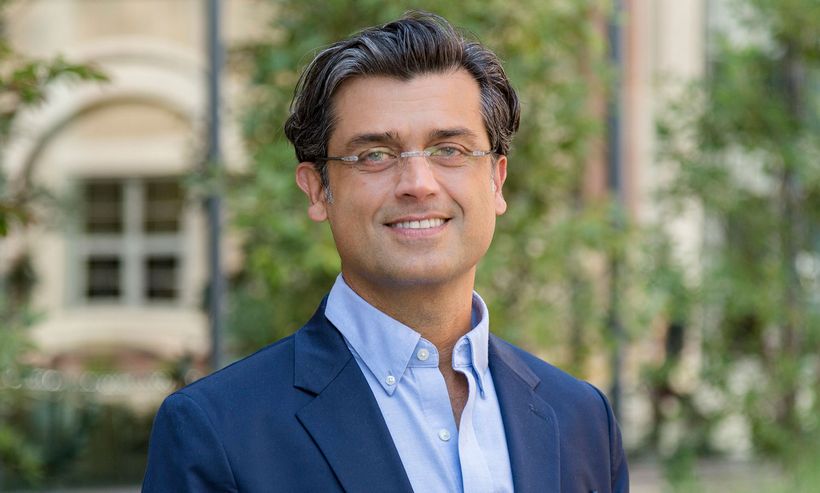
Associate professor Ibrahim Guven, Ph.D. from the Department of Mechanical and Nuclear Engineering is conducting a research project funded by the Department of Defense (DoD) that explores building aircraft for military purposes and civilian transportation that can travel more than five times the speed of sound. Guven’s role in this project is to consider the durability of aircraft surfaces against elements such as rain, ice, and debris. His research group is composed of Ph.D. students who assist with the study and has collaborated with other institutions, including the University of Minnesota, Stevens Institute of Technology and the University of Maryland. Why did you get involved with this research project? The intersection of need and our interests decides what we research. I’m interested in physics and have been working on methods to strengthen aircraft exteriors against the elements for 12 years. We started with looking at sand particle impact damage, and then we graduated from that to studying raindrop impact because that’s a more challenging problem. Sand impact is not as challenging in terms of physics. A liquid and a solid behave differently under impact conditions. The shape of the raindrop changes prior to the impact due to the shock layer ahead of the aircraft. Researching this impact requires simulating the raindrop-shock layer interaction that gives us the shape of the droplet at the time of contact with the aircraft surface. Unlike with sand, analyzing raindrop impact starts at that point, which requires accurate modeling of the pressure being applied. As the aerospace community achieves faster speeds, there’s a need to understand what will affect a flight’s safety and the aircraft’s structural integrity. That need is what I’m helping to fulfill. Were there any challenges you and your research group faced while working on this study? How did you overcome them? Finding data was hard. I’m a computational scientist, meaning I implement mathematical differential equations that govern physics to write computer code that predicts how something will behave. My experiments are virtual, so to ensure that my models work well, I need experimental data for validation. However, conducting experiments on this problem is extremely challenging. That’s the roadblock. Currently, we refer to data from the seventies and eighties. Beyond that, this kind of information is not available. We are working to generate data that my computational methods need for their validation. An example is the nylon bead impact experiment. Some researchers found that if you shoot a nylon bead at a target, it leads to damage similar to that from a raindrop of the same size. It is much easier and cheaper to shoot nylon beads compared to the experiments involving raindrops. However, this similarity vanishes as we go into higher velocities. How do you typically gather data for a project of this nature? We are working with a laboratory under the U.S. Navy. They can accelerate specimens to relevant speeds, meaning they can shoot them into the air at the desired velocity. A colleague at Stevens Institute of Technology also came up with a droplet levitator. He uses acoustic waves emitted by tiny speakers to play a certain sound at a certain frequency to create enough air pressure to suspend droplets midair. To an untrained eye, it looks like magic. They levitate droplets and use a railgun to shoot our samples at the droplets. Our samples hitting the droplets are stand-ins for the aircraft surface material. Once this is done successfully, they shoot a sample with high-speed cameras that can take ten million frames per second. As a result, we get a good, high-fidelity picture of this impact event. That is the type of data I’m seeking, and this is how I get it from my collaborators. What was your overall experience working with the students in your research group? I like to think it was positive. I try to be a nice advisor and give them space to explore, fail, and bring their own ideas. Even if I feel like we’re at a dead-end, I step back and let them figure it out. My role is to help them grow. Teach them, train them and help them along the way. That’s the experience. Did you notice any personal changes in your students during this project? Yeah, I have. When they’re just out of their undergraduate programs, confidence is lacking sometimes. You see them become more sure of themselves as they learn more and more. Often, regardless of whether English is their native language or not, writing is a big issue for every student. How one presents ideas in written form is a persistent problem in engineering. I see the most growth in that area. Again, an advisor has to be a guide and also have patience. Eventually, after working on multiple paper drafts, I can see tremendous improvement. You must allow them to see their shortcomings. It’s important to work with students to refine how they frame a problem, explain it to a wide audience in concise terms, and use neutral language without leading them to certain conclusions. Why do you think that this research is important? Somebody has to do it, right? I believe that I’m the right person because of my background. Personally, I think if this research makes for safer travel conditions, and if I have something to offer, then why not? If we can accurately simulate what happens in these conditions, we can use our methods to test out designs for damage mitigation. For example, we can perform simulations with different surface materials for the aircraft to see if using a different material or layered coating system leads to less damage. In a bigger picture, we’re working on a very narrow problem in our field, but we don’t know how useful that’s going to be in 10, 15 or 30 years from now. Whatever we study and put out there in terms of publications, it may help some other researcher in a different context many years later. This could be space research, modeling an atmosphere on a different planet, or something that is related to our bodies. There are parts of physics in this problem that do not necessarily only apply to high-speed flight. It could be many different things. One has to understand that what is studied may seem obscure today, but because the universe is more or less governed by the same physics, everything should be put in a theoretical framework, done right and shared with the community. People may learn things that could become relevant in the future. It’s not uncommon. What is another subject that you plan to study? The next natural step is coming up with strategies to mitigate damage in these scenarios. If avoiding a risk is not an option, can we actually come up with a solution? We have to determine how to modify an aircraft’s design to prevent a catastrophe. Another extension of my research would be to examine the landing of spacecraft on dusty planetary bodies. During landing on Earth, aircraft approach and reach the ground very smoothly. On the other hand, a spacecraft comes down slowly and needs a lot of reverse propulsion for a soft landing. As it does, it kicks up a large amount of dust, which blows back and hits the spacecraft. Taking into account the damage that occurs due to particle impact is a direct connection to my work. This again is an open area, and because we have ambitions to have a permanent presence on dusty places like the moon and Mars, we have to nail down the concept of landing safely. That is where my research could help.

