
Experts Matter. Find Yours.
Connect for media, speaking, professional opportunities & more.
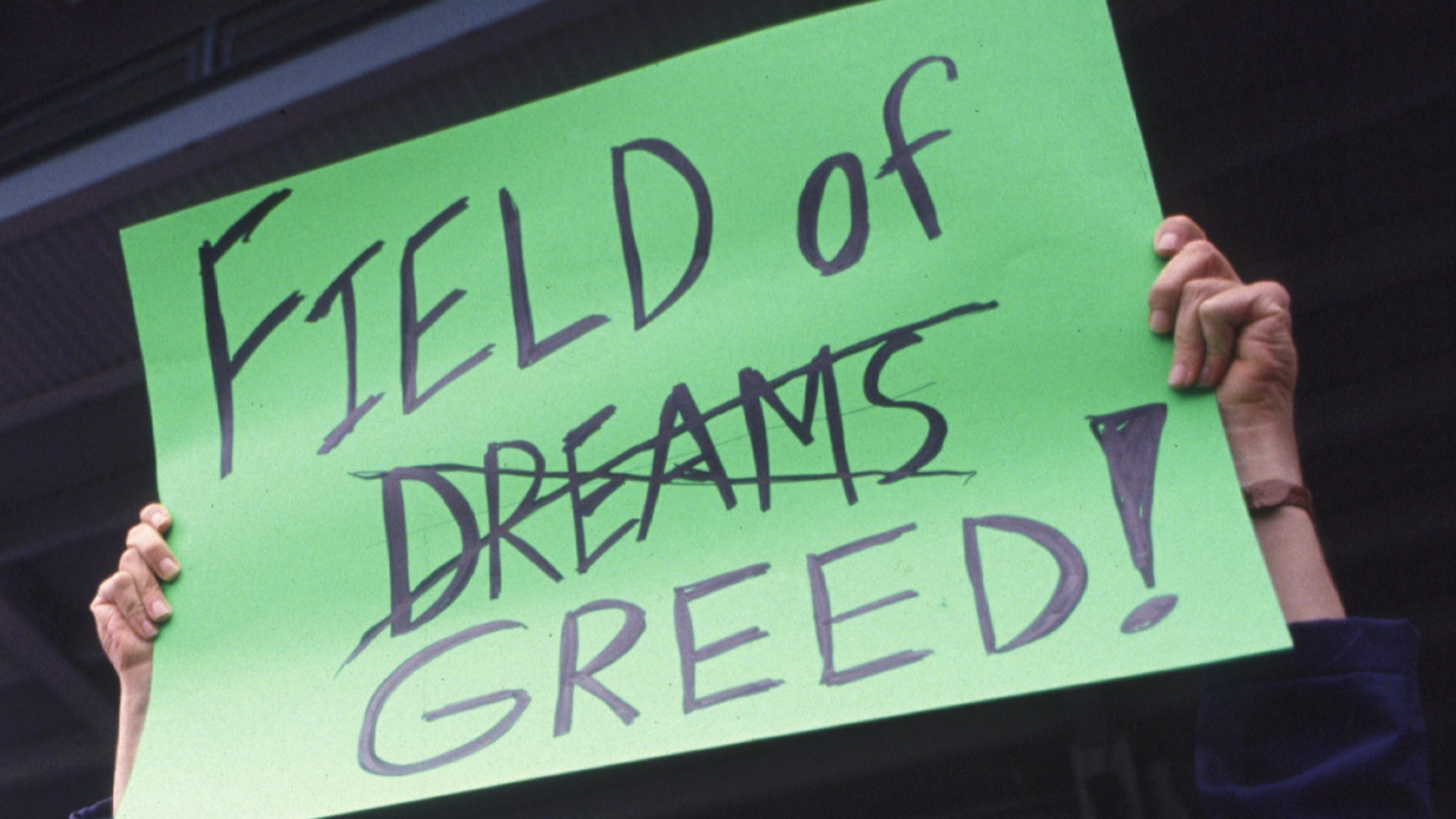
In any disagreement or dispute, sides are taken - by those involved, by those invested or sometimes just by those most interested in the conflict that is occuring. And when it comes to the matter of superstar athletes squaring off against billionaire owners, it's often the fans that speak the loudest and media are doing their best to cover both sides - and get to the root of the matter. Lately, experts from IU's Kelley School of Business have been front and center - providing expert perspective, opinion and analysis. And earlier this month as players were locked out - Nathaniel Grow was getting calls by reporters for insight. “The players have been seeing their financial position deteriorate over the last few cycles, and the last few years in particular, when the average player salary has declined, which is unprecedented for MLB,” said Nathaniel Grow, an associate professor of business law and ethics at Indiana University’s Kelley School of Business who has written extensively on baseball’s CBA topics and issues for several years. “Within that bucket is the service-time manipulation, which helps feed into some of these salary issues.” “The players don’t think they’re getting a fair shake, is a fair general consensus. The question becomes, where do they go and how do they try to improve their financial position?” December 02 - Sporting News The ongoing labor dispute between players and owners will be long, protracted and at times tense - and if you are a reporter looking to cover this trending topic, then let us help with your stories and questions. Nathaniel Grow is an Associate Professor of Business Law and Ethics and the Yormark Family Director of the Sports Industry Workshop. He's also an expert in the areas of sports and labor law. Grow is frequently quoted by media outlets such as The Washington Post, The Wall Street Journal and ESPN regarding current legal issues in the sports industry. Nathianiel is available to speak with media regarding the MLB lockout - simply click on his icon now to arrange an interview today.


Nathaniel Grow, a nationally recognized expert in the field of sports law and an associate professor of business law and ethics at the Indiana University Kelley School of Business, has published numerous articles on the application of federal antitrust and labor law to the professional sports industry, with a particular focus on Major League Baseball. He has been closely following developments and would glad to serve as an expert for reactions and analysis of developments. The author of 17 law review articles, as well as an award-winning book, Grow has received a number of prestigious research honors for his academic work. Grow is frequently quoted by media outlets such as The Washington Post, The Wall Street Journal and ESPN regarding current legal issues in the sports industry. He can be reached at grown@iu.edu and 812-855-8191.

UCI scientists study the effects of an oil spill on Orange County's coastline
Joana Tavares and Melissa Brock, a Ph.D student in ecology and evolutionary biology, are spearheading the newly formed Southern California Oil Spill Project at UCI. They are analyzing the composition and health of the phytoplankton and bacterial communities in the ocean and inland waterways, using samples collected before, during, and ultimately after the oil spill situation has played out. Also, the cleanup of the oil spill off the coast of Huntington Beach earlier this month is essentially complete, but responsibility for the spill has yet to be assigned. In the coming months, and possibly years, it will be the legal system that determines liability — and damages. Michael Robinson-Dorn, a clinical professor of law, co-associate dean for experiential education at the law school and director of UCI’s Environmental Law Clinic, joins the UCI Podcast to discuss how this spill compares to past ones, why simply shutting down offshore drilling is more challenging than it may seem and how society’s values will shape the future of oil drilling in California. For more information or to contact the researchers, email Brian Bell at bpbell@uci.edu.


International trade expert on U.S.-China trade relationship
Timothy Meyer, professor of law, is available for commentary on U.S. Trade Representative Katherine Tai's assessment of China's unfair trade practices. Tim is an expert in public international law, with a specialty in international trade. His current research examines how international economic agreements relate and respond to concerns about economic opportunity and inequality. He can discuss: Economists' longstanding monitoring of the data, which clearly finds that China is not living up to its commitments. How Tai's comments point to the Biden administration taking a hard line on China - potentially even a harder line than the Trump administration was willing to take regarding enforcement.


Employment law expert on COVID-19 vaccine mandates
Jennifer Shinall, professor of law, is available for commentary on employer and federal COVID-19 vaccine mandates. Shinall is an expert in employment law and discrimination and can speak to: Employers' rights to mandate the COVID-19 vaccine and enforce it as a term of employment Historical precedence of vaccine mandates Exceptions companies should consider for the unvaccinated, including masks, social distancing and testing Considerations for employees who do not want to receive the COVID-19 vaccine, including lack of unemployment benefits if terminated


Baylor Expert: 9/11 Reshaped Every Aspect of American Life – Not Necessarily for the Better
English professor, culture expert says terror attacks damaged America, but it’s not too late to recover sense of purpose and generosity The Sept. 11, 2001, terrorist attacks on the World Trade Center and the Pentagon continue – 20 years later – to have profound effects on everything from America’s political, religious and cultural polarization to American entertainment choices, said Baylor University faith and culture expert Greg Garrett, Ph.D., professor of English. “It shouldn’t surprise anyone that an event that shook our sense of security and our identity would be reflected in every aspect of American life,” Garrett said. “But what does surprise and alarm me is the degree to which 9/11 continues to shape our attitudes about race, religion, immigration and the Other, whether that Other is in Afghanistan or just across town. The United States initiated a perpetual war against terror in response to the 9/11 attacks, and the fear that took root in the American psyche has proven difficult to shake.” Garrett, author of more than two dozen books, is internationally recognized as an expert on faith, culture, race and story, and he argues that the reaction to 9/11 can be measured just as much through literature and culture as through accounts of executive orders and covert military operations. Country music, procedurals and reality TV after 9/11 “Initially, Americans supported the War on Terror across political, religious and cultural lines,” Garrett said. “Country musicians like Toby Keith leaned into militant songs about American greatness and righteous revenge. The top-selling act the Chicks (then the Dixie Chicks) was drummed out of country music for their public stand against going to war. The TV show 24 reflected the growing darkness of America’s extra-legal approach to that war—the willingness to use torture, rendition and the opening of a dark site in Guantanamo Bay to house suspected terrorists—and it actually shaped opinion and policy as it grew in popularity and influence.” Two other types of television shows became extremely popular as a result of 9/11, Garrett said. Procedurals (shows such as CSI, Law and Order and House, M.D.) gained a new popularity because they offered viewers something the ongoing War on Terror never could or will: closure. “A serious problem was introduced in every episode, grappled with and solved by the end of an hour,” he said. Another type of show that leapt in popularity in the months and years following the attacks – reality shows – offered “train-wreck escapism,” Garrett said. “The contestants on Survivor and The Bachelor, and the wayward souls on Jersey Shore and Keeping Up with the Kardashians, presented exaggerated versions of our present moment that allowed viewers to forget about the dark actuality of the times,” he said. Springsteen, Harry Potter and critiquing ‘moral failures of the War on Terror’ Not all popular culture offered reinforcement or escapism, Garrett said, adding that some of the most powerful pop culture from 2001 onward critiqued the “moral failures of the War on Terror and critiqued the American people for so readily accepting them.” “Punk rock, always a prime medium for protest, was one of the earliest forms of dissent,” Garrett said. Green Day’s 2004 album American Idiot reached the top of the charts in the United States and 18 other countries, ultimately selling 16 million albums. But mainstream acts like Bruce Springsteen also asked complicating questions about the attacks and their aftermath. “After primarily offering empathy and comfort in The Rising (2002), Springsteen realized that America had betrayed many of its most important ideals, as revealed by songs like ‘Your Own Worst Enemy’ on the No. 1 2007 album Magic,” Garrett said. “Later novels in J. K. Rowling’s Harry Potter series, the most popular fictional narrative of all time, introduce questions of torture and terror, and powerful TV dramas like Battlestar Galactica and the British import Doctor Who also criticize the choices made by the American government and its allies.” Zombies and the Apocalypse Perhaps the most significant byproduct of 9/11 in our culture is the resurgence in apocalyptic stories such as 28 Days Later, Sean of the Dead, The Walking Dead, Game of Thrones, World War Z and The Road, Garrett said. Stories about the Zombie Apocalypse – whether in games, books, comics, TV or movies – asked serious questions about what it means to be human, and about what moral compromises a person might be willing to take to stay alive, Garrett explained. They also reflected the new 24/7 sense of encroaching menace that “seeped into our culture and lit up our phones at all hours of the day and night.” “You could fight all day every day against this menace, these creatures who look like humans but seek your destruction. And then the next morning, you still have to rise and confront it again,” Garrett said. ‘Not too late’ “People 20 years ago said that 9/11 changed everything, and so it did.” Garrett said. “But 20 years later it is not too late to recognize that the fears those attacks brought to the surface don’t have to be the way we continue to live. In my faith tradition, Jesus constantly admonishes his followers not to be so afraid. We make bad and selfish decisions out of fear. We abridge hospitality, compassion and liberty when we believe we are endangered. That’s not the America I grew up in, and it’s not the America in which I hope to die. That America, the light of the world, the city on a hill, Lady Liberty lifting her torch to welcome all, is the America that our founders dreamed, and that we can dream once again.” ABOUT GREG GARRETT, PH.D Greg Garrett, Ph.D., is a professor of English at Baylor University and Theologian-in-Residence at the American Cathedral of the Holy Trinity in Paris. An award-winning professor, Garrett has written about 9/11 and its aftermath in a number of books, including One Fine Potion: The Literary Magic of Harry Potter (Baylor University Press), Living with the Living Dead: The Wisdom of the Zombie Apocalypse, and A Long, Long Way: Hollywood’s Unfinished Journey from Racism to Reconciliation (both Oxford University Press). ABOUT BAYLOR UNIVERSITY Baylor University is a private Christian University and a nationally ranked research institution. The University provides a vibrant campus community for more than 19,000 students by blending interdisciplinary research with an international reputation for educational excellence and a faculty commitment to teaching and scholarship. Chartered in 1845 by the Republic of Texas through the efforts of Baptist pioneers, Baylor is the oldest continually operating University in Texas. Located in Waco, Baylor welcomes students from all 50 states and more than 90 countries to study a broad range of degrees among its 12 nationally recognized academic divisions. ABOUT THE COLLEGE OF ARTS & SCIENCES AT BAYLOR UNIVERSITY The College of Arts & Sciences is Baylor University’s largest academic division, consisting of 25 academic departments and eight academic centers and institutes. The more than 5,000 courses taught in the College span topics from art and theatre to religion, philosophy, sociology and the natural sciences. Faculty conduct research around the world, and research on the undergraduate and graduate level is prevalent throughout all disciplines. Visit baylor.edu/artsandsciences.



UCI scholars discuss how 9/11 changed America
In recognition of the 20th anniversary of the Sept. 11, 2001, terrorist attacks in the U.S., we asked UCI scholars a single question: How did 9/11 change America? They responded according to their expertise – which ranges from collective trauma, media, air travel, foreign relations, false narratives, political divisiveness, and the war on terror. Contact Tom Vasich at 949-285-6455, tmvasich@uci.edu, to arrange interviews. Roxane Cohen Silver, Distinguished Professor of psychological science, public health and medicine E. Alison Holman, professor of nursing Topic: Media and collective trauma Quote: “The Sept. 11 terrorist attacks – which hijacked our television screens that Tuesday morning as people who sought to do us harm hijacked four airplanes – captured people’s attention throughout the days and weeks that followed. It also ushered in 24/7 media attention to what has become known as a “collective trauma,” transmitting the horrible events of that day throughout the country and, indeed, throughout the world in a matter of seconds. …The 9/11 attacks were tragic for American residents, but they also taught us that the media can broadcast distress alongside the news it’s covering.” Jan K. Brueckner, Distinguished Professor of economics Topic: Air travel Quote: “In response to the revenue shock of 9/11 and to new competition from low-cost carriers, the major airlines behaved conservatively in adding back capacity as traffic returned, so that the carriers eventually offered fewer seats to an ultimately larger number of passengers, leading to fuller flights and today’s less comfortable flying experience. Even though 9/11 is long past, the airline industry continues to operate in a climate of fear of terrorism from the air.” Erin Lockwood, assistant professor of political science Topic: U.S. foreign policy Quote: “The attacks – and the U.S. response – set in motion decades of war, anti-Arab and anti-Islamic bias and violence, and a willingness to sacrifice military and civilian lives and civil liberties for the perception of security. As we mark the withdrawal of U.S. forces from Afghanistan this month, it’s all too apparent that many of those trends continue to reverberate today.” David Kaye, clinical professor of law Topic: National security Quote: “Despite my hopes for something better that might emerge, the attacks reinforced a cult of national security that the United States transformed into the torture of terrorism suspects, drone warfare, the invasion of Iraq, Guantanamo Bay’s indefinite detentions, anti-Muslim discrimination at home and the emergence of the contemporary surveillance state. … The predominance of national security as an ideology and apologia remains among the most significant legacies of that day, a feature of American political life that continues to constrain creativity and a return to normalcy in American law and policy.” Matthew Beckmann, associate professor of political science Topic: War on terror Quote: “To understand the legacy of 9/11 is to define the legacy of George W. Bush. For after the deadliest terrorist attacks on U.S. soil in our nation’s history, American citizens and lawmakers gave President Bush broad support and broader authority to wage the “war on terror” as he saw fit. … Twenty years after the attacks, having seen those lofty aspirations dashed in Afghanistan and Iraq, disregarded in Guantanamo Bay and black site prisons, and discounted even by our staunchest allies, the biggest legacy of Sept. 11 for the United States is that the “shining city on a hill” has less luster and a shorter reach.” David Theo Goldberg, professor of comparative literature Topic: Rise of false narratives Quote: “The events of 9/11 lent themselves to make-believe. The smoke hadn’t yet cleared when conspiracies began to abound, from “weapons of mass destruction” to “the deep state.” That the Trump administration adopted this as its own playbook while insisting on “draining the swamp” required cooking the rules. … Fabrication had become the rule book of the game. Invention and inventedness, disruption and innovation fueled the movement. The “truth” was, well, oh so yesterday.”
Aston Law School corporate governance experts launch new book on investor stewardship
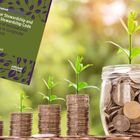
Dr Daniel Cash and Robert Goddard co-wrote Investor Stewardship and the UK Stewardship Code: The Role of Institutional Investors in Corporate Governance The book will be relevant for an international audience of academics, regulators and policymakers in financial regulation, investment regulation and financial services It coincides with the publishing of the Stewardship Code 2020 signatories as part of a new regulatory code by the Financial Reporting Council (FRC) Two members of Aston Law School have released a new book around investor stewardship to coincide with a major milestone by the Financial Reporting Council (FRC). The FRC published the first main list of Stewardship Code 2020 signatories on 6 September 2021, after a round of reporting earlier this year. This milestone details who is following the Code and allows the regulator to focus on holding signatories to the articulated standards of stewardship and how it is reported. The new book by Dr Daniel Cash and Robert Goddard, Investor Stewardship and the UK Stewardship Code: The Role of Institutional Investors in Corporate Governance, provides a critical assessment of the development of the Stewardship Code 2020, which sets out principles regarding the role of institutional investors in corporate governance. It discusses how the regulatory framework for stewardship evolved before and after the financial crisis, and how that evolution resulted in the 2020 Code. It also critiques the Code from a practical and academic perspective, as well as evaluating the wider regulatory framework; in particular, the position of the FRC merging into the Audit, Reporting and Governance Authority (ARGA). Dr Daniel Cash, senior lecturer in law at Aston Law School, said: “The Stewardship Code is a big deal in British governance, and that is exactly what the book looks at. “It examines the history of the stewardship Codes and regulation in the UK, and uses this to critically examine the new 2020 Code. “That critical analysis leads into projections of how the Code may fare in the modern business environment, aspects that may affect its progression, and puts forward elements that can make the Code’s impact more substantial. “This important regulatory development will play a massive role in aligning the actions of investors with the wider societal needs in the new world being dominated by ESG concerns. “Stewardship Codes modelled on the UK’s original 2010 version have been introduced in numerous markets and, as such, the book will be relevant for an international audience of academics, regulators and policymakers in financial regulation, investment regulation and financial services.” You can buy a copy of Investor Stewardship and the UK Stewardship Code: The Role of Institutional Investors in Corporate Governance here.


The use of swear words declines by more than a quarter in the UK since the 1990s – new research
Aston University’s Dr Robbie Love compared the use of 16 of the most common swear words between 1994 and 2014 He found the amount of swearing has fallen by 27.6 per cent during the 13-year period The study also found that the f-word has overtaken 'bloody' as UK's most popular curse word Researchers from Aston University have found that the use of swear words in Britain has declined by more than a quarter since the 1990s. Dr Robbie Love, based in the College of Business and Social Sciences, looked at how swearing changed in casual British English conversation between 1994 and 2014. As part of the study, which is published in Text & Talk: An Interdisciplinary Journal of Language, Discourse & Communication Studies, Dr Love used two large bodies of transcriptions to analyse the use of language, including: The Spoken British National Corpus gathered in 1994 and the same corpus from 2014. Both texts include over 15 million words, although it was found that swear words accounted for less than one per cent. In total, the amount of swearing was found to have fallen by 27.6 per cent, from 1,822 words per million in 1994 to 1,320 words per million in 2014.The research findings also suggest that the f-word has overtaken 'bloody' as the most popular curse word in the UK. In the study, Dr Love compared the use of 16 of the nation's most common swear words, including p***, c*** and s**g, from the 1990s to the 2010s. He also found that trends in the type of swear words used have changed over the last few decades , with 'bloody' being the most common curse word in the 1990s and the f-word taking precedent in the 2010s. The analysis suggests that this is largely down to a big decline in the use of 'bloody',while the f-word has remained relatively steady over the years. It was also found to be the second most commonly used swear word in 1994, followed by s**t, p***, b****r and c**p. Other key findings of the study included: Over a twenty year period b****r had fallen from the fifth most common curse to the ninth, while b*****d dropped from seventh to 10th. The big climbers include s**t, from third to second, a**e, from eighth to sixth and d***, from tenth to seventh. T**t also rose from the 16th most common swear word in the 1990s to 13th by the 2010s. Dr Love then analysed demographics and discovered that, although swearing is more common in men than women, the difference between the genders has decreased notably from 2.33 times more frequent in men in 1994 to 1.68 times in 2014. Another change concerned how much people swear as they age. In both data sets, swearing is most common among people in their 20s, and then declines with age. However, the decline was less steep in the 2010s, suggesting that people continue swearing later in life more than they did in the 1990s. Dr Robbie Love, lecturer in English at Aston University, said: “This research reinforces the view that swearing plays a part in our conversational repertoire, performs useful functions in everyday life and is an everyday part of conversation for many people. “Despite this, it is relatively under-researched precisely because it is considered to be taboo. “Swearing performs many social functions including conveying abuse and humour, expressing emotion, creating social bonds, and constructing identity. “The strong social conditioning around swear words makes them more psychologically arousing and more memorable than other words, and something different happens in the brain when saying them compared to euphemistic equivalents, such as saying "f***" compared to ‘the f-word’.” You can read the full study, Text & Talk: An Interdisciplinary Journal of Language, Discourse & Communication Studies, HERE If you want to explore how the written and spoken word works in society, Aston University's innovative English language and literature degrees are for you. We emphasise practical applications, linking your studies to the real world through professionally relevant modules in areas such as Language and Literature in Education, The Language of the Law, Psychology of Language and Communication or Language at Work.

What does the latest federal ruling mean for DACA? A UConn expert weighs in.
Deferred Action for Childhood Arrivals, more commonly known as DACA, was introduced in 2012, and ithas enabled roughly 828,000 eligible young adults to work, attend school, and live out their lives in the United States, the only country they know as their home, according to the American Immigration Council. DACA is back in news, though, after a federal judge in Texas ruled that the program was unconstitutional, a decision that attorney, scholar, and expert Jon Bauer from the UConn School of Law says is shaky: The decision in federal court wasn’t a surprise to Jon Bauer, who directs the University of Connecticut Law School’s Asylum and Human Rights Clinic. Because Hanen is known for his conservative judicial philosophy, according to Bauer, the ruling was expected to interfere with DACA in some capacity. But Bauer said the ruling could be overturned. “The reasoning of the decision is very weak, in my opinion. The judge, I think, misconstrued the scope of the Department of Homeland Security's authority to engage in what's called deferred action, which is what the DACA program is,” Bauer said. Connecticut has 3,560 residents who have DACA, as of March 2020, according to the Department of Homeland Security which administers the policy. Current recipients aren’t in immediate danger of losing their status, since the ruling as of now only prevents first time applicants from getting DACA. Bauer said that non-citizens have long been allowed to work with deferred action. While the federal government can conceivably attempt a legislative path to citizenship for DACA recipients, the road ahead to any permanent solution is uncertain due to the divisive nature of the current Congress. July 31, 2021 – Hearst Connecticut Media The fate of DACA is important not just to the individual recipients, but to the immigration system and economy of the United States more broadly. If you are a journalist looking to know more, then let us help. Jon Bauer is a clinical professor of law and is the director of the UConn School of Law’s Asylum and Human Rights Clinic. He is a go-to expert in the areas of asylum and refugee law, immigration law, employment and housing discrimination, and legal ethics. Professor Bauer is available to speak with media regarding this most recent DACA ruling – simply click on his icon now to arrange an interview today.

