Experts Matter. Find Yours.
Connect for media, speaking, professional opportunities & more.

Working while studying in Canada: What you need to know
Working during your studies in Canada can be a great way for international students to gain experience, make new connections in Canada, and earn extra money to pay the bills (or treat yourself to something special!). However, there are some restrictions on who can work while studying in Canada and what types of work they can do. Here’s what you need to know before you start your job search. Who can work while studying in Canada It’s important to make sure you qualify to work while studying in Canada before starting a job because, if you do so without qualifying, you could be asked to leave Canada. Your study permit will include information about whether you’re able to work on- or off-campus. International students can work on-campus without a work permit if they meet all of these requirements. (Note that you must stop working on campus the exact day your full-time study ends.) 1. You are a full-time post-secondary student at either: a public post-secondary school, a private college-level school in Quebec that’s at least 50 per cent funded by government grants, or a Canadian private school that can legally award degrees under provincial law. 2. You have a valid study permit. 3. You have a Social Insurance Number (SIN) International students can work off-campus without a work permit if they meet all the following requirements. (Note that you can only start work in Canada once your study program officially begins.) You’re a full-time student at a Designated Learning Institution (DLI) You’re enrolled in either a post-secondary professional, vocational, or professional training program or a secondary-level vocational training program (Quebec only) You’re in a study program that’s at least six months long and leads to a degree, diploma, or certificate You’ve already started studying You have a Social Insurance Number (SIN) If you’re a part-time student, you must meet all of the above requirements and only be studying part-time because you’re in the last semester of your program and don’t need a full course load to complete it. Types of work permitted On-campus work On-campus work means any jobs located in the buildings on your school campus. If your school has more than one campus, you can normally only work on the campus you study at. You can, however, work at other locations if you’re a teaching or research assistant, or if your work is related to a research grant. An on-campus employer can be your school, a faculty member, a student organization, a private contractor that provides on-site services, or even yourself if you run a business that’s physically located on campus. There is no limit to the number of hours you can work on campus. You can learn more about working on-campus here. Off-campus work If you meet all of the requirements for off-campus work, you may work up to 20 hours a week during regular school terms/semesters. During school breaks, such as winter or summer holidays, you’re free to work overtime or take two part-time jobs that add up to a higher than usual number of hours. Note you have to be a full-time student both before and after a break to qualify. This means the summer breaks before and after your study term are not included. You can find more information about off-campus work here. Internships and co-op placements Some study programs include work experience as part of their curriculum. If this applies to your program, you can apply for a co-op or intern work permit as long as you meet these requirements: You have a valid study permit Work is required to complete your program of study in Canada You have a letter from your school that confirms all students in your program need to complete work placements to earn their degree Your co-op or internship makes up less than 50 per cent or less of your study program During COVID, the Canadian government has made some exceptions for remote co-ops and internships. You can learn more about these here. Tips for working while studying in Canada Plan your schedule well. Between work and school, it can be easy to overcommit yourself– especially in your first year of study. It may be best to give yourself some time to adjust to your new schedule before seeking out additional work. Look for opportunities aligned with your field of study or ones that allow you to develop new skills (such as improving your English or French!). Jobs can have more benefits than just making money. Take this opportunity to learn outside the classroom and even make some valuable connections in your field. Consider future employment prospects with your employer. Canadian companies often offer full-time jobs to former interns or employees they’ve already worked with on a part-time basis. Use your co-op or part-time gig as a chance to get your foot in the door. Network in the workplace and ask your manager to give you a referral on LinkedIn to show future employers you’re a valuable asset to their team. In Canada, many positions are filled through recruiters networks, so building your network will be key to hearing about job opportunities. Take this opportunity to meet others in your field. Even if they don’t end up hiring you down the road, they may know someone else looking to fill a position. Be proactive. Don’t be afraid to ask your manager for additional opportunities or express your interest in working on a particular project. If you don’t ask, you don’t get! Ask for help when you need it. Canadian companies tend to be very team-oriented and encourage employees to ask for help when they need it. Asking a colleague or manager for help can be a learning and networking opportunity. Working while studying in Canada is a great way to make the most of your study permit. Finding the right job, internship, or co-op placement gives you an opportunity to learn new skills, make valuable connections, and further define your future career goals. Get access to more career resources and tips for international students by downloading the Arrive app. Original full article located here, published with edits by Arrive.

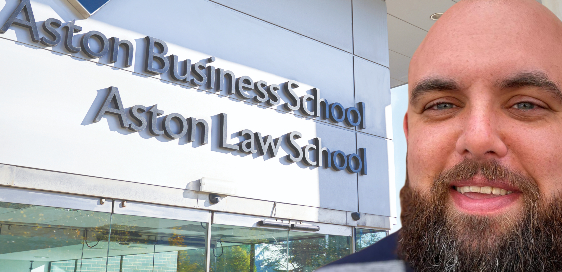
Aston University credit rating expert wins prestigious Fulbright scholarship
Aston Law School’s Dr Daniel Cash is the first member of the University to be awarded a Fulbright scholarship since Donald Biggs in 1974. The Fulbright Program is one of the largest and most prestigious educational exchange programs ever developed It has awarded over 8000 fellowships to students and scholars since its creation in 1946 by Senator J. William Fulbright An Aston University credit rating expert has been awarded a prestigious 12-month scholarship as part of the Fulbright Program in the United States of America. Dr Daniel Cash is the first member of Aston Law School to win one and is the first University staff member to enrol since Donald Biggs in 1974. He will start at New York University’s Stern Business School in April. Whilst there, he will be developing a sector-leading edited collection, bringing together the leading figures in credit rating research. He will also be creating articles on developments within the credit rating sector, and particularly the effect of credit rating agencies on the sovereign debt of the world’s poorest countries. Dr Cash said: “This is the accumulation of more than a decade’s worth of dreaming. I first visited New York in 2007 to try to gain some inspiration after a tough time in my life and ever since then have focused solely on moving over there. “I contacted a professor at NYU during my Masters in 2011 and have kept in touch with him since, even having Visiting Fellowships under him since being at Aston University. This Scholarship is the prize for all of that.” The Fulbright Program is one of the largest and most prestigious educational exchange programs ever developed. It has awarded over 8000 fellowships to students and scholars. Amongst its alumni counts are 39 Heads of State, 60 Nobel Prize Laureates, 75 MacArthur Foundation Fellows and 88 Pulitzer Prize Recipients. Professor George Feiger, executive dean of the College of Business and Social Sciences, who was himself a Fulbright Scholar at Harvard University, said: “The Fulbright Program is highly selective and exclusive and being awarded a scholarship through it is a phenomenal accomplishment for Daniel. It is a flagship initiative that is highly regarded globally and is a just reward for all of his hard work here at Aston University.”


Is a four-day workweek on the horizon?
Is Thursday about to become the new Friday? UConn’s Robert Bird spoke with the Washington Post about the possibility of a four-day workweek and what might be the driving force behind it: New Zealand's and Finland's prime ministers have floated the idea of a four-day workweek. The U.K. Labour Party in 2019 campaigned on the idea that workweeks would be shortened in the next decade. A number of employers have also begun to move in that direction. On Tuesday, Kickstarter announced it would reduce employees' hours without reducing pay next year, reported the Atlantic. Microsoft in Japan instituted a temporary three-day weekend in August 2019 - which resulted in a reported 40% increase in productivity, according to the company, and reduced electricity consumption and paper printing. "A five-day workweek was never a given," Robert Bird, a professor of business law at the University of Connecticut, told The Washington Post, adding that unions fought hard to scrap the six-day workweek norm in the early 1900s. "A five-day workweek was never something that was unchangeable or immutable." "Younger people are demanding more out of their work environment than just a paycheck," he said. "They want to work with someone who believes in their values - and the expression of a four-day workweek sends a signal that the company cares about work-life balance in a significant and meaningful way." June 25 – Washington Post It’s an interesting concept, and one that will be getting a lot of attention. If you are a journalist looking to cover this topic, let our experts help with your stories. Robert Bird is an expert in the areas of corporate compliance, employment law, legal strategy, business ethics, and corporate governance. Professor Bird is available to speak with media – simply click on his icon now to arrange an interview today.


A veteran police officer and a bystander were gunned down in a Denver suburb earlier this week in what authorities are saying was a targeted attack by someone who “expressed hatred” for police. A 19-year veteran of the force, Gordon Beesly was allegedly killed because he was simply wearing a uniform and a badge. The tragic fatality is getting massive coverage and UMW’s Laura C. Wilson was interviewed by The Washington Post to provide her expert perspective on the impact this incident will have on survivors. Laura C. Wilson, an associate professor of psychology at the University of Mary Washington in Virginia, said that years ago she might have thought about each mass shooting or shooting in a public place as having unique characteristics that affect survivors. But she now considers the trauma of multiple events. “When we start to see a lot of these events happening in a small community or within the country, we start to have these compounding impacts,” she said. “People now have more evidence that the world is unpredictable, more evidence that regardless of what I do I can’t keep myself safe.” But Wilson stressed that the effects of trauma are unique to every individual, every survivor. There will be extensive coverage of this killing and if you are a reporter looking to cover the issues survivors of mass shooting events will experience, then let us help. Dr. Laura C. Wilson is a clinical psychologist whose expertise focuses on post-trauma functioning, particularly in survivors of sexual violence or mass trauma (e.g., terrorism, mass shootings, combat). Her research interests extend to predictors of violence and aggression, including psychophysiological and personality factors, as well as indicators of PTSD following mass trauma, long-term functioning among first responders, outcomes among survivors of sexual violence and the influence of media on mental illness stigma. Dr. Wilson is available to speak with media, simply click on her icon to arrange an interview today.



Cyber attacks and ransomware are incidents that are happening more and more often. They are threatening America’s energy supply, food chain and critical infrastructure. Recently, two Georgia hospitals were victims of a recent attack. Media from across the country asked experts like Frank Katz, director of Georgia Southern University's Center for Applied Cyber Education, who is vulnerable and why. Katz, who directs the Center for Applied Cyber Education at Georgia Southern University’s Armstrong Campus in Savannah, said hospitals can be targets for extortion as well as sources of personal identifying information that can aid in further fraud. “They are more likely to pay than another type of business because it’s a life and death situation,” Katz told WSAV-TV. “It really has become a situation of money, pure and simple. These are thieves that know they can extort the money and often get it.” June 21 – Associated Press Frank Katz, director of the Center for Applied Cyber Education at Georgia Southern University, says hospitals are often easy targets. Having so many employees, he says user IDs and passwords can be easy to figure out. Plus, they’re dealing with emergency medical care. “They are more likely to pay than another type of business because it’s a life and death situation,” Katz said. June 21 – NBC News If you are a reporter looking to cover this subject and speak with Frank Katz, Georgia Southern’s Director of the Center for Applied Cyber Education – then let our experts help. Frank Katz, director of the Center for Applied Cyber Education is available, simply click on his icon or reach out to Georgia Southern Director of Communications Jennifer Wise at jwise@georgiasouthern.edu and she’ll assist with connecting you for an interview today.

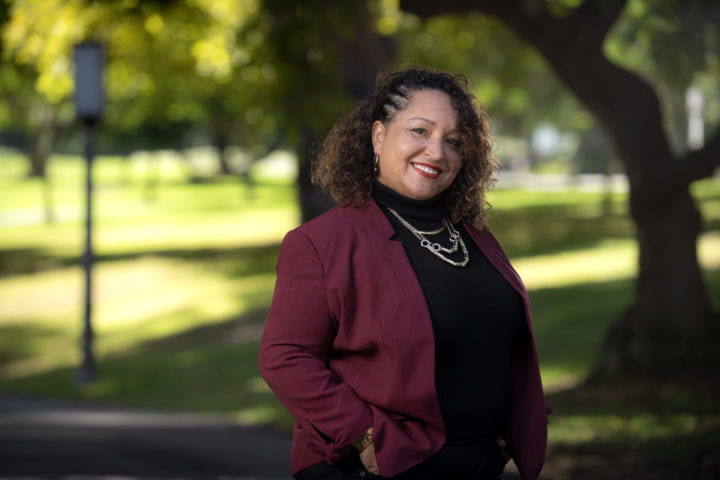
Juneteenth is this Saturday? Our experts can help with your coverage and questions
June 19 — Juneteenth — marks the day in 1865 that the Union Army announced in Texas that the African American slaves were free. Black Americans since then have honored the day, even as it has gone unnoticed by many others. In 2020, Jessica Millward, an associate professor of history at UCI, appeared on the UCI Podcast to discuss the history behind Juneteenth, the decades upon decades of continued struggle, and the hope she feels in this moment. And if you’re a reporter covering this important date in American history – then let our experts help with your stories. Dr. Jessica Millward is an Associate professor in the Department of History at the University of California, Irvine. Her research focuses on comparative slavery and emancipation, African American history, gender and the law. Dr. Millward is available to speak with media about Juneteenth – simply click on her icon now to arrange an interview today.


Experts available to comment on G7 summit discussions
A range of experts from the University of Bristol are available to comment on the upcoming G7 summit taking place in Cornwall, UK. Professor Simon Tormey, Professor of Politics and Dean of Social Sciences and Law at the University of Bristol can speak about what G7 means for UK, reboot of US-China relations, climate change, and taxes on large corporations. Simon can also do interviews in French. Dr David Matthews, Reader in Virology in the School of Cellular and Molecular Medicine at the University of Bristol and a member of the 'G2P-UK' National Virology Consortium, can discuss vaccines and global health security. Dr Kate Hendry, Associate Professor of Geochemistry at the University of Bristol can discuss ocean action including net zero oceanographic capability. Dr Tommaso Jucker, Research Fellow at the University of Bristol’s Cabot Institute for the Environment, can cover: supporting the transition to a low carbon economy – the role of forest conservation and reforestation in mitigating climate change, and action to halt and reverse biodiversity loss – ecosystem restoration. Dr Kristen Reyher, Reader in Veterinary Epidemiology and Population Health at the University of Bristol, is able to discuss antimicrobial resistance, antimicrobial stewardship, antimicrobial use, and epidemiology. And Professor Awais Rashid, Professor of Cyber Security at the University of Bristol, is available for the following topics: Internet safety including protecting children and online fraud, darknet markets, privacy issues and data exploitation.


Climate Change-Related Natural Disasters Impact Short-Lived Assets and Interest Rates
For decades, scientists across the globe have warned about the effects of climate change. Given that these changes—global warming, rising sea levels—happen over time and that their disastrous results may not be obvious for decades, studying the effects of climate change on financial markets has posed a problem. According to Christoph Herpfer, assistant professor of finance, Goizueta Business School, most of the existing literature that deals with the effect of climate change on financial markets considers “indefinitely lived assets,” such as owning stock or owning a home—assets that “don’t have an expiration date,” explained Herpfer. To evaluate the effect of climate change in the long run on these assets then requires discount models—ways to value something today based on what it could be worth decades from now. Herpfer, a banking and corporate finance specialist, studies short-lived assets that, on average, expire after 4.5 years. Herpfer wondered if there could be “an alternative channel in which climate change already impacts companies today,” he explained. One that didn’t have to deal with all the “challenges associated with long run discount rates,” he added. In “The rising tide lifts some interest rates: climate change, natural disasters, and loan pricing,” Herpfer and his colleagues—Ricardo Correa, deputy associate director, Board of Governors of the Federal Reserve System, Ai He, assistant professor of finance, University of South Carolina, and Ugur Lel, associate professor, Nalley Distinguished Chair in Finance, University of Georgia, Terry College of Business—consider this question by studying corporate borrowing costs. In 2020, the paper received the best paper award at the Boca Corporate Finance and Governance Conference. The foursome had a novel idea: In recent years, there has been scientific consensus that climate change fuels natural disasters. So Herpfer and his fellow authors wondered if financial institutions took climate change-amplified natural disasters into account when pricing short-term loans. Their answer was, unequivocally, “yes.” Their work and research is captured in a recent article in Emory Business - it's attached and well worth the read. If you're a journalist looking to know more - then let us help. Christoph Herpfer is an assistant professor of finance at Goizueta Business School. He is also a financial economist working at the intersection of banking, law, and accounting. Christoph is available to speak with media about this research - simply click on his icon now to arrange an interview today.


MEDIA RELEASE: CAA reminds motorists and cyclists to share the road ahead of the long weekend.
Ahead of the Victoria Day long weekend and the summer months, cycling is set to once again be a popular activity this year. As Ontarians start to prepare for the upcoming cycling season, CAA South Central Ontario (SCO) is reminding motorists and cyclists to prioritize safety when sharing the road. “After staying indoors all winter, we expect that more people will choose to get back on their bikes as the weather gets warmer,” says Michael Stewart, community relations specialist for CAA SCO. “With more cyclists re-emerging onto the roads, it is important to be vigilant and mindful of other road users.” All motorists and cyclists are also advised to follow public health guidelines, communicate their intentions with signals, be patient, regularly check blind spots and turn on their lights during dawn, dusk and dark hours when lighting is most limited. Another issue that CAA is reminding motorists to watch out for is dooring, which is described as when a cyclist is injured by the opening of a car door. CAA data shows that it continues to be a big safety concern for both cyclists and motorists alike. Last year the Toronto Police Service reported 77 dooring incidents. Recently the Minister of Transportation introduced the Moving Ontarians More Safely Act that proposes to update the collision reporting process. The proposed legislation would also change the definition of a reportable collision to include bicycles that collide with vehicle doors. A change that CAA supports. CAA is reminding all motorists of these important rules of the road: Pay attention. Avoid distractions like texting, adjusting your GPS or scrolling through your playlist. Yield to cyclists. Motorists should not be driving in a bike lane unless making a right turn. Watch for the approaching cyclists and never speed up and cut off a cyclist when making a right turn. Keep a safe distance. Drivers must keep at least a one-metre distance when passing a cyclist. If it is not possible, safely change lanes to pass. The penalty for not doing so is a $110 fine. Practice the Dutch Reach. Avoid “dooring” cyclists by doing the Dutch Reach. CAA launched a new Dutch Reach video for users to practice as more people are out on their bikes. Some cycling-specific safety tips: Ride with traffic. Riding against traffic flow is dangerous, illegal and a leading cause of car-bike collisions. Protect yourself. Cyclists, wear your helmets. Be visible. Use reflectors and lights in dark and overcast conditions. It’s the law. Be predictable. Obey traffic signs and be clear with your intentions with other drivers. Under Ontario’s Highway Traffic Act (HTA), a bicycle is considered a vehicle, just like a car or truck and must follow the same rules of the road. Ride close to home. As cyclists start to use their bikes for the first time in a while, remember to stay close to home as you are starting out. “By following these best practices and navigating the road respectfully, we can all do our part in keeping our roads safe for everyone,” says Stewart. For more information on cycling safety, visit caasco.com/cycling.



The Facebook Oversight Board’s ruling temporarily upholding the social media giant’s ban on former President Donald J. Trump, which they instructed the company to reassess within six months, noted that the parameters for an indefinite suspension are not defined in Facebook's policies. The non-decision in this high-profile case illustrates the difficulties stemming from the lack of clear frameworks for regulating social media. For starters, says web science pioneer James Hendler, social media companies need a better definition of the misinformation they seek curb. Absent a set of societally agreed upon rules, like those that define slander and libel, companies currently create and enforce their own policies — and the results have been mixed at best. “If Trump wants to sue to get his Facebook or Twitter account back, there’s no obvious legal framework. There’s nothing to say of the platform, ‘If it does X, Y, or Z, then it is violating the law,’” said Hendler, director of the Institute for Data Exploration and Applications at Rensselaer Polytechnic Institute. “If there were, Trump would have to prove in court that it doesn’t do X, Y, or Z, or Twitter would have to prove that it does, and we would have a way to adjudicate it.” As exemplified in disputes over the 2020 presidential election results, political polarization is inflamed by a proliferation of online misinformation. A co-author of the seminal 2006 Science article that established the concept of web science, Hendler said that “as society wrestles with the social, ethical, and legal questions surrounding misinformation and social media regulation, it needs technologist to help inform this debate.” “People are claiming artificial intelligence will handle this, but computers and AI are very bad at ‘I’ll know it when I see it,’” said Hendler, who’s most recent book is titled Social Machines: The Coming Collision of Artificial Intelligence, Social Networking, and Humanity. “What we need is a framework that makes it much clearer: What are we looking for? What happens when we find it? And who’s responsible?” The legal restrictions on social media companies are largely dictated by a single sentence in the Communications Decency Act of 1996, known as Section 230, which establishes that internet providers and services will not be treated as traditional publishers, and thus are not legally responsible for much of the content they link to. According to Hendler, this clause no longer adequately addresses the scale and scope of power these companies currently wield. “Social media companies provide a podium with an international reach of hundreds of millions of people. Just because social media companies are legally considered content providers rather than publishers, it doesn’t mean they’re not responsible for anything on their site,” Hendler said. “What counts as damaging misinformation? With individuals and publishers, we answer that question all the time with libel and slander laws. But what we don’t have is a corresponding set of principles to adjudicate harm through social media.” Hendler has extensive experience in policy and advisory positions that consider aspects of artificial intelligence, cybersecurity and internet and web technologies as they impact issues such as regulation of social media, and powerful technologies including facial recognition and artificial intelligence. Hendler is available to speak to diverse aspects of policies related to social media, information technologies, and AI.