
Experts Matter. Find Yours.
Connect for media, speaking, professional opportunities & more.
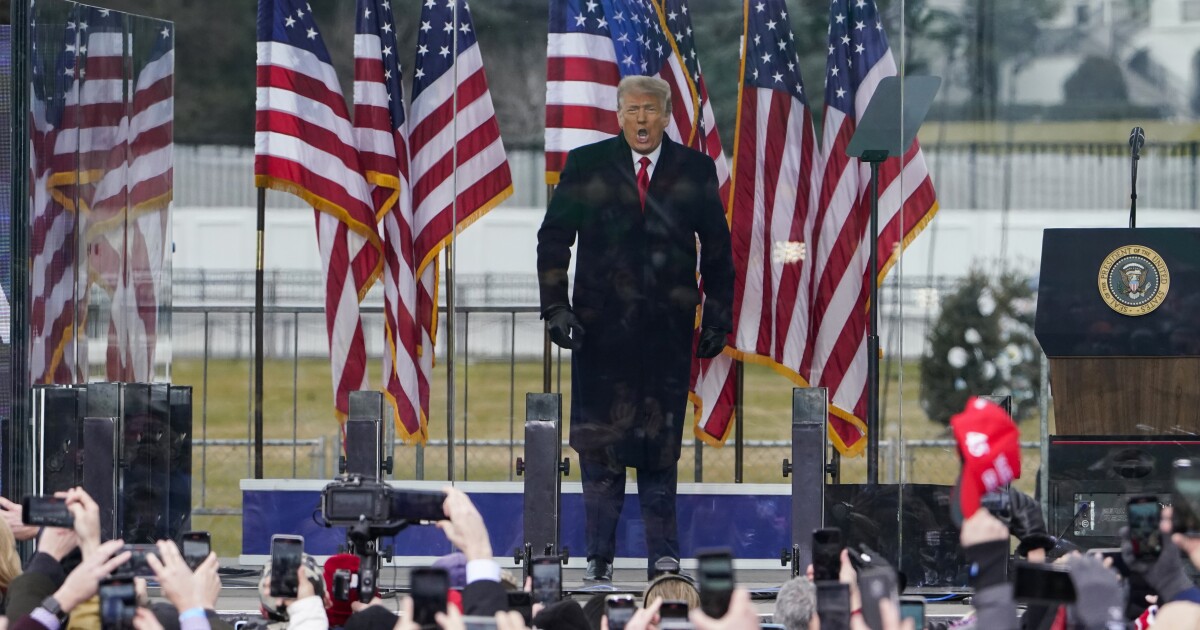
The events that led to the storming of the Capitol buildings last week have garnered attention from just about every news organization across the planet. Pundits and politicians have weighed in on both sides regarding whether President Trump’s words and actions need to be held accountable for the damage to America’s democratic institutions as well as the five people who have since died as a result of the events that occurred on January 6, 2021. Recently, University of Connecticut’s Richard Ashby Wilson, the Gladstein Chair and Professor of Anthropology and Law and an expert on hate speech and incitement on social media shared his perspective in an Op-Ed published in the Los Angeles Times. It’s a thoughtful, methodical, and excellent piece outlining why he believes, in his expert legal opinion, that President Trump crossed the line and now deserves to be held accountable for his crimes. This is a burning topic, and if you are a journalist looking for objective and expert opinion on this topic – then let us help. Richard Ashby Wilson is available to speak with media about this issue – simply click on his icon now to arrange an interview today.


Are vaccine passports legal in a post-COVID-19 era? Let our experts explain
As America and the world look to slowly round the corner of the safety measures enacted during the COVID-19 pandemic, the new coronavirus vaccines are giving hope of an eventual return to normal. However, with an active anti-vaccination movement afoot and many still skeptical of getting that essential poke in the arm, the World Health Organization said some government officials are suggesting the idea of vaccine passports. A simple piece of identification would end the uncertainty that comes with travel, work and the much sought-after leisure that often means crowded places and smaller spaces. The idea has already caught on in countries in Europe and South America. It may be the safety blanket many seek, but are vaccine passports actually legal? It is a question that’s beginning to get serious coverage. “Having proof of vaccination can be essential for a number of sectors other than health, but we cannot overlook the potential discriminatory consequences that may arise,” said Dr. William Hatcher, an expert in public policy and interim chair of the Department of Social Sciences at Augusta University. Another idea being floated is immunity passports, but Hatcher suggests¬ allowing only people with immunity to work might disadvantage those who haven’t gotten sick or those without the antibodies to prove it. It’s as if, in the eyes of their employer, their lack of infection constitutes a disability. The inequality that immunity passports could foster in these situations may be illegal under the Americans with Disabilities Act. There are also other ethical, practical, and cultural aspects to consider as well. If you are covering this emerging topic and are looking to know more, our experts can help. Dr. Hatcher is a professor of political science and interim chair of Augusta University’s Department of Social Sciences. He is an expert in the areas of public administration and social, economic, and political institutions in local communities. Hatcher is available to speak with media regarding the concept of vaccination and immunity passports. To arrange an interview, simply click on his name.


U.S.-Iran Crisis: Outlook and Implications
Executive Summary: The immediate crisis following the death of Iranian general Qassem Soleimani in a U.S. airstrike and Iran’s retaliatory missile strikes against two U.S. airbases appears to have settled down. However, the conditions for a future flare-up remain in place because the underlying conditions have not changed. Going forward, each side is likely to double down on its stated strategic objective, with Iran pushing for an end to U.S. presence in the region and the U.S. pushing for an end to the Iranian nuclear program. Further, the norms that had previously prevented an open exchange of fire between the two sides have been eroded. Why It Matters: The events of January 3rd and 8th represent the first time since the skirmishes of the “Tanker Wars” of 1987-88 that the military forces of the United States and Iran have directly and openly exchanged fire with each other. For the last three decades, the contest between the two states has been a shadow war of proxy conflicts, plausible deniability, and non-military measures. The American decision to strike Soleimani and the Iranian decision to fire missiles in response removed many of the guardrails that have set limits on previous escalations of tensions. The Iranian decision to renounce cooperation with the 2015 nuclear agreement places back into contention an issue that had previously brought the U.S. and Israel to the point of war with Iran in 2012-13. Business Impact: Markets have been largely taking a wait-and-see approach in order to determine the form of Iranian response to Soleimani’s death, and they responded with relief when President Trump signaled that the U.S. would not retaliate. To an extent, uncertainty in the Middle East had already been priced into the markets due to tensions in the second half of 2019. A significant or prolonged conflict would have an obvious negative impact on energy markets and regional economies. In addition, American and Western companies operating internationally or their employees could suffer collateral damage from any future Iranian proxy attacks against visible symbols of U.S. presence overseas. Looking Forward: In the immediate term, the resolution of the crisis represented one of the best possible outcomes: Iran has publicly signaled that the missile launches conducted on January 8th constituted the extent of their military retaliation to Soleimani’s death and President Trump’s White House address acknowledged Iran’s desire to de-escalate and spoke of finding mutually beneficial outcomes with no further mention of military action. Going forward, both Iran and the United States are likely to double down on their desired strategic outcomes. Iran will seek to use all of the levers of its influence to drive the United States from the region, beginning with Iraq but also including indirect pressure on the Gulf states that host U.S. forces. Offensive cyber operations and deniable proxy attacks against civilian infrastructure in the Gulf could be part of that campaign, returning to tactics observed in the past. For its part, the United States will continue its maximum pressure campaign over the Iranian nuclear program, with President Trump promising additional economic sanctions even as he stepped back from military action. Therefore, although both sides appear to be committed to non-military means, the points of tension that caused the most recent crisis are all still present and have arguably increased based on Iran’s increased non-compliance with JCPOA. It remains to be seen whether coming close to the brink of open conflict will have changed the risk tolerance of either side or whether the first acknowledged exchange of fires between the U.S. and Iran for 32 years will usher in a new period of low-level conflict. The View from Tehran: Iran has played Soleimani’s death for maximum strategic benefit. The messaging of the past 96 hours was aimed at various audiences within the country, the region, and around the world. Having been caught on the backfoot by the U.S.’s strike on Soleimani, the Supreme Leader allowed the IRGC to retaliate against U.S. forces in Iraq in a calibrated manner, likely calculating that a strike with limited casualties would satisfy demands for vengeance while not prompting a response. Khamenei’s Decision: Ayatollah Khamenei is an inherently conservative figure and one who is above all else motivated by the priority of regime survival. Given their long-standing personal relationship, there is ample reason to believe that his displays of emotion of Soleimani’s death, including weeping over his coffin during the funeral on January 6th, were genuine and heart-felt. However, his expressed desire for revenge has been tempered by the overarching imperative to avoid a conflict that would have threatened the regime’s hold on power, either from within or without. Rally Around the Flag: Within Iran, the regime is seeking to use Soleimani’s death and their subsequent retaliation to build national unity following a period of significant domestic unrest. This has been emphasized by the extended period of mourning for Soleimani, days-long funeral spectacle, and the invocation of religious and cultural symbols associated with Shi’a martyrs. The death of Soleimani comes on the heels of a series of mass protests in Iran that originally began on November 15th in response to proposed increase in the price of gas, but which have since expanded to a wider challenge to the regime. Media reporting from late December suggested as many as 1,500 Iranian civilians have been killed as part of a regime crackdown on the protests, which have been characterized as the most serious challenge to the regime since the Green Movement of 2009. JCPOA as a Wedge Between U.S. and Europe: Iran announced on January 5th that it would cease compliance with the remaining provisions of the 2015 Joint Comprehensive Plan of Action but would be willing to return to compliance if sanctions are removed. The nuance in Iran’s position highlights the fact that it is continuing to attempt to use the nuclear issue to drive a wedge between European signatories to the agreement and the United States, which unilaterally walked away from the treaty in May 2018. Regime Dynamics: Soleimani was a high-profile figure within Iran, but his outsized influence on Iranian foreign policy also created friction with other stakeholders in the regime, including leaders of the conventional military forces, the ministry of foreign affairs, and the intelligence services. He was one of few genuinely strategic thinkers in the Iranian national security apparatus and the one with the most extensive and deepest connections within the Arab-speaking world. His replacement as commander of the Quds Force is his long-time deputy who will be familiar with the day-to-day operations of the IRGC’s external operations arm but will not have the stature or the network of Soleimani. As a result, other stakeholders may jockey to move into the vacuum created by his death. The View from Washington: The present challenge for the U.S. is how to maintain both a deterrent posture and establishing the means to avoid further escalation. The policy on Iraq going forward will have to balance President Trump’s desire to disengage from the conflict while not creating the appearance of having been pushed out by Iran. Escalate to Deter: President Trump’s decision to kill Soleimani reflected an “escalate to deter” strategy, using a sudden and unexpected escalation of force during a crisis in order to reestablish deterrence after previous provocations in 2019 had gone largely unanswered. However, deterrence is only as good as the last demonstration of a willingness to respond. The decision to not respond to Iran’s retaliatory missile strikes reflected a pragmatic decision to de-escalate. National Security Decision-Making: Nearly three years into his presidency, Donald Trump feels increasingly confident making national security decisions based on his own instincts. The original coterie of experienced national security establishment members such as Jim Mattis and H.R. McMaster who had populated the Situation Room during the early days of the administration have largely resigned or been fired and replaced with individuals of lower profile and/or proven loyalty. Although the mechanisms of the formal interagency process continue to function, President Trump increasingly makes decisions based on a network of informal advisors and media sources. Domestic U.S. Considerations: The decision to launch the strike on Soleimani came during a period of high political tension in Washington, as it had been expected this month that the U.S. Senate would begin a trial in response to articles of impeachment passed by the House of Representatives in December. The Soleimani strike is being taken up by both Trump’s supporters and opponents as evidence of either his credentials as a decisive commander-in-chief or his unsuitability for office, depending on their perspective. Congress has proposed votes to limit President Trump’s independent authority to initiate hostilities with Iran, but this is unlikely to gain traction in the Senate. Separately, the first voting in the Democratic primary is less than one month away, and a sudden shift in focus to national security issues could have results that are difficult to predict, either boosting those with national security credentials (such as former vice president Joe Biden and military veteran Pete Buttigieg), or rallying support among primary voters for anti-war (such as Bernie Sanders). Third-Party Perspectives and Responses: Iraq: The strike at Baghdad International Airport that killed Soleimani also killed the deputy commander of Iraq’s Popular Mobilization Front, a coalition of militias that forms a part of Iraq’s official security apparatus. Iraq’s new Prime Minister Adel Abdul Mahdi has condemned the attack as a “massive breach of sovereignty” and an “aggression on Iraq”. Iraq’s parliament passed a draft law on January 5th calling for the removal of all foreign troops from Iraqi soil, but the law was non-binding and the session had been boycotted by most of the Sunni and Kurdish members of the legislature. Iranian presence has also been the recent target of Iraqi ire, such as in November when a crowd of Iraqis burned down the Iranian consulate in the Shi’a holy city of Najaf, and the Iraqi government will likely try to play both sides against each other to maximize its leverage for military and financial support. Withdrawal from Iraq would mean that the remaining American forces in Syria could no longer be supplied or supported through the western desert of Iraq and would therefore also have to be withdrawn. Iran will likely seek to use all its considerable levers of influence in Iraq to convince the government to see through the expulsion of American forces. The United States leaving Iraq and Syria due to Soleimani’s death would be a fitting legacy from the Iranian perspective and a perverse one from the American perspective given that Soleimani was responsible for the deaths of hundreds of American servicemembers in Iraq (and thousands of Iraqi civilians) through his support for Shi’a militias in the mid-to-late 2000s. Europe: Statements from European capitals emphasized the need for restraint and de-escalation. French President Macron is likely to view this event as further justification for his proposals that the EU develop a defense and security apparatus independent of NATO in order to avoid being entangled by potentially reckless American actions. Iran will likely continue to use this event as an opportunity to drive a wedge between the U.S. and Europe on the nuclear program and other issues, and their chosen retaliation was likely calibrated at least in part to allow them to continue positioning themselves as a responsible actor. For his part, Trump is urging the European signatories to join him in walking away from the JCPOA in order to increase Iran’s international isolation. United Kingdom: The British government has tried to tread a fine line in its responses to the strike, with Prime Minister Johnson calling for de-escalation while also stating that he “will not lament” the fact that Soleimani is dead. The U.K. is likely trying to balance its desire to remain aligned with France and Germany in trying to keep the JCPOA together with its traditional close alliance with the United States and Johnson’s personal relationship with President Trump. Russia: Unsurprisingly, Russian President Vladimir Putin condemned the American strike, which removed a valuable interlocutor for Russian forces in Syria. Russian troops and Iranian-backed militias in Syria had periodically found themselves with diverging interests in their campaign to support the Assad regime, and Soleimani performed a critical function in directing the activities of those militias to ensure that both Russia and Iran achieved their strategic objectives in Syria. A potential American withdrawal from Iraq and Syria would advance Russia’s interest in establishing itself as the indispensable foreign power in resolving the crisis in Syria and within the region more broadly. China: In line with their long-standing principle of non-intervention and their own interest, China condemned the strike, but the response was muted overall. Chinese interests are primarily economic and tied to ensuring a steady supply of petroleum. One of China’s newest and most capable naval destroyers recently participated in trilateral naval exercises with Iran and Russia in the Gulf of Oman. Although such exercises primarily serve a strategic messaging and diplomatic function, they do signal an emerging alignment of interests between the three states that would be significant for the response to any future crises.


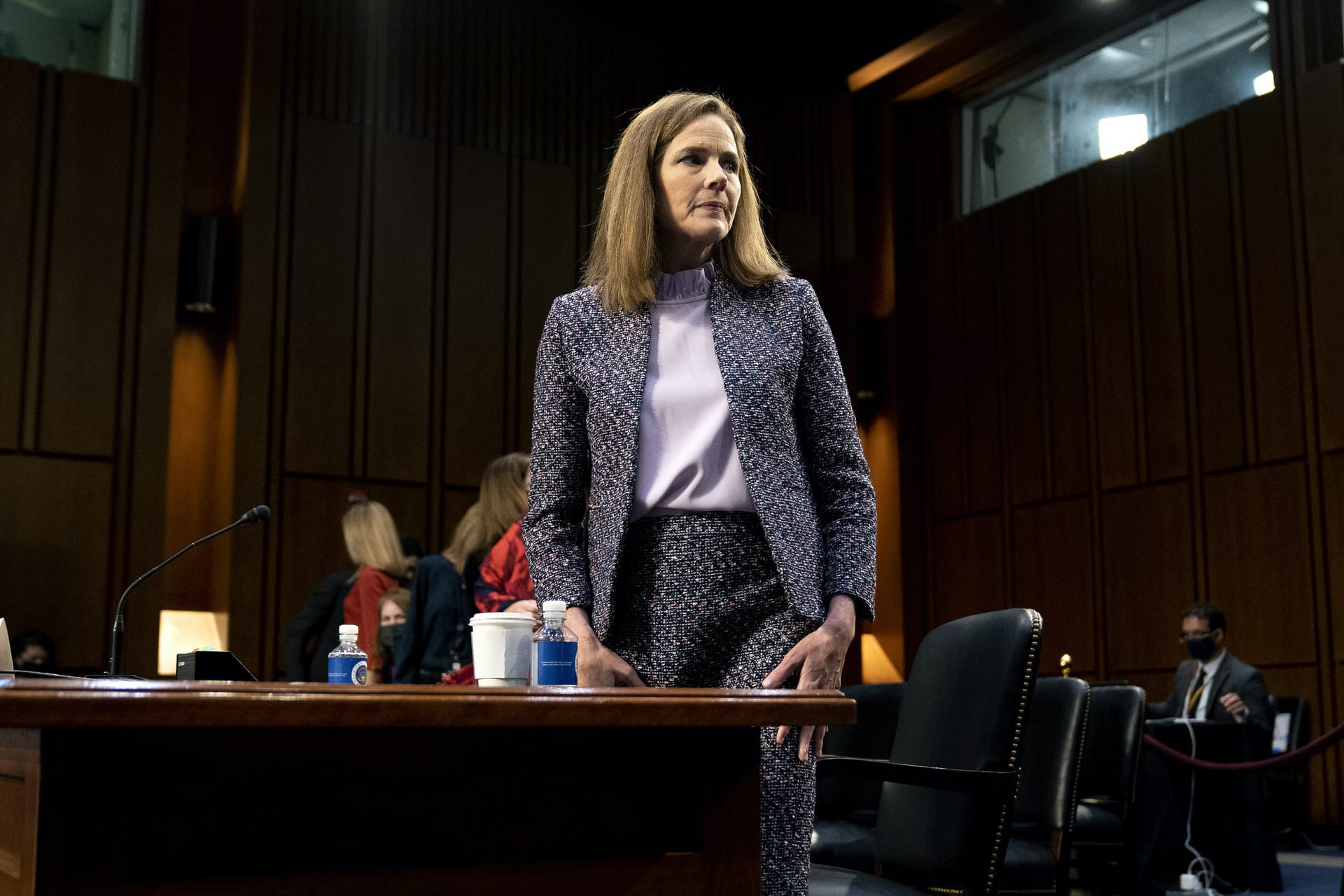
How will the newest pick to the Supreme Court impact America for decades to come?
It was quick, controversial and the outcome was all but obvious once set into motion, but this week Amy Coney Barret t became the youngest female sworn in as a Supreme Court Justice. A sitting judge, a former professor at Notre Dame Law School and mother of seven became President Donald Trump’s third appointee to America’s highest court during his term. The confirmation has left Democrats concerned that the now conservative make-up may sway some very important upcoming decisions. Barrett's confirmation has left Democrats concerned about the fate of the nation's health care law, the Affordable Care Act, and Roe v. Wade, the landmark decision allowing women to have access to abortions. The court will be hearing a case on the constitutionality of the ACA's individual mandate in November. Barrett could also end up weighing in on a general election-related case involving the man who nominated her, should the results of the race between President Trump and Joe Biden come before the Supreme Court. October 26 - CBS News In an election that may see several lawsuits about voting, mail-in ballots and other key elements that could decide the fate of a state or even the presidential election – the Supreme Court where Donald Trump may have a say indecisions and outcomes. If you are a journalist covering this ongoing story, that’s where our experts on this topic can help. Dr. Martha Ginn, professor of political science at Augusta University, is an expert on the judicial process, constitutional law and the U.S. Supreme Court. Dr. Ginn is available to speak with media about this topic – simply click on her icon now to arrange an interview today.

Paper ballots, risk-limiting audits can help defend elections and democracy, IU study finds
BLOOMINGTON, Ind. -- With just over two months before the 2020 election, three professors at the Indiana University Kelley School of Business offer a comprehensive review of how other nations are seeking to protect their democratic institutions and presents how a multifaceted, targeted approach is needed to achieve that goal in the U.S., where intelligence officials have warned that Russia and other rivals are again attempting to undermine our democracy. But these concerns over election security are not isolated to the United States and extend far beyond safeguarding insecure voting machines and questions about voting by mail. Based on an analysis of election reforms by Australia and European Union nations, they outline steps to address election infrastructure security -- such as requiring paper ballots and risk-limiting audits -- as well as deeper structural interventions to limit the spread of misinformation and combat digital repression. "In the United States, despite post-2016 funding, still more than two-thirds of U.S. counties report insufficient funding to replace outdated, vulnerable paperless voting machines; further help is needed," said Scott Shackelford, associate professor of business law and ethics in the Kelley School, executive director of the Ostrom Workshop and chair of IU's Cybersecurity Program. "No nation, however powerful, or tech firm, regardless of its ambitions, is able to safeguard democracies against the full range of threats they face in 2020 and beyond. Only a multifaceted, polycentric approach that makes necessary changes up and down the stack will be up to the task." For example, Australia -- which has faced threats from China -- has taken a distinct approach to protect its democratic institutions, including reclassifying its political parties as "critical infrastructure." This is a step that the U.S. government has yet to take despite repeated breaches at both the Democratic and Republican national committees. Based on an analysis of election reforms by Australia and European Union nations, they outline steps to address election infrastructure security -- such as requiring paper ballots and risk-limiting audits -- as well as deeper structural interventions to limit the spread of misinformation and combat digital repression. "In the United States, despite post-2016 funding, still more than two-thirds of U.S. counties report insufficient funding to replace outdated, vulnerable paperless voting machines; further help is needed," said Scott Shackelford, associate professor of business law and ethics in the Kelley School, executive director of the Ostrom Workshop and chair of IU's Cybersecurity Program. "No nation, however powerful, or tech firm, regardless of its ambitions, is able to safeguard democracies against the full range of threats they face in 2020 and beyond. Only a multifaceted, polycentric approach that makes necessary changes up and down the stack will be up to the task." For example, Australia -- which has faced threats from China -- has taken a distinct approach to protect its democratic institutions, including reclassifying its political parties as "critical infrastructure." This is a step that the U.S. government has yet to take despite repeated breaches at both the Democratic and Republican national committees. The article, "Defending Democracy: Taking Stock of the Global Fight Against Digital Repression, Disinformation and Election Insecurity," has been accepted by Washington and Lee Law Review. Other authors are Anjanette "Angie" Raymond, associate professor of business law and ethics, and Abbey Stemler, assistant professor of business law and ethics, both at Kelley; and Cyanne Loyle, associate professor of political science at Pennsylvania State University and a global fellow at the Peace Research Institute Oslo. Aside from appropriating sufficient funds to replace outdated voting machines and tabulation systems, the researchers said that Congress should encourage states to refuse to fund voting machines with paperless ballots. The researchers also suggest requiring risk-limiting audits, which use statistical samples of paper ballots to verify official election results. Other suggested steps include: Congress requiring the National Institute of Standards and Technology to update their voting machine standards, which state and county election officials rely on when deciding which machines to purchase. Australia undertook such a measure. Creating a National Cybersecurity Safety Board to investigate cyberattacks on U.S. election infrastructure and issue post-elections reports to ensure that vulnerabilities are addressed. Working with universities to develop training for election officials nationwide to prepare them for an array of possible scenarios, and creating a cybersecurity guidebook for use by newly elected and appointed election officials. "With regards to disinformation in particular, the U.S. government could work with the EU to globalize the self-regulatory Code of Practice on Disinformation for social media firms and thus avoiding thorny First Amendment concerns," Raymond said. "It could also work to create new forums for international information sharing and more effective rapid alert and joint sanctions regimes. "The international community has the tools to act and hold accountable those actors that would threaten democratic institutions," added Stemler, who also is a faculty associate at Harvard University's Berkman Klein Center for Internet and Society. "Failing the political will to act, pressure from consumer groups and civil society will continue to mount on tech firms, in particular Facebook, which may be sufficient for them to voluntarily expand their efforts in the EU globally, the same way that more firms are beginning to comply with its General Data Protection Regulation globally, as opposed to designing new information systems for each jurisdiction."


Cancellation of non-conference college football games may lead to a new battle in the courtroom
The Big Ten Conference's decision to cancel all non-conference football games for the upcoming season -- and the possibility that schools in other major conferences may soon follow -- raises a number of potential legal issues, says Nathaniel Grow, associate professor of business law and ethics at the Indiana University Kelley School of Business. “Depending on the terms of the schools' college football scheduling agreement, the university cancelling the game may still owe the other school some level of compensation for breaking the agreement,” Grow said. “If the cancelling university refuses to pay, then it would not be surprising if the other school would elect to file a lawsuit.” A nationally recognized expert in the field of sports law, Grow studied has studied this issue, the subject of a 2010 article in the Journal of College and University Law. "The ultimate outcome of such a lawsuit would hinge largely on the specific terms of two affected schools' contract. In general, though, two provisions of the contract would likely prove to be the most important. First, most scheduling agreements will include some sort of liquidated damages provision, a clause that specifies that one side of the agreement must pay the other party a certain amount of money should the contract be broken. Often times, these contracts will provide that the breaching party must only pay the other school in the event that the opponent is unable to replace the cancelled game on its schedule with one against a sufficiently suitable alternative opponent. "The other relevant clause in these scheduling agreements is likely to be the force majeure provision, sometimes referred to as an ‘Act of God’ clause. Under these provisions, schools may be excused from cancelling a game without penalty if circumstances arise that make playing the game unduly difficult or impossible (for instance, a hurricane or other major weather event). The applicability of such a provision will also vary depending on the specific wording employed in the contract, and whether the clause permits a team to cancel a game on the basis of either a pandemic or a change in conference policy regarding the playing of non-conference games." Grow can be reached at 812-855-8191 or grown@iu.edu.

Clarifying the electoral college before this November’s election – let our experts explain
With a divisive and hyper-charged election on the horizon in America, the Supreme Court may have done the country a favor and avoided a constitutional crisis before it happened. The court delivered a unanimous opinion on faithless electors and how those who represent states are to cast their votes in the electoral college. The Supreme Court ruled unanimously Monday that a state may require presidential electors to support the winner of its popular vote and may punish or replace those who don’t, settling a disputed issue in advance of this fall’s election. Justice Elena Kagan wrote for the court as it considered for the first time the issue of “faithless electors” and whether the Constitution sees members of the electoral college — whose votes ultimately elect the president — as representatives of the intent of their state’s voters or as independent thinkers. The Washington state law at issue “reflects a tradition more than two centuries old,” Kagan wrote. “In that practice, electors are not free agents; they are to vote for the candidate whom the State’s voters have chosen.” In layman’s terms, it simply means representatives to the electoral college are not casting a vote of conscience, but a vote that follows the will and intentions of the popular vote of each specific state. Popular votes and the electoral college have been hotly debated topics during this century’s elections, and if you are a journalist covering this Supreme Court decision or have questions about the upcoming elections – then let our experts help. Dr. Craig Albert is an expert in American politics and he is available to speak with media – simply click on his name to arrange an interview today.


As China clamps down on Hong Kong – Is Taiwan next?
As protests erupt again across Hong Kong against the recent imposing of new security laws essentially giving Beijing unprecedented powers – it has some worried about what is next as China pursues it’s One-China policy. In Taiwan people are watching, and concern is growing. Professor Elizabeth Freund Larus teaches political science at the University of Mary Washington and is an #expert on China and the field of Asian studies. She has also been interviewed by media such as CNBC, The Diplomat and CBN News regarding this topic. She has noted that the developments in China, especially with regards to Hong Kong and Taiwan are catching global attention and will impact economies and governments across the globe. Beijing has taken an especially hard line towards Taiwan since the 2016 election of President Tsai Ing-wen of the Democratic Progressive Party (DPP), ramping up military, economic and diplomatic pressure. Tsai views Taiwan as a de facto independent nation and not part of "one China". But the pressure campaign has done little to endear China to Taiwan's 23 million people. In January, Tsai won a second term with a historic landslide and polls consistently show a growing distrust of China... Social media is filled with messages of support for Hong Kong's democracy movement. Some back Taiwanese independence, or highlight China's rights abuses in regions such as Tibet and Xinjiang. Wendy Peng, a 26-year-old magazine editor who said she often shared pro-Hong Kong democracy messages on social media, said she would now avoid visiting the city. "The national security law makes me wonder how far would China go. Right now I don't see a bottom line and there's probably none. I think it's possible they will target Taiwan next," she said. July -7 Yahoo! New/AFP If you are a reporter covering this progressing story – then let our experts help. Elizabeth Larus is available to speak to media, simply click on her icon to arrange an interview.



Overshadowed by COVID – The opioid pandemic is still taking its toll across America
For more than two decades opioids have been ravaging American cities, towns, and communities. It prompted national attentions and official commissions advising the President. But lately, as the world has turned almost all its focus on COVID-19, the opioid issue has been sitting in the shadows. Not necessarily idle or waiting, but just no longer the topic of a national conversation to find a cure. Before COVID-19 turned our nation upside-down, policymakers were taking steps to help patients access evidence-based treatment for opioid use disorder. This included focusing on removing health insurers’ barriers to medication and requiring insurers to provide parity for mental illness and substance use disorders — and holding them accountable for violations of the law in Massachusetts, Pennsylvania and New Hampshire, to name a few recent examples. While we continue to take steps to address COVID-19 to help keep the public safe, the American Medical Association has seen reports from more than 30 states concerning increases in opioid-related mortality, mental health crises, suicide and addiction-related relapse. Reports are from every region in the nation. This includes a 20 percent increase in calls to the Jacksonville, Fla., fire department concerning overdoses; an “unusual spike” in overdoses in DuPage County, Ill.; increased emergency department visits in coastal North Carolina and spikes in fentanyl-related overdoses in Seattle. Georgia, too, has not been spared, causing increased concern for many. - Dr. Patrice A. Harris is the immediate past president of the American Medical Association and chair of the AMA Opioid Task Force. So – at what cost or how far back have efforts been set by COVID-19? And how much harder will it be for America to regroup and take on its addiction to opioids? There are a lot of questions to be asked – and if you are a journalist covering this topic or looking to learn more about the state of the opioid epidemic in America – then let our experts help. Justin Cole is an expert in clinical pharmacy, Pharmacogenomics, and the pharmacy industry. Justin has been following this issue closely and is available to speak with media. Simply click on his icon to arrange an interview today.


What will the extradition of Meng Wanzhou mean for relations between Canada, China, and the U.S.?
There is the rule of law, and there’s politics – but what happens when you are a country like Canada stuck in the middle of an ugly legal battle between China and America? This Monday, in Vancouver – a hearing is underway that will see one of the world’s titans victorious and the other, probably quite angry. Legal arguments at the B.C. Supreme Court in the extradition case of Huawei executive Meng Wanzhou may stretch into next year. Crown lawyer Robert Frater told the court Wednesday that lawyers for both sides will propose a new schedule later this month that would bring the hearings to a close in early 2021 at the latest, instead of this fall. The Unites States wants Canada to extradite Meng over allegations she misrepresented the company’s relationship with Skycom Tech Co., putting HSBC at risk of violating U.S. sanction against Iran, a charge both she and Huawei deny. Associate Chief Justice Heather Holmes dismissed the first phase of arguments last week by Meng’s lawyers who claimed the case should be thrown out because the U.S. allegations against her wouldn’t be a crime in Canada. Global News - June 03 It has been a long and drawn out process and will likely stretch into this year, and odds are patience is wearing thin. Can any of the countries expect retaliation and what would that look like? Is the United State right seeking extradition of this official? Will a change at the Whitehouse see this effort dropped? And what are the underlying issues at play that may be attributing to this drama? If you are a journalist covering this topic – then let our experts help. Dr. Glen Duerr's research interests include comparative politics and international relations theory. Glen is an expert on this subject and is available to speak to media regarding this topic– simply click on his icon to arrange an interview.
