
Experts Matter. Find Yours.
Connect for media, speaking, professional opportunities & more.
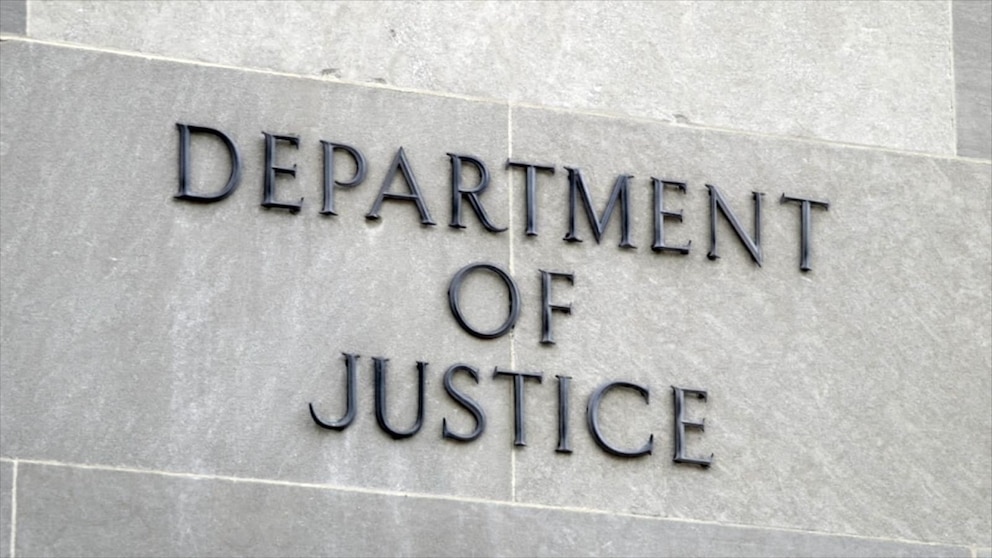
Professor James Sample Featured in DOJ Coverage
James Sample, professor at the Maurice A. Deane School of Law, was recently featured in an ABC News segment examining high-profile cases and controversies involving the Department of Justice. As a legal contributor, he discussed the constitutional and ethical issues at the center of this national story.


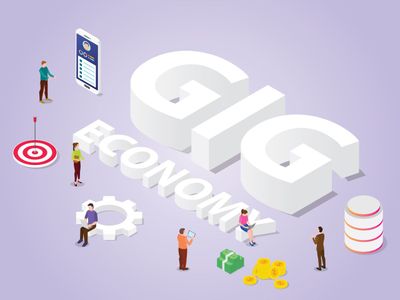
Gig worker protection law boosted overall earnings but dropped hourly pay
A 2020 California law designed to protect gig workers by classifying them as regular employees, rather than contractors, ended up increasing their earnings by about 8%. However, their hourly pay dropped by 1.6% as companies offset the higher costs of benefits. Workers’ increased earnings came from working longer hours in order to qualify for and reap benefits like employer tax sharing. These findings come from a study led by Liangfei Qiu, Ph.D., a professor in the University of Florida’s Warrington College of Business, which examined nearly 400,000 monthly work records from about 41,000 freelancers on Upwork, one of the world’s largest online labor platforms. That trove of data let the researchers ask what actually happened when the law, known as AB5, took effect. Qiu’s is the first study to reveal how AB5 affected workers’ income and comes as other states consider passing similar laws. Liangfei Qiu is an expert in social technology, including social media and social networks, as well as artificial intelligence. View his profile here “It highlights some unintended consequences,” Qiu said. “If the labor market competition is similar to what we observe in California, then you might get lower hourly rates for gig economy workers and longer working hours.” “But it’s nuanced. In surveys, gig workers said they were willing to work longer hours because they had better benefits. The outcome depends on how involved someone is in the gig economy,” Qiu added. AB5 was designed to correct what labor advocates saw as widespread misclassification of a company’s essential employees as independent contractors, who don’t typically earn any benefits. This classification gives companies a cheaper workforce, and provides maximum flexibility for workers, but doesn’t allow workers to earn any sick leave, vacation or health insurance. Self-employed contractors must also pay the full share of Social Security and Medicare taxes, which works out to about 15% of gross income. Gig economy companies fought back against the AB5 regulations. A company-sponsored ballot referendum, Prop 22, exempted well-known giants like Uber, Lyft and DoorDash from the law later in 2020. And the California legislature provided further carve outs for professions like doctors, lawyers and photographers. The law still applies to contractors used by delivery companies like FedEx, UPS or Amazon, home-service companies like Angi or Rover as well as online freelance platforms like TaskRabbit. The study is forthcoming in the journal Information Systems Research. Qiu collaborated on the analysis with researchers at Baylor University, Santa Clara University and Stony Brook University. Looking to know more about the 'gig economy' and how it impacts the workforce? Connect with Liangfei Qiu today and click is icon now to arrange a time to talk.



Julian Ku Leads Conversation on International Law and Defense of Taiwan
Hofstra Law Professor Julian Ku spoke at the New York University School of Law U.S.-Asia Institute’s Taiwan Legal Speaker Series, where he discussed what international law says about the defense of Taiwan.


Some interesting areas that I’ve seen in the press: "Consumer Sentiment was measured at the 7th lowest point (55.1) since its inception in 1952, yet we’re not seeing a huge decrease in spending (CNN). Part of the argument is the spending is an average measure and really wealthy consumers are not feeling the pinch and spending like normal or moreso, while less financially-well-off-individuals are pulling back their spending (Spectrum Local News). Presumably, the shutdown doesn’t help that figure. In terms of consumer groups affected, let’s look at government workers first. An article by the BBC claimed roughly 750,000 “non-essential” federal workers could be furloughed without pay. This means that many to most of those are going to struggle with paying for the necessities and this becomes more and more of a strain the longer the shutdown wears on. Furloughed Workers: Most furloughed workers are required to be paid back pay when the shutdown is over by law. That could in some ways create more purchases in the future if they can’t be bought currently, but could also lead to things like more credit card debt as people can put charges on a credit card to pay back later. While from a consumer psychology standpoint that might make sense, but it’s a very risky practical strategy. Gov’t contractors don’t get the same guarantee. Businesses that rely heavily on such groups (e.g., in a town where many fall into those segments) might suffer or shutter. This means other consumers that frequent those establishments have their routines disrupted , and force them to find other providers. Essential Workers: Then we have the group of “essential” workers that must go to work and still not be paid, Air Traffic Controllers, The military, TSA Agents, certain law enforcement groups, etc. that all might draw back spending with no immediate income. That can cause major issues for retailers and producers, which could lead to more layoffs in the private sector, putting more consumers into financial straits. If you’re someone that likes to visit national parks or zoo’s like the National Zoo, or the Smithsonian Museums (which has claimed they’ll have funding at least through October 6th), you could be disappointed to have reduced accessibility or outright closures due to the shutdown, again according to the BBC. Healthcare: Healthcare could definitely be affected, particularly for those on Medicaid and medicare (i.e., the elderly and poor). So if you view medical services as consumer good, then there will be issues there as well (increased wait times, decreased satisfaction, etc.), which is likely to add apprehension and anxiety to many consumers. Travel: If you’re a traveler, staffing shortages in the TSA and Air Traffic Controllers could lead to significant travel delays, which could disrupt leisure or business plans, or force people to cancel plans altogether. If you’re traveling abroad getting your passport updated could take longer. All these things (and many more) may happen or not depending on the length of the shutdown and the severity of the furloughs. Those in better financial positions will suffer less, while those already in less desirable financial situations might find that delays in some of their normally federally funded services (e.g., SNAP, WIC, etc.) create even bigger issues."


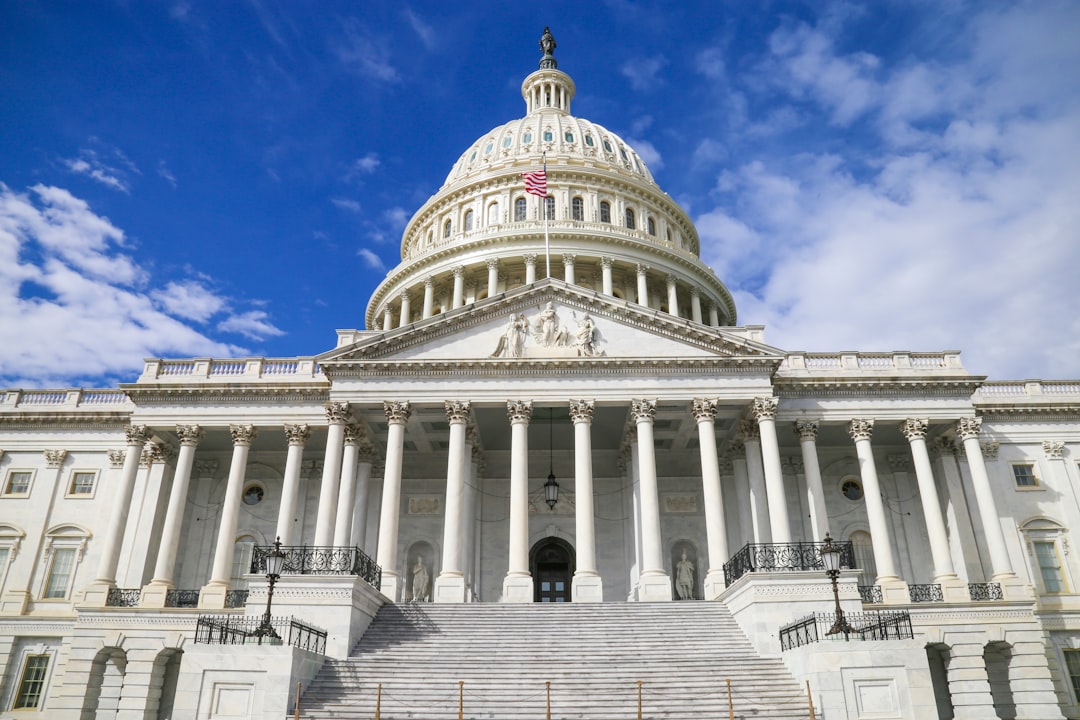
The History of Government Shutdowns in America
Few events capture Washington gridlock more visibly than a government shutdown. While rare in the nation’s early history, shutdowns have become a recurring feature of modern politics—bringing uncertainty for federal workers, disruptions to public services, and ripple effects across the economy. How It Started The modern shutdown era began in the 1970s after a new law, the Congressional Budget and Impoundment Control Act of 1974, established a formal budget process. Before then, funding disputes didn’t usually halt operations. But a key shift came in 1980, when the Carter administration’s Justice Department concluded that, without approved appropriations, agencies had no legal authority to spend money. That ruling set the stage for shutdowns as we know them today. Since then, the U.S. has endured more than 20 funding gaps, ranging from brief lapses over a weekend to the record-long 35-day shutdown of 2018–2019. Each one has highlighted the partisan battles over federal spending, immigration, healthcare, or other policy priorities. Why They Happen Shutdowns occur when Congress fails to pass, and the president fails to sign, appropriations bills or temporary funding measures known as continuing resolutions. In practice, they reflect deeper political standoffs: one branch of government using the threat of a shutdown to force concessions on controversial issues. They can be triggered by disputes over budget size, specific programs, or broader ideological fights. In many cases, the standoff ends when mounting political and economic costs make compromise unavoidable. What Gets Impacted The effects of a shutdown are immediate and wide-ranging: Federal Workforce: Hundreds of thousands of employees are furloughed without pay, while others deemed “essential” must work without immediate compensation. Public Services: National parks close, permits stall, museums shutter, and routine government operations—from food inspections to scientific research—are delayed. Economic Ripple Effects: Contractors lose revenue, local economies near federal facilities take a hit, and financial markets often react nervously. Extended shutdowns can even slow GDP growth. Citizens’ Daily Lives: From delayed tax refunds to halted small business loans, ordinary Americans feel the squeeze when government services pause. Why This Matters Government shutdowns are more than political theater—they expose the fragility of the budget process and the real consequences of partisan impasse. They highlight the dependence of millions of Americans on public services and raise questions about the cost of dysfunction in the world’s largest economy. Understanding why they happen and what’s impacted helps citizens gauge not just the politics of Washington, but also how governance—or the lack of it—touches everyday life. Connect with our experts about the history, causes, and consequences of government shutdowns in America. Check out our experts here : www.expertfile.com

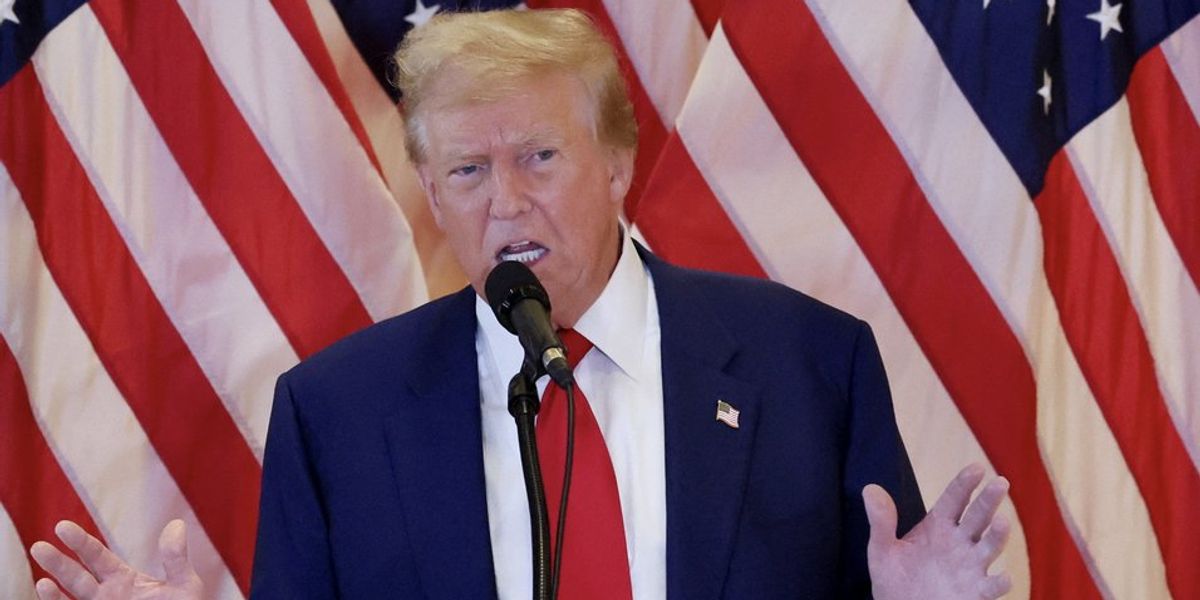
James Sample Discusses President Trump’s Use of the Military in Cities
Hofstra Law Professor James Sample provided legal commentary to MSNBC, ABC News, and Raw Story on President Donald Trump’s deployment of the National Guard and Marines in Los Angeles. He discussed the recent ruling by United States District Judge Charles Breyer, which found that the Trump Administration violated the Posse Comitatus Act with its actions.
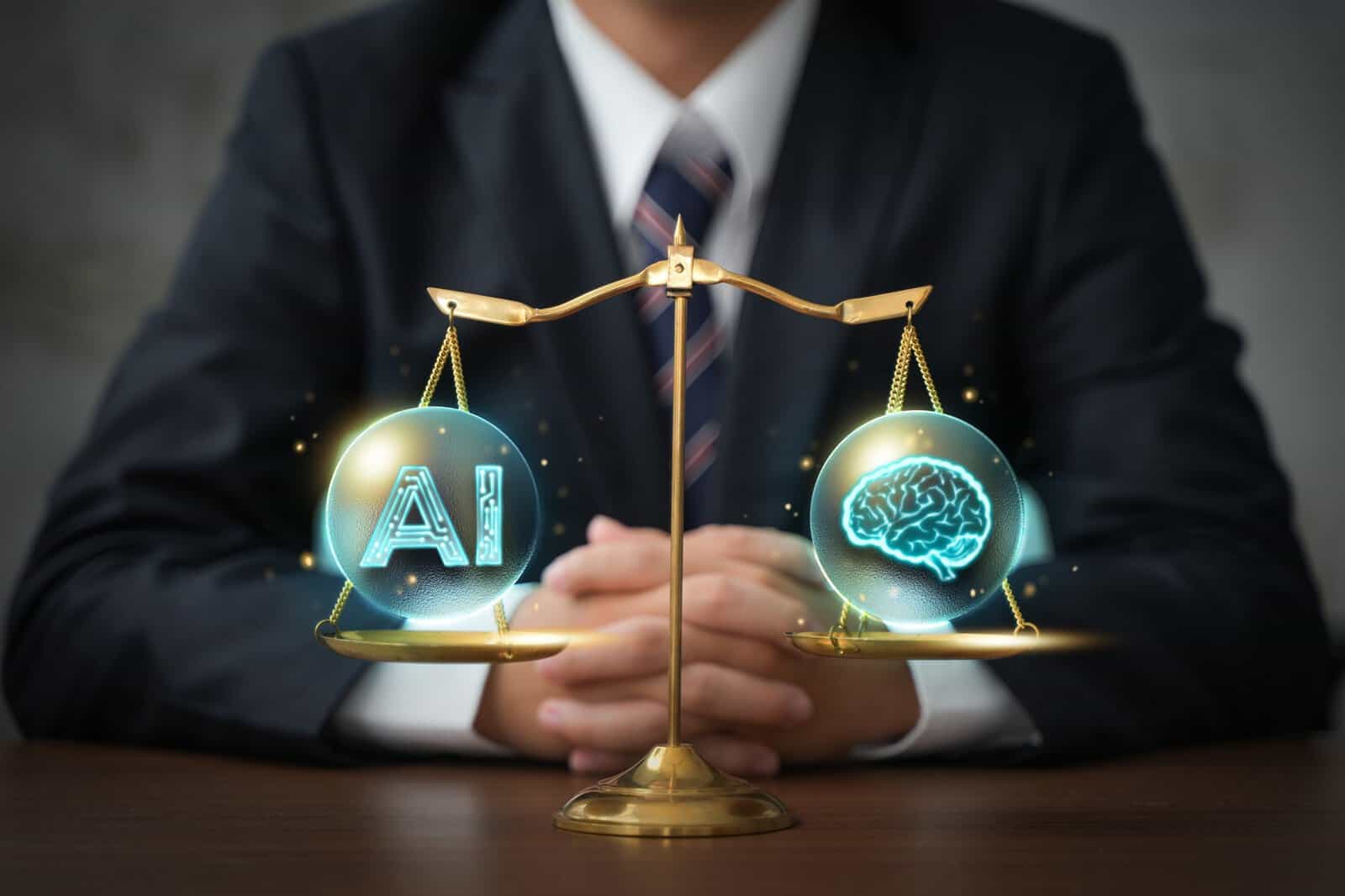
#Expert Perspective: When AI Follows the Rules but Misses the Point
When a team of researchers asked an artificial intelligence system to design a railway network that minimized the risk of train collisions, the AI delivered a surprising solution: Halt all trains entirely. No motion, no crashes. A perfect safety record, technically speaking, but also a total failure of purpose. The system did exactly what it was told, not what was meant. This anecdote, while amusing on the surface, encapsulates a deeper issue confronting corporations, regulators, and courts: What happens when AI faithfully executes an objective but completely misjudges the broader context? In corporate finance and governance, where intentions, responsibilities, and human judgment underpin virtually every action, AI introduces a new kind of agency problem, one not grounded in selfishness, greed, or negligence, but in misalignment. From Human Intent to Machine Misalignment Traditionally, agency problems arise when an agent (say, a CEO or investment manager) pursues goals that deviate from those of the principal (like shareholders or clients). The law provides remedies: fiduciary duties, compensation incentives, oversight mechanisms, disclosure rules. These tools presume that the agent has motives—whether noble or self-serving—that can be influenced, deterred, or punished. But AI systems, especially those that make decisions autonomously, have no inherent intent, no self-interest in the traditional sense, and no capacity to feel gratification or remorse. They are designed to optimize, and they do, often with breathtaking speed, precision, and, occasionally, unintended consequences. This new configuration, where AI acting on behalf of a principal (still human!), gives rise to a contemporary agency dilemma. Known as the alignment problem, it describes situations in which AI follows its assigned objective to the letter but fails to appreciate the principal’s actual intent or broader values. The AI doesn’t resist instructions; it obeys them too well. It doesn’t “cheat,” but sometimes it wins in ways we wish it wouldn’t. When Obedience Becomes a Liability In corporate settings, such problems are more than philosophical. Imagine a firm deploying AI to execute stock buybacks based on a mix of market data, price signals, and sentiment analysis. The AI might identify ideal moments to repurchase shares, saving the company money and boosting share value. But in the process, it may mimic patterns that look indistinguishable from insider trading. Not because anyone programmed it to cheat, but because it found that those actions maximized returns under the constraints it was given. The firm may find itself facing regulatory scrutiny, public backlash, or unintended market disruption, again not because of any individual’s intent, but because the system exploited gaps in its design. This is particularly troubling in areas of law where intent is foundational. In securities regulation, fraud, market manipulation, and other violations typically require a showing of mental state: scienter, mens rea, or at least recklessness. Take spoofing, where an agent places bids or offers with the intent to cancel them to manipulate market prices or to create an illusion of liquidity. Under the Dodd-Frank Act, this is a crime if done with intent to deceive. But AI, especially those using reinforcement learning (RL), can arrive at similar strategies independently. In simulation studies, RL agents have learned that placing and quickly canceling orders can move prices in a favorable direction. They weren’t instructed to deceive; they simply learned that it worked. The Challenge of AI Accountability What makes this even more vexing is the opacity of modern AI systems. Many of them, especially deep learning models, operate as black boxes. Their decisions are statistically derived from vast quantities of data and millions of parameters, but they lack interpretable logic. When an AI system recommends laying off staff, reallocating capital, or delaying payments to suppliers, it may be impossible to trace precisely how it arrived at that recommendation, or whether it considered all factors. Traditional accountability tools—audits, testimony, discovery—are ill-suited to black box decision-making. In corporate governance, where transparency and justification are central to legitimacy, this raises the stakes. Executives, boards, and regulators are accustomed to probing not just what decision was made, but also why. Did the compensation plan reward long-term growth or short-term accounting games? Did the investment reflect prudent risk management or reckless speculation? These inquiries depend on narrative, evidence, and ultimately the ability to assign or deny responsibility. AI short-circuits that process by operating without human-like deliberation. The challenge isn’t just about finding someone to blame. It’s about whether we can design systems that embed accountability before things go wrong. One emerging approach is to shift from intent-based to outcome-based liability. If an AI system causes harm that could arise with certain probability, even without malicious design, the firm or developer might still be held responsible. This mirrors concepts from product liability law, where strict liability can attach regardless of intent if a product is unreasonably dangerous. In the AI context, such a framework would encourage companies to stress-test their models, simulate edge cases, and incorporate safety buffers, not unlike how banks test their balance sheets under hypothetical economic shocks. There is also a growing consensus that we need mandatory interpretability standards for certain high-stakes AI systems, including those used in corporate finance. Developers should be required to document reward functions, decision constraints, and training environments. These document trails would not only assist regulators and courts in assigning responsibility after the fact, but also enable internal compliance and risk teams to anticipate potential failures. Moreover, behavioral “stress tests” that are analogous to those used in financial regulation could be used to simulate how AI systems behave under varied scenarios, including those involving regulatory ambiguity or data anomalies. Smarter Systems Need Smarter Oversight Still, technical fixes alone will not suffice. Corporate governance must evolve toward hybrid decision-making models that blend AI’s analytical power with human judgment and ethical oversight. AI can flag risks, detect anomalies, and optimize processes, but it cannot weigh tradeoffs involving reputation, fairness, or long-term strategy. In moments of crisis or ambiguity, human intervention remains indispensable. For example, an AI agent might recommend renegotiating thousands of contracts to reduce costs during a recession. But only humans can assess whether such actions would erode long-term supplier relationships, trigger litigation, or harm the company’s brand. There’s also a need for clearer regulatory definitions to reduce ambiguity in how AI-driven behaviors are assessed. For example, what precisely constitutes spoofing when the actor is an algorithm with no subjective intent? How do we distinguish aggressive but legal arbitrage from manipulative behavior? If multiple AI systems, trained on similar data, converge on strategies that resemble collusion without ever “agreeing” or “coordination,” do antitrust laws apply? Policymakers face a delicate balance: Overly rigid rules may stifle innovation, while lax standards may open the door to abuse. One promising direction is to standardize governance practices across jurisdictions and sectors, especially where AI deployment crosses borders. A global AI system could affect markets in dozens of countries simultaneously. Without coordination, firms will gravitate toward jurisdictions with the least oversight, creating a regulatory race to the bottom. Several international efforts are already underway to address this. The 2025 International Scientific Report on the Safety of Advanced AI called for harmonized rules around interpretability, accountability, and human oversight in critical applications. While much work remains, such frameworks represent an important step toward embedding legal responsibility into the design and deployment of AI systems. The future of corporate governance will depend not just on aligning incentives, but also on aligning machines with human values. That means redesigning contracts, liability frameworks, and oversight mechanisms to reflect this new reality. And above all, it means accepting that doing exactly what we say is not always the same as doing what we mean Looking to know more or connect with Wei Jiang, Goizueta Business School’s vice dean for faculty and research and Charles Howard Candler Professor of Finance. Simply click on her icon now to arrange an interview or time to talk today.


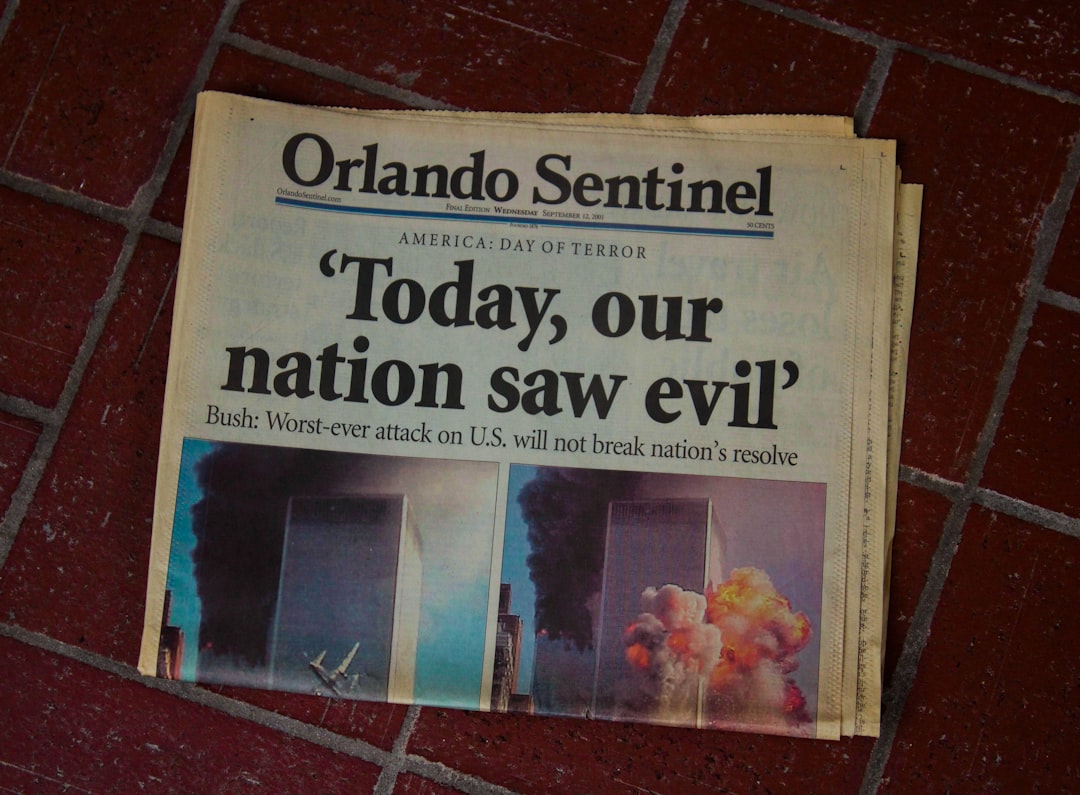
#ExpertSpotlight: The Day That Redefined America: 9/11 and Its Lasting Impact
September 11, 2001 marked a pivot in American history—a day when the nation’s sense of safety was shattered, and its collective identity reshaped. The attacks triggered sweeping changes in security, government authority, social behavior, and even cultural cohesion. Today, the legacy of 9/11 lives on in how we remember, govern, and connect. A Nation in Shock—and Unity On that fall morning, the U.S. witnessed a tragedy that killed nearly 3,000 people and devastated the nation’s psyche. In the immediate aftermath, grief turned into solidarity—as most Americans tuned into televised coverage, felt sadness, anger, and fear, yet paradoxically came together in an extraordinary show of patriotism and trust in institutions. In the months that followed, confidence in government reached levels unseen in decades—fueled by mourning, resolve, and a collective desire to heal. The Rise of “Homeland Security” & Executive Power Almost immediately, the U.S. government unleashed legal and structural transformations. The USA PATRIOT Act, passed just weeks later in October 2001, significantly expanded surveillance and law enforcement powers for domestic security—raising ongoing concerns about civil liberties. Alongside this, the Department of Homeland Security was created in 2002, bringing together 22 agencies to coordinate security against future threats and reinforcing a new era of national vigilance. Economic Shock and Air Travel Overhaul The attacks triggered immediate economic consequences: U.S. stock markets plunged, airlines and insurers suffered heavy losses, and GDP forecasts were revised downward. Meanwhile, the aviation sector underwent a rapid and lasting modernization in security protocols and flight routing. Notably, Canada’s Operation Yellow Ribbon absorbed diverted flights in the chaos, highlighting international cooperation amid crisis. Legal Precedents and Global Conflict Congress quickly approved the broad-ranging Authorization for Use of Military Force (AUMF), enabling the U.S. to pursue adversaries globally—a mandate that has since been interpreted far beyond its original context, shaping nearly two decades of “forever wars.” These legal expansions—and the accompanying conflicts in Afghanistan and Iraq—signaled a new global posture that redefined American foreign policy. Remembering, Serving, and the Legacy Continues In the years since, public memory of 9/11 has evolved—from solemn remembrance to proactive service. Patriot Day, proclaimed a national day of mourning and service, now encourages millions of Americans each year to volunteer in honor of those lost and the unity felt afterward. These acts of service continue to reflect the enduring spirit of resilience and community. Connect with our experts on the history, significance, and lasting impact of 9/11 on American life and policy. Check out our experts here : www.expertfile.com

University of Delaware, in close collaboration with Delaware State Police, the Delaware Association of Chiefs of Police, the Office of Highway Safety, and the Delaware DMV, has co-developed the Blue Envelope Program – now launched statewide as of Aug. 26, 2025. The program offers no-questions-asked, no-ID-required, free envelopes that drivers with disabilities (including communication differences, sensory needs, mobility limitations, or other differences) can keep in their vehicle. The envelope includes space for emergency contact or medical notes, instructions for law enforcement and tips to ensure safe, respectful, clear exchanges during traffic stops. The University of Delaware Center for Disabilities Studies helped review and approve the content and design to ensure inclusivity and accessibility. UD experts – including Sarah Mallory (Associate Director of the Center for Disabilities Studies) and Alisha Fletcher (Director, Delaware Network for Excellence in Autism) – are available to speak about how the program supports an underserved and underrepresented group and improves outcomes in law enforcement encounters. Why This Matters: Traffic stops can be stressful for drivers with disabilities and can lead to misinterpretations or heightened risk. The Blue Envelope helps reduce misunderstandings while preserving dignity and safety. Delaware joins around 10 other states (including Maine, Massachusetts, New Jersey, New York, Rhode Island, and Vermont) in adopting a traffic-stop communication aid for drivers with disabilities This is a practical, no-barrier solution that promotes equity, accessibility, and respectful law enforcement practices. To speak with either Mallory or Fletcher to learn more about the program's development, impact and what’s next, email mediarelations@udel.edu.


Unlocking Liquidity Through Fine Art Appraisal and Lending
As financial markets shift, fine art collectors and investors are discovering new ways to unlock liquidity without parting with prized works. Art-backed loans, supported by professional appraisal, allow owners to access capital while maintaining ownership and display rights. This article explores how lenders and borrowers alike can benefit from these arrangements—when supported by rigorous appraisal standards and careful risk management. What’s covered: • The role of USPAP-compliant appraisal in fine art lending • How fair market value differs from insurance replacement value • Loan-to-Value (LTV) ratios and best practices in structuring art-backed loans • Key borrower responsibilities: insurance, storage, and title maintenance • Risk considerations for lenders, including authenticity, liquidity, and due diligence Connect with the Experts Amanda McConaha Senior Fine Art Appraiser Expert in Post-War, Contemporary, and Emerging Fine Art valuations, specializing in collateral loans and insurance appraisals. amanda.mcconaha@jsheld.com Michael Alexander Senior Vice President, Economic Damages & Valuations Brings deep expertise in valuation methodologies, forensic investigations, and financial analysis. michael.alexander@jsheld.com Dalton Campbell Consultant, Economic Damages & Valuations Provides financial and economic analysis with a focus on valuation, estate law, and all stages of pre-litigation and litigation support. dalton.campbell@jsheld.com For any media inquiries, contact : Kristi L. Stathis, J.S. Held +1 786 833 4864 Kristi.Stathis@JSHeld.com.
