
Experts Matter. Find Yours.
Connect for media, speaking, professional opportunities & more.

Social class has a significant role to play in career success in the United States. A growing body of research is shedding disquieting light on the extent to which working class Americans face discrimination in recruitment, pay and promotion – despite having a college degree. This demographic is up to four times less likely to get hired, 34% less likely to accede to leadership roles, and earns around 17% less on average than counterparts from middle or upper-class backgrounds. But while research is starting to document how class can impede or accelerate professional success, it remains unclear why these discrepancies exist. What are the mechanisms or dynamics at play that make it so much tougher for working class people to succeed than others? Goizueta Business School Assistant Professor of Organization & Management Andrea Dittmann has an interesting hypothesis. She believes that employees from different backgrounds can bring inherently different strengths and weaknesses to the workplace; advantages and disadvantages that speak to certain norms governing how we think about work and leadership. And it boils down, she says, to the way we work with others. “People from working-class backgrounds—those with blue-collar parents, who might be the first in their family to get a college degree—typically relate a certain way to other people. They are better connected to others, more team-like in their approach, than their middle-class counterparts who see themselves as more independent or unique,” says Dittmann. This team spirit could be working against lower-class employees, she says, in the sense that they see themselves or are perceived by bosses as being less adept at working autonomously or as individuals within organizations; and are therefore viewed by others as less poised to advance into roles of greater responsibility. On the flip side, this very capacity to work well with other people could actually give working class employees an advantage in team-based activities or cultures; an advantage that might translate into concrete benefits for organizations. To put this to the test, Dittmann conducted a series of studies aimed at unpacking how individuals perceive themselves within the context of work, and at the interactions that occur between employees and the workplace. Among these studies were qualitative interviews with MBA students from different social class backgrounds about their experiences navigating white-collar workplaces after graduating from college. She also ran a number of experiments to assess how well working-class people performed in teams and individually, and how environments that prioritize collaborative dynamics or interdependence might produce better experiences and outcomes for employees than environments geared to working individually or independently. A full article detailing Dittmann’s work is attached here and offers very compelling research showing how social class plays out in the workplace. It covers important aspects such as: The Catch-22 of Working Well with Others “It’s a kind of catch-22. Working class kids don’t make it into the gateway settings of school or college as much as middle-class kids in the U.S. They are significantly underrepresented in leading business schools like Goizueta, at roughly 15% of the student population,” she notes. “So, the higher-educational context—the talent pool for corporate America—is very much geared to a different social demographic and dynamic; one that inherently favors independent work ethics and approaches and sees them as the norm. Other ways of working, collaborating, and contributing risk are being undervalued as much as they are underrepresented.” When Considering Diversity, Companies Stand to Benefit “We know that companies that are more diverse perform better than others, and diversity needs to extend to social class. What my research and others are showing is that people from a working-class background tend towards behaviors that are more relational, that they are better at working together. If they fail to make it into the workforce in a more representative fashion, companies are basically missing out on opportunities to form better teams.” Faculty research like Dittmann’s is a critical element in Goizueta Business School’s drive to develop principled leaders who are better prepared to engage in the business of tomorrow. If you are interested in learning more, then let us help. Andrea G. Dittmann is an Assistant Professor of Organization & Management at the Goizueta Business School. She is an expert in the areas of diversity and inequality, particularly employees' social class backgrounds, aiming to promote equity and inclusion at work. Dr. Dittmann is available to speak with media about this research – simply click on her icon now to arrange an interview today.


Crossing Space and Time at Japan Society's 2021 Annual Dinner
On June 22, Japan Society celebrated its 2021 Annual Dinner, raising over $1.3 million to take us into the next year and beyond. It was—literally and virtually—a star-studded evening at the intersection of science, art, culture, business, and the U.S.-Japan alliance. After a special message from Japanese Prime Minister Yoshihide Suga, the program included a conversation between former JAXA astronaut Naoko Yamazaki, the second Japanese woman to fly in space, and Ambassador Caroline Kennedy—marking the 60th anniversary of President Kennedy's Moonshot Address, followed by a performance from Japan's Ryoma Quartet. The keynote Fireside Chat brought together two titans of industry, our very own Chairman Joseph Perella, Chairman Emeritus, Perella Weinberg Partners and private equity pioneer Henry Kravis, Co-Chairman and Co-CEO of KKR—also the recipient of this year's Japan Society Award. Mr. Kravis underscored the value of investing in long-term relationships throughout his talk with Mr. Perella, noting, "You have to be patient. You have to set your mission. You have to have a focus on ESG (environmental, social, and governance). Any company today that is not focusing on their ESG and on diversity of their workforce is not going to have much of a future. Today, it's not all about making money. That's a part of it. But it's also very important to ask, 'What are you doing for society, what are you doing to help your country?'" In her conversation with astronaut Naoko Yamazaki, Ambassador Caroline Kennedy cited her father's famous Moonshot Address at Rice University in 1962: "We choose to go to the Moon in this decade and do the other things, not because they are easy, but because they are hard, because that goal will serve to organize and measure the best of our energies and skills, because that challenge is one that we are willing to accept, one we are unwilling to postpone, and one which we intend to win, and the others, too." Yamazaki, who is working to inspire the next generation in aerospace, among other initiatives, is "thrilled to be able to witness the Artemis Program, which is sending the first woman and the first person of color to the moon, with international cooperation. Japan is in charge of the cargo transfer to the Lunar Gateway, the station [that will orbit the moon], and also Toyota and JAXA are developing a pressurized lunar rover to explore the surface of the moon." For Japan Society, the next 50 years will be our own Moonshot, as we move forward into a new post-pandemic inflection point—a significant reopening full of energy and excitement this fall that embodies the best of American and Japanese spirit. It's time to reach beyond the physical space of our landmarked building, which opened to the public 50 years ago in September 1971, re-imagining our enduring mission of connecting American and Japanese people, cultures, and societies across time and space for the next half century. Sixty years ago, President John F. Kennedy's Moonshot Address inspired a generation of Americans to look to the moon in the spirit of adventure, patriotism, and freedom. Today, under new leadership in the United States and Japan, Japan Society starts a new chapter in building our kizuna, our forward-facing energy and deeply interwoven connections, between New York and Japan – and beyond. How do we continue to inspire the next generation of leaders in U.S.-Japan relations? As we think about the next 50 years at Japan Society, much has changed, yet many of the foundations remain the same from our starting point 114 years ago. There's a lot to look forward to as we celebrate significant milestones in 2021-22 and beyond. As Mr. Kravis said, in order to grow and to survive, "You have to keep innovating, you have to keep moving." Japan Society is a convener for the future. With your support, we, too, will overcome the tough challenges facing this world and the U.S.-Japan alliance, together. See you at Japan House and on the far side of the moon! If you missed out on our 2020-21 season, below are some of the highlights. Stay tuned for more exciting events coming this summer and fall, in person and online! Published on June 22, 2021 on Japan Society’s new Watch & Read page.


Victory for Kim Leadbeater, relief for Keir Starmer. Peter Byrne/PA Images/Alamy Stock Photo Parveen Akhtar, Lecturer in Political Science, Aston Centre for Europe at Aston University, dissects the close vote. The Batley and Spen by-election was a close contest that went right down to the wire with few commentators risking calling the result before it was announced. At 5:25am it was declared. Kim Leadbeater was the new Labour MP for Batley and Spen, beating her nearest rival, the Conservative candidate Ryan Stephenson, by 323 votes. It was close but a clear victory for Labour. Leadbeater’s acceptance speech was always going to be poignant. This was the seat held by her older sister, Jo Cox, at the time of her murder in 2016. Cox, who won the seat for Labour in 2015, was killed by a terrorist who held extreme right-wing views and targeted Cox because of her work with refugees. But what was striking – if also sobering and shocking in equal measure given the context – was that Leadbeater also had recourse to thank West Yorkshire police for their protection of her during the campaign. “Sadly”, she said, “I have needed them more than ever.” In fact, even before her victory had been declared, she released a statement pointing to the “intimidation and violence of those who had convened in the constituency with the sole aim of sowing division”. Discord, division and dirty tricks A total of 16 candidates put their hats in the ring for the race in Batley and Spen – a number of whom represented far-right political parties. But it was the presence of George Galloway standing as an independent for the Workers Party which seriously threatened to undermine Labour’s chances of retaining the seat it had held since 1997. Galloway was determined to woo traditional Labour supporters, including the significant Muslim constituent in Batley and Spen. Capitalising on escalating tensions in the Middle East, Galloway sought to paint the Labour leader Sir Keir Starmer as anti-Muslim. His intention was to set up the vote as a referendum on Starmer’s leadership, to split the Labour vote and ultimately force Starmer out of office. To this end, he also attempted to attract white working-class voters by building a narrative of the Labour leader as “woke” rather than for the working class. In the run-up to July 1 there were deeply disturbing reports coming out of Batley and Spen detailing the intimidation and abuse of candidates. There were accusations of dog-whistle racism and homophobia, fake leaflets and foul play. The campaign descended into one of the most bitter and divisive by-elections of recent years. Tracy Brabin, who had won the seat after the murder of Cox and whose win in the West Yorkshire mayoral election triggered the by-election, described witnessing her group of canvassers “being egged, pushed and forced to the ground and kicked in the head”. It was by no means the only time such disturbing strategies have been exploited. In fact, similar divisions were present in the 2015 general election in Bradford West, an election in which Galloway was again present, this time fighting to retain his seat. At a hustings at the university, the then conservative candidate, George Grant, captured the “wild west” nature of the campaign by likening it to a 19th-century rotten borough rather than a 21st-century parliamentary democracy. That election too descended into discrediting individuals and delving into their private lives rather than concentrating on the issues faced by people on the ground. Changing nature of campaigns Electioneering is by its very nature divisive, effectively asking the electorate to vote for party or candidate A and not party or candidate B. But dirty tricks or underhand tactics used to discredit opponents are by no means inevitable. And yet, while the notion of a sense of fair play and decency may be engraved in the nation’s idea of itself, the 2019 general election demonstrated how easy it is to resort to electioneering in bad faith in the age of social media. From faking fact checks to manipulating videos, the 2019 election threw up a whole catalogue of ways in which to unduly undermine political opponents. Indeed, divisive and personal campaigns may become more prevalent in an era of online campaigning. Something not unique to the UK, of course. The 2020 US presidential election was also divisive in nature as were the state elections in India’s West Bengal earlier this year. In Batley and Spen, in the end, as the Leadbeater pointed out in her speech, the people voted for hope not hate. Yet the constituency is deeply divided and will take much work to bring together. Leadbeater was the only major candidate on the ballot box who was local to the area. While the others leave, she remains, in her words, “the best person” to get on with the job of reconciliation.


Without Trump – Is Late Night Television Struggling for New Jokes?
For four years, just about every talk show host and comedy show had a fresh supply of almost daily content. The unfiltered comments, gaffes and chaotic ongoings in the White House offered up a steady stream of material for jokes, monologues and coverage. But those days are over. Does Joe Biden's calm presidency and his capable administration mean a deficit of humor for the country’s comedians? UMW’s Dr. Stephen Farnsworth was recently featured in Variety Magazine about his perspective on the current state of late-night political content. Viewers are likely to continue to expect a robust political discussion. “In Washington, the political divisions are as intense as ever, and so it seems that there would be a ready audience for a continuing focus on political humor in late night,” said Stephen Farnsworth, co-author of the 2019 book “Late Night With Trump: Political Humor and the American Presidency” and director of the Center for Leadership and Media Studies at the University of Mary Washington. “The environment may not look all that different post-pandemic.” June 14 - Variety Magazine Dr. Stephen Farnsworth is a sought-after political commentator on presidential politics. He has been widely featured in national media, including The Washington Post, Reuters, The Chicago Tribune and MSNBC. Dr. Farnsworth is available to speak with media any time. Simply click on his icon to arrange an interview today.



Quarterly Tech Brief - Your Canadian digital resiliency guide for the post-pandemic era
June 2021 Editor's Comments There's cautious optimism brewing in Canada as we enter the Summer months. Life-saving vaccines are finally getting into the arms of millions of Canadians and the COVID-19 case counts are starting to decline. We can see a path to the national and provincial economies opening again very soon. What does all of this mean for Canadian businesses and organizations? Hopefully, you've weathered the worst of the pandemic storm, and are coming out of it stronger and more prepared for the digital era that lies ahead. Although the pandemic forced many Canadian organizations further along their digital transformation journey than they had planned out of necessity, it appears that those digital preferences will continue over the foreseeable future. In this edition of IDC Canada's Quarterly Tech Brief, we explore more real-life best practice digital transformation stories from Canadian CIOs and technology leaders through our recent and upcoming events. We also reveal the most up-to-date Canadian survey results, market forecasts and market trends through our new research reports, blogs and IDC Directions Canada event. Finally, we explore IDC's new Digital Resiliency Framework to help organizations evaluate their readiness, risks and prioritize technology projects. Find out why so many organizations trust IDC to be their technology research advisor through this sampling of our research. FEATURED: Looking for ideas on how to simplify your own company's digital transformation journey or those of your customers? Join us on June 16! Hear from industry-leading tech executives in the June session of our IDC CIO Panel Series, Accelerate & Simplify Your Canadian Digital Transformation Journey. This CIO Panel Series is designed to help you better enhance your digital strategy programs and understand your customers to deliver more impactful experiences. In this 90-minute live webinar, you’ll learn about the impact of the pandemic in major industry sectors in Canada, digital resiliency trends, and new customer expectations. You’ll also hear best practices from Canadian IT leaders as they unpack how 2020 accelerated their digital transformation journey, and what we should be prioritizing in 2021. Check out the stellar CIO panelist lineup and save your virtual seat for June 16. It's going to be a fabulous event - register now to save your spot. Stay tuned for information on our next CIO Panel Session in September. Your Canadian Research Checklist Here are some of our most popular Canadian reports of the quarter to help you understand changing market conditions and succeed in 2021. ✓ Canadian Tech Market Update: 2021 Outlook ✓ IDC Survey: Canadian Organizations on the Road to Recovery Revisited ✓ Brand Perceptions of Managed Security Service Providers in Canada, 2021 ✓ East Meets West: Canada's Rogers Communications Agrees to Buy Shaw Communications ✓ Canadian Communication Services Market Shares, 2020: Who's Who in the Zoo 20 IDC THOUGHT LEADERSHIP: NEW FRAMEWORKS Explore IDC's new Digital Resiliency Framework IDC’s digital resiliency framework shows CEOs, CIOs, and other business leaders how technology can support the entire organization through the different stages of any business crisis. Understanding the Digital Resiliency Framework is critical not just for organizations working to improve their resiliency, but for their technology partners as well. IDC recognizes the challenges organizations are looking to solve and can help demonstrate how technology solutions can help overcome these obstacles in our new eBook: IDC THOUGHT LEADERSHIP: BLOG HIGHLIGHTS Enabling Digitally Resilient Organizations in Canada: A New Approach - Learn how to leverage IDC's new framework to help your customers thrive in the next normal with IDC Canada's George Bulat. Read More → Cloud Adoption and Usage is Growing in Canada, But Cloud Maturity is Not -Explore how cloud adoption and maturity have changed in Canada during the pandemic with IDC Canada’s Jason Bremner. Read More → Growing at the Edge - In 2024, the Canadian edge computing market will reach C$7.5 Billion. Explore what’s driving growth in edge computing and the opportunities it offers to end-users and tech suppliers with IDC Canada’s Tarun Bhasin. Read More → Consumer Device Refresh Rates – Why Demographics & Psychographics Matter PC & tablet refresh rates were lower in 2021 than in past years. See how consumer demographics and psychographics contextualize refresh rates with IDC’s David Myhrer. Read More → ICYMI: IDC DIRECTIONS 2021 CANADA Didn't get a chance to attend our IDC Directions Canada 2021 virtual event live back in April? Now's your chance to catch up on our uniquely Canadian perspectives. On the afternoon of April 22, IDC's thought leaders, Rick Villars, Tony Olvet, Megha Kumar, Nigel Wallis, and Jason Bremner presented their expert insights, intelligence, and guidance for finding success in the next normal. Learn about the future enterprise, digital resiliency, digital innovation, and the future of digital infrastructure in this session. Watch Now On-Demand → ICYMI: IDC FIRESIDE CHAT: CREATING SEAMLESS CONTENT EXPERIENCES Did you miss this insightful webinar on streamlining your content experiences a few weeks ago? Now’s your chance to catch up! The live IDC Fireside Chat webinar may be over, but you can still watch this enlightening event on-demand. Hear Barry Hensch, SVP & Head of Technology Enablement at ATB Financial, share his content management successes and challenges and why they're critical to senior IT leaders in Canada. While Barry’s experiences and tips steal the show, you can also hear insights from IDC Canada’s cloud and collaboration expert, Megha Kumar and seasoned content management leader, Varun Parmar as they share insights to help you move forward on your path to seamless digital experiences in the post-pandemic era. Watch Now On-Demand → Thanks for reading this IDC Quarterly Tech Brief Newsletter. Don’t forget to subscribe to be notified quarterly when the next issue comes out.


Baylor Expert Shares Four Keys to Leadership from Ulysses S. Grant’s Reflections on Civil War
Near the end of his life, as he battled spiraling health and an empty bank account, former United States President – and iconic Civil War General – Ulysses S. Grant penned his memoirs and gave the world a glimpse into the mind of one of the nation’s most celebrated figures. The book, “Personal Memoirs of U.S. Grant,” was published in 1885 and has been pored over for more than 135 years. Peter Campbell, Ph.D., author, associate professor of political science at Baylor University and a nationally recognized scholar on military strategy and international security, recently wrote an essay about Grant and his memoirs for Classics of Strategy and Diplomacy. He said Grant’s personal reflections provide valuable insights into his view and practice of leadership, specifically as he led Union forces in the Civil War. Below, Campbell offers four keys to leadership that he found in Grant’s writings. 1. Know Yourself. Grant was a careful observer of himself. He was able to reflect on his experience, see where he had made errors and learn from them. In July 1861, moments before what Grant thought would be his first engagement as a commander in the Civil War, he was terrified. His heart was in his throat. When he and his forces crested a rise that they thought would reveal the enemy force, they saw that the enemy had fled. “My heart resumed its place,” Grant wrote. “It occurred to me at once that [the enemy] had been as much afraid of me as I had been of him. This was a view of the question I had never taken before; but it was one I never forgot afterwards.” Grant absorbed this lesson and it transformed him as a leader and planner. 2. Know Your Enemy. The great Chinese strategists counseled that commanders must know their enemies. Grant shows us what this looks like in practice. Rather than dwelling on his fears, those things that his opponent might do that would spell disaster, Grant put himself in the shoes of his adversary and asked himself: What would my gravest fears be, were I in his position? He then designed his plan of campaign to raise the specter of his enemy’s fears, knowing that this would compel the enemy to be blinded by fear and compel them to react. To be fair, this was easier for Grant because in the Civil War he was fighting against fellow graduates of West Point and veterans of the Mexican War, including Robert E. Lee. Grant was not in awe of Lee. “I had known [Lee] personally,” Grant wrote, “and knew that he was mortal; and it was just as well that I felt this.” This does not diminish, but rather reinforces, the importance on studying one’s adversary carefully in any kind of competition. 3. Know Your People. As Grant rose in the ranks of the Union Army, he was pulled away from the sound of the guns and the command of troops in battle. This is true in any organization – the higher one rises the further one gets from the ground truth, whether in an army or a Fortune 500 company. Grant recognized that to influence the battles he could no longer superintend, he had to select the right subordinates for the job and then give them the authority to exercise the initiative in their area of responsibility. This meant that Grant also had to be a careful observer of the strengths and weaknesses of his subordinates. Even a hero of the Battle of Gettysburg like Major General Gouverneur Warren was not spared Grant’s penetrating character assessments. Warren’s weakness, Grant wrote, was that he could not trust his subordinates to carry out his orders, which meant that he could not be give a large command. “[Warren’s] difficulty was constitutional and beyond his control,” Grant wrote. “He was an officer of superior ability, quick perception, and personal courage to accomplish anything that could be done with a small command.” When you know your people, you know where to place them where their strengths will reinforce success and their weaknesses will be least disastrous. 4. Unleash the Power of Humility. The most decisive virtue that Grant practiced was humility. As a leader he did not allow pride in his own designs to blind him to the wisdom of his subordinates. Late in the war, Grant wrote up a campaign plan for attacking the Shenandoah Valley, the key source of supply to the Confederacy. He brought the plan to General Philip Sheridan for execution. However, when he met with Sheridan, the cavalry officer presented Grant with his own plan. Grant wrote that Sheridan “was so clear and so positive in his views and so confident of success, I said nothing about [my campaign plan] and did not take it out of my pocket.” When you lead, don’t let pride get in the way of the best ideas bubbling up from your subordinates. ABOUT PETER CAMPBELL, PH.D. Peter Campbell, Ph.D., is an associate professor of political science in Baylor University’s College of Arts & Sciences. He is the author of two books: “Military Realism: The Logic and Limits of Force and Innovation in the U.S. Army” and “Farewell to the Marshal Statesman: The Decline of Military Experience Among Politicians and its Consequences.” Campbell studies international security, civil-military relations, strategy and national security decision-making, international relations scholarship and policy relevance, insurgency and counterinsurgency, the just war tradition, unconventional warfare and advanced military technology, military culture, and the effects of cyber capabilities on conflict escalation. ABOUT BAYLOR UNIVERSITY Baylor University is a private Christian University and a nationally ranked research institution. The University provides a vibrant campus community for more than 19,000 students by blending interdisciplinary research with an international reputation for educational excellence and a faculty commitment to teaching and scholarship. Chartered in 1845 by the Republic of Texas through the efforts of Baptist pioneers, Baylor is the oldest continually operating University in Texas. Located in Waco, Baylor welcomes students from all 50 states and more than 90 countries to study a broad range of degrees among its 12 nationally recognized academic divisions. ABOUT THE COLLEGE OF ARTS & SCIENCES AT BAYLOR UNIVERSITY The College of Arts & Sciences is Baylor University’s largest academic division, consisting of 25 academic departments and eight academic centers and institutes. The more than 5,000 courses taught in the College span topics from art and theatre to religion, philosophy, sociology and the natural sciences. Faculty conduct research around the world, and research on the undergraduate and graduate level is prevalent throughout all disciplines. Visit baylor.edu/artsandsciences.


GPS need training to tackle chronic opioid use
GPs must be better-equipped to support patients to manage the psychological challenge of reducing their opioid use - according to research from the University of East Anglia. The recommendation is part of a toolkit launched to help GPs reduce the amount of opioids they prescribe. The toolkit outlines seven areas of best practice to tackle chronic opioid use – based on international research evidence, the experiences of health organisations and individual practitioners. It comes after figures for England and Wales revealed an increase in opioid prescriptions of more than 60 per cent in a decade – from 14 million in 2008 to 23 million in 2018. Lead researcher Dr Debi Bhattacharya, from UEA’s School of Pharmacy, said: “Opioids, like morphine, tramadol and fentanyl, can be effective for the short-term management of severe pain. However, they are highly addictive which makes stopping difficult yet long-term use can impair quality of life and overuse can be deadly.” “GPs and other health professionals need to urgently, proactively work with patients prescribed long-term opioids for non-cancer pain to gradually reduce or ‘taper’ their doses. “But if GPs are expected to initiate discussions about tapering or stopping opioids, they must be equipped with training to manage the psychological challenges experienced by patients when trying to reduce their opioid use.” “Without this training, prescribers are reticent to open 'a can of worms' that they know they don't have the skills to manage.” “For opioid tapering interventions to be effective, GPs need training in giving their patients the skills to manage any withdrawal effects.” Dr Bhattacharya said: “There needs to be a clear expectation that opioid de-prescribing is the responsibility of the prescriber. “Incentives may help GPs and other health professionals to prioritise reducing the amount of opioids being prescribed to patients, particularly among those who have been taking them long-term. “Prescribers need to better understand the consequences of excess opioid use, and they need better guidelines about how to gradually reduce or ‘taper’ doses.” The ‘Toolkit for Tackling Chronic Opioid Use in Non-Cancer Pain’ has been supported by NIHR Collaboration for Leadership in Applied Health Research and Care East of England, hosted by Cambridgeshire and Peterborough NHS Foundation Trust.


US call to boycott Beijing Olympics: expert available
US House speaker Nancy Pelosi has called for a international boycott of the Beijing Winter Olympics in 2022, in response to reports of human rights abuses by the Chinese government. Professor Shaun Breslin, an expert on China from the University of Warwick (UK), is AVAILBLE FOR INTERVIEW and media-friendly. He comments: "While the messenger can control what message they send, they cannot control the way that it will be understood and parsed by the recipient. This is intended to show to the Chinese leadership the level of global revulsion at what is going on in Xinjiang – and perhaps with the restrictions on individual freedoms more generally in China; including in Hong Kong – this is likely to be perceived differently in Beijing. Or at least, the message will be explained as having a different meaning to the Chinese people. This will be used as further evidence that the US (and its allies) do not want to accommodate China’s rise into the existing international order, and are trying to find ways of checking China’s rise. The Chinese government repeatedly argues that China is being 'smeared' or 'slandered' by the west and this is likely to be the response this time too. "This is, of course, not the first time that the Olympics has become an international relations issue for China. There was a feeling that the country had been slighted in 1993 when the millennial Olympic Games was awarded to Sydney despite a widespread expectation (and not just in China) that Beijing would win, and this would be a validation of China’s re-acceptance into the international community. And when they did win and host the games (in 2008), this was used to showcase a new self confident and increasingly powerful China to the world; a sort of coming out party for China as a putative great power." For interviews, contact: Luke Walton, International Press Manager L.Walton.1@warwick.ac.uk +44 (0) 7823 362 150

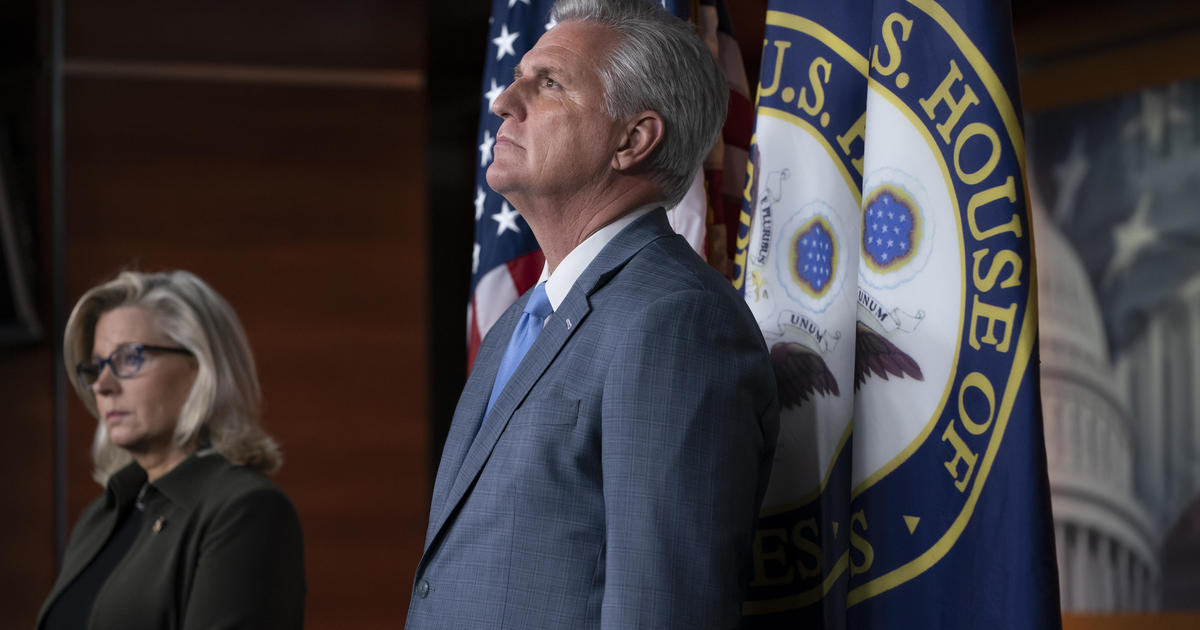
She was once seen as the rising star of the Republican Party, but for Wyoming Congresswoman Liz Cheney, the tides have shifted, and she now finds herself on the outs with the leadership of the GOP. Cheney’s vote to impeach President Donald Trump gained her national attention and accolades from across the aisle, and consequently, several enemies within her own party. Cheney comes with pedigree, profile and a strong following, but with Republicans boasting a record 35 women in Congress, the ousting of Cheney might not have the impact it once did. “It remains to be seen if this decision is a reflection of the Republicans’ willingness to remove a woman from leadership when they aren’t worried about having a ‘woman problem’ in their delegation,” said Dr. Mary-Kate Lizotte, an expert in gender difference in politics and associate professor of political science at Augusta University. What happened Wednesday may have short- and long-term consequences for the Republican party, including how it shapes itself for mid-term elections and the 2024 presidential election. If you are a journalist covering this topic, then let our experts help. Dr. Mary-Kate Lizotte is an expert in political behavior and the implications of gender differences in public opinion. She is available to talk about discuss gender roles in politics and the upcoming Senate runoffs in Georgia. Click on her name to schedule an interview.


Maple Report - May 2021 Edition
May 2021 Welcome to our second edition of The Maple Report. This quarterly newsletter is designed to keep Canadian technology executives updated on the latest trends, market research, events and valuable resources from IDC Canada's expert analysts. In this edition, we want to show you how IDC can help Canadian executives like yourself make important technology decisions. We also want to invite you to our upcoming events and give you a sample of some of our thought leadership through our IDC blog. We hope you find these insights practical to help propel your business into a more resilient digital enterprise. Trust IDC to be your research partner in 2021. We welcome your thoughts about this newsletter. Please send them to askIDC@idccanada.com. HOW CAN IDC HELP YOU? IDC PeerScapes – Helping You Find Technology Best Practices An IDC PeerScape minimizes your missteps by identifying peer business practices worthy of emulating or avoiding, increasing the likelihood of positive impacts from a technology initiative. To assist your organization finding technology best practices, IDC publishes dozens of IDC PeerScape reports. Similar to IDC MarketScapes that we explored in the last edition of The Maple Report, IDC PeerScapes sit on the Engage part of our IDC DecisionScape framework , and include reports to help you launch, evaluate and optimize new technology initiatives. The report outlines key challenges your peers encountered when implementing a specific technology initiative, as well as key insights your peers learned along the way. IDC PeerScapes help you to increase the likelihood of a tech initiative’s success by giving you insight into best practices (and practices to avoid) through specific use case examples implemented by your peers who have already led a similar technology initiative. These documents can help your organization recreate successful implementations of technology and help you mitigate risk. To help you understand the value of these reports, we have included here our IDC PeerScape: Practices for Including Cloud Services into Outsourcing Contracts in Canada report. In it, you'll find Best practices from three areas of cloud adoption are discussed in the document: security, cost management, and skills gap. Companies created security checklists to mitigate security risks and retain control of security when working with external vendors. They also filled the skills gap and minimized cost unpredictability by collaborating with their outsourcing service providers. VIRTUAL EVENTS FOR IT EXECUTIVES IDC Fireside Chat | Content Cloud as a Critical Component of Virtual Work May 19, 2021 | 2:00 pm ET Does your organization have a holistic view of your customers when they contact you for assistance? Are your security protocols on your content systems up to snuff with your virtual workforce? Is your content customized for the different employee roles? If any of these content challenges sound familiar to your organization, then you need to attend this webinar to provide a seamless content experience for your customers and your employees. On our next webinar for Canadian technology executives on May 19th at 2pm ET, we'll hear how ATB Financial's Barry Hensch conquered multiple content management challenges to provide seamless experiences in its virtual workplace during a fireside chat with IDC's Megha Kumar. Walk away with a better understanding of what Cloud Content Management entails, why it's important to manage your content effectively and how you can leverage it to prosper in the digital future. Confirmed Speakers: Megha Kumar: Director, Software & Cloud Services, IDC Canada Barry Hensch: SVP & Head of Technology Enablement, ATB Financial Varun Parmar: SVP & Chief Product Officer, Box IDC CIO Panel Series | Accelerate & Simplify Your Canadian Digital Transformation Journey June 16, 2021 | 2:00pm ET Our IDC Canada research indicates that many Canadian organizations are not where they need to be yet to thrive in the digital economy. If you think your organization could benefit from simplifying and accelerating your digital transformation efforts, then you need to attend this upcoming webinar on June 16 at 2pm ET. Join this virtual webinar to understand where Canadian organizations are on their respective digital transformation journeys, what types of projects were accelerated as a result of the pandemic and what impact it had on Canadian industries. Then hear from our all-Canadian CIO panel on how they've stickhandled the impact of the pandemic at their organizations to set themselves up for future success in the digital economy. Learn what you need from your peers to get your organization moving in the right direction. Confirmed Speakers: Tony Olvet: Group VP, Research, IDC Canada Nigel Wallis: Research VP, IoT & Industries, IDC Canada Catherine Chick: SVP, IT, Canada Goose Pamela Pelletier: Canada Country Manager, Dell Technologies IDC THOUGHT LEADERSHIP HIGHLIGHTS DID YOU KNOW? You Can Get Actionable Research, KPIs, Benchmarks & Best Practices with IDC IDC Canada's IT Executive Programs (IEP) make it easy to access the relevant technology research and advice you need to make data-driven decisions as you lead your organization into the digital future. Get in touch today to learn more or visit our IT Executive Portal to learn more. IT EXECUTIVE RESOURCES Set Your Future IT Roadmap with IDC IT leaders need to rethink what is critical and evaluate where the organization stands as they manage complex changes. For strategies on transforming your organization's IT, read the new eBook from IDC: Future IT: Operating System of the Future Enterprise.