
Experts Matter. Find Yours.
Connect for media, speaking, professional opportunities & more.

The History and Significance of Taiwan
Taiwan’s history is a rich and complex tapestry of indigenous cultures, colonial influences, and evolving sovereignty, making it a critical subject for understanding regional and global geopolitics. From its indigenous roots to its modern status as a thriving democracy and global tech leader, Taiwan plays a pivotal role in shaping international conversations about identity, governance, and economic innovation. This topic matters to the public because of Taiwan's strategic importance in global trade, its cultural vibrancy, and its position in ongoing geopolitical tensions. Key story angles that may interest a broad audience include: The indigenous heritage of Taiwan: Exploring the rich traditions, languages, and contributions of Taiwan’s indigenous communities. Colonial and post-colonial history: Examining Taiwan’s transformation under Dutch, Spanish, Chinese, and Japanese rule and its modern implications. Taiwan’s role in global technology: Highlighting its leadership in semiconductor manufacturing and contributions to the global tech supply chain. Geopolitical significance: Analyzing Taiwan’s relationship with China, the United States, and the international community in the context of cross-strait relations. Taiwan as a democratic model in Asia: Discussing its political evolution, vibrant civil society, and significance in promoting human rights. Cultural preservation and innovation: Showcasing how Taiwan balances its traditional arts, cuisine, and festivals with contemporary innovation and creativity. Connect with an expert about Taiwan: To search our full list of experts visit www.expertfile.com

Trump Administration Likely to Bring Policy Changes to Higher Ed
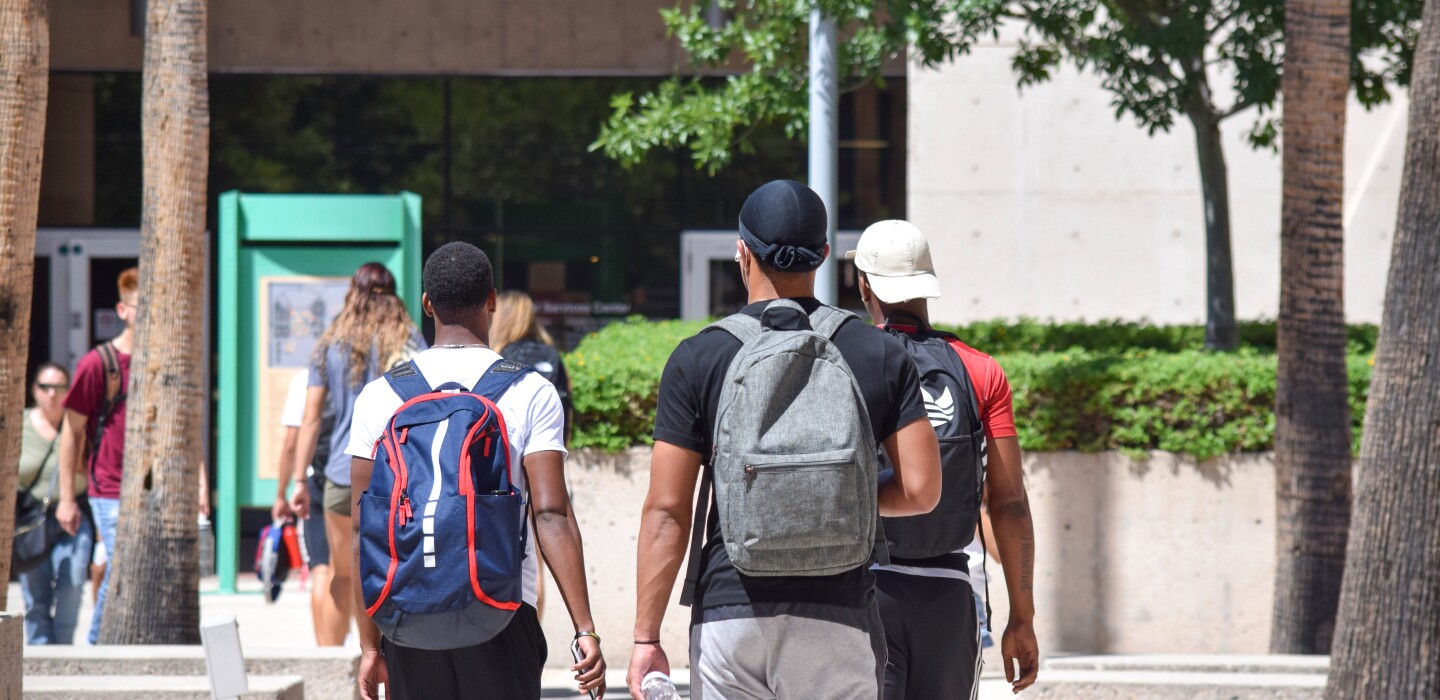
Rebecca Natow, associate professor and director of the EdD in Educational Leadership & Policy Studies program and the MSEd in Higher Education Leadership & Policy Studies, was interviewed for “Higher Ed Changes Loom Under a Second Trump Administration,” that appeared in the latest issue of Governing. The article explains that when Donald Trump becomes president, he will likely undo federal regulations enacted by the Biden administration, affecting issues such as Title IX enforcement and protections for transgender students. Those regulations were partly an undoing of Trump’s first-term policies. “It’s been a burden because the people who are working on the college campuses implementing these policies on the ground are having to learn all new policies,” said Dr. Natow.


Georgia Southern cuts ribbon for Jack and Ruth Ann Hill Convocation Center
Georgia Southern University officials cut a ceremonial ribbon to open the Jack and Ruth Ann Hill Convocation Center, affectionately known as “The Hill,” in a celebration on Dec. 4. At 95,000 square feet, it is the largest event venue space between Savannah and Macon and serves as the signature building on the University’s south campus, fronting Veterans Memorial Parkway (US 301 Bypass). “It’s more than a building; it’s a place of opportunity,” said Georgia Southern President Kyle Marrero. “Inside ‘The Hill,’ our students will learn, our athletes will compete and our community will come together. From classrooms to research labs, from strength and conditioning spaces to media rooms, every inch of this facility is designed with our future in mind.” The exterior of the Jack and Ruth Ann Hill Convocation Center, which evokes the image of a soaring eagle’s wings, illustrates the University’s commitment to supporting students as they soar beyond. Inside the center, there is approximately 8,000 square feet of new space for a Waters College of Health Professions sports psychology lab, a satellite research lab, faculty offices, a conference room and classrooms. The community will be afforded space for community activities and access to a new strength and conditioning area for research and other programs. The arena, which will serve as the new home court for Georgia Southern Eagles NCAA basketball games, provides more than 5,500 in seating capacity, a 50% increase over Hanner Fieldhouse. The arena has chairback seats along both sidelines and behind one baseline, and allows future opportunities to add additional programming to the building, such as more premium seating, suites and club areas. “It is an honor to officially welcome all of Eagle Nation to the gorgeous Jack and Ruth Ann Hill Convocation Center with today’s ribbon-cutting ceremony,” Georgia Southern Director of Athletics Chris Davis told the crowd. “We look forward to christening the facility with women’s and men’s basketball games on Thursday and Saturday, respectively. I especially want to thank Gov. Kemp, the Georgia General Assembly, Dr. Kyle Marrero, the University leadership and our generous donors for this unprecedented opportunity to elevate the stature of our basketball programs with this outstanding facility that will provide an exciting venue to watch the Eagles soar on the court. Hail Southern!” The center also houses the men’s and women’s basketball program and includes spaces for coaches’ offices, locker rooms, laundry/training room, equipment room, strength and conditioning space, fueling station, media room, visiting team locker room and a media green room. Senior Grace Drawdy, who is a multimedia journalism major, member of the swimming and diving team and president of the Georgia Southern Student-Athlete Advisory Committee, is grateful for this contribution. “If I could describe my time here at Georgia Southern, both individually and as a student-athlete, the one word I would use is transformational,” said Drawdy. “Through the opportunities and resources provided to me by Georgia Southern, I have transformed from a young girl who was unsure of her future to a confident woman who is poised for success wherever she may go. I’ve also had the pleasure of watching the University transform while I’ve been here. And what I’m most excited for is the transformation of our athletic training and physical therapy programs. “This space will enhance athletic training and sports psychology for students within the major, but also the student-athletes who access these services every single day. I’m so thankful to be a part of the ribbon-cutting ceremony today, but I’m even more thankful to be a part of a University that continually helps me grow and be successful as a student, as an athlete, and most importantly, as a person.” The new Hall of Fame for Eagle Athletics is located in the building’s concourse. The seating capacity for the events space is more than 5,900 (including nearly 970 seats on the floor). Event-level space also includes a ticketing office, security command center, a Coca-Cola micro market featuring checkout-free technology, and four dividable classrooms that can convert into additional flexible spaces. Marrero thanked the partners who helped to make this impressive $64.4 million two-story complex a reality. “We express our deepest gratitude to Gov. Brian Kemp, the Georgia General Assembly, with the best legislative delegation in the state of Georgia, led by the Speaker of the House Jon Burns, the Board of Regents, and University System of Georgia leadership under Chancellor Sonny Perdue. Your vision and willingness made this project a reality.” He also thanked the University Foundation Board, the Athletic Foundation Board and donors for their generous gifts and unwavering support of such a meaningful addition to the institution. The building is named for Jack Hill (‘66), who was the longest-serving Georgia senator when he died in April 2020. He was a senator for 30 years, serving as chairman of several crucial committees, including Appropriations, which has broad jurisdiction over legislation involving budgeting and spending state and federal funds. With Hill’s support, Georgia Southern reached new heights as an institution serving the southeast region and the state of Georgia. Hill was instrumental in helping the University expand its programs and build several new state-of-the-art facilities, including the Engineering and Research Building, which opened for classes in January 2021. Hill’s wife of 48 years, Ruth Ann, focused her life on public education and retired as principal of Reidsville Elementary School. She was a Triple Eagle, earning degrees from Georgia Southern in 1973, 1990 and 1991. “We’re here to celebrate the great legacy of two individuals who made a difference,” Ga. Rep. Jon Burns enthusiastically shared with the audience. “They were both faithful public servants, because they cared more about their neighbors than they did about themselves. That was very clear. This University and this state could not be what it will be and what it is without the contributions and the foresight of people like Jack Hill. What he endowed this University with was an opportunity for a better life, for a better education for all Georgians and all people who wanted to attend this University. His fingerprints are all over this place. We all know that with the buildings, with the opportunities for these students, for these young people, they’re boundless. Because of the foresight and the work of Jack and Ruth in this place, we are privileged to sit here. Today was a dream of Senator Hill.” Marrero also reflected on the outstanding legacy of Jack and Ruth Ann Hill. “As Senator Hill once said, ‘The power of education is the ability to produce knowledge, character and skill in a way that is beneficial to society,’” Marrero shared.” His legacy embodies that ideal. Today is a celebration of what we’ve achieved together, but it’s also a look to the future. “The Hill” stands as a symbol of our University’s growth and commitment to providing exceptional opportunities for our students and community. “So, today, let us cut this ribbon and open the doors to a new era at Georgia Southern,” he concluded. “Together, we will continue to honor the legacy of Jack and Ruth Ann Hill while building a brighter future for Eagle Nation.” Construction for the Jack and Ruth Ann Hill Convocation Center began in early 2023 and finished late 2024. The program manager for the project is BDR Partners; the architect/engineer is LS3P-AECOM; the site/civil engineer is Hussey, Gay, Bell; the mechanical engineer is Dulohery Weeks; the general contractor is Whiting-Turner. Additional partners are GSFIC and Board of Regents USG. If you're interested in learning more about Georgia Southern University then let us help - simply contact Georgia Southern's Director of Communications Jennifer Wise at jwise@georgiasouthern.edu to arrange an interview today.


Georgia Southern welcomes Georgia state leaders on Wexford Campus in Ireland
Georgia Southern University’s Wexford Campus in Ireland has been invigorating educational, civic, business and trade opportunities between Ireland’s southeast region and the state of Georgia since its establishment in 2022. The bicultural partnership has drawn the attention of state leaders in Georgia, prompting a recent visit to the international campus where Georgia Southern and its Irish partners welcomed the delegation. “We hosted legislators and leaders of industrial development and enterprise organizations,” said Howard Keeley, Ph.D., director of Georgia Southern’s Center for Irish Research and Teaching (CIRT). “These Georgia stakeholders believe that what Georgia Southern is doing in Ireland is important. One of the major concepts behind the Wexford Campus is that it’s a true campus, not just a study-abroad venue. So we’re pursuing several streams of activity. One is teaching and another is research. Another one is economic development, which includes internships and community engagement. We want to be in the community; therefore, to have leading constituents from a variety of industries in Georgia was very gratifying.” Among the attendees were U.S. Congressman Earl L. “Buddy” Carter; Georgia Department of Economic Development Commissioner Pat Wilson and five members of his senior staff, as well senior officials from electrical utilities, including Georgia Power; Trip Tollison, CEO of Savannah Economic Development Authority; Teresa MacCartney, chief operating officer for the University System of Georgia; and Georgia Rep. James Burchett (‘04), along with 10 additional members of the Georgia House of Representatives. “The main thing we wanted to do is show them what the student experience is like,” said Keeley. “We care about our students, and, using philanthropic funds, we’ve invested in a beautiful set of buildings, including one, built in 1886, that will house 50 students at a time. Each year, our goal is full capacity over six minimesters for a total of 300 Georgia Southern students. Historically a religious convent, that structure should open in spring 2026, after extensive remodeling. Many Georgia Southern students, including construction management and interior design majors, are gaining valuable professional skills by contributing to the endeavor.” The Wexford Campus already features the Learning Center, a historic administrative complex constructed in 1812 that has been transformed into a contemporary, high-tech educational space where students learn from local and international experts. They also present their research to peers and visiting Georgia Southern alumni while participating in high-impact experiential learning within the region. Visiting delegates were pleased to learn about the Honors College Global Scholars Program, which hosts 24 Honors College students who, taking an interdisciplinary approach, explore two themes for six weeks each spring in Ireland. This year, a prominent topic of study was sustainability in agriculture. One of Georgia Southern’s European research partners, South East Technological University Ireland, helped guide the students as they compared sustainability challenges along the coasts of Georgia and southeastern Ireland. The students drew on various research efforts, including important knowledge generated by Georgia Southern’s Institute for Water and Health. Similar integrated concepts also inform the summer and fall offerings. In 2024, they included two undergraduate global business courses, as well as the first Europe-based course from the MBA program at Georgia Southern’s Parker College of Business. One focus for the MBA students was Rosslare Europort, just south of Georgia Southern’s Wexford Campus, which has become Ireland’s fastest-growing port as multiple new direct routes to continental Europe have opened in response to Brexit. At a workshop facilitated by a top Rosslare Europort official, the MBA students explored international trade, logistics and supply chain management and the European regulatory environment. Spanning undergraduate, graduate and doctoral levels, the Wexford Campus has also provided courses in accounting, philosophy, sociology, geography, environmental biology, tourism and public health, among other disciplines. Shadowing Irish experts, population health science students from the Waters College of Health Professions focused on designing and delivering preventative-health programs, a critical matter in both Ireland and Georgia. “One of the metrics we use to measure success in Ireland is asking what makes it worthwhile for students to complete the course in Ireland as opposed to staying in the United States,” posed Keeley. “The bottom line is that we’re trying to provide a range of courses that look like Georgia Southern and that meet the degree needs, but also the employment needs in the state of Georgia. We’re always looking at how we can make our students more competitive, deepen their knowledge and give them as much hands-on experience as possible. This is really one of the things that we hope is a differentiator for us.” Notably, annual scholarships are available for the Honors College Global Scholars Program, Department of Political Science and International Studies students and Irish Studies students thanks to generous donations from alumni. In addition, philanthropic support has provided $1,000 to each participating student to offset the cost of transatlantic air travel. “The Wexford Campus’ directives exemplify Georgia Southern’s mission of providing holistic educational opportunities for our students to excel and grow,” said Annalee Ashley, Ed.D., Georgia Southern Vice President for External Affairs, Communications, and Strategic Initiatives, who participated in the trip. “Employers value global consciousness and intercultural skills when hiring, and our students who study abroad can enhance their skills, intellect and hireability in the marketplace. We are proud to serve Georgia and the entire southeastern region in this unique way, and to be supported by the state of Georgia as the University moves toward an R1 designation.” Beyond the campus, the group explored Johnstown Castle, an environmental and agricultural research center and heritage venue, as well as the Dunbrody Emigration Experience Center, whose newest permanent exhibition, Savannah Landing, is based on research by Georgia Southern students. The work highlights more than 170 years of historical ties that connect Savannah and Wexford, where hundreds boarded ships and crossed the Atlantic Ocean to arrive in Georgia’s coastal city in the mid-19th century. The centerpiece project, which was celebrated by the Irish prime minister at a ribbon-cutting in August, was made possible by $832,000 in research-grant funding, secured by the Dunbrody Center and Georgia Southern’s Center for Irish Research and Teaching. “Our guests got to experience history and understand the unique story that connects County Wexford to Savannah and, by extension, the state of Georgia,” noted Keeley. “Furthermore, they were able to see more than three-quarters of a million dollars of investment in Georgia Southern student work. That was super exciting.” The legislative group also met with Georgia Southern’s Irish partners, who shared what this relationship means to the people of Wexford and its hinterland, Southeast Ireland. “We invited all the players onto the field to strategically advance themes of education, economic development, and civic and cultural engagement,” said Keeley. “I believe they concluded that Ireland is a fit. It boasts a thriving economy that is modern, global and innovative. It’s the youngest economy in Europe in terms of workforce, and Ireland is one of the biggest investors in the U.S. economy.” Georgia Southern leadership and local Irish legislators, including four members of the Irish House of Representatives, Senator Malcolm Byrne and members of Wexford County Council, hosted Georgia’s VIPs with open arms. “They wanted to rally around us in the way that a family will rally around you,” said Keeley. “They couldn’t have done more. They totally rolled up their sleeves. It was a complete partnership hosting, and we were able to demonstrate that our network is so solid.” Wexford County Council leader Pip Breen shared opportunities for deeper connections with the Georgia delegation through the Irish nonprofit TradeBridge. Established in 2018, the entity facilitates trade and investment between the southeastern regions of Ireland and Georgia by developing new export markets and job creation opportunities. The trade corridor opens doors for southeastern Irish companies to establish a supportive base in southeastern Georgia, while also creating similar coordinates for companies based in southeastern Georgia to enter the European Union marketplace. Keeley, who was awarded the Presidential Distinguished Service Award for the Irish Abroad from the Government of Ireland in 2023, is a board member. “Georgia Southern’s footprint in southeastern Ireland is an important one for students and for the state of Georgia,” said Ga. Rep. Burchett. “The strides they are making not only allow students to participate in research in engineering, coastal sustainability, history and other important areas of study, but they also directly drive trade and investment opportunities between the southeastern regions of Georgia and Ireland. This was an amazing visit and we value our friendships within the Irish community.” Following the event, Burchett returned the hospitality with an invitation for Wexford County Council members to be recognized in person on the floor of the Georgia General Assembly in March 2025. “They very enthusiastically accepted the invitation,” Keeley shared. “I think when you’re involved in education, when you’re doing business and when you’re building out opportunities, the most important single thing is friendship and like-mindedness. You cannot achieve anything otherwise. There has to be this human-to-human connection. There has to be genuine mutual respect and mutual affection, and that was just in spades.” Georgia Southern’s Wexford Campus was featured on the national Irish TV program, “Nationwide.” You can see it here: Looking to know more, then let us help. Howard Keeley, director of Georgia Southern’s Center for Irish Research and Teaching, is available to speak with media. Simply click on his icon now to arrange an interview today.


Maureen Leffler, D.O., Named ChristianaCare’s Chief Wellbeing Officer
Maureen “Mo” Leffler, D.O., MPH, has been appointed chief wellbeing officer of ChristianaCare, effective Nov. 25. In her role, Leffler leads the ChristianaCare Center for WorkLife Wellbeing and strategies to enhance the professional fulfillment and well-being of ChristianaCare’s nearly 14,000 caregivers, overseeing advocacy programs and initiatives to optimize their experience and foster a culture of well-being throughout the organization. She works closely with leaders across key departments to address factors impacting caregiver well-being. Leffler most recently served as the inaugural chief wellbeing officer at Nemours Children’s Health, where she helped the organization to achieve the 2022 Joy in Medicine distinction from the American Medical Association for prioritizing proven efforts to enhance the professional fulfillment of physicians. There, she established a Center for Associate Wellbeing; led the first systemwide assessment to strategically address well-being and burnout; and implemented a peer support program and expanded the scope of resources available to support the emotional and mental health needs of employees. In collaboration with organizational leaders, she supported targeted clinical team assessments and systems-based interventions to foster well-being. Prior to this role, Leffler served as a pediatric rheumatologist at Nemours and as an assistant professor of pediatrics in the Division of Rheumatology at Thomas Jefferson University. Since 2017, Leffler has served as the course director of the Chief Resident Leadership Training Program for the Accreditation Council for Graduate Medical Education (ACGME). In response to the COVID-19 outbreak, she co-chaired ACGME’s National Task Force on Well-Being. She and her team developed a national graduate medical education well-being community, which she continues to convene, to understand the evolving challenges and share strategies to improve well-being. She represents the ACGME as a coach for the National Academy of Medicine Action Collaborative on Clinical Well-Being and Resilience. She also serves as a consultant to the Professional Satisfaction team at the American Medical Association. Leffler earned her medical degree from the Philadelphia College of Osteopathic Medicine, followed by a residency in pediatrics at Nemours and Thomas Jefferson University Hospital, where she served as chief resident. She subsequently trained in pediatric rheumatology at Nemours and Jefferson. She also earned a Master of Public Health from Temple University and studied chemistry at St. Joseph’s University. Recently, Leffler completed the Georgetown Executive Leadership Certification Program.


Study: Intuitive introverts lead the most successful teams
An unwritten law of leadership states the loudest voices in the room are not always the wisest. Some of history’s most notable and successful leaders were known introverts who wrangled loads of information for sizable teams: Abraham Lincoln, Bill Gates and Oprah Winfrey, to name a few. New research from the University of Delaware found introverted leaders who rely on intuition to handle this large bundle of information lead the most successful teams. The research, co-authored by professor Dustin Sleesman, explored the concept of intuition and when it's helpful for leaders who are in charge of large teams. Sleesman and his co-authors from Michigan State University studied more than 3,000 U.S. Air Force captains at a military base in Alabama. As part of their leadership training, the captains participated in a team-based battlefield simulation, which gave the researchers an opportunity to observe and analyze their behavior. Sleesman and his co-authors accurately predicted that teams performed better when their leaders were armed with high amounts of information. But they made two interesting findings they didn't expect: • Introverted leaders led more successful teams when intuitively handling large amounts of information. • Intuitive leaders, in general, led more successful teams when they had to handle a lot of information. "Introverted people tend to be more reflective, more introspective, they tend to be more observational than extroverted leaders," Sleesman said. "So pairing intuition with introversion tended to be very effective for team performance." Sleesman, an associate professor of management in UD's Lerner College of Business & Economics, studies the psychology of decision-making, negotiation and conflict resolution, as well as team effectiveness. To set up an interview, click on the link below.


Higher Education Enters the Ring
Why it matters Yesterday’s announcement that Linda McMahon is President-elect Donald Trump’s pick to lead the Department of Education ushers in a new era for universities and colleges. This signals a sharp pivot toward decentralization and pro-business policies, and it's expected that McMahon’s leadership will focus on dismantling traditional federal education structures, expanding school choice, and aligning education priorities with a business-first agenda. Higher education faces funding uncertainties, new accountability pressures, and the need to demonstrate its relevance in supporting economic growth. The Big Picture McMahon’s appointment reflects Trump’s broader strategy to reframe education policy in a way that prioritizes state control, entrepreneurship, and conservative cultural values. This will likely have significant consequences for higher education, including: Decentralization: Shifting control of education policy and funding to the states. School Choice Expansion: Redirecting public funds to private, religious, and homeschooling options. Economic Alignment: Pressuring institutions to support industry, small business, and workforce development through research, partnerships, and entrepreneurship/startup programs. Cultural Shifts: Rolling back policies on diversity, equity, and inclusion while emphasizing “patriotic” education. What’s at Stake Federal Funding Cuts: Threat: Research funding, Pell Grants, and other federal supports may face cuts. Reality Check: Congressional approval is required to eliminate funding streams like Title I, making complete federal withdrawal unlikely but changes and funding disruptions possible. Policy Shifts: Threat: Federal oversight will likely weaken, and policies favoring vocational and workforce-aligned education will likely put increased pressure on programs such as liberal arts. Universities will also likely face increasing pressure to align with ideological goals, such as restricting DEI (diversity, equity, and inclusion) initiatives. The new administration could wield considerable control over the school accreditation process, which has been seen by some to force ideological changes on campuses. There has been a movement to decentralize accreditation authority, reduce federal oversight, and align educational standards with conservative values. According to the Council for Higher Education, many of the ideas put forward focus on empowering states to authorize accrediting agencies and even serve as accreditors themselves, shifting control from federal to state governments. Action: Institutions must better identify their options amidst a rapidly evolving agenda at both the state and federal levels, develop strategies and secure the resources necessary. For instance, there are calls to prohibit accreditors from requiring institutions to implement Diversity, Equity, and Inclusion (DEI) policies. Institutions also need to understand what the implications of a more diverse accreditation landscape could be, with standards varying significantly across states, potentially affecting the uniformity and transferability of academic credentials nationwide. Reputational Risks: Concern: Growing public skepticism toward higher education undermines enrolment and support. Impact: Conservative narratives favoring alternatives like apprenticeships and other programs that support the economy and job growth will likely gain traction. Preserving Institutional Independence: Pressure: Universities face increased scrutiny of their course curriculum and research priorities that may be deemed ideologically contentious. Opportunity: Institutions must tangibly demonstrate their value to society. The more they can do to break down barriers between “town and gown” and counter the narrative that paints them as too expensive, elitist, and out of touch. Demonstrating Economic Impact: Need: Universities must showcase their role in driving economic growth through research, commercialization, and support for small businesses and entrepreneurs. Opportunity: Institutions should communicate their relevance in relatable ways that engage with businesses, emphasizing tangible contributions to research innovation and job creation as a positive return on investment that can be messaged to taxpayers. Key Questions for Higher Ed Leaders Funding: How can we diversify revenue streams and reduce reliance on federal support? Advocacy: How should universities engage state and federal leaders to protect their interests? Reputation: How can higher education rebuild public trust and counter skepticism? Relevance: How do we better communicate the value of university research and its role in supporting a pro-business agenda? Adaptation: Can institutions innovate by expanding industry partnerships, online education, and workforce-aligned programs? Implications of Project 2025 Project 2025 is a comprehensive initiative spearheaded by the Heritage Foundation, a conservative think tank, aiming to reshape the U.S. federal government through a conservative lens. Launched in April 2023, it serves as a strategic blueprint for a potential conservative administration, detailing policy proposals, personnel strategies, training programs, and a 180-day action plan. Analysis from the Brookings Institution states that "many proposals in Project 2025 would require an unlikely degree of cooperation from Congress, though others could be enacted unilaterally by a second Trump administration.” While we don’t know the full extent to which Project 2025 will be implemented, its agenda seeks to reshape federal agencies, including the Department of Education, with a significant impact on the sector. Key areas of focus include: Title I and Student Aid Proposals to give parents more control over federal funds could deprioritize public education. Tax Credits for School Choice Incentives to support private school tuition may shift K-12 pipelines, impacting university enrolment. Economic Realignment Universities will need to align with business priorities, emphasizing innovation, commercialization, and job creation. Diversity Equity & Inclusion Project 2025 explicitly calls for reducing federal spending on what it deems unnecessary or politicized initiatives, and DEI programs are likely to fall under this categorization. This could have wide-ranging impacts, including changes to school ranking systems that have a DEI component. Ranking bodies such as US News & World Report may need to adjust their methodologies to account for changes in diversity initiatives and data availability. With potential reductions in diversity-related data, rankings might place greater emphasis on other factors such as academic performance, faculty qualifications, and post-graduate outcomes. This also could extend to endowments, which direct funding toward diversity programs through scholarships and fellowships. For institutions that rely heavily on DEI as a cornerstone of their fundraising and donor relations strategies, they may experience reduced donor enthusiasm, particularly from philanthropic organizations or alumni committed to these causes. Regulatory Rollbacks There is the potential for significant changes to Title IX protections and federal loan forgiveness programs, creating legal and financial uncertainty. What Universities Can Do Now: Secure Funding Build relationships with private donors, businesses, and industry partners. Strengthen advocacy efforts at the state level to safeguard funding & other resources. Adopt proactive strategies to mitigate potential policy impacts, such as diversifying revenue sources, engaging donors with aligned government priorities, and ensuring compliance with evolving regulations. Reinforce Public Trust Explain complex topics in accessible ways to help the public and policymakers make informed decisions. Help promote and support faculty who can serve as credible sources for the media, countering misinformation and fostering informed dialogue. Strengthen community connections with your experts through public speaking engagements, workshops, and local events. Position the university as a hub for knowledge and innovation that benefits the community. Capitalize on the reach and influence of alumni. Highlight their successes to show how they benefitted from educational programs and research. Position them as important role models and advocates in the community who are contributing to economic growth. Demonstrate Relevance Showcase faculty and their research breakthroughs. Demonstrate how their work benefits industries, supports entrepreneurship and addresses societal challenges. Speak to real-world outcomes in health, technology, the environment, and more. Use accessible language to connect with policymakers, business leaders and taxpayers. Strengthen Advocacy: Partner with peer institutions to shape policy discussions. Position universities and colleges as vital contributors to a pro-business agenda. Innovate: Expand stackable credentials and micro-credential programs that are aligned with private and public sector requirements and emerging skills-based models. Look at new online education options. Embrace partnerships that connect academic research to real-world economic impact. Universities must deliver a more compelling, data-driven, yet humanized story about their institution’s contributions, fostering stronger relationships with government, the private sector, and taxpayers. What's Next This new era will most certainly challenge higher education to rethink its approach to funding, policy, and public engagement. For all institutions, both public and private, there is no place to hide. As they step into the ring, Higher Education leaders will need lots of support as they look to forge new paths for research, teaching, and community service while engaging their stakeholders in ways that more powerfully communicate their vital contributions to society. The bell has rung—are you ready?


Success Over Sacrifice: How Zarb’s Online MBA Program Is Changing The Grad School Experience
Dean Janet Lenaghan, Zarb School of Business, published a piece in Poets&Quants highlighting Zarb’s Online MBA program. She details the program’s concentrations, leadership development resources, and global learning opportunities, emphasizing its value in balancing career, education, and personal life. The article also showcases testimonials from alumni and explains the program’s strong reputation for helping students advance in their careers.


Kert Anzilotti, M.D., Appointed President of the Medical Group of ChristianaCare
Kert Anzilotti, M.D., MBA, FACR has been appointed president of the Medical Group of ChristianaCare. Anzilotti has served as interim president since June 2024. He will also continue in his role as system chief medical officer of ChristianaCare. As president of the ChristianaCare Medical Group, Anzilotti will seek to improve every aspect of care for every person the Medical Group touches. He will focus on the optimization of care delivery, strategic visioning, network development, clinical technology implementation and leveraging medical informatics. Anzilotti will continue to develop new care models that transcend settings, promote value-based care and improve the patient experience across the clinical enterprise. Among his priorities are the adoption of population health measures, the embedding of health equity into care delivery and workforce development, further expansion of access points for patients and the continuous enhancement of patient and caregiver experience. “Dr. Anzilotti is exceptionally qualified to lead the Medical Group of ChristianaCare,” said Janice E. Nevin, M.D., MPH, president and CEO of ChristianaCare. “His passion for our mission and vision for the future strength of our Medical Group is unwavering. Since joining ChristianaCare in 2011, Dr. Anzilotti has earned a well-deserved reputation as a thoughtful and collaborative leader.” Anzilotti has served in numerous leadership roles at ChristianaCare, including as chief medical officer, acute care; chair of the Department of Radiology; medical director of Imaging Services; and physician leader of the Neurosciences Service Line. He also previously served as Interim President and CEO for the eBrightHealth ACO with responsibility for physician leadership and network operations. He is board certified in Neuroradiology. “Over the many years I have been at ChristianaCare, I have had the privilege of witnessing the dedication and compassion of my Medical Group colleagues as we served together with love and excellence,” Anzilotti said. “I am honored to lead this incredible, dynamic group that is reshaping the future of care, ensuring everyone we serve can achieve their best health.” Anzilotti earned his medical degree from Jefferson Medical College of Thomas Jefferson University in Philadelphia. He earned his MBA at the University of Delaware, completed the Managing Health Care Delivery Course at Harvard Business School and graduated as Physician Executive Fellow in the Health Management Academy, GE Fellows Program. The Medical Group of ChristianaCare consists of over 2,200 dedicated doctors, nurse practitioners, physician assistants and other caregivers. This highly skilled team delivers exceptional care through ChristianaCare’s community-based primary care and specialty care practices serving Delaware and surrounding states. Additionally, the Medical Group collaborates with ChristianaCare hospitalists to ensure seamless continuity of care for our patients, from primary care to hospital care and back again.


[ Deputy Chief Jen Davis, Police Chief Mark Crowell, Catherine Conoboy WRPS SSP Program Coordinator, Deputy Chief Eugene Fenton, Leslie Rocha, CAA SCO ] CAA South Central Ontario (CAA SCO) is proudly awarding Catherine Conoboy, a civilian professional with the Waterloo Regional Police Service (WRPS), with the CAA School Safety Patrol® (SSP) Program Achievement Award for her outstanding contribution and dedication to the program. As the Corporate Events Coordinator for WRPS, Conoboy has trained CAA School Safety Patrollers for 23 years, demonstrating her unwavering dedication to student safety since 2001. As part of her passion for educating the youth in her community, Conoboy organizes an annual mass training event every September, training between 1,000 to 1,200 student Patrollers at each event. “Conoboy’s commitment to the CAA School Safety Patrol program over the past two decades has been exceptional. Her leadership, collaboration with key partners, and dedication to student safety are the cornerstones to this program’s success,” says Leslie Rocha, community program consultant at CAA SCO, “Whether organizing appreciation events or securing support from local groups or governments, her passion for student safety and community engagement shines through.” In Waterloo Region, during the 2024/2025 school year, 90 schools registered for the program – 46 more schools than in the school year prior. Together with the Student Transportation Services of Waterloo Region, Conoboy has encouraged and promoted schools to participate in SSP training. “We are extremely proud to see Catherine being honoured with an award that recognizes her exemplary work and commitment to public safety,” said Cherri Greeno, director of corporate affairs, Waterloo Regional Police Service. “Through this program, Catherine has shown her dedication and passion to building community relationships while improving the health and safety of thousands of youth within Waterloo Region.” Every year, CAA SCO recognizes community partners across Ontario with the CAA School Safety Patrol Program Achievement Award, given to a road safety advocate who embodies their commitment to the program’s mission of keeping school zones safe. “CAA always advocates for the safety of our communities and the children and pedestrians that reside within them,” says Rocha. “We continue to work alongside our community and police partners to empower elementary school students to help keep themselves safe when travelling to and from school.” The CAA School Safety Patrol program was developed in 1929 to protect, educate, and empower elementary school children on safe road-crossing practices. With more than 90 years of proven experience in teaching road safety and children’s safety in school zones, the program gives Patrollers an acute awareness of road safety and gives them the tools to help them stay safe as they travel to and from school. To help make the program a success, Conoboy also works closely with the local bussing consortium, Waterloo Regional Police, Fire Services, and Paramedics to ensure Patrollers are trained to be safety advocates in their communities. “Year after year, Conoboy’s ability to foster these critical relationships ensures the SSP program runs smoothly and effectively,” says Rocha. Waterloo Regional Police Service has participated in the SSP program for over 30 years. Since its start, the CAA School Safety Patrol program has helped keep students safe in school zones. Every year, approximately 800 schools in Ontario participate in the CAA SSP program, which CAA SCO delivers with local partners. For more information, visit www.caaschoolsafetypatrol.com
