
Experts Matter. Find Yours.
Connect for media, speaking, professional opportunities & more.

Expert Insights: Want More Engagement? Eliminate the Barriers.
Anyone born in the 70’s or earlier will probably remember it well. Time was when playing any kind of video game meant physically disporting yourself to the local arcade—a twilight zone of flashing neon, electronic beeps and bops, and the clink of quarters hitting the slot. As technology advanced, the videogame came to you. Home consoles and TV stations rigged with joysticks duly became the mainstay of gaming. The Atari 2600 brought the arcade experience into dens all over the US; Pac-Man, Space Invaders, and Asteroids now at the fingertips of a generation of games who no longer needed to leave home to play. Fast forward to the era of smart phones and hi-tech, and gaming has evolved again. Today, Fortnite, Minecraft, and The Legend of Zelda can accompany you pretty much anywhere—onto a train or a bus, into the canteen at work or school, or under the covers at 2am. In our always-on, on-demand world, video gaming increasingly meets players where they are; a play-anywhere, digital user experience that empowers individuals to engage with their game of choice wherever they are, whenever it suits, and via whatever platform they prefer, desktop or mobile. For users, the benefits seem clear. But what about game producers? As availability expands to new channels and platforms, how does it change user behavior? Does it deepen engagement or does cross-platform continuity simply end up redistributing play—the addition of each new platform shifting players away from, and effectively cannibalizing, existing channels? It’s a conundrum, and not just for video game producers. Retailers, bankers, insurance firms, media, and hospitality providers—anyone with an online-first approach looking to meet their customers wherever they are—should also be cognizant of the potential downsides of channel expansion in the digital space. Weighing in here is research by Professor of Marketing and expert in the intersection of sports and cultural analytics and marketing Michael Lewis. Together with Wooyong Jo of Purdue, Lewis looks at the impact of omni-channel strategy on videogames—a proxy, he says, for other sectors and industries. What they find is critical for marketers and decision-makers in any context or business setting. Increasing the digital touchpoints between your product and customers does impact behavior—but the net results are overwhelmingly positive. Video game players play more, they spend more frequently, and they integrate gameplay more deeply into their everyday lives. In other words, the investment pays off. And the dividends in customer engagement are serious. Switching to the Switch To unpack all of this, Lewis and Jo partnered with a large US video game publisher to analyze player-level behavioral data for one its major titles in the Multiplayer Online Battle Arena, or MOBA genre. Players form teams and compete to destroy opposing team’s bases, selecting a character from a set of 100+ options. Revenue for the publisher comes from a “freemium” business model—users can make voluntary purchases to unlock new characters or buy cosmetic enhancements. These purchases are geared toward enhancing the gaming experience but don’t affect competitive outcomes, making them a critical measure of engagement. In 2019, the game was released for the Nintendo Switch, which can be docked in home consoles but is most commonly used as a mobile, hand-held device. PC players were given the option to download this new version and continue gameplay seamlessly using their existing accounts. Analyzing player behavior before and after the adoption of the new Switch platform, Lewis and Jo were able to zoom in on some critical measures of user engagement including game usage or the total number of matches played, in-game spending—what, when and how much players spent—and player inactivity or churn. “We were able to really get into player behavior over time, and what happens when you introduce the Switch option and remove the constraints of having to play in one place—the home or gaming PC,” says Lewis. “What happens when you make it possible for players to access the game they love while they’re commuting or on their lunchbreak?” Plenty, it turns out. Mobile access: gameplay, spending and churn Crunching the data, Lewis and Jo find that mobile access dramatically increases gameplay. Players who adopted the Switch version played approximately 31% more games than before—a dramatic uptick that underscores how flexibility gains translate into new opportunities to play and engage. And that’s not all. Lewis and Jo also find that gameplay becomes less concentrated within narrow windows—after school or work, say—and is now more spread out across the day, the result of the “ubiquity effect,” says Lewis. “Take away the constraints of having to be in a fixed location and you see players adding additional play sessions. Interestingly though, we don’t find any adverse effect on PC gaming. Players are simply playing more, and playing longer, rather than replacing PC time.” Then there’s in-game purchasing. MOBA-type games typically give players the option to voluntarily buy modifications for characters, known as “skins.” These skins are cosmetic enhancements: new armor, costumes, skill animations or effects. Crucially, these kinds of purchases don’t advance players to new levels of success in the game. Instead, they are used for personalization—to demonstrate status or to celebrate an in-game event. Lewis and Jo find that mobile adopters make more frequent in-game purchases. While the overall total doesn’t increase materially, these players are spending small amounts, more often—almost 7% more frequently than before. This makes intuitive sense, says Lewis. If players are logging in more often, they have more opportunities to feel inspired to want to spend on skins. But there’s another factor that may be at work. “With this kind of in-game purchasing, it’s likely that a lot of it is about credibility. When you buy a skin or a character pack, it’s like you have more aura within the game; you want to signal something to other players and let yourself be known. And this is more than just monetary, it’s about a deeper kind of engagement,” says Lewis. “It’s possible that as mobile access makes the game more of a frequent companion, as the rate of play increases, there’s this effect that players fall deeper into the community—their engagement deepens even more.” Interestingly, the shift to mobile access had the most significant impact precisely on those players whose pre-Switch in-game purchasing was lowest. These users, who were arguably most likely to disengage and drift away from the game, became significantly more active once the hand-held option became available. “If you have players spending less and less inside the game, the intuition is that these are the customers you are most at risk of losing,” says Lewis. “Bringing in the Switch has seen these customers—those more prone to churn—actively reengage with the game, maybe because they have greater propensity for the mobile version.” Either way, this should be a particularly interesting finding for marketers, he adds; retaining existing users is typically cheaper than attracting new ones. “The evidence suggests that mobile access can serve not only as a growth strategy, but also a defensive one if it helps keep marginal users engaged; those who might otherwise have detached from the product altogether.” Help Them Switch So far, so encouraging. There is one potential downside to porting a game or online product to a new channel, however, and that is usability. Lewis and Jo find that players who switched between platforms experience a slight, initial decline in in-game performance—likely because of differences in the control systems between devices. Players who’ve been using keyboard and mouse controls may need time to adapt to hand-held controllers. To mitigate this, he and Jo suggest that producers could offer tutorials or introductory gameplay modes that accelerate the learning curve as users adjust to the new interface. In most cases, usability should be factored in as an additional, hidden cost, when developers and organizations are contemplating investing in more online customer touchpoints. “Expanding your online channels will always have some cost. Taking a game from one platform and porting it to another one isn’t free, so you will want to anticipate the hurdles, even as you weigh up the clear benefits,” says Lewis. “The key is to make sure you protect your users. With things like video games, you want to think about how to guide or upskill your players, maybe have them play bots at first to ramp up their capabilities. Whenever you create a new channel that has a different operating system from the user’s perspective, you’re probably going to want to provide some aid to your fan community.” The benefits of omni-channel access should always be weighted against the costs involved, counsels Lewis. Even so, today’s competitive pressures—the seemingly inexorable march of technological innovation and evolving user expectations—are likely to make platform expansion unavoidable for most online businesses. In the world of video gaming, as major franchises release new products across multiple platforms, and player preferences become more sophisticated, companies may simply have to adopt similar strategies to remain competitive. “As everyone else invests in the same new technologies, you almost have to do the same—just as a matter of doing business,” says Lewis. “If you are launching a video game, you’ve got to compete with whatever Call of Duty or Grand Theft Auto are doing. You can’t just tell your players they can only engage on one platform. The competition is continuously raising the stakes just in terms of the bare minimum.” Building Fandom: the Connective Cultural Tissue More broadly, Lewis and Jo’s findings speak to how human beings form communities of shared passion around business entities and, perhaps more compellingly, around cultural phenomena: video games, for sure, but also sports teams, music, films, comic books, fashion, and more. Understanding the mechanisms that drive and deepen engagement sheds more light on what Lewis calls the “connective cultural tissue of fandom: ”the powerful social bonds, camaraderie, and shared identity that connect people to cultural entities and to each other. Fandom, he argues, is the “key to our world.” Understanding fan behavior is critical to understanding how it is that games, brands, sporting teams, or politics forge communities built on shared passion. “Whatever your organization or business is, you are going to be interested in driving passion. You want people to engage and love what you do. What we’re looking at in this study is a building block towards understanding how cultural entities fit into consumers’ lives, and how eliminating barriers helps to expand communities and drive relationships—extending reach and engagement by weaving cultural experiences more deeply into everyday life.” The real challenge in front of organizations, be they video game producers or online retailers, says Lewis, is to give their product the kind of “cultural meaning” that creates fans—and not just users. “When you think about the behavior of fans, the level of passion and engagement that exists around cultural phenomena—whatever they are from video games to FIFA, the English Football League to the Super Bowl, Taylor Swift to the Republican Party—that’s where you see the passion that really drives the world. And that to me, is critical in understanding how business works, how societies function, and how our world evolves.”



The Biggest Study Yet on School Cellphone Bans Shows Results Aren’t So Simple
As more schools move to restrict or completely ban smartphones in classrooms, the largest study ever conducted on school cellphone bans is challenging assumptions about what these policies actually achieve. The new U.S. study, involving roughly 4,600 schools and researchers from institutions including Stanford, Duke, the University of Michigan, and the University of Pennsylvania, found that strict cellphone bans dramatically reduced phone use during the school day. In some schools, classroom phone use dropped from 61 percent to just 13 percent. It's a popular topic and media coverage of the results has been extensive. But the findings became more complicated from there. Researchers found little immediate evidence that phone bans significantly improved test scores, attendance, classroom attention, or bullying rates. Some schools even saw short-term increases in student discipline issues and declines in student well-being immediately after bans were introduced. Still, the study suggested that longer-term outcomes may improve as students adjust and schools refine enforcement strategies. Teachers consistently reported fewer classroom distractions and stronger learning environments. Mizuko Ito is a cultural anthropologist of technology use, focusing on children and youth's changing relationships to media and communications. She recently completed a research project supported by the MacArthur Foundation a three year ethnographic study of kid-initiated and peer-based forms of engagement with new media. View her profile The findings arrive as governments across North America continue expanding school cellphone restrictions amid growing concerns about distraction, screen addiction, anxiety, and the impact of social media on youth mental health. The study highlights a growing debate among educators, parents, and researchers: while limiting phone access may reduce distractions, the relationship between young people, technology, mental health, and learning is far more complex than simply removing devices from classrooms.



TCU Chemistry Researcher Named a Big 12 Faculty of the Year
Kayla Green has built an internationally recognized research program while mentoring the next generation of scientists at Texas Christian University, and her efforts are getting noticed. The chemistry professor and assistant dean of undergraduate affairs at the Louise Dilworth Davis College of Science & Engineering represents TCU among this year’s Big 12 Faculty of the Year honorees. The Big 12 Faculty of the Year Award honors outstanding faculty who excel in innovation and research at each of the athletic conference’s 16 universities. Honorees represent and reflect the best attributes that make a Big 12 college campus a bastion for learning and growth. “In my view, Professor Green exemplifies the fact that student success cannot happen without research, and world-leading research cannot happen without authentic, student-centered experiences,” wrote a nominator when Green was named the 2025 winner of the Chancellor’s Award for Distinguished Achievement as a Creative Teacher and Scholar. “Professor Green has maintained a vibrant, externally funded research program throughout the past 15 years, a distinction shared by very few TCU faculty.” Green was chosen in part for her international reputation in the field of inorganic chemistry as applied to neurodegenerative diseases and catalysis, as well as her leadership in a growing research program that has brought in more than $2.5 million in external support. This includes work with Ben Janesko, professor and chair of chemistry and biochemistry, and biology professors Giri Akkaraju and Michael Chumley on a grant from the National Institutes of Health. Green’s collaborative work with students highlights her ability to weave together research and mentorship. “Dr. Green’s vision and drive have strengthened the foundation of our college,” said T. Dwayne McCay, interim dean of Davis College. “Her ability to inspire students and colleagues alike reflects the kind of leadership that propels our mission forward.” One of her most impactful initiatives is Chemistry Boot Camp, a program she developed with colleagues Janesko and Heidi Conrad to help incoming students build confidence before their first chemistry class. The Big 12 Faculty of the Year Award is intended to showcase the diversity of research breakthroughs and educational opportunities afforded to students attending Big 12 institutions and helps attract future students. This year’s award recipients stretch across a vast array of departments. “We are constantly looking for ways to highlight how Big 12 faculty continue to educate and inspire the next generation of leaders,” Jenn Hunter, Big 12 chief impact officer said. “From the arts and filmmaking to business and engineering, this year’s cohort showcases the vast opportunities available to students pursuing an education on Big 12 campuses.” Faculty members were nominated by their institutions in conjunction with conference faculty athletic representatives, provosts and other university leaders. “I’m very honored to represent TCU as a Big 12 Faculty of the Year,” Green said. “I hope that I am not expected to exhibit any athletic skill sets but am happy to cheer on the Frogs in all they do in our classrooms and competitions! Congratulations to the honorees from across our great conference. TCU has the best faculty, and I am happy to represent them in this capacity.”



How the Class of 2026 can keep resumes out of the digital black hole
Students set to graduate this May are entering a job market where the rules of engagement are being rewritten in real-time. AI is both friend and foe, and ghosting has become the norm. University of Delaware career expert Jill Panté shares how college students can navigate these challenges in a rapidly shifting economy. Panté, director of the Lerner Career Services Center at UD, can apply her expertise to the following: The AI recruitment gap • How to prevent resumes from falling into the "digital black hole" of automated tracking systems. • Current recruitment in 2026 is heavily filtered by AI. If resumes don't mirror the language of the job description, a human might never even see it. • In 2026, AI is the gatekeeper. Students who aren’t using AI for assistance are working twice as hard for half the results. However, the goal is to use it as a co-pilot, not an autopilot. Beat the bots (tailor your content) • Use tools like Resume Worded or Generative AI like Microsoft Co-Pilot or Gemini to see how resumes stack up against specific job postings. • It is better to send five highly tailored, thoughtful applications than 50 generic ones that get auto-rejected by an algorithm. • Use AI to run a mock interview based on the job description and company. The "hidden” job market • If a "job search" consists solely of clicking "Easy Apply" on LinkedIn for six hours a day, it’s not searching; it’s just doom-scrolling with a resume. Roughly 80% of your time should be spent talking to humans. The other 20% should be spent on applications and research. • Find the recruiter or a department head on LinkedIn. Send a brief (2-3 sentence) note reiterating your interest. • Leverage alumni networks through LinkedIn. Narrative branding • Especially for Gen Z: Hiring managers don't just want to know what you did; they want to know the impact you made. • Instead of saying "Responsible for social media,” say "Increased engagement by 40% over 3 months by implementing a new video strategy." • Always lead with results (LinkedIn, resume, Interviews) to showcase the value you bring. Workforce anxiety • Managing the mental toll of the modern, high-speed job search and the professional "ghosting" epidemic. • Establish a personal "Board of Directors" to provide a balance of support, accountability and feedback. • Maintain momentum by volunteering, attending local networking events and learning new skills on platforms like LinkedIn Learning and Coursera. To reach Jill Panté directly and arrange an interview, visit her profile and click on the “contact” button.


New AI tool matches students with high-impact internships
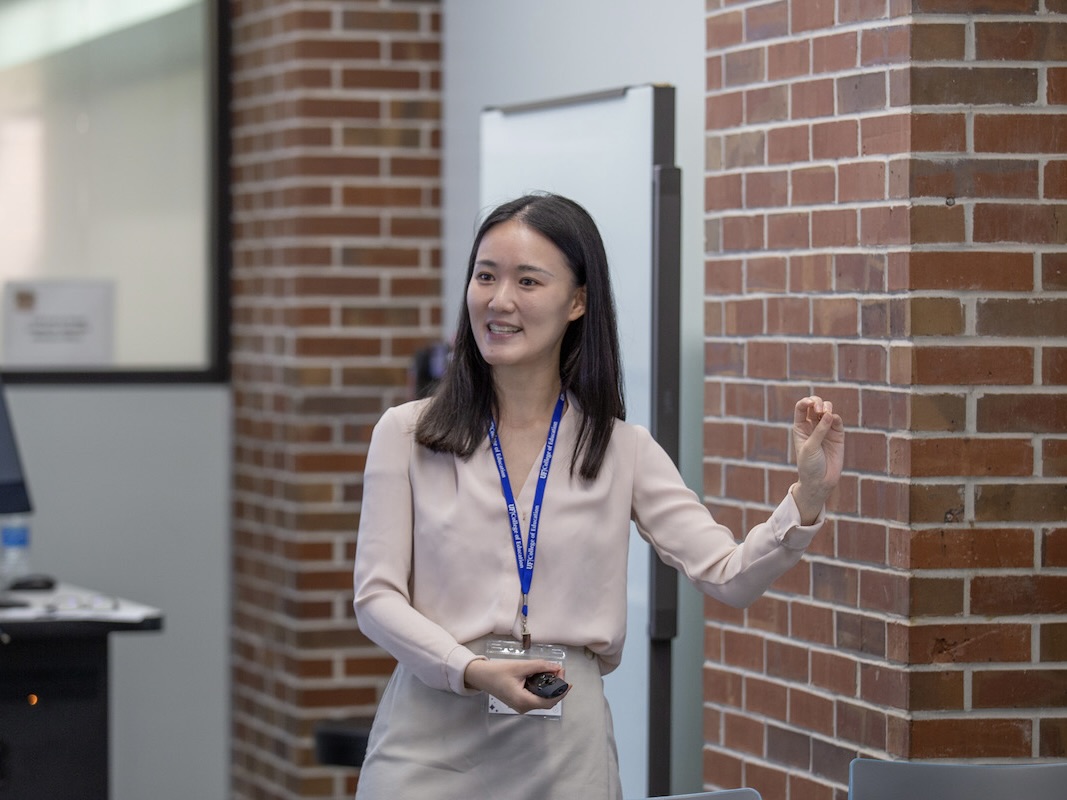
Finding the right internship can be an important step for students, but it’s not always clear which opportunities will lead to the strongest growth. To help solve that problem, University of Florida researchers have developed an AI-powered tool that helps students identify internships most likely to accelerate their technical and professional development. Unlike traditional recommendation engines, Pro-CaRE not only predicts which opportunities will lead to stronger outcomes, it also explains why each suggestion is a good fit. In testing data collected from the students, Pro-CaRE’s predictions proved highly accurate, accounting for more than 72% of the differences in learning gains among participants. While the pilot is being tested in engineering, the tool could be adopted for other disciplines. “Internships are one of the most critical parts of an engineering education, but students often struggle to know which experiences will actually help them grow,” said Jinnie Shin, assistant professor of research and evaluation methodology in the UF College of Education. “What makes Pro-CaRE unique is that it doesn’t just offer a list of options. It provides personalized recommendations backed by data and it tells students clearly why an opportunity is a good match for them.” Pro-CaRE creates matches by analyzing each student’s coursework, major, background and self-reported interest, confidence and self-efficacy in engineering skills. It then compares that profile with a carefully chosen set of similar peers to refine suggestions. The result is more precise guidance that adapts to students at different stages of their degree programs. “Students shouldn’t have to guess or hope that an internship will be worthwhile,” Shin said. “With Pro-CaRE, they can approach opportunities knowing they’re backed by evidence, whether the role is onsite, hybrid or remote and whether it’s at a startup or a Fortune 500 company.” The system is designed to work across a wide range of companies and contexts, giving students flexibility while ensuring their choices align with their personal and professional goals. Each recommendation comes with a clear “why this?” explanation, so students can make confident decisions and discuss options more effectively with advisors. Pro-CaRE was developed by a cross-disciplinary UF team combining expertise in education and engineering. Alongside Shin, the project’s co-principal investigators include Kent Crippen in the College of Education and Bruce Carroll in the Herbert Wertheim College of Engineering. The team is exploring external funding opportunities to expand the usage and test the efficacy on a larger scale. “Ultimately, our goal is to empower students to invest their time in experiences that will have the greatest impact,” Shin said. “Pro-CaRE bridges the gap between what students hope to gain and what internships can truly deliver.”



Using AI tools empowers and burdens users in online Q&A communities
Whether you’ve searched for cooking tips on Reddit, troubleshooted tech problems on community forums or asked questions on platforms like Quora, you’ve benefited from online help communities. These digital spaces rely on people across the world to contribute their knowledge for free, and have become an essential tool for solving problems and learning new skills. New research reveals that generative artificial intelligence tools like ChatGPT are creating a double-edge effect on users in these communities, simultaneously making them more helpful while potentially overwhelming them to the point of decreasing their responses. “On the positive side, AI helps users learn to write more organized and readable answers, leading to a noticeable increase in the number of responses,” explained Liangfei Qiu, Ph.D., study coauthor and PricewaterhouseCoopers Professor at the University of Florida Warrington College of Business. “However, when users rely too heavily on AI, the mental effort required to process and refine AI outputs can actually reduce participation. In other words, AI both empowers and burdens contributors: it enables more engagement and better readability, but too much reliance can slow people down.” The study examined Stack Overflow, one of the world’s largest question-and-answer coding platforms for computer programmers, to investigate the impact of generative AI on both the quality and quantity of user contributions. Qiu and his coauthor Guohou Shan of Northeastern University’s D’Amore-McKim School of Business measured the impact of AI on users’ number of answers generated per day, answer length and readability. Specifically, they found that users who used AI tools to generate their responses contributed almost 17% more answers per day compared to those who didn’t use AI. The answers generated with AI were both shorter by about 23% and easier to read. However, when people relied too heavily on AI tools, their participation decreased. Qiu and Shan noted that the additional cognitive burden associated with heavier AI usage negatively affected the impact on a user’s answer quality. For online help communities grappling with AI policies, this research provides valuable insight into how these policies can be updated in the current AI environment. While some communities, like Stack Overflow, have banned AI tools, this research suggests that a more nuanced approach could be a better solution. Instead of banning AI entirely, the researchers suggest striking a balance between allowing AI usage while promoting responsible and moderated use. This approach, they argue, would enable users to benefit from efficiency and learning opportunities, while not compromising quality content and user cognition. “For platform leaders, the takeaway is clear: AI can boost participation if thoughtfully integrated, but its cognitive demands must be managed to sustain long-term user contributions,” Qiu said.


UF develops breakthrough magnet that could transform metal production
Imagine if producing steel parts for agricultural equipment or even aluminum soda cans required only a fraction of the energy it does today. A University of Florida-led innovation may soon make this a reality. In a groundbreaking collaboration backed by a nearly $11 million federal grant, UF researchers have developed a first-of-its kind superconducting magnet that could advance metal production and position the United States as a global leader in alloy production. “This revolutionary technology has the potential to substantially reduce the cost and energy use of heat treatments in the steel industry, and we are excited to help pave the way for its adoption in industry.” —Michael Tonks, Ph.D., UF’s interim chair of Materials Science and Engineering Funded by the U.S. Department of Energy’s Advanced Manufacturing Office, the project uses Induction-Coupled Thermomagnetic Processing, or ITMP, an advanced manufacturing method that integrates magnetic fields with high-temperature thermal processing. The national consortium of industry, academic and national laboratory partners is now led by Michael Tonks, Ph.D., UF’s interim chair of Materials Science and Engineering, who succeeded Michele Manuel, Ph.D., the project’s long-time leader. “This revolutionary technology has the potential to substantially reduce the cost and energy use of heat treatments in the steel industry, and we are excited to help pave the way for its adoption in industry,” said Tonks. It’s not just any piece of equipment; it’s a custom-built superconducting magnet with a unique ability to combine magnetic fields with high-temperature thermal processing. In partnership with the UF physics department, Oak Ridge National Laboratory, or ORNL, and six companies interested in the technology, the magnet and cylinder induction furnace now sit atop a 6-foot-high platform. The prototype, which costs more than $6 million to purchase and install, is capable of processing steel samples up to 5 inches in diameter making it a rare asset for academic research. Yang Yang, Ph.D., UF materials science research faculty member, estimated ITMP could reduce steel processing time by as much as 80 percent, cutting energy use and operational costs. “Thermomagnetic processing changes a material’s phase stability and kinetic properties, accelerating carbon diffusion in steel, said Yang. “Traditional furnaces cannot achieve these advanced material properties.” The system works by modifying the driving forces for important steel phase changes, which shortens heat treatment. “What normally takes eight hours can be done in just a few minutes.” Yang explained. “The magnetic field acts as an external driving force to make atoms diffuse faster.” Unlike conventional energy sources like electricity or natural gas, the ITMP process uses volumetric induction heating along with high-static magnetic fields to lower energy consumption. The project is still in a pilot phase and requires additional research and testing. At ORNL, researchers emphasized the rarity of UF’s prototype, citing its unprecedented combination of magnetic field strength and ability to process large samples and components. “This could significantly advance U.S. manufacturing and process efficiency for heat treatment of materials such as metal alloys of steel or aluminum,” said Michael Kesler, Ph.D., ORNL research scientist and lead collaborator. Kesler noted successful implementation of this technology could contribute to a reliable energy grid and more efficient industrial electrification. UF researchers contend it could also reduce carbon emissions, supporting cleaner, more sustainable manufacturing processes. The tall, two-level magnet now resides in the Powell Family Structures and Materials Laboratory on UF's East Campus. MSE plans to officially unveil it in December, inviting representatives from national labs, industry and academia. While Engineering students will have future opportunities to use it for research and experiential learning, UF researchers are optimistic about potential industry adoption for industrial manufacturing in the next five to 10 years. The award is part of a $187 million DOE initiative to strengthen competitiveness in U.S. manufacturing. If successful, the innovation could redefine how the world shapes the materials of tomorrow.


New light-based chip boosts power efficiency of AI tasks 100 fold
A team of engineers has developed a new kind of computer chip that uses light instead of electricity to perform one of the most power-intensive parts of artificial intelligence — image recognition and similar pattern-finding tasks. Using light dramatically cuts the power needed to perform these tasks, with efficiency 10 or even 100 times that of current chips performing the same calculations. Using this approach could help rein in the enormous demand for electricity that is straining power grids and enable higher performance AI models and systems. This machine learning task, called “convolution,” is at the heart of how AI systems process pictures, videos and even language. Convolution operations currently require large amounts of computing resources and time. These new chips, though, use lasers and microscopic lenses fabricated onto circuit boards to perform convolutions with far less power and at faster speeds. In tests, the new chip successfully classified handwritten digits with about 98% accuracy, on par with traditional chips “Performing a key machine learning computation at near zero energy is a leap forward for future AI systems,” said study leader Volker J. Sorger, Ph.D., the Rhines Endowed Professor in Semiconductor Photonics at the University of Florida. “This is critical to keep scaling up AI capabilities in years to come.” “This is the first time anyone has put this type of optical computation on a chip and applied it to an AI neural network,” said Hangbo Yang, Ph.D., a research associate professor in Sorger’s group at UF and co-author of the study. Sorger’s team collaborated with researchers at UF’s Florida Semiconductor Institute, the University of California, Los Angeles and George Washington University on study. The team published their findings, which were supported by the Office of Naval Research, Sept. 8 in the journal Advanced Photonics The prototype chip uses two sets of miniature Fresnel lenses using standard manufacturing processes. These two-dimensional versions of the same lenses found in lighthouses are just a fraction of the width of a human hair. Machine learning data, such as from an image or other pattern-recognition tasks, are converted into laser light on-chip and passed through the lenses. The results are then converted back into a digital signal to complete the AI task. This lens-based convolution system is not only more computationally efficient, but it also reduces the computing time. Using light instead of electricity has other benefits, too. Sorger’s group designed a chip that could use different colored lasers to process multiple data streams in parallel. “We can have multiple wavelengths, or colors, of light passing through the lens at the same time,” Yang said. “That’s a key advantage of photonics.” Chip manufacturers, such as industry leader NVIDIA, already incorporate optical elements into other parts of their AI systems, which could make the addition of convolution lenses more seamless. “In the near future, chip-based optics will become a key part of every AI chip we use daily,” said Sorger, who is also deputy director for strategic initiatives at the Florida Semiconductor Institute. “And optical AI computing is next.”


Your Retirement Reset: My New Book will Be in Stores on Sept. 8th
This one has been a long time coming. My new book, Your Retirement Reset: How to Convert Home Equity into Financial Security, published by ECW Press, finally has a publication date. Why I Wrote This Book I have spent decades watching far too many older Canadians carry unnecessary financial stress into what should be a more secure and dignified stage of life. Throughout my career as a mortgage broker, business owner, and later as an executive at HomeEquity Bank, I saw the same painful pattern again and again: people who had worked hard, paid down their homes, built real equity, and still felt trapped. Many were living with fear, cutting back on basic pleasures, worrying about every bill, and feeling ashamed that they had not “saved enough.” Meanwhile, a major asset was sitting right beneath their feet. What struck me most was this: younger homeowners often see home equity as a financial tool, but many retirees do not. For many older Canadians, the idea of borrowing against their home feels frightening, even when it could improve their quality of life and help them stay independent. This resistance is not just about math. It is emotional. It is psychological. And it is deeply tied to identity, security, family, and fear. The Retirement Problem We Are Not Talking About Honestly Enough The old retirement script is failing too many people. We are living longer. The cost of living keeps rising. Private sector pensions have largely disappeared. Healthcare and long-term care costs are real concerns. And many people reaching retirement are discovering, far too late, that the traditional advice to simply save, downsize, and make do does not reflect today’s reality. At the same time, most older Canadians want to age in place. They want to remain in the homes and communities they know and love. They do not want to be pushed into selling, renting, or moving in with family unless they truly choose that path. Yet many are gripped by what I call FORO — Fear of Running Out. That fear shapes countless decisions and robs people of peace of mind. It’s actually rooted in neuroscience and the way we’re wired to behave as we do. I’ve posted about this here in my newsletter and Substack a lot. Because it’s important. This is not a fringe issue. It is a national issue. And it deserves a more honest conversation. Why This Book Matters for Canadians 55+ There is a critical gap in this country when it comes to retirement literacy. Many Canadians over 55 have substantial value tied up in their homes, yet traditional retirement advice often does not seriously incorporate home equity into the conversation. At the same time, the information people do find is often fragmented, biased, overly technical, or scattered across lenders, planners, brokers, lawyers, accountants, media stories, and well-meaning family members. That leaves people vulnerable. They may rely on outdated assumptions. They may wait too long to explore options. They may make decisions out of fear rather than clarity. And because older adults usually do not have decades to recover from a financial mistake, the stakes are high. I want to be direct about this: one wrong decision later in life can be extremely hard to reverse. Seniors need unbiased, transparent information they can actually trust. I wanted to create a resource that is practical, plainspoken, and empowering. Not a sales pitch. Not a jargon-filled textbook. Not a one-size-fits-all solution. What I Hope This Book Will Accomplish I hope “Your Retirement Reset” helps Canadians 55+ do a number of things. First, I hope it helps people understand their options more clearly. Too many retirees only hear about a narrow set of choices. I want readers to see the full landscape and understand how different strategies work, including the pros, cons, and trade-offs. Second, I hope it helps people replace fear with confidence. Retirement should not be defined entirely by scarcity thinking. When people understand how to use all of their assets strategically, including home equity, they can make decisions from a position of strength rather than panic. Third, I hope it helps families have better conversations. One of the great hidden challenges in retirement planning is communication. Adult children often mean well, but they may not understand the emotional reality of aging, independence, or financial vulnerability. These conversations matter, and they are often avoided until a crisis forces them. This book is meant to encourage healthier, earlier, and more respectful dialogue. Fourth, I hope it helps more older Canadians protect their dignity and independence. To me, this is the heart of the matter. As I work through my current MBA studies, my life today is filled with spreadsheets. But retirement shouldn’t be. It is about autonomy, confidence, lifestyle, peace of mind, and the ability to live on your own terms for as long as possible. The Information Gap Nobody Is Filling One reason I felt so compelled to write this book is that the resources simply are not where they need to be. There is no shortage of opinions in the marketplace. But there is a shortage of clear, balanced, accessible education specifically designed for older Canadians trying to navigate retirement in the world as it actually exists now. Many books in this category are dated, narrowly focused, or too technical for many of the people I speak with. And it’s to be expected that much of the consumer-facing content around financial products like reverse mortgages comes from lenders themselves. Many seniors are left trying to piece together a life-changing financial strategy from disconnected advice and Google searches. That is the gap I am trying to fill. Canadians need impartial, balanced information they can trust — especially around home equity strategies and retirement financing. I believe Canadians deserve better than that. They deserve a resource that speaks to them in plain language, respects their intelligence, acknowledges the emotional complexity of these decisions, and gives them practical tools to move forward. We Need a More Modern Retirement Roadmap This book is built around a simple idea: retirement planning cannot just be about accumulating savings. It also has to be about learning how to use those resources wisely. That includes understanding how to: • create income • manage spending • shelter income from unnecessary tax pressure • protect savings from fraud and bad decisions • evaluate whether home equity should play a role in your retirement strategy These are the pillars I keep coming back to. They reflect what I believe Canadians in this stage of life truly need. I want readers to come away not just informed, but steadier. More capable. More hopeful. This Is Personal for Me I am part of this demographic myself. I understand the questions, the transitions, the uncertainty, and the pressure. I also know from lived experience that retirement is not simply a financial event. It is a life event. It affects your confidence, your relationships, your routines, your health, and your sense of who you are. That combination — professional experience and personal experience — is exactly what I bring to every page. That is why I have approached this book not simply as a finance book, but as a practical guide for real people facing real decisions. My hope is simple: that this book helps more Canadians 55+ move into the next chapter of life with greater knowledge, less fear, and a stronger sense of possibility. Because retirement should not just be about getting by. It should be about living with confidence, dignity, and choice. The Book is Now Available for Pre-Order If this message speaks to you, or to someone you love, I hope you will pre-order a copy of Your Retirement Reset. Available September 8, 2026. PRE-ORDER NOW: https://ecwpress.com/products/your-retirement-reset And if you love supporting Canadian booksellers, please also check with your local independent bookstore. Most can easily order it for you. Don’t Retire… Re-Wire! Sue



Finding joy in learning: How lighthearted moments transform English as a Foreign Language classrooms
In classrooms, not every meaningful learning moment can be planned. At the University of Delaware, educator and researcher Chad Davidson is exploring how spontaneous, lighthearted interactions between teachers and students can open the door to deeper understanding in real time. His recent paper in Language Teaching and Educational Research, "Exploring Spontaneous Acts of Lightheartedness in EFL Classrooms: A Reflective Duoethnography", examines how these unscripted moments – rooted in trust, positivity and a willingness to embrace the unexpected – help create environments where students feel comfortable taking the risks essential to learning. In this Q&A, Davidson discusses the inspiration behind his research, what he’s discovered about these classroom dynamics and how they could shape teaching practices moving forward. Q: What is the focus of this research, and why is it important? Davidson: Spontaneous acts of lightheartedness promote real-time learning because it's being open to the unknown in positive ways since the true dynamic of every classroom brings continuous unknowns: A teacher never knows 100% how the students will react (these students, in these moods, on this day, etc.), how quickly they will learn or pick up on something or not. A teacher, hence, spontaneously responds in real-time to the until-then-unknown student reactions in order for those particular students best to then grasp the concept or skill that is the present goal (or “learning objective”) that those students grasp. The hope is that the teacher's spontaneous response (as it often is with many teachers) is positive and lighthearted in order to foster students to also be open to such unpredictability in the classroom and to foster students' comfortability with the vulnerability to be open to taking spontaneous risks that are necessary for that transformation that we call learning – transforming from lack of knowledge to knowledge, from lack of understanding to understanding, from lack of mastery to further mastery. Q: What are some key findings or developments? Davidson: Realizing the essential features that make up spontaneous lighthearted classroom acts; for example, these acts must include trust of the student(s) and from the student(s), and the acts must have good-intentions of creating or maintaining a relaxed environment conducive to safely taking risks for potential learning. Q: How could this work potentially impact the field or the wider public? Davidson: This could foster this act type in classrooms. That is, hopefully more teacher-practitioners will allow themselves and their students to freely enact these in their daily in-class teaching/learning-attempts. Q: What are the next steps or upcoming milestones in your research? Davidson: We incorporated some valuable insights of Mexican philosopher Jorge Portilla. While there is a glut of usage of German, French, British and American philosophers, there is almost no usage of Hispanic or Latin American philosophers in education literature. It would be great to do more work that makes use of the profound thought in the works of Latin/Hispanic philosophers. For me, this would be continuing to go more deeply in applying Jorge Portilla's thought to philosophy of education, such as to classroom management. ABOUT CHAD DAVIDSON Instructor Chad C. Davidson has a Ph.D. in curriculum and instruction with an emphasis in philosophy of language education. He has 17 years of language teaching experience, primarily in teaching and curriculum creation for English for Academic Purposes at various colleges and universities across America (University of Delaware, Kansas State University, Georgia Tech, North Orange County Community College, Johnson County Community College), in Russia (Udmurt State University), and in Turkey (Mus Alparslan University). Moreover, he has studied languages at the following universities abroad: Universidad Autónoma de Guadalajara in Mexico, Universidade do Porto in Portugal, and Aristotle University of Thessaloniki in Greece. To speak with Davidson about his work and the importance of spontaneous acts of lightheartedness, reach out to MediaRelations@udel.edu.