
Experts Matter. Find Yours.
Connect for media, speaking, professional opportunities & more.
Georgia Southern adding two engineering doctorates this fall
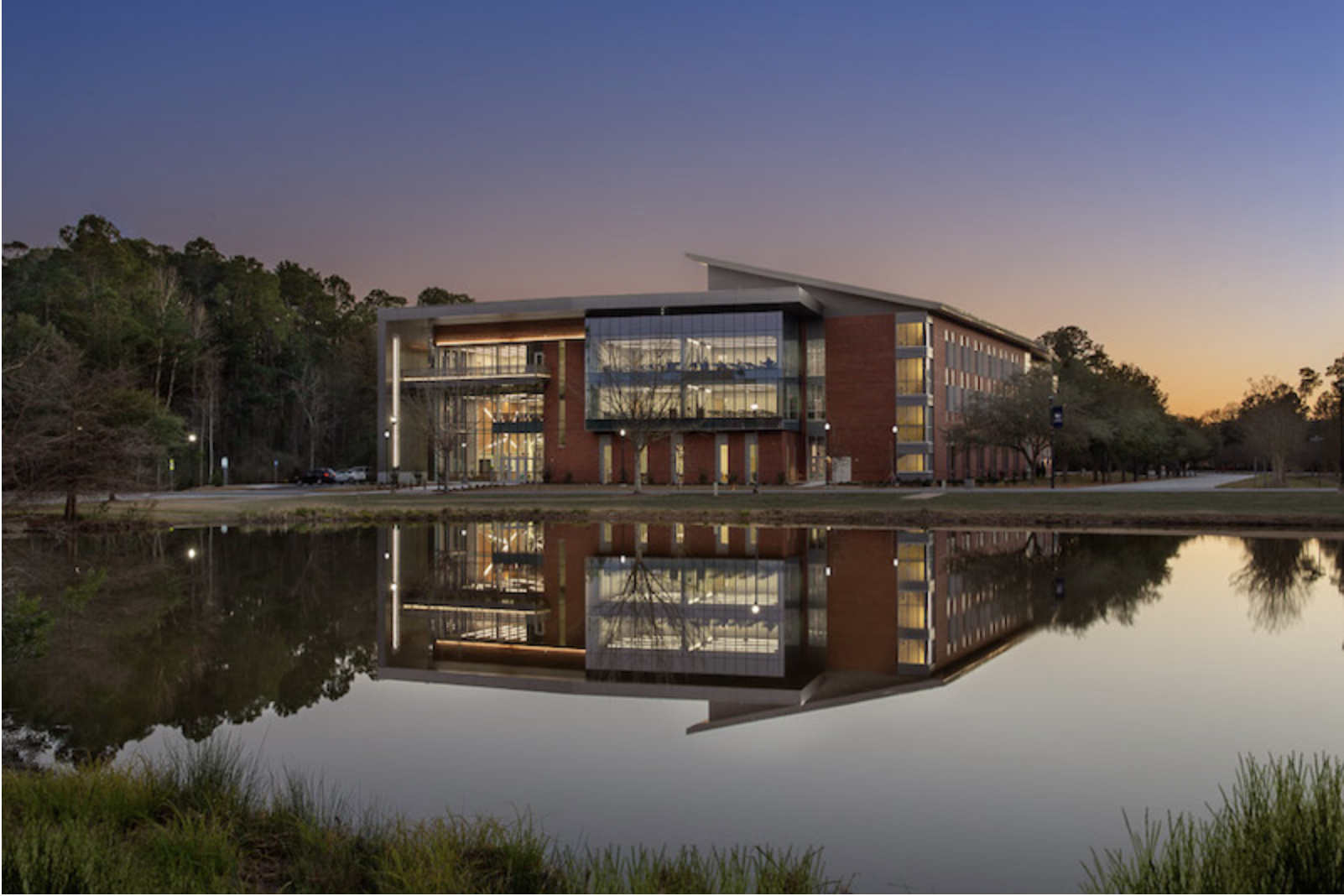
Georgia Southern University is launching two new engineering doctorates – a Ph.D. in applied computing degree and a Ph.D. in engineering – after approval of the programs this week from the University System of Georgia’s Board of Regents. With almost 4,000 students in its programs, Georgia Southern’s Allen E. Paulson College of Engineering and Computing identified the need for the new graduate degrees to sustain growth in the discipline, continue to aid workforce development in the region, add substantially to the university’s research capabilities, and provide additional teacher-scholars for Georgia. “In line with Georgia Southern’s Strategic pillars, the new Ph.D. programs will greatly enhance the University’s research capabilities and further advance key partnerships in the region,” said Carl Reiber, Ph.D., Georgia Southern’s provost and vice president for academic affairs. “A strong Ph.D. program improves faculty recruiting and is a prerequisite for applying for research grants from sources such as the National Science Foundation, the National Institutes of Health, the Department of Energy and the Department of Defense.” The proposed engineering Ph.D. program will have concentrations in civil, electrical, advanced manufacturing and mechanical engineering, and will fuel future multidisciplinary research synergies with other departments and centers within Georgia Southern in fields such as natural sciences, environmental sustainability, public health and education. Greater scholarly collaborations with sister institutions within the university system and beyond are also envisioned. The Ph.D. in engineering program will have a positive impact on the economic and technological development of Southeast Georgia, contributing significantly to the growth of the I-16 technology corridor. The Ph.D. in applied computing degree program will be offered jointly by the Department of Computer Science and the Department of Information Technology within the Allen E. Paulson College of Engineering and Computing at Georgia Southern Universit. The program will provide students with the requisite foundation to conduct basic and applied research to solve advanced technical problems in computing foundations, cybersecurity and machine learning. The program aims to promote the education of individuals who will become exceptional researchers, high-quality post-secondary educators, and innovative leaders and entrepreneurs in the field of applied computing. It will advance research and the generation of new knowledge in applied computing and support the growing knowledge-based economy in Southeast Georgia. The mission of the Ph.D. in applied computing degree program is to ensure student, graduate and faculty success by preparing graduates with the skills and depth of knowledge to advance the computing disciplines through application and scholarship. It will mentor students who will support faculty in their scholarly pursuits as they prepare to assume professional computing and computing-related positions that utilize their applied technical skills, problem-solving aptitude and scholarly abilities upon graduation. “The addition of these two new degree programs is part of Georgia Southern University’s commitment to be a world-class institution that provides a population of advanced graduates who can contribute to regional economic development and public-impact research,” Reiber said. “The programs will enhance the vitality and growth of the bachelor’s and master’s computer science and information technology degree programs by expanding the academic and research missions of the Allen E. Paulson College of Engineering and Computing." For more information about these new engineering doctorates coming to Georgia Southern this fall research or to speak with Carl Reiber, Ph.D., Georgia Southern’s provost and vice president for academic affairs — simply reach out to Georgia Southern's Director of Communications Jennifer Wise at jwise@georgiasouthern.edu to arrange an interview today.


Health Professions Academic Building on the Armstrong Campus in Savannah Georgia’s only public medical school has received funding approval to open a new four-year campus in Savannah, an expansion that will provide greater access to education and training for medical students and ease the state’s ongoing shortage of physicians. The new campus of Augusta University’s Medical College of Georgia (MCG) is expected to enroll its first students on the Armstrong Campus of Georgia Southern University by Fall 2024, pending approval by the Liaison Committee on Medical Education, the accrediting body for medical schools in the U.S. and Canada. The campus will be located in the existing Armstrong Center and the Health Professions Academic Building of Georgia Southern’s Waters College of Health Professions. Located down the street from Savannah’s St. Joseph’s Hospital, it would be MCG’s third four-year campus in Georgia. The MCG educational experience is anchored at its main campus in Augusta, with another four-year campus located in Athens in partnership with the University of Georgia. “Georgia ranks 40th in the nation for both the number of active physicians and the number of primary care doctors,” Georgia House Speaker Jon Burns said. “Georgians experience this reality every day. Increasing opportunities within the University System of Georgia allows Augusta University’s Medical College of Georgia to educate and train more students and meets a clear need to make sure our communities receive better health care. Georgia needs more doctors, and I’m proud we are making this investment in our future.” The Board of Regents of the University System of Georgia (USG) on Tuesday approved $1.7 million for renovations at Georgia Southern’s Armstrong Campus to help make the new campus a reality. The money was included in the fiscal year 2024 state budget passed earlier this year by the Georgia General Assembly and signed by Gov. Brian Kemp on May 5. “We’re grateful to Governor Kemp, Speaker Burns, Lt. Gov. Jones and the General Assembly for their support in helping MCG and the university system expand one of the best public medical colleges in the nation and help get more doctors into our local communities,” USG Chancellor Sonny Perdue said. Four-year campuses provide the full spectrum of medical education, from basic sciences to clinical experiences. “This campus expansion is a momentous milestone for Augusta University and the Medical College of Georgia, standing as a testament to the unwavering support we have received from Speaker Burns, state Rep. Butch Parrish, Governor Kemp, the entire General Assembly and Chancellor Perdue,” said Augusta University President Brooks A. Keel, PhD. “Through this collaboration, we are forging a brighter future for health care in Georgia and fulfilling our shared commitment to producing more doctors for our state. I extend my deepest gratitude to all those who have championed this vision, including St. Joseph’s/Candler Health System, whose exceptional partnership has provided invaluable clinical experiences for our students. Together, we are bolstering the state’s medical community and strengthening Southeast Georgia’s access to quality health care.” MCG’s statewide educational model also has students learning at two-year, clinically focused regional campuses in every corner of the state, including the Southeast Campus, established in 2011 and based at St. Joseph’s/Candler in Savannah, and Southeast Georgia Health System in Brunswick. Other regional campuses include the Southwest Campus based in Albany and the Northwest Campus based in Rome. “This partnership with Augusta University and the Medical College of Georgia is another example of how together, the governor, our legislators, the University System of Georgia and Georgia Southern University are collaborating to meet the growing needs of Southeast Georgia,” added Georgia Southern University President Kyle Marrero. “These programs on our Savannah campus further Armstrong’s history of being a leader in training health care professionals and complement our efforts to expand nursing education and develop our future physician assistant program.” Through this partnership, Georgia Southern is providing approximately 23,000 square feet of instructional and lab space in its Armstrong Center and the Waters College of Health Professions’ Health Professions Academic Building. This includes 10,000 square feet of dedicated student group workspace and faculty and staff offices and 13,000 square feet of shared anatomy lab and large classroom space. The renovations include the creation of a new anatomy lab within the Health Professions Building, as well as minor renovations and new furniture, fixtures and equipment for the student group workspace and faculty and staff offices. The new campus would allow MCG to accept 40 more students per year, increasing its class size, already one of the nation’s largest, to 304 students per class. “As the state’s only public medical school, it is both our responsibility and commitment to produce more doctors for Georgia, and this growth in our class size is one way we can fulfill what I consider to be our most critical mission” said MCG Dean David Hess, MD. “This expansion would not be possible without the support of Governor Kemp, the Georgia Legislature, the University System of Georgia, Augusta University President Brooks Keel, and our colleagues at Georgia Southern University. I am also thankful for the unwavering support of St. Joseph’s/Candler Health System, including its CEO Paul Hinchey and chief medical officer Dr. Julia Mikell, a 1976 MCG graduate. Physicians and staff at St. Joseph’s/Candler have been exceptional educational partners, serving as a home base for our Southeast Campus, and providing rich clinical experiences for our third- and fourth-year students, for well over a decade. I know that commitment will extend to students at this new four-year campus.” “This is a sentinel event not only for the future of health care in Georgia, but also for Savannah and the region,” added Paul P. Hinchey, president and CEO of St. Joseph’s/Candler. “We have had a great relationship with MCG for more than a decade and our physicians have been instrumental as faculty in teaching third- and fourth-year students in Savannah. SJ/C has also served as a longstanding clinical site for nursing students from Georgia Southern and from the Armstrong campus. Creating a four-year medical school campus in Savannah will strengthen the medical community in Savannah and throughout Southeast Georgia. I want to thank Speaker Burns, Dr. Hess and the University System of Georgia for making this great vision a reality.” “I am excited to help build a campus that will continue MCG’s mission of educating the next generation of physicians,” said Elizabeth Gray, MD, associate dean at MCG’s Southeast Campus, based in Savannah and Brunswick. “I am confident that Georgia Southern will be an exceptional educational partner, and am excited to continue working with the leadership, physicians and staff at our longtime partners St. Joseph’s/Candler to help increase the number of physicians in this area of the state and beyond.” Interested in learning more? For more information about this exciting new development — simply reach out to Georgia Southern's Director of Communications Jennifer Wise at jwise@georgiasouthern.edu to arrange an interview today.

Why does Alabama have more gun deaths than New York? UConn expert explains.
Only five million people live in Alabama, but the state has the fourth highest firearms death rate in the country. In 2021, the state had 26.4 firearm deaths per 100,000 people, according to the Centers for Disease Control and Prevention. Compared to New York -- a state with about 20 million people and a rate of 5.4 gun deaths per 100,000 in 2021 -- the question becomes: Why does such a small state rank so high for gun violence? UConn expert Kerri Raissian offered perspective and insight on the causes and reasons why these tragic incidents occur in specific regions and states more often across America in an interview with the Alabama Reflector: A 2019 brief published by the Rockefeller Institute of Government, a nonprofit research center for the State University of New York (SUNY) system, said universal background checks, concealed carry permits and laws prohibiting people who have committed violent misdemeanors reduce gun homicides. “One policy that has come up against legal challenges recently has been not allowing people under the age of 21 years old to have certain guns or types of weapons,” Raissian said. “It is helpful. That age group has the highest risk of perpetuating homicides of any age group in the U.S.” Social policies can also deter gun violence. “It is laws, it is access to guns, it is also poverty,” Raissian said. “We have a lot of evidence that laws that you wouldn’t think have anything to do with gun violence, like Medicaid access, summer school for kids, employment opportunities for kids, are really good at reducing gun violence.” Raissian cited a randomized controlled trial of a youth summer employment program that was established in Chicago that had reduced incidents of gun violence compared to a control group. “It is not just about keeping them busy because these differences persist,” Raissian said. “It is also learning conflict resolution. It is also learning communication skills — all those things that come from employment and positive interactions tend to reduce violence of any form.” But Raissian and Grant Reeher, a professor of political science at Syracuse University, both said no single law will solve the issues of gun violence. The full article is attached above, and well worth the read. Kerri Raissian is an associate professor in the School of Public Policy at the University of Connecticut, director of the University of Connecticut's UConn’s Center for Advancing Research, Methods, and Scholarship (ARMS) in Gun Violence Prevention, and co-director of the Institute for Collaboration on Health, Intervention, and Policy (InCHIP) Gun Violence Prevention Research Interest Group. She is available to speak to media about this important topic - simply click on her icon now to arrange an interview today.

Aston University appoints new Deputy Vice-Chancellor Academic
Professor Osama Khan has nearly 20 years’ experience as an academic leader and innovator He will lead academic strategy, new educational model and student experience strategy in line with Aston 2030 Strategy Osama will join Aston University in October 2023. Aston University has appointed Professor Osama Khan as its new Deputy Vice-Chancellor Academic. With a successful career in higher education for nearly 20 years, Professor Khan will be joining Aston University from the University of Surrey where he is currently Pro-Vice-Chancellor Academic, leading on education strategy, teaching excellence and student learning experience. In his new role, he will play a central part in the development of Aston University’s academic strategy in line with the University 2030 Strategy. Responsibilities will include leading the University's academic portfolio incorporating education, curriculum, digital offerings, careers and placements, library and information services, student experience and services. Educated at Independent University, Bangladesh, University of Surrey and University of Cambridge, Osama began his academic career as a lecturer (and then senior teaching fellow) at University of Surrey in 2004. He moved to Solent University in 2012, where he held a variety of roles including director of learning and teaching at Solent Learning and Teaching Institute. He was appointed the first Pro Vice-Chancellor, Students and Teaching at Solent University leading on curriculum, digital services, learning space transformation. He was appointed as Vice-Provost, Education at University of Surrey in 2019. Subsequently his remit extended to form the Pro Vice-Chancellor, Academic portfolio with responsibility for education, curriculum, student services, digital transformation, and learning spaces. He has 25 years of teaching experience in corporate finance at various renowned universities. Professor Aleks Subic, Vice-Chancellor and Chief Executive of Aston University, said: “I am delighted to welcome Osama to Aston University and the executive team at a crucial time when we are shaping our bold strategy for 2030 and beyond. “Osama is a proven academic leader and innovator, who has who has achieved sector leading outcomes in student experience and educational quality. His strong commitment to values-based leadership is aligned well with our approach to working with our people and the diverse communities we serve. “I look forward to working with Osama to position Aston University as the leading university in the United Kingdom for student experience, employability and social mobility.” Professor Osama Khan said: “Aston University's unwavering commitment to academic excellence, coupled with its dedication to equality, diversity and inclusion, resonates deeply with me. Moreover, I commend Aston University's efforts in narrowing the awarding gaps, striving for equity in education and promoting fairness in the academic journey, for it is through education that we empower generations and create lasting impact. “I am honoured to join this creative institution as its next Deputy Vice-Chancellor Academic, where we will prioritise inclusive education and foster an environment where every individual can thrive and succeed. “I eagerly look forward to working with our exceptional faculty, dedicated staff, and talented students to shape the next chapter of excellence through the new Aston University 2030 strategy. Together, we will transform lives, foster innovation and forge a path towards a brighter tomorrow." Professor Khan will be taking up his post in October 2023.


Ask an Expert: Can a Recession Boost Employee Job Satisfaction?
Will the United States tip into recession in 2023? The jury for many remains out, though there are enough clouds forming on the horizon to cause consternation for firms eyeing the next financial quarter. But while recessions invariably spell belt-tightening, are they always plain bad for business? Could there be some kind of silver lining to hard times? New research led by Goizueta Business School’s Emily Bianchi suggests there is in fact an upside to economic downturns: higher employee job satisfaction. Bianchi and colleagues from Oglethorpe and Hong Kong Polytechnic Universities have found that in times of increased financial uncertainty, people tend to think less about other opportunities or openings, and focus more on the jobs they actually have. This in turn makes us see our jobs and workplace more favorably, says Bianchi. “It might feel counter-intuitive because there’s reason to think that tumultuous times make the workplace and workplace relations more tense or challenging. But we wanted to explore whether the security of having a job in an economic slump might positively impact the way people think about their roles and employers,” Bianchi says. Our hunch was that fewer available jobs outside the organization may translate into greater satisfaction with the jobs we have in hand when there’s a recession. To test this possibility, Bianchi and co-authors ran three studies. The first looked at almost 50 years of data from the U.S. General Social Survey, a cross-sectional barometer of people’s attitudes and opinions, including their assessment of the economy and satisfaction with the work they do. Through analyses of respondents’ answers between 1974 and 2016, Bianchi et al. found compelling evidence to support their hypothesis: at both the national and state level, job satisfaction rose during recessions and fell off again when the economy did better. A second study analyzed data from the U.K. where recessions tend to hit at the same time as the United States, but can be more or less severe. Two surveys conducted by the University of Essex followed the same respondents between 1991 and 2013, allowing Bianchi et al. to measure how individual job satisfaction fluctuated with macro-economic changes. Limiting their analysis to those people who remained employed over the time period and controlling for things like age, gender and income, the researchers were able to isolate the impact of recession based on the way that a group of just over 8,500,000 employees felt about their jobs. They found the same pattern. “By looking at the same individuals over time, we’re able to eliminate any impact coming from changes in the composition of the workforce across economic cycles,” says Bianchi. The same pattern emerged: during bad economic times, people reported greater job satisfaction even within the same group. Unlocking the Upside of Downturns To dig deeper into the psychological mechanisms undergirding these patterns, Bianchi et al. ran an experiment. One group was shown “bad news” about the economy, while the other read a report on economic growth and “plentiful jobs.” Both groups were then asked to self-report on job satisfaction. Those who had read the news article on recession and unemployment reported greater contentment with their current jobs. Moreover, when reminded of recessions, they reported that alternative jobs became less salient, which in turn led to greater job satisfaction. In other words, their own jobs were “more satisfying.” One implication of these findings is that they challenge the notion that job satisfaction is exclusively dictated by what happens inside the organization. We tend to think of businesses as bubbles that are somehow impervious to the outside world. But these studies show broader societal events can affect us in surprising ways. A Silver Lining for Employers Recessions are rarely welcome news. And for employers, they can engender feelings of hopelessness, says Bianchi. The insights shared in her paper should provide some reassurance, nonetheless, that even when the chips are down, they might have one less thing to worry about. But there’s a caveat. Our findings suggest that there might actually be a bright side to recessions for employers; that greater job satisfaction during these difficult times might help people psychologically weather an otherwise challenging situation. “Of course, this does not mean that employers should take advantage of this surprising goodwill by asking more of their employees. Rather, while employers likely believe that there is little they can do to bolster job satisfaction during tough times, our research suggests that satisfaction-boosting efforts may be even more effective. Moreover, our findings suggest that employers should be more attuned to bolstering satisfaction when times are good and employees are particularly apt to be looking at other opportunities.” Interested in learning more about how a recession may impact the workplace? Then let us help with your coverage and questions. Goizueta Business School’s Emily Bianchi is available to speak regarding this important topic - simply click on her icon now to arrange an interview today.



A new book, A Student’s Guide to Open Science: Using the Replication Crisis to Reform Psychology, has been published, providing students and researchers with a comprehensive guide to open science practices and how their implementation can enhance research transparency and rigour. In the book, Dr Charlotte Pennington who is a lecturer in psychology at Aston University, explores the "replication crisis" in psychology, which refers to the difficulties in reproducing research results to test the robustness of findings. Through the book, students will gain an understanding of the origins and drivers of the crisis and learn how open science practices can transform research practice, enhance research transparency, and improve replication and reproducibility. The book contains various features, including an overview of landmark events that will mark the history of the replication crisis in the years to come, case studies of classic psychological studies undergoing replication, ‘test yourself’ activities to reinforce learning of key concepts, and top tips for adopting open science practices. It also includes useful illustrations to aid understanding and facilitate revision. Dr Pennington said: "The replication crisis has highlighted significant issues in the field of psychology and beyond and has led to a lack of trust in some research findings. However, it also provides a platform for reform – to improve research practices and the wider culture, with the discipline of psychology paving the way. I am proud that there is now a textbox that provides students and researchers with a handy guide on how to improve transparency and rigor in research through open science practices. “It is essential for all students to have a fundamental understanding of the challenges posed by the replication crisis and how open science can address them." The book has received high praise from experts in the field. Professor Chris Chambers from Cardiff University said: "This book should be on the reading list for all university science degrees and on all library bookshelves. It is concise, accessible, and remarkably interactive, with brilliant use of examples and learning activities.” Dr Madeleine Pownall from the University of Leeds said: "It is essential reading for anyone who wants to make sense of open science, by covering complex content in an accessible and hands-on way. My hope is that every psychology student will finish their degree with a heavily annotated, well-thumbed copy of this important and timely book.” Professor Brian Nosek, executive director of the Centre for Open Science at the University of Virginia said: “The last 10 years have been a whirlwind in psychology: identification of faulty research practices, frequent failures to replicate findings, research on how the field could improve, and adoption of new solutions to make research more transparent and credible. It is a lot to take in and it is hard to know where to start. “I am frequently asked to recommend a reading that provides an overview of what has been learned during the last 10 years and a gateway for getting started with open science. With this book, now I have an answer.” A Student’s Guide to Open Science: Using the Replication Crisis to Reform Psychology is now available in print and online formats.

Aston University celebrates becoming a University of Sanctuary with official event
Aston University officially celebrated becoming a University of Sanctuary with an event held on 16 May for all those who contributed to achieving this status. The University was awarded University of Sanctuary status in December 2022, joining a network of higher education institutions across the UK working to develop support for those displaced by humanitarian crises. The celebration was hosted by Aston University Vice-Chancellor and Chief Executive, Professor Aleks Subic. Guests included Councillor John Cotton, Birmingham City Council Cabinet member for Social Justice, Community Safety and Equalities, who made a special award presentation. The event programme also included a performance by poet Loraine Masiya Mponela, who herself was an asylum seeker and conversations with recipients of Ernest Edward Scholarships, a sanctuary scholarship scheme for students who have sought refuge in the UK. The scheme was set up by Aston University in 2022 due to a generous donation by prominent businessperson Matthew Crummack. Universities of Sanctuary is an initiative to recognise and celebrate the good practice of institutions welcoming people seeking sanctuary through facilitated access to higher education, supporting local refugee communities and taking an active role in learning about the issues and obstacles faced by this group in pursuing university-level education. Professor Aleks Subic, Vice-Chancellor and Chief Executive of Aston University, said: “I am delighted to have had this opportunity to host a celebration event to thank everyone who has helped us achieve the University of Sanctuary status. “Aston University is committed to supporting people seeking sanctuary through its efforts to deepen our understanding of the issues surrounding asylum seekers and refugees, providing a welcoming environment for sanctuary students, and working with individuals and communities beyond the campus to promote the values and principles of sanctuary. “Being a University of Sanctuary is key to our Civic Agreement: our commitment to make Birmingham a better place for everyone who lives, works, and studies here. Birmingham." Councillor John Cotton, Birmingham City Council Cabinet member for Social Justice, Community Safety and Equalities, said: “Birmingham is proud to be a City of Sanctuary, with its long history of offering refuge to those fleeing war, persecution and tyranny around the globe. In these troubled times, standing up for the principles of sanctuary and refuge is more important than ever. “I’m delighted that Aston University has joined the family of Universities of Sanctuary and is one of the many important institutions in our city that actively extends the hand of friendship to those seeking refuge and the chance to rebuild their lives here in Birmingham.”

Aston University predicted as one of the UK’s leading centres for lab-made meat
• Aston University named as one of the UK’s leaders in the potential future of food • Highlighted for research, teaching, public outreach, industry links and location • Process uses cells taken from animals via biopsy, so doesn’t involve slaughter. Aston University has been named as one of the UK’s leading lights in what is predicted to be the future of food - lab-made meat. The University is one of 17 higher education institutions that are expected to play a major role in the development of cultivated meat. Cultivated or lab-grown meat is made from cells taken from animals via biopsy. The cells are used to create meat which doesn’t involve the slaughter of animals. The process promises fewer greenhouse gases and a decrease in land required for its production compared to traditional livestock. The list of universities has been compiled by Cellular Agriculture UK, a non-profit organisation which promotes the UK’s so-called ‘cell-ag’ sector. Aston University is one of five institutions they chose to highlight in their report Mapping the potential for UK universities to become research and teaching hubs for cellular agriculture. Aston University is described in the report as having potential to be an anchor institution for cellular agriculture, and was highlighted for its research and teaching, public outreach work, links with emerging industry and its central location. Dr Eirini Theodosiou, senior lecturer in the School of lnfrastructure and Sustainable Engineering, focuses on ways to produce enough cell mass to create the meat. She said: “This is still a relatively new food technology. Unlike many others we work on biomaterials for microcarriers/scaffolds for cultivated meat, which puts us in a very strong position, in the UK at least.” Meanwhile Dr Jason Thomas’ work explores the psychology behind supporting people to accept lab-made food. Although many people are willing to try it, there are still many who are reluctant to do so. A recent study of the US and UK found that 35% of meat eaters and 55% of vegetarians claimed they were too disgusted by the idea of cultured meat to even try it. A key goal of his research is how to support people to not just try it but to integrate it into their diet. Dr Thomas said: “We are interested in finding out what factors can influence consumer purchase of and consumption of lab-made meat.” “The engineering/psychology link is one of our USPs and is something Aston University can capitalise on; learning what the consumer wants from cultivated meat, and what would encourage them to consume it, using psychological science, and then incorporating this directly into the production process via engineering. “It is a relatively new food technology, and much work still needs to be done to make it affordable, acceptable and on a massive scale, but it could easily end up being one of the most transformative new foods of the 21st century.”


Ana Palacios’ interview on “Eagle Eye View,” the official podcast of Georgia Southern University. Palacios discusses her research and how being a mom motivated her. Several esteemed nutrition researchers collaborated on “Effectiveness of Lactation Cookies on Human Milk Production Rates: A Randomized Controlled Trial,” which was recently published in The American Journal of Clinical Nutrition. David B. Allison, Ph.D., dean of the Indiana University School of Public Health-Bloomington (SPH-B), is among the researchers who conducted a one-month, randomized controlled trial of lactating parents of healthy babies in the same age range. Their findings revealed no evidence for an effect of consuming lactation cookies on human milk production. “Too often in the field of nutrition and food, strong beliefs—sometimes even well-reasoned conjectures based upon some scientific knowledge—are mistaken for demonstrated facts,” Allison said. “Conjecture is good, but knowing is better. We come to know about the effects of nutrition and dietary supplements through rigorous, randomized, controlled trials. Having conducted such a study on lactation cookies, we found no evidence for their effectiveness. “This does not mean that it is impossible for any lactation cookie to affect human milk production,” he continued. “This study does suggest that the cookies we studied—under the conditions we studied them—have no discernible effect. The burden of proof seems to now be on those who claim there is an effect.” The study followed 176 U.S. parents who were exclusively breastfeeding healthy two-month-old babies. One group of parents was provided a serving of commercially available lactation cookies to consume daily for a month; the other group of parents ate a serving of conventional cookies not designed to increase lactation, each day for a month. Through a weekly survey, parents reported the quantity of milk they produced after following a validated milk expression protocol using a hospital-grade breast pump, providing data that were analyzed by both the study authors and an independent statistician. These data demonstrated that the impact of consuming lactation cookies did not have a significant effect on how much milk was actually produced or perceived to be produced by the lactating parents. The authors assert that consumers should be cautious when considering the potential effect of this product, or any food and/or supplement that promotes health-promoting benefits without published, peer-reviewed scientific evidence to support its claims. As the researchers noted, these lactation cookies can contain substantial calories and sugars, which could affect postpartum weight loss efforts and related health issues. “Despite being a physician and nutrition scientist focused on early-life nutrition, I still remember how difficult breastfeeding was for me with both of my children,” said study lead author Ana M. Palacios, MD, Ph.D., assistant professor, Department of Health Policy and Community Health, Jiann-Ping Hsu College of Public Health at Georgia Southern University. “Our research highlights that lactation cookies, which include added sugars and saturated fat, may not have the said purported benefits of increasing milk production. Purchasing lactation cookies to increase milk production may pose an unnecessary cost and may have additional implications for parents, such as limiting post-pregnancy weight loss and reducing consumption of healthier foods. More research is needed to better understand what foods and nutrients can best help increase milk supply in diverse populations.” The full article, along with the list of contributing authors, is available by simply clicking the article below: Interested in learning more? For more information about this research or to speak with Ana M. Palacios — simply reach out to Georgia Southern's Director of Communications Jennifer Wise at jwise@georgiasouthern.edu to arrange an interview today.

Gene Editing Institute Opens a Unique Learning Lab for High School and College Students
Free program uses CRISPR in a Box™ toolkit to teach the power of gene editing To inspire the next generation of students to pursue careers in STEM (science, technology, engineering and math) and learn about the power of genomic science, ChristianaCare’s Gene Editing Institute has launched a new Learning Lab on its premises that offers educational programming about revolutionary CRISPR gene editing technology. Located next to the Gene Editing Institute’s lab on the University of Delaware’s STAR Campus, the Learning Lab is a physical space that provides an immersive field trip experience for upper-level high school students and college undergraduates who may not have access at their schools to a laboratory to conduct gene editing experiments. There is no cost for schools to use the lab or for the materials to conduct the experiment. The Gene Editing Institute wants to ensure that all schools have equal opportunity to participate in educational programming at the lab. Students using the lab can perform a gene editing experiment in a single day using the Gene Editing Institute’s innovative CRISPR in a Box™ educational toolkit. All materials in the kit are safe, synthetic materials, and allow students to perform CRISPR gene editing with non-infectious E. coli bacteria. They will be able to see an appearance change indicating gene editing has occurred at the end of their experiment. “Students around the country, no matter where they go to school, have the potential to be scientists, researchers and laboratory technicians,” said Eric Kmiec, Ph.D., executive director and chief scientific officer of ChristianaCare’s Gene Editing Institute. “Our hope is that by creating access and space for students to explore, we can inspire the next generation of students to pursue STEM careers. The Learning Lab allows us to help cultivate the next generation of genetic scientists and strengthen Delaware and our region as a leader in biotechnology.” Education Program Manager Amanda Hewes, MS, developed the Learning Lab after noticing a problem that was undercutting the opportunities of teachers to bring gene editing experiments into the classroom — a lack of space and equipment. Amanda Hewes, education program coordinator, assists students from Wilmington Charter School with their samples of DNA during a Learning Lab experiment. “We don’t want anything to hinder the way students learn about CRISPR gene editing,” Hewes said. “If a student feels like there are too many steps, or a teacher doesn’t have an essential piece of equipment, then we’ve lost an opportunity to bring the next generation of scientists into the lab. We’re striving to break down as many barriers as possible for students.” Learning real-world applications of gene editing The Learning Lab also allows students to speak directly with experts in the field about careers in biotechnology and gene editing as they learn the difference between such things as phenotypic and genotypic readouts in their gene editing experiments. This gives students the chance to ask about the real-world application of genome experiments in a research lab. It also lets them think about their place in a lab setting. “I’ve never been in an actual lab setting before,” said Shiloh Lee, a junior at the Charter School of Wilmington, at a recent class. “I think it is very, very cool to be able to experience it.” “I’ve learned a lot of new skills with the micropipetting,” said Pauline Zhuang, a senior at The Charter School of Wilmington. “We don’t have the same resources at our school. The CRISPR in a Box is such a great resource. My classmates and I have been able to experience, firsthand, what it is like to actually do gene editing.” Through the program, the Gene Editing Institute hopes to educate 1,000 students by spring 2024. Currently, the lab is on track to engage more than 200 students by the end of the spring 2023 semester. CRISPR stands for Clustered Regularly Interspaced Short Palindromic Repeats, which are the hallmark of a bacterial defense system that forms the basis for CRISPR-Cas 9 genome editing technology. The CRISPR technology enables researchers to modify genes in living cells and organisms and may make it possible to correct mutations at precise locations in the human genome in order to treat genetic causes of disease. For more information about the Learning Lab and the educational program, email geneeditinginstitute@christianacare.org.

