Experts Matter. Find Yours.
Connect for media, speaking, professional opportunities & more.

Recognizable companies including Google, Twitter and Eli Lilly all are encouraging their employees to work at home to prevent spread of the coronavirus. Research on the benefits and drawbacks of “working from home is still in its infancy, but researchers have generally found that telecommuting can function as a double-edged sword, said Erik Gonzalez-Mulé, assistant professor of organizational behavior and human resources at the Indiana University Kelley School of Business. “On the one hand, telecommuting can increase productivity because it enhances employees’ feelings of control and autonomy. With the freedom to choose when and how to do their work, employees generally experience greater motivation and satisfaction,” Gonzalez-Mulé. “Of course, there is a caveat here, in that managers should take care to maintain the same performance management systems they use for ‘in-residence’ employees, such as setting specific goals, ‘checking in’ on goal progress, using regular performance evaluations, and the like. “The idea is to communicate to employees that, as long as the work gets done -- which managers can assess with performance management systems -- they can choose when and how to do it,” he added. “On the other hand, recent studies show that telecommuting can increase feelings of isolation. This is because telecommuting workers have significantly less face-to-face contact with their manager and colleagues, which can lead telecommuters to feel alone and socially disconnected. One way to ameliorate these effects is to use technologies that involve virtual face-to-face contact, like Zoom or Skype, or to have at least some ‘real’ face-to-face contact, such as some meetings that are conducted in-person.”


Professor Barry Branch, Ledbetter Professor of the Practice at Scheller College of Business was a featured author in the article “National Rent Report for January 2020 Shows Growing Number of Renters” in the online magazine RENTCafe. Branch discussesd national trends that are leading more young people to rent rather than purchase a single-family home. “Young professionals are increasingly attracted to multifamily projects near their jobs. These buildings are attractive if they offer cutting edge technology that enables residents to work from home; attractive amenities that provide a healthy lifestyle and greater interaction with others; proximity to a variety of retail, food and entertainment attractions as well as public greenspaces; a significant reduction in their reliance on automobiles and access to public transportation; and greater flexibility to adjust to job changes and changes in their personal circumstances,” he said. In the piece he acknowledges the stable economy but notes that increased uncertainty in national, political, and economic environments may lead many people to resist the commitment to purchase a home. However, Branch points to the possibility that a larger demand for rental units may provide less inventory and therefore, an increase in rent prices. He states that “an offsetting factor among renters is the current trend towards rapidly increasing rental rates in many markets, which threatens their ability to manage their cost of living.” To offset these adverse factors, he cites low-interest rates that will incentivize developers to build more units and government programs for creating affordable housing as just a few factors that will continue to keep the rental market thriving. Are you a journalist looking to know more about this topic? Then let our experts help. Barry Branch is Sr. Professor of the Practice of Real Estate Development at Scheller College of Business, Georgia Institute of Technology. He is co-founder of The Branch-Shelton Company, LLC, a private investment management and financial advisory firm. Barry is available to speak with media regarding this important topic – simply click on his icon to arrange an interview.


FAU Experts Available to Speak on Coronavirus and its Impact Worldwide
Coronavirus has now earned global attention and Florida Atlantic University experts are available to speak with media about the impact of coronavirus on areas related to this worldwide epidemic, including hospitality, tourism, employment sick leave, and politics. If you are a journalist covering the progress of this virus and how it is impacting various sectors and segments of society – then let us help with your stories, questions and ongoing coverage. LeaAnne DeRigne, Ph.D., MSW, associate professor in FAU’s Phyllis and Harvey Sandler School of Social Work LeaAnne DeRigne is an expert on paid sick leave and its impact on the health and financial security of individuals, families and public health in general. Her recent research on the importance of paid sick leave benefits has received wide press coverage,and has been cited around the country by policy makers, lobbyists, and advocates pushing cities and states to mandate sick leave coverage. Key findings from the study, which are representative of the nation, showed that regardless of income, age, race, occupation, full-time or part-time work status, health status or health insurance coverage, workers without paid sick leave were three times more likely to delay medical care than were workers with paid sick leave. She also conducts research on other workplace benefits such as flexible work, vacation time and pensions. Peter Ricci, clinical associate professor and director of the Department of Marketing and Hospitality Management in FAU’s College of Business Peter Ricci is a hospitality industry veteran with more than 20 years of managerial experience in segments including food service, lodging, incentive travel, and destination marketing. While filling the role of hotel general manager for almost a decade, Ricci served as a part-time educator before entering academia full time as both a clinical associate professor and administrator. Kevin Wagner, Ph.D., professor and chair of FAU’s Department of Political Science in the Dorothy F. Schmidt College of Arts and Letters Kevin Wagner’s research and teaching interests include presidential and judicial politics, political behavior and legislative behavior. He is also a research fellow of the FAU Business and Economics Polling Initiative (BEPI). Wagner has lectured extensively on American politics and has served as an expert in many leading newspapers including the New York Times, Boston Globe, New York Newsday, the Dallas Morning News, and the Miami Herald. He has been featured as the political analyst for CBS 12 in West Palm Beach and on national television including NBC’s “Today.” All of the experts listed above are ready and available to speak with media. To arrange an interview simply click on an expert’s profile or email Lisa Metcalf at lmetcalf@fau.edu.




With South Carolina in the rear-view mirror, for most candidates seeking to represent the DNC this November – Tuesday is bottom of the 9th with the bases loaded. A home run means it is game over and the champion is crowned. A hit likely means you’ve survived to play another day. But for those who swing and miss … it’s a long walk to hang up the cleat and hit the political showers. There is a lot riding on Super Tuesday and odds are there will be a lot of people pontificating, pondering, and trying to predict what’s next for those left standing. And if you are a journalist covering the lead up and the aftermath to this high-stakes and heated race to lead the Democratic Party against President Donald Trump – let us help with your stories. Dr. Stephen Farnsworth is a sought-after political commentator on subjects ranging from presidential politics to the local Virginia congressional races. He has been widely featured in national media, including The Washington Post, Reuters, The Chicago Tribune and MSNBC. He is author or co-author of six books on presidential communication. His latest work, "Presidential Communication and Character: White House News Management from Clinton and Cable to Twitter and Trump," examines how the last four U.S. presidents sell themselves and their policies in an ever-expanding and sometimes precarious media environment. Dr. Farnsworth is available to speak with media and help with your coverage – simply click on his icon to arrange an interview today.


This Sunday, close to 100 million people will be tuning in to watch the Kansas City Chiefs take on the San Francisco 49ers in the biggest game of the year. The Super Bowl is the biggest, loudest and most expensive sporting event in America. But before the players take the field and kick-off at 6:30 PM on game day - there’s a week worth of events and parties to host and control, tens of thousands of fans, celebrities and curious on-lookers to contend with and ensuring the week is entertaining, enjoyable and ultimately safe is also the top priority. And all of it takes months of planning in advance. And most importantly, handling all of these logistics, in the background and relatively unseen might be the biggest play of the week. If you are a journalist covering the Superbowl this week – then let our experts help. Jim Riordan initiated the MBA Sport Management program at Florida Atlantic University in 2000. Jim is an expert in the areas of event operations, crowd management and sports administration. He has also worked several major sporting events including Super Bowl XXXII and XXXIV. Jim can help with your stories, share his experience and lend his expert perspective on what it takes to pull off an event of this size - to arrange an interview, simply click on his icon to book a time.
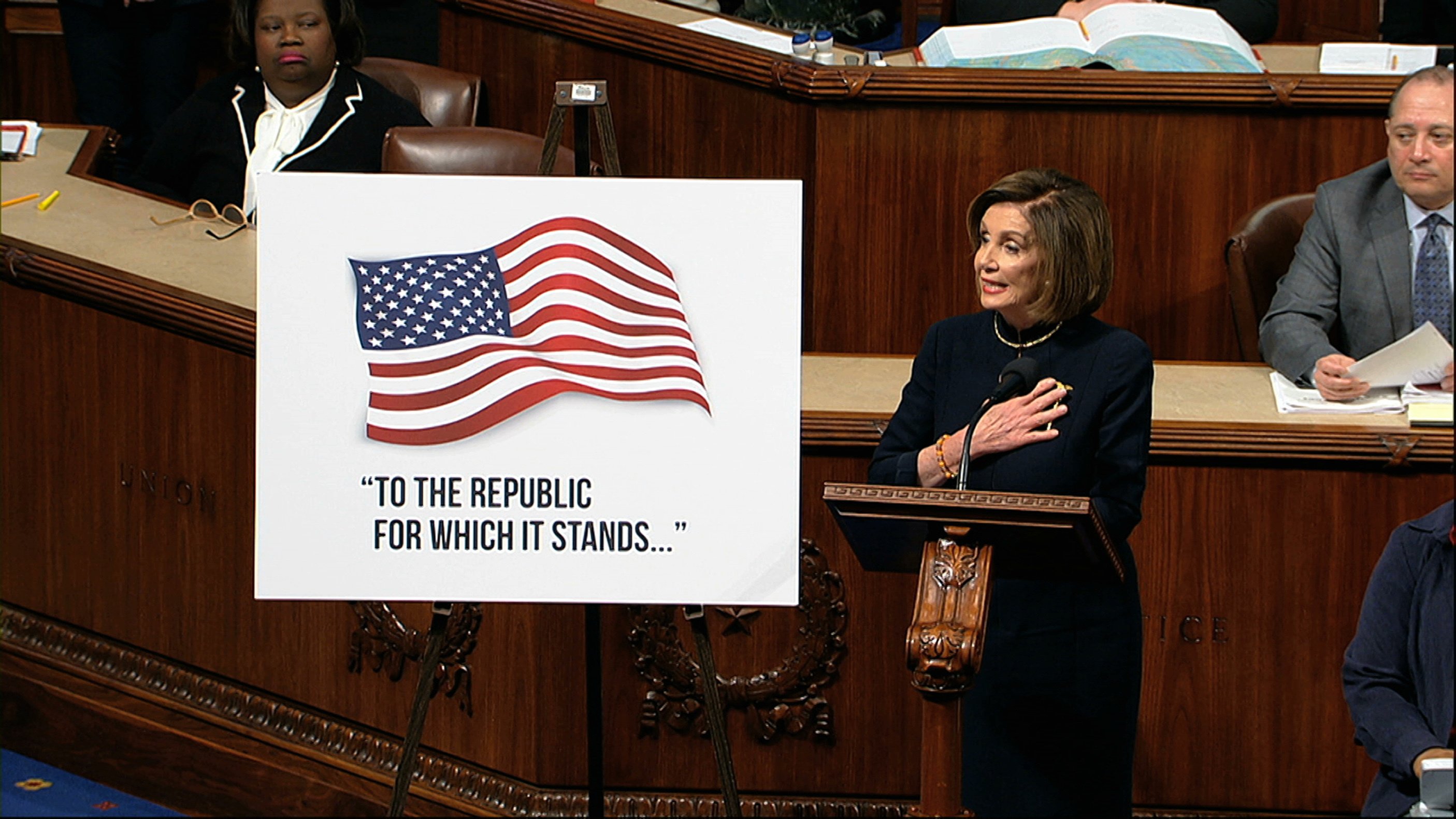
A President is Impeached – Now What?
The numbers are in and for the third time in history – a sitting United States President has been impeached. But now what? There will be rhetoric, threats and predictions – but what is the process and what are the actual potential outcomes? This is a serious issue, and not just for either political party, but for the government and country as well. So, if you are covering – let one of the leading political experts in the country help with your stories. Dr. Stephen Farnsworth is a sought-after political commentator on subjects ranging from presidential politics to the local Virginia congressional races. He has been widely featured in national media, including The Washington Post, Reuters, The Chicago Tribune and MSNBC. He is author or co-author of six books on presidential communication. His latest work, "Presidential Communication and Character: White House News Management from Clinton and Cable to Twitter and Trump," examines how the last four U.S. presidents sell themselves and their policies in an ever-expanding and sometimes precarious media environment. Dr. Farnsworth is available to speak with media – simply click on his icon to arrange an interview today.

Is your social media ready for when the next crisis strikes? Let our experts help!
At the National Institute for Social Media, response plans are the priority. A response plan is the high-level look, or the umbrella overview, that crisis management falls under. Your response plan details how you respond to positive, negative feedback, and any neutral feedback that comes your way. Take a compliment and make the most out of it: Positive feedback feels like you’re off the hook. If feedback is all positive, you feel like you don’t have to do anything. But that’s your opportunity to nurture and strengthen those who are already your supporters. They then become your brand champions. Avoid the neutral zone traps – react and respond accordingly: Questions or posts that aren’t really positive or negative land in neutral space, and that’s really not crisis communication, responding to those is just good customer service. When crisis strikes: If you have a crisis, most people associate it with an isolated event, and sometimes you can plan for it, sometimes you can’t. A few years ago, when Nordstrom’s discontinued Ivanka Trump’s clothing line, they anticipated a negative backlash by those who would accuse them of being politically motivated. They stated sales was the reason, and 100 percent came out neutral, but they could anticipate that particular feedback. Whereas, in the viral video of a passenger being physically dragged off an airplane, the airline couldn’t have anticipated that event. However, with an online response plan, they would have been prepared to respond to the unexpected event. A quick response is important but an informed response is more important than anything else. If it fits the situation, you may buy yourself time to do a little research by commenting that you’ve passed their question on and will respond soon. If you don’t have a strategic plan to fall back on, and you respond quickly but poorly, you run the risk of doing more harm than good. With an online response plan, people understand how to assess a given situation. Respond: To show transparency, we want everyone to see we are responding to customer; we have a planned response where we acknowledge the customer. Take offline: Give them an offline option for sharing additional information. Resolve: This allows the customer to have their issue resolved and be heard but discourages them from sharing ugly details on that highly visible platform. The plan is for a social media manager to have a path when they don’t know what to do. The viral airplane video is one example because by the time their social media people saw it, it was already going viral. They had every indication they should be panicking. Did they have a person to talk to help them make the decision about how it needs to be addressed? For those crises we can’t anticipate, there needs to be a clear path to a leader who can help with this difficult situation. One of my favorite things to tell people is that you don’t have to be victimized online just because you’re a professional organization. You can set up community guidelines. Some businesses think, what if someone starts using racial slurs or inappropriate comments? You can post community guidelines that state these are our expectations of how our customers can participate respectfully, and we reserve the right to delete your content. You can set the expectation that you want people to engage respectfully. You have to get to the heart of what people are really asking or wanting. In the case of Ivanka Trump’s clothing line, nobody was upset because Nordstrom’s wasn’t carrying the clothing line; what they were really upset about was that a large organization could be taking a political stance against the at-that-time republican candidate. Are you looking to know more about how corporations and institutions need to be prepared and how they need to react when bad news goes viral? That’s where we can help. Amy Jauman is social media expert, consultant, writer, and professor at Saint Mary’s University of Minnesota. Dr. Jauman authored a (National Institute for Social Media) NISM textbook for social media strategists and is available to speak to speak with media – simply click on her icon to arrange an interview.


2020 is going to be the year of politics – let Stephen Farnsworth be the expert you call first when you’re covering it. Like the final act in a great Shakespearean play – 2020 looks to be a year of tragedy, irony, comedy and intrigue. We can expect betrayal, vengeance, protagonists, antagonists, heroes and villains. With impeachment hearings, the DNC primaries, summer conventions, trade deals and the election that promises to be an epic display of speeches and stumping as well as vicious and vitriolic attacks. Dr. Stephen Farnsworth is a sought-after political commentator on subjects ranging from presidential politics to the local Virginia congressional races. He has been widely featured in national media, including The Washington Post, Reuters, The Chicago Tribune and MSNBC. He is author or co-author of six books on presidential communication. His latest work, 'Late Night with Trump Political Humor and the American Presidency' shows how late-night political humor, have responded to the Trump presidency. Employing a dataset of more than 100,000 late night jokes going back decades, Farnsworth and S. Robert Lichter discuss how the treatment of Trump differs from previous presidents, and how the Trump era is likely to shape the future of political humor. Stephen is available to speak with media – simply click on his icon to arrange an interview today.

It may be the most wonderful time of the year, but for those delivering packages to houses and homes across America this holiday season it’s also the busiest one. In fact, it’s expected that Amazon alone will ship close to 300 million packages for Christmas. Customers want their purchases quicker and cheaper and it’s changing how the landscape works. It's estimated that free shipping will cost Amazon more than a billion dollars this quarter alone. This explains why shippers are looking at some radical new technologies to cut the cost of the last mile – and this is not just limited to the retail shopping industry. “Technology-driven innovations such as delivery drones or driverless vehicles not only facilitate last-mile delivery, they help with the inclusion of new sets of “customers, especially those in remote locations or rural areas with poor infrastructure, says Morvarid Rahmani, assistant professor of Operations Management at Scheller College of Business at Georgia Institute of Technology. For instance, companies like UPS, CVS, and WakeMed are exploring the idea of drugs and other health-related items being delivered by drones. In a first, collaboration between the FAA and UPS partner Matternet made deliveries from a CVS pharmacy in Cary, North Carolina as well a customer’s retirement community in November. Rahmani thinks this type of delivery shows promise. “Using drones to deliver medical packages can give rural communities access to products and medical supplies, which they would not be able to access otherwise. This delivery model is a way of incorporating social concerns and conditions of underserved populations into business practices. Using drones to deliver medial packages is a great example of collaboration between a governmental agency and for-profit companies, which is toward the dual goals of promoting efficiency and inclusion,” she notes. So, while most consumers are coming to terms with drone technology as a means for the Amazons of the world to replace it’s fleet of trucks, many customers are seeing the future of receiving essential, potentially life-saving drugs to their doorstep. “These technologies enable inclusive retailing and distribution for large (excluded) communities all over the world, says Rahmani. “Successful implementation of inclusive business practices requires collaboration of for-profit firms with the public sector, civil society organizations, and communities”.CBS News - December 15, 2019 Morvarid Rahmani is an Assistant Professor of Operations Management at Scheller College of Business at Georgia Tech. She is an expert in the areas of research is on collaboration in work processes such as new product development, management/IT consulting, and education. Dr. Rahmani is available to speak with media regarding this topic – simple click on her icon to arrange an interview. About Scheller College of Business The Georgia Tech Scheller College of Business is located in a state-of-the-art building in Georgia Tech’s vibrant Technology Square, the core of the Atlanta’s high-tech business community. The College offers an internationally recognized business education, including full-time, evening, and executive MBA options as well as undergraduate and Ph.D. degrees, to approximately 2,000 degree-seeking students each year. Scheller College collaborates across Georgia Tech to offer joint MS degrees in quantitative and computational finance and business analytics. Custom and open enrollment programs for executives and professionals are offered through the Huang Executive Education Center, located within the College. Interdisciplinary centers for teaching and research within the College enrich the educational experience, the campus and the community by providing a direct connection with the real world. They fuel collaborative teaching and research in some of the most relevant areas in business today: leadership, innovation, sustainability, the global enterprise, and business ethics. For more information, contact media@scheller.gatech.edu

With 2018 in full swing there’s no sign that the issue of fake news is going away. In fact, it continues to plague major social platforms such as Facebook as well as the traditional media players. This erosion of trust begs the question – how can we ensure the right experts on important topics are at the center of the conversation? If your organization has experts, there is a silver lining. There has never been a more important time for experts – the real ones – not the “fake it till you make it” collection of posers and promoters that have read a blog on personal branding. We’re talking about the people who have put in their 10,000 hours of researching, building and publishing. Presenting your top people in a more visible, engaging and approachable way presents huge opportunities for you to build trust and deepen relationships with a variety of audiences, including customers and partners – not just the media. However, to really capitalize, you have to look closely at how audiences interact with your expert content. Based on our work with thousands of experts and their organizations, we’ve prepared a list of key trends and predictions you need to watch if you’re a communications and digital media professional. Trend 1: Organizations are measuring their “Internal Bench Strength”. The power behind any organization is its people, but many organizations fall short in taking stock of their roster of experts who are capable of building voice and reputation with key audiences. Communicators are increasingly turning to internal pulse surveys and annual assessments that better identify competencies, professional interests and attitudes across the organization. Smart organizations are using surveys to create an efficient roster of internal experts and match them to the news cycle. Identifying a “core group” of go-to experts who will best benefit from programs such as media training and carefully mapping key topics to experts will ensure the organization is aligned to support communications objectives – both for proactive story development and responding quickly to breaking news opportunities. Trend 2: Organizations are starting to function more like newsrooms. As newsrooms in the print and broadcast world continue to be streamlined and downsized, organizations can play a key role in helping journalists by making relevant content and credible sources more accessible. Incorporating better search features that allow journalists to quickly find experts using simple keyword searches is an important starting point. Showcasing experts in the context of key news events in a content hub with interesting story angles are increasing in popularity Trend 3: Next generation newsroom platforms will change how media find expert sources. Journalists have a challenging role today amidst a backdrop of fake news and increasing cynicism about the credibility and sources of information. They still have the same day deadlines, but with an increased responsibility to get the story right, so reliable sources are critical to their success. So it’s not surprising that journalists, television bookers and producers are gravitating to solutions that make it easier for them to discover, evaluate and connect with expert sources. We recently integrated our ExpertFile global directory into the Associated Press newsroom software which is used by thousands of print, broadcast and digital newsrooms around the world. The AP, as the world’s leading news organization, recognizes the pressures that publishers and broadcasters are under. They are committed to technology advances that help news organizations. Few journalists have the time to rummage around in poorly designed corporate websites and university faculty directories looking for the best expert. And if you think it’s just junior reporters using these online tools think again. We’re seeing seasoned journalists from top media outlets including The New York Times, CNN, Time Magazine, NBC, The Washington Post, the BBC, NPR Radio and the CBC making regular use of the ExpertFile platform. The bottom line: If you aren’t thinking about broader distribution of your expert content beyond your website you are missing out. Trend 4: New search technologies are helping organizations cut through the content clutter. Searching for the right person based on attributes such as key topics, publications, or geography inside an organization remains a challenge – even for those organizations that have invested heavily in content management solutions and intranet platforms. The organic and onsite search user experience has become a top issue for marketing and IT teams. Audiences who have been spoiled by “Google-like simplicity” expect to find relevant information, or they’re gone within seconds. That’s why many organizations are investing in new search technologies powered by machine learning to provide faster discovery and connections with their subject-matter experts. Last year we built Elasticsearch features right into our platform to save our clients the time and money of doing this for themselves. Search remains one of the biggest opportunities to quickly drive more market attention and audience engagement, as well as to improve internal collaboration between experts. Trend 5: Video will continue to outperform all other forms of content. There’s nothing quite like video to drive the value of owned content. But remember that video is becoming essential to boosting earned media. We’re continually impressed by the new research that continues to emerge on the power of video content. Last fall, LinkedIn reported audience engagement numbers for its new video feed feature that showed 20 times more engagement for video vs. all other forms of content on its platform. As more audiences demand video content, so does the demand in television newsrooms for broadcast-ready experts. That’s why we also partnered with Dejero to help broadcasters who use their platform to search for experts suitable for interviews. If you are looking to get more television coverage, then you have to invest some of your budget on video to showcase your experts. We predict that the most successful organizations will adopt a video-centric approach to storytelling, creating snackable multimedia content that connects with a range of audiences. Many marketers are overthinking video as something requiring a massive production with a big annual shoot”. That doesn’t work for audiences such as journalists who are feeding a real-time news cycle. Our simple advice – look carefully at your video strategy and identify opportunities to use video across your digital properties in areas such as your homepage, media room and even landing pages. We’re interested to hear how your organization is capitalizing on these trends to better promote your experts to key audiences. For more information on how ExpertFile can help your organization incorporate the latest software and services innovations into your thought leadership and expert marketing strategies please drop us a line at dtaenzer@expertfile.com.