Experts Matter. Find Yours.
Connect for media, speaking, professional opportunities & more.
Privilege Creates a Different Starting Line in “Race to the Jobs”
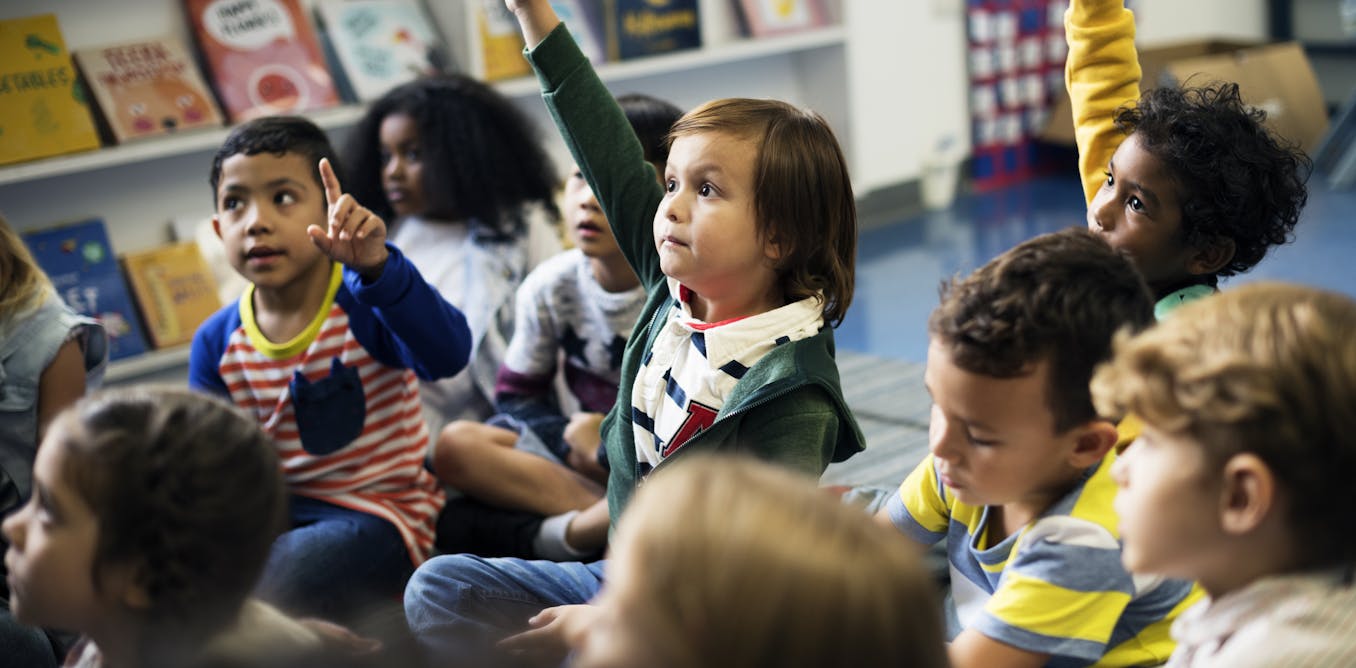
College is a unique microcosm of society where students from a variety of backgrounds come together in one place. Many times, students have not been exposed to people from backgrounds that differ from their own. I consider this an opportunity to teach my students at Otterbein University about social inequality and privilege. In my Sociology of Sport course, I illustrate to students that the societal “playing field” isn’t always equal for everyone in visible or obvious ways. I use athletics as an entry point to teach them about the different privileges – or disadvantages – each of us have. I take students to the football field, where everyone starts at the 25 yard line facing the end zone. Standing in the end zone, I represent each student’s dream job or career path. Then I proceed to read statements out loud – and if that statement applies to them, students take a step forward or step back, depending on the directions given. My statements range from “if you have immediate family members who are doctors, lawyers, or other professionals, take one step forward” to “if you were ever called names or ridiculed because of your race, ethnicity, or social class background, take one step backward.” Each of the statements read are beyond the students’ control. Once I’m through reading all of the statements, I ask students to look around, noticing who is in front of them, who is behind them. Then they sprint to my position, and the first one to reach me is the winner of the race, representing the competition to the dream job.. However, through this activity, it’s clearly seen that not everyone had the same advantages as the others. Before they begin the race to me in the end zone, ready to run toward their dream job, students are already noticing the advantages some have over others. It really begins to sink in once they look around and see how everyone is staggered across the field. There is no even starting line – we all start from positions on the field. This Race to the Jobs activity, originally conceived by social justice activist Paul Kivel, becomes a springboard in our class for a better understanding of our own privilege and how we can all help create more opportunities for those who need help to overcome an obstacle. Doing this active learning makes it that much more impactful and poignant. Taking a different approach to showing these issues can make a big difference in student’s perceptions. They open their minds up to new – and sometimes difficult or challenging concepts of privilege and oppression – becoming more self-aware. The students begin to see that, just as in our classroom discussions and course readings, not everyone can be a LeBron James, born into a relatively difficult situation, and rise to his level of success on luck or talent alone. We need to examine our own privilege because if we don’t know who we are, we will never see our blind spots. Kristy McCray, Ph.D., is an Otterbein assistant professor in sport management. Contact her if you have any questions or wish to arrange an interview by clicking on her icon at the top.


IU Kelley School expert: $170 million fine of Google, YouTube probably not enough
In the largest fine ever, Google agreed to pay $170 million to settle a case with the Federal Trade Commission and New York’s attorney general over charges that YouTube made millions from violating children’s privacy laws. Scott Shackelford, associate professor of business law and ethics at the Indiana University Kelley School of Business, chair of IU’s Cybersecurity Program in Risk Management and director of the Ostrom Workshop Program on Cybersecurity and Internet Governance, doubts it will have much of an effect. “Google, via YouTube, has been held accountable by the FTC and the New York Attorney General’s Office for its practices that violated children’s privacy, but it’s questionable whether a $170 million fine is sufficient to change business practices,” Shackelford said. “Similar to its $5 billion fine against Facebook, the FTC needs to do more to both increase these penalties, and even more importantly require the necessary steps to ensure that these violations do not recur. This is the FTC’s third fine against Google since 2011, for example, and it will likely not be the last.”


Key Environmental Quality Research Questions Identified for North America by Multidisciplinary Team
As density in cities increase along with other global megatrends, researchers are working to address environment and health challenges in collaborative ways. Using a recently pioneered process, a multidisciplinary team of North American researchers, government agencies and businesses leaders identified priority research questions for the United States, Canada and Mexico in an effort to tackle pressing environmental quality issues. In an article published in the journal of Environmental Toxicology and Chemistry, Bryan W. Brooks, Ph.D., Distinguished Professor of Environmental Science and Biomedical Studies and director of the environmental health science program at Baylor University, led the Global Horizon Scanning Project (GHSP), which focuses on identifying environmental and health issues internationally. Brooks also facilitated GHSP workshops in Africa, Australia, Central and Southeastern Asia, Europe and Latin America. “We face palpable global environment and health challenges, which require innovative understanding, tools, products and systems to prevent, diagnose and manage adverse outcomes to public health and the environment,” Brooks said. “The GHSP was initiated as part of a larger effort to identify important international research needs. It is essentially a research roadmap towards achieving more sustainable environmental quality, which is necessary to protect human health, biodiversity and ecosystem services.” As part of the study, members of the Society of Environmental Toxicology and Chemistry’s (SETAC) and the American Chemical Society’s (ACS) Environmental Chemistry and Agrochemcials Divisions submitted questions that were then synthesized during a workshop by scientists and engineers from the academic, government and business sectors. “This project is intentionally inclusive, bottom-up, multidisciplinary, multisector and transparent,” Brooks said. “Answering these priority research questions will not be easy, but strategically doing so promises to accelerate progress to address grand challenges that matter to everyone.” “This report provides a comprehensive global perspective covering some of the world’s most critical environmental challenges that will impact society for decades to come,” said Sherine Obare, Ph.D., dean and professor of the Joint School of Nanoscience and Nanoengineering at UNC Greensboro and chair elect of the American Chemical Society’s Environmental Chemistry Division. “SETAC’s ability to engage scientists from around the globe has led to forums that identify urgent challenges including, next generation 21st century analytical chemistry methods, strategies to predict chemical exposure, understanding multiple stressors and new approaches in chemical risk assessment. This project will define the scientific directions needed to transform environmental science and engineering, globally.” “The GHSP reflected in this paper has harnessed the insights of scientists not only across North America but around the world,” said Charles Menzie, Ph.D., Global Executive Director of SETAC. “Each brings tremendous experience and a strong sense of what is needed for future research. However, the distillation of these many into a set of consensus questions provides a much needed foundation for charting our direction for research to inform environmental policy. SETAC is proud to have supported this through our global meetings and now through our journal.” A related GHSP manuscript identifying priority environmental quality questions for the Australasiaregion of Oceania was also recently published in Integrated Environmental Assessment and Management. GHSP efforts from Africa and Asia are ongoing with plans to report priority research questions from these global regions in the next year. ABOUT BAYLOR UNIVERSITY Baylor University is a private Christian University and a nationally ranked research institution. The University provides a vibrant campus community for more than 17,000 students by blending interdisciplinary research with an international reputation for educational excellence and a faculty commitment to teaching and scholarship. Chartered in 1845 by the Republic of Texas through the efforts of Baptist pioneers, Baylor is the oldest continually operating University in Texas. Located in Waco, Baylor welcomes students from all 50 states and more than 80 countries to study a broad range of degrees among its 12 nationally recognized academic divisions. ABOUT BAYLOR COLLEGE OF ARTS & SCIENCES The College of Arts & Sciences is Baylor University’s oldest and largest academic division, consisting of 25 academic departments and seven academic centers and institutes. The more than 5,000 courses taught in the College span topics from art and theatre to religion, philosophy, sociology and the natural sciences. Faculty conduct research around the world, and research on the undergraduate and graduate level is prevalent throughout all disciplines.


‘Bottom-line mentality’ can lead to loss of employee respect and loyalty, research shows Supervisors driven by profits could actually be hurting their coveted bottom lines by losing the respect of their employees, who counter by withholding performance, according to a new study led by Baylor University. The study, “The Influence of Supervisor Bottom-Line Mentality and Employee Bottom-Line Mentality on Leader-Member Exchange and Subsequent Employee Performance,” is published in the journal Human Relations. “Supervisors who focus only on profits to the exclusion of caring about other important outcomes, such as employee well-being or environmental or ethical concerns, turn out to be detrimental to employees,” said lead researcher Matthew Quade, Ph.D., assistant professor of management in Baylor University’s Hankamer School of Business. “This results in relationships that are marked by distrust, dissatisfaction and lack of affection for the supervisor. And ultimately, that leads to employees who are less likely to complete tasks at a high level and less likely to go above and beyond the call of duty.” While other studies have examined the impact of bottom-line mentality (BLM) on employee behavior, Quade said this is the first to identify why employees respond with negative behaviors to supervisors they perceive to have BLM. The research team surveyed 866 people. Half of those surveyed were supervisors; the other half were their respective employees. Data was collected from those who work in a range of jobs and industries, including financial services, health care, sales, legal and education. Researchers measured supervisor BLM, employee BLM, task performance and leader-member exchange – the rating employees gave of their relationships with their supervisors. Employees rated their supervisors’ BLM by scoring on a scale statements like: “My supervisor treats the bottom line as more important than anything else” and “My supervisor cares more about profits than his/her employees’ well-being.” They rated leader-member exchange via statements such as “I like my supervisor very much as a person” and “My relationship with my supervisor is composed of comparable exchanges of giving and taking.” Supervisors rated their employees by scoring statements such as: “This employee meets or exceeds his/her productivity requirements,” “This employee searches for ways to be more productive” and “This employee demonstrates commitment to producing quality work.” Based on the responses and the data collected and analyzed, the researchers found: High-BLM supervisors create low-quality relationships with their employees. In turn, employees perceive low-quality leader-member exchange relationships. Thus, employees reciprocate by withholding performance. When supervisor BLM is high and employee BLM is low, the damaging effects are strengthened. When both supervisor and employee BLM are high, the negative performance is still evident. The last finding on that list was particularly significant, Quade said, because it contradicts a common belief that when two parties (in this case, supervisors and employees) think alike and have similar values, there will be a positive outcome. Not so much in the case of BLM, the study shows. “When supervisor and employee BLM is similarly high, our research demonstrates the negative effect on performance is only buffered, not mitigated – indicating no degree of supervisor BLM seems to be particularly beneficial,” the researchers wrote. “It seems even if employees maintain a BLM, they would prefer for their managers to focus on interpersonal aspects of the job that foster healthier social exchange relationships with their employees in addition to the bottom line.” The profit-performance relationship can spark a conundrum for companies, Quade said, because organizations want to be profitable, and performance is an important indicator of an organization’s health and vitality. If leaders believe a negative dynamic regarding BLM exists in their organization, the researchers suggest a few practical steps: Be cautious of a BLM approach or emphasizing bottom-line outcomes that could neglect other organizational concerns, such as employee well-being and ethical standards. Managers should be aware of the message they pass along to employees (and the possible performance repercussions) when they tout bottom-line profits as the most important consideration. Organizations that need to emphasize bottom-line outcomes should consider pairing the BLM management style with other management approaches known to produce positive results, such as practicing ethical leadership. “Supervisors undoubtedly face heavy scrutiny for the performance levels of their employees, and as such they may tend to emphasize the need for employees to pursue bottom-line outcomes at the exclusion of other competing priorities, such as ethical practices, personal development or building social connections in the workplace,” the researchers wrote. “However, in doing so they may have to suffer the consequence of reduced employee respect, loyalty and even liking.” ABOUT THE STUDY “The Influence of Supervisor Bottom-Line Mentality and Employee Bottom-Line Mentality on Leader-Member Exchange and Subsequent Employee Performance” is published in the journal Human Relations. Authors are Matthew Quade, Ph.D., assistant professor of management in Baylor University’s Hankamer School of Business; Benjamin McLarty, Ph.D., assistant professor of management, Mississippi State University; and Julena Bonner, Ph.D., assistant professor, Utah State University. ABOUT BAYLOR UNIVERSITY Baylor University is a private Christian University and a nationally ranked research institution. The University provides a vibrant campus community for more than 17,000 students by blending interdisciplinary research with an international reputation for educational excellence and a faculty commitment to teaching and scholarship. Chartered in 1845 by the Republic of Texas through the efforts of Baptist pioneers, Baylor is the oldest continually operating University in Texas. Located in Waco, Baylor welcomes students from all 50 states and more than 90 countries to study a broad range of degrees among its 12 nationally recognized academic divisions. ABOUT HANKAMER SCHOOL OF BUSINESS AT BAYLOR UNIVERSITY At Baylor University’s Hankamer School of Business, integrity stands shoulder-to-shoulder with analytic and strategic strengths. The School’s top-ranked programs combine rigorous classroom learning, hands on experience in the real world, a solid foundation in Christian values and a global outlook. Making up approximately 25 percent of the University’s total enrollment, undergraduate students choose from 16 major areas of study. Graduate students choose from full-time, executive or online MBA or other specialized master’s programs, and Ph.D. programs in Information Systems, Entrepreneurship or Health Services Research. The Business School also has campuses located in Austin and Dallas, Texas. Visit www.baylor.edu/business and follow on Twitter at twitter.com/Baylor_Business.


Billion reasons why Netflix loves binge-watching
The numbers are out, and the there’s no doubt about it, Netflix despite weaker Q2 figures released this week, streaming is now an industry mainstay. Netflix has transformed the industry and now viewers are no longer willing to wait for that one time a week a show usually airs. In fact, streaming options are now a must have for networks hoping to compete with Netflix and other services. And with Disney and Apple are now spending billions to catch up – audiences are in store for a lot more content. But, as bingeing television becomes the norm, there are also concerns? On the human side, what dangers are posed to people consuming enormous amounts of screen time. And on the industry side – how can show business keep up? And should it? Are you a reporter covering streaming services, binge-watching and the other habits of audiences? Then let our experts help. David A. Schweidel is Professor of Marketing at Emory University’s Goizueta Business School. He is an expert in the areas of customer relationship management and social media analytics as well, his research also includes binge watching. David is available to speak with media – simply click on his icon to arrange an interview.



Full speed ahead or time to pump the breaks when it comes to investing in ride-share companies?
There’s been a lot of talk and even some screaming from early investors about the state of ride-share stocks like Uber and Lyft. Since its IPO, Uber has been a rollercoaster ride for those who got in early. “When Uber stock (UBER) went public on May 10, it looked like a disaster. At minimum, underwriters look for a stock to close slightly above its offering price. Uber’s shares dropped 7.6% to $41.60 in the first day of trading and closed well below the offering price of $45. But a funny thing has happened since. After closing down as much as 18% from its IPO price, Uber stock has rallied 21% to close at $44.92 per share on Thursday. The stock eclipsed the IPO price during intraday trading for the first time on Wednesday and closed at exactly $45 that day.” June 07 – Barron’s But let’s be honest, unless you’ve got a crystal ball or a time machine – any stock is a gamble. How the market reacts, how the company performs and even how CEOs behave can dictate big gains or drastic falls. Steve Jones is a Professor of Finance at Indiana University's Kelley School of Business – he lent his perspective to the topic. “As far as which stocks to buy, there are never right or wrong answers – It’s just a question of a person being able to assess risk or potential returns. The IPO prices indicate the market has discounted Uber and Lyft stocks and sees them as riskier than originally perceived to be. Now, they do offer potential for a good return… For example, Facebook stocks dropped then rebounded… Google dropped then rebounded. Lots of stocks that have not done well at first have come back. Will that be these two? "I think there’s potential for it. On the other hand, we have this situation where analysts are critical of the business models of both these companies. It’s not clear Uber drivers are going to sign up to do this in the long run at these kind of wages, and if they can’t underpay drivers, how do they make money? There is a criticism going on of the business model here, and if this model can become profitable, I think the stocks will take off. It’s questionable though, whether that’s possible or not. That’s what the market is going back and forth on right now.” Are you covering the track Uber investors are on, other IPO’s or companies that are disrupting not just the marketplace but also the stock market? Then let our experts help with your stories. Steve L. Jones is an expert in the areas of asset valuation, corporate finance, financial markets, and investment management. He’s available to speak with media regarding these topics – simply click on his icon to arrange an interview.
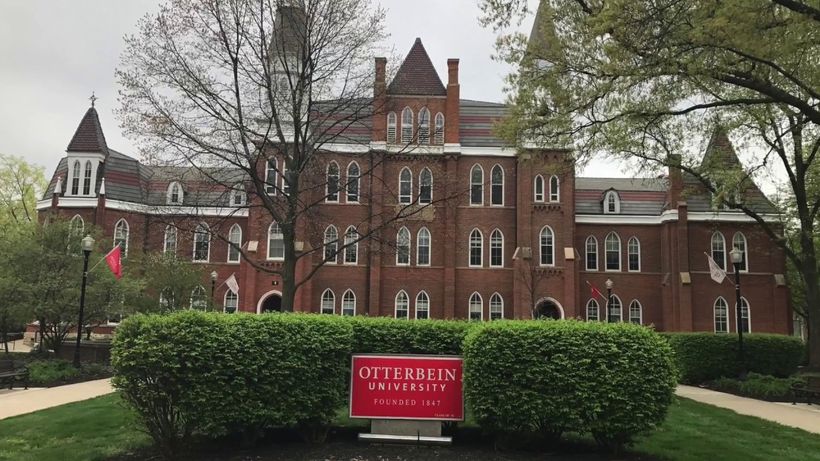
This year, 26 students from Columbus (Ohio) City Schools (CCS) walked across the stage to receive their Otterbein degrees as part of the Class of 2019. It was a result of a partnership between two great educational institutions that is ensuring post-secondary education is accessible to students in central Ohio. “(The event) was a great example of how two educational institutions can come together and make an impact on the lives of young people and the larger community,” said Tanya L. McClanahan, supervisor of higher education partnerships for CCS. For some time now, Otterbein and CCS have been working together to provide several academic options and initiatives to students from Ohio’s largest school district. Since 2014 the Urban Districts Initiative has been working with Columbus City Schools, as well as South-Western City Schools, Westerville City Schools, Whitehall City Schools and Cristo Rey, all districts with more than 35%of students living in poverty. The Initiative is an enhanced need-based aid model that reduces the gap between aid and expected family contribution to the smallest amount possible and has driven significant increases in enrollment of low-income students at Otterbein, as well as sparking a significant increase in student success. The Seniors-to-Sophomores program, where Otterbein offers a summer College Credit Plus course for CCS students that pairs an academic course with a for-credit study skills course. The University also has a STEM skills refresher course for entering students funded through a grant from Nationwide. Otterbein offers Professional Learning Communities (PLCs) for district teachers and Otterbein faculty. In PLCs, teachers and faculty come together to discuss issues related to pedagogy and serving students to enhance the work of both institutions. Recently, Otterbein introduced a scholarship for the dependent children of CCS district (benefits eligible) employees that reduces the cost of an Otterbein education to the average of the state supported universities in Ohio. There are a lot of great things happening in Otterbein’s financial aid and recruitment models that are seeing positive outcomes in the Otterbein and central Ohio communities - and if you need to know more, that’s where our experts can help. Jefferson Blackburn Smith is the Vice President for Enrollment Management and is an expert in financial aid, scholarships, politics, and higher education. He is available to speak to media regarding these topics – simply click on his icon to arrange an interview. To learn more, click the link below: https://www.otterbein.edu/news/cohort-of-columbus-city-schools-alumni-to-graduate-from-otterbein-university-sunday/

There’s no question about it – our planet has a problem with plastic. Though simple, cheap, convenient and often necessary, the reality is single use and non-reusable plastics like straws, plastic bags, wrapping and most containers are causing problems. There’s no hiding or ignoring the evidence – plastic is everywhere from landfills, to our rivers and streams and even occupying its own land mass in the ocean. Recently Canada proposed a ban on single use plastics to come in to effect in 2021. The country joined the likes of France, Germany, Italy, the U.K. and the European Union who are all implementing similar policies. The United States, however – has not. Here are some facts from the Center for Biological Diversity. Americans use 100 billion plastic bags a year, which require 12 million barrels of oil to manufacture. The average American family takes home almost 1,500 plastic shopping bags a year. According to Waste Management, only 1 percent of plastic bags are returned for recycling. That means that the average family only recycles 15 bags a year; the rest ends up in landfills as litter. Up to 80 percent of ocean plastic pollution enters the ocean from land. 100,000 marine animals are killed by plastic bags annually. One in three leatherback sea turtles have been found with plastic in their stomachs. Plastic bags are used for an average of 12 minutes. It takes 500 (or more) years for a plastic bag to degrade in a landfill. Unfortunately, the bags don't break down completely but instead photo-degrade, becoming microplastics that absorb toxins and continue to pollute the environment There is no doubt plastic is a serious problem in America – but will the country join in? What will it take from an industry point of view? Will costs outweigh the benefit? Is this a matter of regulation and do Americans have the appetite to make this a political issue? There are a lot of questions and that’s where our experts can help. Dr. Beril Toktay is Professor of Operations Management, Brady Family Chairholder and ADVANCE Professor at Georgia Tech’s Scheller College of Business. She’s the founding Faculty Director of the Ray C. Anderson Center for Sustainable Business. She’s an expert in the areas of sustainable operations and supply chain management, with a special focus on the circular economy. Beril is available to speak about this issue with media – simply click on her icon to arrange an interview.


A vacation free of emails, obligations and answering to the boss – let our expert columnist explain!
UMW’s resident writer for the Lynne Richardson is back with another great piece in The Free Lance-Star – just in time for summer. It’s a call to action for bosses and employers to let their people be free when they’re relaxing away from work on that cherished summer vacation. It’s about taking a time out when they’ve booked that time off. “So, you leave for the big trip. It’s a long flight and when you take your smartphone off of airplane mode, you realize you’re getting emails from your office. A co-worker needs information. Somebody wants to know where you left the file he needs for a meeting tomorrow. Your boss needs you to call him as soon as possible as he’s meeting with his boss tomorrow and needs a refresher on a project you are working on. So, you take a deep breath and respond to each of the requests. After all, you haven’t really disengaged yet from work. But the next day is the same. You continue to receive "emergency" emails. It’s like you cannot leave the office, because folks are tethered to you in some way. So, this is a cautionary tale for supervisors. Your folks need time away. They need to be away in every sense of the word. Please give them permission to not respond to emails while on vacation. There are very few emergencies that would require you to reach out to them. If it means that you, Mr. Supervisor, must wait a few days for some information, so be it.” If you like this – read the rest of the article attached below. So, do you have a plan in place to ‘un-plug’ while off? Should workplaces have mandatory policies about contacting people when they are away? Worry not – our experts can help. Dr. Lynne Richardson is a columnist, mentor and her expertise focuses on leadership management and higher education administration. She is available to speak with media about leadership…and even bad bosses. Simply click on her icon to talk with her and arrange an interview.


Belief in the ‘Prosperity Gospel’ Does Not Turn People into Successful Entrepreneurs
But the belief that God financially rewards the faithful can fuel values linked to entrepreneurial thinking, Baylor University study finds Belief in the “Prosperity Gospel” — that God financially blesses faithful followers — does not turn individuals into successful entrepreneurs. But prosperity beliefs can fuel values linked to entrepreneurial thinking, such as power and achievement, according to a Baylor University study. However, researchers found no direct relationship between prosperity beliefs and willingness to take risks, and little connection to recognizing opportunities. Risk-taking and identifying opportunities are typical traits of entrepreneurs, according to the national study. “As revealed in our findings, a belief that God will provide financial benefit to the faithful is not enough to push someone to launch a business,” said lead author Kevin D. Dougherty, Ph.D., associate professor of sociology in Baylor’s College of Arts & Sciences. “The relationship between prosperity beliefs and starting a business is indirect and inconsistent.” The study — Prosperity Beliefs and Value Orientations: Fueling or Suppressing Entrepreneurial Activity” — is published in the Journal for the Scientific Study of Religion. For the study, researchers analyzed data from a nationally representative survey of 1,066 working adults. Their goal was to connect prosperity beliefs, human values, entrepreneurial attitudes and entrepreneurial action. They found that values — both by themselves and in conjunction with religious beliefs — are important predictors of how and whether individuals might launch a business. Participants responded to a three-item scale to measure beliefs that faith and faithful behavior lead to success at work and in business. The items included: “God promises that those who live out their faith will receive financial success;” “Believers who succeed in business are evidence of God’s promised blessing;” and “I believe faithful believers in God receive real financial benefits in this life.” Participants also responded to questions relating to The Theory of Basic Human Values, which recognizes such universal values as openness to change, achievement, security, power and benevolence. In general, “entrepreneurs tend to think differently than non-entrepreneurs, prizing achievement and self-direction while downplaying tradition and conformity,” said co-author Mitchell J. Neubert, Ph.D., professor of management in Baylor’s Hankamer School of Business. Value orientations of self-enhancement and openness to change are associated with recognizing opportunities and taking risks — entrepreneurial behaviors that correlate with creating new businesses. While prosperity beliefs by themselves show little direct impact on entrepreneurship, they do influence the impact of values and attitudes related to creating a business. Prosperity beliefs can strengthen the relationship between self-enhancement values and opportunity recognition, but they seem to reduce the relationship between openness to change and willingness to take risks. Another significant finding pertains to gender. Men and women who accept prosperity beliefs are no different in their willingness to take risks or start businesses, said co-author Jerry Z. Park, Ph.D., associate professor of sociology in Baylor’s College of Arts & Sciences. In general, risk-taking and business startups are more common among men. The study also shows that education and experience are key predictors of entrepreneurship, but those resources may be difficult to acquire for some prosperity believers because of social and economic circumstances. While individuals in that group have hope, it seems contingent on divine action rather than human action, Neubert said. “Can prosperity preachers Joel Osteen and T.D. Jakes save the U.S. economy? Probably not. But nor are they damning it,” Dougherty said. “The type of positive, self-help gospel they preach can enhance specific value orientations that are related to entrepreneurial thinking and entrepreneurial behavior.” *The research was supported by a National Science Foundation grant. ABOUT BAYLOR UNIVERSITY Baylor University is a private Christian University and a nationally ranked research institution. The University provides a vibrant campus community for more than 17,000 students by blending interdisciplinary research with an international reputation for educational excellence and a faculty commitment to teaching and scholarship. Chartered in 1845 by the Republic of Texas through the efforts of Baptist pioneers, Baylor is the oldest continually operating University in Texas. Located in Waco, Baylor welcomes students from all 50 states and more than 90 countries to study a broad range of degrees among its 12 nationally recognized academic divisions. ABOUT THE COLLEGE OF ARTS & SCIENCES AT BAYLOR UNIVERSITY The College of Arts & Sciences is Baylor University’s oldest and largest academic division, consisting of 25 academic departments and seven academic centers and institutes. The more than 5,000 courses taught in the College span topics from art and theatre to religion, philosophy, sociology and the natural sciences. Faculty conduct research around the world, and research on the undergraduate and graduate level is prevalent throughout all disciplines. Visit www.baylor.edu/artsandsciences.